



"Drone without human is nothing": Is Ukrainian arms export possible without Ukrainian expertise?
Drone Industry
President of Ukraine Volodymyr Zelenskyy announced on 28 April the launch of a mechanism for exporting domestically produced weapons. According to him, all the details have finally been agreed at the level of state institutions. Finally, because the issue of arms exports has remained on the agenda of Ukraine’s defense industry since at least December 2024, when it became clear that defense companies were capable of manufacturing more products than the state could afford to contract.
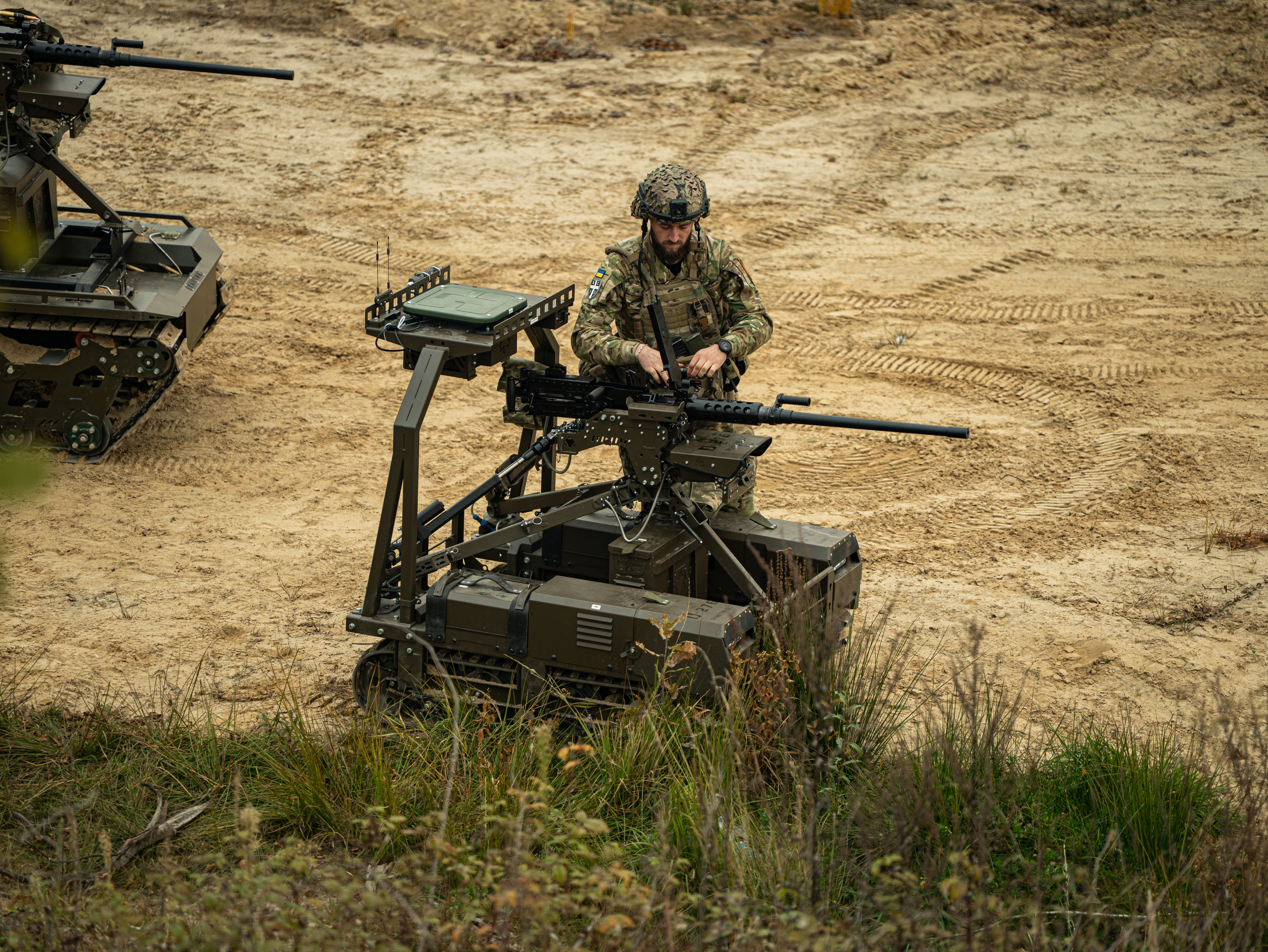
All this time, industry associations, sector representatives, and experts have mostly justified the need to unblock exports by pointing to Ukraine’s limited financial capacity. Entering international markets would be a breath of fresh air for Ukraine’s defense-industrial complex, which has been developing at an unprecedented pace because of the full-scale war with Russia. According to the Ministry of Defense, the production capacity of Ukraine’s defense industry has increased 50-fold since February 2022 and is now estimated at US$50 billion.
At the same time, the war in the Middle East, Iranian Shahed attacks on military bases and infrastructure facilities in the Persian Gulf have exposed the need of the nominal collective West not only for cheap and effective systems, but above all for Ukrainian tactics in using them.
In other words, the situation has developed in such a way that everyone stands to benefit from unblocking arms exports from Ukraine.
Ukrainian manufacturers will receive additional contracts, which means foreign currency revenue, the opportunity to increase reinvestment, produce more goods or develop new areas. As a result, this means the creation of new jobs, higher tax revenues that can be directed toward financing the Defense Forces, and so on.
Partners, for their part, receive not only ready-made solutions, but most importantly, direct experience gained on the battlefield of modern warfare, experience for which Ukrainians, unfortunately, have paid the highest price, one that cannot be converted into any conventional monetary terms.
Volodymyr Zelenskyy clarified that partners helping Ukraine had been offered a special cooperation format, Drone Deals. These are special agreements on the production and supply of Ukrainian drones, missiles, shells, and other necessary types of weapons, military equipment, and software, their integration with partners’ defense systems, as well as the provision of Ukrainian expertise and the technology exchange Ukraine needs.
Ukrainian companies will get a real opportunity to enter the markets of partner countries, provided that Ukrainian troops have the right of first claim on the necessary volume of weapons. In other words, production surpluses will be exported.
"Ukraine’s surplus production capacity for some types of weapons reaches 50%, and this is a direct result of our state investment in Ukraine’s defense industry and our cooperation with partners," the president noted.
Therefore, cooperation with partners from the nominal collective West will only deepen further.
On 30 April, Ukraine and five European countries, Finland, Italy, Norway, Sweden, and the United Kingdom, signed a memorandum in Kyiv on the creation of CORPUS (the Coalition for Resilient Procurement and Unified Support), a coalition in the field of defense support designed to share expertise and coordinate efforts.

The need to deepen defense cooperation between Ukraine and Europe was discussed, in particular, during one of the panels at the 18th Kyiv Security Forum (KSF), for which Censor.NET served as an information partner. As part of the ‘Drone Industry’ project, we are publishing the key points made by the speakers, representatives of manufacturers, Ukrainian military personnel, and NATO.
Joint ventures as an effective system for developing cooperation
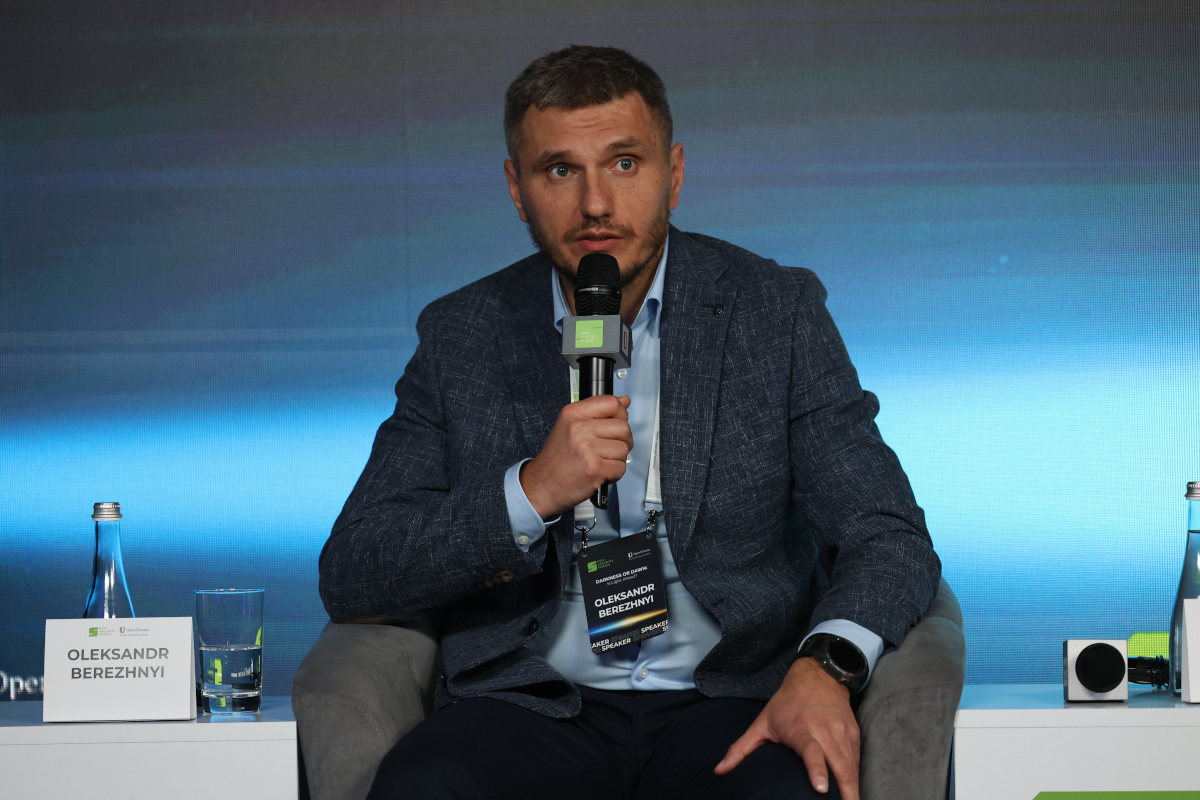
Oleksandr Berezhnyi, managing director of Quantum-Systems Ukraine, specifically highlighted the creation of joint ventures. In his view, this path is beneficial both for Ukraine and for Europeans.
For context, German drone manufacturer Quantum Systems already operates Quantum Frontline Industries (QFI), the first German-Ukrainian joint venture under the Build with Ukraine initiative. The joint production venture with Frontline Robotics is currently scaling up the production of 10,000 multipurpose quadcopter drones in Germany for Ukraine’s Armed Forces and delivered its first batch in late March 2026.
Two additional Quantum Systems joint ventures will also be created. Quantum WIY Industries (QWI), with Ukrainian partner company WIY Drones, is expected to strengthen Ukraine’s air defense. The joint venture will focus on developing and scaling up air defense capabilities, particularly in interceptor drones and related technologies.
Quantum Tencore Industries (QTI), a joint venture with Ukrainian partner company Tencore, will focus on scaling up the production of combat-proven unmanned ground systems.
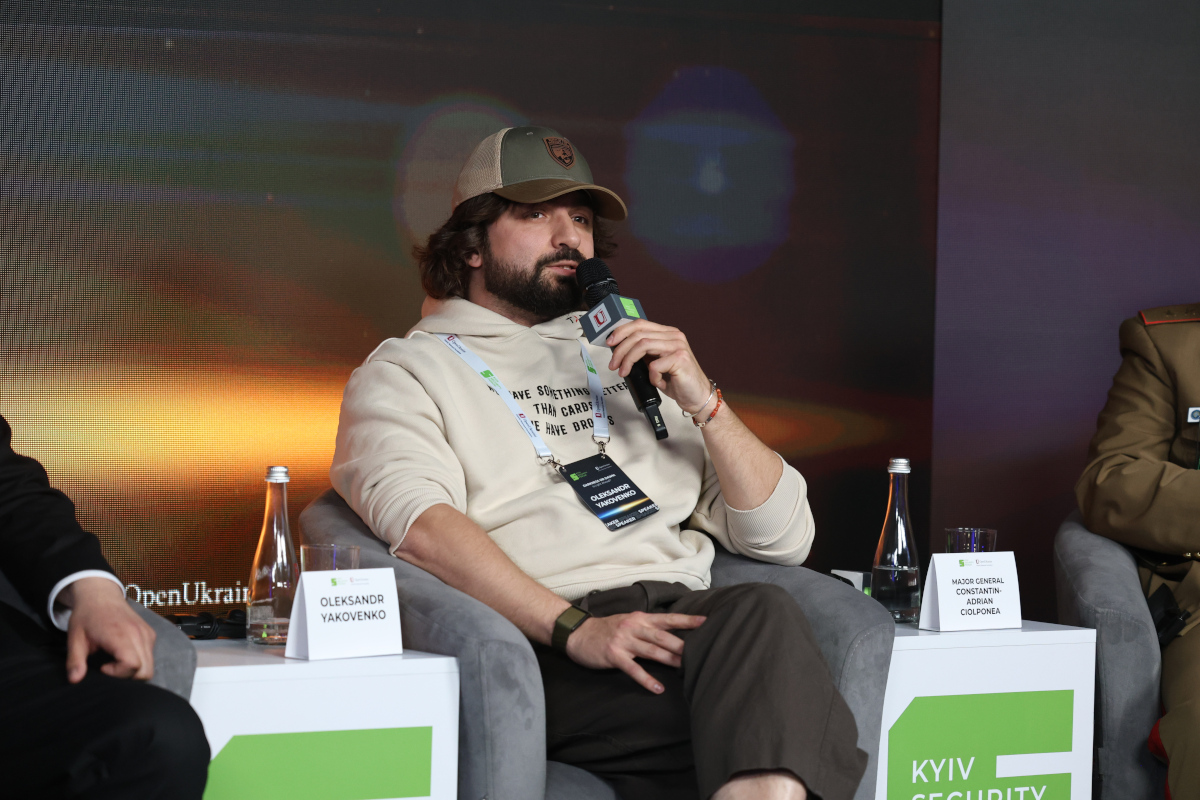
"The concept of Joint Ventures between European and Ukrainian companies is, in my view, the most effective system for developing cooperation," said Oleksandr Yakovenko, founder of TAF Industries. "I do not believe in the export of Ukrainian weapons. Not because we do not have enough weapons. Many Ukrainian companies have far fewer orders than their production capacity allows. It is because Ukrainian weapons will not work without Ukrainian military personnel. If I supply a Ukrainian interceptor drone to Arab or European countries, local troops will need at least a year to learn how to operate it effectively. That is why integration and cooperation are the only way."
Yaroslav Azhniuk, founder and CEO of The Fourth Law, expressed a similar view:
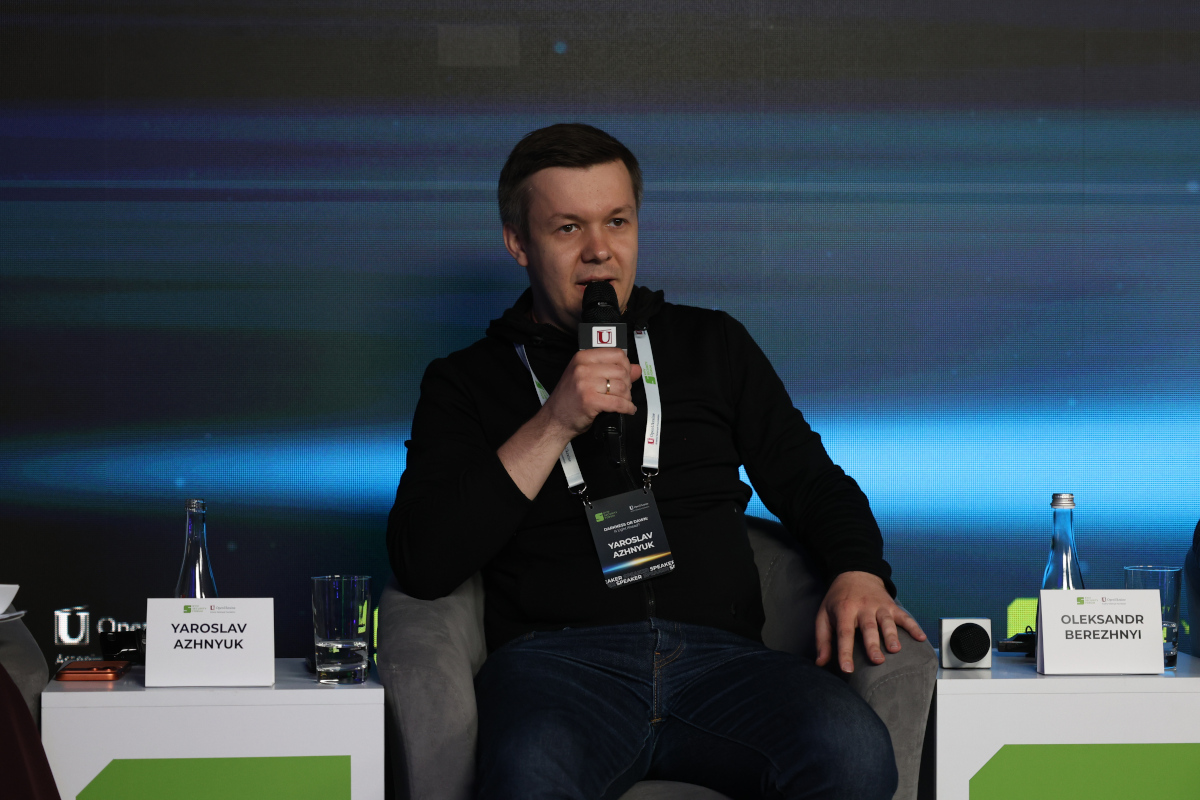
"The most valuable thing is the ingenuity of Ukrainian engineers. It is unique. If we take, for example, an interceptor drone from Ukraine and bring it to Germany or Canada, and start producing the same interceptors there, that is good. But in six months, they will become obsolete. And no one will know why. That is why there must be cooperation with companies that grow together with military units."
He added that the future model of defense procurement for countries that are not at war should resemble insurance, or a kind of "drone subscription." In other words, a country would make a monthly payment and, in return, receive not only drones, but also regular software updates, hardware upgrades, maintenance, and so on. This approach would protect against obsolescence, as the situation on the battlefield changes dynamically.
"The war has shown that what worked three months ago no longer works at all today. It is impossible to fight a modern war with systems that were made five years ago. Moreover, it is impossible to fight with systems that were made a year ago. This is especially true of drones and any unmanned systems. Collaboration between European industry and Ukrainian companies is the key to success and to protecting the entire European defense framework," Oleksandr Yakovenko stressed.
Without a human, a drone is nothing
Colonel Mykyta "Raz Dva" Nadtochii, deputy commander of the 1st Azov Corps of the National Guard of Ukraine, advises foreign partners to learn, in particular, from the mistakes made in Ukraine.
"Russia is a country with imperial ambitions. It will not stop at Ukraine. What is happening now is a large-scale testing ground for Russia, allowing it to understand what is effective, how it can move further against countries west of Ukraine, and so on. That is why Europeans need to think not about how to make more money and how to sell their product for profit. Europeans must understand that they are doing this not only for Ukraine, which is already at war, but also for themselves," he said.
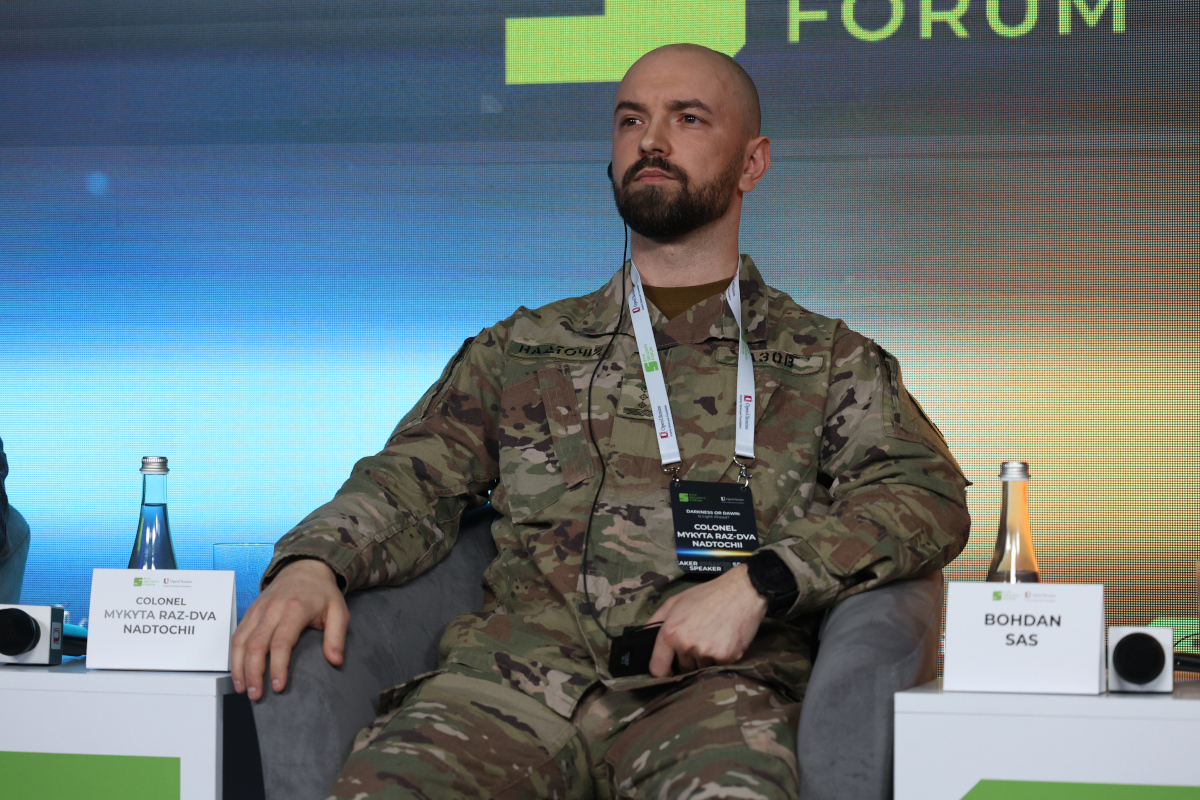
Colonel Nadtochii also noted that both Ukraine and European countries need to work with their own populations, including by investing in education and explaining why their state must be defended.
"People are the key. Without a human, a drone will not fly; without a human, it will not be manufactured or tested. The idea that drones win wars is popular now, fine. But a drone without a human is nothing," the serviceman stressed.
Yaroslav Azhniuk noted that Europe needs to prepare very quickly for a future war.
"The likelihood of Russia attacking the Baltic states and China attacking Taiwan within two to two and a half years is quite high. And Europe is completely unprepared. How many people are there now across all of NATO’s armies who can operate drones? A thousand? Five hundred? And how many of them are ready for real combat, for using drones the way Ukrainian soldiers do? And I am not even talking about interceptors or deep strikes," he explained.
"In my personal opinion, we are already in the Third World War. It’s just that everyone thought it would be a nuclear war, but it turned out to be hybrid and asymmetric," added TAF Industries founder Oleksandr Yakovenko.
Major General Constantin-Adrian Ciolponea, a representative of NATO’s Supreme Allied Commander Transformation (SACT) in Europe, proposed creating a drone operator training center in Ukraine for NATO countries.
"We do not have a training center where the vision and practical experience of combat operations can be passed on directly and then introduced into the training curriculum. That would be very useful," he said.
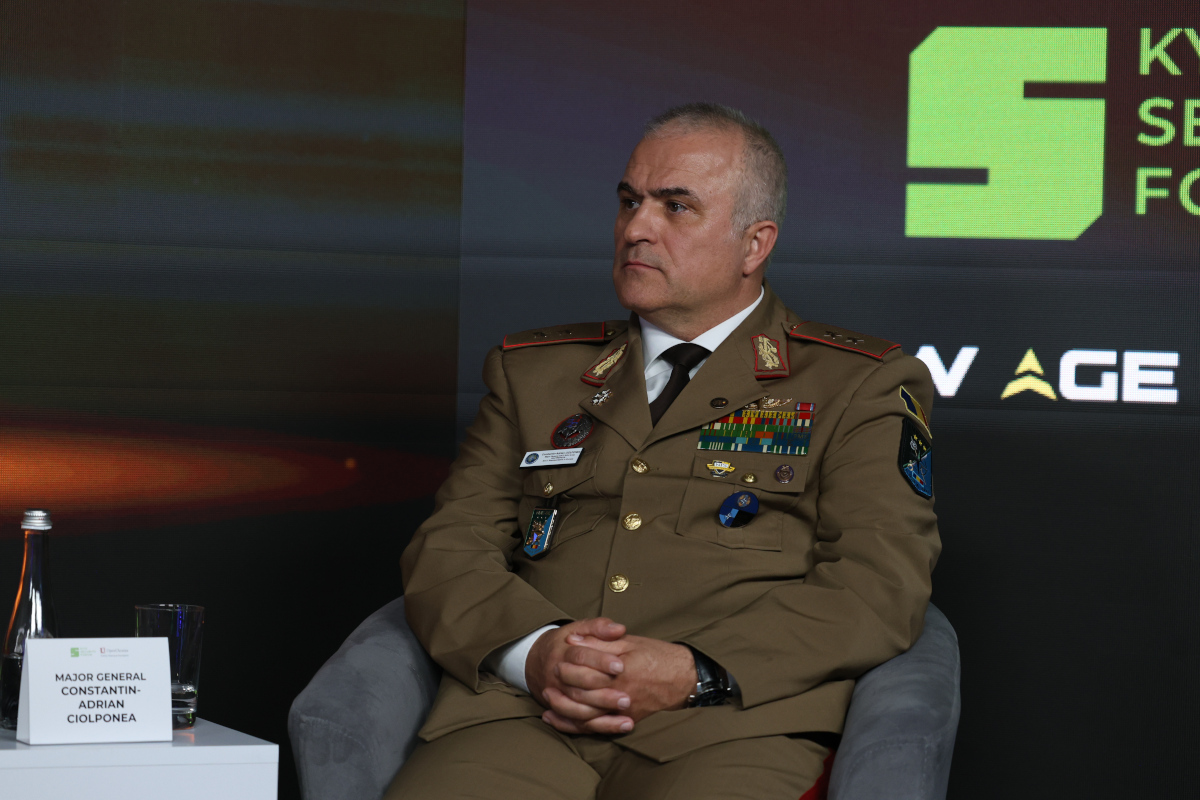
He added that there are many drones and anti-drone technologies on the market today. According to estimates by the London-based hub, the market’s capacity will reach $32 billion next year.
"The market is growing very fast. The problem is that there is no framework to determine what works and what does not. Ukrainians have a major advantage, because Ukraine has a certain ecosystem. You can already determine what works and what does not, and you can adapt immediately. The West does not yet have such an ecosystem. And solutions there are not developed based on the problem. The latest technologies for a specific domain are simply brought to market (there are five domains in total: land, air, sea, space and cyberspace/information space – ed. note), then they are tested, and then comes the political process. Sometimes this takes from one to five years," the major general noted.
Ukraine needs deep tech
According to Constantin-Adrian Ciolponea, drones have completely changed warfare on land, in the air, and at sea. Thanks to modern technology, the fog of war has disappeared: every movement of the enemy army can be tracked through cameras or highly sensitive radars. Hiding anything, above all, a thermal signature, is extremely difficult. Thanks to drones, Ukraine can successfully fight an adversary that outnumbers it.
"We understand what it means to fight without resources. Every time I meet with foreign partners, they say: ‘You assemble drones from consumer goods. This is not miltech; these are goods you can buy in a shop.’ Yes, these are goods you can buy in a shop. But by the way, not in a European shop, because they are mostly made in China. And this will be a major problem for European miltech in the future. After all, the products supplied to us by Western partners cost US$250,000 and can carry 20 kg over 200 km, while ours cost US$20,000 and can carry 25 kg over 300 km. And yes, they are assembled from consumer goods. But that is exactly the difference between Ukrainian miltech and European miltech," Oleksandr Yakovenko noted.
The downside, in his view, is that Ukraine does not have access to deep tech, science-intensive innovation based on fundamental scientific research and significant engineering breakthroughs.
"Whatever anyone may say, we do not have deep technologies that fall under the same ITAR (International Traffic in Arms Regulations). This is precisely where there is a component of our cooperation, between European primes and Ukrainian startups and innovative companies. We have experience in application, which we can scale up quite quickly," Yakovenko clarified.
"Europe can help us with resources, because many manufacturers simply do not have the money to create what they are capable of creating. The same applies to training. If we provide a drone, it will be completely useless without proper training. All the more so because conditions on the battlefield are constantly changing," added Bohdan Sas, co-founder of Buntar Aerospace.
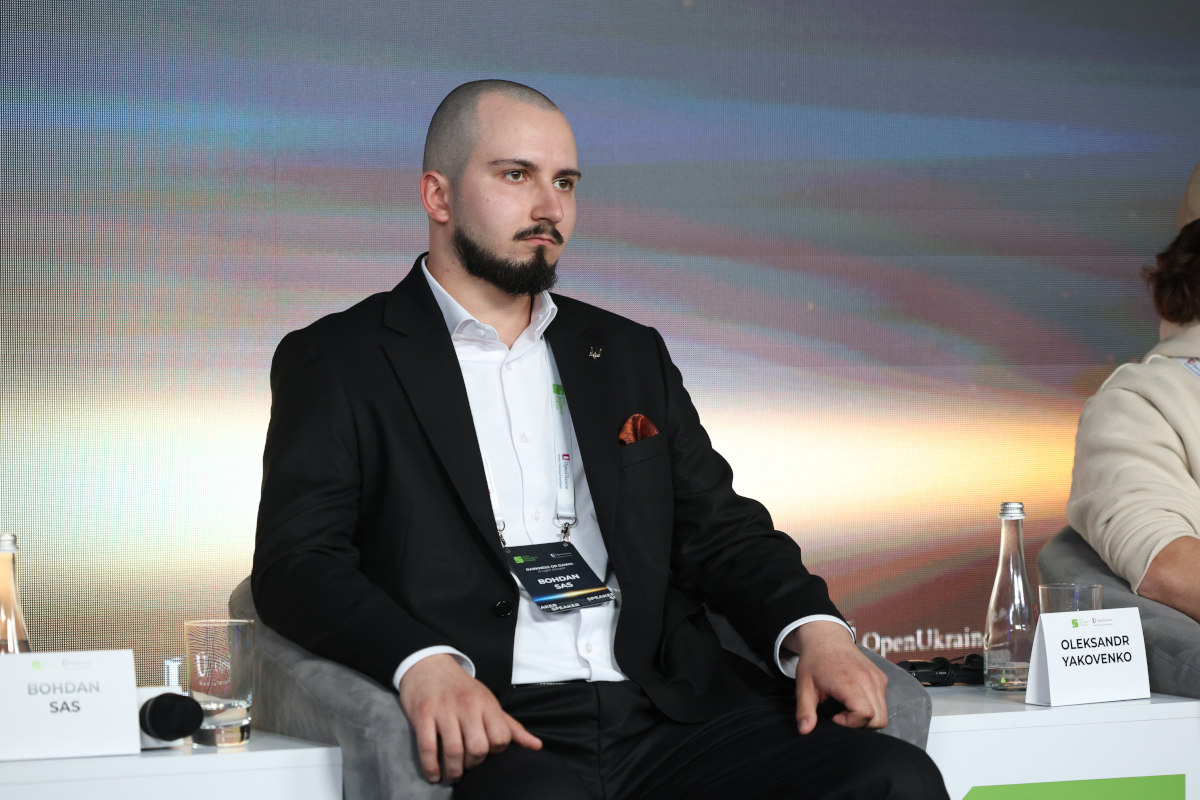
At the same time, he urged that Ukraine’s national interests not be forgotten:
"We see many companies and governments that want to come to Ukraine to gain knowledge of military tactics or obtain some weapon system that works on the battlefield, and then go back home and copy it without Ukraine. This is deeply unfair to those who are giving their lives at the front."
***
Therefore, innovations by themselves cannot influence the course of the war. The key factors remain the people who will use these innovations as intended, and money, because war is expensive. For example, one day of war in Ukraine costs approximately UAH 7.5 billion (US$172 million), as Roksolana Pidlasa, chair of the Verkhovna Rada Budget Committee, previously stated.
This is where the points of intersection for cooperation lie. Europe is already beginning to understand this as well. For example, by the end of the second quarter, Ukraine will receive €6 billion to purchase domestically produced drones for the Defense Forces under a €90 billion loan program.


