



Russia is considering scenario involving war against Europe by 2045, - Foreign Intelligence Service
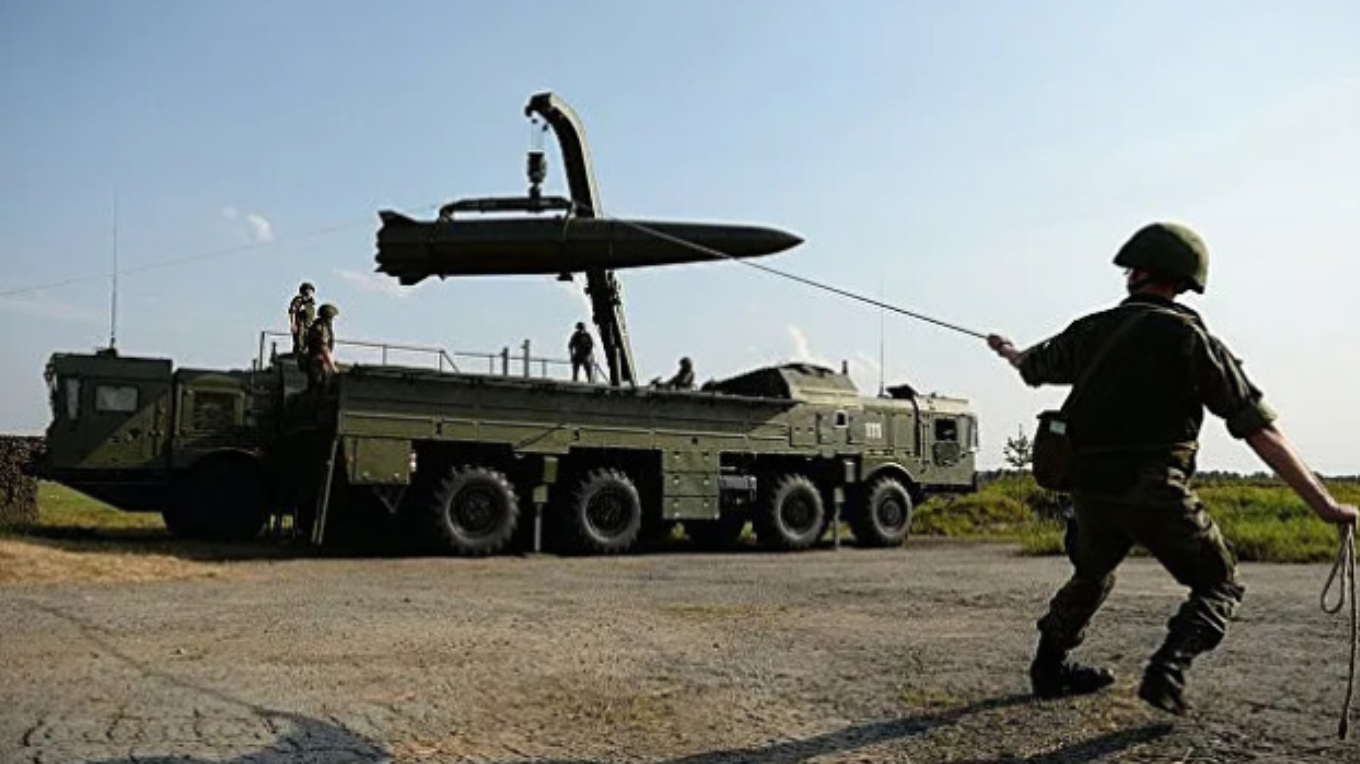
There are nearly 400 Russian intelligence officers in Europe, and Moscow is drawing up scenarios for potential military conflicts with NATO countries.
This was reported by the Foreign Intelligence Service, according to Censor.NET.
Details
They recalled the statements made by the Russian dictator Putin to the effect that the Russian Federation "has no intention of attacking Europe", but at the same time he warned that in the event of a "strike against Russia", Moscow might use "all available weapons", including nuclear ones.
Such rhetoric is evidence of a systematic campaign to intimidate European governments and societies.
"Its aim is to curb military support for Ukraine, weaken Europe’s willingness to strengthen its own defence capabilities, and instil a fear of direct confrontation.
"However, the Kremlin’s statements should not be confused with its actual plans. Today, Russia’s main objective in Europe is to undermine support for Ukraine whilst keeping its own level of risk to a minimum. To this end, Moscow has far more effective tools at its disposal than a direct invasion," they noted.
We are talking about a hybrid war: sabotage, cyber-attacks, influence operations, disinformation, ‘chance visits’ by drones and espionage.
Spies in Europe
According to Ukrainian intelligence, there are nearly 400 Russian intelligence officers in Europe.
"Their actions enable Moscow to systematically test the limits of what is permissible, whilst attempting to remain below the threshold that could trigger a collective response from NATO. ...
Moscow regards it (the prospect of direct military confrontation with Europe – Ed.) as one of the scenarios for military conflicts up to 2045. Six of these scenarios relate to Northern Europe. Scenarios involving Poland and the Baltic states are also being actively explored. After all, the Putin regime, by its very nature, requires an external enemy to justify its own policies, mobilise society and maintain control over it," the Foreign Intelligence Service emphasised.
According to the Russian Federation’s assessment, the Baltic states are one of the most vulnerable links in European security.
"The scenario may involve creating a situation in which the Alliance is forced to make decisions under conditions of uncertainty and time pressure. The aim is not to defeat NATO militarily, but to demonstrate its alleged inability to respond swiftly and collectively defend its members," the intelligence report explained.
Surveys show that Russians name the United Kingdom, France, Germany, Poland, Finland and the Baltic states as the main hostile countries.
At the same time, 61 per cent of those surveyed believe that the time has come for negotiations, but 59 per cent believe that, should these fail, aggressive action should be stepped up.
Summary
"The Russian threat to Europe has long since gone beyond the scope of a possible direct attack by Moscow. Russia is preparing for a long-term confrontation in which the Ukrainian and European fronts are interlinked."
Europe must therefore view Ukraine not as a peripheral element of its own security, but as its indispensable front line, based on the principle that the security of Ukraine and Europe is indivisible.
"Strengthening our own defence capabilities, reducing energy dependence, applying sustained economic pressure on Russia and, above all, supporting Ukraine – these are not isolated political decisions, but elements of a single, overarching strategy to deter a common enemy," the Foreign Intelligence Service concluded.


