


FPV drones will fly farther: Defense Ministry tests confirmed effectiveness of new communications module from "Wild Hornets". VIDEO
Drone Industry
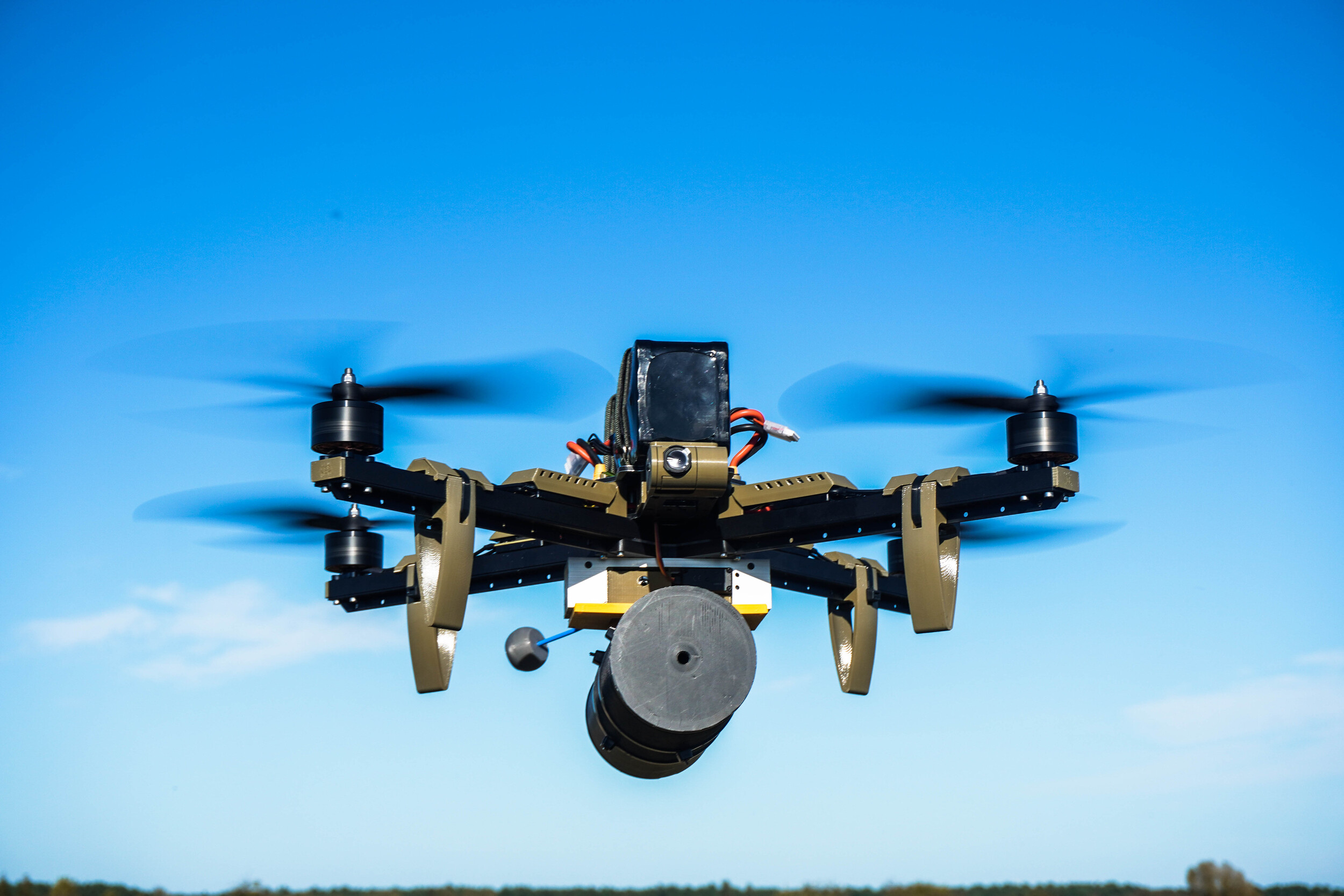
State trials have confirmed the effectiveness of an innovative solution developed by engineers at MilTech company Wild Hornets that increases the operating range of Ukrainian FPV drones and improves communications reliability under electronic warfare (EW) interference.
The company shared this information with Censor.NET’s "Drone Industry" project.
The solution is the new HV VTX Pro video transmitter module, introduced as part of an upgrade to Wild Hornets’ Hornet Vision digital communications system. It is one of the key components of an FPV drone, transmitting the video signal from the camera to the ground control station or the pilot’s goggles.
Official trials of the new module involved specialists from the State Scientific Research Institute for Testing and Certification of Armaments and Military Equipment and the Ministry of Defense’s State Quality Assurance Directorate. The trials confirmed the stated specifications of HV VTX Pro across all the company’s main drone types:
- the Sting high-speed interceptor;
- the "Queen of Hornets" multipurpose cargo platform;
- the 10-inch Wild Hornets Digital air defense drone.
During the trials, pilots used the Hornet Vision Ctrl remote drone control system.
The trials also confirmed that HV VTX Pro not only provides a more resilient video link but also significantly improves the drones’ performance characteristics. Some performance parameters of UAVs equipped with the new module substantially exceeded the stated figures. The relevant changes to their specification sheets will be made following additional field trials.
How does it work?
The technological solution developed by Wild Hornets engineers more than doubled the VTX module’s maximum power output to 4 W.
Using the HV VTX Pro module at this power level increases the range at which a clear digital video signal can be transmitted from the drone to the ground station. It also improves the stability and quality of the video link in a congested radio environment and under EW interference.
This upgrade expands the operational capabilities of both interceptor drones and FPV strike drones. In practice, it increases their maximum effective operating range. The more powerful VTX module also expands interceptor drones’ ability to engage targets flying at extremely low altitudes.
The new HV VTX Pro module is already in serial production and is being installed on Wild Hornets drones that use the Hornet Vision system.
Meanwhile, bringing VTX transmitter production in-house has not only improved the drones’ performance for the Ukrainian military but also significantly reduced their cost.
Previously, Wild Hornets engineers developed an upgrade to the Hornet Vision digital video transmission system, increasing the number of independent communications channels from 9 to 25.
This will allow up to 25 crews using Hornet Vision to operate simultaneously within a single standard radar coverage area without causing critical radio interference for one another. By comparison, analog systems can support effective operations by only up to 10 crews.
About the company "Wild Hornets"
Wild Hornets is a Ukrainian MilTech company engaged in the development and production of unmanned systems.
Wild Hornets was among the pioneers of using FPV drones for combat purposes and developed Sting, the most effective high-speed interceptor drone for destroying enemy Shahed-type kamikaze drones. Its emergence effectively shaped the interceptor drone niche in Ukraine.
The company combines leadership in this category with an ecosystem of combat drones and innovative communication technologies that will allow pilots to control drones remotely.
Drones produced by Wild Hornets are now used by more than 100 units of Ukraine's Defense Forces: the Armed Forces of Ukraine, the National Guard, the Special Operations Forces, the Security Service of Ukraine, the Defense Ministry's Main Intelligence Directorate, the Air Force, and the State Border Guard Service.


