



Story of Sting: How "Wild Hornets" made drone interceptor everyone wants
Drone Industry
The winter of 2024 marked a turning point for the drone industry—that was when several manufacturers began developing interceptors, or interceptor drones.
There were two types of interceptors: aircraft-type UAVs and quadcopters.
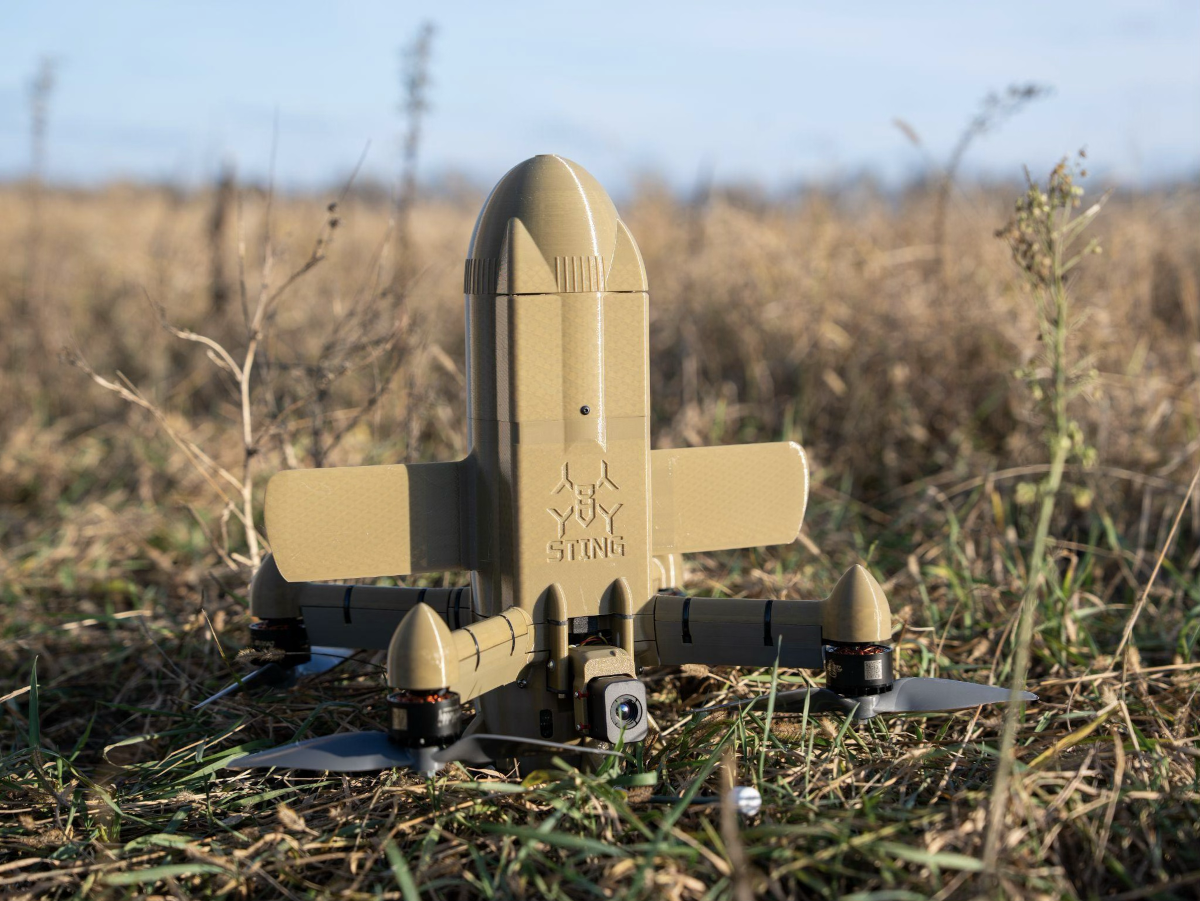
The drone manufacturer "Wild Hornets" bet on quadcopters. Numerous tests, modifications, and improvements led to the creation of the Sting interceptor, which today shoots down about 600 "Shaheds" per month. And these are only the shootdowns verified through the "Delta" system; in reality, there are significantly more.
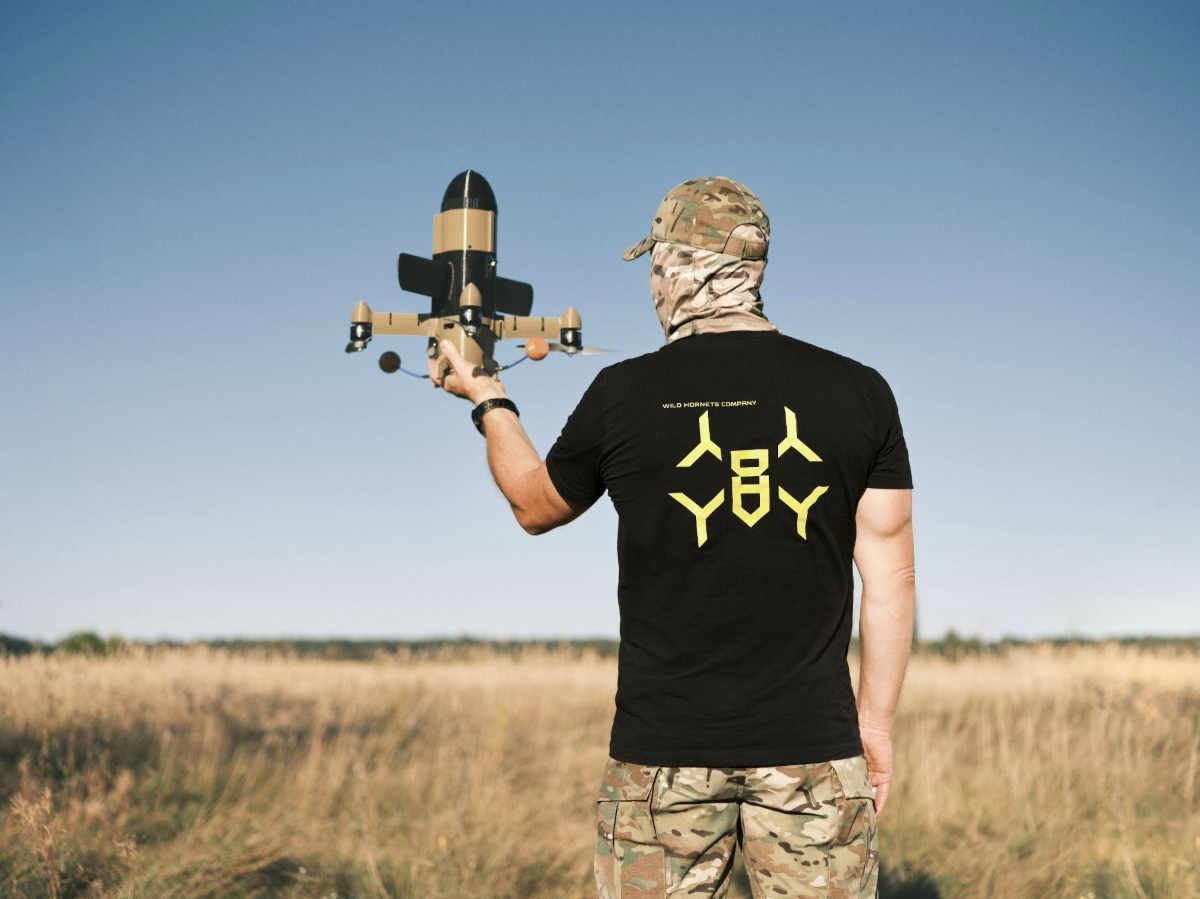
The American television network Fox News recently published a video of the Sting in action, presenting it as part of the "U.S. high-tech arsenal" in the context of a war with Iran. Ultimately, the journalists had to air a new report highlighting Ukraine’s cutting-edge development. "Ukrainians will cover us," said host Jesse Watters.
The situation in the Middle East has demonstrated the global need for effective interceptor drones and Ukrainian expertise in protecting the skies from threats posed by swarms of attack UAVs.
As part of the "Drone Industry" project, Censor.NET interviewed the founders of the company "Wild Hornets" about the path they’ve had to take, funding, cooperation with charitable foundations, China’s role in the Russia-Ukraine war, as well as the challenges they face in their daily work.
They wanted to shoot down enemy helicopters
Our interviewees recall that they began developing the anti-aircraft drone, essentially, just for fun, since they had long been experimenting with high-speed UAVs. There was no specific goal at the time; their motivation was almost like that of Olympic athletes—faster, higher.
The direction was set by the military personnel of the "Bulava" unit from the B. Khmelnytskyi Separate Presidential Brigade. One day in the summer of 2024, while carrying out a combat mission with the "Wild Hornets" FPV drone, pilot Hulk spotted an enemy helicopter—it literally flew right under the drone. He started to give chase, but didn’t have enough speed. On a whim, the soldiers asked him to come up with something. Of course—taking down a Russian helicopter worth tens of millions of dollars with a "pennies-on-a-dime" drone is practically a dream.
But what is a dream for some is a challenge for others. The "Wild Hornets" launched their R&D with a clear objective: to shoot down enemy aircraft, since helicopters were still flying in abundance within range at the time. They believed they could do it.
However, at some point, the developers sat down to crunch the numbers.
"How many helicopters does Russia have—200 or 300? About 150 of them are in action on the front lines. So where’s the economic benefit? We realized this wasn’t a scalable solution. Especially since there wasn’t a specific order," recalls the co-founder of "Wild Hornets."
In fact, that was when we decided to focus on shooting down the "Shaheds." UAVs fly slower than helicopters, there are many of them, and they are easier targets. The military supported the idea. After all, swarms of "Shaheds" were constantly flying over our soldiers’ positions, and they couldn’t do anything about them. You can’t catch up to a "Shahed" with a standard FPV, which has a top speed of 120 km/h.
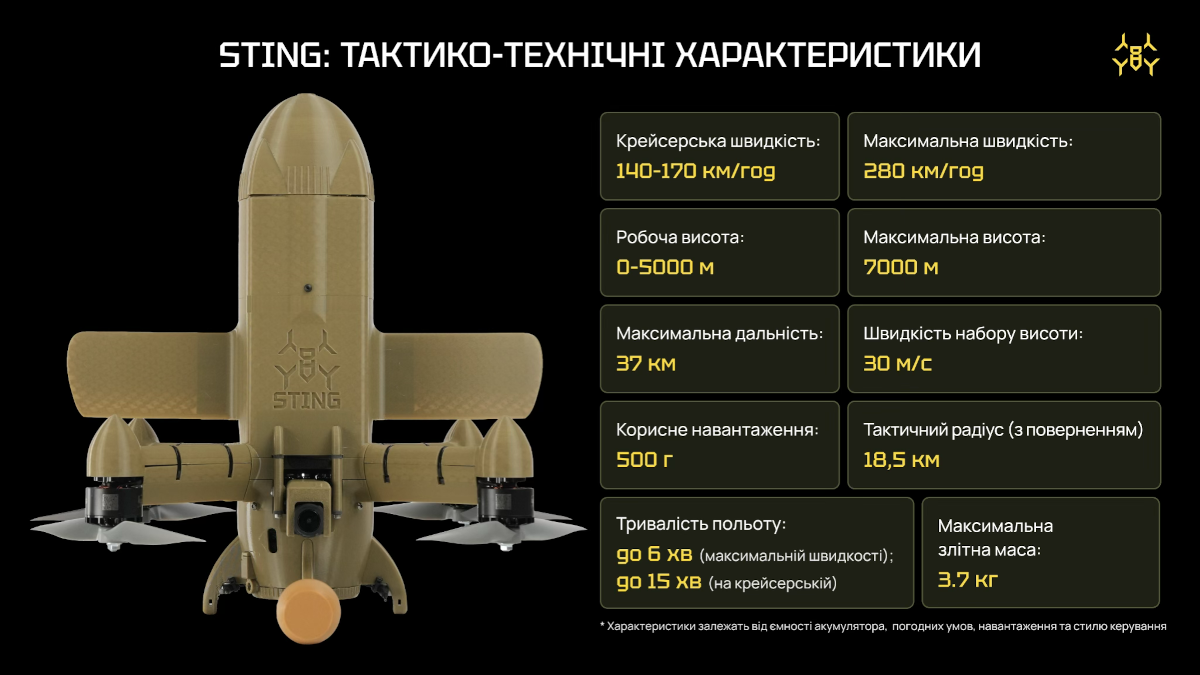
The commanders didn't understand Sting
The first few hundred interceptors were provided to the military free of charge. However, the Sting was not actively deployed at the time, as commanders had other priorities—shooting down enemy reconnaissance drones.
Only a few crews believed in the idea of using drones to shoot down "Shaheds" and managed to convince their commanders to "turn a blind eye."
Others, however, cited instructions to the effect of "according to the rules," arguing that there was only one radar and it had to be used to track reconnaissance drones, that the crews had other specialities, that operations should be conducted during the day rather than at night, and that if a downed "Shahed" fell on someone’s head, the commander would be held responsible. In short, classic military bureaucracy.
"We thought we’d make drones, give them to the military, they’d shoot down, tell us what was wrong, we’d fix the mistakes, improve the product, and that’s how we’d grow. But that didn’t happen. There was no one to work on the "Shaheds." We started forming a field team ourselves from our own employees. We made arrangements with the military to hang out with them, sort of like pirates, and use their radar. It was winter, freezing cold. Each such trip cost about 20,000 UAH: food, equipment, and clothing for the team. We also helped the military with drones and equipment. We spent half a year out there and didn’t shoot down a single thing," says the co-founder of "Wild Hornets."
In March 2025, we even considered shutting down the project, which had cost a hefty sum—around $500,000. There were no orders for Sting; the team was working just to keep the warehouse stocked and didn’t see a clear direction. Everyone who saw it praised it, but no one bought it. Funds were ready to order the new product, but only once they had evidence of systematic destruction. The only person who supported the "Wild Hornets" at that time was volunteer Serhii Sternenko. He had become passionate about this project back in the fall of 2024 and secured funding for it.
Scaling up
In April 2025, a soldier from the 38th Anti-Aircraft Missile Regiment named after General Yurii Tiutiunnyk posted a video showing a Sting missile shooting down a "Shahed." Soon, others began sending in videos of downed drones. Successful operations were reported by "Bulava" and the 425th "Skelia" Regiment. The ice had broken.
"Here's another impressive video: our friend in the military was sitting at home when he heard a ‘Shahed.’ He grabbed his Sting and the remote, went outside in his flip-flops, and shot it down on the sound," say the creators.
The video was sent to Sternenko—there were systemic crashes, so it was a working topic. He then organized a major fundraiser. That money became the first significant funding used to scale up production. Production volumes grew from dozens to hundreds per month.
The army leadership began actively supporting the concept of interceptors, recognizing the project’s potential. The number of "Shaheds" increased exponentially. While the Russians were launching about 120 attack drones per month against Ukraine at the end of 2022, by 2025 that figure had become a daily average. For example, in June, the enemy launched 5,412 "Shaheds," or an average of 180 drones per day. Additionally, the U.S. had stopped providing military aid to Ukraine at that time due to Donald Trump’s desire to "end the war." Consequently, the issue of defending the country’s airspace became even more critical.
A project that emerged and grew against all odds
"Wild Hornets" began mass production of the Sting interceptors. The pressure was immense. Everyone knew that if they failed to fulfill the order, the company wouldn’t survive. And then, out of the blue, the new owner of the building where the production facility was located decided to evict them—giving them 15 days to move out.
The drone team started looking for a new base, but everyone turned them down. And in a very aggressive manner, at that. They’d rather take in "office workers" than drone manufacturers. No one wants unnecessary risks—all it takes is for the production facility to get noticed, and enemy missiles will be flying in.
Some options were found, but they required additional renovations, for which there simply wasn’t enough time. Eventually, they settled in a space from which a "call center" had recently been evicted. We brought in the equipment and started working. But almost immediately, the head of the homeowners’ association in the neighboring building began filing complaints with every possible authority. The "Wild Hornets" were literally fending off the police every day, along with the prosecutor’s office, the SES, representatives of the KCSA, and other abbreviations.

"And on top of those inspections, Kyiv was being systematically bombed at night. Everyone was putting pressure on us because they needed interceptors," says the co-founder of "Wild Hornets."
They eventually managed to fulfill their first major order on time despite all the difficulties. And the line was already forming; the momentum had started to build. When the first batches reached the military units, Sting began to show results fairly quickly. More and more people were eager to get the product. While in June 2025, "Wild Hornets" was producing approximately 300 interceptors, by July there was a request for 900 units, and by September—6,000. And this was even before the Ministry of Defense officially codified the product.
When the government did a better job
The codification had to be done in a rush.
"Codification was a struggle for us, but that was our own fault. We weren’t ready to work with the government. We needed a large staff, but not only was it difficult to find people, we didn’t even know what kind of people we should be looking for. This is an example of when the government performed better than we did. They were constantly pushing us, keeping us on our toes, and were ready for the next stage sooner than we were. So the government did its job well and immediately placed a large order," they say at "Wild Hornets."
But working with the government is more complicated. Collaborating with foundations—which currently rank third in terms of orders, behind the government and military units—means quick order processing. They can submit a request and pay for it in a single day, and within two weeks, the "Wild Hornets" ship the products. Government contracts involve a series of approvals and a lot of paperwork. The preparation process can take a month, but orders are placed in large batches right away. And the Sting interceptors are delivering results.
For the sixth month in a row, Sting ranks first in the number of downed "Shaheds" and "Gerberas."
Global recognition
When "Wild Hornets" launched, they began publicly sharing details about their new developments. Their X (formerly Twitter) page was immediately in English. Over time, a whole community formed there, helping with donations and fundraisers for the military. Abroad, X is the key social media platform.
Top publications in nearly every country are actively writing about the "Wild Hornets." A mention on Fox News also boosted the company’s popularity. They didn’t actively seek media attention, but their latest developments caught the media’s eye.
"Foreigners were intrigued because we had unique content. The ‘Queen of Hornets’—there was no other drone like it. Once we posted a video showing the ‘Queen’ hooking onto a dead Russian soldier’s assault rifle. They we attached it to the same ‘Queen’ and used it to fire back at the enemy. The military even hung a grenade launcher on it," says the co-founder of "Wild Hornets."
When the war in Iran began and President Volodymyr Zelenskyy offered assistance in repelling shahed attacks, media coverage of the manufacturer Sting intensified. Interceptors are a Ukrainian innovation. While high-speed drones had been built before as a hobby—for example, in the United States—it was the Ukrainians who came up with the idea of using them to shoot down aerial targets, especially other drones. The "Wild Hornets" were the pioneers in this field.

However, this popularity also has a downside. Other companies began copying Sting and passing it off as their own product.
"The same form factor, the same wings—even the struts are positioned in the exact same places. We arrived at this point after spending half a million dollars and a year of testing and trials. It didn’t come easily. We have a huge problem with intellectual property rights protection in our country. And it’s not being addressed at all. The Ministry of Defense calmly codifies an exact copy of the Sting, and no one has any objections. And then these counterfeits appear on Brave Market," emphasize the "Wild Hornets."
China is like a world of its own
Sting is a Ukrainian drone, but like the vast majority of others, it uses Chinese components. These components are indispensable, since no other country in the world manufactures drone parts on the scale that China does.
"It's funny how Europeans and Americans came up with this ‘China-free’ idea, when they don't have anything of their own. The European Union produces as many thermal imaging cameras for drones in a year as Ukraine uses on the front lines in a single month. Besides, there’s the issue of price. A thermal imaging camera in China costs $400–500, depending on the model, while in the European Union it’s 2,000 euros—and you can’t even buy it there because it’s a dual-use item," explains the co-founder of "Wild Hornets."
There is essentially no alternative. Copper wire, magnets for motors, rotors, circuit boards, transistors—it’s all made in China. This is a disaster for global security.
China is often called Russia’s ally in the war against Ukraine. Ukrainian defenders have even taken Chinese citizens fighting in the Russian army prisoner. However, according to the "Wild Hornets," the Chinese are "playing both sides" in the conflict.
"As soon as they choose a side, we're all doomed. China is learning very quickly. It constantly analyzes and refines all of our combat experience. The Chinese are very quick to incorporate improvements into their equipment. They've made significant strides in terms of quality, particularly when it comes to components. The same cameras we used two years ago were nothing special, but now they’re on par with top-tier NATO models. You can’t buy a camera like that in NATO because it’s military-grade equipment. In China, anyone can buy it," says the co-founder of "Wild Hornets."
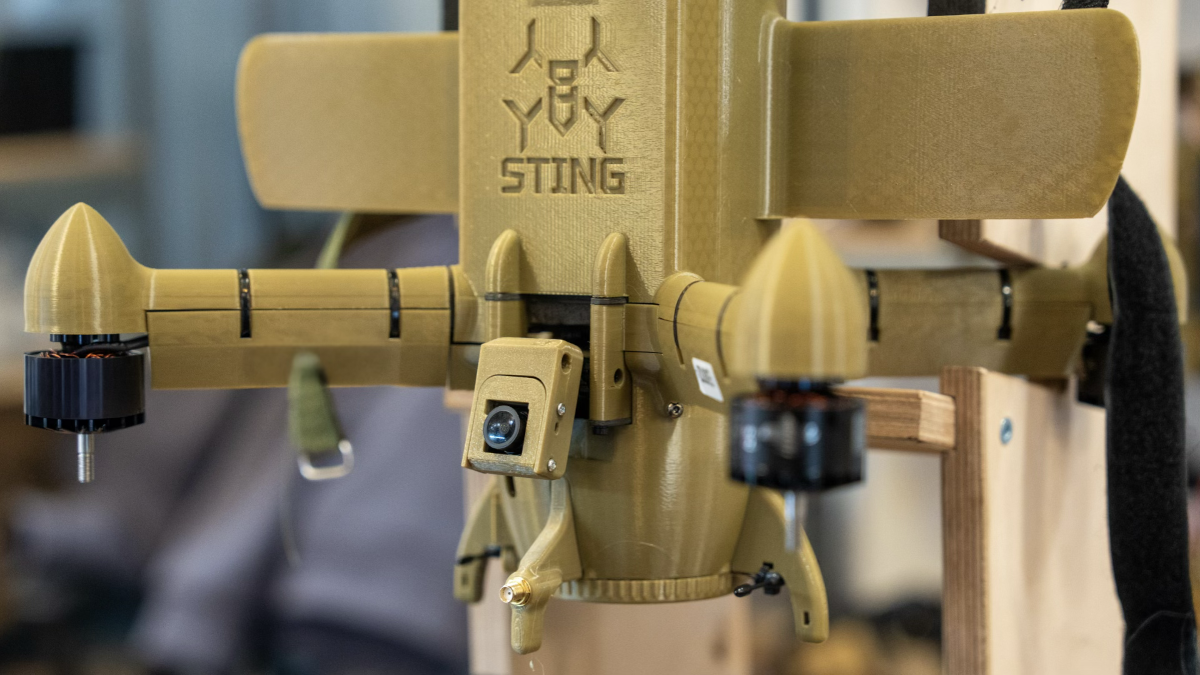
The Chinese are capable of manufacturing anything in any quantity; their machine-building industry is highly advanced. The manufacturer Sting purchases their CNC (computer numerical control) cutting machines—this is very high-tech equipment. To import such equipment from Europe, special permits are required.
"Suppliers who work with China have told us that the Chinese are willing to do anything for money. When asked, ‘Who is the head of your family?’, they reply, 'Whoever earns the most.' They are asked, ‘And who is your God?’ They pull out a dollar and say, ‘Here is our God,’" our interlocutors say.
At the same time, domestic production of components in Ukraine is developing quite rapidly. However, domestic products still lag behind in terms of production volume. We are just beginning to embark on this path, while the Chinese have already passed it.
The sheikhs are willing to pay any amount
Recently, reports have emerged in the Western press that Saudi Aramco, the world’s largest oil company, is in talks with at least two Ukrainian companies regarding the purchase of interceptor drones to protect its facilities from Iranian attacks. The authoritative publication The Wall Street Journal mentioned the companies "Wild Hornets" and SkyFall (manufacturer of the P1-SUN interceptors) in its article.
"Wild Hornets" refuted the American journalists’ report. However, they acknowledge that inquiries have been made. Every day, they receive a dozen such messages from Gulf countries, with sheikhs leaving their contact information, willing to pay any price.
"All these years, the Gulf States have been under U.S. protection and haven’t developed their own defense industries; there was a lot of corruption involved in that. They come here, say they have a lot of money, and insist on buying this or that. They also have this notion that all it takes is the push of a button to be protected. They came to Ukraine for our experience, because we were the first to use ‘Shaheds’ against us, and now they’re using them against them. Where else can they go? There’s no solution in the U.S.," explains the co-founder of "Wild Hornets."
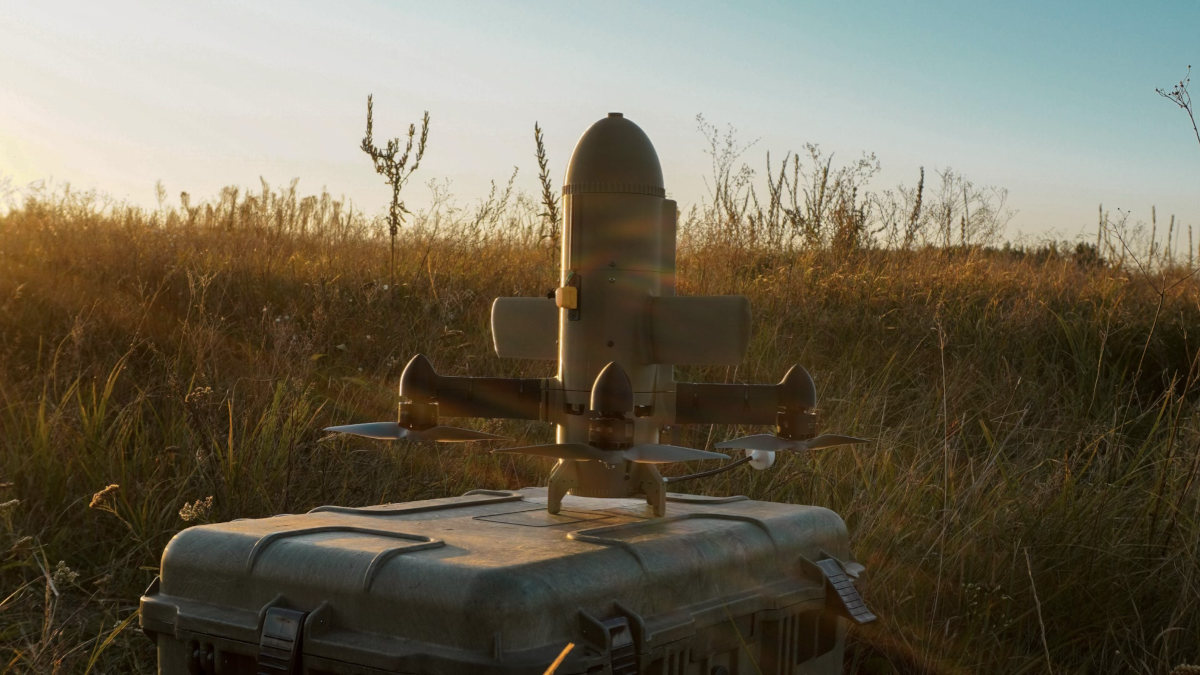
Their company receives inquiries due to the large number of videos showing successful shootdowns of Shahed drones. However, the Ukrainian manufacturer is not interested in any of these offers at this time. They say they could apply for an export license, but they aren’t even considering that option.
After all, there is a great need for high-quality interceptors on the domestic market; there is a shortage of them in Ukraine itself. Sting is currently the most effective interceptor, shooting down "Shaheds" at a ratio of 2:1 on average—that is, two sorties for every enemy drone.
"We have big commitments. There's high demand for our product. If we double production now, people will come to us and ask us to do it again. We don't see a ceiling. Our goal isn't money, but to make a high-quality product that really shoots down everything," they say at "Wild Hornets."
People and premises are manufacturers’ pain points
Scaling up production is being hampered by two problems: a shortage of people and a shortage of production facilities. No one wants to lease anything to weapons manufacturers, as owners fear they could be left with nothing. There are simply no insurance mechanisms for such cases. This could be resolved at the legislative level by requiring owners of production facilities to lease them first and foremost to defense industry enterprises, while offering state-backed insurance against war risks in return.
Lawmakers, however, are not considering this option and instead propose building facilities in villages. But first, there is no time for that, and second, the enemy will know the very next day that a drone production site is located there, meaning several missiles and dozens of Shaheds are guaranteed. The underground facilities remaining from Soviet-era factories are simply unsuitable for modern manufacturing. Nor are these spaces readily offered.
The second problem is human resources. It is very difficult to find qualified workers in large numbers, and there are fewer and fewer of them. Occasionally, those who are able and willing to work face issues with military registration. A mechanism for temporarily exempting such workers from mobilization should help address this problem.
"Sociologists talk about immigrants from Bangladesh and Pakistan, but a person has to be competent. This is precision weaponry, even if it is disposable and inexpensive. We need brains that are motivated by more than just salary. And what guarantee is there that these technologies will not be taken to somewhere like Pakistan?" said the co-founder of Wild Hornets.
The company has a large HR department. Candidates are required to undergo polygraph screening. They are also subjected to OSINT vetting. Having in-house OSINT analysts is already a basic requirement. Many candidates are filtered out, including some who could be spies. Industrial espionage is something weapons manufacturers face every day. There are also "waiters" — people who campaigned for the "Russian world" on social media.
"There seem to be plenty of people, but once you start screening them, very few make it through. And it is not just about spies and Russia sympathizers. There is also petty theft, alcoholism, drug use, and gambling addiction. When you look through polygraph results, you are surprised by how many banned substances people use. There was one case when a person showed up on their first day at work with signs of alcohol intoxication. He said he had been celebrating getting the job. That is how we live," the co-founder of Wild Hornets said.
Another issue is VAT. Imported drone components enjoy tax breaks, but while some are imported under preferential terms, others that enter the market do not qualify for these breaks and are sold with VAT included. It incurred even if the required components are manufactured in-house. As a result, at times it is cheaper to import from China than to produce in Ukraine. What is more, it is more cost-effective to move production to Poland or the Czech Republic and then import the parts from there under preferential terms without VAT. Again, that ends up being cheaper than domestic production.
In the end, the necessary parts often have to be bought from individual entrepreneurs who are not VAT payers, since this tax is not charged on the final product. So buying components on normal market terms means taking a direct loss.
At the same time, manufacturers stress that the state is open — it is willing to engage in dialogue, and working meetings are held on a regular basis. No one is asking for bribes; the available mechanisms function as they should, but when a problem arises, it is unclear who is supposed to solve it.
"The state is indeed doing a lot to develop the defense industry, but there are nuances, such as premises and VAT on domestic production. These issues can be resolved relatively easily, and that would provide a serious boost for even stronger growth," Wild Hornets says.
The West needs Ukrainian technologies, not Ukrainians
One often hears the view that Ukraine does not produce anything truly high-tech, that all these technologies have long been known abroad. Yet the West is ready to covertly take out not only samples of our weapons, but also engineers, tempting them with hefty sums that few in Ukraine can offer. Western companies usually have no interest in building joint ventures, as they do not need Ukrainians as what they see as an extra link in the chain.
"They do not see us Ukrainians as partners. There was one case. In the United States, there is a program called Drone Dominance. Ukrainian manufacturers went there for a competition where they could win a Pentagon contract. But there were conditions in the event of victory. First, all Chinese components had to be replaced with American ones or with components from the list of approved countries. Second, a company had to be opened in the United States, somewhere in Alabama or Nevada. Third, 80% of that company had to belong to Americans. They do not care that this is, in essence, the export of military technology, which is prohibited by law. They say they will ‘sort everything out,’ and then it will no longer be Ukrainian technology," said the co-founder of Wild Hornets.
As soon as you open production on the territory of a foreign state, our interlocutors stress, you are no longer a Ukrainian manufacturer, but a local one. And you will be subject to that country’s laws. At any moment, your products may simply be blocked from leaving, even if they are being counted on in Ukraine.


