


Europe fears consequences of Trump’s meeting with Putin and Xi: preparing for all scenarios
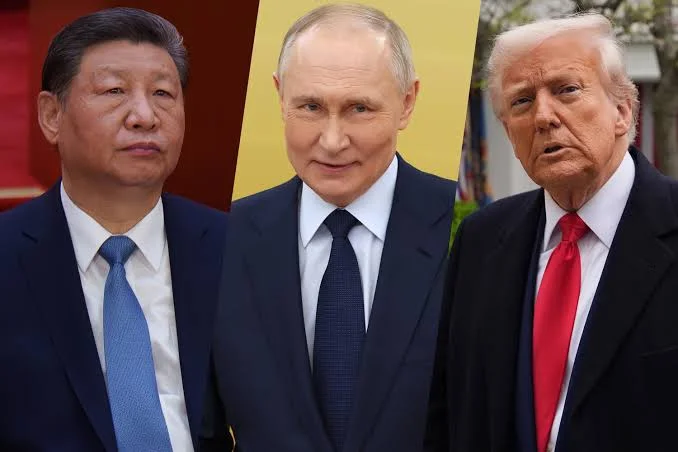
European officials fear that U.S. President Donald Trump may make statements or reach agreements during his meeting with Russian dictator Vladimir Putin and Chinese leader Xi Jinping that would harm the interests of Ukraine and Europe. U.S. allies are preparing for various scenarios and do not rule out unpredictable outcomes from the summit.
According to Censor.NET, citing Axios, European diplomats fear that Trump may deviate from the previously agreed-upon negotiation plan.
According to European officials and Western diplomats, the greatest concern stems from possible statements by the U.S. president regarding Ukraine and Taiwan. Such statements could run counter to the interests of Washington’s allies or give the impression that the U.S. supports the positions of Moscow and Beijing.
"We know that every time President Trump speaks with Putin or meets with him, it results in bad news for Ukraine and Europe. We are preparing for anything," said one European diplomat in comments to Axios.
Trump changed his plans regarding the summit topics
Initially, the main purpose of the trilateral meeting was to discuss nuclear disarmament.
However, before departing for the Philippines on Monday, November 16, Trump stated that summit participants would also discuss Iran and Ukraine.
"We'll talk about my favorite topic—Ukraine," said the U.S. president.
This statement came after U.S. officials assured during a briefing on Friday that the war in Ukraine would not be on the agenda for the meeting. Chinese officials had previously expressed the same position.
Europe does not want a repeat of the Yalta Conference
The upcoming summit between Trump, Putin, and Xi Jinping was discussed behind closed doors during a meeting of European leaders in Dublin last week.
Some participants expressed concern about possible statements by the U.S. president regarding the war in Ukraine. German Chancellor Friedrich Merz raised this issue most actively. Ukrainian officials also voiced similar concerns.
According to Axios, U.S. officials tried to lower expectations for the summit and convince allies not to expect significant results from the meeting.
At the same time, Washington’s European partners fear that the talks could give the impression that the three leaders are agreeing to divide the world into spheres of influence.
Some of the publication's interviewees referred to this scenario as "Yalta 2.0." They drew a parallel with the 1945 Yalta Conference, which shaped the postwar order in Europe.
Earlier, German Chancellor Friedrich Merz urged Trump not to spring any surprises during his meeting with Putin. He stressed that the U.S. must continue to work together with Ukraine and Europe.
At the same time, according to Axios, U.S. Special Representative Steve Witkoff and Jared Kushner plan to meet with Ukrainian and European officials in Berlin on November 19. Among the main topics of discussion are security guarantees for Ukraine and its postwar economic recovery.
This meeting is scheduled to take place on the same day as the summit between Trump, Putin, and Xi Jinping. It is expected to be held on November 19 on the sidelines of the Association of Southeast Asian Nations (ASEAN) summit.


