


NATO has rejected Kremlin’s demand that Alliance return to its 1997 borders: Rutte described it as unacceptable
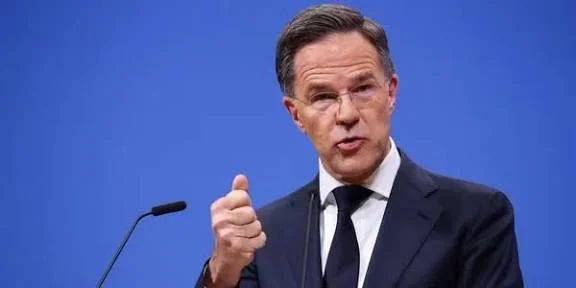
NATO Secretary-General Mark Rutte categorically rejected Russia’s demand that the Alliance return to the limits of its military presence as they stood in 1997. According to him, none of NATO’s members consider it acceptable to revise the European security architecture on the Kremlin’s terms.
This is reported by The Guardian, citing a statement made by Rutte during a meeting of the NATO Parliamentary Assembly in Berlin on 23 November, according to Censor.NET.
"We all understand perfectly well that the proposals put forward by Russia in 2021 effectively call for NATO to revert to the situation as it stood in 1997. This is unacceptable. And there is no one in NATO who would consider this a good idea," the Alliance’s Secretary-General emphasised.
Rutte has thus rejected one of Moscow’s key demands, which is calling for a review of NATO’s military presence in Central and Eastern Europe.
What Russia is demanding of NATO
The Kremlin is insisting on a return to the security arrangements of 1997, when most of the countries of Central and Eastern Europe had not yet joined the North Atlantic Alliance.
This primarily concerns restrictions on NATO’s military presence in countries that joined the Alliance after 1997, as well as the cessation or significant curtailment of the Alliance’s cooperation with Ukraine and other post-Soviet states.
According to media reports, the Russian side raised this issue again during negotiations on ending the war against Ukraine, notably at meetings in Abu Dhabi and during discussions with representatives of US President Donald Trump’s administration.
Some reports also referred to Moscow’s demands regarding Finland’s NATO membership. At the same time, the Finnish authorities emphasised that the country’s membership of the Alliance could not be the subject of negotiations with Russia.
How NATO expanded after 1997
In 1997, the North Atlantic Alliance comprised 16 states. It now comprises 32 countries.
Following the end of the Cold War, Poland, the Czech Republic, Hungary, the Baltic States and other countries in Central and Eastern Europe joined NATO.
The most recent members to join the Alliance were Finland in 2023 and Sweden in 2024.
At the same time, Russia’s demand to return to the 1997 configuration does not necessarily mean the formal exclusion of these states from NATO. Above all, Moscow is seeking to restrict the deployment of the Alliance’s forces and military infrastructure on their territory.
Under Article 10 of the North Atlantic Treaty, decisions on inviting new members are taken unanimously by NATO member states. Russia does not have a right of veto over the Alliance’s enlargement, as provided for in the Treaty.
Rutte commented on the Russian missile strikes on Poland
During his speech, the NATO Secretary-General also commented on the violation of Poland’s airspace by three Russian X-101 missiles on 20 November.
He described the incident as dangerous, but refrained from drawing any conclusions as to whether the intrusion had been deliberate.
"It is clear that this is a dangerous incident. It originated in Russia. Whether it was deliberate is a matter for the relevant authorities to determine. I never speculate," said Rutte.
According to him, NATO will be able to comment in more detail on the circumstances of the incident once it has received the evidence currently being analysed jointly by Poland and other Alliance member states.


