



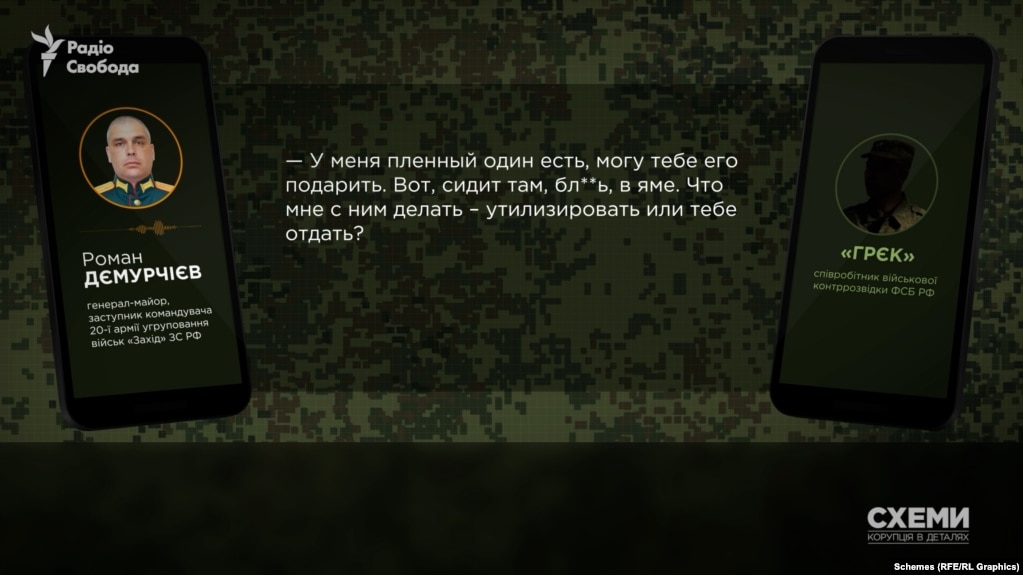
Correspondence of Russian General Demurchiev made public: "I have prisoner—should I liquidate him or give him to you?". PHOTOS
Journalists from the "Schemes" project (Radio Liberty) obtained a large collection of correspondence and voice messages from Russian Major General Roman Demurchiev, deputy commander of the 20th Combined Arms Army of the Russian Armed Forces, which operates in the Lyman direction, among other places.
The journalists verified the authenticity of the materials with the help of the US National Centre for Media Analysis and the international data research centre DARC, and also compared them with events from the war, according to Censor.NET.
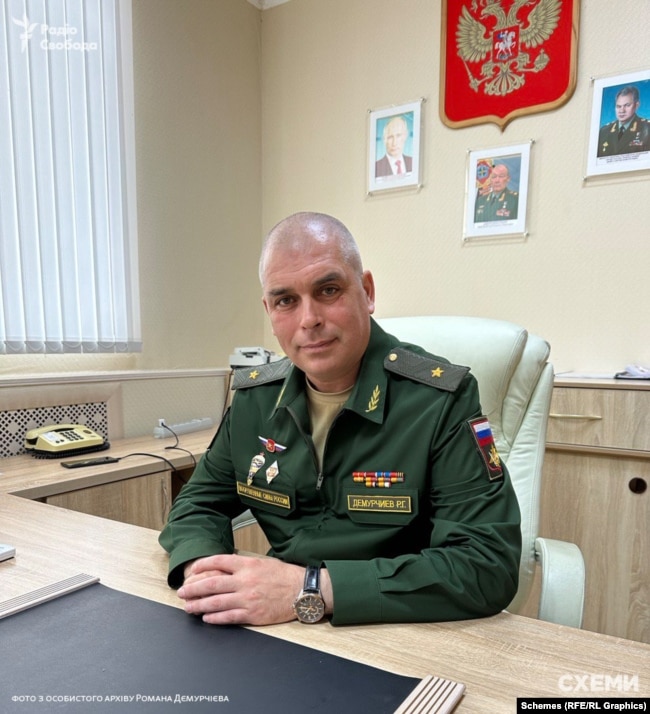
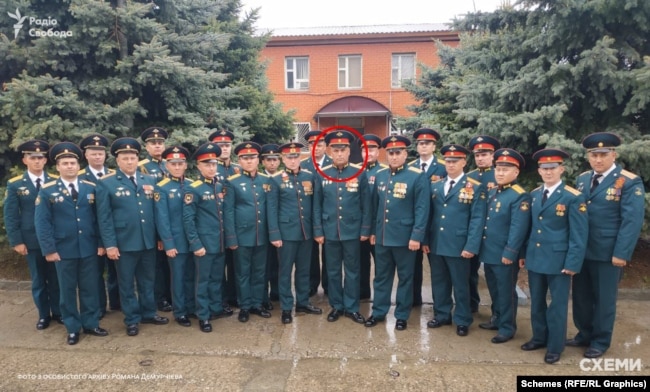
Details
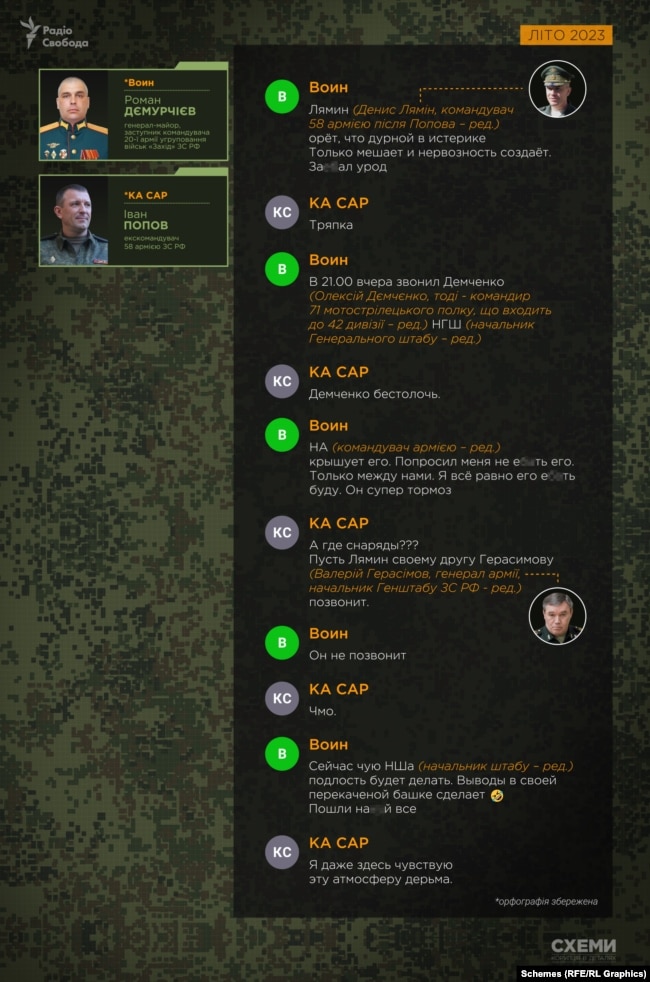
The investigation provides an unprecedented insight into the internal culture of the Russian army: in text messages and voice recordings, the general sharply criticises the Russian command, the special services and the attitude towards his own soldiers. He calls the training of troops "zero", expresses dissatisfaction with the actions of the leadership and does not hold back his emotions about the army's policies and tactics.
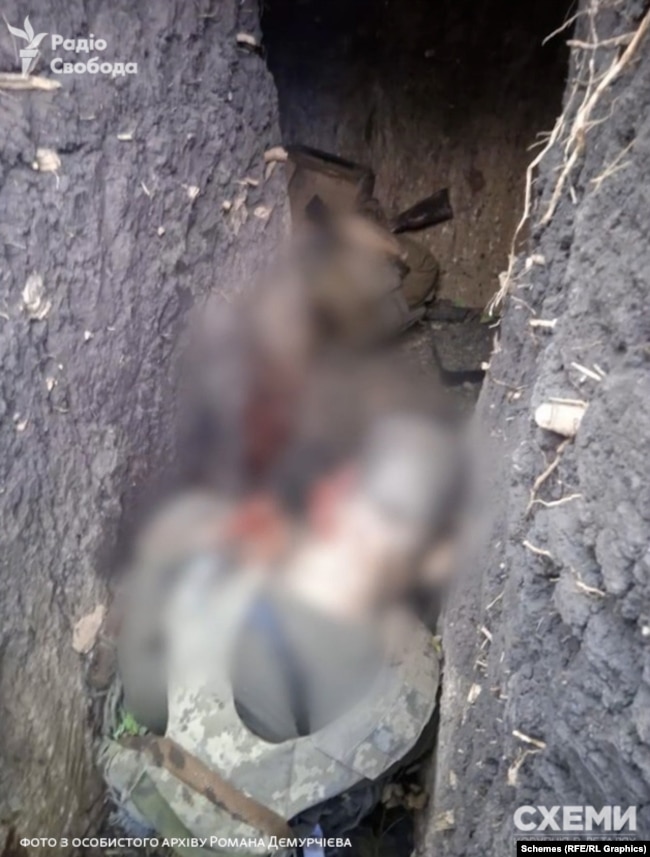
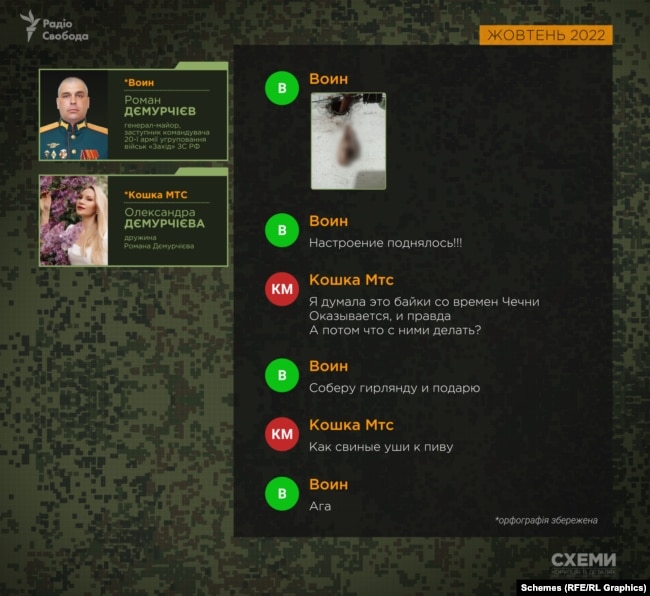
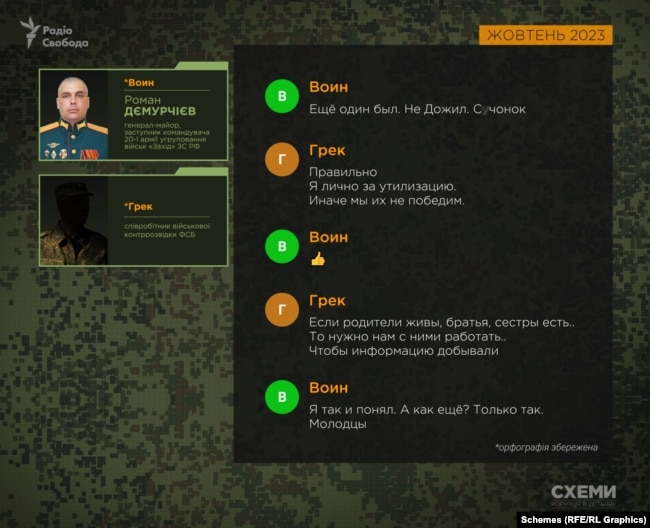
Journalists paid particular attention to fragments in which Demurchiev discusses the condescending attitude towards Ukrainian prisoners of war and mentions brutal cases of torture and murder. In particular, in his correspondence, he sends photos of body parts of prisoners and videos in which former prisoners serving in Russian units beat Ukrainian fighters who have already laid down their arms. In conversations with a representative of Russian military counterintelligence, he discusses "working with relatives" of prisoners to obtain information.
In his messages, the major general also allows himself to make harsh statements about the work of Russian special services and other military leaders, calling them "rooster offices" and losers.
Journalists emphasise that Demurchiev's correspondence and notes are not only a chronicle of the daily internal life of the Russian army, but also an indirect record of possible war crimes against Ukrainian prisoners, which the general refers to as normal everyday occurrences.


