



Ryan Collins - American from the International Legion - There is not only one army in Ukraine. Without volunteers wouldn’t be possible anything
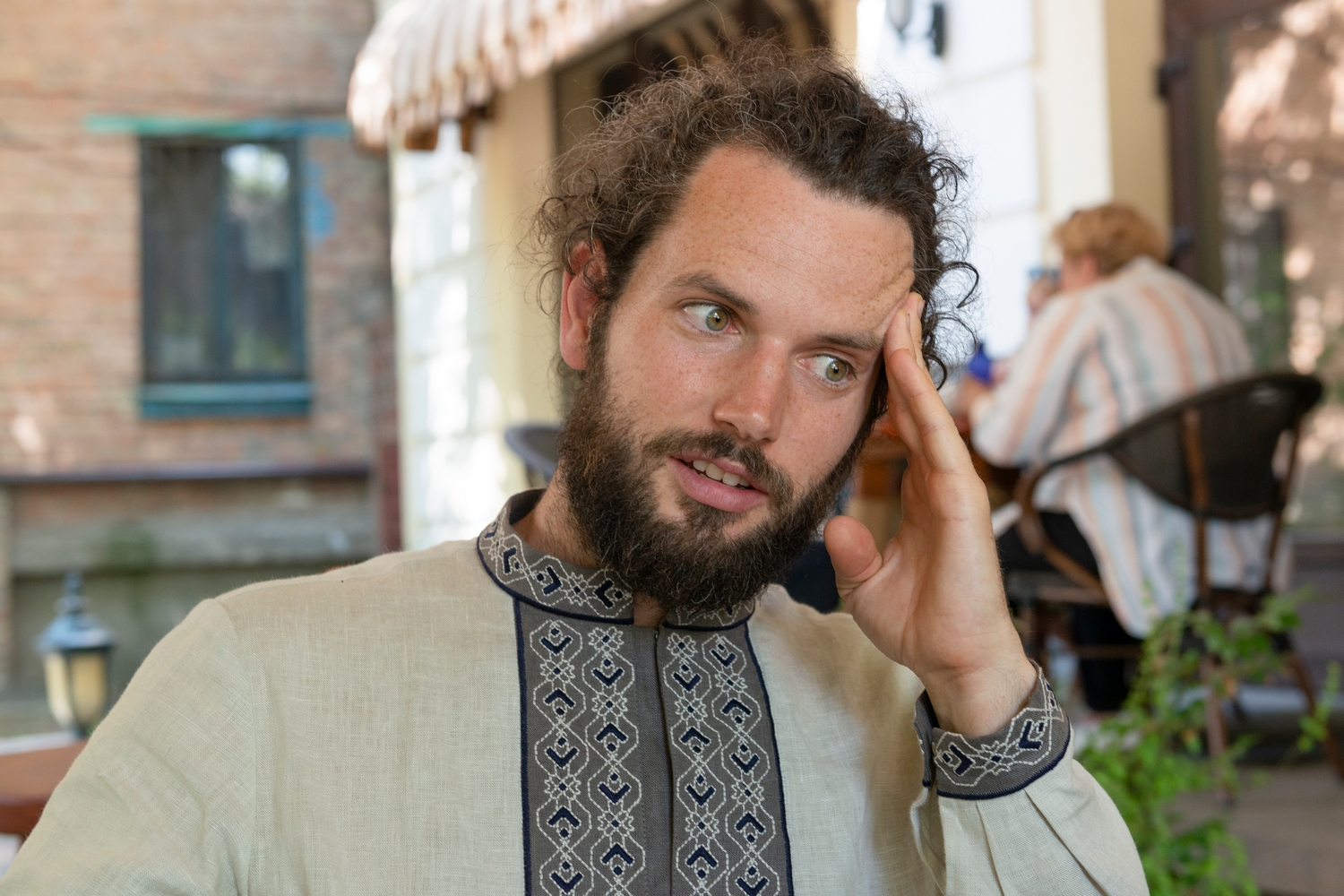
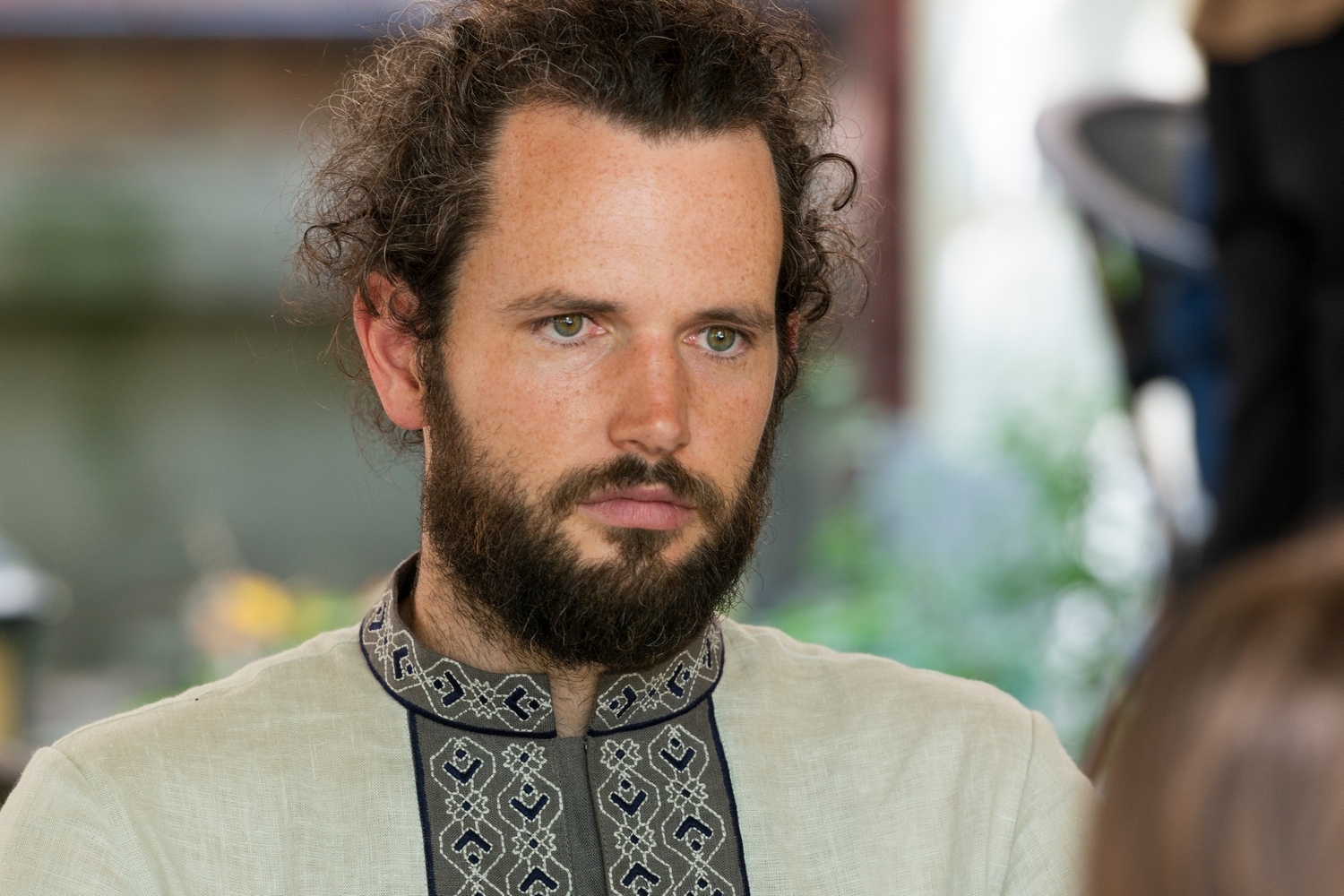
With Ryan Collins, an American from Wyoming, we met on a hot summer day in Kyiv, where he arrived to get the new car for his squad from the volunteers.
At the end of February 2022, Ryan left his business in Georgia and travelled to Ukraine to serve in The International Legion and help the Ukrainian people fight for their country. We have discussed what motivated him and what he thinks about The International Legion.

Hi Ryan, It is a pretty unusual situation when somebody from The International Legion is willing to talk with the media and even show his face and uncover his name. What is the reason for this openness?
It is not because I am or am not a legionnaire that I chose to speak. It could have just as easily been that I was in a Ukrainian military unit or humanitarian organisation. I speak out because I want Ukrainian people to know I am with them.
Is it your first war?
Yes. I have no prior military experience, but I have been shooting since I was a small child. I was five years old, my granddad gave me my first bb gun rifle, and when I was 10, I got my first real rifle, bolt action 22 calibres. Since then, I spent my weekends in my parent's countryside home just shooting all the time – thousands of rounds. I enjoyed it a lot when I was young. And when I was older, I got into precision long rate shooting. I was pretty good at it.
Why did you decide to join the Legion?
I lived in Ukraine for a couple of years before launching my skiing guiding – backcountry skiing company in Georgia. And after I lived in two countries – half of a year I spent in Ukraine and another – in Georgia. When the war started, I understood that it was going to be a nightmare for my friends in Ukraine. I feel closely connected to them and this country. I felt that I should be here because I want to be a part of Ukraine
For how long have you been there?
I think I left on 25-th or even 24-th from Georgia. I returned from the mountains with clients and saw that invasion had begun. I made my plans and got the next flight I could find. It was challenging to get here only because it was hard to find a flight on such short notice from Georgia to Poland. Many planes were booked up because many Georgians also came to Ukraine. So I have to fly from Georgia to Frankfurt, from Frankfurt to Barcelona, and finally from Barcelona – to Krakow, then to Ukraine. It wasn't difficult to get here, but it was a long journey. I think I came to Ukraine on February 27. While I was moving, The International Legion was created. It didn't exist when I left. I figured out that it would probably be the only legal way for me to get involved and help Ukraine as a part of the Armed Forces. After the training, I've been on the Eastern front for a few months.

How long do you plan to stay in The International Legion?
I'm planning to stay at least a year.
Do you have a lot of rotations?
It's hard to say, but the opportunity for rest exists. Actually, in our squad, no one wants to have a rotation right now. Everyone wants more opportunities to fight.
Do your family know you are in Ukraine, and how do they react?
I'm an only child. My mother knows that I'm in Ukraine, and she is supportive. She has always been supportive of whatever I choose to do. It's not as if my job before was a safe one. Working as a ski guide in the backcountry is also a dangerous job. So I think a long time ago, she accepted that she has be ok with what I am doing, and she has also been supportive in this case. My grandma doesn't know. My mom was the one who made the decision we shouldn't tell her.
What dangers have you come across?
Explosions, artillery, mortars and stuff like that… Those dangers are obvious on the front lines. Sometimes it is better, sometimes it is worse. There are those things - landmines creating fear because you can't fight against them, you can't shoot them, and it just lurks around so that it is the very danger that everybody has to face. Dangers... The typical ones…

There is no such person who has never experienced fear. How do you cope with fear on the front line?
Humans can adapt to different circumstances. It's nothing special about me or everybody. Actually, if you look at everyone in Ukraine, you can see that this is true that everyone adapts to what they must and when you join the military, you kind of been given a job and the danger that comes with the job becomes something that you adapt to. It does not mean that it is easy, of course, but it is possible.
How is the Legion handling losing people?
It's always difficult. But the organisation is doing a good job with everything.
Have you read the article about the mistreatment in the Legion? Have you encountered some things that were written about, like misconduct or criminal behaviour orders?
Yes, I have seen this article. What could I say? I did not encounter those things in our branch of The International Legion, which is under the Armed Forces of Ukraine. Sometimes war could be like a magnifying glass that reveals certain things, but I suppose that it does not mean that there is a common problem that is spoiling the whole Legion.
What is your opinion about the Legion?
You know it is not a summer camp. It is war. Sometimes you have your own ups and downs. But the main point is – it is an unbelievable thing going on in Ukraine! How you have managed to maintain and train in the middle of the war an absolutely new unit from zero! It has never been done by any country in any war before. For example, the French Foreign Legion wasn't created overnight in the middle of the war. This is something really unusual.
Now you came to Kyiv to bring back a car to your squad. Does it mean that you lack equipment?
Now I am in Kyiv because we have bought a car in Britain and volunteers helped us drive it here. The military is doing a good job in providing us with the basics of what we need and arming us, but the better equipped we get, the better chances we have for survival and the more tasks we can provide. Thanks to the volunteers, it gets better all the time. For example, everybody should have body armour and basic things like this, but if you start to have more tools, you can have more tasks, and fewer people can accomplish more things, so you become more efficient. So more equipment, tools and learning how to use them are getting better as time goes on. And more it improves, – more balance on the asymmetry because there are a lot more russian soldiers than us, and each of us needs to be better equipped, better trained and more motivated.

What do you lack the most on a frontline?
Probably the most advanced communication equipment – long-distance radios, satellite radios – things like that, because it is very expensive and not even all regular army units have it. So we have a lot of needs for expensive technology stuff. We can use our own money to buy 2000$ dollars drone – it's ok, we can pull our resources. But a 20 000$ drone or 20 000$ man-pack radio is not possible to afford on our own. And also, for the Ukrainian army, it is a difficult task – during wartime, to equip every unit with those things is really hard. We have personal pretty good radios, and we also have a couple of vehicle radios for which I build - long-distance communication antennas. We did not have anyone who knew anything about it, so I learned how to do it
What do you think about how Ukrainians faced the war?
There is not only one army in Ukraine. Without all volunteers, nothing would be possible. This is why Ukraine could fight back against such a large overwhelming force because you know there are Armed Forces and an army of people behind them who are giving everything that they have to support the war effort. And this is a difference maker in terms of morale and terms of supplies, equipment and problem-solving.
From your personal experience: why is the Ukrainian army successful?
Creativity, motivation, and do it yourself attitude. Meeting the obstacles they face, they only find creative solutions for everything. The biggest advantage they have is that, in some ways, the Ukrainian army could act in a decentralised way. Sometimes it may seem chaotic, but it provides many opportunities for solutions, responding to things quickly and without that much bureaucracy. They are very creative, and everyone is motivated to try to do something better and solve the problem. People are there for a reason. It's a big difference maker.

What do you think about the russians?
As for me, I probably have a different perspective than a lot of Ukrainians who understandably have a lot of anger and even hatred towards russians because of obvious reasons. It is not just because of a russian army it is also because, at the very least, the apathy of russian people or attitude of fatalism 'oh, what can we do about this? - nothing.'
I do not hesitate to think they should be removed from Ukraine by force by whatever means necessary, but I wish they would save themselves because it is a waste of human life.
I don't have hatred for russian people. I wish they would go home, refuse to fight and turn their weapons on their commanders. I wish they would take their destiny into their own hands instead of subscribing to this fatalism, to this ideology which is dead-ended and so pervasive…
How has being in the war zone changed you?
It's a question that is hard to answer now. I can't say yet. I'll have to have time to look at that back after the war. Now I don't feel any changes, or at least I can't perceive them from this point where I am now. Maybe… sensitivity to loud noises, but this is just basic stuff.
What of the things you saw you are likely never to forget?
Ukrainian man during bombardment still in his field working on his tomatoes. I will never forget this.
What do you think, is it possible to return to ordinary life after the war?
There is a saying that you can't leave the war. It would depend on how things go in the next year or two. A total victory for Ukraine will feel different if there is still some lingering war in Europe. We will have to see. I think that I would go back pretty normal. It won't be the same, but on the other hand, I share it with everyone in Ukraine, so it is not like a lonely feeling; everyone would be different.
What are your plans after the war?
I hope to receive Ukrainian citizenship, and I would like to continue spending much of my time here. I don't know if it would be after the war or my period here. It depends on how things are going. I don't know if it will be the same time when I finish. I feel if I finish with the Armed Forces and the war is not over, I will find some other way to help on the civilian side. If we are reaching peacetime, I would like to spend half of the year in Ukraine again and rejoin my business because it is a unique project. I do not want to give up on the sense of community I have with the people that we do it – we go out, explore, and do what we love. The business is only a way to sponsor us doing it. I suppose that after the war, I will continue to enjoy my life.
Anna Vakhotska for Censor.NET.
Photo credit Julia Burlachenko/Ryan Collins


