



How a Business Conflict between ACP and GNT Group in Ukraine Turned into a Potential Top Corruption Case

Russia’s all-out invasion of Ukraine gave rise to additional issues for Ukrainian businesses in the context of corporate conflicts.
Settling loans became an objectively complex issue. However, the loan discipline is inexorable. One has to pay sooner or later. Often, foreign partners meet Ukrainian companies facing difficult conditions halfway by restructuring loan payments.
This is why the business circles were somewhat puzzled by the conflict between the Argentem Creek Partners, a foreign company positioning itself as a U. S. fund, and the GNT Group, the Ukrainian holding company that owns a huge grain terminal in Odesa Commercial Seaport.
The dispute between these companies affects investors’ perception of the realities of doing business in Ukraine. Business needs the rule of law and the absence of total corruption among those in power because corruption destroys the rule of law.
In addition, Davyd Arakhamia, the chair of the Servant of the People faction in the Rada and the chair of the supervisory board of UkraineInvest, Ukraine’s Investment Promotion Office, can bear a relation to the Argentem vs. GNT conflict.
Unexpected Coercion
On December 23, 2022, the Argentem Creek Partners (ACP) declared that it was foreclosing the loan they granted the GNT Group back in 2019.
The creditor explained this drastic step by the holding company’s lack of transparency.
In turn, the Ukrainian company accused the Argentem of corporate raiding and an attempt to take away the company’s assets and resell them to an interested buyer.
Also, the GNT claimed they were ready to settle loans with the ACP, but the foreign company was not interested.
Over the three months of the conflict, the companies exchanged numerous arguments one against another. Eventually, their dispute will have to be settled by the London Court of International Arbitration – it will examine which party is formally right.
What Are the Argentem?
Usually, the Argentem Creek Partners are referred to in public as a U. S. hedge fund. In fact, however, it is a private limited company incorporated in the UK. However, it does have its head office in New York.
Its founder and management are Americans. The company specializes in business lending in high-risk markets.
Loans are provided through funds set up in offshore jurisdictions and controlled by the company. For instance, the company has such funds in the Cayman Islands.
The ACP’s business is finding companies desperate for funding and holding valuable industrial assets.
The lending terms are quite strict, with the collateral being several times as high as the loan granted. If the debtor faces problems, they are not interested in having the loan restructured and repaid gradually.
The Argentem’s strategy is to collect the debt via the courts, for instance, by establishing control over the valuable industrial asset followed by its highly profitable resale.
The ACP are very experienced in pursuing such cases by exerting legal pressure against its opponents in foreign courts. In particular, there were disputes of this kind in respect of the assets of Grupo Virgolino de Oliveira, a sugar and ethanol producer from Brazil; Tristan Oil, a Kazakh oil and gas producer; and Berau Coal, a coal mining company from Indonesia.
In Ukraine, the Argentem are known as a creditor of the Mriya agroindustrial holding company.
Was There an Investor?
In the GNT Group’s case, the ACP presented themselves as an investor investing US$ 75 million into the Ukrainian company rather than as a creditor.
In 2020, Argentem as an investor initiated the establishment of a Board of Directors in the Ukrainian holding company and appointed two directors, Bohdan Khomiak and Oleksii Pavlenko.
However, the ACP can hardly be considered an investor. By all indications, there was a loan granted on fairly stringent terms.
At that time, the GNT Group had to close out its prior EBRD loans and buy out the interest of its foreign partner that rolled down its investment operations in Ukraine after investing dozens of US$ million in developing port infrastructure. Volodymyr Naumenko and Sergiy Groza, the holding company’s owners, told about it in more detail in their Business Censor interview.
"The creditors gave us two lines of credit to the tune of US$ 75 million against the pledge of the company’s corporate rights, whose value exceeded the loan amount severalfold. The money was used to repay the EBRD loan and buy out the interest from CHS Inc... We planned for short-term technical loans till the end of the year 2021. We needed time to find a proper partner or raise long-term financing for developing the GNT Group’s business," they explained.
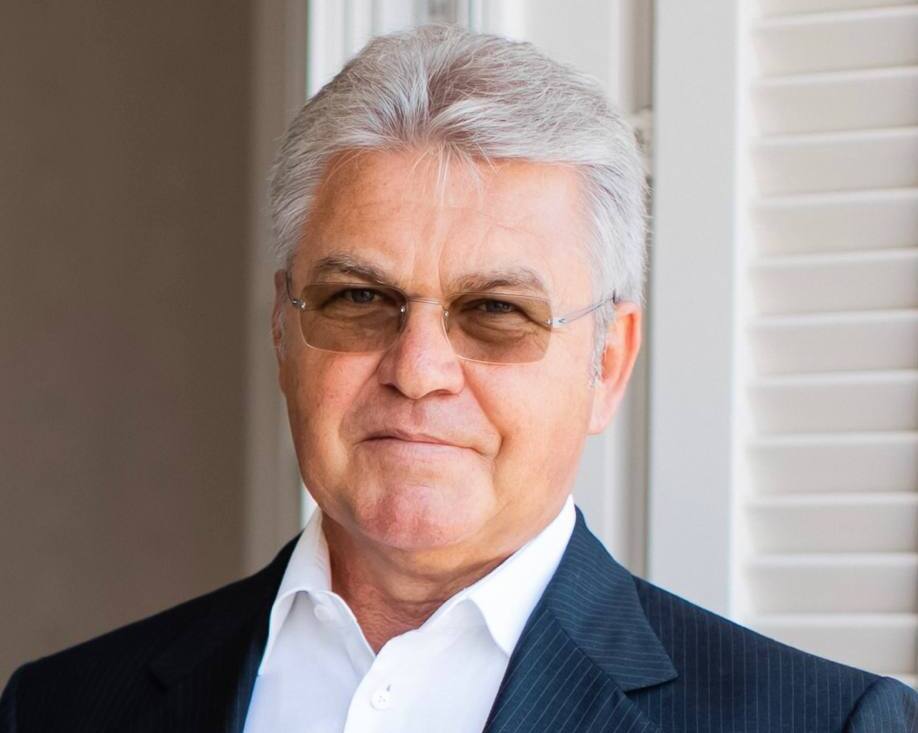
Сергій Гроза
To secure the loan, the alleged investor entered into a trust management agreement with the GNT Group in respect of the companies that own and manage grain transshipment facilities in the Odesa Seaport.
For instance, the creditor’s agent Madison Pacific Trust Limited (Hong Kong) was issued a general power of attorney to administer the corporate rights of the Group’s member companies, such as Olimpex Coupe International, MetalsUkraine Corp Ltd" and Inzernoexport Grain Handling Facility.
As requested by the ACP, the Ziff-Ivin Associates audit firm has been preparing quarterly reports on the holding company’s performance since 2020.
Due to the Covid-19 pandemic, the supply of various financial services on the global market contracted in 2020–2021. According to the GNT Group, it affected the holding company’s operations. As a result, in 2020, the company closed trade finance facilities with European banks with a total capital of about US$ 150 million.
For this reason, GNT signed several loan agreements with private financial companies in the summer of 2021. They included a loan agreement with Innovatus Capital Partners to the tune of US$ 20 million, secured with the double amount of grain and corporate rights on pari passu terms with ACP.
The GNT Group also considered this loan a short-term bridge loan until a strategic investor is found.
In February 2022, just before the Russian assault, the GNT Group held a Road Show for investors in London. After that, however, the war affected Ukrainian businesses’ operations significantly.
By autumn, many domestic companies started negotiating the restructuring of their external loans. The GNT Group pursued such negotiations with the ACP.
In mid-December 2022, the holding company contacted Abu Dhabi Ports (ADQ) and Yas Holdings (Elite Agro) to find out about their potential strategic investor role. Doing so would enable the Group to refinance its debt to the ACP and Innovatus.
Moreover, an agreement making it possible to export Ukrainian grain via the so-called "grain corridor" was signed in August 2022. It improved the commercial potential of Ukrainian companies and made them more appealing.
However, the ACP started debt enforcement on December 20 and made multiple attempts to seize control over the group companies. According to GNT Group, this event made any further negotiations on raising strategic investments impossible.
Peculiarities of the Case
In private conversations, participants of the agrarian market indicated that the Argentem did not act in its typical fashion in the GNT Group case.
They reiterated that the Mriya agricultural holding company defaulted on its debt in 2014 for being unable to settle its current liabilities with creditors. The Argentem Creek Partners were among Mriya’s Eurobond owners.
At that time, the committee of creditors decided to keep the agro holding alive. New management was appointed, consisting of reputed professionals in their respective domains. Simon Cherniavsky (who used to manage the HarvEast agro holding) was appointed director general. Giovanni Salvetti, a top manager of Rotschild&Cie, became a financial advisor.
In 2018, the complex process came to an end with the purchase of Mriya by SALIC UK Ltd., a Saudi company. The sale process was transparent. The asset was also coveted by Kernel and Epicenter.
However, if we analyze public information about the GNT Group, the actions of the ACP tend to support the Ukrainian holding company’s claims of a hostile takeover attempt by devaluing the business to resell it.
Formally, the ACP is fully entitled to foreclose. The GNT Group should have repaid the loan in late 2021. However, as mentioned above, the parties negotiated debt restructuring amidst the war. The Board of Directors controlled the company. It was audited by Ziff-Ivin Associates. The grain terminal kept loading vessels with grain.
According to Volodymyr Naumenko, he asked John Patton in December 2022 if the creditors intended to foreclose. He answered in the negative. But then the Argentem sent an unexpected letter demanding that the Group pay up immediately on December 20. The Group was given only two hours to repay US$ 75 million plus interest. Doing so was impossible.
On the same day, the creditor replaced the director of Olimpex Coupe International, the Group’s stevedoring company. Instead, they appointed Ihor Kulak, a Hillmont Partners law firm lawyer.
Madison Pacific Trust Limited, the agent vested with powers of a participant according to the loan terms, made the decision to replace the director back on December 19, that is, before the demand to pay up was made.
The same management changes took place in other GNT Group companies.
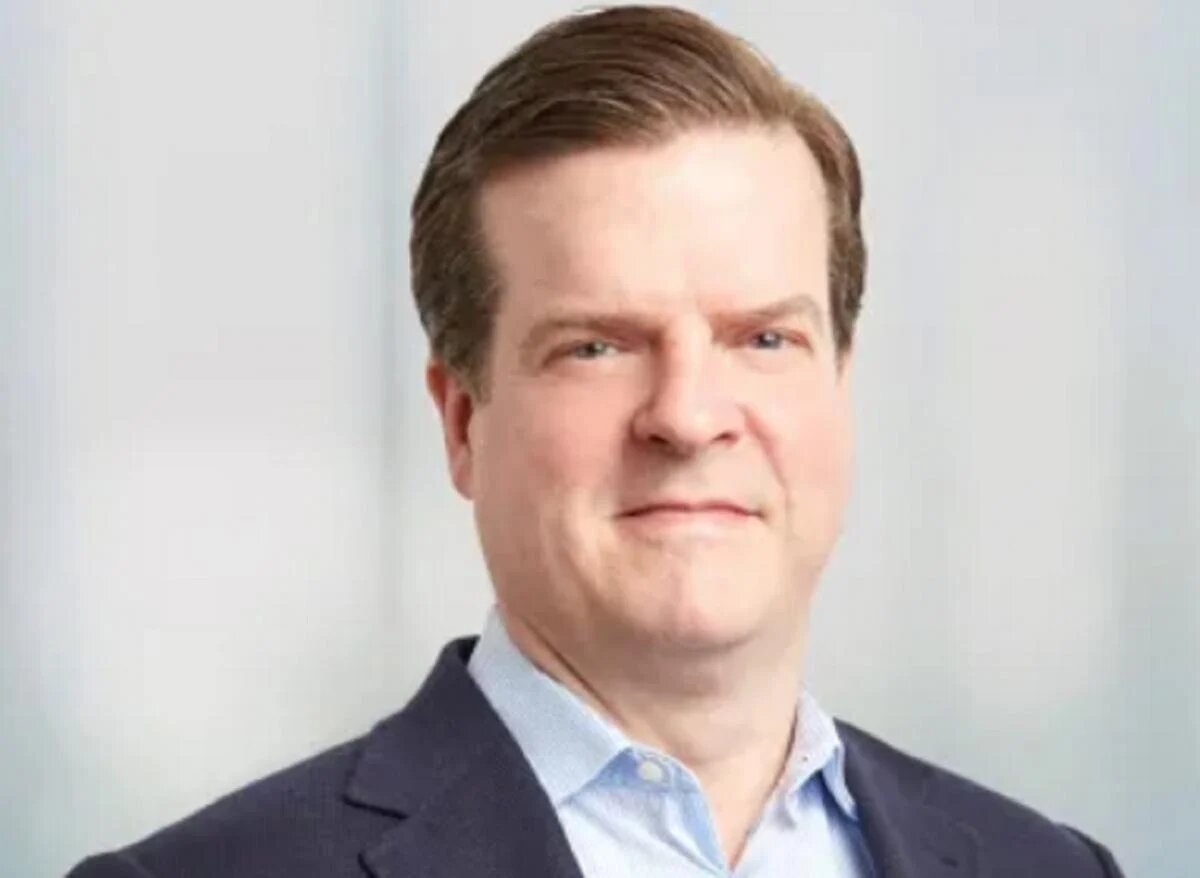
Джон Паттон
In addition to imitating an attempt to collect the debt, the ACP took several other steps that support the GNT Group’s hostile takeover contention.
The legal addresses of the three Group companies engaged in transshipping grain in the Odesa Seaport were changed to Lviv.
Hillmont Partners’ lawyers, without any logistics experience, were appointed directors.
According to GNT Group, replacing directors in the Group’s Ukrainian companies was illegal due to the breach of the corporate agreement by the ACP. According to the agreement, the creditor had the authority to appoint commercial directors only.
"This security mechanism was needed to give the creditor the ability to influence operating companies’ commercial decisions. And that step would have been both logical and transparent," Volodymyr Naumenko said.
John Patton had to explain away these accusations to the media.
He said, "Based on the documents we have that secure the loan for us as creditors, we made use of our reasonable right to appoint a new managing director to the Cyprus holding company and new directors in Ukraine, Cyprus, Switzerland, and UAE on December 20, 2022."
In February, the Western Commercial Court of Appeal suspended the decision to appoint Ihor Kulak as the ACP’s director to Olimpex Coupe International.
Further events line up well with the business devaluation scheme. In February and March, the Argentem initiated the bankruptcy of two Ukrainian companies, Olimpex Coupe International and MetalsUkraine Corp Ltd, and the holding company’s parent company in Cyprus, G. N. Terminal Enterprises Limited.
The ACP explained their decision to file for their bankruptcy by investigating the allegedly disappeared stock of 400 thousand tonnes of grain and sunflower seeds worth US$130 million.
It is unclear from the statements how these numbers were calculated and what the word "disappeared" means in this context. Some grain is known to have been pledged to Innovatus. There were a bit more than 100 thousand tonnes of grain.
According to Volodymyr Naumenko’s commentary for Business Censor, "Patton keeps talking about the grain that ostensibly disappeared from the terminal, which has nothing to do with Argentem Creek Partners. We provided detailed explanations to the UK court. In short, some grain kept in Odesa Seaport had to be discarded. The port elevators are not designed for long-term storage, and it was not possible to keep grain in proper condition due to military operations. Innovatus was informed accordingly. Once the grain corridor started operating, that grain was replaced with new batches. Since then, the amount of grain has been sufficient to settle the Innovatus debt. As regards other grain, including the grain kept in line elevators, the GNT Group took various measures to prevent spoilage under the circumstances of the export blockade. These were exchange-traded products, and we do not have to seek endorsement for any trade transactions with such products. For instance, there were barter trades, with us supplying sunflower seeds to oil factories for processing and receiving in return sunflower oil that does not spoil and can be sold once the exports become possible. Everything is stated in the holding company’s financial statements. We will release more detailed information later."

Володимир Науменко
Thus, the ACP’s approach to the grain terminal radically differs from that to the Mriya agro holding. The committee of creditors rescued Mriya’s business from a critical situation by appointing agrarian market professionals.
However, here everything is just the opposite. The business has been developing.
Firstly, the grain terminal in Odesa Seaport has been operating actively due to the "grain corridor" agreement. In January, about 1.5 million tonnes of grain (almost 10% of exports) were loaded on the vessels via the GNT Group.
Secondly, the GNT Group had been negotiating strategic investments.
However, contrary to any logic, the creditor started driving the Ukrainian companies into bankruptcy.
The GNT Group reiterated that the ACP as a creditor had had several contractual options for obtaining satisfaction of their debt claims, for instance, by selling a part of the company jointly and transparently and by making use of the guaranty provided by Sergiy Groza and Volodymyr Naumenko as owners of the holding company.
However, the Argentem do not mention whether any joint agreements with other creditors of the Ukrainian holding company have been taken into account in bankruptcy. They probably haven’t because the sale of some of GNT Group’s assets has started under loans from Ukrainian banks, separately from actions taken by the ACP.
For instance, the Sunolta Group announced in March that it purchased some port logistics facilities and equipment owned by GNT Group (Olimpex Coupe International grain terminal) held by Ukrainian banks as collateral for the company’s debt.
Is There Support for the Hostile Takeover?
Are there any administrative pressure and political smokescreen in this conflict?
In February 2021, President Volodymyr Zelenskyy signed the law "On State Support for Large Investment Projects in Ukraine," also known as the "investment nanny law."
The Cabinet of Ministers appointed Ukraine Investment Promotion Office, or UkraineInvest, established in 2016, to be the state institution in charge of helping the investors in accordance with the law.
In November 2022, Davyd Arakhamia, the chair of UkraineInvest’s supervisory board and a member of Rada representing the Servant of the People party, met with the ACP in Vienna.
The information about the meeting was disclosed by the media by accident. It just so happened that two journalists found out that Davyd Arakhamia stayed in Austria’s capital while pursuing Ukrayinska Pravda’s investigation, referred to as "Battalion Vienna."
He was forced to comment on his contacts.
"The major goal of my visit was to meet with the U. S. fund Argentem Creek Partners, which invested over US$150 million in Ukrainian assets. I met them as the chair of UkraineInvest’s supervisory board. I also visited DF Group’s Vienna office to meet Dmytro Firtash and their manager. We discussed prospects for opening up a grain corridor to preserve the ports in Mykolaiv Oblast where the DF Group owns the port of Nika-Terra," Arakhamia said.
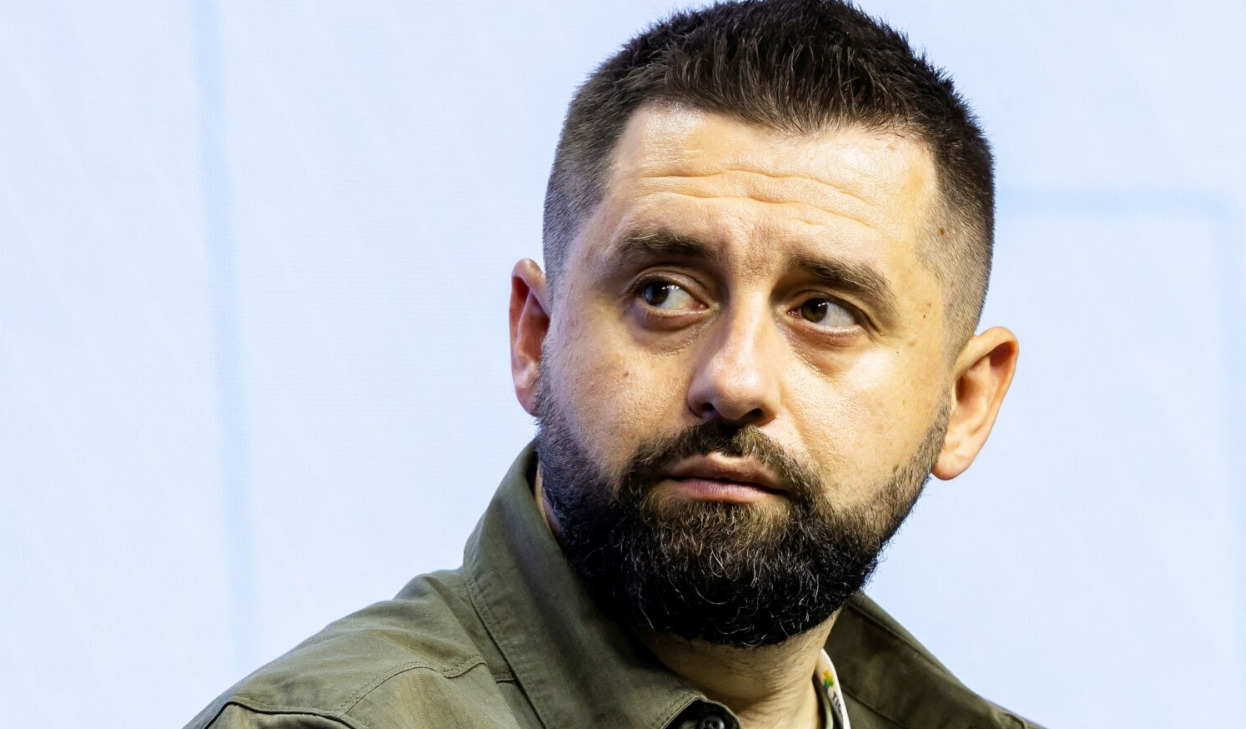
Давид Арахамія
So, the journalists took notice of the meeting between the member of Rada with the Argentem in November. In December, however, the U. S. company that had been negotiating debt restructuring earlier began taking over assets.
Logically, many questions for Arakhamia came up. Did he discuss the situation with the loan to GNT Group with the Argentem? Does UkraineInvest intend to mediate an amicable settlement of the dispute?
According to information from the Hubs website that kept trying to elicit comments from him for a month, the Rada member refused to discuss this topic.
Moreover, the publication received an official response from UkraineInvest. It turns out that the Office does not know anything about Arakhamia’s contacts with the ACP as the chair of UkraineInvest’s supervisory board (see the document below for UkraineInvest’s response to journalists).

Document
Why did Arakhamia decide not to tell the investment nanny office anything about his negotiations with Argentem? A supervisory board chair is not supposed to support an investor on his own. It has to be done by people specially hired by the government to do so.
Let us make an assumption that can help explain his conduct: Arakhamia, a politician representing the ruling party, may have administrative leverage to facilitate the ACP’s hostile takeover of the GNT Group’s business to sell it for a windfall outside transparent procedures. He may have discussed this with the Ukrainian holding company’s creditor in Vienna.
According to information available to the Hubs journalists, Arakhamia did discuss the potential transfer of the GNT Group’s stevedoring asset by the Argentem under the control of Dmytro Firtash’s port business when meeting with the DF Group (it owns the Nika-Terra port in Mykolaiv).
Regardless of any DF Group’s reaction (at least, their trail in this story remains unseen), a proposal like this can be a telltale sign of corrupt collusion and willful intent on the part of the U. S. company.
In their questions for Arakhamia, the journalists asked him to comment on information circulating in Lviv’s business circles that he potentially pressured the judicial and registration systems in Lviv in favor of the Argentem.
Trail in Lviv and Legal Connections
In this context, the need for re-registering the GNT Group’s business in Lviv and the appearance of Hillmont Partners evoke interest.
Hillmont Partners are supporting the Argentem Creek Partners in this dispute. As mentioned above, their lawyers were appointed directors: Ihor Kulak to Olimpex Coupe International and Inzernoexport Grain Transshipment Facility and Andrii Dasho to MetalsUkraine Corp Ltd.
These two lawyers are well experienced in the legal domain in Lviv, but, being 700 km away from the sea, they have no stevedoring experience. By the way, the GNT Group companies were re-registered at the Hillmont Partners’ office address in Lviv.
Both current and former partners of the Hillmont Partners have long-standing relations in Lviv and the Ukrainian government, including its judicial branch.
Andrian Artsyshevskyi and Yurii Melnyk, two partners in Hillmont Partners, own Melnyk and Artsyshevskyi law firm in Lviv. Rostyslav Dudiak, a lawyer from this firm, represents the Argentem in one of the grain terminal cases.
Dudiak used to work for Pavlenko and Partners law firm with Oleksandra Zhelik, a Lviv District Administrative Court judge. Yurii Melnyk is both the co-owner and the director of that firm. He also is a member of the Lviv City Council.
The above-mentioned judge Zhelik blocked any registration activities in the GNT Group’s companies after the appointment of Kulak and Dasho as their directors with her ruling on January 6.
It took her just a day to rule on the case because a request was submitted by the lawyer representing the ACP on January 5.
This judge’s husband is Maksym Zhelik, a Western Commercial Court of Appeal judge.
As mentioned above, decisions were made in February and March 2023 to open bankruptcy proceedings against Olimpex Coupe International and MetalsUkraine Corp Ltd. The rulings to this effect were issued by Andrii Tsikalo, a judge of the Lviv Oblast Commercial Court.
The bankruptcy ruling was issued in spite of the order by the Nicosia District Court (Cyprus) prohibiting any action aimed at gaining possession, encumbering, or selling the grain terminal in Odesa Commercial Sea Port owned by the GNT Group.
In addition, companies of the Ukrainian holding company had no signs of insolvency (the terminal operates under the "grain corridor" agreement). In addition, the companies held liquid mortgaged property for settling accounts with the creditor.
Judge Tsikalo is a peculiar character in his own right who found himself in the limelight of an article on Bihus. In 2014, he bought a 267-square-meter house.
However, Hillmont Partners’ connections to the government are more interesting in our case.
Kostiantyn Chyzhyk, an active partner, became the head of the GR (government relations) practice in early 2022. Before that, he used to work as Deputy Minister of Energy and Environmental Protection.
In 2019, the Servant of the People party was sponsored by partners of Hillmont Partners, Serhii Kalchenko and the late Serhii Nyzhnyi.
Serhii’s brother Andrii Nyzhnyi is also currently a partner in the law firm.
Serhii Kalchenko was elected as a member of Rada as number 24 on the Servant of the People’s ticket; in the spring of 2019, he was considered a potential Chair of the Central Electoral Commission.
The late Minister of Interior Denys Monastyrskyi worked for Hillmont Partners as a lawyer in 2007.
It bears mentioning that, as stated by Innovatus, the National Police is investigating the alleged disappearance of the pledged grain. Furthermore, we quoted above the explanations by the GNT Group’s owners regarding the grain.
Also, Andrii Lysiuk, a former founder and CEO of Hillmont Partners, was appointed deputy head of a department in the Security Service of Ukraine in September 2021.
Vadym Halaichuk, elected to the Rada as No. 44 on the Servant of the People ticket, was another co-founder of the law firm. In 2021, he became a deputy chair of the Political Council of the Servant of the People. Davyd Arakhamia was elected its chair at the same time.
John Patton explained away the registration of the port companies in Lviv by the need to relocate business due to the war in Ukraine.
However, he failed to clarify how this relocation could protect grain loading on vessels in the Odesa Seaport. He also did not provide any information about the Argentem’s meeting with Arakhamia, the chair of the Servant of the People faction.
Maliuska’s Puzzle
According to an article by the UNN news agency, the administrative leverage in this conflict was openly demonstrated by the Minister of Justice Denys Maliuska.
For instance, the minister made a decision in favor of the ACP based on Ihor Kulak’s complaint single-handedly, without consulting with the Board of the Anti-Raiding Office.
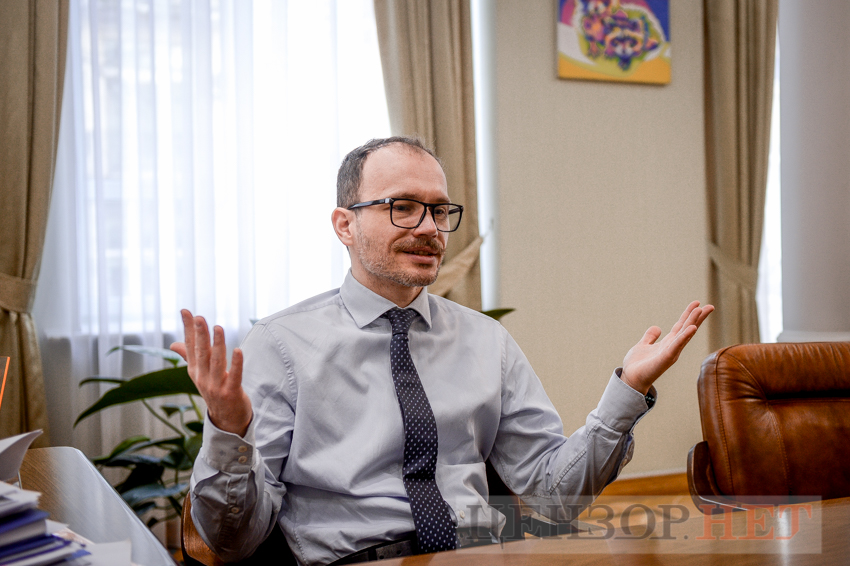
Денис Малюська
In February, the Western Commercial Court of Appeal sustained a motion by Vitalii Marchenko (the Olimpex Coupe International’s director dismissed earlier) and suspended the decision to appoint Ihor Kulak as the director.
Based on the court’s ruling, Marchenko was reinstated as the company’s director on March 1. This is what Kulak disputed with the Ministry of Justice.
Denys Maliuska motivates his single-handed decision to favor the ACP with "evident violations of the law" during the registration actions. However, according to journalists, there are numerous court decisions in favor of the GNT Group. Thus, the Anti-Raiding Board of the Ministry of Justice should have analyzed at least this complaint.
Earlier, Nashi Groshi wrote that the minister Denys Maliuska was known to change a decision by the Anti-Raiding Board on his own "after a call from an authority to which one doesn’t say no."
Is There Deep-seated Corruption?
According to estimates by participants of the agrarian market, an asset like this could be sold at US$200 million. Both loans with interest amount to about US$120 million. If the sale were transparent (as prescribed by the loan agreement), the creditors would have to share the proceeds (less debt) with the GNT Group’s owners.
The difference of US$80 million is a powerful argument in favor of trying to sell the business in a backroom agreement with a pre-determined buyer; this is what the GNT Group accuses the "U. S." ACP of.
The ACP hold only some port facilities owned by the GNT Group as collateral for their loan. However, control over the entire business under the pretext of violations by the Ukrainian holding in handling grain would open wider earning prospects for the creditor if the business were sold behind the scenes.
This is regardless of the London Court of International Arbitration, where the proceedings can drag on for years.
Finally, let us remind you that, after several corruption scandals in the government in January, Davyd Arakhamia stated that active arrests were to be expected in spring "according to the wartime laws." On his part, Volodymyr Zelenskyy told in his speech at the Munich Security Conference that there was no "deep-seated" corruption in Ukraine anymore.
But does it all sound convincing for business?


