



20 months in captivity. Fascinating story of musician of military orchestra
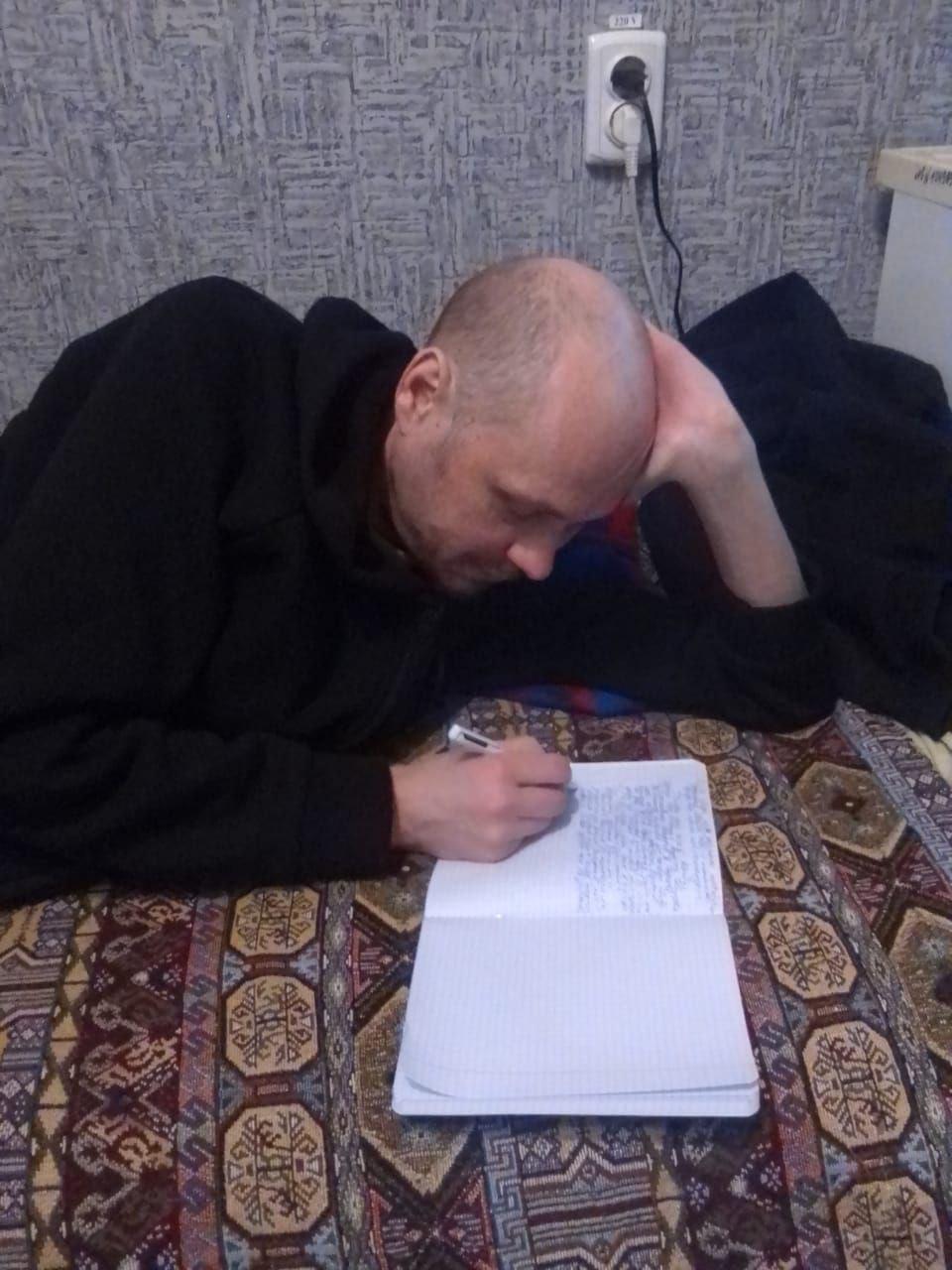
20 months in captivity, losing 40 kilograms of weight, Pushkin’s poems and Zhukov’s biography.... Volodymyr Tsema-Bursov, a native of Mariupol, a soldier of the 56th Separate Motorized Infantry Brigade of the Armed Forces, a professional musician, spoke about his Russian captivity in the program "Who is with Miroshnychenko?"
While Volodymyr is undergoing rehabilitation, gaining weight and getting used to a relatively peaceful life, he talked to Anna Miroshnychenko from his hospital bed.
CONSEQUENCES OF CAPTIVITY
- How much do you weigh now?
- I added 20 kilograms, somewhere around 80.
- And how many were lost in captivity?
- I lost 40 in captivity, that is, I weighed 96 kilograms when I was captured, and when I was released, I weighed 55.

- How do you feel now?
- I'm relatively normal now, but I still have digestive problems, I have constant headaches, constant nausea, hangover, but there is no smell of alcohol.
- You are now in hospital. Do you want to talk about what you've been through? What are your feelings?
- Of course, I'd like to tell everyone what I've been through. -Of course. Why is that important? So that people don't think that these are stories and someone's imagination. I am strongly outraged by the behavior of the aggressor state, its disregard and ignorance of international rules and regulations, both in the conduct of hostilities and the detention of prisoners of war, something that I bore on my shoulders.
- I have heard your story, I know the horrors you endured in captivity. It is very important that you tell us about the beginning of the full-scale invasion. You live in Mariupol and you're a musician in the 56th Brigade.
- I lived. Unfortunately, now I have no way back to Mariupol, although in all my thoughts about freedom, when I was in prison, for some reason, I imagined myself on the streets of Mariupol, I imagined myself in the apartment where we lived with my family. Unfortunately, now this territory is temporarily occupied, the apartment where we lived burned down completely, there are only four walls and four window openings left. Unfortunately, I will not go back there and as for what we had to experience, yes, as you know, we were surrounded at the Ilyich plant, we held the defense there until we just had to come out and surrender. We were going for a breakthrough, then the result was that we could not break through.
- What is your education?
-Higher education in music.
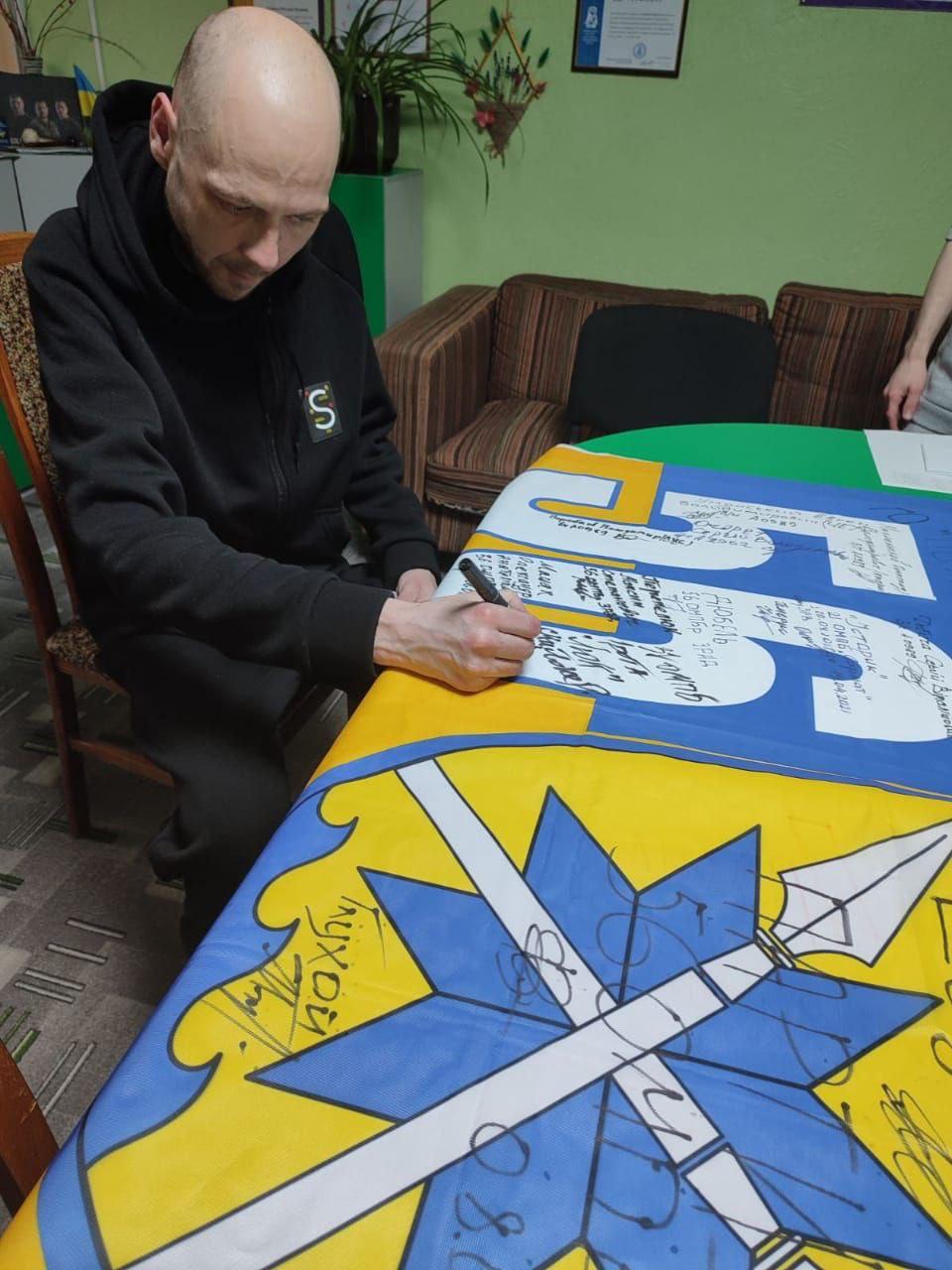
- What did you do in the 56th Brigade?
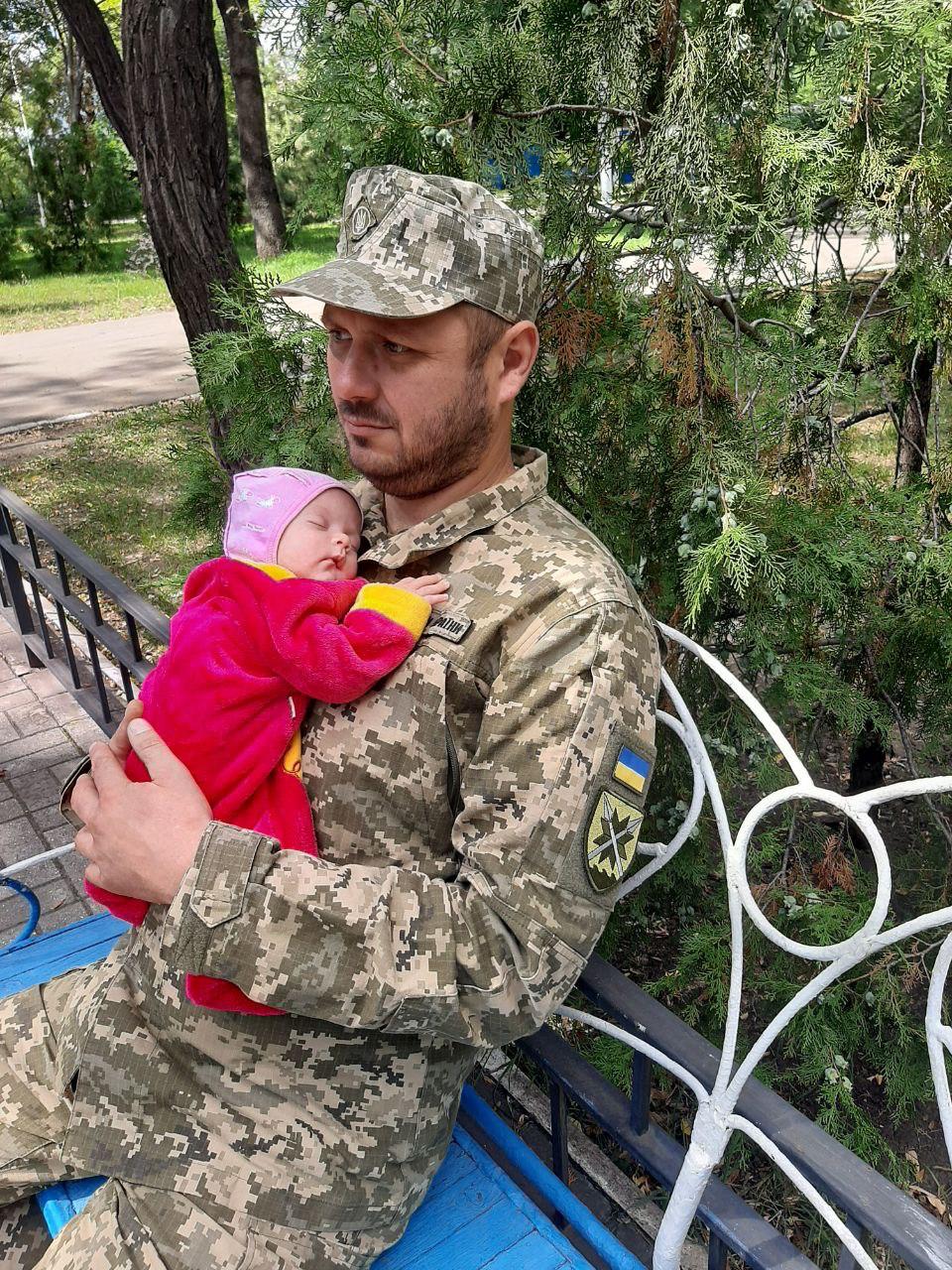
- I was in the orchestra. In the last few months, we formed the orchestra. Why? There was a shortage of people, we were not only rehearsing but also were on duty. We, like all servicemen from all units, were on patrol in the town, at the checkpoint, at the canteen and so on. It was just normal military duties.
ABOUT CAPTIVITY
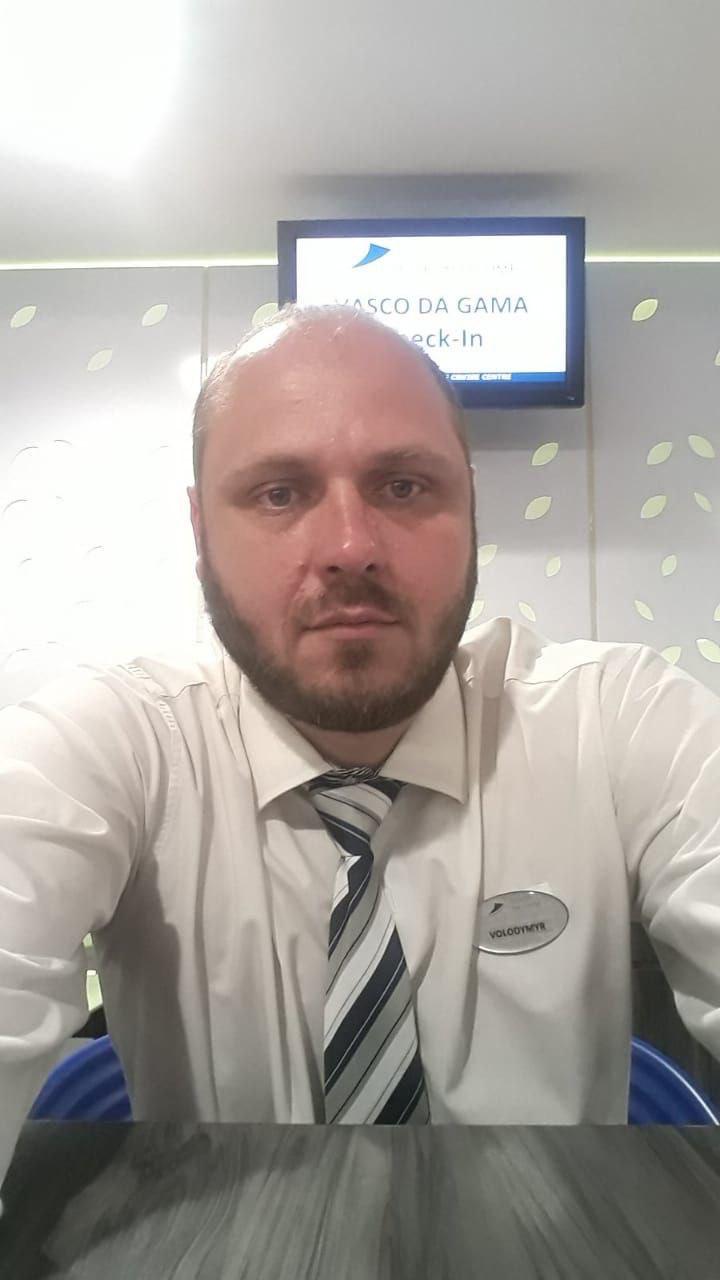
- Let's talk about the captivity, what you experienced. From the very first day you were perceived as a military man, as an "Azov", and very often they saw everyone as an "Azov", "Nazi", and so on... How did your story in captivity begin, Volodymyr?
- We were originally in the same location as a certain Azov group. In Sukhodolsk prison, I was once taken to a punishment cell for interrogation. It was with elements of beating and those who were conducting the interrogation said to me: "You are an Azov instructor. I said no, I am not an Azov instructor. Your information is false, I am a musician by profession. They say - and how do you prove it? And one of them says - well, a musician, you say... And if we bring you a guitar, you can play something. Well, I'll play something, I know how to play a little, whatever happens. I can't prove that I'm not an Azov instructor, just like I can't prove that I'm a musician. They come after me, take me out of the punishment cell, take me to the administrative building and this escort asks someone: "Where?" He led me and we found ourselves in the assembly hall of the prison, there was a drum kit on the stage, drums, a bass guitar on a stand and an electric guitar hanging off-stage and this guy who was accompanying me, he took a second glance at me and looked at me and said, let's go out. Apparently, he realized, by my reaction when I saw the musical instruments, he must have realized that I was really a musician, that is, I was not embarrassed, put a bold face on, did not start stuttering, didn't have shifty eyes. I thought, well if I have to play now, I'll play, where can I go? As a result, after this short-term examination, the investigator questioned me calmly, interrogated me, asked me questions. In my case, it was the toughest interrogation, because all other interrogations were held without elements of manhandling, but occasionally we "got". We had a routine.

ABOUT PUSHKIN AND ZHUKOV
- What did you "get" for, Volodymyr?
In addition to the fact that we stood all day, we were given various kinds of literature about the re-division of the Second World War, that is, either the Great Patriotic War, or the biography of the commander Zhukov, or the history of Napoleon's battle of Borodino, poems of a patriotic nature, where the word "Russia, Russia, Russia, there is no word in the world that is dearer to me. Over time, poems by the classics appeared - Pushkin, we had Lermontov... then Russian literature appeared, also classical. For what did we "get" for? Every morning in prison there was such a procedure as "morning inspection", when the whole cell ran out into the corridor, stood in a certain way, namely with legs wide apart and heads down so that the ears were approximately at the level of the knees and hands behind the back. And in this poze.. the staff of the pre-trial detention center listened to our achievements in literature, in history, and asked us questions. Naturally, among people, there was a person who was worried, who, as bad luck, did not have time to finish learning, who had a line out of his head, and if the verse did not pull it off, and the verse was questioned as a rule in the following way: one verse was read by the first person, he was stopped, the second verse was told to the next person, after the second one to the third, and so on, so on, so on... If they saw that the camera was telling the story normally, they could simply say "let's take them to the camera". But if, God forbid, someone stopped short or someone said that, chief, I did not learn or I forgot, then "hits" began and unfortunately these "hits" concerned not only the person who forgot or did not learn, but concerned everyone.
WHAT RUSSIANS THINK ABOUT
-Tell me, please, do these people who treated you like that really love the Russian Federation? Do they really see us, Ukrainians, as fascists and Nazis? Is it such a blind faith in their tsar, in Putin?
- There were people who did not touch upon this topic at all, and there were people who were so imbued with blind faith in the chosenness of the Russian people that it seemed that they were addle-brained. Some considered themselves a superior race, while they constantly told us that we were Ukrofascists, Banderaites and so on, although they considered themselves carriers of some light, good and so on. Recently, I remember such a conversation in exercise yard: when we were walking along this yard with our heads down, and an observer was walking above us, and he said - "Well, Khokhls, what kind of equipment do you have in your Ukrainian army?". Someone answered him something, and he said: "Ah, ZILs and URALS, all Soviet equipment, Russian, of course, but what can you Khokhls invent ? Even you fight with Russian equipment." I can say about such a person that he is batty in the brain or he is fall off the turnip truck. We had an employee, they worked 24 hours in three, and every time on his duty he walked down the corridor and shouted "Well, does the Russian land feed?".
FOOD IN CAPTIVITY
- How did they feed you, by the way?
-The food in prison is good, but as far as quantity goes, it's for a cat. Because every time I took a portion in my hands, 9 out of 10 times, I would look over there and think, -this is a portion for a cat or some kind of Spitz dog, shaggy little ones. Very small. We had breakfast until 7 am and I ate in the morning, I knew that at 11 I would feel hungry, my stomach would be empty and you could check the clock on my stomach because at 11 we started the so-called "physical training" and just when my stomach started to say that it was empty and we were announced physical training, the whole prison and for 2 more hours I was hungry, we jumped, did push-ups, squats and until lunch. Lately, the feeling of hunger began to be accompanied by nausea and half a faint, I stood and thought that I was about to fall over, just zonk out. I was on the verge of losing consciousness. I didn't tell anyone about it so as not to bring it up and look like a whiner and so on, so I stood there and hoped. We stood all the time, we did not sit, initially we stood for 16 hours, we sat down only for meals. But when all the people behind bars started to get swollen legs and knees, then they started to give us extra time to rest, they sat us down. Still, we were on our feet 8-10 hours a day.
- How terrible.
-The days passed like this - from waiting from breakfast to lunch, from lunch to dinner, from dinner to bedtime. Lights out. Wake up. Breakfast. And again the next day went by. They were destroying us both mentally and physically. I was amazed, how can you take a man and beat him? But then, when they sorted out who was who, they selected for themselves certain categories of prisoners of war, which interested them more, namely certain military specialties. But since I am a musician, they gradually lost interest in me, just as they lost interest in drivers of some kind of equipment, in, let's say, not quite combat units among the military.
THOUGHTS IN CAPTIVITY
- What did you think about most often during your 20 months in captivity?
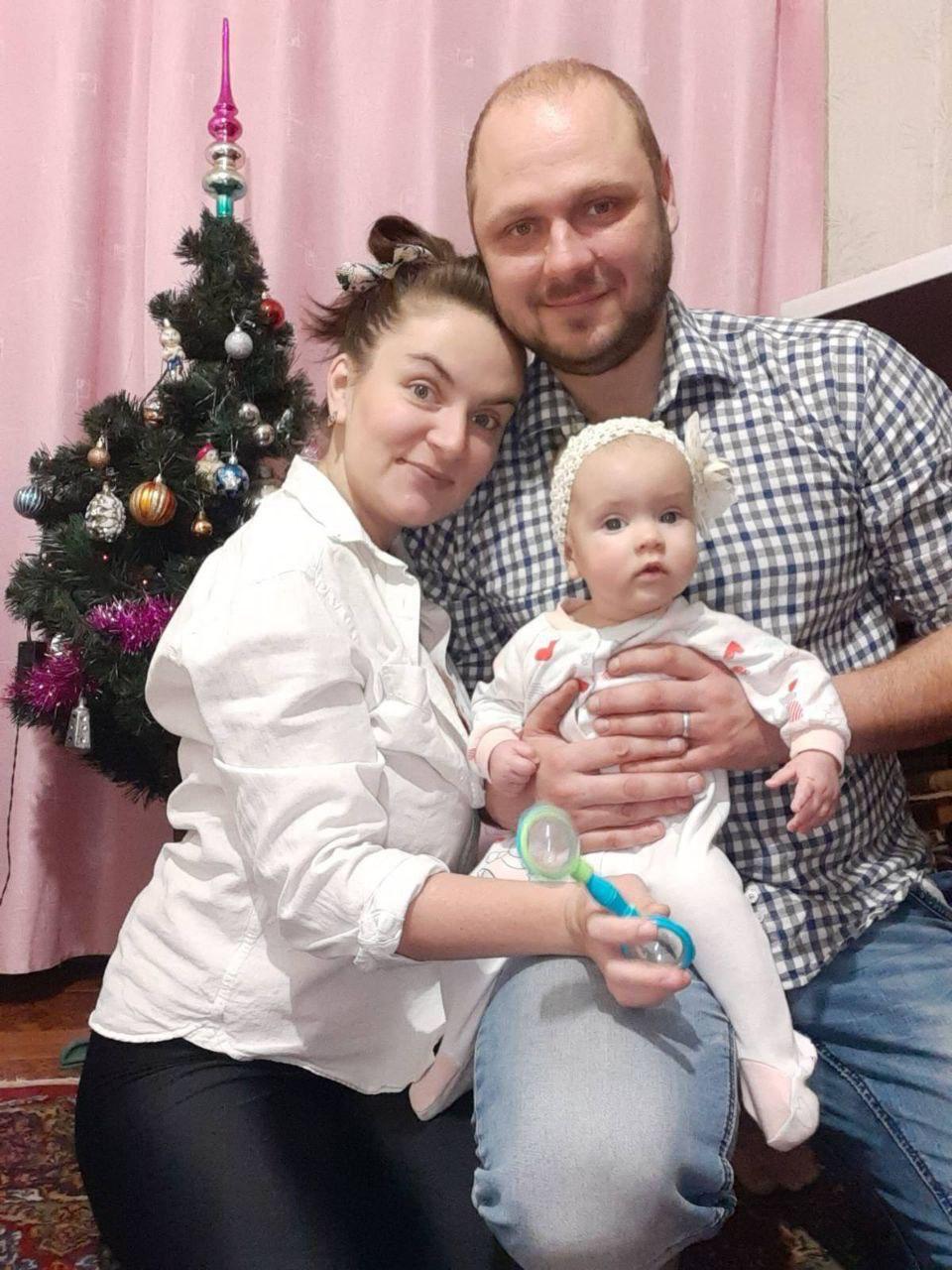
- I am at a loss to answer what I was thinking. I was thinking about everything, including bad thoughts, including - where is my family? But I tried to keep those thoughts away from me. I was sure that everything was fine with them, but this confidence I had nothing to back it up, I did not receive a single letter that said either that everything was bad or that everything was fine. Until the day I got a letter from my spouse, she wrote some details, I don't even remember, I just wanted to hear that everyone was alive and doing well. And so in general, my body was standing there in line, and I was anywhere. I was thinking, remembering our past life, remembering my work, countries where I was. Or we were talking, guys were telling life stories, I was telling some of mine. What were you thinking about? I'm ashamed to admit it, but a lot of thoughts ended with what to eat. And it was also conversations, they started about anything, about cars, about building a garage and still everything ended with food, wherever you turn, all conversations ended with food. Because that, I'm ashamed to admit, used to take up the thoughts.
ABOUT BEING RELEASED FROM CAPTIVITY
- What was the day you found out you were returning to Ukraine?
- It wasn't a day, it was a night, and it was a very hectic night. It started with noise, shouts, bustling in the corridor, clanging sound, swearing and we realized, we were experienced prisoners by that time, and we realized that it was the "transmigration of souls", as I called it. And that night, when we heard the noise and shouts in the corridor and the first thing we did was to wake up at the same time and run to the toilet. Why? Because we have already had the unfortunate experience when we move, whether it is an airplane, truck or bus, if you want to go to the toilet, then at least get a polite refusal. We quickly put on our prison uniforms, flung out, they placed us in different corners of the corridor, threw us the clothes we had arrived in. Quick, quick, run, run, run! Come on! What are you doing? They dressed us, lined us up, took us outside, and I saw a so-called sliding gate open and Z-car, a Kamaz, a prisoner transportation vehicle, enter the territory. A prisoner truck drives in, another prisoner truck turns around and I hear that enchanting sound when the machinery backs up and the noise of the sliding gate. We have heard this sound many times, so either someone is being taken away or someone is being brought in. And that sound that night was very pleasant to my ears.
- And when you were in Ukraine, did you cry?
- I didn't cry. I must have had some kind of psychological braking system that I went through it all without emotions, I turned into a vegetable. I had no positive or negative emotions. I felt like a fly that was awakened in the middle of winter, I was confused. But I put it all down to the fact that my brain had been slowed down on purpose so that I wouldn't overreact and have an emotional explosion. I was mentally in prison, that is, I was so used to it, I often caught myself thinking that this term would never end for me. And we, to some extent, also envied the convicts who knew exactly when they would get out, we did not know that day, it could be tomorrow, in a week, in six months. And this uncertainty was very depressing. When I found myself in Ukraine, I am ashamed to admit that I very calmly, without emotions, went to another bus, sat down and sat while everyone was walking, smoking, taking pictures. I just sat on the bus.
- It is a pity that your wife did not meet you. Maybe you would have come out then and you would have had a little different emotions.
-That's for sure, but, you know, I might not have been too upset that she hadn't met me, I wouldn't have wanted to appear to her as I was then. I was a stack of bones. Unfortunately, I did not have time to clean up my mouth, my teeth are a little bit loose, she will have to look at it and be satisfied with it, but I gained a little weight, I gained mass, I am not ashamed now, my face became round, not so that my cheekbones protruded and my nose like Pinocchio's is sharp.
ABOUT THE PAST AND THE FUTURE
- Actually, I remember those photos, and you look different to me now. Perhaps that's how the camera conveys it, I would really like people to write words of support to you, how beautiful you look after going through this. Now, Volodymyr, you have another uncertainty. You are now in rehabilitation, do I understand correctly what is next?
- I need more time. Let's say that I feel weakness in my body: if I walk a distance, I feel that my legs are swollen again, as they were swollen in prison, as they are swollen now. And I am very fatigued. If you take me before this prison, in which I spent 20 months, I could do a lot of activities and movements without getting tired. But here, sometimes I walk a block or go around the building, I feel that I need to sit down, sit down. At the same time, for 20 months we were standing and there were physical exertions - we did squats, push-ups, and jumping. It would seem that I should have strength reserve in my muscles, but there is none.
- By the way, have you ever thought about going abroad? A lot of guys who went through a story like yours, they went abroad and got treatment there, didn't you think about it?
- I am only in favor, I know that my wife was offered similar things where she is now, abroad, she was offered rehabilitation for me as a serviceman, they are also aware of the case, she is also a refugee. They are aware of our whole history, family tragedy and they offered it to her.
- If you have such intentions, you should definitely go, why not?
- Yes, yes, I'm not against it, I'm all for it, the only problem is that it should be agreed and approved.
- This should probably be formalized, and both the command and doctors should prepare conclusions, shouldn't they?
-Yes, yes.
- I would really like your dream to come true and your wife's, so that you can leave at least for a while and get some treatment. Where will you live? There is no way to return to Mariupol...
- There's no way to Mariupol. We are in a state of uncertainty, everything depends on how my further service will take place. Will it be or not, as whom and in what part of Ukraine. If the state will help us with housing, where we would like to have housing I do not know, as we have uncertainty now with our location, now we are on the string. Ideally, of course, I am in pain for my Mariupol. I confess, to my shame, I am one of the people who all my life said that Mariupol is the worst city that can be, because of spoiled ecology by two factories, very dirty, square, 9-storeys, angular, industrial.
HOW MARIUPOL WAS BOMBED
- What are your feelings now?
- When I remember him now, I cry uncontrollably. I realize that for me it was the most beautiful and the most beloved. It's a pity it was leveled with the ground and they built a lot of brightly colored houses. Sometimes you come across bloggers, so positively inclined, saying - it was so gray, so gray, and now it has become so colorful, so iridescent, cheerful and joyful. Of course, they should have leveled it and killed 30,000 population there, driven out half the city as refugees and built these boxes and painted them in motley colors. There are not enough houses, 9-story buildings, I'm revisiting again, indeed, there were 9-story buildings there, there's not. They were either collapsed by rockets hits like paper buildings, or fires destroyed them. Naturally, no one put out the fire in that situation, we did not have elementary mobile communication, internet. I saw the city from the height of the Ilyich plant, it was all in smoke, airplanes were flying, throwing bombs. They claimed that they were fighting the Ukrofascists, namely the Azov people, who were at Azovstal, but the bombs were dropped on the private sector, on 9-storey buildings. This is what is incomprehensible to me. Then they built these boxes, painted them and settled people there. Naturally, they poll the loyal people and they say, "Thank you grandpa Putin for our happy childhood". I would like to meet my acquaintances who welcomed Russia, who were very loyal, and I would like to talk to them about this topic, whether their opinion changed when they saw where the airplane came from, where the shells came from, where the mines came from. What is also curious - very often during interrogations in Russia, in prison, the investigators were very sincerely surprised when they heard that they were told that the planes came from the direction of Taganrog and flew in the direction of Taganrog. Ukrainian aviation did not reach Taganrog because there were Russian air defenses in the demarcation zone, that is, there was no way for Ukrainian aviation to reach Mariupol and we did not see a single Ukrainian airplane. However, we very much hoped that it would appear and counteract the lawlessness that was taking place in the sky.
ABOUT MUSIC
- Tell me, Volodymyr, do you want to play music? I never asked you what you play or sing
- I've been playing bass guitar all my life, although I studied at a music school on the accordion, then did not finish education, left, graduated from a music college on a wind instrument, and then graduated from the institute as a theorist, theoretical disciplines. But life happened in such a way that I've been playing bass guitar all my life. I worked in an orchestra in my beloved Mariupol, worked for a few months in the Philharmonic, worked in a cruise company, in a show band, and in the army I became a tuba player because I was a bit familiar with this instrument and played the tuba in the army. And today, here, in this medical institution where I am, the deputy commander for political affairs organized a small concert. Musicians have such a format of concerts as a house concert, so this one could be called a corridor concert. A teacher from their institute of culture and her two students came and planned one song, another, another, another. It ended up that they joined this action, I was among the first, then the medical staff and patients joined in, there were dances, songs and choral singing and guitar playing, dancing.
I thank you very much for the conversation, I want you to have full rehabilitation opportunities, to recover, to be in good health, to meet your wife and child. I would like to see you at the Victory Parade, marching with the orchestra in Kyiv, so I invite you to the capital. Thank you very much!
Anna Miroshnychenko, "Who is with Miroshnychenko?"


