



Actor, junior sergeant Roman Semysal: "The army is not my thing. But I am law-abiding citizen, so I understand that I have to fight"
The commander of the ship "Cherkasy" from the film "Cyborgs" has been serving in the Ukrainian Armed Forces since the beginning of the full-scale offensive and has no intention of returning to civilian life until we win, although he misses his job and profession terribly.
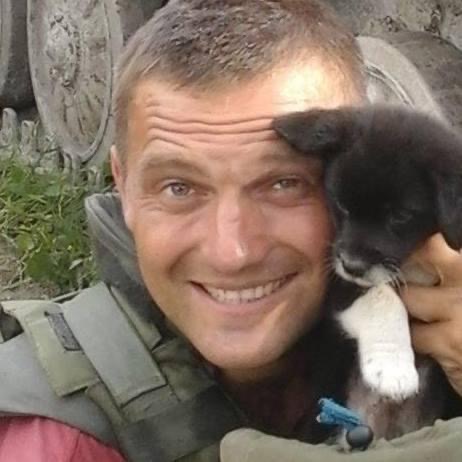
Roman immediately warns: "I'm not sure you've chosen the right person to interview. I have not done anything heroic, I have not participated in fierce battles, and I do not like to heroise something that does not require it." But we were interested in his view of the army before, and it is even more important now, because a professional actor does not leave the service, does not look for reasons to demobilise, but stays in the Armed Forces and does the work that is required. We discussed why this is important to him during our conversation.
"ON 24 FEBRUARY, I FOUND A SUMMONS IN THE DOORWAY. SINCE THEN, I'VE BEEN IN THE ARMY AGAIN"
- I served a year in 2014-2015 under mobilisation, was demobilised in early autumn 2015, after which I was automatically enrolled in the first operational reserve. I was called to the army for the second time on the first day of the full-scale invasion. On 24 February, I found a call-up letter in the morning in the doorway. Since then, I have been back in the Armed Forces.
- Over the years, have you had any contact with the army? Did you not want to return?
- No, I had absolutely no desire to return to the army. I'm not a military person, I'm a person of art, let's say, although it sounds a bit pretentious. Straightforwardness, lack of diversity in the army, lack of creativity, rudeness, complete submission, service, sycophancy to senior officers - this is what I cannot stand. That's why the army is not my thing. But I am a law-abiding citizen, I understand that I have no other country but this one. And no matter how I feel about the security forces, I have to fight.
- Did you feel that the time would come when you would have to fight again?
- I had a feeling that there would be a serious escalation in the East. Moreover, I was convinced that we would be at war with Russia a long time ago. I was still very young when Ukraine became independent. I was fifteen in 1991. But even then, I understood that this monster would not let us go, that there would definitely be a war between us. I just didn't think it would be so bloody and so long. Moreover, when the full-scale invasion began, I was really convinced, like some people, that "two or three weeks" would be enough to end the whole thing.
I didn't really believe that they would go to Kyiv either. Women at work asked me questions: "We are afraid that missiles will fly at Kyiv..." I laughed and said: "Girls, stop it, it's just unrealistic. They are not complete idiots to go and conquer a country like Ukraine. You have to put so many millions in service."
I was shocked by what started on 24 February. And this is despite the fact that I have a year of ATO experience behind me, but this was the first time I stumbled upon such a reality, and it shattered my self-confidence. I was issued with an assault rifle. I thought I'd check whether it was cleaned or not, and remember my skills. It turned out that I had forgotten how to disassemble and assemble the machine gun because seven years had passed. I realised that I needed to brush up on my skills, remember how to shoot a grenade launcher and so on... I quickly caught up, but at first, of course, I was shocked by this. Plus insomnia, the constant panic that prevailed in Kyiv at the time. I was drafted into the 101st Brigade, we guarded the General Staff. There were a lot of horror stories, a lot of fuss, a lot of friendly fire, a lot of wounded civilians and people killed because of this panic. That was the beginning, very shocking - for everyone, not just me.
- And when did it become clear that this was going to be a long-term thing?
- When it didn't end in two or three weeks, and then when it didn't end by the summer, I was convinced that it would end by then: we were given artillery, we had "Himars"... For some reason, I was convinced that we would enter Crimea at the end of the summer of 2022. I was sure of it, seriously, I assured other people who asked me about it. I realised that it would take a long time, and not just one year, after we retreated from Soledar and then withdrew from Bakhmut. Then there was a slow-moving counter-offensive. And thank God that it was a slow crawl. Honour and praise to Zaluzhnyi for not burning the army in the minefields. It was then that we realised that this was going to last. I think the hot phase will last for another couple of years. And then... It will constantly smoulder...
- This winter has been super hard...
- Fatigue, psychological fatigue, accumulated. Despondency has set in. I would even say that in the ranks of the Armed Forces I hear these conversations, especially from young men: why do we need this... Now conscripts are being demobilised, and many of them want to flee "this country", as they say. They are desperate to fight, desperate for leadership, both political and military. They say, why fight at all if we don't have weapons? We explain to them: guys, if you don't fight, what will you do instead? Well, we won't fight because we don't have weapons, we don't have ammunition. This means that in "two or three weeks" they will come to your door without knocking, rape your wife in front of your eyes, and torture your children. At best, you will be castrated, and at worst, raped, first in front of your wife, and then your wife in front of you. Do you understand what will happen? If we don't resist, even if we have nothing, we will simply not exist, especially the military. Because soldiers, former soldiers, all men will be exterminated. Only those who agree to fight on the side of Russia and go on to conquer Poland, Moldova, the Baltic states and so on will be spared. Unfortunately, we have no other choice.
I'm also tired. After all, I haven't been doing what I love, acting, for two years. I also want to plunge into peaceful life, I really do. Much more than those who have never fought and are already "tired of war". But I understand that if we don't defend ourselves with our teeth and bare hands, we have no chance of simply existing.
- How do people react when you tell such an unpleasant truth?
- They don't like it. They make faces: "What are you telling me? Why!" The problem is that many people do not consider this country their country, their land. Many people have been brought up with a kind of... I would say, a kind of consumerist, characterless, indifferent attitude towards their homeland. They are happy wherever they think they will be paid well. Sometimes they say: "I want to go to some normal country". They are already giving us direct amounts: we know who to pay, for example, ten thousand dollars or 15 thousand (they say the price has gone up), and they can leave the country in peace and continue to live happily, or, as they see it, carefree, despite all the prohibitions.
- There are people who get into boats and sail across the Dnieper to the left bank of the Kherson region, not knowing whether they will return or not, and there are men who cross the Tisza
- It's disgusting. I've been serving in Kyiv for three months now - I was transferred for family reasons. I see Kyiv in the morning when I go to work. I see healthy middle-aged men in minibuses. I see that many of them are even uncomfortable to see me in uniform, because it reminds them of the war... Maybe I'm being too categorical, but it reminds them once again that they are cowards. They don't want to see us. I'm not saying that this is a total trend. But we - I mean the military - are an eyesore to many people in relatively peaceful cities. And Kyiv is a relatively peaceful city, despite the fact that there are sometimes arrivals.
Apparently, the reality is that for some people this war is a personal matter. Others are waiting for it to be won by someone else's hands. They don't speak out yet: "We didn't send you there," but many people seem to think so. But this has always been the case. There were a handful of people on the Maidan, too. The rest of us don't care. But fortunately, the fate of the country is decided by an active minority.
"EVERYONE MUST FIGHT, OTHERWISE WE WILL NOT WIN THIS WAR"
- How did you end up in the South of the country? What was your task there?
- In Kyiv, I was part of the 101st Brigade, a security brigade. My function was to open the gates for the officers and remind them to put on their caps when they entered the territory of a particular unit or facility. Of course, it was humiliating for me. So I asked my influential friend at the time to transfer me to a normal combat brigade. I was transferred to the 17th Tank Brigade. It was stationed in different areas. In particular, the battalion tactical group I served in was in the Kherson region. It was probably the most useful period of my participation in the war. There, I unloaded and loaded tank shells, then we brought them by truck and helped to load tanks at their positions.
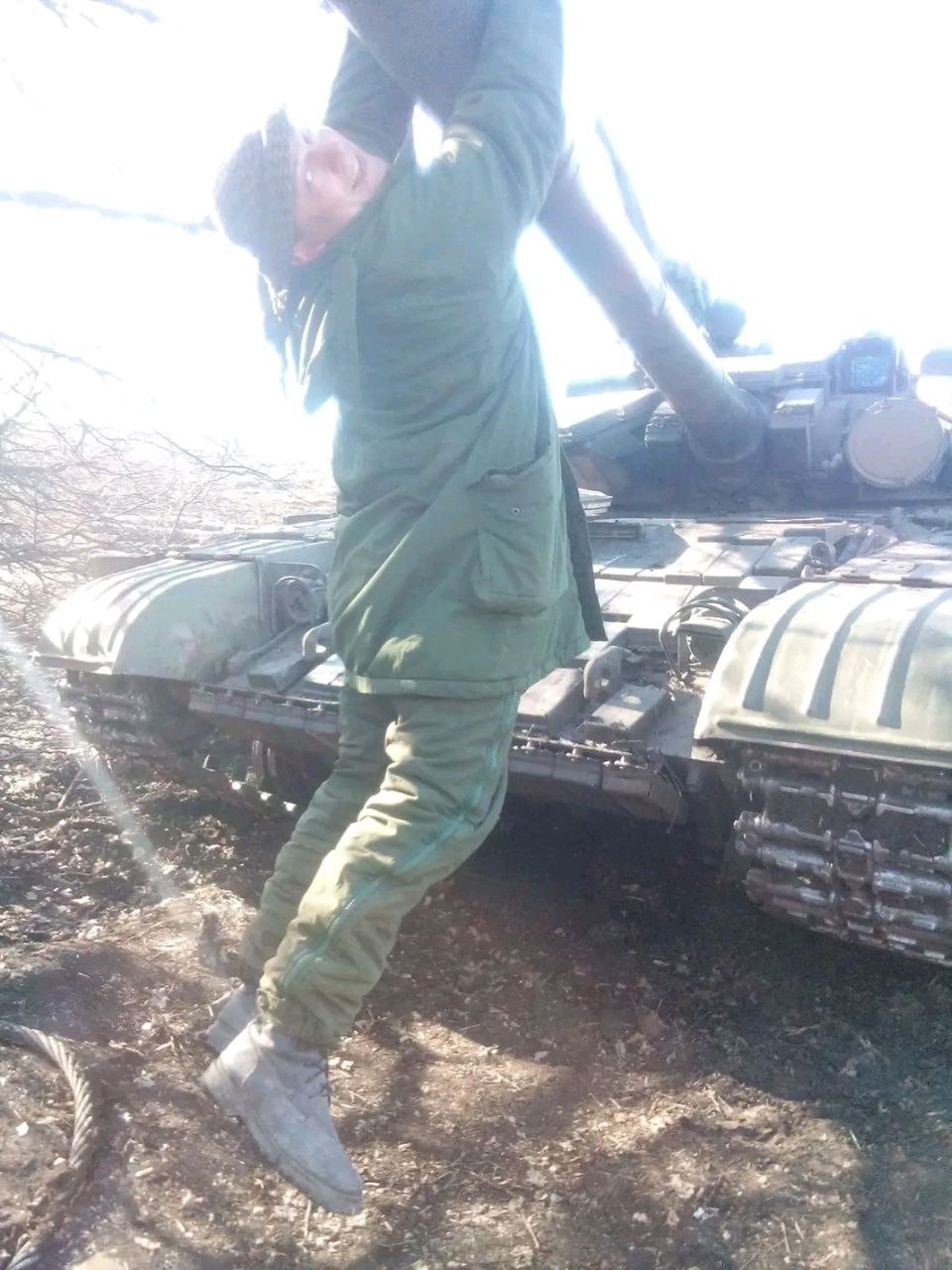
Then there were some changes in the service. I was transferred to artillery reconnaissance, an aerial reconnaissance unit. I flew unmanned aerial vehicles. I was a very poor UAV operator because I am a person who has no technical education. So I took up computer work. I served in aerial reconnaissance in the 17th Brigade for exactly one year.
- Can you say how the war has changed, its nature?
- It was then... Once Arestovych said that it was a "resort for boys". Many people were offended by him, but it was true. At least, that's how I saw it with my own eyes. The fighting, especially in 2015, after the DAP, Debaltseve... Actually, there were no more serious battles. There was an escalation in Marinka, I think, in early summer, which was successful for us - we kicked the enemy's ass. After that, there were no serious positional battles, or any battles at all. Now we are in a completely different weight category. There are many losses, many wounded. It's been going on for much longer, with no end in sight. Well, actually, these are completely different weight categories - that war and this war. Here, everything is more serious and scary.
- Is the tank scary or powerful? How do you perceive it?
- It is both scary and powerful. Not only those who are being shot at are afraid, but the tankers are also afraid, because if they are hit, they have little chance of survival... A terrible death for tankers is to be burned alive.
- How many of your colleagues went to war and are still at war?
- I know a few of them. Ruslan was a mortar gunner. Vasyl Kukharskyi died recently. I did not know him personally. Another one died, my wife knew him better, he worked at the "Atelier" theatre. I don't know much about the actor's community. I know that there are some dead among non-actors, but those who worked in the film crew when I was filming the TV series "Don't Come Out Without a Bell". A guy who worked as a prop maker for us was tortured somewhere in the Bilohorodka area at the beginning, in the first days of spring 2022. A couple of years ago, a stuntman who often doubled me in films, a very good guy Denys, died. Many of those with whom I served from the beginning of the full-scale were killed. It's all very hard.
- Should actors go to war? No one is cancelling culture, it is also important, and we need something to happen in the country. How do you feel about this?
- I will say this: everyone must fight. Otherwise, we will not win this war. I understand that not everyone will accept what I have to say, but we cannot sit back, although some people are trying. Everyone has to fight, whether you are an actor or not. If you can't fight, you need to actively help the frontline. This is on the one hand. On the other hand, I'm 47 years old, I won't say it's a very old age, but my eyesight is much worse than it was when I was 39, when I took part in the ATO. I can't run as fast as I did ten years ago, I don't have the same reaction, and so on, there are some objective age-related things. Although, I repeat, this is not yet old age, but you need to understand your physical condition. That's why I don't make exceptions for people in the arts or humanities: we are of such a delicate constitution psychologically that this is not for us... People can't even imagine how much I want to play in the theatre, act in films, do voice-overs, because I am an expert in this. But now the reality is that each of us has a military profession in addition to a civilian one. I'm not calling on everyone to join the ranks of the 3rd Assault Brigade, but you have to do something useful for the frontline.
- In 2014-2015, you started writing poetry...
- I had written them before. They were mostly poems about love, youth, and so on. But on the frontline, in borderline situations, perceptions, reactions, the sense of life and death, longing for relatives, and so on are sharpened. That's why I express it in poetry. This happens very rarely nowadays, I write very little, I don't remember the last time I wrote, really. But when it happened, I posted them on Facebook and even recorded videos with poems, not only my own. I love Zhadan, Vlasova, Vingranovsky, Stus. These are my favourite poets. But I write very rarely now.
"LITERATURE SAVES ME. IT KEEPS ME FROM DEGRADING"
- What do we hold on to now, so that we don't lose faith in our victory?
- My faith is based on a simple survival instinct. Yet, despite so many people being desperate and indifferent, there is a critical number of people who understand that we will either be destroyed or win. To survive, to ensure that our children, grandchildren, and descendants survive, we must win, we have no other choice. And no matter what anyone says about the lack of help from America, that Europe is very slow to harness - the ammunition should have been there yesterday, but it is not there today - we still have a unique historical opportunity to finally break the back of the empire, because we are supported by the entire progressive Western world. We have never, in any historical period, had such support, never. Here we have it. That is why we will win.
- What do you hold on to? What gives you strength - books, communication?
- Books, yes. I read a lot of literature. Right now I'm learning English again(laughs). I also listen to all the top experts, listen to them, analyse them. I have stopped listening to many of them because many of their predictions do not come true. But literature saves me. It helps me not to degrade.
- Are you recognisable?
- Very rarely, but sometimes they recognised me. The first reaction: "What are you doing here? Didn't you have a chance to get away?"(laughs.) That's the first thing they asked.
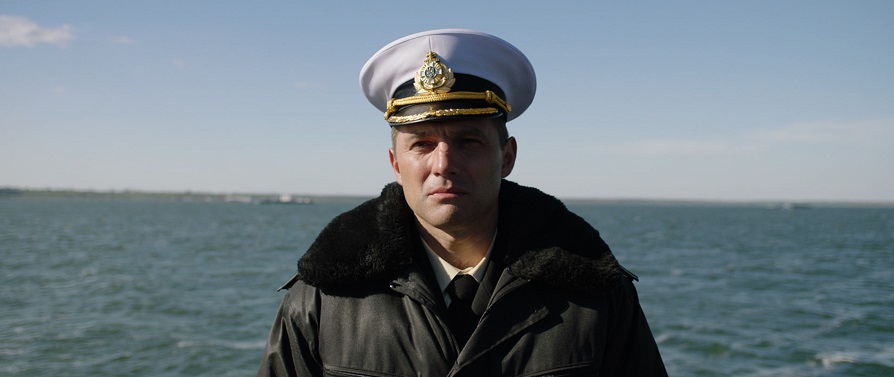
Roman Semysal in the film "Cherkasy"
Is that why there are parades, beautiful uniforms, poems, songs, films about the army and war? To somehow ennoble the generally very bloody, cynical, cruel work. There is nothing noble, nothing beautiful or pretentious about it. And in order to somehow plaster over this, all this pathetic, pathos around this profession is accumulating. Someone has to do it. Nobody likes killing, except for complete bastards, nobody likes violence - if we're talking about healthy people. But this is a very dirty job. And it was one thing when there was a wave of enthusiasm, when there were queues at military registration and enlistment offices - it was nice to see these queues, people were not indifferent, people were up. But when a month passes, a year passes, the second one begins, and the second one passes, when you get caught up in the routine, the routine, it's very difficult to endure.
- How worried are you that your sons may have to fight? How painful is this thought for you?
- My eldest son is now studying in America at one of the most powerful, leading theatre and art universities in the world. He studies there at the acting department, now in his second year, and he entered it before the war started. But he is aware that in two or three years, when he returns to Ukraine (at least, he is going to return now), he may have to run around Donbas with an assault rifle, as he said. My younger son is twelve and a half. I don't want the younger and the older to run around with machine guns. That's why we need to run around with weapons now.
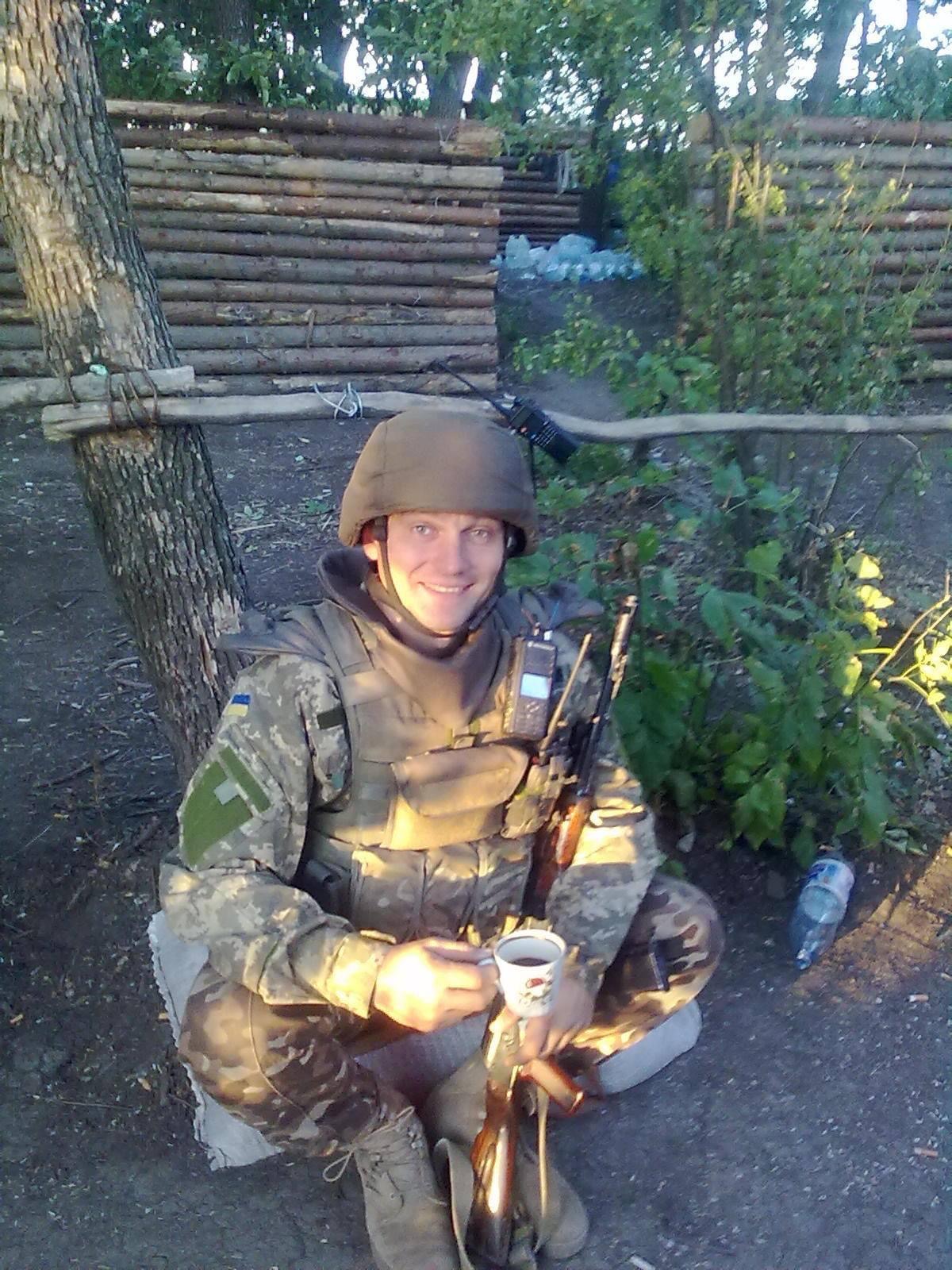
I will say even more, although it will also be unpleasant for many people to hear: I do not believe that we need to return Donbas. It is critically important for us to knock the scum out of Crimea, because it is shipping, trade with the world. Crimea is critically important. And these territories... Firstly, we will sacrifice a lot of our soldiers for these lands. Secondly, they are absolutely unusable - they are so full of explosives, the infrastructure is completely destroyed. And the people... We will not remake them, these people. We can't change them. And it's not worth fighting for their souls, it's not worth sympathy. When I was in the Kherson region, everyone helped us, absolutely everyone. Yes, maybe someone was keeping their hands in their pockets, but I have never seen such support as in the Kherson region... I was amazed at the favourable attitude of people, ordinary villagers. And in Kostiantynivka, not all of them, but half of them look at us with such thoughts: "Well, well, soon our guys will come and show you..." I even once wrote on Facebook that I had padded my tunic for one woman so she wouldn't sit on the cold cement, and she said: "What a good nation you have, a good nation." I said: "And you are not our nation?" - "No, I'm Russian". And she recognises this, she says: 'You are so kind-hearted, you help me with medicine, food, you clean the house. But still, for her, we are "another nation. A good one, but different". And I'm not afraid to say that they are the majority. This is on the territory where we are now - Kostiantynivka, Kramatorsk... And what happens to people who have been under occupation for ten years? The children have already finished school - the war has been going on for ten years... We shouldn't be fighting for this territory. I understand that this is an unpopular opinion, but I think so.
Violetta Kirtoka, Censor. NET


