



Viktoriia, wife of legendary paratrooper Pavlo Chaika: I always said he could be example for guys who are in depression after combat and injuries
Pavlo’s beloved is fulfilling the dream of her husband, who died in a motorcycle crash nearly a year ago, by organizing a large-scale marathon involving civilians, war veterans, and people with disabilities. On September 28, a 10-kilometer run will be held in Petropavlivska Borshchahivka.
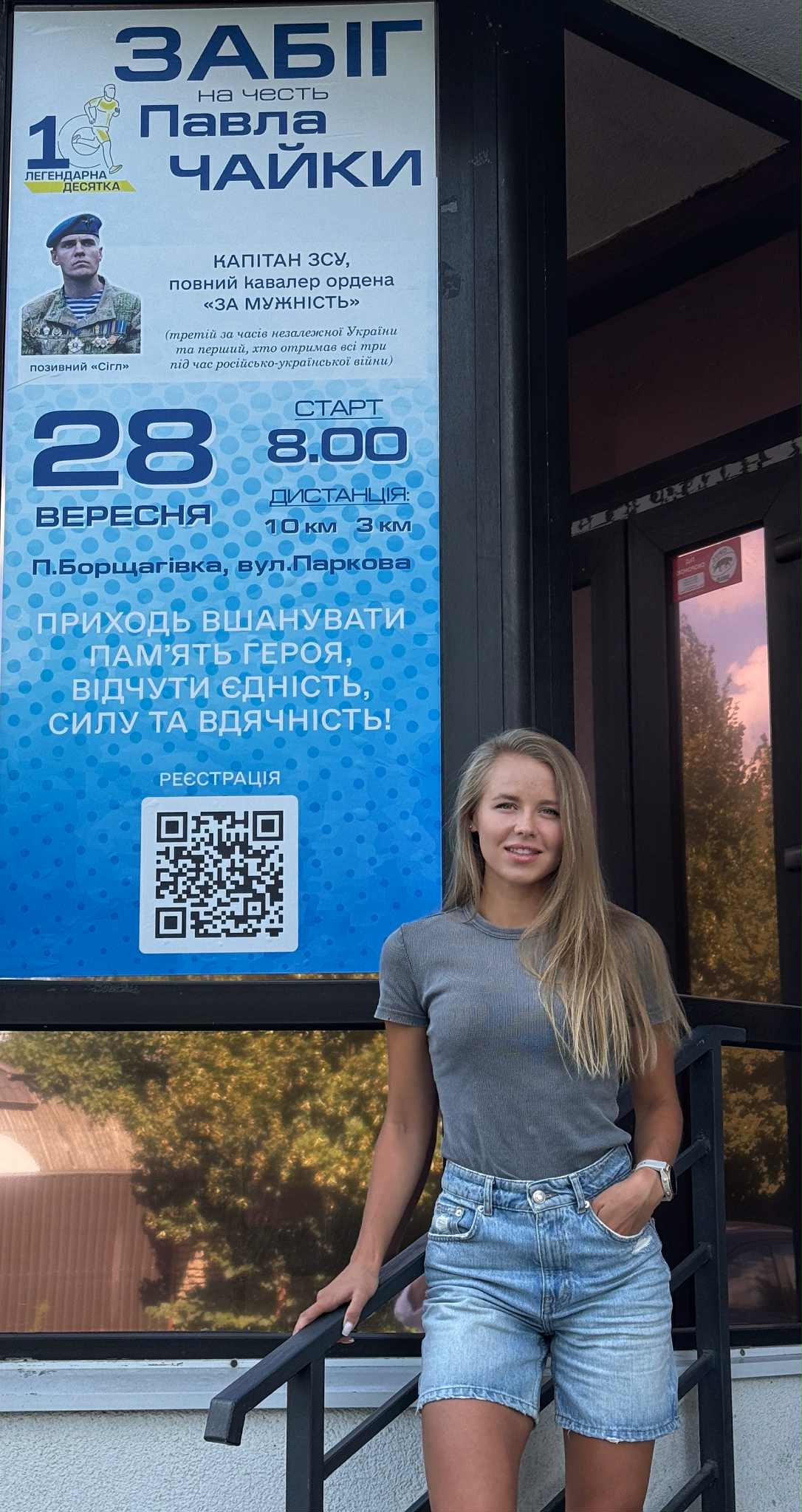
It was here that the couple lived for eight years, and here Pavlo would run his ten kilometers every morning before work.
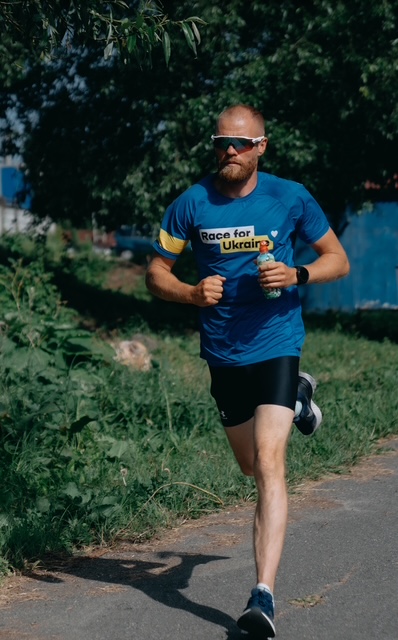
From 2014, in the first days of the Russian-Ukrainian war, Pavlo Chaika took up the defense of the country, participating in the liberation of settlements in Donbas, he repeatedly advanced into Donetsk airport, where he proved himself as a brave and resolute warrior... Since 2015, after the fighting near Debaltseve, the soldiers of the 79th Air Assault Brigade began calling this paratrooper legendary. He became the first among Ukrainian servicemen during the Russian-Ukrainian war to be awarded all three Medals for Courage. For evacuating the wounded and the fallen in the heat of battle, hiding everyone inside an armored vehicle while remaining outside himself as shells exploded around, he received the non-state award "People’s Hero of Ukraine." Pavlo was wounded twice, in the knee, the arm, and the head...He underwent several complex surgeries. But his arm never fully recovered. As for the knee, doctors constantly warned him about load restrictions, yet at some point, he started running again. And not just running—he took on marathon distances. He was inspired and supported in all his endeavors by his wife, Vika.
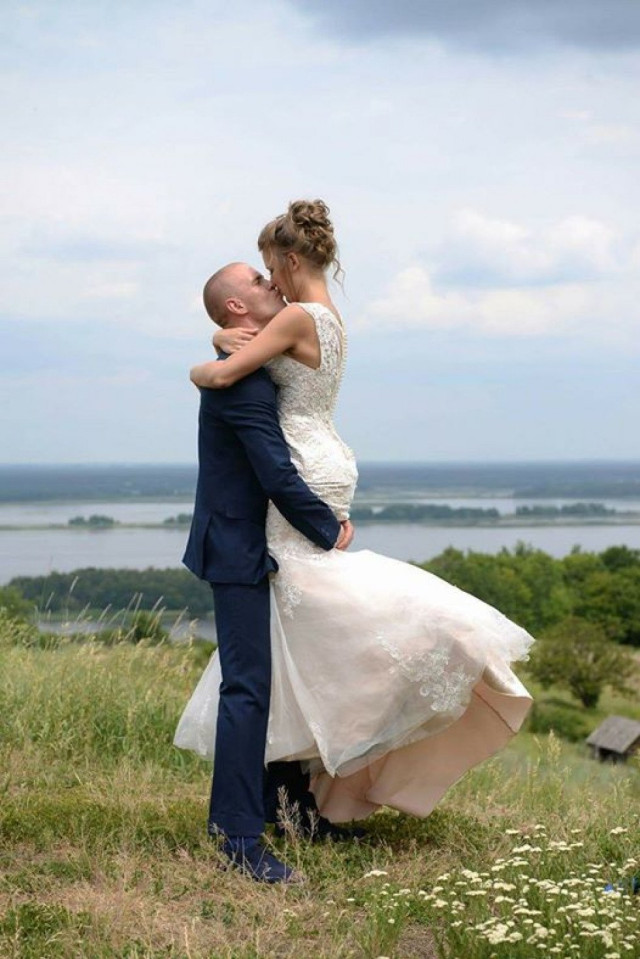
Journalists loved telling the story of this couple because it was a pleasure to write or film about such a beautiful couple—open, positive, and full of plans and dreams.
Pavlo’s military path is well known. He served in the 79th Brigade until 2016, after which he was invited to the Ministry of Defense, where he served until his discharge in 2020. Almost immediately, he received an offer to help develop a security company, which he worked on until the full-scale invasion, a moment he was preparing for. All employees of the company were well-equipped and skilled, so they quickly formed a volunteer unit in Kyiv, which Pavlo led as commander of a Territorial Defense Battalion. After the liberation of the Kyiv region, he began building a training ground, where both civilians and groups of servicemen could undergo training. Those who travel along the Zhytomyr highway can see the large billboards of the Pitbull training ground. That was Pavlo’s creation.
His death nearly a year ago shocked all his friends. On September 29, a sunny, warm autumn day, he was returning from Warsaw, where he had run a 10-kilometer race. He was riding his favorite motorcycle along a dry road in daylight. But at a curve, he suddenly veered into the oncoming lane and collided with a car...The impact threw Pavlo from his seat, and it seems he died instantly. The motorcycle burned completely. No one in the car he hit was injured, the driver escaped with only a few bruises.
Pavlo was heading to Kyiv and had not planned to stop in his native village near Lutsk. But he crashed just 20 kilometers from the home where he grew up. That is where he remained, in the Alley of Heroes. He never made it back home to his wife.
From the day of her beloved husband’s funeral, Vika spoke of fulfilling his dream by organizing a marathon in Petropavlivska Borshchahivka, where she and Pavlo had trained every day, running through all the streets. From planning and discussion, Vika moved directly into action, training herself and preparing everyone who wants to run 10 kilometers at the end of September in honor of her legendary husband.
How does a woman live after losing her beloved? Where does she find the strength to train? Has she come to terms with the loss? These are the questions we asked her.
"YOU ARE A LEGEND – SO YOU MUST BE AN EXAMPLE FOR OTHER GUYS, SHOWING THEM THAT THERE IS LIFE AFTER THE ARMY"
"We had a plan, to go to Portugal for my birthday in October last year," Vika recalls. "So we spent the whole summer working at the training ground. Pavlo was actively training everyone who wanted to get acquainted with weapons, applying his skills and knowledge. That was what he had accumulated over the years of service in the army, at war. And he had a vision of how to conduct training effectively. In addition, last summer we traveled to other training grounds, observed how they worked, to understand all the pros and cons. At the beginning of last autumn, the first championship was held at the Pitbull training ground. Everything was going well, but it took an enormous amount of time. Pavlo spent the day at the training ground, and in the evening, we would go for a walk, discussing the day’s events, with him telling me how things were going and planning the next steps. From time to time, analyzing the situation at the front and in the country, Pavlo felt powerless because he couldn’t influence anything on a larger scale. In those moments, I told him that he hadn’t survived the war in vain, that he had led people out of encirclement and survived himself. That now, the most important thing was to pass on his knowledge, teach children in schools, communicate with people, give motivation, and serve as an example. The accumulated fatigue and stress led us to decide to at least change the scenery for a week, to look at our lives as if from the outside. We needed to switch off from that constant wheel for a couple of days. That’s why we planned a vacation in Portugal. We had already bought tickets, booked accommodation, and registered for a 10-kilometer race. But then, some changes were introduced into our legislation regarding restrictions on traveling abroad due to disability. That was when Pavlo shared with me his long-standing dream: he wanted to travel abroad by motorcycle. As a child, he imagined riding far away somewhere with a group of boys like him...In the spring of last year, he finally allowed himself to buy a motorcycle, a real Harley-Davidson. It was his cherished dream. We traveled a lot together on it, even to Volyn to visit Pavlo’s parents. So I immediately said I could go to Warsaw with him. But at the beginning of September, he made up his mind: I’ll go alone. He said it very firmly. Well, if alone, then alone."
- Why did Pavlo go to Warsaw specifically?
- Because at that time, the annual marathon was held there. Two years earlier, I went with the girls I train to take part in the race. Pavlo was our "driver", he brought us to Warsaw and took care of our arrangements. But he didn’t want to run himself. After the race, he said: "Next year I’ll run the 10K here too."
Before his departure, there was a competition at VDNH in Kyiv. Pavlo ran there with me, preparing for the distance in Warsaw. On September 27 last year, a Friday, we celebrated our anniversary, eight years since our wedding. He gave me flowers and said: "Thank you for putting up with me." He kissed me and left. That evening, something strange started happening to me, I cried for no reason, I was shaking…
- You two hardly ever parted...
- We were together all the time! It was easy for us to be just the two of us. Everything was shared: what was mine was his, what was his was mine. We supported each other in everything.
On Saturday morning, I met with the girls for training. We suddenly began talking about Pavlo, they started asking me about his story. In two years, we had never had such a conversation, but suddenly everyone was curious. I kept talking, but inside I felt everything tightening. I thought to myself: "This is a strange feeling. I don’t like it."
- Did he call you those days? Did he tell you where he was and what he was doing?
- Yes. He sent me video messages. We were constantly in touch. He arrived in Warsaw safely. He told me he was going to bed. In the morning was the race, we talked before it, and Pavlo crossed the finish line with me, over a video call.
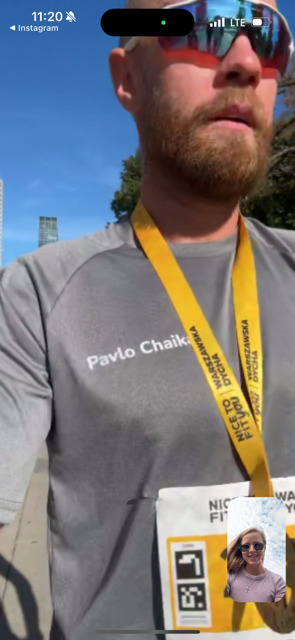
"FOR ME, THE MOST IMPORTANT THING WAS THAT MY HUSBAND WAS HAPPY"
- When did Pavlo start running? Was it your initiative?
- Not at all. But I was always telling him what happens to the body when you run, what it’s like to run marathons. I had been running all my life, since childhood, and I constantly trained people. He saw this and often attended my training sessions. I would tell him: you serve in the army, where the approach to physical training needs to be modernized. You can run to the training ground and back. And he suggested doing that in his unit. That’s how he started running to the training ground and back. At that time, his disability status had not yet been documented. He didn’t think it was necessary, so for a long while, he didn’t confirm anything officially, even though his arm wasn’t fully functional. Later, his knee required another surgery. That eventually led him to transfer to serve in the Ministry of Defense, and we moved to live in Kyiv.
He had knee surgery right before my first marathon in Kyiv. I was running the distance, and he was waiting for me at the finish line on crutches. I was approaching the 38th kilometer when it started raining. Pavlo was standing there, waiting for me, hungry, in the rain. "I need to run faster, because I feel sorry for Pavlo", that was the only thought I had at the time.
After rehabilitation, he slowly started running again. I advised him to look into marathons for war veterans. I was sure that something like that must exist, that guys would gather, train together. "You’re just not interested in it," I told him. And he eventually did find such runners. We began training with them at the Olympic Stadium. I would tell him: "Look at your build. God spared your life. You’ve got long legs, you’re tall and lean. Your brain works, your heart is strong. You have everything you need for running. And you can be an example for the guys who are struggling with depression after combat and after injuries. You’ve been through all of it. And you are a legend. That has to work."
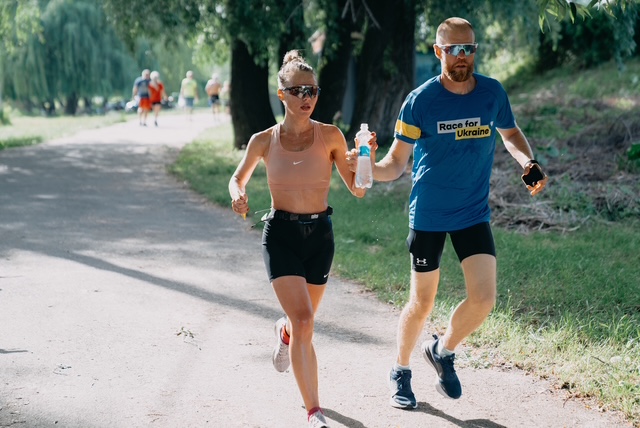
Training and preparation gave him the opportunity to go to the United States for a marathon. And that was an incredible experience for him. He finally began to accept that there is life beyond the army.
Before his trip to the U.S., we had already traveled abroad together. After our wedding, we visited Poland. Then, Ihor Zakharenko, the owner of the Feieria travel agency, gave us tickets to Croatia, and the following year we went to Cyprus. We always tried to travel somewhere, to see the world.
How did we usually travel abroad? In the first days, we would walk around, go running, and at the end of the vacation we would take part in a local race to seal the trip with good impressions and emotions. We checked the race calendar for when marathons were held in Portugal. We saw that in the fall, races were scheduled in the city of Porto. And we decided - we could combine everything, as was our tradition. See the city, with its special atmosphere that gives you a good mood. And take part in the marathon.
- When did Pavlo say he enjoyed running? When did he start getting a thrill from it?
- At first, Pavlo just came to my competitions. Everyone was happy to talk to him, take pictures with him. I would tell him: "So many people respect you. And you feel needed. If you also start running, it will be an example for others to follow. People enjoy talking with you, you’re easygoing." Pavlo underestimated himself for a long time, but over time, we managed to overcome that.
Even without training, just thanks to his excellent physical abilities, he could cover ten kilometers in 38 minutes. That’s a very good result. He was always very proud of it: "See what I can do!" But of course, you need preparation for a marathon. You can’t run a marathon without consequences, even if you have perfect natural ability. At first, he came up with his own training plan. I told him: "No problem, do it the way you like, but remember, you have a coach right next to you." It was important for him to do something on his own. And for me, the most important thing was that he was happy.
When Pasha started training, his old injuries began to make themselves felt. He went to see a traumatologist, who advised him against heavy loads. But Pasha had already decided he would try to take part in a marathon. Eventually, he went to Washington, where he found great inspiration. It happened to be on my birthday, October 25, that morning, he had a ticket. At five in the morning, he gave me a bicycle and roses, and then left. A week later, he returned motivated and energized. It was after that trip that we registered a civic organization. He became passionate about organizing something similar in Ukraine. I told him: "You do understand how much it will take? You need to involve everyone, find those who are interested. At least we should start doing something, study how such races are organized." But we never had enough time to take it up seriously. It became a long-term dream — someday to organize a similar war veterans’ marathon in Ukraine. From time to time, we discussed this idea and planned how we would do it.
Pasha often recalled that marathon in Washington and would say: "Why can’t we have it like in America? So that anyone who wants to can run. So that people see that even with a disability you can grow, be part of something good, and, ultimately, make peace with yourself."
After Pasha was killed, I decided to finish what he hadn’t managed to complete. From now on, every year on the last weekend of September, there must be a legendary 10K dedicated to the memory of Pavlo Chaika.
- The first run is scheduled for September 28. Will it be exclusively for war veterans?
- Of course, the scale of the event depends on the number of participants. But I’m trying to spread the word to everyone that this race will take place. So please join in. I welcome all participants and running sponsors as well.
"RIGHT NOW THERE IS A LOT OF TALK ABOUT HOW TO OVERCOME AN INNER CRISIS OR TRAUMA. ALL MY LIFE I’VE DONE IT THROUGH EDUCATION AND SPORT."
- Why was it decided to hold the race in Petropavlivska Borshchahivka?
- Every morning Pasha would get up at five o’clock and run his 10K. It doesn’t really matter which streets are used for the marathon, because we used to run all over the village. But I’d like it to feature a pleasant landscape and the main arteries of the community. So that people can also discover Petropavlivka, because it’s a beautiful village, and realize that you can enjoy life right at home. A run is always a family event. When one family member is preparing, the whole family gets involved, because you need to consider many things: nutrition, sleep, time management. During preparation, all the weak spots in family relationships come to light. So while training for the run, you also train your ability to compromise, communicate, and be open. When you prepare for a race once a year, an inner transformation process begins: you feel motivation and a push to live better. Your biorhythms change, as do your energy levels and hormones. You change yourself. I believe sport is an integral part of family life. It’s a form of shared recreation. If you know how to rest properly, you are strong, healthy, and eager to engage with something bigger than just eating, sleeping, or drinking alcohol on weekends. Your interests, priorities, and values change. And when you live like this, you begin to seek out and surround yourself with like-minded people.
In 2018, we already held a half marathon in Petropavlivka. The starting point back then was at the "Chaika". But now it’s a different time. These days, there’s a lot of discussion about how to cope with an inner crisis or trauma. All my life, I’ve relied on sports and education to get through such things.
Events like this also give the village itself a chance to grow. It benefits everyone. I’m certain of that.
- I take it the route will definitely pass by the fir tree you and Pavlo planted together?
- Before the New Year in 2023, the students asked me: "Coach, what should we give you as a New Year’s gift?" I thought about it. I didn’t really need anything special. What I wanted was for people to keep coming to training and changing their lives for the better. But for all of us, we needed something unifying. That’s when I thought: we could plant a fir tree, a place where we could gather, our meeting point.
So we decided to plant it in the spring, right after the half marathon in Warsaw. And at some point I said to Pasha: "You’ve built the training ground, you’ve planted the tree. The only thing left is to have kids..."
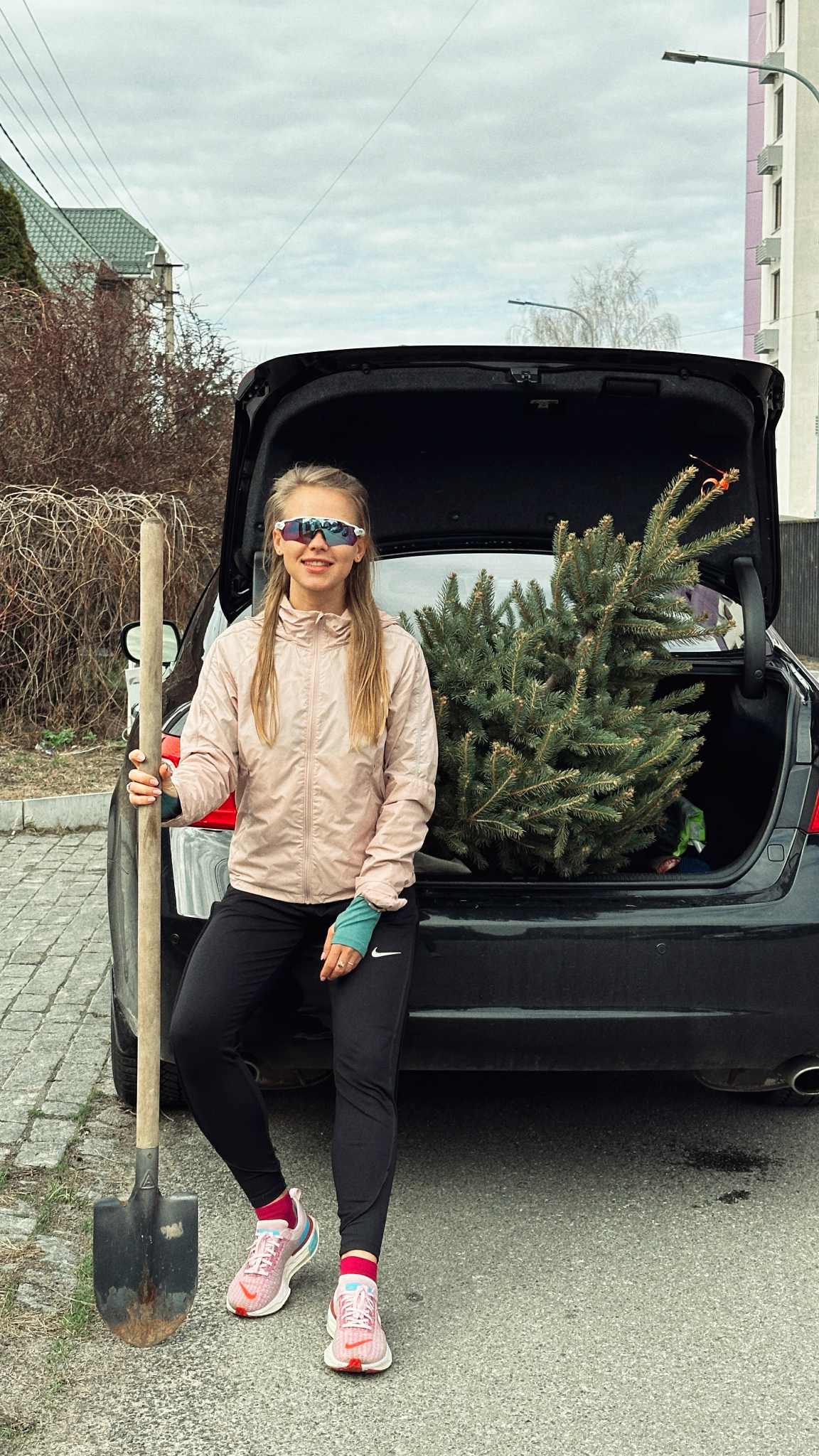
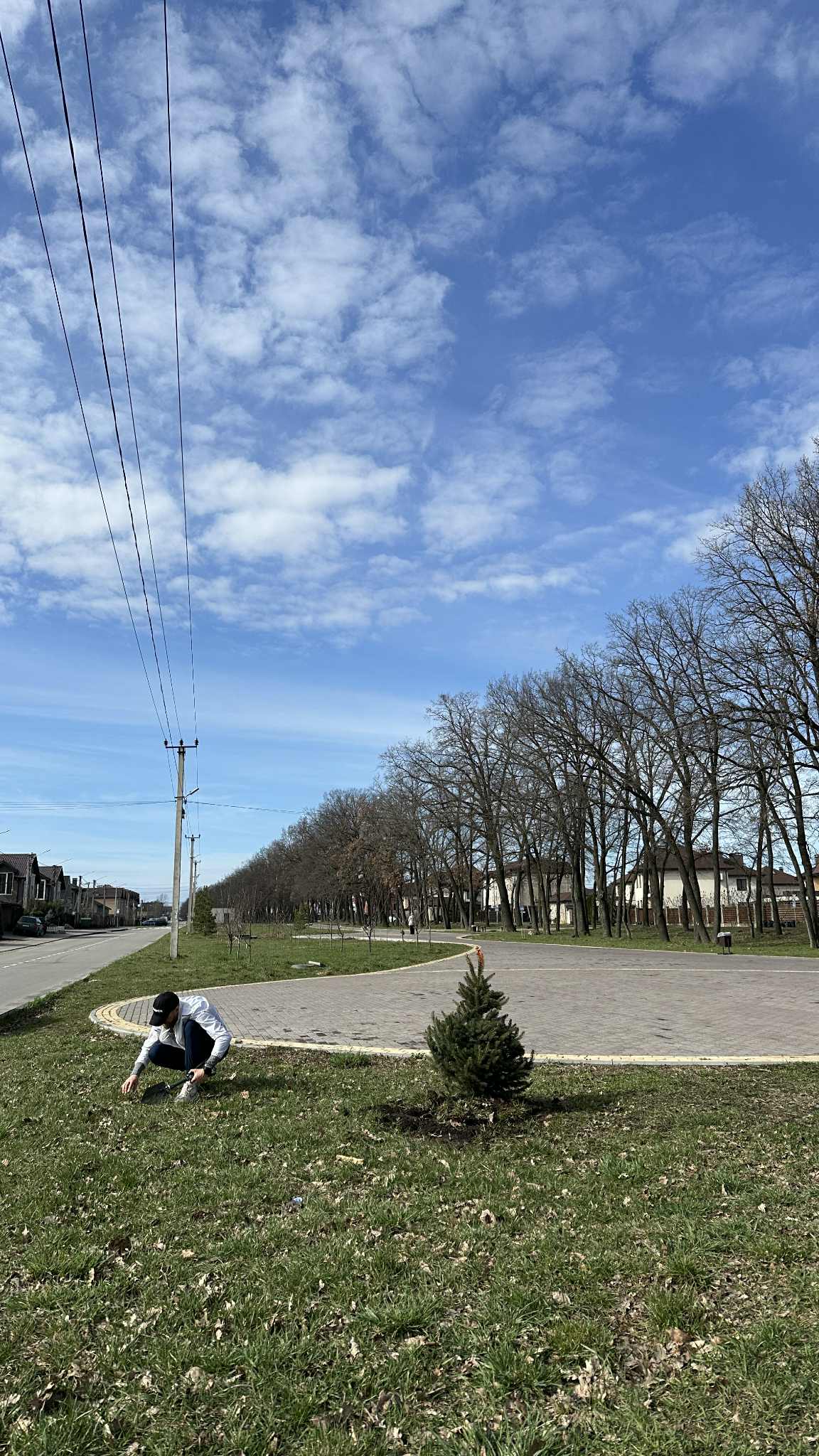
A stone stele with a QR code has been installed near the fir tree, allowing anyone to learn more about Pasha.
- Have you learned to live without Pasha?
- I feel like I'm at work here. You have to do something all the time.
I realize that he was killed. But there’s no sense that he won’t walk through the door again. I miss his presence, his vitality. I’ve already said that the bond between us was very strong, probably on a subconscious level. I could sense, down to the minute, when Pasha would appear at the doorstep, what mood he was in. By the sound of his steps in the stairwell, I knew what he was about to say. We had a life plan mapped out 60 years ahead. He was the only reliable person I entrusted my life to, the one who made me feel safe, where I could simply be myself.

- When did you start running yourself?
- Around the age of ten. A coach came to our village. He worked in the district at a youth sports school and announced a track and field tryout. That’s how I started training. I went to everything, kids’ athletics, then stayed for adult training, and afterward played volleyball or basketball. Later, I enrolled in a sports school in Mykolaiv.
- So from then on you had a constant need for physical activity? For example, if you don’t run for a week…
- …I feel empty. I guess I was born this way. I feel like I can’t get enough oxygen. I also enjoy exploring places wherever I am, and I do it through running. You run for an hour, cover 12 kilometers, and you discover so much, what interests you, what doesn’t. You save time that way: you’ve trained and also explored the area.
- After Pasha was killed, did you stop training for a long time?
- For at least a week, I didn’t run. I was completely shut down…
- Can you name the most important race you and Pavlo took part in?
- Not just one. The ones where he won.
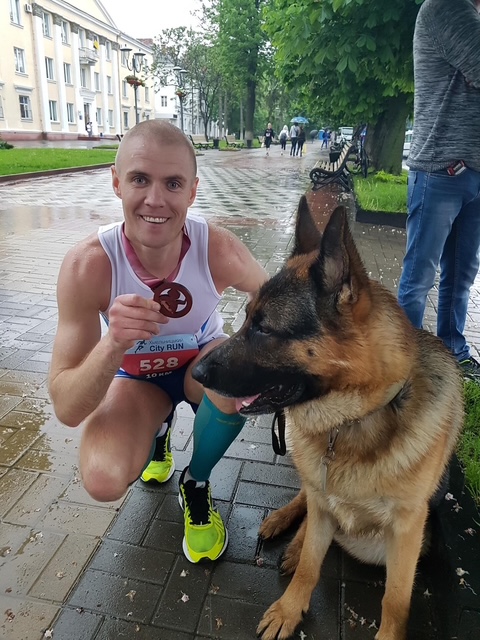
- Which awards were dearest to Pasha?
- "Mine," Vika laughs. - "He loved experiencing emotions through me, when I achieved something, when I set personal records."
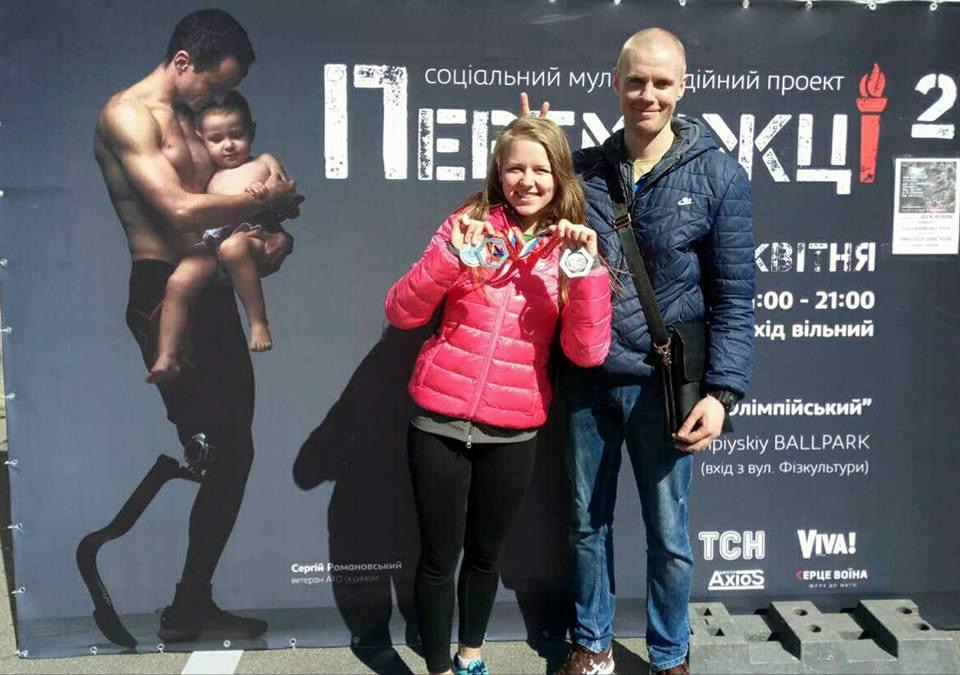
When the full-scale invasion began, Pasha insisted that I go to Lithuania. The first thing I checked there was whether they held marathons and when the next one would be. It was exactly 41 days away — enough time to prepare. I ran it and finished third. Soon after, I returned to Ukraine, I simply couldn’t stay away from Pasha for so long. And he missed me terribly, too. He drove to Poland to pick me up, he was even ready to go all the way to Lithuania just to bring me back…
In the autumn of 2022, I traveled to Norway, where my mother and my younger sister’s family now live. In Oslo, I wanted to run a half marathon. But I decided not to spend the money and instead spend time with my family. And then, imagine this: I step outside, and the first person I see is a runner. I tensed up, hoping it wasn’t a race! But then I almost cried, because in the very town where my family lived, a run was taking place, one that happens only once a year. And I had no idea! Otherwise, I would definitely have taken part.
- Do you regret anything you didn’t manage to do with Pasha? Maybe something important you didn’t say to him, or something you kept putting off for later?
- I don’t regret anything. We did everything on time, we talked about everything. We accomplished so much. And we were never afraid to share all our thoughts and feelings with each other. I don’t regret a thing. All the years I spent with Pavlo, we were happy.
More details about the run dedicated to Pavlo Chaika can be found on the Facebook page.
To register for participation, follow the link.
https://e.ticketme.org/events/Pavlo-Chayka
Violetta Kirtoka, Censor. NET


