



Yurii Syrotiuk: "We had to live in trenches filled with corpses of Muscovites"
Yurii Syrotiuk, a former Member of Parliament and now a senior sergeant with the fire support company of the 5th Separate Assault Brigade, has been on the front line for years. In 2014, he volunteered to go to the front and fought for several months in the Donbas. After Russia’s full-scale invasion began, he once again joined the ranks of Ukraine’s defenders. Despite the exhaustion, he hasn’t lost his sense of humor.

- "I like to joke that I’ll never die, I’ve got parliamentary immunity! The guys always laugh at that," he tells me with a smile during the interview. "For me, war is about attitude. I want it to be worthy—both mine and that of those around me. War is like the weather: we didn’t choose it, but we still have to fight. So why should my brothers-in-arms and I do it in a bad mood?"
- From the very beginning of the war, when you were still a member of parliament, you visited the ATO zone. Did you realize back then that a full-scale invasion was possible?
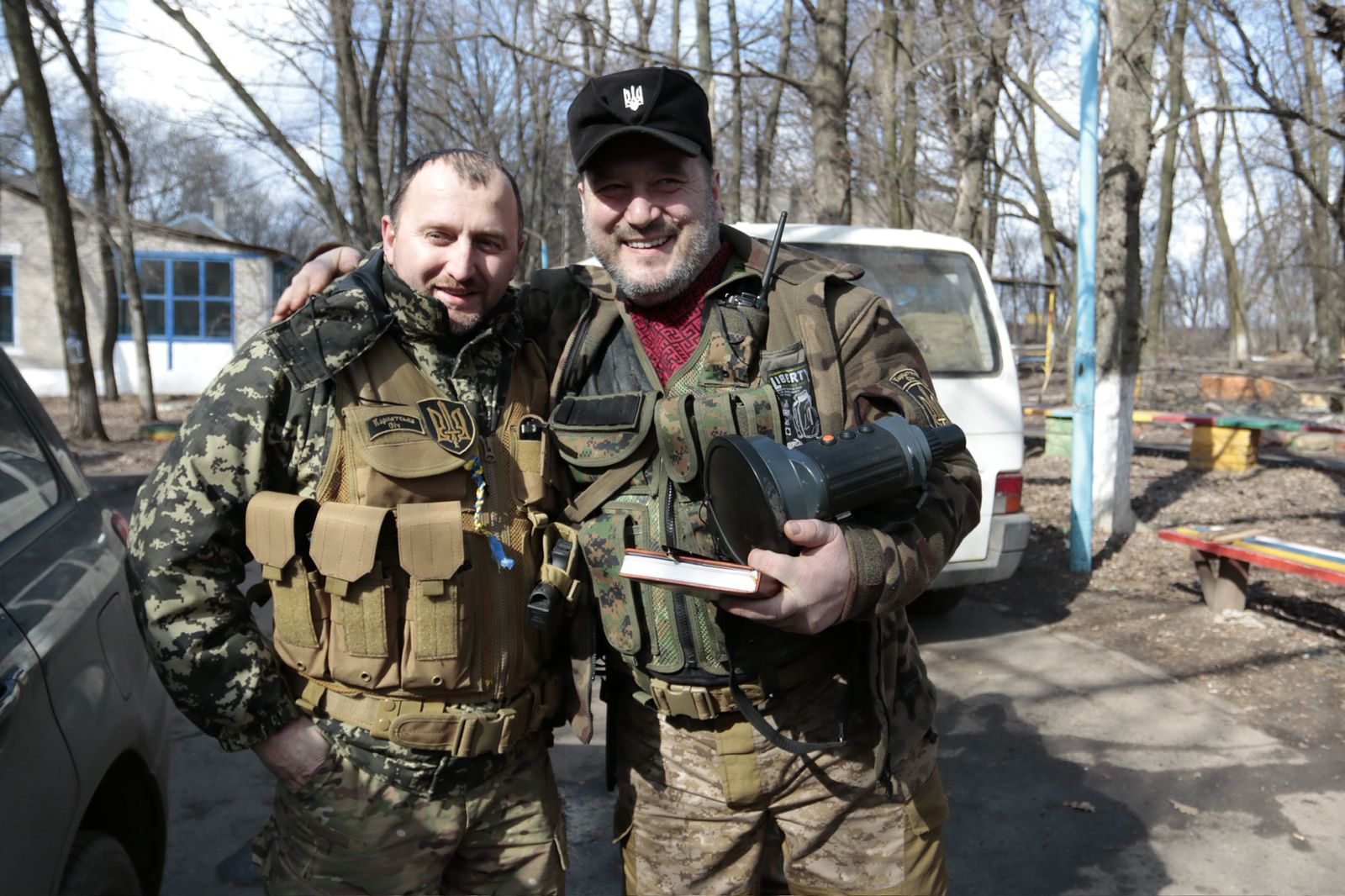
- "Ever since Ukraine regained independence, I knew there would be a war between Ukraine and Russia. My grandfather was killed serving in the Ukrainian Insurgent Army. My father was deported to Siberia as a child. He returned as an adult and always hated everything Soviet. In 1994, when I had just become a student, I signed up to go to Chechnya as part of the Ukrainian National Assembly – Ukrainian People’s Self-Defense (UNA-UNSO). Unfortunately, the previous group never made it, they were stopped, so that mission never happened for me. Since my student years, I belonged to the nationalist organization Trident named after Stepan Bandera, and later headed its branch in Ternopil. I grew up in an environment where we understood that a war with Russia was inevitable. Many laughed at us because we marched in formation, trained, and studied. Criminal cases were opened against us, Trident was considered an illegal paramilitary organization. As a straight-A student, I was taken to the Ternopil police department about once a week and they really gave me the works."
After leading Trident, I had a hard time finding a proper job. Although I graduated from Ternopil Pedagogical University in 1998 with a diploma with honors, I was effectively blacklisted. Some people received referrals to postgraduate study, others were kept on at the university, but despite being one of the top students, I searched for work for a long time and barely landed a post in some small village. I worked there for a year, although they didn’t pay my salary.
In 2014, already serving as a member of parliament, I understood from the first days of the war what was happening, so I demanded the evacuation of military plants from the Donbas, the Donetsk gunpowder works, the Luhansk cartridge plant, and Zoria. I sent letters and appeals to Yatsenyuk. He forwarded them to the then minister of economy, Sheremet, who replied: "There is no war. It’s not practical. There’s no money. It’s all too expensive." As a result, we lost production, both shells and gunpowder. Around the beginning of March, I registered a draft resolution calling for the closure of all border crossings and for mining the state border with Russia. It was debated for a long time, but was eventually implemented.
At that time, I was a novice in the security and defence field, and I had only been an MP for a short while. When I joined the relevant parliamentary committee, which included heavyweight figures like Kuzmuk, Lytvyn and Martyniuk, I felt the need to represent the opposition properly. So I put together a team of young students and we focused on the security and defence sector (they still work with me today; we formed the Ukrainian Studio of Strategic Studies to develop proposals and initiatives). I kept sounding the alarm about war, campaigning and speaking out. I proposed effectively turning the National Guard into a Special Operations force. I was the first to register a law on weapons. But the most important thing we did and which still hasn’t been implemented, was that in 2014, I filed a draft resolution on building a defensible Ukrainian state and society. Its preamble states that Russia is an existential threat, so we must be prepared for total confrontation with it. The concept envisaged that every child in Ukraine should, from an early age, join military-patriotic organisations and attend various children’s training camps. Next, compulsory service on the Swiss model: every person, male and female (girls optionally), should complete at least five months of marksmanship courses. Without those, it would be impossible to join any security force. Afterwards, every Ukrainian would take part in training exercises once or twice a year and belong to a people’s reserve. The plan was to create a society that is peaceful, but armed to the teeth.
Of course, I realized that a full-scale invasion was inevitable. You remember — people in our circles talked about it constantly. My aide became the commander of the 2nd Battalion of the National Guard and fought near Sloviansk when Girkin captured it. I was the first MP to go to the front to visit my comrades, but I ended up in a skirmish myself, I wanted to shoot a bit. I was younger then, and it all seemed exciting (he smiles – O.M.). In December, after resigning my parliamentary mandate, I volunteered to join Oleh Kutsyn’s Carpathian Sich and stayed there until March 2015.
- I often hear from soldiers who were also preparing for the invasion that, deep down, it was still hard to believe it would actually happen. Yet in the final months before the attack, the situation was extremely tense. Western partners were warning Ukraine about Russia’s plans. What were the last few days before those fateful events of February 2022 like for you?
- In critical situations, I become very calm. The only thing that gives me away is that I might joke or laugh. So I took it all quite steadily. On the morning of February 24, the missiles started flying. My frightened wife woke me up and asked what to do. I said, "If the war has started, we should get some proper sleep first, then act calmly." I felt no panic, no rush, no fear.
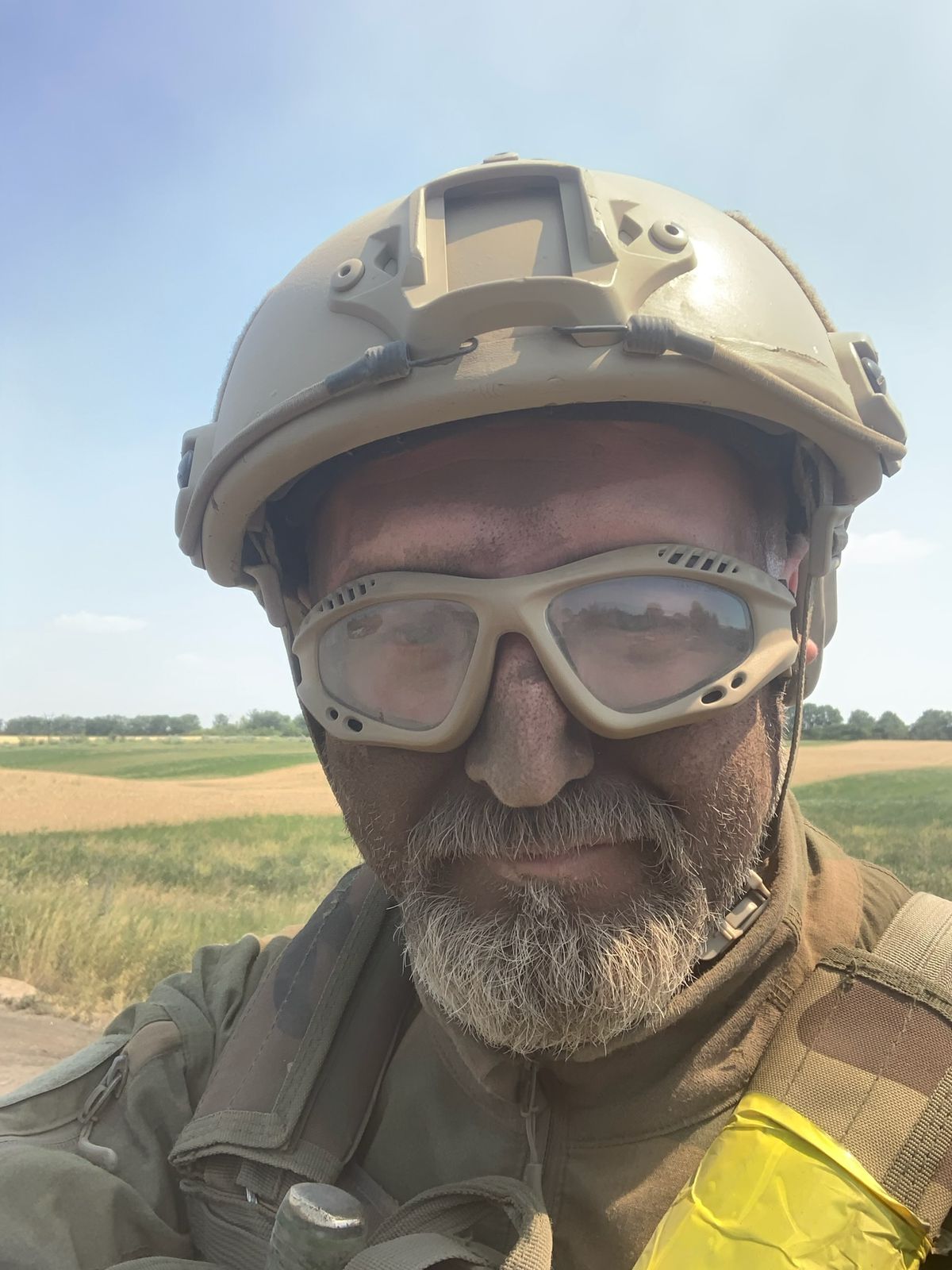
Then my wife asked to evacuate them because she was worried about her mother, who lived near a military base. I said I couldn’t travel west of Kyiv. It turned out our younger son, who was only 14 at the time, later drove them out. He drove across Ukraine to Volhynia to my mother without a licence. As I was leaving the house, I looked into my older son’s eyes (he was 17) and realised he would never forgive me if I didn’t take him with me. I said, "Pack up." I took the younger one, two neighbours and my godson, who was a year older than my son and went to the Volunteer Formation of the Territorial Community (VFTС) "Svoboda." Because I had raised my children from childhood to be ready to fight the Russians, my younger son, who had previously spent two or three months each year at patriotic children’s camps, became one of the best instructors in the first days of the war: teaching grown men how to handle weapons, how to strip them, how to move with them, and so on.
- You and VFTС "Svoboda" were initially in the Kyiv region. Tell us about that time.
- At first, there was uncertainty. You remember, on the first day, there were reports that the Russians were already advancing along Peremohy Avenue. We climbed onto the roof of the Kyiv "Svoboda" office building, where we were based, with our assault rifles and held all-round defence. On the second day, we woke up and were told the Russians were breaking through from the Vyshhorod direction and heading toward Obolon. We went there to dig trenches. Later, we were on a city bus when a missile struck the TV tower nearby. As the bus turned away, a second one hit. Fortunately, there is the wall of Lukianivske Cemetery there, so the blast wave passed over the bus, blew out windows in nearby buildings, but we came through unscathed.
Around the third day, we received word that the Russians were breaking through toward Brovary and we had to get there to defend. I remember the feeling: we were on a city bus heading for the town. I knew our special forces were already sitting in the woods along the road. Beyond that, who knows who was out there. And we were driving on (he smiles – О.М.). We arrived in Brovary, they handed us bottles of incendiary mixture and said, "If Russian tanks come through, your job is to throw these bottles and try to stop them" (he smiles – О.М.). I laugh about it now because I realise we would have been dead in the first few seconds. But at the time, my son and I sat on that bridge next to those bottles and knew: if tanks came up, we would throw them. Later, we moved to the Baryshivka district. They issued us large anti-tank grenades and again said, "If there are two platoons or a Russian tank company, you must throw them." These were huge Soviet-era grenades, like from World War II. And again, we thought we would do exactly that. Looking back now, it was absolute madness. But at the time, we understood very little about war.
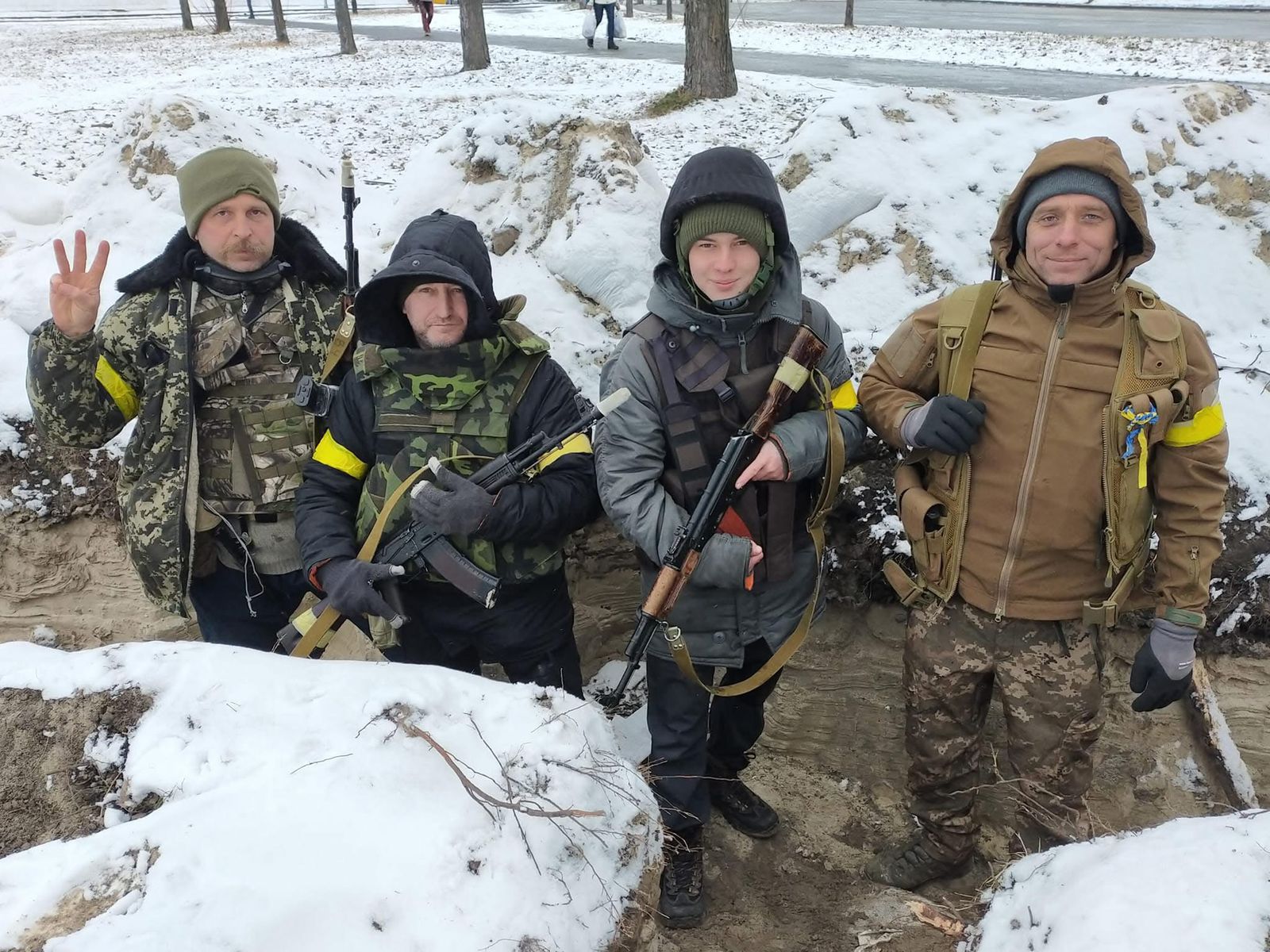
Then our counterattack on the village of Lukianivka began. It so happened that my son and I were standing watch at a checkpoint, the guys went off to storm the village and left us behind. I looked at my boy and thought: how could I miss an action like that? So, probably committing a "war crime," we abandoned the checkpoint and went after our guys to join the assault. It sounds funny now, but we advanced all out. By evening, we reached the far end of the village. I saw our special forces consolidating in the middle while we continued to clear further in. At dusk, we returned and those guys shouted, "Are you crazy or what?! We would have shot you in the dark, we don’t know who’s moving around!" That was the whole romantic side of it.
Overall, there was a lot of luck in the battles for Kyiv. Our nerves were still holding. Also, the environment, volunteers desperate to fight, mattered. You know, I felt somehow safer next to my son, because in those first days I thought he was a better fighter than me. He seemed more prepared. I worried about my godson and tried to keep him somewhere to the rear. After all, the father didn’t take his child to war, but the godfather did. Those were my first impressions.
- What did you do after the fighting around Kyiv subsided?
- We were figuring out what to do next and where to go. Svoboda began forming a battalion within the National Guard, but at first, they only took two companies, some of the guys who had been in Irpin and Bucha. Those of us who had held the Baryshivka sector were told to wait a week or two. We didn’t want to wait. What if the war ended in that time?! Personally, I blindly believed we’d be in Crimea by summer. That belief was irrational, but it pushed us to catch whatever action was coming. So we scrambled to find somewhere to attach ourselves. I even had a military service exemption certificate, so it wasn’t straightforward for me. We went to one special unit, but their whole plan was: "The Muscovites will come here, and then you’ll act." That didn’t appeal to us. Then one of the football fans of Lviv's Karpaty said a new-type assault unit was forming in Kyiv, built to NATO standards and rooted in Cossack traditions. Commander Pavlo Palisa had come from America, where he’d trained. That sounded interesting. We went, talked it over. Palisa interviewed everyone. We moved quickly through the enlistment office. I finally got a military ID, I hadn’t even had one before. They didn’t take my son because he wasn’t 18 yet. I argued with the draft office and called every general I knew: "Help get my son into the army!" The draft officer told me, "You’re abusing your status as a former MP!" (he smiles – О.М.). I said, "How? I’m not trying to get him off, quite the opposite!" It didn’t work. Our group from VFTС "Svoboda" and some Karpaty fans ended up, as planned, in the newly formed 5th Separate Assault Brigade. We were fired up!
While the unit was forming, we all stayed in Kyiv. Every day, we ran and worked on physical training and tactics. Each evening, on the banks of the Dnipro, I gave 15-minute history talks to anyone who wanted to join, covering the Russo-Ukrainian wars. Meanwhile, the guys were entertained by performances from Mohylevska, other odds and ends. I went to the political officers and said: "Listen — people are going to war. You have to give them the highest level of motivation, reasons worth dying for. You can’t do that with these odds and ends or blah blah. What we need are people like Taras Kompanichenko and Roman Koval. People must be charged up for war and told about it." In practice, I acted as an improvised political officer (he smiles – О.М.).
Before the "five" went to the front at the end of June, we spent three days at the training range, basic combined-arms training (he smiles – О.М.). Palisa asked us, "Guys, who do you want to be?" We said, "We don’t care. Tell us." He replied, "There are new American grenade launchers, MK-19s. Nobody knows how to use them. You’re a bit sharp. How about you become the grenade launcher crews?" We agreed. It turned out to be a lucky choice: with a 30-kilogram grenade launcher, you don’t go in first, you drag it in behind someone. You don’t immediately present yourself to the sights, and your survivability is much higher than those who jump into the trench first. So we spent three days on the range: fired assault rifles, worked with that grenade launcher that no one in the army really knew how to use at the time. Then we left. We had our own vehicles, pickups and full gear. Near Lysychansk, we had to stop the Russian advance after they seized Sievierodonetsk. We were the first to arrive on the front, and we never left. Looking back, I can say my VFTС and 2014–2015 experience seems like child’s play now.

- What was that period like for you?
- At first, we got roughed up, like any new unit. We even had cases where some soldiers recorded pleas like, "Mom, take me home." Some ran back to Kyiv. People were asking, "How come our guys were sent to war without F-16s and aircraft carriers?!" (he smiles – О.М.). But we didn’t run in the first fight. We gathered whatever had been left behind. I can’t say our battles for Lysychansk were fully successful, but our grenade-launcher platoon performed well, we were among the last to withdraw, providing covering fire and handling evacuations.
From there, we went to the Vuhledar TPP, then to Mayorske. That’s where the "Five" really formed into a combat unit. There was an episode: we lost a position and the commander ordered it retaken. We did. But the reinforcement group didn’t get in time, and the men who had been holding it were, sadly, killed. A second assault group then recaptured it, but they ran into Wagner forces and again our men were killed. The third group finally drove the Muscovites out. We covered all of that. After that, the "Five" became properly "hardened".

Next came the "resort" in New York, that’s what we called our position near Horlivka, just 200 meters from the Russians. There were open trenches and solid dugouts. I even dug out a sauna right on the position. Since the line of contact had been there since 2014, sometimes we had to come up with our own ways to shoot and fight.
At some point, we were assigned to Syrskyi’s reserve. In December 2022, we were pulled out and sent to Soledar during the final battles for the city. We had two grenade-launcher and two machine-gun teams. We worked hard. There’s a video from near the city showing a group of 20–30 Wagner mercenaries charging at us and we just killed them. It was strange to watch them being driven to slaughter like that.
Then we were redeployed to Bakhmut. We were near the "airplane" monument. I worked with an M113 armored personnel carrier. We mounted our grenade launcher on top, and I fired from there. By the way, in the first phase of the war (from early 2022 to the winter of 2023) it was the most fearsome weapon on the front line. Wherever there was a good MK-19 crew, the Russians had no chance of advancing. Back then, the Wagner troops were coming at us from the direction of Klishchiivka. We were taking them out together with other crews positioned on the upper floors of nearby buildings.
We held Bakhmut for a long time. When the army withdrew from the city in May 2023, we kept fighting on the outskirts until December. Then came the brutal battles for Klishchiivka. We advanced, moved positions, and often had to live in trenches filled with dead Muscovites. I remember on one stretch of the front, maybe five meters wide and fifty long, I counted more than forty of their bodies. Those were the conditions we were in.
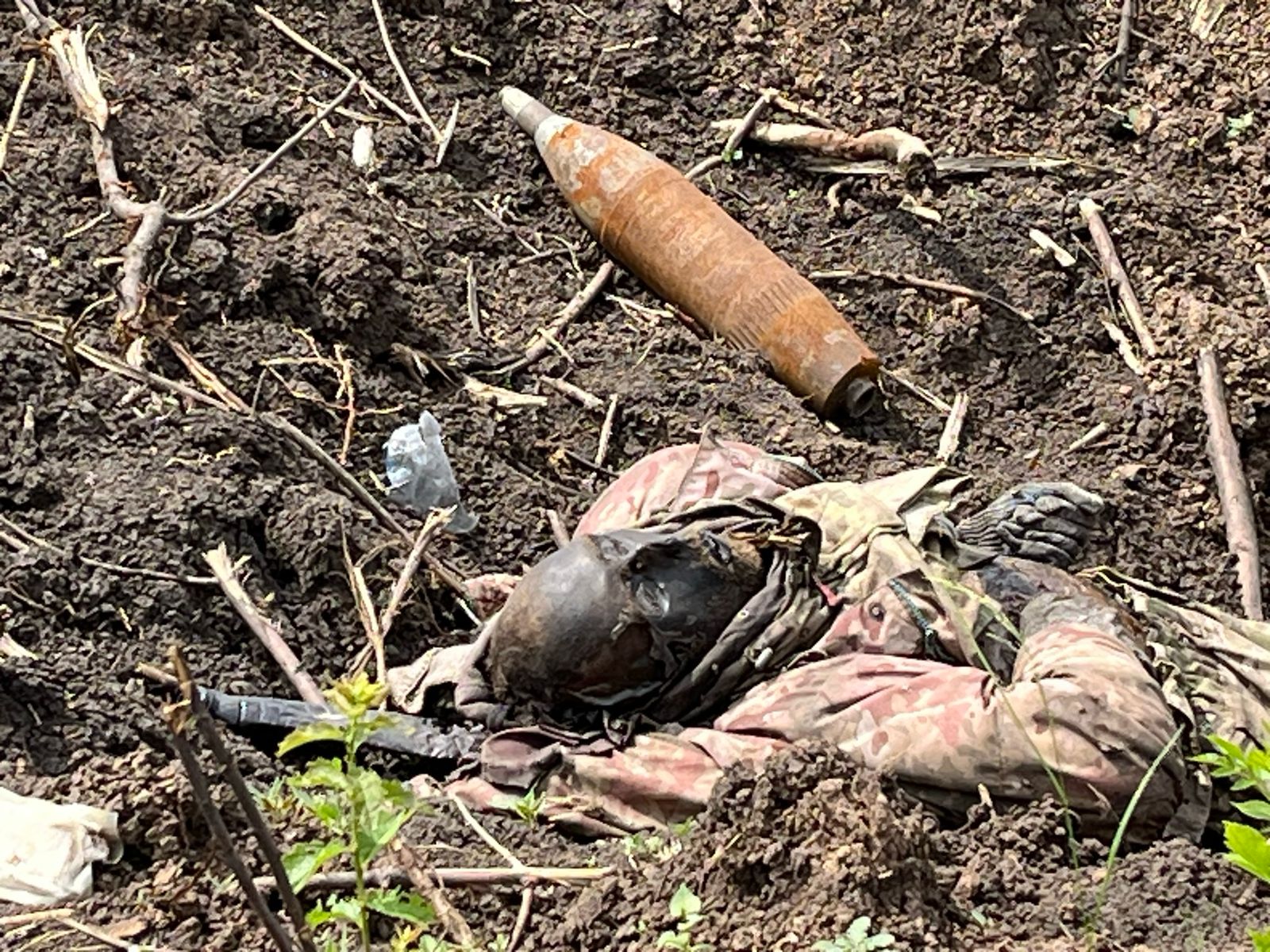
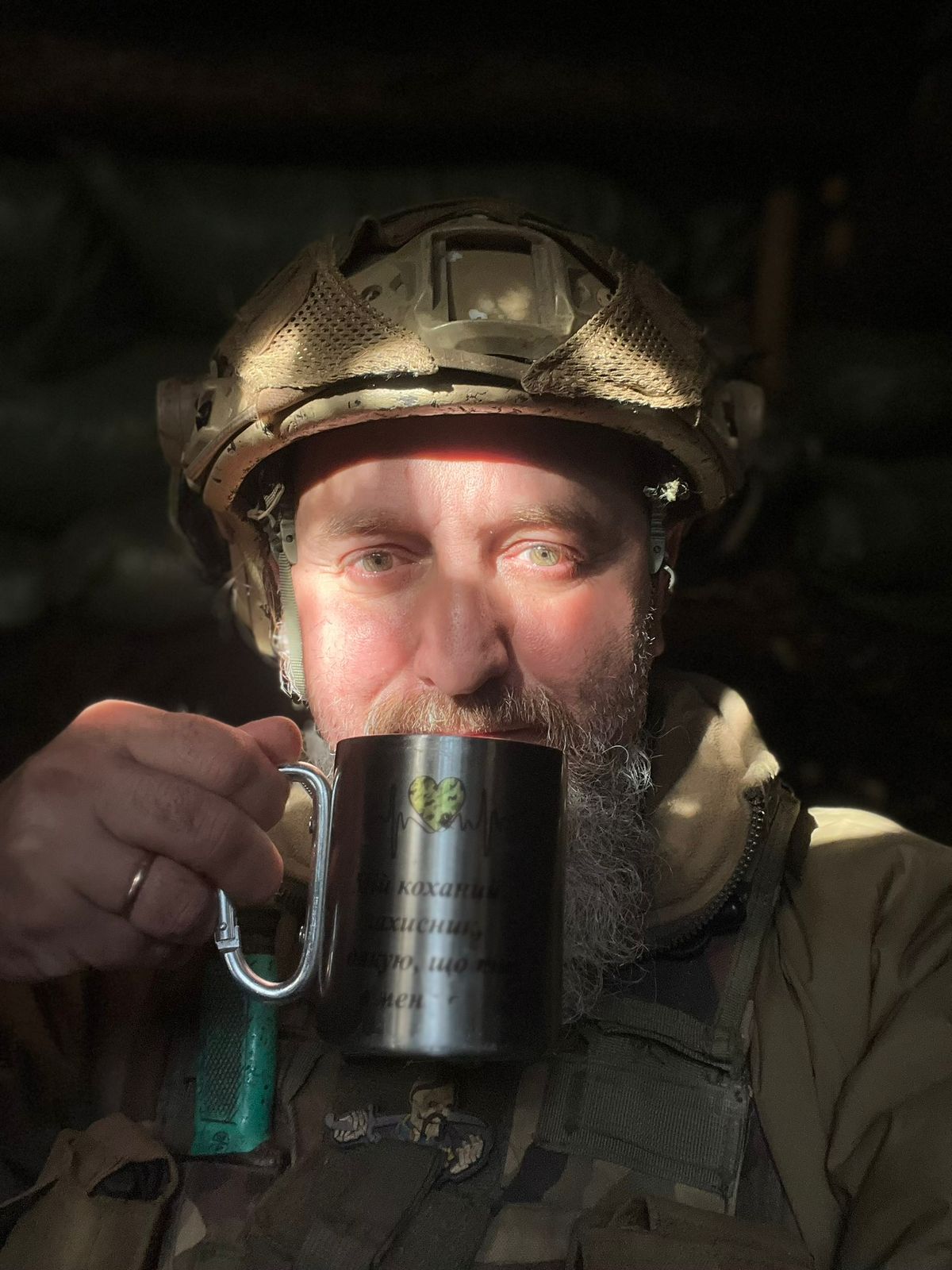
When we returned from the positions, we’d strip completely, head to the outdoor shower, wash, and do laundry, our clothes reeked with that persistent smell of corpses. Some of the guys would even start gagging from it. I, however, stayed calm about such things. I even cooked soup right there on the positions. Once, I was sitting and making coffee when two soldiers showed up, one was a skinny little figure with a long rifle, the other a squat one beside them. As they came closer, it turned out the first was a female sniper from the 80th Brigade (I later heard she was killed, a real professional). I called out: "Hey, come on, have some coffee, I’ll share my soup!" They looked around (he smiles — O.M.), bodies all over, some still bubbling in the mud and politely declined before walking off.
- In an interview a year ago, you compared the war to the film Mad Max. What is it like now?
- The war was "Mad Max" style back then when "sheds" appeared and bikers rode straight to their deaths. But later it turned into a brutal slugfest. It’s hard to compare now, because the key problem isn’t fighting anymore but getting to the fight and getting out of it. The kill zone has grown huge. Previously, the war was on the surface: we drove pickups, we shot, and I liked going on recon, finding something, for example, a Russian rifle, crawling through tree lines. Today the war is underground. It’s very stupid, terrifying and psychologically exhausting. The task now is to reach a position safely, get in and give away no sign that anyone is there. Even our mortar teams are dug in below ground. Everything keeps getting more complicated. Logistics worsened. Last year, drones largely handled it, delivering food and ammunition. Now we’re actively working with ground robotic systems (GRSs). We scaled up from a grenade-launcher platoon to a fire-support company, and then an GRS platoon was formed, spun out into a separate company and taken away because it became the first of its kind in the Armed Forces. So we’re trying to build a new GRS platoon from scratch again, since the whole logistics chain depends on it. For example, a 120-mm mortar round weighs about 20 kilograms. How many of those can a mortarman carry if you have to march at least 10 kilometres to the position?! That’s why we work nonstop while there’s no mud. Our ground drone "Termit" has already covered about 300 kilometres. The manufacturers are probably surprised by that figure, because enemies quickly track those GRSs. For the past three days, we’ve been doing logistics to deliver a month’s supply of food and water to the positions, the ammunition needed for effective operations, and fuel.
The war has changed completely. Zaluzhnyi writes about the positional deadlock — and that’s exactly what it is. We can see the enemy 20 kilometers away. Once they start moving, their chances of getting through are slim. Maybe they’ll make it and raise a flag, but a drone will still find them. If not, the infantry will mop up. But that’s Putin’s strategy, he believes he can crush us with sheer numbers.
The war has been going on for a very long time. I was afraid of drowning in it completely, of being consumed by it. Now it’s just work. There’s no longer the drive or enthusiasm we had in 2022. You just try to do it as professionally as possible. But the psychological exhaustion builds up. People have been fighting nonstop for almost four years. Your children are growing up without you. And when you come home on leave and see what’s happening in Kyiv, for example, you realize you don’t even want to come here or look at all that mess. Many of the guys say, "We don’t want to go home — there’s nothing to do there, and no one to talk to.
But at this stage, I like what I see, at least in our unit, there is a very protective attitude toward people. During the Bakhmut and Klishchiivka periods we tried to go toe-to-toe with the Russians, we pushed offensives hard and sometimes, perhaps, didn’t always account for the cost in lives. As the company’s senior sergeant I sometimes travel with the commander for coordination drills. I often hear junior officers and battalion and company commanders say: "We must protect the soldiers. Bring people in carefully. Don’t take needless risks."
Whenever I talk with mid-level officers, I always say: "There won’t be any more soldiers." We understand our ranks have thinned. If a soldier feels everything possible has been done to preserve his life, he will repay that a hundredfold. On the position, in the trench, I keep asking myself: what motivates the guys to go back in again and again? To play this "roulette" for the fourth year running, knowing you can’t always influence the outcome. Maybe what’s happening is a kind of Cossack revival, Cossack genes have woken up and people are going to fight simply on character.
- You said many of the guys don’t even want to go back to rear-area cities because of what’s going on there. I hear the same from soldiers I know. We talk about why that is, given there are no safe places in Ukraine, Shaheds and missiles fly every day, killing civilians, including children, which is the worst part. At the same time, plenty of people have relaxed and hope victory is just around the corner. It’s clear everyone is tired of the war, that’s natural. But we can’t be so naïve as to believe those so-called talks will bring peace, talks we don’t influence anyway. We see how the Russians behave. Their behaviour, including this autumn conscription, shows they have no plans to stop, doesn’t it?
- Remember the theories that Putin would meet Trump in Alaska and the war would end? Nothing came of it. Same with his trip to China. The "key" to ending this war lies in Ukraine itself. This war has no peaceful solution whatsoever. There might be a pause, a truce, but that’s unlikely to end the conflict once and for all, there will be a next phase. Imagine the Russians agree to a truce now. What happens inside their country? A "brutal hangover", they’ll see how many people they’ve thrown into the meat grinder, how heavy their losses are. We know Russia doesn’t do revolutions, but it does have drunken sailors’ mutinies. Putin understands that, and that he’ll be blamed. Historically, Russians can stomach defeat and then hit back. So the war ends only when Russia ceases to exist as an empire. And only we Ukrainians can make that happen. Are we doing everything toward that? No. Look, this is the fourth year of full-scale war. By now, everyone should have basic first-aid skills and know how to act in a critical situation. You say Shaheds hit civilian cities daily, which means there are wounded people. Do we have mass first-aid courses? Every person should know how to stop bleeding, how to help, and what a proper trauma kit must contain. I don’t want all children to become soldiers, I’m not some crazed fanatic. But I understand the world is moving toward destabilization, and this cycle, where power becomes the main "currency" in international relations, may last a long time. The United States has lost its role as the global hegemon, and China hasn’t assumed it yet. While that transition plays out, regional powers emerge. This chaos will intensify until a new order is established.
In addition, there are new threats: climate change, food shortages in some regions, for example, in Africa, which will trigger mass population movements, much like during the crises of the Roman Empire. I often view this war through a historical lens: we will have to live with instability for a long time. Ukraine sits at the "heart" of Eurasia, in the Heartland. And in geopolitical theory, whoever controls it holds Eurasia and, by extension, the world. It’s no accident that world wars were fought on Ukrainian soil. If we hold out now, a very "lively" future awaits us. That’s why children in schools must already be taught how to handle explosive hazards, how to protect themselves during missile or air strikes, and basic marksmanship skills. I said it in 2014 and I repeat it now, as I told you: "The key to success is a peaceful Ukrainian nation armed to the teeth." Putin isn’t just waging war against the Ukrainian state. His goal is to destroy not only Ukrainian statehood in any form, but Ukrainian identity itself. It is the Ukrainian nation that stands against the Russian empire. That’s his miscalculation: he didn’t account for everyone here standing up to him. When they moved on Kyiv on February 24, 2022, mathematically we should have lost in three days, we had fewer troops and less money. But this wasn’t merely armies facing off. It was the Ukrainian nation resisting the Russian empire, Ukrainian men, women, children, and the elderly stepped up to defend their home.
If you look at our history, we didn’t lose to the Russians on the battlefield. They beat us with turmoil, betrayal, and "black councils" time and again.
- With trickery and constant deceit.
- I’m baffled by Putin. He always used to beat us politically. Had he not barged into Ukraine, he could have swallowed us more quickly through the "Medvedchuks," OPZhZh (Opposition Platform – For Life - ed.) , the Russian church, language, music, all of it. I think Putin snapped. By invading Ukraine, he completely "Banderized" it…
- Well, those same "Medvedchuks" were the ones telling him people here would greet them with flowers and bread-and-salt!
- So Putin made a mistake. But overall, in my view, peace with Russia could be worse for us than war with it. You used the phrase "constant deceit." Exactly, on top of everything else, they’ll divide us from within. For Russia, the end goal is to break our synergy, that strange cohesion of the Ukrainian nation. Personally, I regard this war as sacred. For centuries, we’ve been at odds with the Russians. We’ve endured occupations, famines, genocides. Now we have a chance to avenge all of it. It’s the best calling a man can have. Everyone taking part in this war should thank God for it. You were just an ordinary guy, and by showing up to fight you join the heroic. That chance comes once in a thousand years. You stand there and realize you’re the same as a Cossack under Bohdan Khmelnytskyi, as a soldier under Roman Shukhevych. You are their equal. Later, you won’t be ashamed to look them in the eye in the next world. Here’s a story to that point: in the summer, we finally got reinforcements, and I went to Kyiv to pick up the new recruits, guys grabbed in flip-flops outside shops and taken to the DVRZ intake point. As I understand it, that place is like a maximum-security prison (he smiles — O.M.), when I collected them, they all stood with their hands behind their backs. We told them: "Look, we’ll teach you everything we know. We will never send you anywhere a more experienced fighter won’t go first. When we went to war four years ago, everything was unknown, we knew nothing. Today you’re joining under ideal conditions, because survivability in our unit is very good." And now all those guys have already seen combat. One of them even captured a Russian soldier in his very first fight. Others broke out of encirclement. So, from those frightened boys who used to run when they saw a policeman or a soldier on the street, they are becoming completely different men.
- How can we change that initial public attitude?
- We need to renegotiate the social contract. On February 24, 2022, a powerful social consensus emerged — everyone who was willing stepped into the war effort. That wild drive and energy of Ukrainians stopped Putin. But over time, something broke. So change is needed. We talk about everyone fighting, absolutely everyone. Yet there’s a segment of society that is indifferent, or something else. We have a problem of tolerating desertion and AWOL. If we truly live on the frontier between two worlds, understanding that this situation with Russia is perennial, then we must cultivate knightly values. But in this respect, we haven’t drawn large-scale conclusions. As a result, we’re not winning this war now because, first, not everyone actually wants to win it, not for real. Second, not everyone has engaged. If they did, we’d settle the matter with Russia very quickly. So we’ll have to "lock horns" again in a second war after a pause. Like it or not, the country will have to restructure itself. People often draw analogies with Israel. Well, we must live as a fortress, as Europe’s forward outpost. It’s good that Europe is gradually starting to understand this, although Putin is working hard to strip us of its support. But this is a "long storm", and they need to prepare for it too.
I insist the war must be fairer. If we say everyone has to fight, then that’s how it should be. We’ve had all kinds of guys, it happens. There was one who, at the start of the war, was terrified to go out because he’d broken himself psychologically. No one wanted to deploy with him because he was afraid and unwilling to work. I told him, "Brother, you’re coming with me. You’ll do exactly what I do. I don’t want to die either." I took him once, and again, and so over time he turned into a heroic guy! Sometimes you just have to pull a person out of their everyday setting, put them in a different one, help them and they become a hero.
And the new social contract must remain uncompromising even after active hostilities end. We have to create an environment that holds to account every single person who stole even a single kopeck from this war. Yes, chaos breeds thieves, in every country, in every war, people steal. But we are not fighting for the corrupt, post-Soviet, post-colonial Ukraine; we are fighting for the one we dream of. We will still have to build it. People ask me what I’ll do after the war. I say I want either to spend time in a monastery or stay at home, see no one, speak to no one. But I know that won’t happen, because all of us will have to roll up our sleeves and work on the country, if we live and hold out. That’s the question. You put it well: we don’t control any peace talks. But the outcome of the war depends on us. I believe that if we give the Russians a bloody nose (and we can), only then will it bring them to their senses.
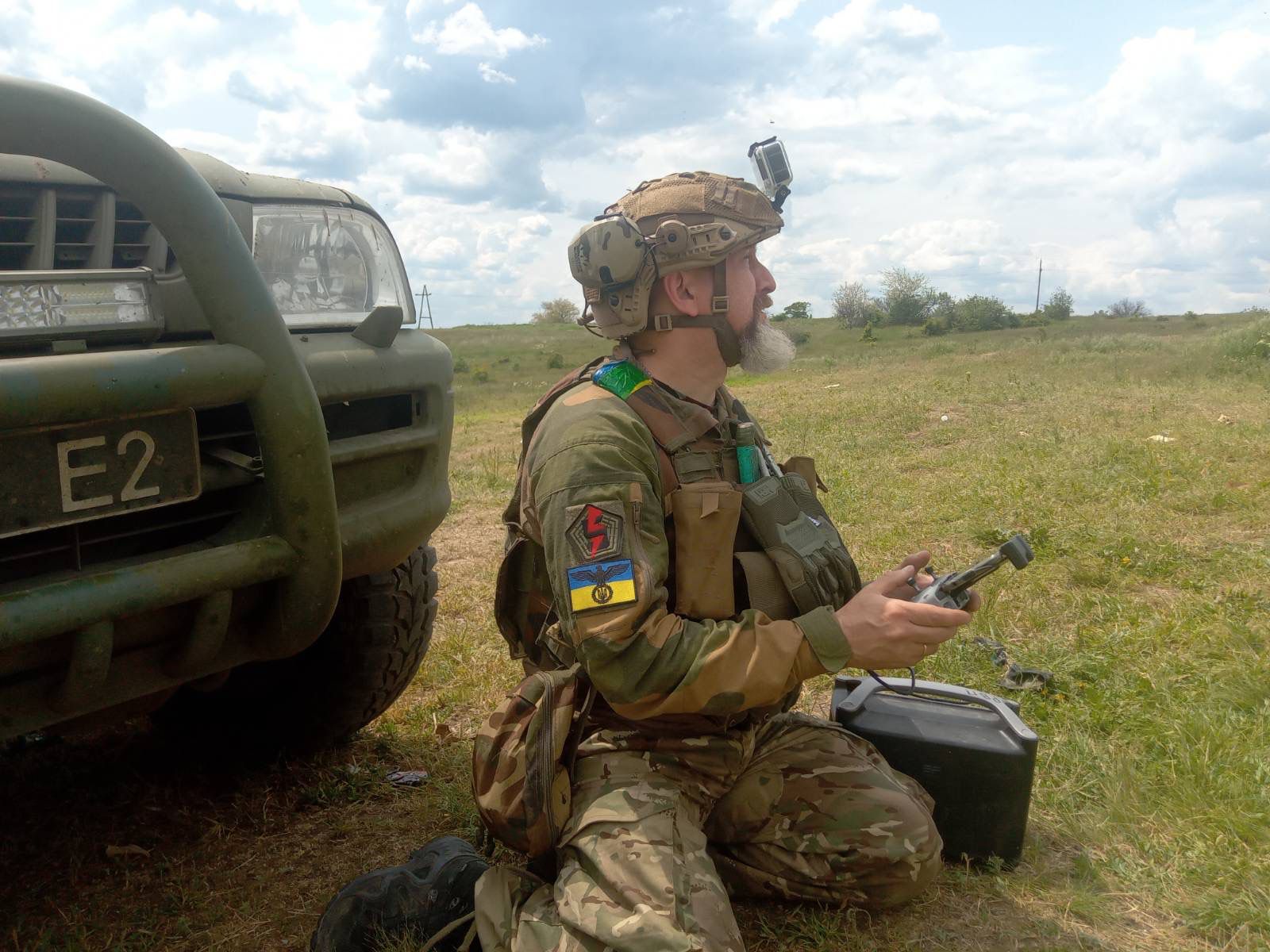
Until we stop them, they’ll keep coming at any cost. So we have an unavoidable task: shut it down. We have to get to work. You know, if courage, physical strength, and endurance mattered most in the first phase of the war, now brains play a major role, especially for the soldier. Take our ground robot: it has to be configured, programmed, kept on a stable link; you need technicians who can strip it down and repair it in the field, and so on. In other words, the war now demands a somewhat different skill set, but it still needs people, because despite what they say, robots won’t be doing the fighting. No, people fight.
We have to close ranks and, at this stage, beat back Putin. Sadly, a victory in the form of the Russian empire’s dissolution is unlikely right now, unless divine providence makes Russia collapse. I’ll repeat: they’re not capable of revolutionary change. What you’ll get is a "Prigozhin 2.0", vicious, brutal infighting. It’s crucial that we seize that moment rather than sit on the sidelines, because that may be the only chance to put a final cross over Russian imperialism. Until that happens, we must do everything to repel Russia and inflict the most painful losses possible at the front.
Olha Moskaliuk, Censor.NET
Photo and video provided by the interviewee


