



From Avdiivka dugouts to European gold: how grandmaster Ihor Kovalenko, after years on front line, helped Ukraine’s national team become champions
...A month ago, the world’s media were full of praise for him: a Ukrainian serviceman who has been on the front line since the start of the war not only went to the European Championship with Ukraine’s national team, but also made a key contribution to the team’s gold, scoring 6.5 points out of 8 on board four!
Censor.NET was already convinced that Ihor Kovalenko deserved such recognition and respect back in the summer of 2022, when we were among the first to do a frontline interview with Kovalenko, who was then serving as a combat engineer.
More than three years have passed, and we are once again talking to Ihor. About how his return to top-level tournaments has been received in the chess world; about the long months he spent as a signals intelligence operator near Avdiivka, which changed his perspective on many things; and about how Christian faith helps him get through the hardships of war and win at the highest level.
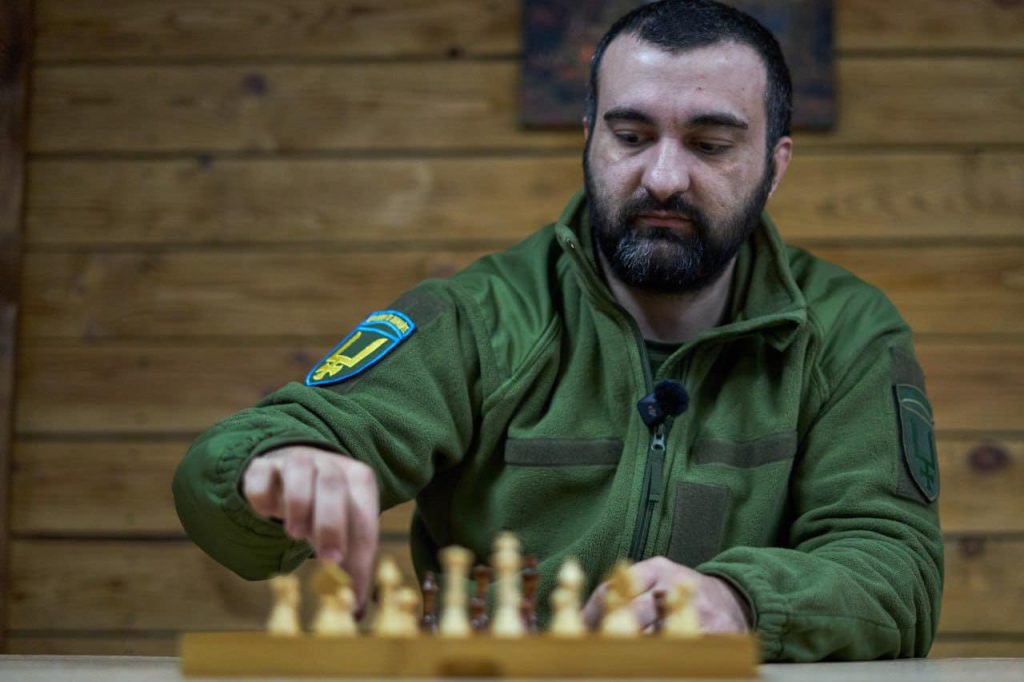
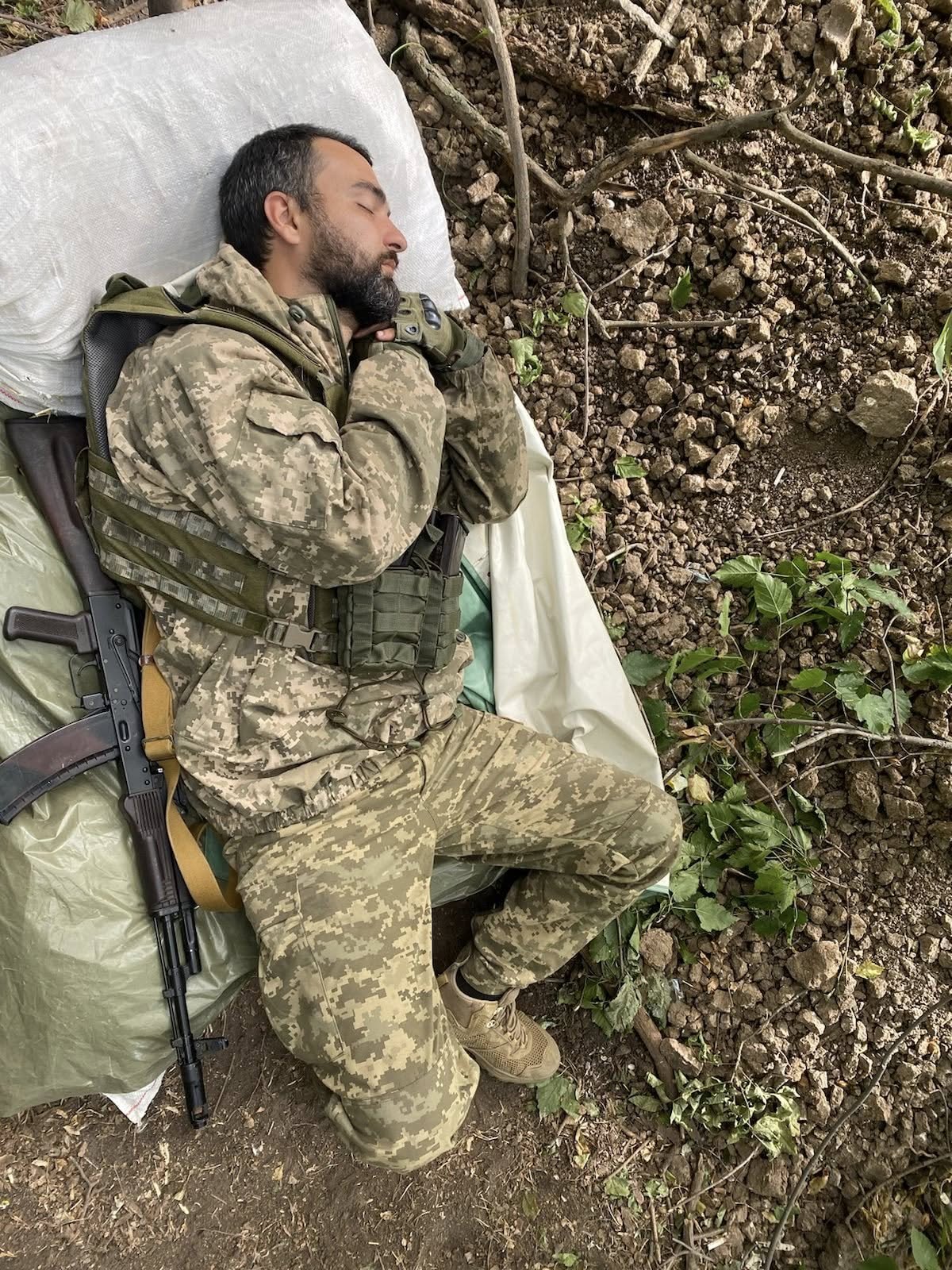
– Ihor, let’s start with your Facebook post about winning the European Championship. There you write, among other things: "First of all, throughout the tournament I slept on the floor under an open window, because for a serviceman standard hotel beds feel like a hammock."
Explain to a reader far removed from the front why it was difficult for you to sleep in a regular bed.
– I spent more than two years in a dugout, on rather hard surfaces. And even if it wasn’t a dugout, then it was the floor of some forgotten, ruined house. You sleep on a sleeping mat and in a sleeping bag. After that, sleeping on a more or less soft sofa or in a bed is almost impossible. I was last in a dugout on 27 May. So much time has passed, and even now I still can’t sleep properly. I still sleep either on the floor or on a hard sofa, in a Japanese style. I don’t know how long this will last – for years or decades. Or maybe it’s for life…
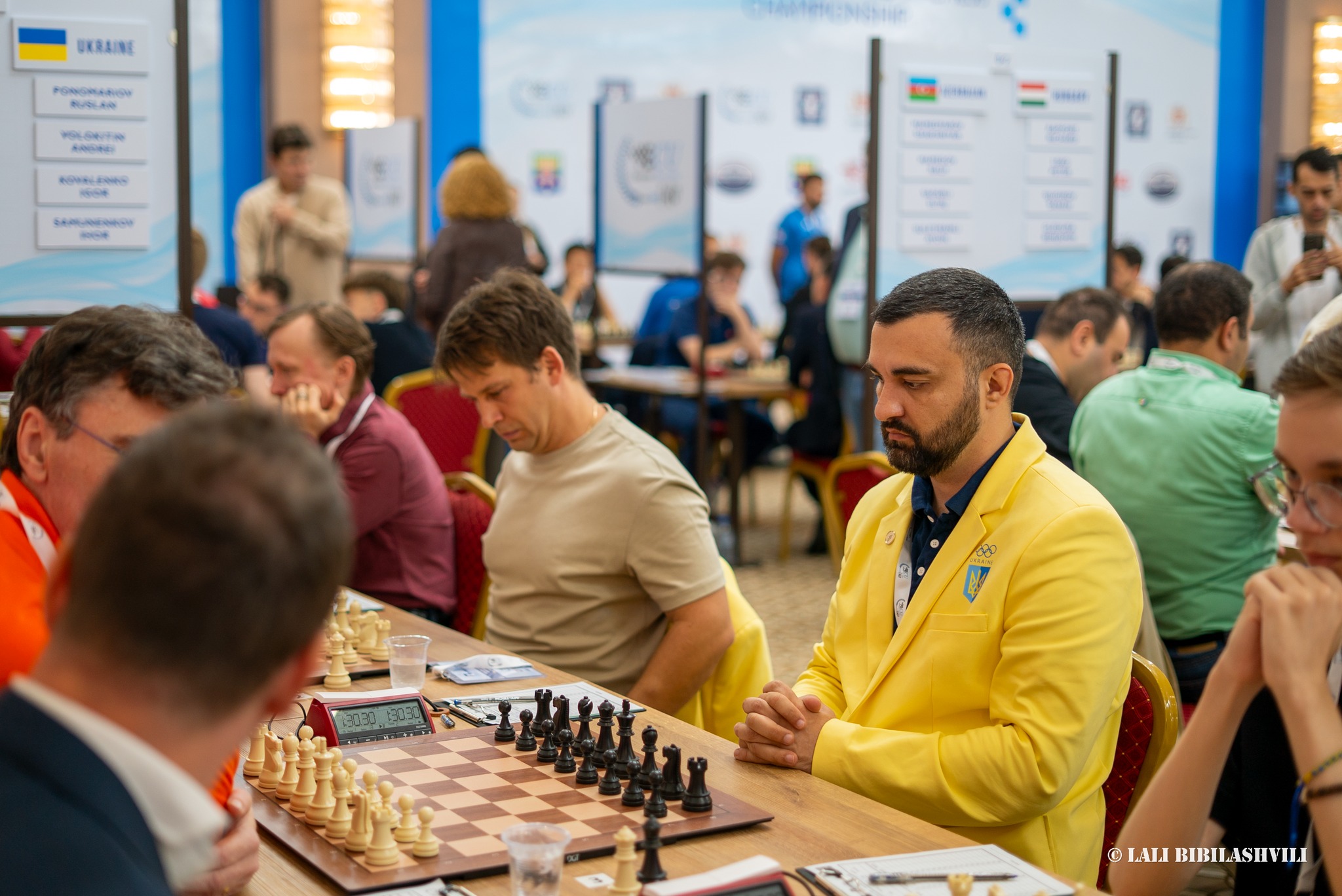
– Everyone at the European Championship knew where the serviceman Ihor Kovalenko had come from. Everyone watched your games and your demeanour with particular interest. Did that make it harder for you to concentrate at the board?
– No. Around 90% of the participants expressed their respect. Some showed what I would call absolute, unconditional respect. One of my colleagues almost burst into tears when he came up to me: "Thank you for being alive, okay, healthy, and able to play chess." And at the end of the tournament, after the closing ceremony, the players from Azerbaijan’s national team even came up to me and said: it’s good that we lost specifically to you.
– Wow! Respect to them for that.
– I think that is the best possible message. As for the extra attention, it didn’t bother me at all. After such a long break, I was ready to play anything and as much as needed. I even played one endgame in one of the rounds for 151 moves. I think in any other situation I wouldn’t have done that. But I was simply starving for chess, because right now any position is interesting to me, as long as I get to play…
– You said about 90% of the reaction to your participation was positive. What about the other 10% – who were those people?
– As far as I know, there was nobody among the players at the European Championship who supports Russia. That’s the first thing. Second, there were some retirees who are, in one way or another, tainted by their connections with Russia. But what could they do? At most, keep as cold a distance as possible – both from me and from the Ukrainian delegation. They didn’t criticise us, didn’t put spokes in our wheels. But they were as cold as possible. And that’s fine. That’s life, and I don’t take offence. Some people showed passive respect. And many others, especially the younger generation of players, simply don’t know who I am. And that’s also fine!
– During the tournament, how did you formulate your motivation to play and compete for yourself? Was there more enjoyment from the process or a stronger sense of responsibility?
– You know, I don’t look at it from that angle. For me, living in a state of responsibility is just the norm. I’m not a free artist like many chess players who say: this is how I see it, this is how I feel it. My life philosophy is this: an adult man lives in a state of responsibility. Sometimes that responsibility is greater, sometimes it’s smaller. But in general, that’s how he should live. So I didn’t feel any particular pressure at all. That’s normal.
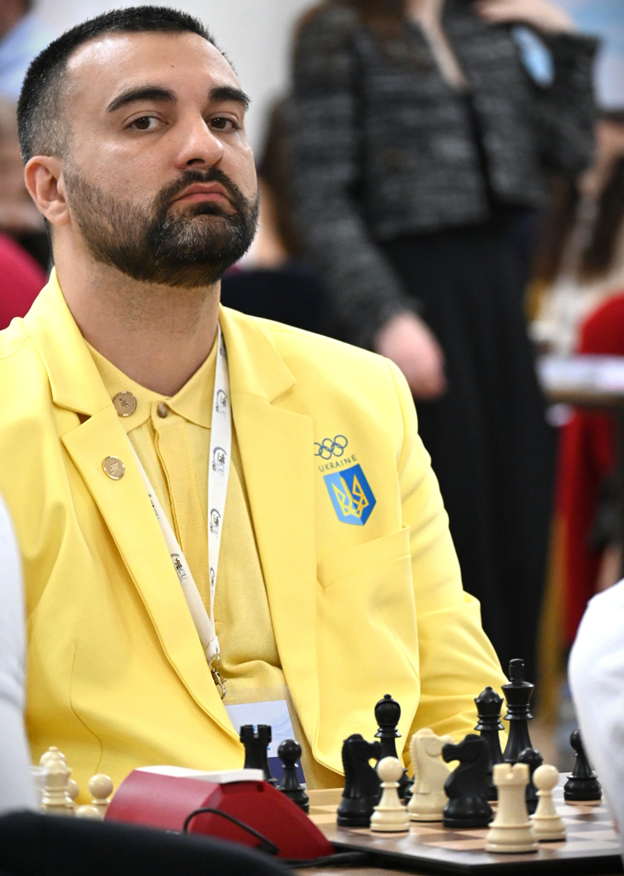
– And how is it for you to play during the war in general? I understand that you are a practising Christian and also a chaplain, so your framework of faith is solid. But war inevitably shifts this centre of gravity in a person’s values in some way. So what does it feel like for Ihor Kovalenko the warrior to play at a high level?
– After years of war, and especially after Avdiivka, everything that happens on the chessboard has definitely lost some of its value. Overall, I don’t even know how to answer this question. I just know that I’ve sacrificed a lot of my health, and I understand that without God’s help, I can’t play at a high level. To be honest, I don’t really understand how I’m producing this level of play. I understand where this strength comes from – but I have no explanation for why it is there. I simply pray and receive an answer from the Lord. A Christian often has this philosophy: we put everything in God’s hands, and the Lord Himself decides what answer to give – and it’s not always the one we like. In Batumi, the answer was one that all of us are very happy with. But it’s not always like that.
– There’s a well-known saying that losing a game is a little death. After Avdiivka, doesn’t that aphorism sound like overblown literary drama to you?
– When my life consisted only of chess, that’s how it felt to me. But after Avdiivka, after visiting those soldiers who have returned from captivity, it doesn’t feel that way anymore. There has been a rethinking of life. After coming into contact with reality in the most literal and brutal sense of the word, and being close to the pain and horrors people go through, it becomes impossible to perceive the world of chess as something grand and mysterious.
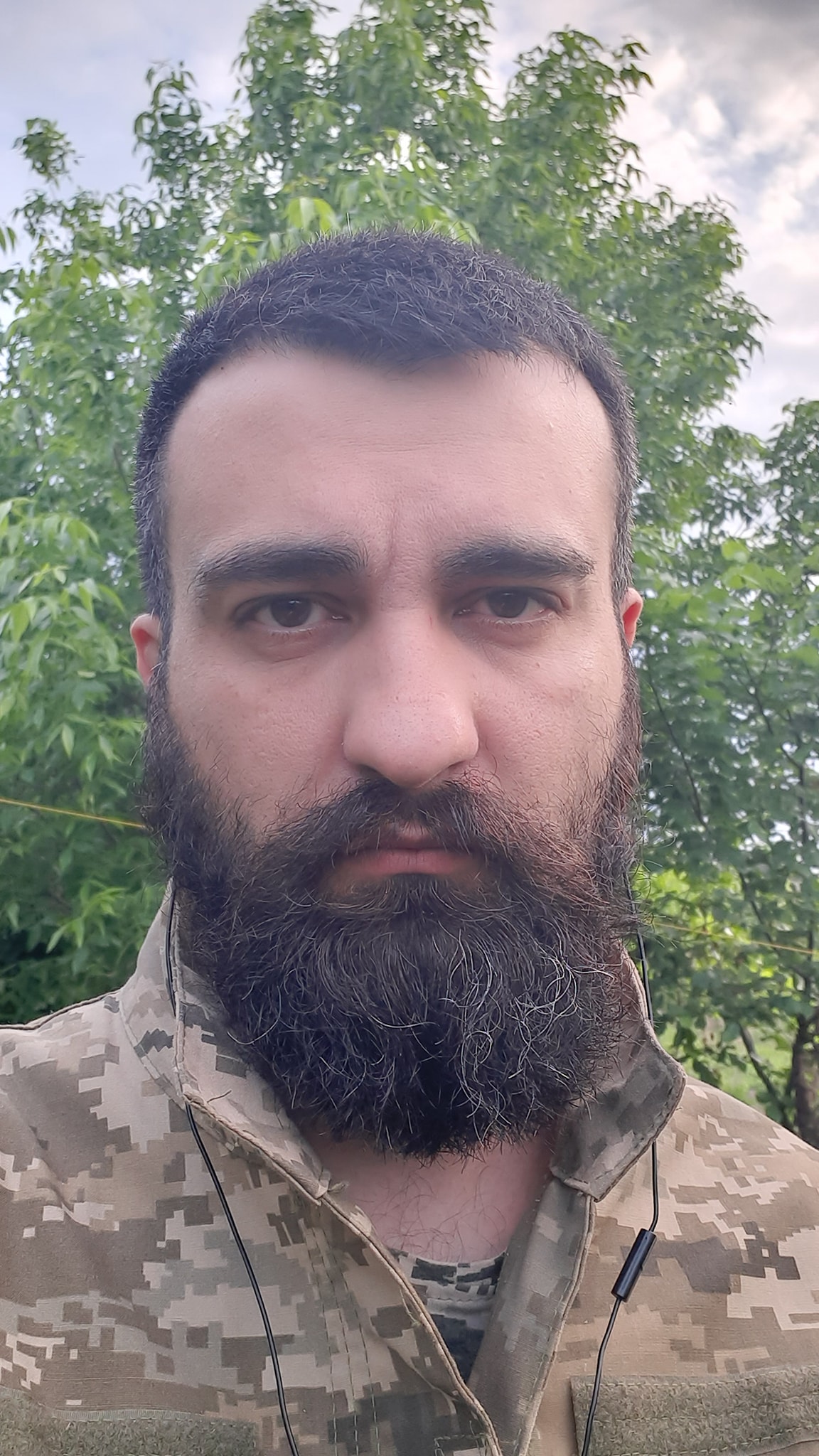
– And when you visit the soldiers who have returned from captivity, do you go there as a chaplain? Or just as Ihor Kovalenko?
– I try to be a chaplain while still staying Ihor Kovalenko (he smiles. – Ed.)
– Are these people you knew before they were captured?
– No. At first, I was looking for those I had fought alongside on neighbouring positions. And then it just went on and on. There are many people there who went through roughly the same things I did. The only difference is that they were captured and I, thankfully, was not. But the main thing about me is that I’m not exactly a chaplain – I’m more of a serviceman who also does chaplaincy work, and in some situations it’s easier for me to "open up" those brothers-in-arms who are closed off. Because it’s simple: "Where are you from?" He names a position, and I say: "I’m from that position." And that’s it. We understand each other. He understands what I was doing; I understand what he was doing. And within five minutes he has opened up.
– Can you put into words what they want most from you as a chaplain: understanding? Or do they simply need someone to listen to them? What lies at the core of their desire to talk to you?
– They need someone to listen to them. To be listened to and to see in someone’s eyes that they are understood.
On average, the people I talk to were captured no later than 2023. They spent several years in captivity. They were tortured. So sometimes they simply need to be listened to, to have someone express sympathy, to have a family-like atmosphere created around them. Because in general they have everything: medical treatment, the state looks after them, volunteers help them. On paper it all looks fine. But what they lack is that sense of family. There is an emptiness in their soul that needs to be filled. That is what we must do.
– You’re now able to visit released POWs and prepare for tournaments because you’ve been transferred to the capital, right?
– Yes. As of 1 June de facto (and from late July de jure), I was transferred to CSKA, after many conversations.
– Decode CSKA for us, please – some people no longer remember, and most young people don’t know what it is.
– The Central Sports Club of the Armed Forces of Ukraine, based in the capital. That’s all I can say. And it was at CSKA that I was given the conditions I needed to prepare – and, probably most importantly, time simply to live and rest, to reboot my nervous system. Although in Kyiv I still sleep in a sleeping bag. I still see the war in my dreams from time to time… I need to recover and become something resembling a chess player again. In everything I needed, they met me halfway. And we can see the result. We have to understand that we’re talking about a chess player after a three-year break. And I’m not young anymore – will I even get back to the level where I can win medals? But they did everything they could on their side, and I’m grateful to them. It turned out like this: they did everything they could. I did everything I could. God did everything He could. And we have the result!

– It’s great that everything has worked out this way. But I still want to ask you about your military path. Ihor, how long did you serve in signals intelligence?
– For more than 30 months.
– In general, I’m not a big fan of contrived comparisons between anything and chess. But here you could say that, just like chess, signals intelligence is about attention, concentration, and the ability to analyse and identify plans – both your own and the enemy’s.
– Yes, my particular role is the one that is closest to the chess profession. I believe I was a "chess player" in the Armed Forces of Ukraine.
– What did a typical day of Ihor Kovalenko, the SIGINT operator, look like? Where and with what kind of equipment did you work?
– I’m sorry, I can’t talk about that. Not even now. After the war – I will.
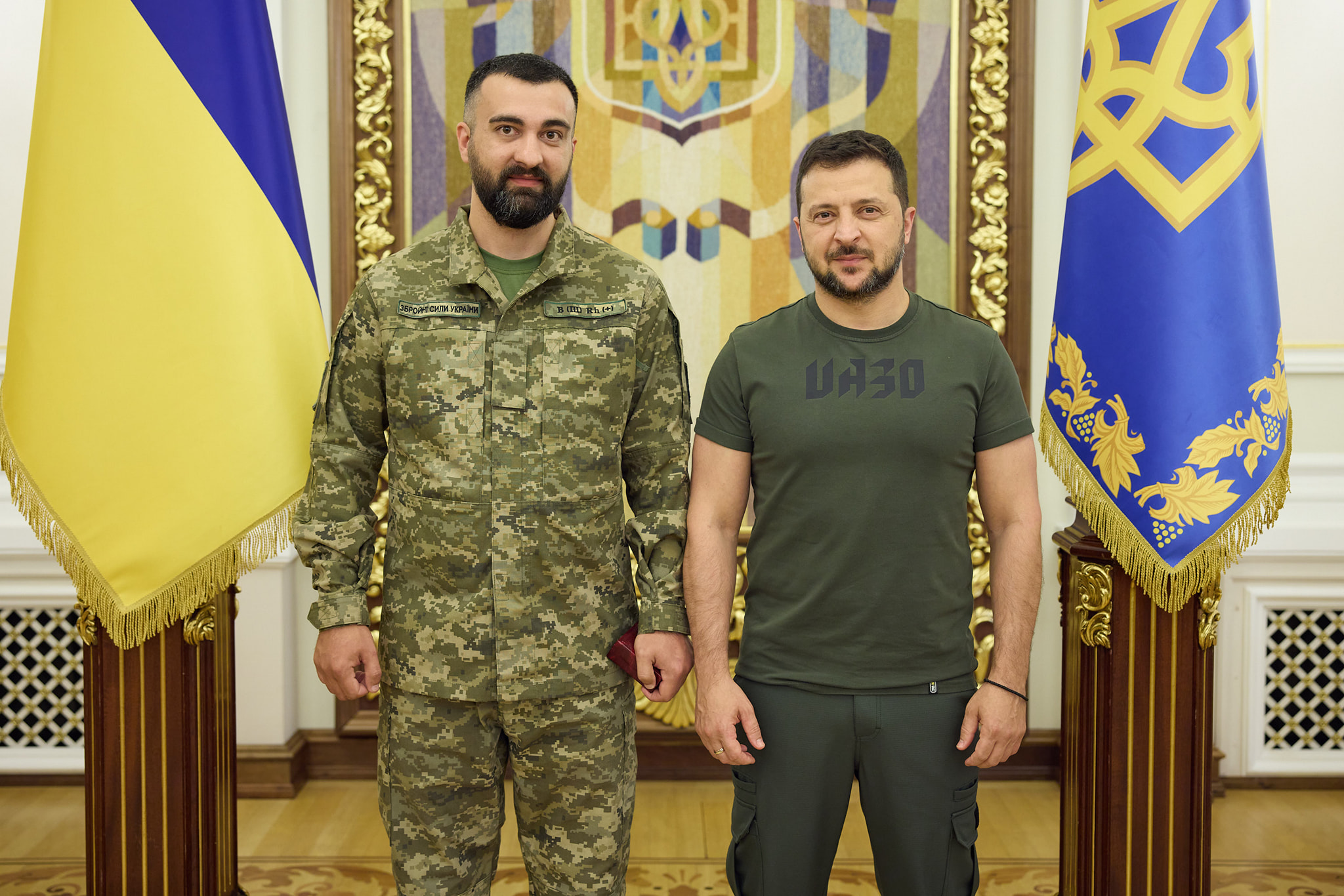
– You received the Order "For Courage", 3rd class, from President Volodymyr Zelenskyy in person. Did you manage to exchange a few words with the President, or was it more of a streamlined, conveyor-belt type of ceremony (in the good sense)?
– I winked at him, and he winked back (he laughs. – Ed.).
– What does Avdiivka mean to you – what place has it occupied in your life since then?
– In Avdiivka, at first, I was rotated out once a month. Then they didn’t rotate me out for four and a half months. At all. And when the hardest period began, they didn’t rotate me out for five months and two days. I was melting snow there just to wash my head or do anything else. Everything came from snow, because there wasn’t enough water.
The first thing I realised near Avdiivka is that a person needs very little to live. A soldier knows: if the dugout is dry, life is great. You realise that so many things in civilian life that we cling to and stress over are absolute trifles. You calmly accept many things you don’t have. You don’t have them – and that’s that. So be it.
Many civilians don’t understand this. And when I see how civilians behave now, to me it often looks like the behaviour of a spoiled, fussy child.
– So after Avdiivka, you’ve learned how to enjoy simple, small things.
– Yes. You’re alive – you’re happy. A little hedgehog shuffles past – you’re happy. You managed to make a coffee – you’re happy. You have water to make that coffee – you’re happy. It’s raining outside, and your dugout isn’t leaking – you’re happy. It’s cold somewhere out there, and you’re warm – you’re happy. You realise that many things are simply part of life, and it becomes easier to get through everyday discomfort. What’s nonsense and unacceptable to a civilian is, for me, just a matter of "a bit uncomfortable".

– And what does faith mean to you specifically in wartime? Is it first and foremost that verse from Ephesians: "Put on the armour of God so that you can stand when evil attacks…"? There is evil, a certain embodiment of the devil, and here is your chance to resist it – is it like that for you?
– Yes. If we don’t put it on, we can’t stand against it. We understand everything, but resisting all this is very hard even when you’re "armoured up"; and when you’re "naked", you can whine for a very long time…
I have other places in the Bible that are my foundation for not losing my mind during the war.
– Tell us which ones.
– The first is the verse that says "…but it will not come near you" (Psalm 90:7). For me this is a promise from God – a promise that even if everything around you is on fire, everything is bad and there are losses, you will survive. I prayed about this and that verse took root in my heart; I had an inner conviction that I would live.
And another verse: "Guard your heart carefully, for the springs of life flow from it" (Proverbs 4:23). For me this means that God watches over our lives, but our heart is our responsibility. We must protect our heart from malice, from hatred, from becoming embittered and brutalised by everything we see.
And another important one: "In any circumstances give thanks to God, for this is His will for you in Christ Jesus" (1 Thessalonians 5:18). I have also embraced this for myself – to thank God for every little thing, and this daily "exercise" softens the heart a lot. It’s a form of PTSD prevention.
It’s very important to "defend yourself actively" against this tsunami of dark thoughts.
– I’ve heard about such thoughts from others who have fought and are still fighting.
– I’ve realised that this is very bad for a Christian’s heart. And, in fact, it’s very bad for any person. That’s when I recall this: many people don’t believe I was in those places for so long, because they see how calm I am. I think it’s because I constantly examine myself so as not to let those bad emotions take root in my heart. As soon as they sprout, I cut them down like weeds, before they grow into big trees. At an early stage they’re just weeds – of anger, hatred, the urge to do very dark, heavy things.
– When we talked more than three years ago, that interview was in Russian. You said then: let’s do it in Russian, it’s better. I asked: what about your Ukrainian? And you replied: "It’s getting better, moving towards the point where one day it will be Ukrainian. But for now let’s do Russian."
And now I’m listening to you and I hear that your Ukrainian is better than mine. And it doesn’t sound forced. Did you mostly speak Ukrainian at the front?
– In everyday informal conversation, it’s still easier for me in Russian. But there was a period of more than a year when I had to issue commands and take commands and during that time, I spoke a lot of Ukrainian.
– Let’s go back to chess. At the Central Sports Club of the Armed Forces, where you’re now an instructor, do you work with children? Kids who are learning to play chess?
– Indeed, this chapter of my life is opening again. It isn’t directly tied to the Central Sports Club, but they are supportive and make it possible. I already have students.

– Three years ago, the headline for our interview was "Grandmaster and sapper Ihor Kovalenko". So now, to those three words in the headline – grandmaster, EW operator and chaplain – should I also add "teacher"?
– No, I’m no longer an EW man. I have the skills, but I’m not an EW operator anymore. I’m just a chess player, a believer and… I don’t quite know how to put it. I see it this way: a believer in pixel camouflage who plays chess. That’s better.
– I look at kids playing chess and I see what a doubly cool thing it is during the war. For a child, it’s both pure joy and an amazing tool for escapism. While you’re playing, you mentally get away from explosions and sirens. Do you see how this works with children?
– Chess is therapy. Chess is an alternative to the stressful information environment we live in. On top of that, it’s training for many areas of the brain, so that a person’s mind is better protected from the flow of informational garbage. There’s no other way to call it. It’s 100% true that it’s easier for chess players to analyse what we hear around us. And among children, among those who have returned from captivity, and among servicemen in general, I see many people who play chess. And I understand that they are giving themselves therapy. Their body already needs them to sit down and play chess so that their mind can step away from the reality they live in and find something that gives them the best possible emotions. That "something" is chess!
– After the team victory at the European Championship, I imagine you read a lot of nice things about yourself – kind wishes and words. What would you say to our readers as someone who brings glory to the country in sport and defends it by every means available?
– Less pessimism. The Apostle Paul said that there are three fundamental things: faith, hope and love. So if, in our struggle for justice, freedom of speech, Ukraine’s victory and so on, we lose hope, faith and love (above all – love), then very dark times await us in our free Ukraine. And we must not allow that to happen!
Yevhen Kuzmenko, Censor.NET
Photos and videos from the archive of Ihor Kovalenko


