



How our energy sector is being protected and what Ukraine can expect this winter
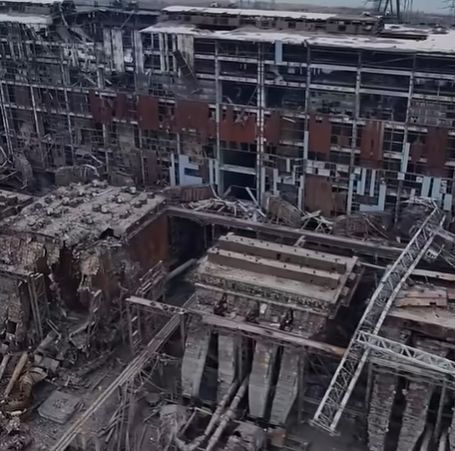
"So we’re not going to build any more protective structures?" – "I’d wait. But, f***, to be honest, it’s a waste of money, just throwing it away…" This dialogue, taken from the huge trove of the Mindichgate tapes, hit listeners especially hard. Why? Because it ruthlessly hits the nerve of autumn 2025, with substations smashed by the enemy, grinding schedules of power cuts and NABU audio recordings circulating in which powerful figures, among other things, siphon off funds that were supposed to go towards protecting Ukraine’s energy sector.
"Why is there no electricity in my home?" This question from an ordinary Ukrainian can be answered with a vivid video from DTEK or the above dialogue between two corrupt officials. Censor.NET has chosen a third option: a conversation with a leading nuclear energy expert, Olha Kosharna.
We took our time talking with Ms Kosharna about the level of protection of Ukrainian energy facilities, the new tactics of Russian shelling and possible countermeasures. And about our chances of making it through this winter.
Spoiler? There will be no apocalypse – but it won’t be easy either. And here is why…
- Let’s start with a quick awareness promotion. What does the protection of energy facilities in our country consist of?
- It depends on the level of the facility. If we take nuclear power plants, for instance, there have always been air defense systems around them – even back in Yanukovych’s time. Civil aviation routes were not allowed to pass over NPPs. Around 2012, a so-called national-level design basis threat was developed, as well as facility-specific design basis threats – a classified document approved by the National Security and Defence Council. Based on intelligence information, the design basis threat is defined on the basis of an assessment of the risk of sabotage, theft or any other unlawful removal of nuclear and radioactive materials, in line with IAEA recommendations under the Convention on the Physical Protection of Nuclear Material and Nuclear Facilities.
A different approach is used for thermal power plants. But it is likely that large TPPs now also have air defense systems, as well as electronic warfare assets. What does a typical thermal power plant look like? It is a vast site with equipment spread across it: boilers, a large turbine hall, cooling towers, coal yards (if coal is the fuel), rotors, transformers and other electrical equipment – and so on.
- Is this site about the size of a football pitch?
- Bigger. Although thermal power plants differ from one another. I have been to Zaporizhzhia TPP (the one next to Zaporizhzhia NPP). But I have not been to Trypillia, Vuhlehirska, Dobrotvir or Burshtyn TPPs. All of these facilities have different installed capacities.
As for transformer substations, they also come in different types. There are 750 kV transformers – huge units the size of a multi-storey building. There are 330 kV transformers, 110 kV ones, and so on.
- We’ve talked about typical facilities; now let’s move on to levels of protection. I’ve heard there are three levels, the first being gabions and big bags.
- Yes, the first level is gabions. These can be simple sandbags, or metal mesh cages filled with crushed stone. This level of protection is against shrapnel.
The second level consists of PT-shaped concrete structures. The concept for these was developed and agreed with the General Staff and the State Emergency Service in 2023. It was the General Staff that assessed the kinetic impact of debris from missiles and Shaheds.
- So the second level of protection is against Shaheds?
- Yes. And I have seen photos where Shaheds hit this kind of protection and fail to cause damage. Even in cases where the structure still did not have metal reinforcement around the concrete shelter, one such photo was posted on Facebook by Kubrakov. Moreover, as noted in the report of the Verkhovna Rada’s temporary investigative commission chaired by MP Kucherenko, this type of protection can even withstand strikes by certain cruise missiles.
The problem is that Russia is now hammering us with ballistic missiles. And this protection, obviously, cannot withstand ballistic strikes.
- The second level is clear. What does the third level of protection involve?
- The third level has not been implemented, and I consider it completely unrealistic. The idea was to cover the entire facilities with protective structures. But how can you cover vast areas with expensive, high-quality protection?
At the same time, in some places, underground control centres for substations have been built. This is public information; Volodymyr Kudrytskyi has spoken about such centres in the past. How many of them have been built, I do not know.
Overall, when it comes to substations, we had a very extensive network – even an excessive one. Before the collapse of the USSR, we consumed around 300 billion kilowatt-hours a year. After independence and up until the full-scale invasion, that figure was 150–180 billion. Now, in my view, it is below 100 billion.
In addition, during the strikes in the autumn and winter of 2022–2023, we, firstly, had more electricity generation and, secondly, more backup lines. Now, unfortunately, the situation is significantly worse. A great deal was damaged last year and this year: almost all generation capacity on the left bank has been knocked out.
- Let’s go back to the protection of energy facilities. Who allocates the money for this kind of protection?
- When the decision was made to protect these facilities with defensive structures, Ukrenergo selected key sites from among (roughly 120–130 substations). A Recovery Agency was set up, headed by Mustafa Naiiem. That agency was assigned 22 of these key facilities to carry out the works. Ukrenergo handled the rest and, from its own list, also designated priority sites. By the time Kudrytskyi was dismissed on 2 September 2024, part of the concrete protective structures had already been built under Ukrenergo’s supervision.
As for the cost of building these protective structures, I can only say that under Naiiem’s agency the cost of works was three to four times higher than at Ukrenergo.
- Given the many problems that Ukraine’s energy sector is facing today, who bears more responsibility for where we are now – the enemy, with its massive strikes and systematic destruction of our generation capacity, or corruption and incompetence within our own management?
- Without doubt, the situation is difficult primarily because of the enemy’s strikes. First of all, it is worse now than it was in 2022–2023. We have lost a great deal of generation capacity, both thermal and hydropower. As a result, we have a shortage of capacity for electricity production.
Unfortunately, corruption and the incompetence of some of our officials do not help either. This applies, for example, to the development of decentralised gas-fired thermal generation, whose importance was loudly proclaimed by Minister Herman Halushchenko. In practice, however, he put obstacles in the way of projects involving private investment.
- What about nuclear power plants?
- Nuclear power plants provide base-load capacity; you cannot use them flexibly, that is, you cannot use them to balance the power system. In addition, the transformers that evacuate power from the plants around Khmelnytskyi and Rivne NPPs have now been damaged (that is already Ukrenergo’s area, not Energoatom’s). The units at Khmelnytskyi and Rivne are operating at reduced output; they cannot deliver full power because their transmission capacity has been damaged. But even if they were operating at full power, it would not solve the problem.
- Why?
- Remember, there used to be a night-time dip in demand, when electricity consumption dropped. At that time thermal power plants would reduce output, while nuclear plants continued to operate in base-load mode. That’s why we were told to use energy-intensive appliances at night, so as to avoid spikes and overloads during the day. In the morning and evening peak hours, thermal plants and hydropower plants would ramp up generation to cover demand. On sunny days, thermal plants reduced output in the middle of the day, because solar power plants were generating electricity.
- Yes, I remember hearing that.
- But, lately, we have lost almost all of the generation that can ramp output up or down. Around the world, that role is played by hydropower plants – and we simply do not have enough of them. In fact, it was hydropower that got us through the winter of December–January 2023... Now, after the damage they have suffered and two years of low water levels, things have taken a sharp turn for the worse. On top of that, two of our nuclear plants are located in the west of the country, as is our electricity imported from the EU, while our grids cannot transmit such volumes to the left-bank regions – which creates additional complications. Add to this the losses on the lines due to heating of the wires, and you get an idea of the scale of our problems.
The enemy’s tactic is as follows: they pound targets in Chernihiv, Sumy and Poltava regions in order to split the left-bank and right-bank parts of the country.
- Split in what sense?
- The less electricity is produced by local generation, the more extensive the restriction schedules become. The enemy is betting that the Left Bank will feel it is being treated unfairly compared to the west of the country, where the energy situation is better.
- Do you think the enemy is really playing such a subtle game?
- Yes, to me it is absolutely obvious. In addition, I am sure that Russia is perfectly capable of striking the outdoor switchyards at our nuclear power plants. And they are located in immediate proximity to the reactors. Russia is capable of anything, we can see that!
The situation is difficult. I hope all these scandals involving Mindich and Halushchenko will not damage our energy sector. I am actually convinced that Halushchenko is an agent of Andrii Derkach. I wrote about this a long time ago…
- Well, recruiting politicians around him has long been one of Andrii Leonidovych’s tactics. By the way, speaking of tactics: what playbook does Russia use when attacking our energy facilities?
- Russians learn fast. Back in the winter of 2022–23 they started these massive attacks on Ukraine’s power system. Those strikes were geographically scattered, and they themselves understood that they had not achieved the desired effect. I have even seen one Russian document where they analyse their mistakes and explain why they failed to bring down our power system… In other words, very systematic people work there, professionals, including energy specialists.
After gas transit through Ukraine was discontinued, they began shelling our underground storage facilities, compressor stations and gas production enterprises, which are located mainly in Kharkiv and Poltava regions. And now they have focused on destroying electricity generation on the Left Bank of Ukraine and in the border regions – Chernihiv, Sumy and Kharkiv.
How else has their tactic changed? In 2022, over the entire autumn–winter period, they launched only 400 attack UAVs. Now, in just one month – October 2025 – they launch more than 2,000 of these UAVs. Because they have put drone production on an industrial footing, already without Iran’s help. And their tactic now is this: they send a large number of drones, from 30 to 50, against a single target. And then they follow up with missiles, again several aimed at the same target. Obviously, this wears down our air defenses. And it is hard for us to hold them off, because weapons from our partners were delayed for a long time.
- It really is hard to fight back and this is taking a toll on energy-sector professionals as well. Everyone saw that hysterical press release from Centrenergo, full of exclamation marks. How justified is that hysteria, not just at the level of a single energy company, but in terms of the country’s prospects for the coming winter?
- Well, first of all, I believe this is utterly unprofessional communication. Yes, I understand the company’s despair – because they have lost all their assets. They owned the Zmiivska, Trypilska and Vuhlehirska thermal power plants. Vuhlehirska TPP is under occupation; Trypilska has repeatedly come under attack, and they really did invest money; they were restoring it. Although, of course, all this is classified information, we do not know what exactly they restored there. Zmiivska TPP in the Kharkiv region was also damaged in October.
At the same time, in my view, DTEK communicates with the public in a much more professional manner.
- Nevertheless, the state of our power system is deteriorating, and the enemy will likely increase both the power of its strikes and their frequency. In your view, what is the most dangerous scenario this winter for Ukrainian cities and towns?
- You see, the situation will differ from region to region. There are three major cities – Kyiv, Odesa and Kharkiv – which, firstly, have very high electricity consumption and, secondly, lack their own generation capacity (all three have suffered damage).
But in my view, there will be no apocalypse in these cities. In Kyiv, for example, the city administration bought mobile cogeneration units back in 2024. There are old boiler houses that can be brought back into operation to supply heat. Yes, we will be living with schedules and it is quite possible that by the end of the heating season, we will see power cuts lasting 12 to 16 hours a day. I expect the enemy’s strikes to be systematic.
It will be more difficult in the border towns. A telling example is Shostka in Sumy region, where the situation has recently been very difficult.
- And the west of the country?
- Things will be easier there than in Kyiv, Kharkiv and Odesa – and much easier than in the border towns and small cities.
To sum up: yes, we will be living under scheduled electricity restrictions. But there will be no apocalypse.
- A technical question, but oddly enough it still bothers a lot of people. Some are irritated when their building is without power while literally across the street everything is lit up. Can you explain in simple terms why this happens?
- The point is that even a single building can be connected to different power lines. And if a critical infrastructure facility – a hospital, a kindergarten, a major industrial plant – is connected to a given line, this is exactly what can happen. I even know of a building in Kyiv that shares a line with a hospital. They simply didn’t have any outages…
So we should not demand perfect ‘fairness’ in the fourth year of war, when we have lost our reserves – both in generation and in the grid. We need to understand that the situation will be worse than in 2022, when we had a more extensive network and could quickly switch consumers to backup lines. And generation was sufficient. Today we have no generation reserves.
- On the one hand, this is already our fourth winter with scheduled and emergency power cuts, and people have prepared as best they can. On the other hand, you can never have too many good tips in a situation like this. So how has energy expert Olha Kosharna prepared for this winter? Perhaps some of what you’ve done will be useful for our readers?
- In fact, I prepared back in the summer of 2022. I remember writing in our building’s HOA chat: ‘We live in a modern building with electric stoves. Neighbours, please buy portable gas camping stoves with small canisters. They are safer. But don’t put them on top of your electric stove, because if the power suddenly comes back on, there could be an explosion.’"
Apart from that, since 2022, I’ve had a portable solar panel. And when we faced severe outages in the summer of 2024, I used that panel to charge my devices.
As for lighting, USB lamps with built-in batteries are very useful. Different types of LED lights as well. And, of course, flashlights. What else? For my router, I bought an uninterruptible power supply. It’s a battery that stays plugged in all the time, whether there is power or not. When the power goes out, it switches to battery mode – so I still have Wi-Fi in the flat.
In addition, internet providers have prepared as well, ensuring uninterrupted internet access, and mobile operators have done the same. You still have mobile coverage for 8, 10, even 12 hours.
Of course, I also have an Ecoflow power station (although there are plenty of other power station manufacturers on the market now). It’s not very powerful – it won’t handle a fridge – but it easily keeps smaller devices going.
- Our conversation today is not about Mindichgate, but I can’t not ask about it, because we all see the political and social shock the country is going through amid this cascade of scandals. Could this crisis affect the quality of how Ukraine’s power system is managed in the coming months?
- I can speak for the electricity side of the energy system. Ukrenergo currently has a professional team that worked with Kudrytskyi and stayed on after his dismissal. The current head, Vitalii Zaichenko, served for many years as chief dispatcher of Ukraine’s United Power System. People he trained now work on his team, which makes it a very strong one. To hold the system together under constant attacks, to prevent a real blackout – a breakup of the power system into separate ‘islands’ – that takes real skill, expertise, top-class professionalism.
So when it comes to Ukrenergo, I trust them. I know them; they are highly qualified people. What is more, when Israel was preparing for that 12-day war with Iran and realised it had to prepare its power sector for heavy strikes, it turned to Ukrenergo for advice.
- You’ve reassured me and our readers about Ukrenergo. But what about the Ministry of Energy, whose head, Svitlana Hrynchuk, was forced to resign amid Mindichgate? Is there a risk that key day-to-day processes at the ministry will stall?
- She has deputy ministers, and it is likely that one of them will be appointed acting energy minister. I don’t think her resignation will have a major impact on the ministry’s work.
Yevhen Kuzmenko, Censor.NET


