



Ihor Lutsenko: "No one is running this country! There is no one who controls the processes or has any kind of strategic vision"
After NABU released the "tapes" of conversations involving figures in the Midas operation close to the president, the country’s political landscape shuddered. The story, already dubbed "Mindich-gate", is rapidly accumulating new, shocking details. Tensions in the political class are off the charts, and society is closely following developments.
President Volodymyr Zelenskyy is being urged to take decisive action – to reshape his inner circle and stop shielding people who may be involved in corruption. And according to investigations by anti-corruption bodies, there are quite a few of them. NABU has already announced that this "series" will continue, with new names of suspects in corruption offences to be revealed. We discussed these extraordinary developments with serviceman Ihor Lutsenko, who, during his time in parliament and in the civic sector, worked specifically on anti-corruption issues.
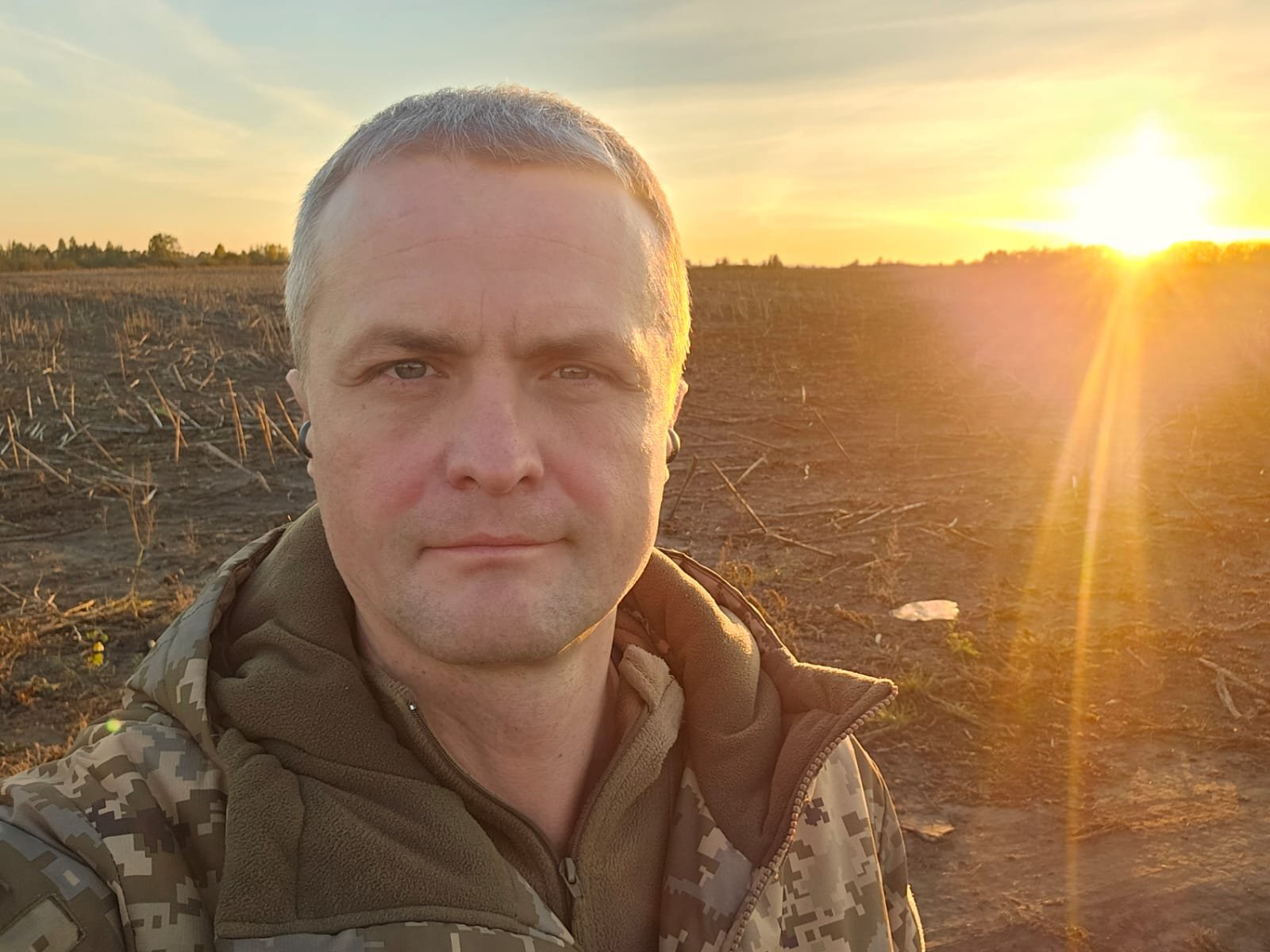
– What went through your mind when you heard those NABU recordings? What were your first impressions?
– In a way, I’m even ashamed of what may have been an overly indifferent reaction, because other things hurt me much more. But of course, they are connected to this story. I think this is a kind of professional deformation, because I spent five years on the Verkhovna Rada’s anti-corruption committee and before that I was a civic activist dealing with this problem. I immodestly consider myself someone who understands the phenomenon of corruption to some extent, and I realise that our state, in its current form, simply cannot exist without it. Just as a scientist knows that an electric field exists, even though no one sees it, I also know exactly where corruption manifests itself in this country – but we do not always have the instruments (in this case, NABU wiretaps) to "hear" it. Unfortunately, my forecasts about what is happening overall are being confirmed. And for now, I do not see any historic preconditions for change here. On the contrary, the world is moving in the opposite direction – rampant corruption is advancing in all the most "civilised" countries, taking on increasingly brazen, radical and cynical forms. Sadly, we are very much part of that trend.
We are at war, which means corruption does double damage. So if we are talking about the energy minister (who later became justice minister), it turns out that because of this corruption he is, at a minimum, absent from his "trench". He went off to steal money and left his "position" empty, so the enemy moves in and encircles us. In this case, it starts "suddenly" pounding our energy system. As I understand it, we were not expecting this, because I did not see any massive purchases of the relevant equipment by citizens for this winter, even though that needed to be done. At the very least, the Ministry of Energy should have warned people that this season would be roughly like 2022–2023, not like the two seasons that followed. There were no such warnings. I am not saying that only the Ministry of Energy bears responsibility, but someone is supposed to be in charge there! And the person responsible for the most important thing we have in the rear, the energy sector, left his "trench" to engage in some very dubious activities. This means that there is a huge number of people in power, including in the opposition, who simply do not have the intellect to grasp what the priority challenges facing us really are. What is going on now? Some carve-up of positions, all this nonsense about a government of national unity.
But this is nothing more than an attempt to redistribute power among themselves. The priority here should be entirely different, yet these people simply do not have the intellectual capacity even to talk about it. Our history has repeatedly shown that the elite, or supposedly smart people, can be completely wrong about priorities – busy dividing up political posts while the proverbial "Muravyov troops" are crossing the bridges onto the right bank of Kyiv. And I can see that something like this is possible with our current comrades. A person can behave differently, have a sensitive heart, feel other people’s suffering and, through that, understand reality. But these people have no heart at all. They simply do not feel the suffering even of those who are literally just a wall away from them, or in the next car in a traffic jam. There are hundreds of thousands at the front, millions in the rear. They are suffering, and yet these people somehow do not feel any of it. And you do not need three university degrees to be able to do that…
– So they lack empathy?
– One could put it more harshly, but let’s say it this way: they have no empathy. Those are the facts – these people lack any way of understanding what is really going on. That is why they are so dangerous for us. And look at their slang. Language is the house of being. And the house of their being is, excuse my language, a kind of sewer. They live in it mentally, feed on whatever is there, never step outside it and do not see anything higher – feats, suffering and struggle. That is why I say they are extremely dangerous. They have taken the highest positions or surrounded them with their influence – the president, the prime minister, the defence minister… By the way, the former defence minister is on those tapes as well, right?
– Yes.
– So these people are terribly dangerous because of their total incompetence when it comes to the historic moment we are living through.
– Is this an internal enemy?
– That’s putting it too strongly, because a dog that might bite you is not an enemy – it’s just not a very intelligent creature. In this case, we are dealing with very dangerous, unintelligent creatures whose sole occupation is to grab as much as they can as fast as they can. This crowd is completely out of touch; they understand and feel nothing.
– Can this new so-called government of unity politically save the current authorities?
– No, because the very idea behind its creation is to push this government aside in one way or another. If that process starts, there will be no end to it. Of course, their main goal is for the current authorities to show weakness, and then, in the best-case scenario, there will be some re-division of powers. This will not lead to anything good. Both the government and the opposition are ignoring a certain set of problems…
For example, the war and the rear: starting from soldiers’ everyday life – that they have nowhere to live – the quality of command, the accountability of commanders for gross mistakes, and ending with issues like housing refugees, supporting the energy sector, and so on. For me, as a kind of applied political scientist, it was telling when comments appeared that there had been an argument at the NSDC because Zelenskyy demanded that someone be found who was responsible for the energy issue. This is exactly what I keep talking about – there is total chaos there, all the "trenches" are abandoned and there is no one in charge. We need to understand that, in reality, no one is running this country! There is no person who controls the processes and has any kind of strategic picture in mind. Take Syrskyi. He is fighting on certain sectors of the front. That is his job. Yes, he could say: I will also replace the person in charge of energy and the one who is in charge of budget policy. But that is not within his powers! Although, in theory, any "actor" in this system would do exactly that. By the way, Fedorov, who is certainly not without sin, still shows successful examples of taking on responsibility outside his formal domain. In this chaos of abandoned "trenches" someone has to take over "command". If the "commander" of the energy sector or of fortifications has run away, you take responsibility and start managing things. And if they have all run away, you get shouting at the NSDC. And that is understandable! I would be shouting too in such circumstances, because I would have realised that I had messed up and at the very least failed to appoint a future scapegoat for what was going to happen. And now whom do we question? Who is to blame for the fact that we do not have electricity right now? Here we are sitting, and across the road there is darkness, you can’t see anything. Who is to blame for that?! Why did no one protect us from such a situation?! Because, I repeat, all the "trenches" are abandoned and no one is responsible.
– But we do have a president who, by his actions, shows that he is in charge of all processes in the country. Remember those recent public instructions to the prime minister to dismiss ministers…
– We have always had these neo-feudal traditions when it comes to ministers. That is, of course, bad, but I do not think our country is currently capable of overcoming it. For the majority, this is fine. They elect the president precisely as the boss of prosecutors, judges and so on, he is supposed to head everything possible, so let him decide everything as well.
Ultimately, the president sees himself as the key figure. However, it seems to me that he does not fully realise that a huge number of processes require the delegation of powers and responsibility. I cannot recall a single official during this war who failed in their job and then went off to somehow atone for their guilt. It seems there has been no such case.
– Here it all works differently – usually such people are "punished" by being sent off somewhere as ambassadors.
– Reassigning someone to work as an ambassador is indeed a purely Ukrainian form of punishment (he smiles – O.M.). Because even the Russians, in such cases, have the front looming somewhere in the background: a person has failed, so they send them there. They also confiscate property. Right now, they are going through massive processes of stripping people of what they stole. We have nothing of the sort. Either we are that honest, or there is simply no one responsible for enforcing the law. Even in any criminal, feudal, capitalist or communist system, it is recognised as right that someone punishes those who steal in times like these.
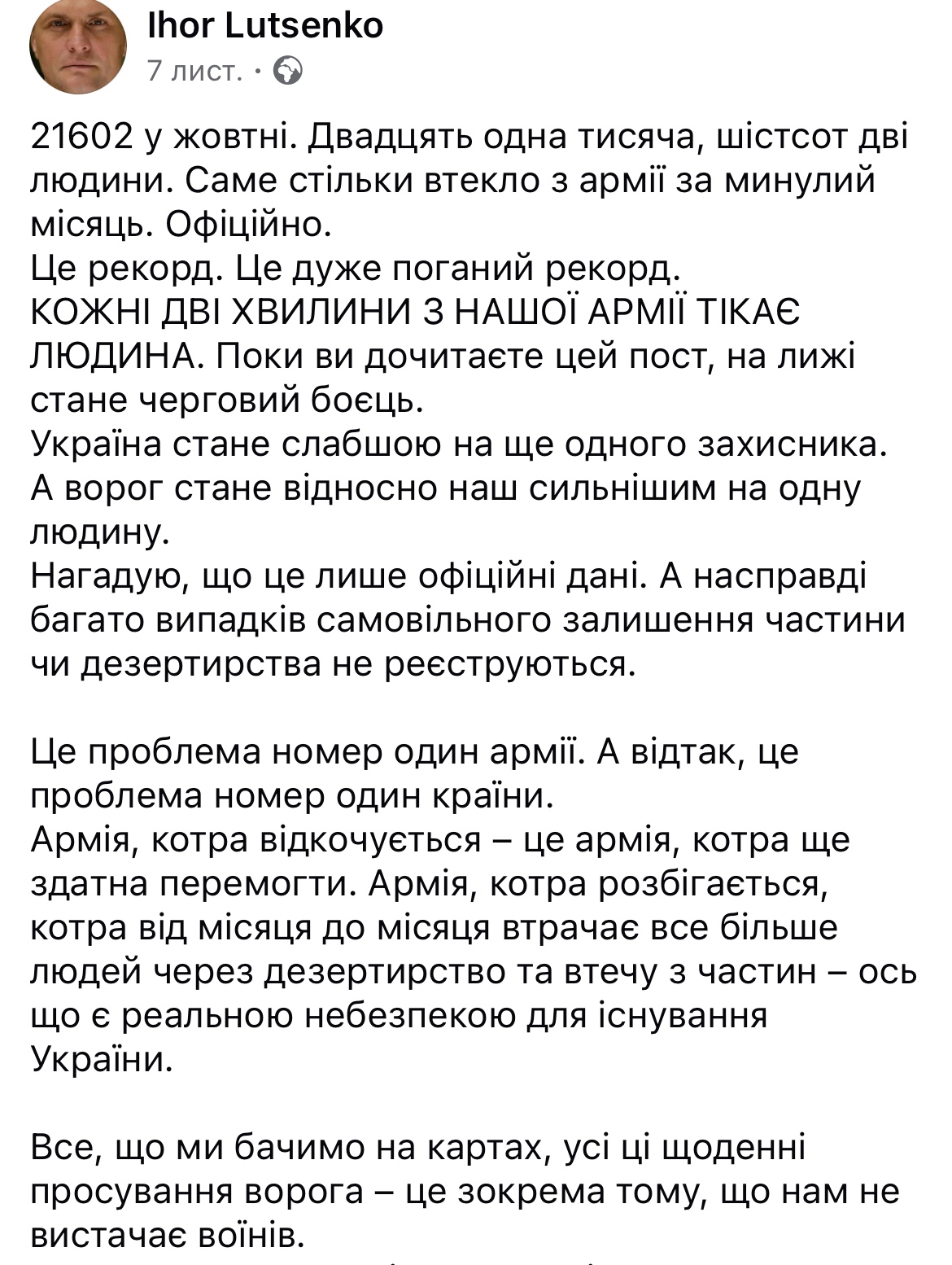
Instead, we have a culture of total impunity. And it is precisely from this that those AWOL figures stem, which the Prosecutor General’s Office is heroically broadcasting via my Facebook page (on 7 November, on his page, Ihor Lutsenko published information that in October 21,602 servicemen went AWOL from their units – O.M.). As if I were their press secretary or something. In reality, I’m just looking two clicks deep into their website.
So we need to understand this: the illusion that someone up there is actually in control is extremely dangerous. In the top office, there are no adults in the room. About two years ago I became completely convinced of this and realised that there are no standard recipes for changing it. It is a terrifying feeling. If we had outright criminals in power, we could build alternative structures, self-defence, to at least protect the country. But you don’t get a sense of hostility from these infantilised people. In some ways they may even be decent people, but they have no clue what is going on, or they simply don’t care. And they are surrounded by even worse specimens. What I do know is that the country’s top officials are now very offended by all of us: why are we laying into them, saying everything here is bad?! What does that have to do with them?! They are on our side, they want the same things we do. The only thing is, they simply do not understand that they are the ones with the resources to solve problems, or at least reduce the damage – and we are not. When we get angry at them, they do the same in response and tell us that they too are against Putin and that they also want everything to be fine here, that they want the energy system to "shine", but instead it’s on fire…
– If someone close to the authorities wants the energy system to shine rather than burn, they don’t set up corruption schemes here for their own enrichment. That’s kind of logical, isn’t it?
– Logical. But they think it won’t really interfere if they steal "just a little" somewhere along the way. And what is that money for? I think it is to fund the authorities’ media assets, to effectively pay salaries to their underlings – to pay the majority so that it votes the way it is supposed to. And to pay officials so they at least do something, because in our civil service there simply aren’t enough positions with decent pay. Things like this require extracting cash from state monopolies, which any government treats as a mandatory attribute of power. Naturally, along the way about 90 percent of that cash is siphoned off. The proverbial Che Guevara takes his cut for his services, and then down the chain, by the time it reaches the proverbial Vasyl Sydorov at the bottom, only about one million dollars out of a hundred is left. But the president is told: "You understand that we’re doing this to spread it around to your people!"
– So does he just turn a blind eye to this, or what?
– How else?! He was probably told that everyone does it and there is no other way – after all, you need proper media people to defend you. Just look at how many "good" Telegram channels there are now, and at least half of them need to be "fed". Zelenskyy’s predecessors were pulling assets onto themselves. Let me remind you that Kuchma is still one of the richest people in this country, together with his son-in-law. Yanukovych fled. His successor is also very wealthy. The current president is the poorest of them all. In that sense, I even find him somewhat likeable (he smiles – O.M.). When I walked the corridors of parliament, I felt very poor compared to other MPs. And it would be the same for him among his peers. Against the backdrop of Kuchma, Yanukovych and Poroshenko, he can see himself this way: I’m actually an honest president!
– But none of his predecessors ran the country during a full-scale war. If you’re the president under such circumstances, and your friends and partners are brazenly robbing the state, that means you are covering for them, doesn’t it? Otherwise Mindich would hardly have managed to flee abroad just a few hours before NABU raids.
– In our country everyone in such situations has always managed to get away. I don’t recall a single top official being detained while trying to flee. Some have come back, like our "Che Guevara". And even then, he could have chosen not to return – someone somehow persuaded him.
– They say it was under presidential guarantees that he wouldn’t be locked up. And Mindich is still abroad. I doubt that’s just a coincidence, right?
– And not only Mindich.
– There is also a lot of talk that Andriy Yermak is allegedly on the NABU tapes under the codename Alibaba. They say that because of this, the leader of the pro-presidential faction, Davyd Arakhamiia, gave Zelenskyy an ultimatum: either he sacks the head of the Office, or there is no single-party majority in parliament. Everyone knows the president is everywhere with Yermak. Do you think he will make that sacrifice? (We spoke on the evening of 19 November, when the possible dismissal of the head of the Office was being actively discussed – O.M.)
– Yermak has some kind of phenomenal stamina, because not everyone can spend that much time that close to someone. In principle, Zelenskyy could take that step. It would just leave him with even fewer personnel options. I can’t imagine the president dropping his beloved foreign policy, turning into an isolationist and focusing exclusively on domestic affairs. So he needs a viceroy for that. Who could fill that role in the current situation? I don’t know. I don’t know this crowd well enough.
The president has a problem in that he is heavily dependent on someone who is supposed to be "running the household", so to speak – at least mentally. Even though Yermak travels everywhere with him, he is also the one keeping this whole "patch" under control back here. Whether he faces dismissal depends in part on how serious the "artistic flourishes" about him on those tapes are, what kind of "storylines" they contain. It is obvious that he is aware of a great many processes. The bad thing is that inside the country we genuinely need a very strong leader right now – and with time this is becoming ever more critical. The president is a good presenter of Ukraine, but not a tough manager and certainly not the boss of the security apparatus, because there are major questions about the performance of virtually all of our law enforcement and security bodies. Unfortunately, we are drifting towards a kind of anarchy here. When there are no adults at the top, everyone there does whatever their imagination suggests – and that does not always lead where it should. I can illustrate this with a situation I was closely involved with in service – long-range drone strikes on Russian territory. In this area, everyone still "dances" as they please. There is still no single properly coordinated effort. And that is not just my opinion, but also that of the generals overseeing this domain (I won’t specify from which structure). They drew up presentations a long time ago on how the president ought to organise this work. We are doing a pretty decent job here as it is. But we could be doing much better if all our agencies "played" like a single orchestra, rather than as several separate pop-symphonic ensembles, each of which on its own produces a pretty good "picture out in the swamps". But we are not getting to the next level yet, because there is no one in overall command of these people. That is an obvious point! Just so you understand: we could have reached today’s tempo of strikes – when every night or every other night something big is burning in Russia – as far back as spring. But in March we had zero! Okay, for a while this could be explained by that informal understanding: they don’t hit our energy system, and we don’t hit theirs. But there were stretches when we were trying to hit something there maybe once a week. And now it’s as if an ambulance crew is out there hitting targets near Moscow with drones. That is good, of course – but someone still has to provide people with first aid, because that is your job. I don’t want to single anyone out here in particular, but I kind of am.
Everyone has a clearly defined function they are supposed to perform. Striking targets is great. But, for example, a spy in the rear can sometimes cause much more damage than a battalion on the front line. That happens. You are supposed to "catch mice". But somehow you are not managing it. Take Cherkasy region: the UOC (MP) has a grip on people’s minds there. And it all comes down to the fact that there is no one at the top to say: "Right, you are responsible for making sure there is no Moscow ‘church’ here at all! Compromising material? Ihor Lutsenko has it!" I even have a plan for getting rid of Moscow Patriarchate priests so that you would not find them in any city centre. By the way, during the war someone still found the time, and right across the street here (we recorded this interview on Volodymyrska Street – O.M.) the UOC (MP) chapel disappeared. I understand that if it weren’t for this war, we would never have driven them out of there. And now it was gone overnight. In other words, if there is the will, anything can be done. The problem is that the relevant officials do not know they are responsible for this. As a result, they don’t even think about how to tackle this task. If someone has a great unit that is hammering targets in the "swamps", that does not mean they can neglect their primary job. Because a single parish of the Moscow Patriarchate can cause far more damage than a single oil refinery.
– In your view, will the rear end up losing this war?
– The rear is currently our weakest link. At the front things are more or less clear. But here? We effectively don’t have law enforcement, including anti-corruption agencies. Today NABU is engaged in a media fight (which is better than nothing), because the criminal prospects of all these cases are rather doubtful. You can read the experts who analyse all this.
– So no one from "Mindich-gate" will be punished?
– Well, they are already punished by the fact that they are fugitives. That is our most poorly formalised form of punishment.
– Let me put it differently: will none of them be held to account in Ukraine?
– Properly, in line with the law – most likely not, given our legislation and the approaches to such matters, and the quality of the work done by law enforcement and the courts. The rear is our most problematic part. I’m not prepared to criticise only the central government here. The local level are "beauties" too! Considering how many different people there are, we can see examples with major pluses – and major minuses.
– For example?
– For example, the flowerbed stories. I look at frontline-adjacent towns where, on one side, drones are buzzing, and on the other, they’re planting roses. I’ve been seeing this since Bakhmut, when the enemy was so close that mortars were already hitting, and across the river municipal workers were carrying flowers. Unfortunately, this is being repeated in practically every town.
– What does that tell you?
– It seems to me that, at the local level, they are less afraid of the Russians coming than of potential liability for any moves that trigger these "red flags". What do I mean? Take Klitschko and Filatov: they complained that cases were being opened against them because they were allocating funds in one way or another to support Ukraine’s Defence Forces. So even such media figures, who definitely don’t consider themselves saints, start getting their knuckles rapped for doing good things. Let alone their less well-known colleagues, who under current circumstances think: "I’m just an ordinary official, I’ve got loads of money in the budget, but I’m not going to spend it and dig a tunnel for the defenders, because that’s not provided for in the legislation I work under." And I have never seen anything like proper military administrations here. But in those areas they clearly need to be digging those tunnels to create fortified districts. The very concept of preparing cities for defence is completely absent here! We are handing the Russians excellent fortification positions. What we need is tough decisions – and that is what military administrations are for: they come in and say, "That’s it, sorry, we’re evicting everyone the hell out of these neighbourhoods, maybe even the entire town. We’re putting half a tonne of explosives in every building!" By the way, explosives are also in short supply, which is yet another question to the rear. But you see, even if you simply send in an excavator to dig a trench for the Defence Forces, that’s a criminal offence – you’ve misused taxpayers’ money. So local leaders quite reasonably say they have no right to do this. Yes, many people go against the system and hope for future amnesty, and in the meantime they do good things. The rest operate strictly within the current legal framework – and in doing so, hand the country over to the Russians. By the letter of our laws, we should long ago have basically enthroned them here. Fortunately, there are people who find ways around certain things and manage to achieve something.
– Maybe the legislation needs to be changed?
– You can simplify the legislation, but no one raises this issue because no one needs it. These civil–military administrations are essentially an attempt to seize control over resources. Look, a million soldiers are living God knows where, at their own expense. And who cares?! No one is laying down clear rules. If there aren’t enough of them, why haven’t you adopted them in three and a half years?! Because they don’t care! And no one asks them: "Why haven’t you done this?" There is no one in charge, and they are used to following orders. So now everyone is on their own, and each person decides what to do in this situation according to their own conscience, courage and ingenuity. For example, there are plenty of communities that want to shoot down Shaheds themselves. This is a perfect illustration of reality. The state has not built a general system to protect the population from air threats. People understand they can only rely on themselves, so they go and learn how to shoot down UAVs. So that’s what we end up with: some people are learning – and others are stealing.
– So are there two worlds with opposing values in Ukraine?
– They are very closely intertwined.
– But they’re so different! One person risks his life to carry a wounded brother-in-arms off the battlefield, while another complains that it’s hard to carry a bag stuffed with dollars.
– A million is about 12–15 kilos. A heavy burden (smiles – O.M.). And this is a question of desertion. Because people are dying because of you – you deserted from the post of minister or whatever else.
– I don’t think these worlds can coexist for long. What do you think?
– They can’t for long. And yet we’ve somehow held on for three and a half years. But the trend for us is towards losing this war. Because the number of personnel is constantly shrinking. There are fewer and fewer combat-ready troops. And the number of AWOL cases is growing. And those who do come in are "second-" or even "third-tier" in terms of quality…
– Because most of them are brought in by force.
– Because mobilisation has been replaced with "busification" (meaning grabbing people off the street and tossing them into a van -ed). Everywhere else in the world, the law enforcement system forces you not to break the law. Here, it has completely stepped away from that role. Desertion and AWOL are not under police jurisdiction. The State Bureau of Investigation has only a few hundred investigators. So, in practice, with the system we have now, there is zero chance of investigating that scale of crime. Unless you bring the police into it – let them do the catching.
– How so? They’re busy chasing draft dodgers.
– Not exactly. In some countries there is a practice where, figuratively speaking, lots are drawn and a person from that sample goes into the army in a certain order. And here? You’re called up, you don’t show up – and what then? Do they block your bank accounts, like in Russia? I haven’t heard of such a thing. Do they apply any sanctions to such people? Also no. There are plenty of people on wanted lists with the territorial centres of recruitment (TCRs). But are TCRs investigative bodies now or what? They can’t block accounts. What they can do is grab you under your building or somewhere else. Obviously, that’s not mobilisation – it’s a completely random and low-yield process. It seems to me that, judging by the statistics, most of those grabbed like this will never actually end up defending the country. What needs to be done? Introduce a real mobilisation policy. For example, make the register of draft dodgers public.
– But then people will start screaming that this is a violation of human rights.
– Oh dear! I will feel so sorry for them!
– Someone dragged to the front by force is usually an ineffective soldier.
– The question is why they are being dragged into the war in the first place. You can apply a very simple approach to these, let’s say, newly recruited soldiers – send them to units with a low AWOL rate. We do have such units! For example, Khartiia, the Third Army Corps, K-2 and so on. These people somehow know how to work with newcomers. Because there are brigades where you arrive, see total chaos and can easily imagine how that will play out in combat. So you realise you need to get out of there fast. I can’t even condemn people for that. That’s why I say: if we are in such an extraordinary situation, then let’s send new recruits only to those who know how to work with them.
– Why is there such chaos in some brigades?
– It’s a lack of management. A proper manager would start analysing these processes and giving instructions. But when some general decides to hand all the "busified" conscripts over to his buddy, also a general, you get exactly this – they run away. And he says: "How is that my fault?! They’re the scoundrels! They don’t want to defend the Motherland!" And how many generals do we have behind bars? A few over the Kharkiv situation – and that’s it. There is total impunity on this issue.
Interestingly, media-visible commanders have far fewer people going AWOL. If I’m not mistaken, Lasar's group doesn’t have any AWOL cases at all. It is a very effective unit.
I believe mobilisation should be carried out on the basis of political expediency. In other words, everyone who is more or less well-known – opinion leaders, columnists, philosophers, artists, poets, the Forbes Top 100 and so on – should be sent to the army quickly. You’re a shareholder? Great! Leave your CEOs in charge and go fight yourself. These people are excellent organisers. Take Pavlo Yelizarov, who comes from business, Ihor Obolenskyi, who is not exactly a military type, or Andriy Biletskyi – he has no specialised formal education, but he is a talent who can create real momentum.
– The Forbes Top 100 will say they are holding the economic front.
– They’re not holding anything. They are shareholders. If they have mobilisation exemptions, those exemptions must be lifted, with a clear explanation that we cannot do without them. Of course, they will see this as outrageous lawlessness – but what other option is there?! Yes, there will be resistance, but the people will support it. In time, these people will lift the army up, because they are good managers. I don’t understand what they are so afraid of.
Death can find you here just as easily! But these people are generally excellent organisers. They’re shrewd. If you actually force them to fight for the country, they will deliver results – and many of them may even come to like it after a while. Right now, these are exactly the skills we need, because today’s army is both a military-industrial complex and a combat unit rolled into one. R&D, production and application – that is the formula for a successful army, something that has never existed in history before. You’re building something on one knee and, from the other, already firing what you’ve built. By the way, Western militaries are absolutely right when they say: why should we be churning out drones now for some future war with Russia if they will quickly become obsolete?! What we need is units that can immediately convert their combat experience into production solutions and then back into combat experience – which, I’m afraid, is not well understood here because none of this is formalised. We called up a million people, handed out a million standard rifles, ten thousand tanks – done, we’re ready! But that’s not how it works anymore. People talk about how dangerous the Russian "Rubicon" is. Well then, let’s borrow that example if our own doesn’t appeal to you! That’s why, if we really want change, our businessmen are desperately needed at the front.
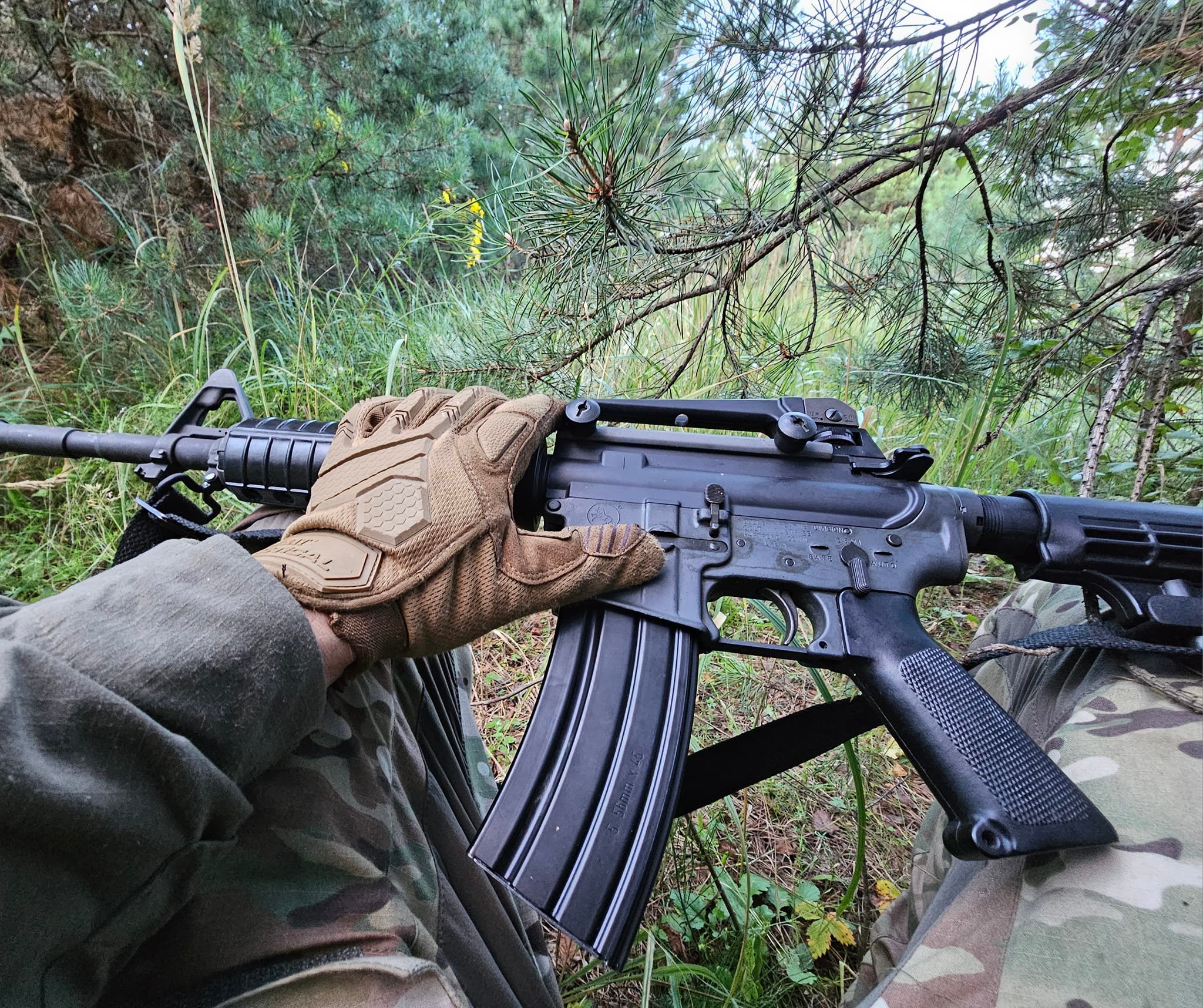
– So this businessman is sitting there today, looking at "Mindichgate" and thinking: why should I go and fight for people who are stealing in wartime?
– Well, businessmen understand those people very well (he smiles – O.M.). But this is about motivation. If you’ve made it in business, you have a certain debt to this country that you should repay. So whatever he may think to himself, I believe they must go. We do have people to hold the economic front – there are more exempted than there are fighting. So I would send the top tier of society into the army, because we need the best people in the toughest places. And that would be a mobilisation policy that the broader public could actually perceive as fair. Right now the perception is different, which is why AWOL cases amount to two-thirds of the official mobilisation figure. I think in reality it’s even higher.
Another point: if we establish a proper mobilisation process, we will be able to rotate people. Then people like me would fight until we’re 65. It’s perfectly reasonable – two years at war, two years off. That is a completely acceptable pattern in which you can have a family, keep some sort of business career and so on. What is happening now is simply the destruction of the army. It is overloaded. There is no replacement. People have no strategy and no sense of perspective. At some point, this will be rethought. Not by this lot, but by someone else. If things become truly critical and we start suffering major losses, some kind of council of commanders, or something similar, will emerge. They will be the most legitimate authority. Under such circumstances, no one will have more power than they do. They will have to gather and decide what to do with the country and on what foundations – to form some kind of military junta and mobilise everyone in the way I’ve already described to you.
– And the Commander-in-Chief? The Supreme Commander-in-Chief?
– Their reserve of legitimacy, so to speak, is not infinite. If, God forbid, we start losing large swathes of territory, that will raise serious questions. And we are already rolling back, because the number of our troops at the front is going down. Yes, the Russians’ inflow of manpower is slowing as well, but our rate of attrition is far too high. In this mathematical race, they are still increasing their overall power, while we are decreasing, which is why we are gradually pulling back. In other words, the current mathematical model is programmed for defeat. And no one can really dispute that with me. Something has to be done about it. The sooner, the better. But I understand that until some new terrible tragedy happens that once again jolts the country awake, nothing will change.
For example, something horrific involving Pokrovsk. Right now they are gradually "squeezing" it from us. But I don’t think the situation there is hopeless. There is still a chance to hold out for quite a long time. According to the maths, we won’t be able to do this indefinitely. But we can avoid simply handing it over – we can make them pay a very high price for it.
We ought to shift to a high-tech style of warfare. But again, that would mean a revolution in principles and personnel within the army. I’ll repeat: if something abrupt happens, like the loss of an entire region, there will be a revolt of some sort – by MPs, military commanders or someone else. A measured revolt, not like Prigozhin’s – the only thing you can say about that is: "Who stages a revolution like that?!" For that kind of scenario you need a shock. If it doesn’t happen, everything will continue as it is now.
– When territory is lost gradually, society doesn’t pay as much attention. Remember how, when people started talking about the possible rapid loss of Pokrovsk, it was suddenly in every news bulletin. The president makes several statements in a row, Budanov risks his best fighters, Syrskyi is on the ground. But is it really the Commander-in-Chief’s job to run the defence of a city? That’s not his task.
– When the Commander-in-Chief is forced to go and personally command the defence of Pokrovsk, that is a management crisis
– But this crisis needs to be fixed!
– Of course! But on top of everything else, from under Pokrovsk Syrskyi is simultaneously running the TCRs. Is that normal at all?! And the TCRs are acting like both investigative units and enforcement bodies at the same time. So the range of problems here is huge. It shouldn’t be like this. If Syrskyi is physically on the ground dealing with combat operations, there has to be someone else handling all the other issues. For instance, the Defence Ministry, the Interior Ministry, or the Logistics Forces Command of the Armed Forces of Ukraine, which is responsible for supplying the troops with everything from drones to ammunition. Right now they are running around in a year-end panic buying up any UAVs within a certain segment. Why? First, they have no systemic approach at all to analysing how drones are used. Second, the task is simply to spend the money quickly. The year is ending, so they need to buy at least something.
– And whether any of this actually works doesn’t interest them?
– They couldn’t care less. Right now DOT-Chain is functioning. With the so-called "e-points" you earn there, you can go shopping on the open market – and, as a rule, the military buy themselves something decent. And what does the Logistics Command do? "Right, who do we remember among the manufacturers? This one and that one – they’ll do!" It’s a completely ineffective structure that simply needs to be shut down and replaced with an effective mechanism. Parts of that have been done elsewhere and work well. But not there. This is an example of what needs to be done across the army: remove what has outlived its usefulness and grow something that actually works. You can see it in the Third Army Corps, Azov, Khartiia – they are successful both in combat and on the logistics side. But at the overall level, you need a top figure with the relevant powers who will actually do this. Since we effectively have an "electoral monarchy", the "monarch" needs a chief "vizier" for military affairs. Petro Oleksiiovych, for instance, suffered from sticking his nose everywhere – that was the era of micromanagement. Now it’s the opposite. So there has to be some super-competent, strong-willed, charismatic person who, under Zelenskyy, would resolve all military issues and push through all the defence reforms. That person would be number two in the country – the top man for the war. Or you could split these functions among several people. In essence, moving Shmyhal to the post of defence minister was the right step. It shows that this position is more important than that of prime minister. And the defence minister should also be in charge of the General Staff. Ideally, there should be a system of both oversight and support at the same time. People in the General Staff might not all like that, but I think it would start working better. Anyway, no point dreaming out loud. Still, that kind of reshuffle is a good illustrative move, because the Defence Ministry is where the most important things are. Another option would be if the president had three Palisas – they could be the ones shaping our entire military policy.
We have a huge amount of both domestic and foreign economic resources in this country and a mass of idle men. There is simply no one to organise all this. For example, we could cover our entire infantry needs with foreigners. They say we currently have an average of 15 soldiers per kilometre. Multiply that by a thousand – 15,000. Multiply that by four – 60,000, so there is rotation, people get to rest, recover and train. Recruiting that many foreigners is very easy. But we don’t have a structure that is responsible for it. We don’t need a Recruitment Centre, we need a structure that handles the whole pipeline: from interviewing a candidate to getting that person delivered here. Both the civilian side, like the Foreign Ministry, and the military side have to be involved. And what do we have today? Khartiia is recruiting on its own, Biletskyi and Azov are doing the same. They’re forced to run this process amid anarchy and the absence of the state. Whereas if the state were doing it, everything would be much easier, because diplomacy and embassies would kick in. An ambassador in a Latin American country should have a task similar to a TCR’s: you ask him, how many soldiers did you bring into the Ukrainian army this month? That would give us a very strong filter for the diplomatic corps – something that should have been done long ago, because there are plenty of people there who simply aren’t doing their jobs. We’re already running out of Colombians. There are still some Brazilians. But we need to draw on other countries as well. Every country has this "top layer" – excellent human material. Roughly three percent of the adult population – people born for war. We should be the ones taking them, not Russia.
– Russia has North Korea and China.
– Korea is already a move of desperation. In general, they are tapping Latin America and a bit of Africa. And they do it centrally: a plane lands, loads up and flies off. We have nothing like that. For a Colombians coming here, the whole village pools money for his ticket. Then he somehow gets smuggled in in somebody’s car boot and so on. As for Africans, we’re at absolute zero. The state’s position is: we don’t take Africans.
– Why?
– I don’t know why this attitude. Some kind of anti-African bias (he smiles – O.M.).
So the state has completely failed in this area. Otherwise, we could already have foreign infantry. It’s a perfectly normal model. I would, for example, train our Scandinavian and Baltic friends to be drone operators.
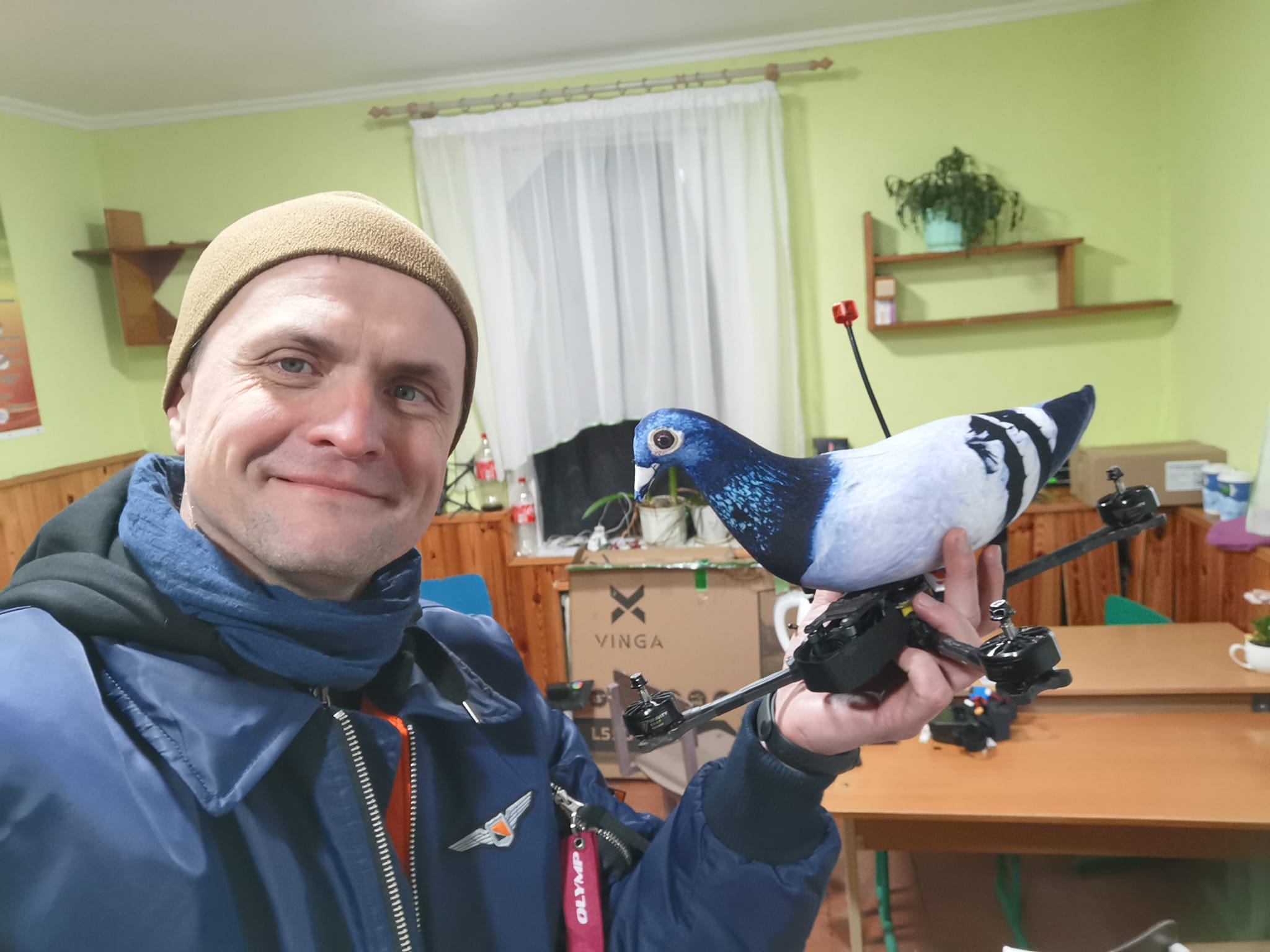
They are not fighting with us in large numbers, but even the level we have this year is fine. In a year they will go home and start training others there, and Scandinavia itself will be a little more educated on this subject.
But this is politics! This issue can actually be solved. Modern war does not require that much infantry. We could partly solve the AWOL problem this way as well. Yes, there are questions when it comes to assaults. But trying to turn "busified" conscripts into assault troops is a disastrous idea. My friend Roman Stetsiuk ended up right on the zero line two weeks after completing Basic Combined Arms Training, and in less than a month he was sent back to the rear because he was wounded. He was lucky to survive – the drones simply didn’t explode right next to him. Then came the hospital and discharge. That’s how short his military "career" was. We need to understand that even if someone is a "super Rambo", psychologically they are not ready for the front line. They need to be trained and introduced there gradually. The Third Army Corps and Azov somehow manage to do this.
To sum up, Ukraine’s problem is not the lack of proper leadership, but the mathematical model we talked about, which forces us into retreat. But that retreat cannot be endless. Territory is finite. And we shouldn’t be counting things the way Röpcke does (a German analyst and journalist – O.M.), presenting everything in square kilometres. That is not a competent approach. When you’re being encircled, it doesn’t get any easier depending on how many square kilometres are involved. It is not an indicator of "slow advance". I would analyse it differently. I would also gradually move away from the "e-points" system, because the pendulum has swung the other way and that is skewing the metrics.
– Are the fighters getting too carried away?
– It turns into a race and a purely sporting interest, without any understanding of the context or the strategic importance of your actions. And we are now trying to patch the flaws of this system with ad hoc tweaks. For example, we introduce a bigger spread in coefficients for targets hit as deep as possible into the enemy rear. In general that’s the right thing to do. But it is only a small fragment of the measures needed for the system to work smoothly.
Coming back to square kilometres, we can’t be looking at all these indicators even in terms of the number of settlements lost. The main criterion today has to be what we call the loss ratio. That needs to be recorded clearly at the analytical level. For example, with a notional ratio of one to twenty we can say we are fighting successfully. If it is one to five, we have a problem. I’m speaking roughly – it still needs to be calculated properly. But territory and square kilometres are deeply secondary. We have long since entered a multi-year war with no end in sight. So let’s adapt. If we define the loss ratio as our key metric, then we must minimise our losses. To do that we have to overhaul the entire way we operate. Perhaps we don’t even need assault troops in their current form? We should strengthen their drone component and start calling them not assault troops, but drone-assault troops. Even just introducing that name would cut AWOL by 0.5%. Or maybe all of five percent (he smiles – O.M.). We have work to do. Because the main thing for us is preserving our personnel. This war is going to last for decades. Potentially.

– It seems to me that society has not yet realised that this war will last a long time.
– It’s ridiculous! Every six months we get some new spiel about why the war is going to end soon. How is that even possible?! People, come on, wake up! Even the Russians themselves are telling you now: "We will fight you through to ultimate victory!" And they will, because they enjoy it.
– And it's profitable?
– It might not even be profitable. But they no longer know how to live any other way. It’s their existential setting. Many of them don’t want to fight, but then Putin shows up and says they have to. And here we keep getting new stories from one "expert" or another about some next peace deal – as if Russia has already agreed with Burundi to bring peace to Ukraine.
We need to shift the country into a legal regime of permanent war, because the current framework is geared toward a temporary one. Everything is built around a crisis scenario: they get called up, they fight for a bit, it all ends, and everyone goes home. We can’t amend the Constitution. We can’t re-elect parliament. Not even local authorities. Although what exactly is stopping us there?! Is there any reason elections can’t be held in Uzhhorod, for instance?! Something has to be done about this. It’s a very unusual, complex task and, unfortunately, beyond the capacity of our current strategists. But we do need some form of political life. For now, that means Facebook, Telegram and "people with cardboard signs". By the way, after those protests we got that appalling decision to let men aged 18–23 travel abroad. As one of my fellow servicemen put it: "There should be Old Testament-style punishment for something like that." It simply leaves no room for Christian forgiveness.
– The German chancellor has already officially called this out, telling Zelenskyy that young Ukrainians are needed in Ukraine.
– That’s a direct slap in Zelenskyy’s face. He’s basically saying straight to him: "What on earth have you done?!"
– We’ve discussed some difficult things. I’d like to end on something positive. Is there any hope for a better future at all?
– That’s a very difficult question (pauses for a few seconds – O.M.). First, our enemy is not getting stronger – it is getting weaker. Another mobilisation is brewing there, and for them it’s a kind of lottery. We remember how in 2022 they launched mobilisation and immediately slammed on the brakes because they got scared. I think attitudes to the war in Russia have only worsened since then – and the same goes for mobilisation. Our main task is to send the signal that, despite everything, we will hold out, and that Russia’s efforts are pointless: "The objectives of the ‘special military operation’ will never be achieved!" I believe this is within our power.
Second, our economy is in remarkably good shape for a country that has been in full-scale war for almost four years. Some sectors are growing, others are shrinking, but overall everything is functioning. Our potential mobilisation pool is also enormous. People are simply avoiding the army! Because, just like the Russians, we haven’t properly worked through mobilisation. But I wouldn’t even start talking about the country being "exhausted". It isn’t!
Third, we already have successful models for winning on the battlefield. Ask Madyar or K-2. They just need to be scaled up. We are waging the technological side of the war better than the Russians. We have plenty of places to recruit infantry from – you and I have already talked about that. So let’s get on with it! We mustn’t waste time. You know, what our corrupt officials are stealing from us most is not even money, but time. Because money can be found later, but the opportunities will already have been squandered.
Olha Moskaliuk, Censor.NET
Photo: Ihor Lutsenko's social media


