



Call sign Tykhyi: "We are eliminating Russkies on industrial scale"
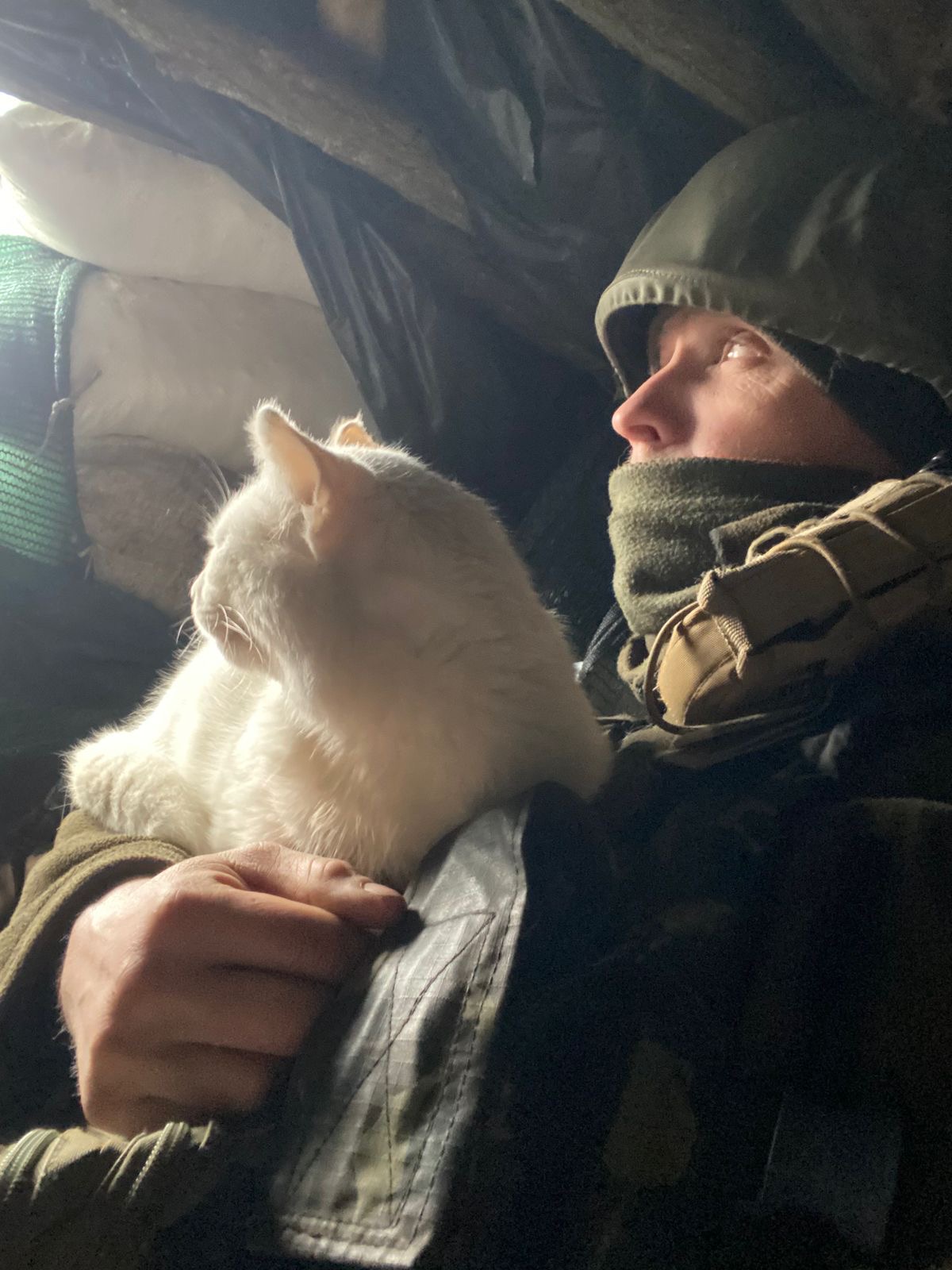
Serhii does not like noise or fuss, so he chose a matching call sign – Tykhyi ("Quiet"). His work is always focused and precise, with no unnecessary words or movements. He is an external pilot with the Khortytsia Ghost unmanned systems battalion of the 15th Operational Brigade of the National Guard of Ukraine.
He says that over time, he has become more reserved, even a bit of an introvert: silence and solitude give him a sense of balance. Before the war he ran his own business, working in mobile communications distribution, and later moved into the banking sector. In 2015, he was mobilised. After basic training in his home city of Mykolaiv, he completed another month of training at Desna. From there, he was assigned to a reconnaissance battalion, where he served as a senior reconnaissance scout.
- Where were you deployed when you joined the service?
- Along the front line from the industrial area of Avdiivka to the Svitlodarsk bulge. That was where I first experienced the death of a commander whom I respected deeply. We carried him out. He died in our arms.
- Can you tell us how it happened?
- Yes. His name was Serhii, call sign Pirania. He was the company commander. He was always with us, constantly up front, constantly training us. Even selection for our unit was very strict: no alcohol, nothing extra – if you could handle it, you stayed.
We went out on a mission to Troitske (past Luhansk). Our group moved into the grey zone on a reconnaissance operation. The commander was up front, then the combat engineer, third was the radio operator, and I was fourth. We hit an OZM antipersonnel mine. One man was killed in action, and the commander was wounded. He said, "Leave me, I’m done." We still dragged him out, put him in a BTR armoured personnel carrier and got him to the hospital, but he died.
- I’m sorry for your loss.
- Thank you. That was the first really heavy loss. A remarkable man was killed, someone who gave us the knowledge I still use today.
- How long did you stay in the army?
- Until October 2016. Back then, I said, "I hope I’m handing in my rifle for good," and went back to civilian life. I wanted to go back to my bank, but it went bankrupt while I was serving, so I was laid off. I kept looking for my place in the commercial sector and moved into grain logistics.
- How did the full-scale invasion hit you?
- It was unexpected. Everyone had been saying beforehand that it was possible, but I just couldn’t accept it. I didn’t even want to think about it. I had just wrapped up my work in Mykolaiv, was getting ready to spend a couple of weeks with my family and then in March go to work for a Polish logistics company. I already had my visa. And then the full-scale invasion started.
- Where were you on 24 February?
- At home. We all woke up at four in the morning. I heard explosions – they were attacking our airport. I immediately realised the war had started. I have a wife and a one-year-old child, so until I sent them abroad, which was in April, I did not join the fighting.
- Did you spend this month in Mykolaiv?
- Yes, in Mykolaiv. I wanted to go back to my old battalion, but they told me, "We don’t have any slots, we can’t take you, we’re full. Wait." By the way, my battalion was then sent to Mariupol and later captured. Unfortunately, many of the guys are still in captivity.
- So what were you doing before you were mobilised?
- I was helping our Territorial Defence, so I was there on the ground but not directly involved in combat. On 18 April, I was mobilised into the National Guard of Ukraine. At first, we were in Mykolaiv, doing security duties and training. But we wanted to fight, so a composite group of us went to defend positions near Snihurivka.
- Did you stay in reconnaissance?
- No. I was an ordinary infantryman in a rifle battalion. Back then, I didn’t admit I was a recon man (he smiles – O.M.).
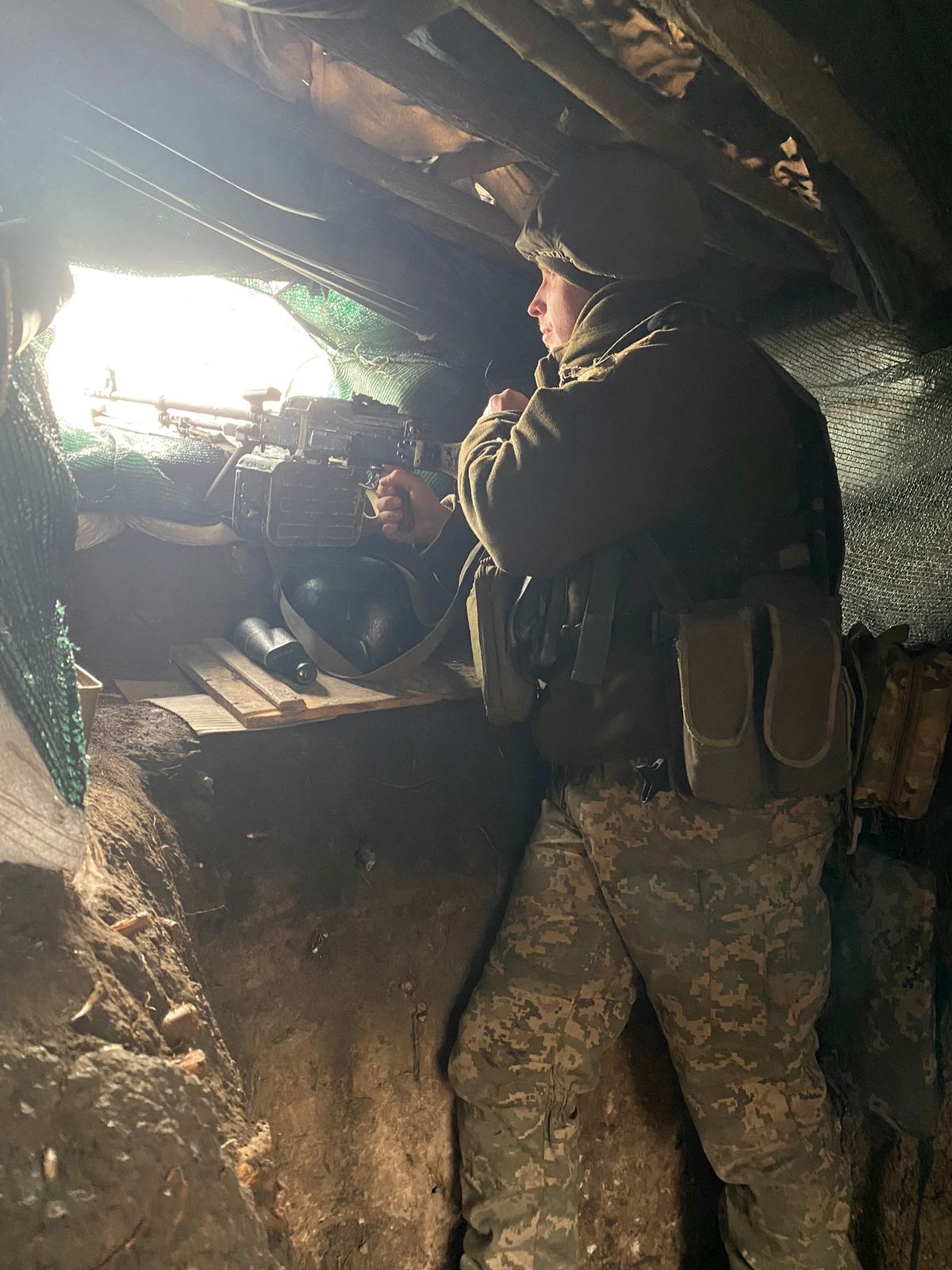
We fought on those positions. At that time, there were no drones yet – only artillery, tanks and APCs.
- What were you feeling most of the time back then?
- You know, I became very restrained. I took everything in stride, without excessive emotion, keeping a cool head. If there’s work to do, you do it. You don’t refuse – you go, no matter what.
By the way, I was there with my compadre (call sign Monk), with whom we joined the army together in 2015, and in April 2022, we were both mobilised again. We fought near Snihurivka. Later, we were told that the Kara-Dag unit was recruiting. It was holding the line on the Zaporizhzhia front near Mala Tokmachka. We agreed to transfer, and in January 2023, we moved to another unit – again as infantry. My friend became the senior sergeant, and I was a senior private. It was on those positions that we went through that very bitter counteroffensive.
- In your view, did the publicity ahead of the counteroffensive hurt us?
- It did, because everyone knew about it, so they were waiting for us there. We knew everything was mined, so there was no way to just push straight through. It’s hard to even talk about how many people we lost there. And no one has been held accountable for that.
- Servicemen who were also on the Zaporizhzhia front before and during the counteroffensive say the Russians prepared so thoroughly that they even brought in construction equipment…
- Just so you understand, excavators were working right in front of our positions – they would calmly drive in and dig. We watched all of it, recorded it and passed on all the information. But as soon as one of our excavators showed up, it was immediately engaged. If we fired two or three times, we’d get about 10–12 rounds back.
- Are you talking about artillery?
- Yes. Sometimes our aircraft joined in as well.
- And on their side?
- Everything you can imagine! The only thing they didn’t have yet was the amount of glide bombs and drones they’re using now – that came a bit later.
- Speaking of drones – how did you start flying? How did you go from infantryman to drone pilot?
- I got to know drones after my friend was wounded. That was near Verbove, when we went to hold the last tree line. Those were very tough positions that cost us dearly. It wasn’t just our brigade there, but neighbouring units as well. They gradually pulled back, and the b@stards started pressing us to take that tree line from us.
We ended up encircled. Not a single serviceable rifle – they had all jammed. We only had grenades and a Fort pistol. There were three of us in the dugout – me, my friend and another brother-in-arms – and one KIA. Our artillery was pushing the b@stards back a bit while the guys were trying to fight their way to us. My friend went out to help them and was wounded in the eye. I dragged him back inside, bandaged him and ordered an evacuation request to be sent. In the end he and one of our brothers made it out on foot. Then he was taken to hospital. Thankfully, he’s okay now, but he was discharged from the army with a second-degree disability – he lost an eye, the bullet tore it out completely.
So I stayed in the dugout with two brothers-in-arms, and for another two days we held the defence, surrounded by b@stards who kept trying to drive us out. They thought there were officers sitting in there, so they chose that tactic. We called fire on ourselves and just managed to jump into the neighbouring dugout, which was also ours. By then, FPV drones were already in play, with dropped munitions and gas. : Our neighbouring units moved up to us, supposedly to retake that tree line. But they turned out to be very green – not ready to face enemy drones. Eight or ten of us ended up crammed into a small dugout, which they slowly started to take apart, throwing gas in on top of everything else. The guys started jumping out. I stayed inside, dropped to the ground, and then crawled out to pull the wounded back into the dugout. We bandaged whoever we could and waited for orders on what to do next, whether to pull back. They started pressing us from three sides. Everything was working us over – artillery, a tank, drones. In the end only three of us made it out of that dugout. I sent the two wounded first. Then I grabbed the radios and batteries, my brother’s rifle and also headed back across the fields to our positions.
I’m walking and I see a dropped munition already hanging over me. It falls but doesn’t detonate, and I roll away. The second one was rigged with gas. Good thing I moved off to the side. The drone flew back to rearm, and I sprinted on while it was gone, before it could come back around.
- So after this situation, you switched to drones?
- It just so happened that at that time our unit was being restructured into an unmanned systems battalion. We went through training and started flying Mavics, Autels and Matrice drones. We operated in the Kharkiv sector.

- Were you doing reconnaissance?
- Yes. You know, with all my deep respect for artillery, today the true gods of war are drones. They are what decide a lot on the battlefield now.
- In one report from Dobropillia, I heard a civilian grandma say: "There are more drones in the sky now than birds." Servicemen on all fronts talk about the sheer number of UAVs…
- There really are a lot of them. Unfortunately, the enemy is upgrading, ramping things up, learning fast and changing tactics. We’re also evolving and trying to stay one step ahead of them, to anticipate their possible moves. In general, we’re taking out Russian forces on an industrial scale.
By the way, our pilots don’t just fly. I’ll tell you about an episode that happened here in May. There were three of us, a crew on a position. The enemy was hammering it and the infantry in front of us with mortars and drones. One soldier there was wounded. We decided to help him reach the evacuation point. We went under fire while he was crawling along a trench. We dragged him about 300 metres to a dugout. Then the evacuation vehicle arrived, picked him up and got him safely to the evacuation point.
- The situation on your sector now is, to put it mildly, very difficult, isn’t it?
- It is, but we’re holding our sector steadily. We detect the enemy in advance, destroy them and don’t let them seep through to our positions.
- And pilots have another problem now – changing weather conditions…
- Fog and rain work in favour of enemy infantry groups that can slip through, because our kit can’t always get airborne. They try to use the weather to their advantage to move further. We still keep watching, we still launch our drones, find the enemy and kill them. It’s just harder now, because they have time to reach bushes or cover, so they’re tougher to spot. But it’s not easy for the b@stards either. Our unmanned systems battalion is now a well-oiled machine that keeps improving, developing and ramping up its ability to detect and destroy the enemy. We have real brotherhood, traditions, mutual respect and support. Our combat leadership is sound. Our battalion commander is excellent; he’s right there alongside the soldiers, which helps enormously. He knows each of them, talks to them often, knows their problems and deals with them. He goes up to the frontline. In those conditions, it’s easier for us to do our job. I’ll give you a personal example. When our position ended up semi-encircled and we were already prepared to hold the defence there as infantry, the commander decided to pull us out while it was still possible, to save lives. An operation was planned, an armoured vehicle rolled in, and we managed to evacuate quickly with all our gear. Holding that position as a launch point made no sense anymore and was too dangerous.
- Colonel Yurii Fedorenko, commander of the 429th separate Achilles unmanned systems regiment, which also operates on the Kharkiv front, recently said the enemy has gone back to mechanised assaults. What do you see?
- They tried to push vehicles towards Kupiansk. Just this morning (on 3 November – O.M.) we spotted a tank near the Oskil River and destroyed it.
- What does that tell you? For a long time, they were moving in small groups…
- They still move like that against us – one or two at a time. There are kill zones, a so-called "road of life", where they come and lie down to rest forever. We don’t let them through. They never reach our positions. I have no idea what drives them to keep going in those conditions. It’s a mystery to me. But they are covered by FPV drones and fibre-guided drones, and there are a lot of those. In general, it feels like they’re on some kind of unlimited package for everything. But we’re not standing still either. I should say our optics work very well, as do our strike drones like Vampire and Kazhan. And our FPV air defence does a brilliant job taking down their Molniya, Zala and other reconnaissance and strike drones. We’re also actively developing the UGV line – ground robotic systems…
- And are you involved with those systems yourself?
- We have an entire company that supports both our own and the infantry’s positions with them.
The enemy targets them as well, though. Right now, we’re really suffering from "sleeper drones" lying in wait along our routes. Even though we constantly review our supply routes, there will always be someone sitting in ambush somewhere.
- What about their ground drones?
- They have them too. Today one of our FPV drones took out one of their UGVs.
- What was it carrying?
- Unfortunately, nothing. It was standing there empty. In general, they use them to transport supplies, fuel cans and so on.
- What do you hit most often overall?
- EW systems, guns, light armoured vehicles, but mostly infantry. Heavy armour can’t really get through here because of the river and the elevation changes. We are constantly hitting the boats they try to use to cross.
- But Russians try to camouflage themselves when they move. I know they often use special cloaks.
- They move in camouflage ponchos. But our drones pick them up perfectly by their movement, and then we tear them apart with dropped munitions.
- The guys also say Russians often play dead.
- Very often. As soon as one of them hears a Mavic overhead, he hits the ground and pretends to be dead. But once you drop a munition on him, suddenly he "comes back to life" (he smiles – O.M.). They’re very hard to kill: you can drop a round right on him, score a hit, and he still gets up and walks away. Sometimes you don’t kill him on the first try.
- Do they shoot back at your drones often?
- Yes. Sometimes they shoot down our FPVs, they fire at our heavier drones. Yesterday we were taking out one of their soldiers. He shot down two of our FPV drones with his rifle, and only after that did we finish him off with a dropped munition. On intercepted comms we heard one of them say: "My leg is wounded, I don’t need evacuation, just give me medicine. I’ll lie here for a week and then go back to fighting."
In general, they’re very good at digging in. There are some real "specimens" here who live right in their positions. One of them even ate his comrade.
- The one who’d been killed before that?
- We didn’t quite figure it out. Over the radio, he said: "I still have something to eat – Vasilyevich. I’m slowly finishing him off." So things like that happen too.
- How would you rate the enemy’s drone pilots?
- They have competent pilots. I will never underestimate the enemy. They work skilfully too. They know what they’re doing and they’re learning.
- Who exactly are you up against now?
- A group called "Judgment Day" (a Russian drone pilot group – O.M.). But we’re also ready for Rubicon (one of the key structures in Russia’s unmanned forces – O.M.).
- Have you ever taken Russians prisoner using drones?
- Yes. One of our pilots used a Mavic to capture a bastard and guide him straight to one of our infantry positions.
- You didn’t talk to him? What did he say?
- Not with that one, no. But they all have the same story: none of them wanted to fight, they’re all so miserable – loans, prison, someone wanted to earn money this way.
- These are Russians saying that, right? Not those who were "mobilised" in the occupied territories?
- Russians. And by the way, Cubans have also been spotted on our sector. They’re being forced forward – they don’t know where they are, can’t orient themselves and get lost.
The b@stards have everything divided up: there are "caravan handlers" who ferry people and supplies across, there are those they deliver to, who then sit on the positions. It’s a well-established conveyor. For example, the journey of a single infantryman takes roughly four days from point A to his destination – to where he’s supposed to end up. I’ll say it again: I don’t understand why they keep doing this. But they just keep coming. Their mobilisation goes on, and there are plenty of volunteers for contracts. Unfortunately, they have no problems on that front. They have enough resources for everything because they live under a hardline totalitarian system. Everything is put on a conveyor.
- And they have enough money for the war.
- As long as there are people willing to buy their gas and oil, they’ll keep fighting. No matter who says "Russia will collapse," they’ve put their economy on a war footing and they’re coping. What they don’t know is what to do after the war. That’s what scares them. Because the people could topple the "tsar" from his throne. So the war suits a lot of them. Sadly, it suits some in our country too.
- You mean those who are profiting from it here?
- Yes, those who are making money off it and those who have adapted. Right now, we have two worlds: people who live a civilian life, for whom the war is "somewhere over there", and those it affects directly. No matter how hard we try to unite the country, the war is not the same for everyone. That dividing line is very visible. At the beginning of 2022, we pulled together and held out, but after the counteroffensive, the mood started changing fast and dropping off – that’s the flip side of the coin.
You know, when I come back to my city, it really hurts to see able-bodied men whose lives are just fine and who don’t worry about anything. Guys, let’s swap places! All officials and civil servants who are not in truly critical positions are obliged to defend the country. That’s their duty. For the time being, they can be replaced by women, veterans or serving soldiers who want to and are able to do it. I, for example, have two university degrees. Whatever I need to learn, I’ll learn. I can handle it overall. No problem – let’s do it. I’m ready to work for the state. Because I also want to be at home with my family. I also want a civilian life. But unfortunately, I see my child, at best, for a couple of days once every three months, and the rest of the time only on video calls.

- How do civilians react to you when you come home?
- During the ATO people were grateful, they thanked us for protecting them. Now, even neighbours quietly look away. Especially those whose husbands are sitting at home. They try to avoid me.
- Are they ashamed?
- I don’t think so. It’s all quite deliberate. It’s this "it’s none of my business" mindset: "We have Ukraine in our hearts, but you lot go and fight somehow without us."
- What keeps you motivated to go on fighting in these circumstances?
- I do it for my child, so they can live in peace, and to avenge the children and brothers-in-arms who have already been killed in this war.
P.S.: Dear friends, the technical team of the Khortytsia Ghost unmanned systems battalion of the 15th Operational Brigade of the National Guard of Ukraine is asking for your support in raising funds for equipment to produce fibre-optic FPV systems. These systems have proven highly effective on the Kharkiv front in the brigade’s area of responsibility. The enemy is trying to push forward, but our guys are firmly holding them back.
We ask you to join this fundraising effort so that our troops can continue to hold the line and keep the enemy off our land.
The target is 200,000; 92,000 has already been raised. Banking details:
https://send.monobank.ua/jar/9sp1i1V4ov
Card number:
4441 1111 2327 2100
Olha Moskaliuk, "Censor.NET"
Photos provided by the interviewee


