



FPV pilot with call sign IIID: "Russians’ UAVs are mostly identical: power up and fly. It makes their work easier"
Stage, rehearsals, performances – Dmytro Tretiak, an actor and musician from Kharkiv, lived for his art and plans for the future. But when Russia launched its war in Donbas in 2014, he did not stay on the sidelines: he supported the front and performed for Ukrainian troops. After the full-scale invasion, he returned to volunteer work but later decided it was time to join the army himself.
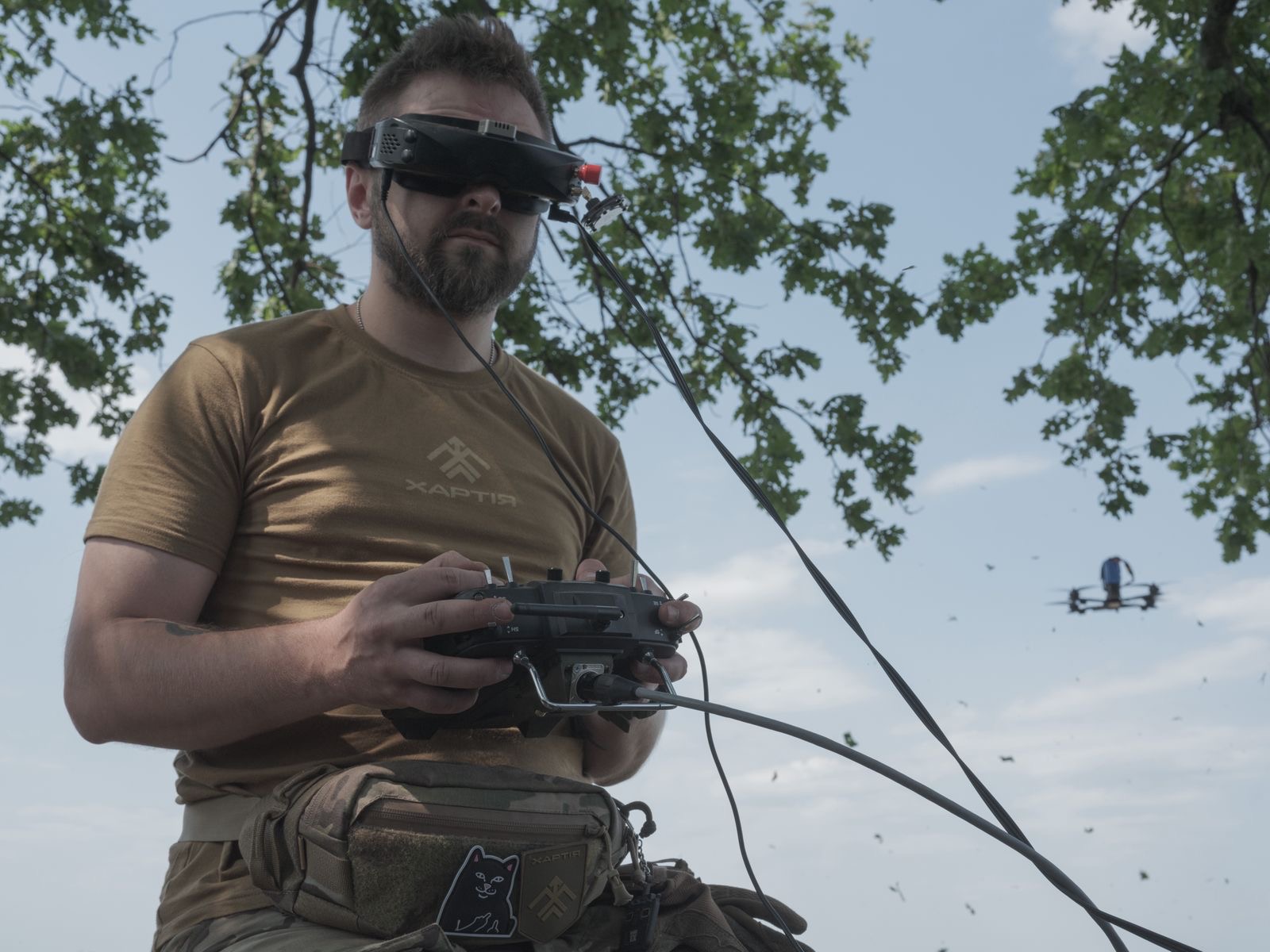
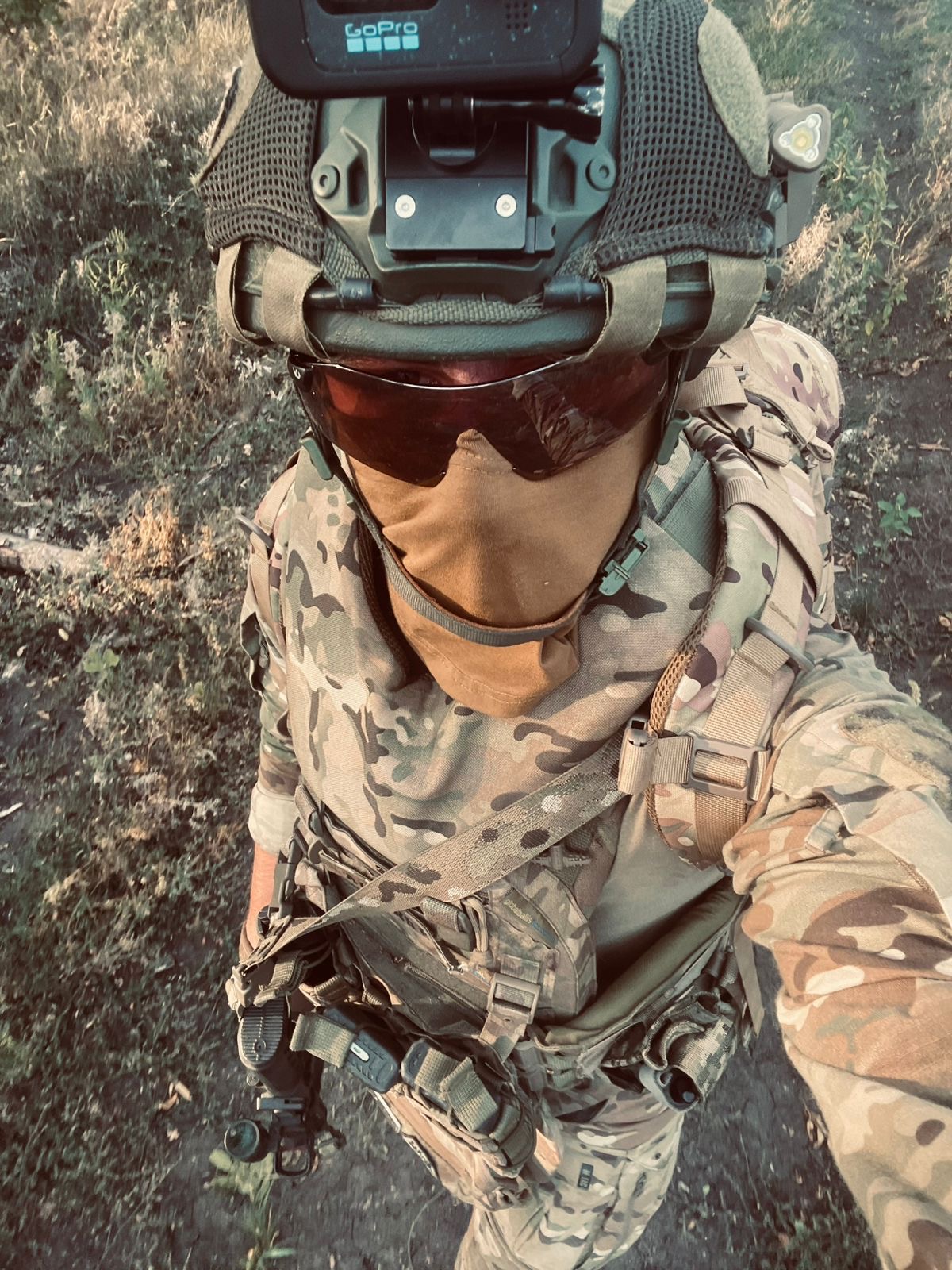
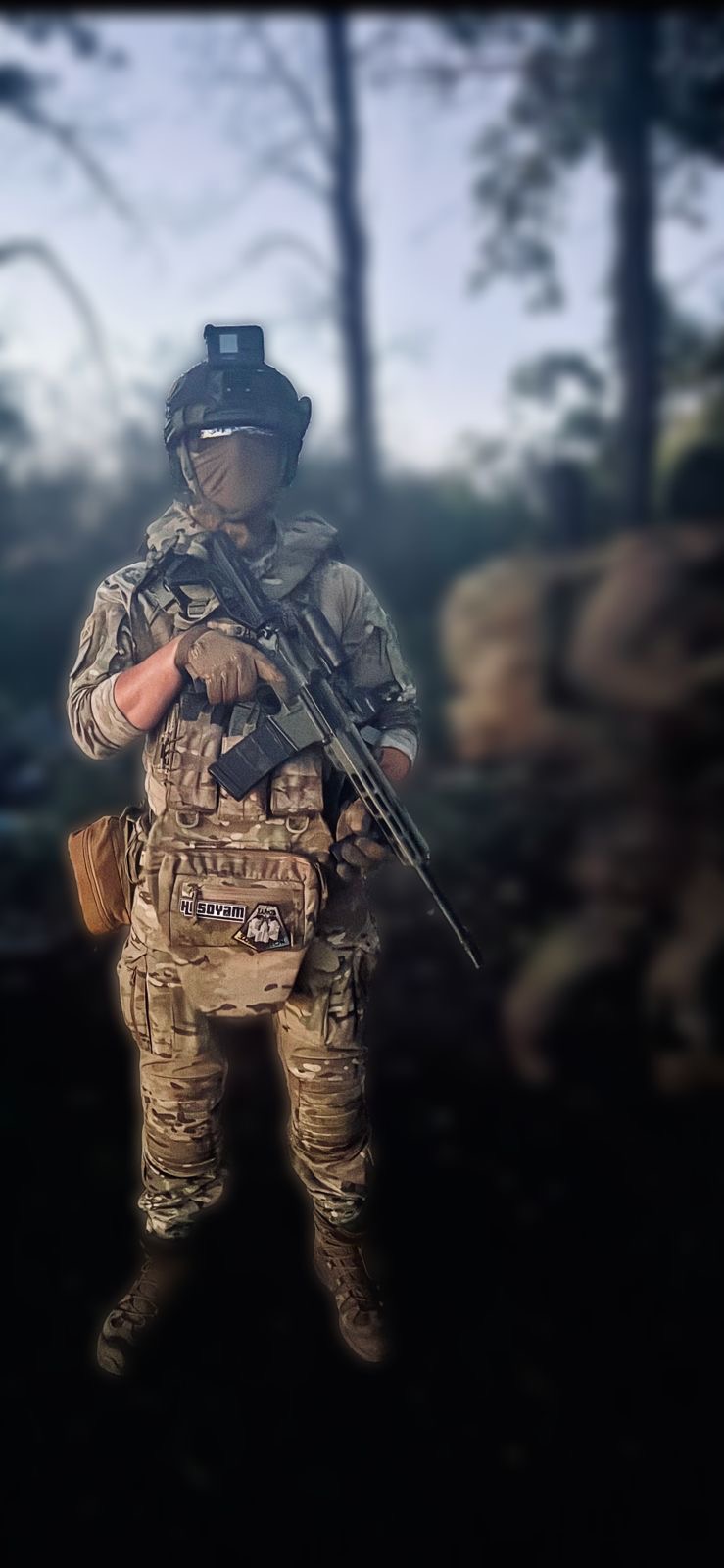
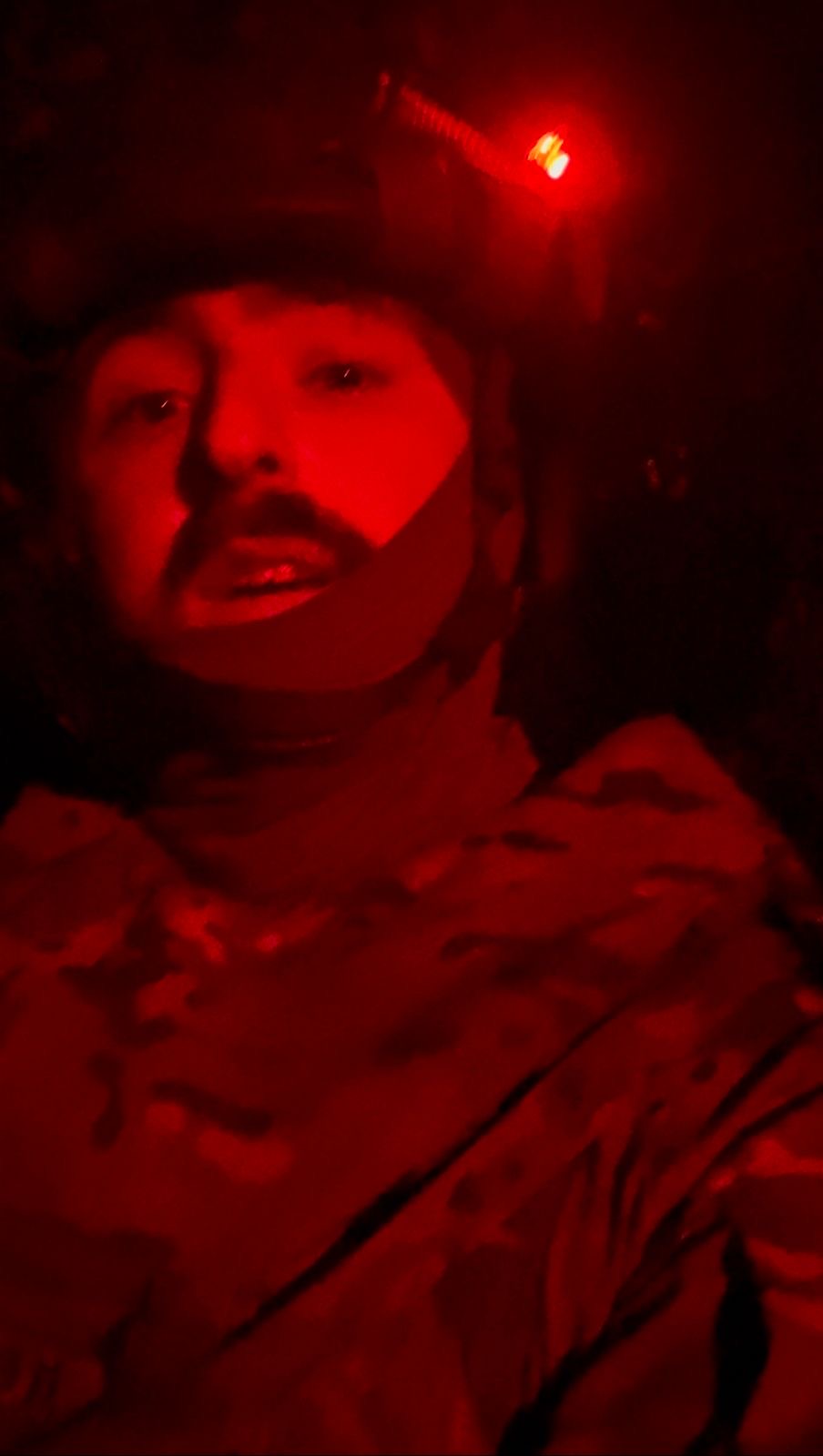
He chose the UAV track because he could see how fast everything here was evolving and improving. He is now an FPV drone pilot with the 13th Brigade of the National Guard of Ukraine "Khartiia", with the callsign IIID, which is also his musical stage name. He operates in the Kharkiv region, defending his home city as well. Heavy fighting is underway here now, in the Slobozhanskyi direction.
"The frontline is very fluid, so things are changing all the time," Dmytro says over the phone after returning from a position. "The b@stards keep coming, pushing with infantry assault groups. I’m probably not the first one to say this. Many soldiers have already pointed out that the enemy is using small-group tactics: they seep between positions, look for gaps and make heavy use of drones. Sometimes they crawl into houses and we have to drive them out or burn them out there. That makes life much harder for our infantry. And we are doing everything we can to help our guys."
- You said the Russians are actively using drones. Which ones do you encounter most often in your section of the front?
- As far as I know, the crews from their Rubikon centre are working here. They have Mavics, FPVs, fibre-optic drones, Molniya drones and fixed-wing reconnaissance ‘wings’. That’s the arsenal they use. They set up fibre-optic ambushes: on certain stretches of road, several drones can be ‘sitting’ there at the same time.
- These so-called ‘sleeper drones’? (systems designed to remain dormant until remotely activated along infiltration routes and supply lines - ed.note)
- Yes, those. There really are a lot of them. It’s obvious the enemy isn’t standing still and is developing technologically. It’s the constant motion. It’s always been like that in wartime: someone invents a sword, then someone else comes up with a shield, then a new sword and another shield, and so on in a loop. It’s a game of who can be more cunning. Right now, for example, they’re already using fixed-wing ‘wings’ as a kind of mothership: they carry FPV drones on them and drop them. And the fibre-optic drones are coming in from ever greater distances. You know, I was recently getting annoyed that they’re rebuilding the embankment in Kharkiv, while here at the front, you realise that drones like that will soon be able to fly over the city, so it would be better to think about what to do for its defence in that regard. Because this so-called ‘kill zone’ is expanding precisely because UAVs can fly further and further. And how far it can expand is limited only by human imagination.
- Indeed, the ‘kill zone’ is expanding and the enemy is improving. The same guided aerial bombs have already reached Odesa and Mykolaiv. Shaheds have also been upgraded – they fly faster and carry more dangerous payloads. Under such conditions, the very idea of refurbishing embankments in cities close to the front really does raise questions…
- One guided aerial bomb can smash that whole embankment. I even wrote a Facebook post about it recently, saying it would be better to think about some kind of rotating barbed wire – there were videos online showing how to make several layers of such wire that would cut fibre-optic cables so drones couldn’t get into the city. That’s what we should be dealing with, not putting in new flowerbeds. We all know what’s happening in Pokrovsk right now, and a year ago, they were also doing flowerbeds there. And how much are they helping now?!
- You mentioned the embankment, and I recall how Kharkiv mayor Ihor Terekhov, after a kindergarten was hit, said we need to build underground educational facilities. That’s a colossal amount of money. I think this is exactly the kind of construction we should be focusing on.
- Of course! I remember that at the beginning of the full-scale invasion, a woman from Lviv sent saplings for Kharkiv. It was a story about unity and a way of showing that we create life even though the enemy is sowing death all around. But now, in the fourth year of the full-scale invasion, giving people a ‘warm bath’ doesn’t seem very appropriate to me. People in Kharkiv need to be very clearly aware of how close the front is to their city, because some still haven’t thought about it. And we see how fast it can move. Only thanks to the titanic work of Defence Forces units in that same Slobozhanskyi direction is it possible to hold the enemy off and destroy them. Even so, it’s an hour’s drive from Kharkiv to Kupiansk and half an hour to Lyptsi. Driving that route is a very sobering experience. You realise that the fact you can now walk calmly to a café in Kharkiv is the result of the military’s incredible, every-second work. For civilians, the war can seem to happen ‘from one news report to the next’, but for the military and for civilians who live in hot spots or right next to them, it is continuous – 24/7. Somewhere, a bullet, a mortar round, a shell or a drone is flying. It simply never stops.
- Heavy fighting is raging for both Kupiansk and Pokrovsk (we are recording this interview on 31 October – O.M.). The battle is fierce in the information space as well. Recently, Putin was informed that Russian forces had encircled Ukrainian Armed Forces in these cities. Our president refuted that claim. After that, Putin said they could suspend combat operations there for a few hours to let Ukrainian and foreign journalists in to "show the real picture". What does that tell you?
- I don’t think it’s easy for journalists to get in there, because the Russian army has no problem killing civilians, without any moral dilemma at all. Right now, even from drones, you can see the bodies of civilians just lying in the streets of these towns and cities.
Statements like that are part of his domestic and foreign policy. The whole world is watching us. We, on our side, are trying to convince them that we’re winning, and Russia is trying to convince them that it is. For example, as soon as a group of four shell-shocked Russians crawls into some basement and radios in that they’re ‘in the centre of Kupiansk’, the Russian side will immediately announce: ‘We’ve already taken everything there!’ On top of that, this is a way of putting psychological pressure on our society. The message is: look, we’re advancing, you can’t stop us, and we can keep going like this forever.
- Does this affect Ukrainians?
- Some people, yes; others, no. People are different. Some believe Russian propaganda. That’s just how it is.
- What do the locals in your sector say? Are there any so-called "waiters" there (people waiting for Russia to come - ed.)? In Donbas, as the military says, they still come across them, and some don’t even hide their views.
- I’ve only seen one man who was openly hostile to Ukraine. He was just very gloomy and would, whenever he had the opportunity, repeat: ‘Nothing is possible in this country,’ and so on. By contrast, there are plenty of positive examples: people who give housing to the military completely rent-free, and when you try to pay them, they take offence. There are many kind, welcoming people. Of course, in areas where fighting is ongoing and there is constant, direct danger, I haven’t seen any cheerful locals, which is perfectly understandable.
But there is also a question that’s been there since the start of the full-scale invasion, about people who either leave the combat zone or stay, risking their lives. Sometimes, somewhere in the ‘grey zone’, you can see a civilian car just driving about its business. And this is in places where even the military moves around on armour.
As for general attitudes, I’ll say again: I’ve seen more good than bad. I understand that unpleasant cases do happen – the military talks about them. But even so, I want to stress that despite all that, there are a great many sincere, kind, supportive people who truly care about their country and their military.
- And what do they say about evacuation? Why don’t they leave?
- Mostly, it’s simply a reluctance to leave their homes and everything they’ve built up over the years. There’s a fear that no one will help them, that everyone will abandon them and forget about them.
I was hearing this back in September 2022, when Kupiansk was liberated. At that time, I was a civilian working at a volunteer hub. On the third day after liberation, we were already driving out people who wanted to leave the city. And those were the moods then. For example, we evacuated one family. The father had already spent time in a Russian basement because his son serves; they found a photo of him in uniform on his phone. They had been living entirely inside the Russian information space, where they were told that Ukraine had fallen, everything was occupied, the Russian tricolour was flying over the Kyiv City State Administration, and so on. I was explaining to them: ‘Look, Kharkiv is alive! The metro is running, cafés are open.’ They were shocked by that.
Now, of course, there is no such information vacuum on the territories we control. But people are still afraid. Especially older people: how are they supposed to leave everything they have, knowing that they’re no longer young or energetic and can’t just show up somewhere else, find a job, and start over? Very often, grandmothers and grandfathers don’t even want to go to relatives in safer regions. I was seeing this from the very start of the full-scale invasion, when we were taking humanitarian aid to Slatyne and Prudianka. Those settlements were under mortar fire. There still weren’t so many drones then. Yet people stayed. Grandmothers would come out, and we’d ask them: ‘How many people do we need to bring food for?’ They’d reply: ‘Yesterday there were 14 households, today there are 13 – our neighbour was killed by a mortar round.’ And still they didn’t leave. They had no gas, no electricity, no water, but they somehow survived, because, I suppose, they felt a deep sense of belonging and rootedness in their homes. I used to think to myself: I was born and raised in Kharkiv, I love it with all my heart, but if fighting starts in the city, I’ll probably move somewhere further away. It’s better to come back later, but at first, to be effective and not get killed, it’s better to go somewhere safer and then think about how to help your city from there.
- But in the end, you did join the army. How did you make that decision?
- In fact, it’s quite simple: I’m a man of conscription age, and defending my country against the aggression of the Russian Federation is my duty as a citizen. When I was joining the army, some people were asking me: ‘Why are you doing this?’ – and I was absolutely baffled. I couldn’t understand why I should have to explain a decision when everything is so clear and black-and-white. You know, I have a photographer friend who was badly wounded in the Donetsk region not long ago. He was with a foreign photojournalist who was killed. An FPV drone hit them. My friend, sadly, lost a leg, but he’s alive, he’s now in a rehabilitation center, and getting a prosthesis. And he said that for this foreign journalist, who had been to many hotspots around the world, the war in Ukraine was the most black-and-white one, where everything is clear: who the victim is, who the aggressor is, and which side the truth is on. It was just as clear for me. I lived in Kharkiv, I was doing creative work, by training I’m an actor, I had a music band. I was an absolute pacifist and never thought I would tie my life to the army. It seemed absurd. But when the war in Ukraine started in 2014, as a participant in the Revolution of Dignity, I wanted to join the military together with my friends. We still had our studies then, so we started out as volunteers instead. But the thought that I should have been fighting back in the ATO days never left me.

I think all people, one way or another, understand where the truth lies. Even those who write in online comments: "What has this country ever done for me? What is there to fight for here?" I believe, on a subconscious level, they know exactly what’s what. They desperately try to justify their fears, sometimes feeding Russian talking points and playing into the enemy’s hands, just so they don’t have to admit to themselves: "I’m actually really scared!" Instead, they say: "They’re all bad, so who are we even fighting for and why?" and so on. There’s a saying that fits perfectly here: if you want to, you’ll find a thousand opportunities; if you don’t, you’ll find a thousand excuses.
For a while, I was also making excuses for myself. I remember back in the ATO days, we played a concert at a military hospital in the Luhansk region. And one of the soldiers there (an older, colourful man with a grey Cossack-style topknot and beard), who was undergoing rehabilitation center came up to us and said: "Guys, thanks, that was a great concert! Go and make modern Ukrainian music, because all this folk-kitsch stuff is already driving us mad, and we’ll do the fighting here." I heard that kind of thing from soldiers more than once. For a time, that became a sort of inner excuse for me: I wasn’t just living my life, working for foreigners and not helping my country in any way. No, I was doing my job in the cultural sphere, working in a theatre that serves not only an entertainment role but a social one as well. Plus, at the start of the full-scale invasion, the draft offices were overflowing – there were even too many volunteers, so many people simply weren’t taken. But a year went by, then a second, and the war didn’t end. Soldiers started saying in interviews and on social media: we need reinforcements, there are no more queues at the draft offices, and we are running out. I looked at myself and realised: I’m a 30-year-old, young, healthy man with a good head on my shoulders. It’s my duty to defend this country, so why am I not doing it?! If I love this country, then it would be dishonest, first and foremost towards myself, to keep looking for yet another excuse and just wait it out until it’s over. Besides, this is a historic time. Even though it is very hard and incredibly painful…
- In an interview, former MP and now serviceman Yurii Syrotiuk called this war a sacred one and said that by showing up on the battlefield, each person joins the heroic tradition and becomes the equal of the Cossacks and the fighters of the Ukrainian Insurgent Army (UPA).
- I also recently had this feeling before going to the front line. At first, I felt some fear and anxiety - what if something happens, but then I thought: wow, wait, you are a free person, not under occupation, not a slave or a prisoner, you have weapons to protect your freedom and your family, you have brothers and sisters in arms who are also moving with you towards a common goal, and that is a great blessing! Although, unfortunately, it is in total darkness, because the losses we suffer and the people we lose are an irreparable price.
You know, with the Nafta theatre, where I worked, we performed a play in Austria at the beginning of the full-scale invasion called Nobody Died Today. It was about the war, aimed at Europeans, to explain why we don’t want to ‘make peace’ or simply lay down our arms, and why we need help. Afterwards, we had a discussion with the audience. Someone asked me: ‘Look, war is bad, but the whole world is now talking about Ukraine, and you’ve become visible. In a way, that’s a good thing, isn’t it?’ I said: ‘In a way it is, but I would probably rather have gone on living in a Ukraine that the world only knew about because of Chornobyl, the Klitschko brothers and Shevchenko, as long as the people we are losing now were still alive. People would have heard about us anyway over time, because we are a country with incredible potential and a unique people.
- Tell us why you chose to become a pilot. Why did you decide to fly?
- Because I found it interesting. If I remember correctly, one of the first units to use FPV drones on the battlefield was Signum. These incredible videos started appearing, and everyone saw what an impact it had on the battlefield and how the Russians started to panic. That caught my attention. Plus, I like computer games. So I downloaded an FPV drone simulator, bought a simple controller and started practising. I watched videos and talked to friends in the Defence Forces who were already flying, they shared their impressions and experience. I learned fairly quickly and chose this ‘role’ for myself: to inflict damage on the enemy from the sky and make it harder for them to occupy our country.
- What was your first combat sortie like? Some pilots say they were so nervous their hands were shaking. Others admit they were completely focused in the moment, and the full realisation of what had happened only came later, when the adrenaline wore off. How was it for you?
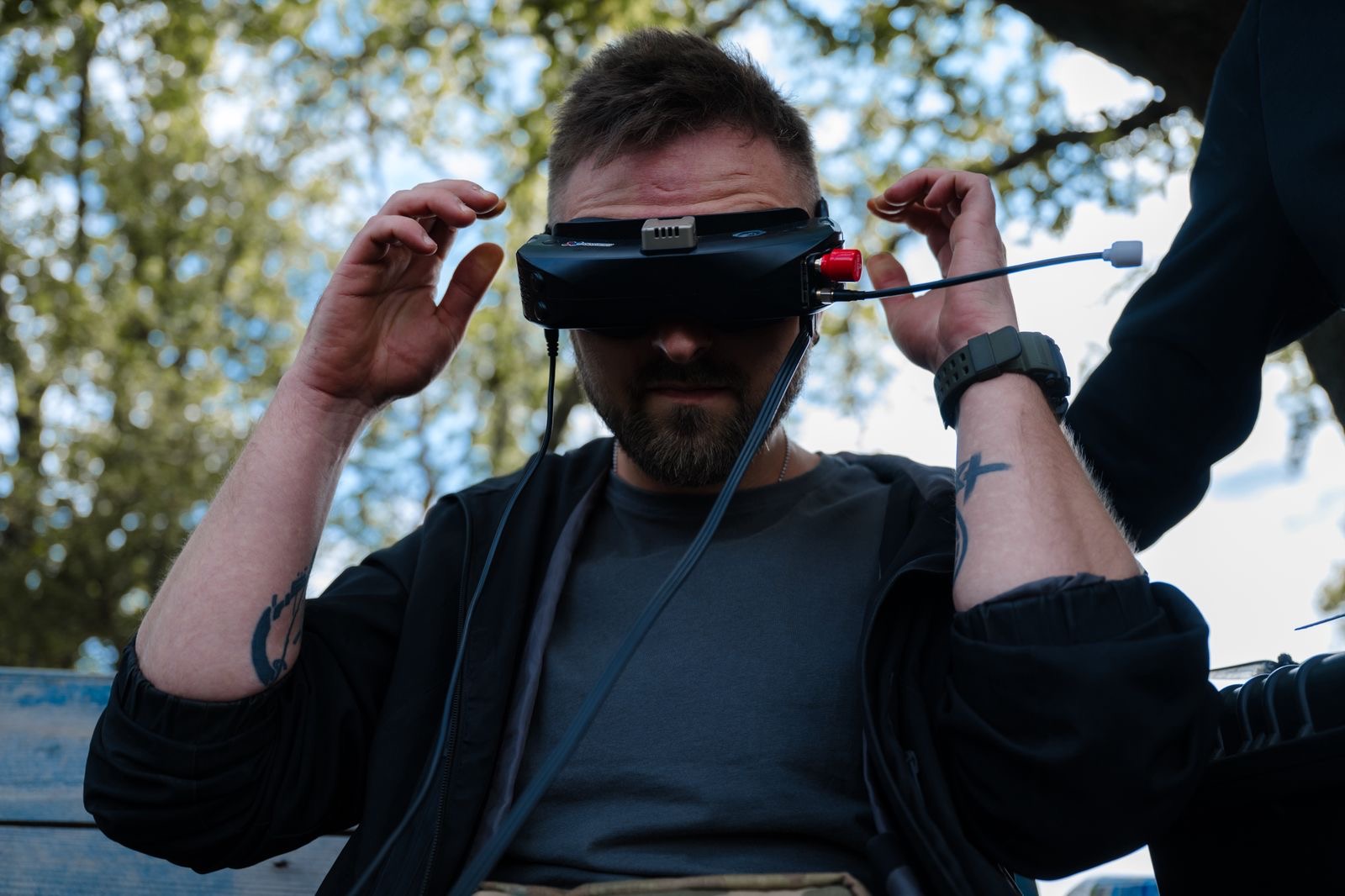
- When I started working, I didn’t really get any serious jitters. I was fairly composed about everything. Of course, when I went in on my first targets, my heart started beating faster and my fingers clenched on the sticks. Because you understand: it’s one thing to fly in a simulator, where you just press a button, the level reloads and you start over; and it’s another thing when you’ve got a real drone, you’ve flown quite a distance with it, and there is a live target in front of you on the battlefield. That matters, and you can’t mess it up. What I also like about FPVs is that when you put the goggles on, you almost become the drone yourself. I know some units fly using screens. But I prefer goggles. When I’m flying, I don’t think about what position the sticks are in on the controller. I’m simply an extension of the drone.
- What do you most often target?
- We have different targets and missions. Sometimes it’s cover, ambushes, knocking out equipment or enemy personnel. It depends. I wouldn’t single anything out in particular.
- And what do you personally like to "hunt" for? Some pilots admit they deliberately look for enemy manpower to kill as many of them as possible.
- If you’ve had a successful sortie and worked over enemy infantry, it means they won’t be able to kill, maim or rape any more of our people. Instead, they’ll end up back home in a hospital, in a coffin, or their bodies will be torn apart by dogs in the ‘grey zone’. In other words, you’ve just eliminated a predator who wanted to kill you. And because of that, you and the people who matter to you are still alive.
Taking out enemy equipment is satisfying as well. For example, there was a case when an artillery gun was pounding our positions – it just wouldn’t leave them alone, and there were wounded there. It shelled them for several hours. Our crew took off and destroyed it. Of course, it would have been even more satisfying to eliminate the Russian artillerymen themselves. But it was good enough that we left them without a weapon system, and that made life easier for our troops.
The real gods of war and true titans are the infantry, the assault troops, the scouts – the people who are directly on the zero line. They have the hardest job. I bow to each and every one of them. For me, it’s a great honour that I can at least somehow help them in what they’re doing: make their lives a bit easier, cover them somewhere, destroy the enemy before he reaches them.
- I know you had some kind of duel with an enemy FPV. Tell us about it.
- We had to reach a certain tree line. While we were moving through the ‘grey zone’, about 500 metres from our destination, an enemy FPV popped out from behind the trees, spotted us and headed in our direction. I shouted to my brothers-in-arms that it was an FPV. We dove into the tree line next to the road and started moving. So this time I wasn’t in the role of UAV operator – I was in the crosshairs of a Russian drone’s camera. It’s not the most pleasant experience. But we reacted pretty well – everyone got out alive and unhurt. We opened fire on that FPV. Unfortunately, no one hit it. But the fact that we didn’t just panic and run, and instead acted in a measured way, says a lot. Honestly, I expected worse from myself. At least I was trying to shoot that drone down – although I still need to work on my accuracy. I’m doing that. Still, what we were doing threw their pilot off and made it harder for him to decide how to attack and plot his run at the target. He understood that he could be shot down at any moment, so he acted less effectively.
- Overall, what are their pilots like? How would you describe them?
- They have all sorts of pilots, just like we do. It depends on the unit, on the people themselves and their abilities. I think it really is easier for those who used to play or still play computer games. Killing an infantryman with an assault rifle and killing him from a drone are two different things. In the first case, you see the enemy in front of you and hear him. In the second, there’s a screen in front of you and an image of an enemy you have to kill. That’s easier.
So yes, the Russians do have good pilots. The one who tried to kill us just wasn’t one of them – fortunately. If he’d been different, our encounter could have ended much worse. But you know, I’m not a fan of scaring ourselves to death with talk about how fast and how well they learn, and how there are so many more of them. People sometimes overdo it with that. You can drive yourself into despair that way. Why fight at all then, if everything is supposedly so bad and we have no chance whatsoever?!
At the same time, we have to admit that they do have competent UAV operators who cause us a lot of trouble and inflict losses. I mentioned the Rubikon centre earlier in our conversation. They created it as their own analogue to our Unmanned Systems Forces. They train pilots and crews there, and sometimes their instructors go out on operations. They were the ones who, in the Kursk region, managed to halt our breakthrough and cut our logistics. In general, their drone supplies aren’t bad – they’re fairly centralised and standardised. They don’t have the same variety of drones we do, because we have many different manufacturers. The Russians’ UAVs, on the other hand, are mostly identical: you just power them up and launch. In some ways, that actually makes their work easier.
- What is your most vivid memory from the war now, as a serviceman?
- One moment really stuck with me: when my commanders gave me a few days off and I was able to spend time with my girlfriend, whom I hadn’t seen for a very long time. Those were the best few days I’ve had recently. It was a powerful reminder of what I’m fighting for and why I’m here. I love civilian life very much and hope to return to it someday. But right now, it felt good to be in a civilian setting in the status of a soldier. It’s such a great feeling when, after the positions and shattered settlements, you suddenly find yourself in a big city where everything is alive, and you’re all clean and dressed up, walking around with the woman you love. You know how it is: when soldiers put on civilian clothes, they still dress in a way that you can tell who they are. So I could feel people’s eyes on me. And it was very nice when they looked with respect. Sometimes, in the heat of the moment, soldiers may say things like: ‘No one needs us.’ But that’s actually not true. I see a lot of respect for the military from civilians. Of course, there are also those who avert their eyes. But that’s usually men of conscription age who don’t update their records with the military enlistment office, even though they know what the right thing to do would be, and they can see from examples that you can, so to speak, still enjoy life while serving. I think they are simply, as we’ve already discussed, looking for excuses.
- And perhaps you’re inspiring someone.
- I hope so. Because at one time, I also drew inspiration from the military, including my friends who went to war as volunteer fighters. They helped me understand that they were living a full life. That animal fear ‘if I go to war, I’ll definitely be killed’ receded. Of course, there is danger. But that danger is there in civilian cities as well.
Besides, I tend to trust my own eyes rather than propaganda. It was like that even before I joined the army, back in the Maidan days. I went there to see for myself which side the truth was on – and I saw inspired, strong, free, beautiful, bright people of all ages and social backgrounds. And when Kernes, wearing a St. George’s ribbon, stood on the square and claimed that Kharkiv is a ‘Russian city’ and that there were no Kharkiv residents on the Kharkiv Euromaidan, I knew with a perfectly clear conscience that this was a complete lie. That’s probably why even now it’s easier for me to resist this Russian information influence, despite how powerful and large-scale it is.
- Finally, as a musician, I’d like to ask you: is there still room for music in your life now?
- Absolutely! Music is precisely what I can always take with me, just like poetry. I can write poems lying in a dugout while on duty, and then, when I get a day off in the city, go to a studio and record a track. I sometimes do that now as a solo rap artist. It’s a convenient way for me to process my experience of everything that’s happening to me and around me. That’s how I can let my emotions out. In the future, of course, I’d like to make a living from it and get some clear-headed, common-sense ideas across to more people. For now, I’m happy to invite everyone to the streaming platforms: Spotify, iTunes, YouTube Music and Deezer. Look up the artist IIID there and listen to my tracks. I’ll be grateful because the streams are monetised, and that money goes towards improving our gear and supporting the unit.
Olha Moskaliuk, Censor.NET
Photos provided by the interviewee


