



Quality of conscripts is declining sharply. Instead of drafting suitable men, they’re taking whoever they can get - Dmytro Stembkovskyi (Haid)
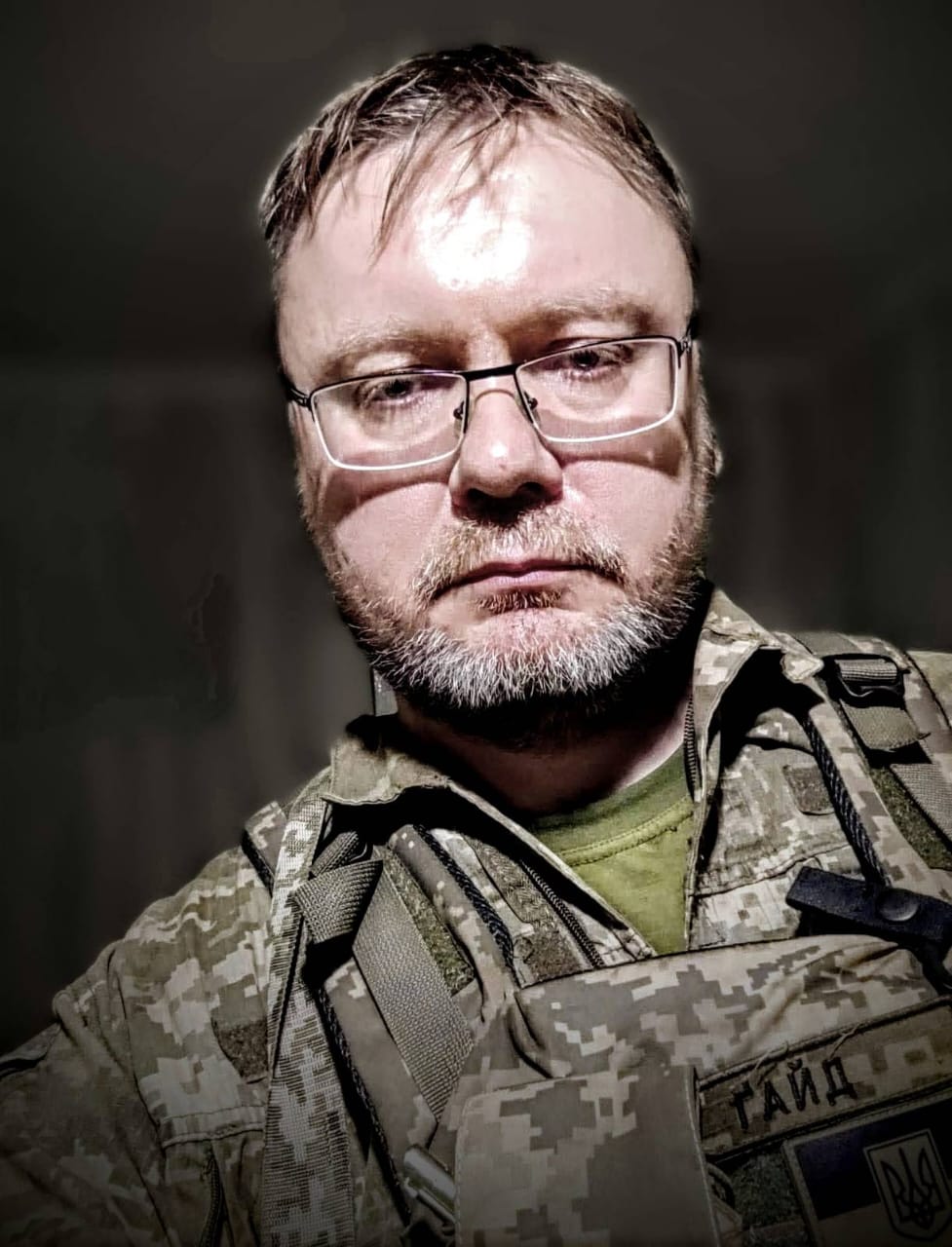
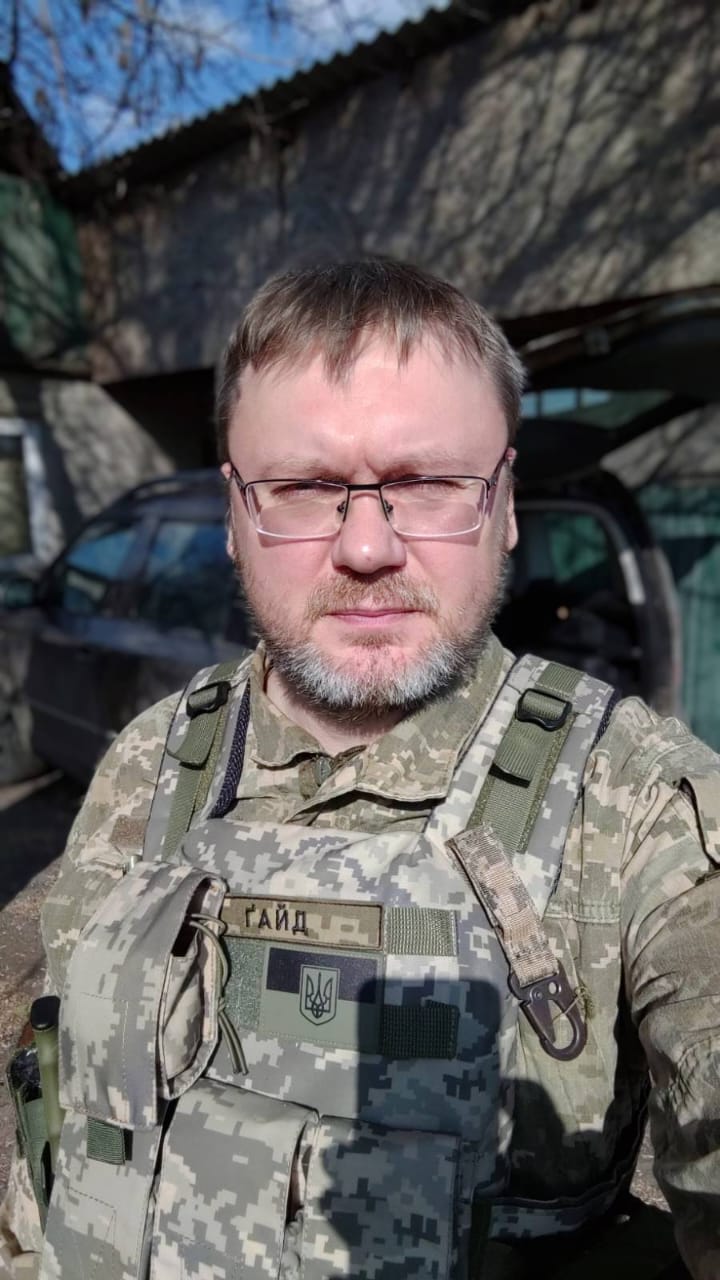
Dmytro Stembkovskyi (Haid), a fourth-generation Kyiv resident, joined the military as an infantryman even though he had UAV operator skills and a higher technical education. Before the war, he worked as a Kyiv tour guide, volunteered, and had previously taken an active part in the Revolution of Dignity.
Although he had been trying to enlist since 2022, he was mobilized in the summer of 2023. For personal reasons, Dmytro asks that the unit where he served as a clerk not be named, even though he also went out to positions as an infantryman. The paperwork he handled reflects thousands of lives, the wounded, the killed, and their families.
Haid is now serving in communications.
In an interview with Censor.NET, he spoke about "not being a hero," the moral burden of serving in moral and psychological support, and why his biggest dream now is the sea.
I SPENT THE ENTIRE SUMMER OF 2022 GOING TO THE MILITARY ENLISTMENT OFFICE AS IF IT WERE MY JOB
- A classic question: how, when, and why did you go to war?
- After our children were born, my wife and I bought an apartment to live in Irpin, and that is where my family and I spent the first day of the full-scale invasion. At first, I went to Irpin’s Territorial Defense Forces, sat in a basement there for the whole day, and realized I was making a mistake because I had left my wife and children behind. Explosions were heard all day, so our building could easily have been hit. So the next day I took my wife and children to western Ukraine.
At the end of spring, after Irpin was liberated, we returned. Our building turned out to be intact, but three buildings nearby had been destroyed.
All summer long, I kept going to the Dniprovskyi District military enlistment office in Kyiv. I was struck by the fact that the war was in full swing, yet the enlistment office was open only two days a week for four hours each time. On reception days, crowds of volunteers would line up, with the queue written down on a sheet of paper, I was always closer to the hundredth number. Tellingly, one man who lived nearby and came to the enlistment office right after curfew ended was already 13th in line, and even he did not get in that day.
So I spent the entire summer going to the enlistment office as if it were my job. Later, I found a call for mobilization with Right Sector — the 67th Brigade. They conducted a very serious interview: out of 14 people, only seven were taken, and they did not even accept some who had fought before. But I failed the physical screening because of arthritis in my knee joints. I saw how much I lagged behind the younger guys in terms of health, so I started running and underwent serious treatment; I even had my nasal septum corrected.
Before being mobilized, I paid out of pocket to complete a tactical medicine course and training on operating a Mavic drone at the Kruk school.
- But how did it happen that you did not end up with Right Sector?
- When I called again in early summer 2023, I was told that the Ministry of Defense had banned the 67th Brigade from recruiting people on its own. Just a few days after that call, I received a draft notice. I was mobilized on June 14.
The attitude at the enlistment office and the military medical board was bad and extremely formal: everyone was declared fit for service. I ended up at the training base in Honcharivske; it was a very bad place; in a month and a half, they completely crushed morale there.
After that, I got lucky and was assigned to a very renowned brigade. I would rather not name it now because I still have friends there. We were taken from our permanent base to Donbas.
A fellow soldier I had been with since training stepped on a mine on the third day, half his foot was blown off. About a year later, he returned after treatment because he wanted to be of some use. But another year after that, he admitted he would have been better off going to the Medical and Social Expert Commissions (MSCEC), getting disability status, and being discharged — the realities of war and the workload are that exhausting.
IN 2024, THE WAR CHANGED A LOT AND BECAME SCARIER BECAUSE OF FPV DRONES.
- Wait, so you ended up in the infantry even though you already had a UAV operator certificate, having completed training back in civilian life?
- I kept asking to be assigned as a UAV operator, but I ended up in the infantry. They noticed me quickly and offered me the role of my company’s clerk because I was one of the few who knew how to work on a computer.
- But you still had to go out to positions, as I understand it?
- Yes, already as a clerk, but when you are in a trench, you serve alongside everyone else. But to be honest, I was at positions less than the "regular guys," because I had a huge amount of work.
So we were holding the line near Vuhledar, and things kept getting worse. It started with rotations of five days on positions and five days of rest, but it ended up as 12 days on positions and one day of rest.
When the Russians launched a massive assault, and it turned into a "meat grinder," they did not send me to positions because there was a lot of work in moral and psychological support (MPS), and I had a lot of responsibility on me.
- Tell us about what you felt, how you coped with fear.
- I recently realized why our grandfathers did not like talking about the war, no matter how much I asked. And not only about World War II. I have been a volunteer since 2014, and back then, an Aidar fighter became my children’s godfather. I kept asking him about the ATO, but he also spoke about it very reluctantly. I could not understand why. Now I do… Because it is unpleasant to talk about the fact that you were not a hero. I am in the same situation now.
It really was frightening; I wanted to get through it and be rotated out as quickly as possible. The living and hygiene conditions weighed heavily on me, as did the quality of the food, which would spoil in the heat. So I definitely was not a hero.
- Still, you were on the front line at a time when an enemy drone could track your every move, with all the consequences that implies. Being in that situation at all already takes courage.
- Yes, in 2023, the war was nothing like it was in 2024. In 2023, wounds and deaths mostly happened as a result of mortar fire, but a year later, everything became much scarier because of FPV drones. No matter how trained, motivated, built, or accurate you are, it does not help. To a drone, everyone is the same. And drones were flying right over where we rested when we were pulled back.
When I arrived, UAVs were still handled in a fairly amateur way, by guys who had at least some understanding of it. Officially, they held rifleman positions. Later, a separate platoon appeared in the battalion, and then a UAV company as well.
- Have you ever had to deal with the enemy at close range?
- No, I have not. My comrades shared this: the fighters in my company repelled a bastard assault. Our platoon leader was with them, a good, highly motivated young officer, physically strong (his brother was killed; he could have been discharged, but he is still fighting). A wounded b#stard jumped into our trench. The platoon leader wanted to take him prisoner, but b#stard began begging to be shot. When the platoon leader moved toward him (to take his weapon), he fired at him; the bullet hit his leg and went through. B#stard was shot dead. The platoon leader kept going for another two days while wounded, refusing evacuation so as not to leave the guys (he was one of the remaining officers).
By the way, that is an example of a devoted officer. Another example is my company commander, who would go himself to retrieve wounded fighters when everyone was afraid to go evacuate the wounded. But the result was predictable: my former company commander was severely wounded, now has a disability — thank God he is alive.
AT FIRST, I WOULD SOB IN FRONT OF EVERYONE WHEN I LEARNED ABOUT OUR DEAD
- You write about paperwork that required interacting with fighters, including at positions. And there was more and more of it as the fighting intensified and casualties grew. What exactly are we talking about?
- I was a clerk, but I became close with the battalion’s moral and psychological support team, for the most part, they were good people. The moral and psychological support officers taught me everything. Since I was coping well, they kept loading me with more, and by the end of my service, I was doing almost all the work of a moral and psychological support officer.
The more active the combat operations, the more work there is for MPS. It is work from morning until night, and often they would call at night to have certificates prepared. Later, in addition to my own company, I was also assigned four more platoons to handle.
On top of that, the guys were in the hospital and needed injury payments — "additional remuneration during treatment." And they have families to feed. The speed of processing the paperwork determines how quickly the payments are credited. Without an investigation, it is impossible to receive payments. It may seem like routine paperwork, but it is necessary because it is a legal document that provides grounds to pay a person additional remuneration for the time spent on combat duty.
Recommendations for awards and write-offs of property are also our work.
- It is not like going on an assault, but it is incredibly hard psychologically.
- At first, I could not hold back my tears and would sob in front of everyone when I learned about our dead. A year later, I was sobbing alone. Then I grew so hardened that I could cope with it, to some extent, I was losing my humanity.
Then came the assault on Vuhledar. That was the first time I completely lost it because a large number of people I was personally friends with were killed. Work helped, working myself to exhaustion, and the command kept pushing us. I conducted a huge number of investigations into combat injuries and wounds, and into missing personnel.
We had no time to cook. They brought us raw food, but there was simply no time to prepare it. There was nowhere to properly wash, and there was even less time to go looking for a place. But MPS officers were doing even more than I was. This avalanche of work continued until January 2025.
Often, it was an endless cycle. A bus arrives with new fighters, and you process them as new arrivals until morning and a week later, you are sending their duffel bags to their wives. And that happened to me not once, not twice, not five times. Then relatives call me, and I cannot not pick up. I talk to them, crying with them. Some start accusing you, like: you mobilized him, and now you are sending his things back. Over time, I also became calmer about that. They ask why we could not retrieve the body… Because the guys were coming out of positions wounded themselves. On adrenaline, after losing blood, they barely have the strength to make it to the evac point.
- The Armed Forces are often dubbed the UPA (the Ukrainian Paper Army) because of the avalanche of paperwork. From what you have said, your investigations are extremely important. Is it realistic to cut at least something or move it into an electronic format?
- Yes, my work was very important. And the proof is how many soldiers thanked me for getting things done on time, for not being indifferent, for explaining what to do and how.
Of course, some things could be automated, and some could be removed altogether. But not that much. In the end, everything is designed with the idea that the war will one day end, and service members will be able to receive payments, benefits, and so on based on all these documents. And for that, everything has to be executed in a legally flawless way, so that even 20 years from now, no one can cast doubt on an injury a person sustained while defending the country.
AMONG ALL THOSE WHO WENT AWOL, I BLAME ONLY ONE — THE MAN WHO LEFT A WOUNDED SOLDIER ON THE BATTLEFIELD
- Did you think about working full-time in moral and psychological support, since you were effectively doing that job?
- In principle, I wanted to be a morale officer, and I asked to be sent to courses. I approached an officer myself and offered to take an MPS position, but they saw me as a psychologist.
There was a case where they assigned to MPS a person who was not suited to the job at all, and then, as an officer, he did not conduct a single investigation, most of his work was dumped on my comrade. Once, I even got into a fight with him, after which he went AWOL. So effectively, the morale officer, an officer, went AWOL.
So it is logical that if they even sent such an unfit person to MPS, they could have sent me as well. In the end, I was told that my paperwork had been submitted for MPS. I waited for six months. Going to training felt like the end of the war. I dreamed of returning to my company in an officer position.
While I was waiting, we were redeployed near Pokrovsk again, but this time it was no longer the rear. Our company took losses for the second time. Our battalion commander was replaced, and there were more losses because of him. For two months, people were effectively surrounded; they were not pulled out, and support was minimal. In my personal view, it was the battalion commander’s fault, although not every comrade shares that opinion.
- Today you are serving in a communications unit. How did you end up here?
- Our battalion was disbanded, so I was not sent to Kyiv for MPS training. The battalion was split up and reassigned to different units. That is when I decided to use the fact that I was classified as fit for limited service and transferred to a rear-area unit. In 2023, I was declared fit for service, but if the medical board had been honest, they should have classified me as fit for limited service. That is why the new medical board classified me as fit for limited service. But I could not let the team down, and I also had certain ambitions, so for another 10 months I continued serving in a combat unit. After the battalion was disbanded, I transferred to the rear.
- How do you feel about those who went AWOL?
- I do not blame anyone. I blame only one soldier, the one who left a wounded comrade on the battlefield when he really could have carried him out.
A person’s nervous system has a limit to how much strength and endurance it can take. Many people volunteered for the army in 2022, and they are still in the military, and they are treated badly. That is why many go AWOL, they cannot take it mentally or physically.
On the other hand, the quality of conscripts is declining sharply. Instead of drafting suitable men, they are taking whoever they can get. In the class where my twin children study, not a single father has joined the army. Not one.
- It is obvious that the lack of demobilization weighs on you. Do you dream about what you will do after the war?
- Before the army, I was a very politically active person. I never missed rallies, took part in the revolutions of 2004 and 2014, volunteered, once belonged to the Rukh political party, and regularly attended various political events. But now I do not need anything anymore, I am utterly exhausted. Now I want my children to study and live abroad. As for me, all I dream of is going somewhere far away from the war, sitting on the seashore, and just looking out at the horizon and the waves.
Olha Skorokhod, Censor. NET


