



93rd Brigade soldier Anton Samarin: "Railway station workers in Okhtyrka refused to unload our equipment on morning of February 24 because they were… changing shifts. And cars carrying FSB officers in civilian clothes and column of Russian military vehicles were already moving through city."
At the start of the full-scale invasion, this officer was a company commander and was the first to engage the enemy in Okhtyrka, in the Sumy region. He was also the first to enter the liberated town of Trostianets. Now he serves as a battalion commander in his home 9th Brigade, which is fighting in the Donbas.
Anton comes from a large family; his parents have four sons and two daughters. Two of his brothers, the older and the younger, are also defending Ukraine.
SUMY REGION
- I joined the 93rd Brigade in 2019 as a platoon commander. I served under the commander of the 1st Mechanized Battalion, Oleksandr Slipko, callsign Borsuk. Until February 24, 2022, no one believed there would be a war, even though the Russians were building up their forces along the border. In the event of danger, however, our brigade was tasked with sealing off the border in the Sumy region, we were supposed to move right up to the border itself. About four days before the full-scale invasion began, Borsuk and I, along with two other company commanders, traveled along the border in civilian clothes, identified the positions we were supposed to take, and walked the lines. The battalion commander determined who would move where. In other words, we conducted a reconnaissance of the area. The impression was that the task would be to arrive at the border, take positions, and show the Russians: we are here, we are conducting exercises, we know the area, we are fully aware of the situation. The idea was to push them away from the border so that society would not feel alarmed.
- So you didn't think the Russians would cross the border?
- We did not think so, but we talked about it. Borsuk and I stopped by the military enlistment office and asked: "If a war starts, what will you do? You have nothing ready here." They replied: "What war? Are you kidding?" We said: "You have to be prepared for anything. There are so many troops near the border, what if?.. In 2014, no one thought there would be a war either, yet it happened, and the Russians came in."
After the reconnaissance, we returned to our permanent deployment location. First, one battalion loaded onto the trains, then the second. We were the third to load. The tanks moved out separately, by the way, under their own power. We set out on February 23. The wheeled vehicles reached the area beyond Okhtyrka under their own power, dispersed in the forest, and waited for the tracked vehicles, which were supposed to arrive on the morning of the 24th. That is exactly what happened. I entered the area with them when a call came from our permanent base in Dnipropetrovsk region: "Missiles have flown overhead." "That can’t be!" I said in disbelief. Meanwhile, relatives were already calling everyone around us: war, war… There was no panic among the people. There was only one question: what are we doing here? Borsuk, the company commanders, and I gathered and talked it through: if, God forbid, aviation comes in, we are screwed immediately, because a huge amount of equipment and personnel is concentrated in one place. The brigade commander ordered us to take up the first defensive line. And it was God knows where, right near the border. We still had a long way to go. We rushed to the railway station, our train was supposed to be brought in for unloading. But we were told: "We’re changing shifts. We won’t do anything until nine o’clock." We started explaining: "Are you serious? It’s war! Missiles are already flying! We’ll be wiped out here!" While we were trying to sort out who was supposed to do what and when, the first column of FSB officers was already driving through Okhtyrka; they were in civilian clothes, in civilian vehicles. And behind them came the first column of Russian military equipment.
- Right through Okhtyrka itself?!
- Yes. And we were still at the railway station.
- How far is it from the border to Okhtyrka?
- A couple of hours by road. We ended up shouting our way into an agreement with the railway workers, they brought the railcars in, and we started unloading. New information kept coming in nonstop, locals were running up to us yelling: "There’s fighting in Okhtyrka! A Russian column has entered the city!" That’s when panic kicked in. Every civilian was shouting, "A hundred tanks! A hundred tanks!" No one was counting what exactly was moving, wheeled vehicles or tracked ones, no one could tell one type of equipment from another. They were just running up to us in a panic and yelling. We tried to filter the information, but one thing was clear: the situation was extremely unclear, and no one really knew what was going on.
When we were already ready to move to the designated defensive line, the battalion commander received a call from brigade HQ: "Move to the second line, the first one is already occupied by the Russians." We tried to move out, but the enemy was already inside Okhtyrka. We reported this up the chain. They didn’t grasp it right away, how could the Russians already be in Okhtyrka? I suggested: "Let’s establish a perimeter defense at the railway station and then assess the situation." Artillery was attached to us, 2S1 howitzers. It unlimbered right on the platform, trained its barrels on the streets leading to the station, and prepared to engage in direct fire.. We also positioned our IFVs between the streets in combat formation. Silence. Nothing was happening. Borsuk said: "Let’s take control of the main streets in Okhtyrka." There are three of them: the road leading toward Velyka Pysarivka, in the direction of the border, that’s where I moved out; the 3rd Company was supposed to advance toward Trostianets; and the 2nd Company took the third street. We were simply moving along, checking the streets. Civilians were running around in panic. At that moment, I did not see a single piece of enemy equipment, but a Russian Ural truck simply drove up to another company and stopped behind their IFVs. The infantry riding on top turned around and there was a white-painted Ural standing there. Before our guys could fully understand what was happening, the Russian came up with the worst possible idea and opened fire on the infantry. He fired twice. Then he realized how stupid that was, as he hadn’t seen the rest of our column. There were two people in the Ural the driver and the shooter. Both surrendered. They became the first prisoners of war in this war.
Around the same time, I moved to the edge of the street and took control of an intersection, the roads led toward Trostianets, Popivka, and Velyka Pysarivka. There was a Marshal gas station there, so we dubbed the spot "Marshal Intersection." We set up defensive positions, began digging in, and waited for further orders. It was quiet. About forty minutes passed, nothing happened, no engine noise, no movement. I reported to the battalion commander. He told me that our troops had already taken prisoners.

- Did it lift morale a bit?
- I told my guys, and they were happy. The infantry was fired up and ready to fight. We were given a task: if nothing happens, gradually move toward Kyrykivka and Velyka Pysarivka. From there, from the border side, people were driving out, a stream of cars was fleeing. We set up a patrol to stop vehicles and check who was inside. Locals kept passing information: a hundred tanks, a million tanks… Our battalion commanders` and company commanders’ phones never stopped ringing. Then we received the order to move on. We formed a column, vehicles in combat formation with infantry following, and started moving slowly. We set up an advance guard. A soldier got into a civilian car and volunteered, "I’ll drive ahead and see what’s going on. It’s a civilian vehicle; if anything, I’ll turn around and head back." He drove maybe a kilometer, and I saw him racing back. I halt the 1st Platoon: something’s wrong. The advance guard pulls up and reports: enemy vehicles are charging toward us, a lot of them, over a hundred. I report this up the chain and give the order, "Prepare for combat." Everyone takes their positions and readies anti-tank weapons, at that moment, we only had RPGs. An hour passed, nothing happened. The infantry had already dug in along the sides of the road. I was standing behind a bus stop with the company`s combat medic and the commander of a 2S1 artillery battery attached to us for fire adjustment. The three of us stood there, scanning, nothing. I stepped into the middle of the road with binoculars, looking, no one there. Then I hear the asphalt start to hum. In the 93rd Brigade, we trained constantly, so we know the sound of a tank, you can hear it from a kilometer away. I look through the binoculars and see vehicles appearing on the horizon. I give the order "Prepare for combat" again. Everyone is ready, keyed up. I realize it’s a tank coming. Not just moving, racing. I hear the tracks scraping over the asphalt. The asphalt starts to shake, but there’s no engine roar. That threw me off: was fear getting to me? Why couldn’t I hear it? I give the order to engage, run behind the bus stop, step back a bit, and take cover behind a gas pipe; I couldn’t find anything better. I informed the battalion commander that a column was advancing on us and that we were engaging. He replied: "Understood." The battalion commander sent an anti-tank reserve from the brigade. A Rapira anti-tank gun arrived, and, I believe, a reconnaissance company as well. They were still on their way when the fighting had already begun.
What really stuck with me was the encounter with a T-80BM tank, because it was leading the column and was hit by an RPG. Its reactive armor was blown off, and the commander ducked back inside the tank. I heard the gas turbine engine, this model has it mounted at the rear, and I realized this was something new. That’s why it couldn’t be heard the way older tanks are. The tank didn’t stop and raced straight past us. Then came a Typhoon, an IFV, and another tank. We hit the third and fourth tanks with RPGs. The funny thing was that their commanders were riding in march order, half out of the hatches, completely confident there was no one there. And then the first RPG hits started landing on the tanks. I think the third or fourth tank opened fire with a Kord heavy machine gun to the left, where our infantry was. Another one also fired at the infantry, but hit a house instead. The house collapsed, and the Russians kept moving. That’s when I had my first two wounded, two WIA: when the tank commander fired the Kord, two soldiers were injured, small fragments lodging in their hands.
The tanks sped through. We realized that if this kind of equipment kept charging forward, we wouldn’t be able to stop it. I got nervous: "They’re just flying past us, and we can’t do anything." Then a Typhoon drove by, with a serviceman riding on it holding a map. Our IFV opened fire on the Typhoon, and out of the corner of my eye, I saw that the commander fall, while the vehicle kept moving. Later, locals captured the Typhoon’s driver, and he said it had been carrying the commander of their reconnaissance brigade. We later saw that map, it had nothing on it except a road sketched in pencil showing where to drive. He was moving ahead and directing the column. There was no enemy marked on their map at all, just an empty settlement. They thought they would encounter only civilians…
My men were a bit shaken up by the feeling that there was nothing we could do. A soldier was sitting by the bus stop, watching the column: "That’s it, the wheeled vehicles are coming, Urals and KamAZ trucks." Our IFVs fired up and opened up. The first truck was carrying a box body, it was the brigade’s classified vehicle, transporting laptops and "secret" flash drives. My sergeant just nailed that KamAZ, it exploded right in front of me, and kept driving on, on fire. It looked like something out of a movie: a shot, the vehicle explodes, burns, and keeps moving…
- But the column didn’t stop?
- No, the Russians still thought they could slip through. But only the armored vehicles made it, all the wheeled transport stopped. The first KamAZ exploded, then the second one. We started firing at the windshields. Later, a photo circulated online showing a dead Buryat soldier; a lieutenant’s shoulder board was later found hidden on him. My guys punched through the windshield, the driver panicked and slammed into the berm. Both he and that Buryat jumped out of the truck, and our infantry killed them both. The third vehicle stopped, then the fourth. From the IFV, we riddled all the vehicles. Those who were riding in them dismounted and started fleeing toward the border. I remember stepping out onto the road and seeing it: from "our" gas station all the way to the horizon, the column was standing still.
- And what happened to those that got through?
- They soon ran out of fuel. All the fuel trucks were in the column we stopped, same with the ammunition. So they abandoned the vehicles. Later, locals towed those tanks and the Typhoon away.
We evacuated our two WIA. Our company was clearing the wheeled vehicles left on the road. We could hear engines running in those trucks, headlights still on, but no gunfire anymore. Everything had gone quiet. So we checked all the abandoned equipment. We recovered two brand-new mortars and a large stockpile of mortar rounds. We properly replenished our kit there and took up defensive positions.
- Did you stay in the same place?
- Yes, at "Marshal Intersection." We just spread the vehicles out, collected the trophies, armed the infantry, and emplaced a 120-mm mortar in position, our infantry had long dreamed of firing one. We had an artillery battery commander with us; he laid the mortar, zeroed it in, explained everything, showed the infantry how it worked, and prepared the rounds. We were getting ready for the next fight, because we understood this couldn’t be the end of it, there was no way they would make one attempt and stop. So we pulled out their anti-tank mines, TM series, and set up mine barriers. We mined both sides of the road with anti-personnel mines, deployed anti-tank assets, reinforcements arrived from the battalion, and we rolled out anti-tank guided missile systems. A reconnaissance company came in and took up positions. A sniper platoon was ready to operate. At that point, there were so many people there, probably more than I have in my battalion now.
Later, from the news, we learned that the Russians were advancing on Trostianets in parallel. They managed to occupy the city on the very first day. They entered competently from three directions and broke through the resistance… The 1st Motorized Infantry Battalion of our brigade was stationed there. They fought as well and took trophies, but they were eventually pushed out of the city.
We took up positions. At dawn, locals from a border town called us and said a column was moving. We thought: this is attempt number two. I stepped out onto the road and looked through binoculars. The plan was simple: the moment the first vehicle appeared, we would engage preemptively with artillery and mortars. That’s exactly what we did. The first vehicle didn’t make it to us, it was about four hundred meters short. It was hit directly in the turret and blown apart.
- Was it armored?
Yes, it was an ARPV (Armored Reconnaissance and Patrol Vehicle). The vehicles behind it started turning around. We engaged with artillery, mortars, and anti-tank guided missile systems. Because the distance was so short, the ATGM missiles didn’t have time to stabilize and detonated on the asphalt. We didn’t manage to knock out all the equipment that time. The column turned around and fled. Literally an hour to an hour and a half later, the fight was over, and everything went quiet. I reported to the battalion commander that they had tried to push through a second time, we stopped them, destroyed one piece of equipment, and the column pulled back.
That day, we had no casualties. But on the 26th, 152-mm 2S19 tube artillery moved into already occupied Trostianets. I was studying the terrain, we were analyzing where the Russians might try to push through next. Then we heard salvos coming from the direction of Trostianets. Rounds started landing right on the intersection where our 2S1 battery was positioned. They must have fired everything they had there — the entire ammunition load carried in their vehicles, at us. That’s when the reconnaissance company took casualties, two or three wounded. And I had my first KIA, Kolia Bobko, callsign Marksman. A shell hit directly into the trench where he was. It was my first truly painful loss… Kolia was quiet, calm, a real sniper. He had dug a trench for himself and a separate one for his rifle. The rifle survived intact, but he was killed… Another soldier was three or four meters away from him.
Immediately after the shelling, I ran to my men, asking whether everyone was okay. They said everyone was in position. We called the medics to evacuate the reconnaissance company’s WIA. I was already thinking, thank God, no fatalities, everything’s fine. And then the soldier who had been on Kolia’s right said: "Bobko is gone." "How is he gone? Maybe he wasn’t in position?" "He was. I went up and saw the trench he had dug." We went there, the trench was half-collapsed. We started digging him out, thinking he had just been buried by the earth. We pulled him out by the shoulders, and there was no head…
After that, they shelled us with both Smerch and Uragan MLRS.
- They knew exactly where you were.
- After their two columns made contact, they passed the information along and we were hit… After that, we dispersed our forces to reduce losses.
We received the task to advance on Kyrykivka, a settlement ahead of Okhtyrka toward the border.
- Was the enemy already there?
- We didn’t know, there was no information. We couldn’t conduct reconnaissance because the brigade was stretched over several kilometers. We coordinated all actions and advanced in the morning with the 2nd Battalion. We entered Kyrykivka, it turned out to be empty; they hadn’t dug in there. The 2nd Battalion gradually pushed toward Velyka Pysarivka and took it as well. It’s right by the border. At the time, it was being shelled by Grads and artillery seven or eight times a day. It had been a good village, with many people living there. Now you drive through, a house is burning. They say an elderly woman lived there. She’s gone… The Russians were destroying the settlement around the clock. We contacted brigade HQ and said counter-battery fire was needed, because the village was being wiped off the map, people couldn’t breathe or step outside even for a second, spending entire days in basements. It was sheer terror.
After that, we were tasked with clearing movement toward occupied Trostianets. We were relieved by the 4th Company of the 2nd Battalion. I moved toward Okhtyrka, and we began advancing village by village toward Trostianets. We encountered frightened civilians who scared us themselves with white armbands on their sleeves. The tactic was this: the company stays in the village we’ve reached, while I move ahead to check routes so we can enter the next settlement the following day. Near Smorodyno, I think, we drove along the road to see where we’d go next and saw civilian women walking with white armbands. It was insane. The first thought was: maybe they’re disguised… We approached. The women were terrified. We told them: "Take those armbands off, if our armed guys spot you from a distance, no one will sort it out… Take them off." They tore the armbands off. We questioned the women. They said DPR fighters had been brought into Trostianets and were brutally abusing the people.
- Because "Donbas was bombed for eight years"…
- Yes. "You were jumping on the Maidan, now you’ll get what’s coming"… We reassured them: "Don’t worry, everything will be fine soon. We’ll get there." We told them to call their relatives in Trostianets and warn them not to go anywhere, to stay at home for a couple of days.
In Smorodyno, there was a small cluster of houses standing apart. The 1st Platoon moved in and Russians started crawling out of a house: some in long johns, some half-dressed, totally relaxed. Russians had played it slyly: they themselves stayed inside the village, while placing DPR fighters on the outskirts, so if anyone opened fire, it would be them taking the hits. As soon as the Russians heard armored vehicles, APCs entering the village, they bolted toward Trostianets. The DPR fighters didn’t make it out, they tried to flee through the reeds; the platoon commander managed to get away, but all the others… they were all buried in Smorodyno.
When we entered Smorodyno, they started pounding us from Trostianets. I had wounded again.
My company entered Trostianets from one side, another company from the other, I believe from the north. That’s how we caught them in a pincer. Another group, already using captured tanks, blocked the road toward Boromlia, on the side of the Russian border. That road was the backbone of Russian logistics. They realized they had no way out, no evacuation, no resupply. We were constantly inflicting significant losses on them. They had their headquarters at the Trostianets railway station, with a massive amount of equipment, ammunition, and vehicles there. We flew a drone over it once, we had just gotten our first Mavic and saw it all: 2S19 self-propelled guns lined up in two rows right at the station, a column of fuel tankers, eight of them behind a nearby building, a tank, a BMP, another BMP, another tank, Ural trucks unloading ammunition, and crowds of personnel. The place was swarming with Russians. We passed the information to command. Then the pounding began! As we were already flying back, we saw self-propelled guns exploding, smoke everywhere, everything burning… Their ammunition must have been cooking off there for two days straight.
The next morning, we were supposed to go on the offensive. We had just formed up and started moving when locals told us the Russians had fled early that morning.
- Which route did they take? You controlled almost everything.
- They went toward Boromlia, toward the border, using dirt roads. We entered the city. And the feeling… I don’t know. I had never experienced anything like it in my life. The emotions were overwhelming. The infantry moved in, checked everything. There was a huge amount of abandoned equipment and ammunition. Locals started coming out…
- Were they happy to see you?
- They were crying, hugging us, thanking us. And the infantry were crying too.
- Did it feel like the army actually mattered?
- In the 93rd, we understand that the army has to be combat-ready. One thing is an army that marches in parades, stepping neatly on the parade ground. A combat-ready army is different: the brigade is constantly training, people know their jobs and are always ready to carry out combat missions, fired up. That’s a real army.
The day before the assault on Trostianets, I lost a soldier from the 3rd Platoon, Mykola Shvets. A very strong sergeant. The Russians tried to retake Smorodyno, but didn’t go themselves, they sent DPR fighters instead. They loaded them into a Gazelle van taken from civilians and painted "Z" symbols on it. At the intersection the vehicle drove into, three or four reconnaissance troops, including Shvets, were conducting reconnaissance and checking the minefields. They were about to leave when they spotted the Gazelle. They quietly took cover. A drunk thug spilled out of the van shouting, "Spread out!" Our guys wiped out the entire Gazelle. But someone managed to get away. While fleeing, he fired a burst along the asphalt. One bullet ricocheted and went under Shvets’s body armor…
And on March 21, we lost contract soldiers. As officers, we knew these people inside out. We had spent a lot of time together, lived in the same environment, carried out missions back in Donbas during rotations. At the permanent base, we even did routine maintenance work together. We knew what each of them was good at, what they liked, knew about their families, their children, their problems. We never had rigid subordination like, "I’m your commander, you address me formally and only about work." No, we could come up and ask how things were at home. Normal human relationships. That doesn’t work only in the army, it works everywhere. When you treat people decently, you can expect understanding. And sergeants… How do you motivate a sergeant? His pay is barely higher than a private’s, but the workload is heavier and the responsibility greater. He has to know far more than a soldier. And everything here is built on trust. That’s why, during the war, the hardest losses are among contract soldiers, those volunteers who came first. Because they gave themselves fully to the service.
For me, Okhtyrka will forever be associated with the death of Kolia Bobko, and Trostianets with the loss of Mykola Shvets. That’s the hardest part.
- How long did you stay in Trostianets?
- After the city was de-occupied, we were given three days to sort out the trophies. We restored captured Russian IFVs to reinforce our units. We found brand-new RPGs. Tanks were standing there. There was everything you could imagine. We went into a basement at the railway station and found a fully deployed medical regiment, defibrillators, rooms packed with medical supplies. The medics stocked up on pills, bandages, everything they needed.
- Did many locals suffer under the Russians? Did they tell you anything?
- The people of the Sumy region are natural-born partisans, from head to toe. They were under occupation. You’d think they would just sit and wait to be liberated. No! They made Molotov cocktails at home, went out at night to burn Ural trucks. We read intercepts; the Russians were losing their minds over it. A convoy with ammunition arrived. The driver got drunk and went off to sleep somewhere. Locals threw a Molotov cocktail into the truck, it burned, the ammunition detonated. And we were still wondering: what keeps exploding at night in Trostianets? Turns out locals had torched a Ural. Some were caught and taken out for execution. There was one local man, a partisan. He did unbelievable things there, killing Russians. They caught him and led him out to be shot… but left him alive. They held him in a basement, tortured him. One day, either the Russians were drunk or something else happened. They fell asleep, and that man freed himself, killed the Russians, escaped, and came to us… Later, he enlisted.
I know that the mayor of Lebedyn, Oleksandr Baklykov, was mobilized. He was killed in 2024 while serving with the 47th Brigade…
I follow the Trostianets community. It matters to me to see how they live. It’s incredibly painful that every week someone killed in action is being buried there. I had fighters from Trostianets, Okhtyrka, and other towns in the Sumy region ferocious warriors, absolutely fearless. Sometimes the tasks were, let’s put it this way, one-way missions. "No problem, we’ll do it," they said and they did. With people like that, you can move mountains. If only everyone thought that way…As soon as fighting started in Okhtyrka, locals came up to us: "Give me a rifle, I’ll fight!" — "What rifle? We have contract soldiers here, we’re handling this. Where are you going to fight? You’re locals, get to the basements, stay there, don’t move," I told them. "What are you talking about, give me a weapon!" It nearly turned into arguments…
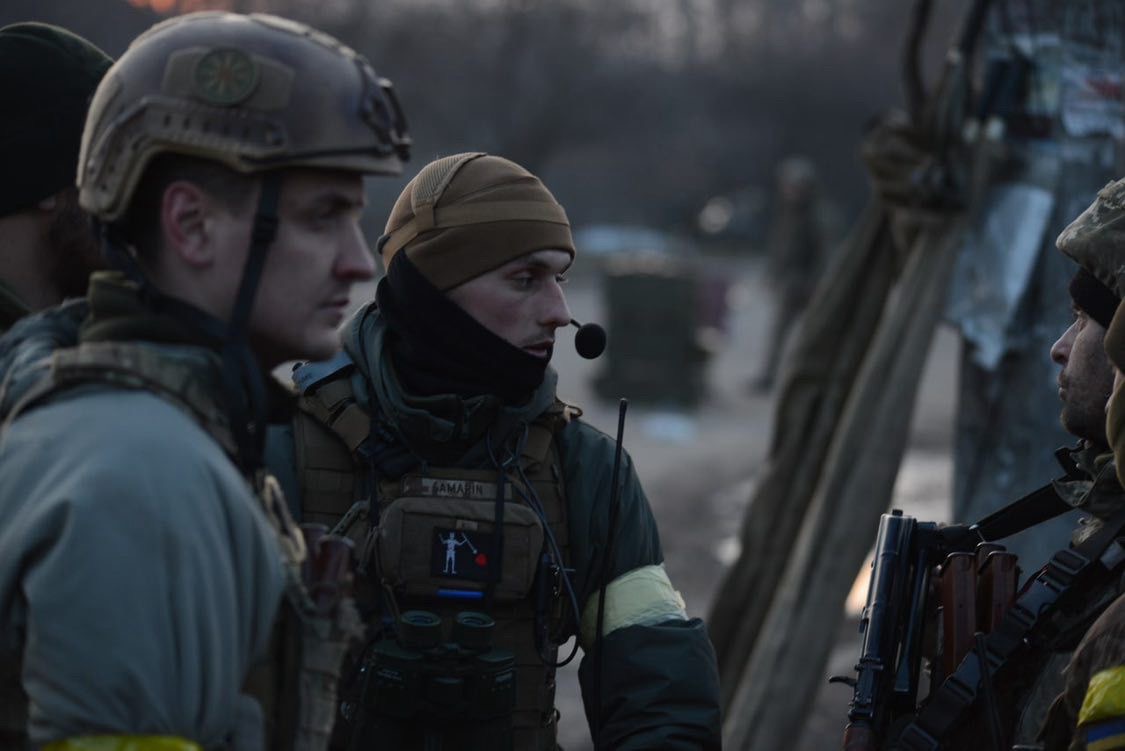
At the start of the invasion, there were no regular troops in Sumy. We kept asking people: who is defending Sumy? The answer was always the same: "No one." How is that even possible? There was only the Territorial Defense in the city. I know there was even a local pensioner blowing up columns with improvised explosive devices. What more is there to say? There were brigades that had been trained and, on some directions, lost positions they had been preparing for years, on spoil heaps, on high ground. And here, Territorial Defense units, practically bare-handed, did not let enemy vehicles into Sumy. That’s some level!
BARVINKOVE
- From the Sumy region, you were redeployed to the Kharkiv region, near Barvinkove?
- Yes. Literally the next morning after we entered Trostianets, we were told: the mission has changed, you’re heading to Izium, it’s a catastrophe there. We restored captured equipment, assembled, and moved out. I thought we’d still manage to set up defenses around the city. But by the time we arrived, half of Izium was already occupied. The plan was to blow the bridges and then figure things out. But the Russians had already crossed the Siverskyi Donets, a local gave up bypass routes, the enemy threw pontoon bridges across, and moved on.
We arrived in Barvinkove, deployed, and spread out beyond the village. At that time, airborne troops were fighting there, assaulting, advancing, not even having time to dig in. Our infantry, on the other hand, walks around with shovels. Wherever we stopped, we dug in. That’s how it’s always been with us. Combat training drilled it in. Dmytro Bryzhynskyi, my first brigade commander, used to say: "You are infantry. Where you stop, you dig in. You move, you dig in again. Because your life is the trench." I remembered that phrase forever.
The next day, we assaulted a village, and it didn’t work out. The airborne troops went to the right, and we went to the left. The 1st Motorized Infantry Battalion entered the village, but they were pushed out. My company was attached to another unit. We were told to assault at night. I said we would not conduct a night assault.
- How do you just say, "We’re not going"?
- I said it.
- I get it. But how do you say that to a superior? What gives you the strength to do that?
- It’s not like saying, "I won’t go, period." You have to argue your position. A task is given, but it’s flawed or incorrect. "I won’t do it this way because…" and then you lay out why it’s wrong. If it will lead to casualties and achieve nothing, there’s no point in doing it at all.
- It’s no secret that many who spoke up like that were removed and replaced with those who said "Yes, sir!" and went…
- That’s the fate of a commander. But it’s not the end of the world. They won’t send you further than the front line anyway!
I didn’t go head-on against an order. It’s about the psychology of talking to a commander. I said: "Here’s what I propose: we go in the morning. In the morning, there’s rain and fog, we approach covertly, they won’t see us. And we’ll see the enemy when we get close. We’ve just arrived and are supposed to assault immediately, assault whom? We don’t know the routes, the terrain, anything. Tomorrow morning, I’ll conduct reconnaissance with the recon company. The morning after that, we can assault." I explained everything, and they agreed. If I had just said, "Yes, moving out," I would have buried my company there and stayed with them... So in certain situations, you have to say "no" and explain why. You have to propose your own alternative, a better option, where the key thing is preserving your people.
- Did you successfully take that village?
- No. The main problem was that we had no tanks of our own. My idea was to assault quietly. A tank company had entered that village the day before, they parked between houses, but there was no infantry in sight. Armor needs to be burned out with artillery and anti-tank weapons. We didn’t let them sleep all night, worked them over with Grads and tube artillery. They were on edge, expecting an assault. By morning, they had fallen asleep from exhaustion. And we could have… But due to the incompetence of certain people, artillery was directed onto our own positions. We had wounded and one killed. The wounded were evacuated, but the body of the fallen soldier remained in occupied territory. On top of that, a company from the 2nd Battalion was sent into the village on vehicles. The enemy was asleep, there was fog and rain. Their equipment was silent. Our armor rushed in and started firing at the infantry there. I said: that’s it, we’re pulling back. What’s the point of this mission if we’re ramming ourselves against their armor? We’ll knock out one tank, then another, and then what? Will we drive them out? No. I said we would not sign up for this again, and I would not send my people.
I said: "People don’t understand the situation." We’re the ones walking it on foot, seeing everything with our own eyes. I proposed an alternative. In the end, they agreed: "Take up defensive positions." I said: "The villages are in low ground, the road is above them, on high ground. Why should I sit in the lowland? I’ll take up defense on the road, mine it, and let them come down." That’s what we did. We took up defensive positions and they went no further. We held, knocked out their vehicles. I said: "Did it work? It worked."
It’s almost always hard being attached to another unit. Your opinion barely matters, and you get sent on missions that are either impossible to carry out or simply poorly thought through. It feels like they’re not your people, not your unit, and for some reason, no one cares what happens to them. I couldn’t fight under those conditions. I spoke with our battalion commander, and he did everything he could to get us back to our own unit. That was when Velyka Komyshuvakha was being occupied. We took up positions beyond Brazhkivka. The fighting there was brutal too, because Russian airborne troops had moved in. They assaulted us hard, pushing in our the direction, it was extremely tough. We took losses because enemy artillery never went quiet. They advanced in columns of equipment, APCs and tanks. We kept pulling back from one position to the next, again and again. That’s how we reached Novodmytrivka, outside Barvinkove. It became a key point; we dug in there and took up defensive positions. The infantry were completely exhausted, they’d been fighting nonstop since February 24, and no one let us rest. People could barely walk; they were worn out. I understood that with the enemy pressing this hard, we’d be finished soon… I sent the large radio station to a safer spot and said I’d stay on my handheld, there was no point setting it up here. I grabbed a shovel, went over to the infantry, and said: "Looks like that’s it, we’ve fought ourselves out…" We knew we didn’t have the strength or the reinforcements, it was hard to keep fighting. So we dug in with the infantry and sat there. They shelled us with artillery once, then again.
Then, unexpectedly, a tank battalion arrived as reinforcement. They positioned themselves on the high ground behind Novodmytrivka. After that, the 8th Company of the 3rd Battalion came in, we were reinforced. A high-ranking general showed up and said, "There’s nobody ahead, assault." I told him, "There are tanks there," and he said, "There’s no one there." Borsuk and I kept insisting there were, and they threatened us with a court-martial for "lying." The company commander, now the commander of the 3rd Mechanized Battalion, got behind the wheel of the first vehicle in the column and drove forward. And there, a tank swung its gun toward him and opened fire. He made it through. The tank fired at the second IFV, and another tank fired at the company commander’s vehicle. The drivers of our BMPs bailed out, and about six hours later, they came back on foot. They said there were a lot of tanks out there. The general got in his vehicle and left. And we were the ones who had to pull the 8th Company out of there. After that, we thought they were about to come at us, so we prepared for an assault. Russian artillery kept hammering us day and night. It was a huge relief when an "Omega" group arrived, Pepel, Bruno, Sapsan, seasoned guys. They brought Stugnas, SPG-9s, and Javelins. They told us, "It’s going to be okay now."
Then the 5th Company of the 2nd Battalion arrived and took positions in the village with us. The commander of that company, Khomiak, and I walked through the village "daydreaming": "If only Grads would land nearby and make us a little WIA… at least we’d get some rest in the hospital." We laughed, of course, but there was definitely some truth in those jokes.
- You were that exhausted…
- Like amoebas, both us and the infantry. Then an enemy vehicle column came at us, and we smashed it to pieces. There were two or three tanks, an MT-LB, and two IFVs. We had Hotabych’s tank from our tank battalion there, plus another tank from the 3rd Tank Brigade, and the Omega guys were working too. They hit one vehicle with an NLAW, our tank fired, and then hit another one. The enemy panicked and started running. After that, we pulled out a concussed Buryat or whoever he was. He had simply passed out inside the vehicle while the others ran. We walked up to the tank to figure out why its turret was still traversing, and that’s when we found him and dragged him out.
The Russians also tried to push in above Novodmytrivka, and we tore their tanks apart there, too. Remember that video that went viral where a tank turret was lying separately? That was from there.
They tried to push again and again it didn’t work. After that, it was over. They made attempts about once a month. That’s when we started driving them out of the tree lines…
- One of the battalion commanders in your brigade called it "a strategic war for every tree line."
- What else would you call it? We kept getting orders to take a tree line. And that "tree line", it’s basically two sticks standing there. And we’re told: "Go on, take it." The recon platoon commander Archer, myself, and a couple of scouts would quietly move into each one, check if anyone was there, see where we could dig in. And the next morning, I’d bring the infantry in. That was our "strategic war" for every single tree line. But it made sense, Russian airborne troops started giving up positions and pulling back. All they did after that was pound us with artillery, and that was it.
- So in effect, you prevented them from doing what they wanted, pushing through to Sloviansk…
- We stopped that offensive. By then, we were completely exhausted. At one point, they shelled us for twelve hours straight. We pulled all the infantry back behind the village, while the company commander and I stayed at the battalion command post. It was impossible to leave that basement even for a second. When we finally came out of the shelter, everything around us was burning, reeking… It felt like the end. And then suddenly, click, silence. Some kind of breaking point came, and it was over.
- Did they withdraw from that direction?
- They didn’t withdraw. They simply ran out of infantry. They were fighting their own "strategic war for tree lines." They’d drive four tanks into a tree line, and that was it, the position was considered taken. No infantry, no fortification, just tanks standing there. Nothing else is happening. That’s how they "occupied" tree lines with tanks, and we knocked those tanks out. That’s when the "White Wolves" helped us a lot. They came with quadcopters and carried out some of the first drone drops on tanks. In that sector alone, they destroyed 88 enemy vehicles. Before every offensive, we’d call them: "Help us out. We’re supposed to advance tomorrow, and there are four tanks sitting in the tree line." "Alright, we’re coming." They’d arrive at night, we’d give them the coordinates. They’d hit one tank, then another and the remaining two would flee. We’d then move in and take that tree line without a fight. They were a huge help back then. At that point, I really appreciated using special units exactly as intended. Their job is to destroy equipment and that’s what they were doing. "Omega" helped as well, providing fire support and reconnaissance. A colossal amount of work was done in that area near Izium.
BAKHMUT
That’s how we reached the point when the Kharkiv offensive began. Right before it, we were pulled off our positions: "There’s trouble in Bakhmut." Everyone was exhausted, we thought we were finally heading for recovery. Instead, we were sent to Pokrovske near Bakhmut. Around that time, artillery ammunition had run out as well, it was a brutally hard moment. When we entered the Bakhmut area, we realized that those tree lines near Izium had been a "walk in the park." If there, artillery suppressed us to the point where we couldn’t do anything, in Bakhmut we understood that the Wagner forces had no limit on artillery shells at all. Their guns didn’t fall silent for a single day.
We spent five months in our first rotation near Bakhmut. It was the autumn of 2022. Before we moved out, my battalion commander and the commander of the 2nd Mechanized Battalion, Rostyslav Sylivakin, call sign Krot, came up to me and said: "Samara, we lost you in a card game…" I looked at them, and Krot explained: "My 6th Company was wiped out in three days, you’re going in to replace that exact unit." Once I arrived on site, everything became clear: the company commander was wounded, meaning there was no commander, and the senior sergeant was in charge instead.
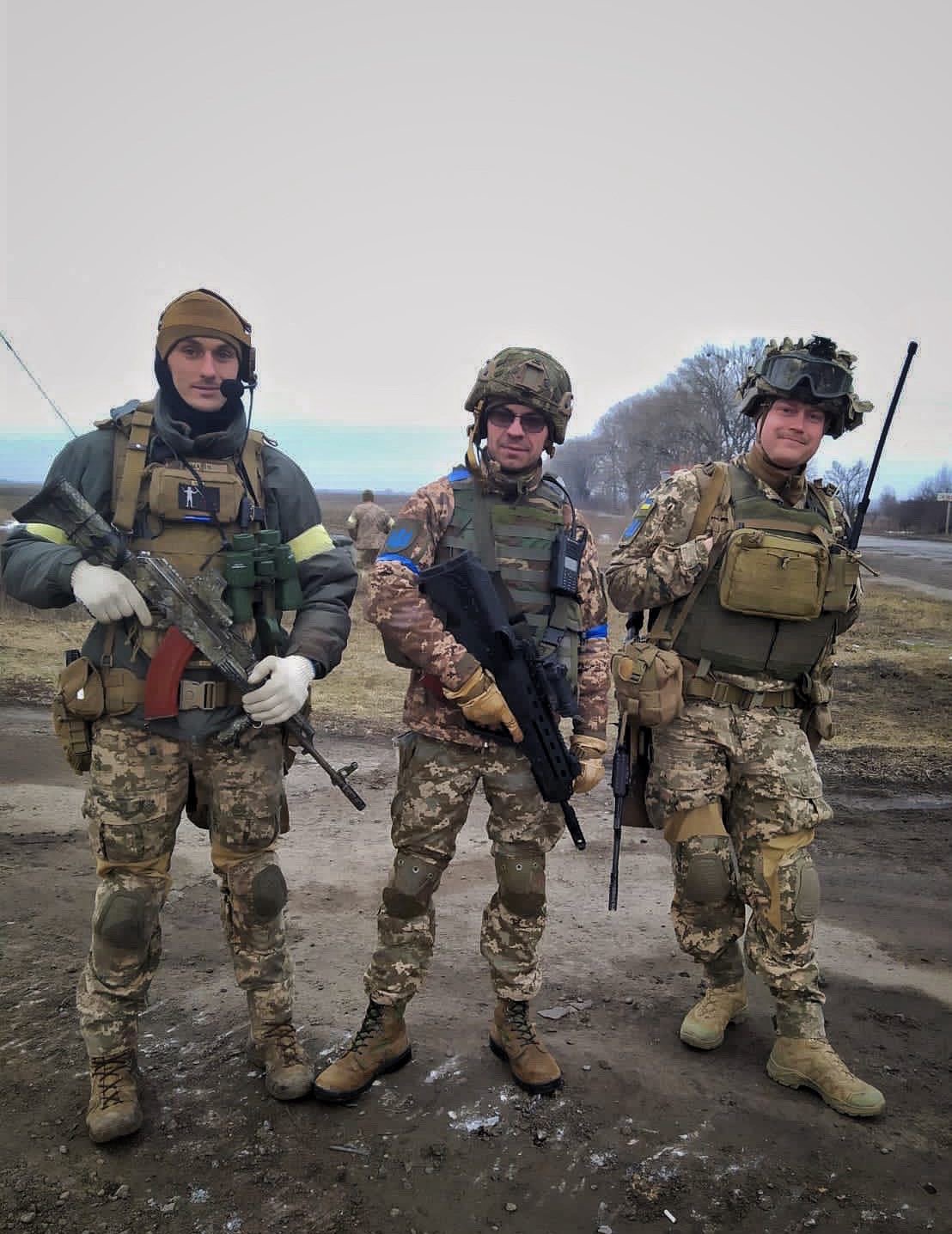
Photo: Anton Samarin, call sign Samara (far left), his battalion commander Oleksandr Slipko, call sign Borsuk (far right), and the 2nd Battalion commander Rostyslav Sylivakin, call sign Krot (center).
- Where exactly were they stationed?
- Near the settlement of Pokrovske. It’s a village near Bakhmut, not far from Soledar and the Knauf plant. We were holding the tree lines between Bakhmut and Pokrovske. When I arrived for reconnaissance, the senior sergeant of the 6th Company and I were supposed to walk the positions, but we were pinned down at the battalion command post for an hour and a half under Hyacinth fire, we couldn’t even step outside. When it finally went quiet, we moved out. I saw the terrain was… specific. I laid the task out to the infantry and platoon commanders: "Dig in, take up defensive positions, mine everything, there’s no other option." Within three days, we rotated out the 6th Company, and the assaults on Soledar and the Knauf plant began. The slaughter with the Wagner guys started, with casualties during the assault operations. Russia doesn’t have specialists like the "Wagner" fighters anymore. They were purpose-built for the job and utterly fearless. We fought them for two or three months. Both sides took heavy losses. We had tanks positioned in a covered firing position, working 24/7: they’d roll out in the morning and come back in the evening.
My day as a company commander started at 5 a.m. I’d do a routine drone pass, check that everything was quiet and nothing was happening…
- You were already flying a Mavic, weren`t you?
- Yes. Then I’d link up with the tank crews. I’d bring a tank up to a firing position, launch the drone, and we’d range in one point. The second tank would lie on a second point, where the enemy could try to push through. Then I’d fly again. If nothing was happening, I’d go to the infantry. We’d range in the SPG there, and I’d give instructions: if an assault starts, we act like this. More than once, the Wagner guys were already pushing onto our positions by 5 a.m. One day like that, when they came at us, Krot and Umka, the 2nd Battalion Chief of Staff, Volodymyr Shypka, showed up early. From five in the morning until six in the evening, we ran the fight on our feet, not sitting down once: drone, call in artillery, drone, cue the SPG, and so on. By evening, we realized our hands were numb from radios and tablets. We were all stunned by how intense the fighting was.
As a rule, after such active assaults, there would be a lull for two or three days. But over two or three months, we managed to knock out what you could call the "original Wagner", the specialists. Then the convicts came. Our first clash with them happened when about forty of them moved on our position. The Wagner guys would come in groups of six or seven, no more, because if you bunch up troops, whatever lands nearby is going to wound someone. But this was just a crowd running toward the tree line. We immediately knew something was off. We peeked out, they didn’t look like Wagner either, more like regular soldiers. That’s when we realized: it was the convicts. We started hammering them. They began pushing day after day. We’d zero them out, and then more and more of them would show up.

During that period, they used a "meat-grinder" tactic, throwing waves of manpower at us. A single position could be assaulted five to seven times a day. We were running out of ammunition… They pressed us hard. After five months, the 128th Brigade rotated us out. Over the entire time we held those positions, our battalion lost 1,300–1,400 meters of ground, no more.
We pulled out for a month, recovered, went through training, and returned, but this time into Bakhmut itself. We took up positions on the outskirts, in the direction of Opytne. A small part of Opytne was still under our control. We spent the final four months in Bakhmut. Urban fighting is its own kind of warfare, and it’s extremely hard: limited visibility, close-quarters contact. Not everyone can take it. The area was saturated with troops… Next to us were the 5th Assault, the 80th, the 60th, and the 3rd Assault. The losses were enormous. There were times when you simply couldn’t get out of Bakhmut. Among ourselves, we used to say that defending the city was more of a political task. But we couldn’t pull back into open fields either. The problem was that nothing had been prepared. People were still living around Bakhmut. There were just Czech hedgehogs lying on the roads, and for what? To do what? Eventually, everyone simply pushed them aside. Meanwhile, nobody dug trenches or cut the roads. But positions get lost, destroyed, burned out. People need somewhere to fall back to, and there was nowhere.
BATTALION COMMANDER
- While we were in Bakhmut, I was appointed battalion commander. I’d served in the 1st Mechanized Battalion the whole time, I knew the unit commanders. But I was assigned to the 2nd Battalion. Around then, a new brigade commander came in — Pavlo Palisa. Many officers from the 2nd Battalion were transferred to other brigades. I was getting to know a unit that was new to me in the middle of combat. All the company commanders were exhausted and angry, nothing was working out for them. The battalion was in very hard conditions. Vasyllich helped me a lot, a highly competent deputy commander, a protégé of Umka and Krot, and my classmate, he helped me understand the situation and get acquainted with everyone.

Photo: Samara, now a battalion commander (right), and his deputy, Vasyllich.
Over time, the battalion became more stable and held the line as best it could. Of course, there were losses, everyone took losses. We didn’t understand the overall mission, and that fueled a lot of nerves, arguments, and made everything hard to process. In some places neighboring units could slack off; someone could move in, fail to do the job, and pull out, without saying a word. Someone else might move in and hold, but be unable to do anything. Bakhmut is a brutally hard, painful life experience, with heavy losses. We were given the go-ahead to pull out only when the enemy had almost encircled the city. Behind us there were just a couple of streets left, right where our command post was.
I remember how I felt when we drove out of the city. It was like a veil lifted. I suddenly had this overwhelming desire to live… Bakhmut drained every last bit out of you, like some kind of Mordor.
As for whether it was worth fighting so hard for Bakhmut... It's the same with every city. In the fields, we fight for every "strategic landing". In Bakhmut, Toretsk, Pokrovsk, anywhere, for every house, for every barn... It's hard and bloody everywhere.
There was just a lot of talk about Bakhmut, songs were written, and lots of interesting people came there to take pictures near the plane.
- As far as I know, that plane was blown up on purpose so people wouldn’t take photos there and provoke the enemy into striking that spot…
- It was dangerous as hell! People would roll in wearing black sunglasses in a Hummer. They’d stand by the plane taking photos — and almost immediately tube artillery would start hammering the block. Those people would leave the city in an armored vehicle, while our fighters were the ones getting wounded and killed. For some, it was a place to do PR. For us, it was a place of horrific losses and brutal fighting.
And how many SOF guys I knew were there, working with us, giving their last strength, their health, their lives. How many well-known people died there, and how many ordinary ones…
Now you walk through any cemetery in the country and read the headstones: this one was killed in Bakhmut, and this one too… Young guys, born in 2000 and later, there are so many of them… Azov, the 3rd Assault Brigade… It wasn’t just the 93rd. At Lisove Cemetery in Kyiv, my brother-in-arms Umka and I walked past all the graves… The scariest part is that for the families it’s become routine: plant some flowers, wash the monument… On weekends, the cemetery is packed, crowds of people, loads of cars. Before, we’d go to cemeteries a few times a year, clean up before Easter, come on some memorial date. Now people practically live at the cemetery; the flower sellers know them by face. Umka and I said the same thing at the same time: if only you could gather up incompetent commanders, take them through the cemeteries, and force them to talk to the parents who’ve lost their children…

Photo: Samara (right) and Umka in Bakhmut.
- Why did you decide to study to become a soldier?
- There are no military people in my family. When I was in third or maybe fifth grade, I had this dream — to have a scooter and become a serviceman. I watched the TV series Kadetstvo and wanted to be a cadet, sharp uniform, everything looked so romantic… After ninth grade, I enrolled in the Koropets Military Lyceum in the Ternopil region. Those years at the lyceum were very important for me — 2014–2015.
My parents didn’t think I’d keep going down the military path. But I was studying at a military lyceum, I liked it, so why would I later become a mechanic or a lawyer or an economist if the military profession was what I wanted? So I entered the Army Academy in Lviv, studied at the infantry faculty for four years, and after assignment, I ended up in the 93rd Brigade.
- Did you want to fight?
- Yes. We had cadets who already had combat experience, they talked a lot. We also had officers from the 8th Regiment, the Feodosia Marine Brigade, the 72nd and the 30th Brigades. They told their stories, and we, guys straight out of school, listened to what the war in 2014–2015 had been like. Of course, they talked about all the pros and cons…
After graduation, I was sent to the Luhansk region, to Triokhizbenka, in that sector. By my second rotation, I was already a mechanized company commander. We moved to the Volnovakha direction, to Novotroitske, and held a spoil tip. In our battalion, there was a rivalry among the reconnaissance platoons. The leader was Fanat — Ivan Leshchenkov. He was killed in 2022 near Barvinkove and was awarded the title Hero of Ukraine posthumously. Even back then, everyone admired him. My senior sergeant was Dima Kutsenko; he’s a Hero of Ukraine now. I told him: "The enemy is a kilometer away, and nobody knows what’s going on between the positions, behind them." We started crawling out there. I got as far as their minefields, I nearly blew myself up. Then we decided to mine the enemy’s logistics route. I knew we could even do it with their own mines. My plan was this: we’d cut through the field line, pull out their anti-personnel mines, and leave them right there but place them on the road they used.
- Did you go through with it?
- It didn’t get that far. The three of us went out, me, the senior sergeant, and a medic. We were just about to plant the mines on the road when a vehicle with Russians rolled in. They were definitely Russians, I think Girkin later even wrote an article about it. It was an inspection group: one Russian marine in a beret with that "egg" badge, one sergeant, and three officers. They stayed there and we backed out, calmly.
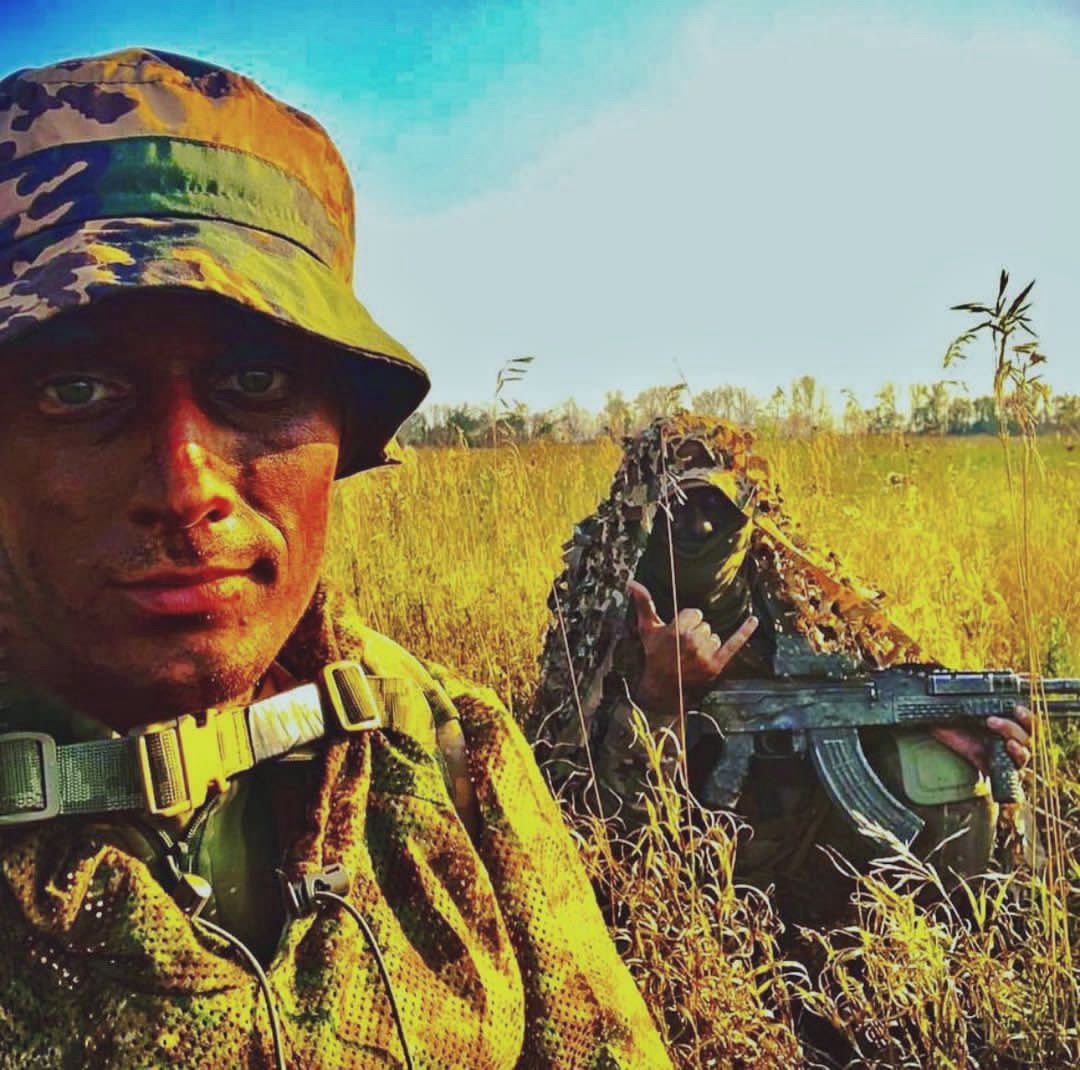
- So you got into a small-arms firefight?
- Yes.
- And there was no one else, just them?
- It was a good thing their positions didn’t react. We quietly made our way back. The next day, we flew a drone, saw their bodies and the vehicle, and recorded everything. For three or four days, their soldiers were afraid to go anywhere near the spot, they thought it had all been mined. After the bodies were taken away, Girkin went on to claim that "the Ukro-fascists treacherously shot Russian boys point-blank, right in the face"…
- Did you get an earful for that?
- I got chewed out for everything: "You’re a company commander! What the hell were you doing out there? … You’re not supposed to go there!" Like, that’s recon’s job, special ops. I told them, "Everyone’s working. What, just sit on our hands? We have to do something." They tore into me. And then: "Good job, well done. But don’t do it again."
For me, the most valuable thing was Fanat saying: "Solid work, you guys crushed it!" Fanat himself praised us! I was thrilled. Then Krot offered me: "Want to come work for me as chief of reconnaissance?" And I’d always dreamed of going into recon and with Krot, a strong young commander, no less. But the battalion commander wouldn’t release me and kept me as a company commander.
- During the full-scale offensive, you received combat awards...
- For the defense of Okhtyrka, I got the Order of Bohdan Khmelnytsky, 3rd class, and for Bakhmut — 2nd class. Or was that for Izium? For Bakhmut there’s nothing to be awarded for. We lost a ton of people and territory. For that, you should only be getting chewed out. In general, medals are… whatever. It’s the infantry that should be recognized. I treat awards… with suspicion. In Bakhmut, I received an award Glock. I was happy, my own weapon! Then I went to the rear, and there you’ve got guys walking around with award weapons who never came closer than 15 kilometers to the front line. And they’ve got the same Glocks as mine. Since then, I’m embarrassed to carry it. Everything gets devalued… I just lump myself in with those others. One of my soldiers sees me with a Glock, and some fat cat in the rear has the exact same pistol…
It's better if the infantry gets everything. I want my sergeants to get Glocks, they do so much work, and always at the risk of their lives. And I'm further away than they are. So they should be the first to get everything.
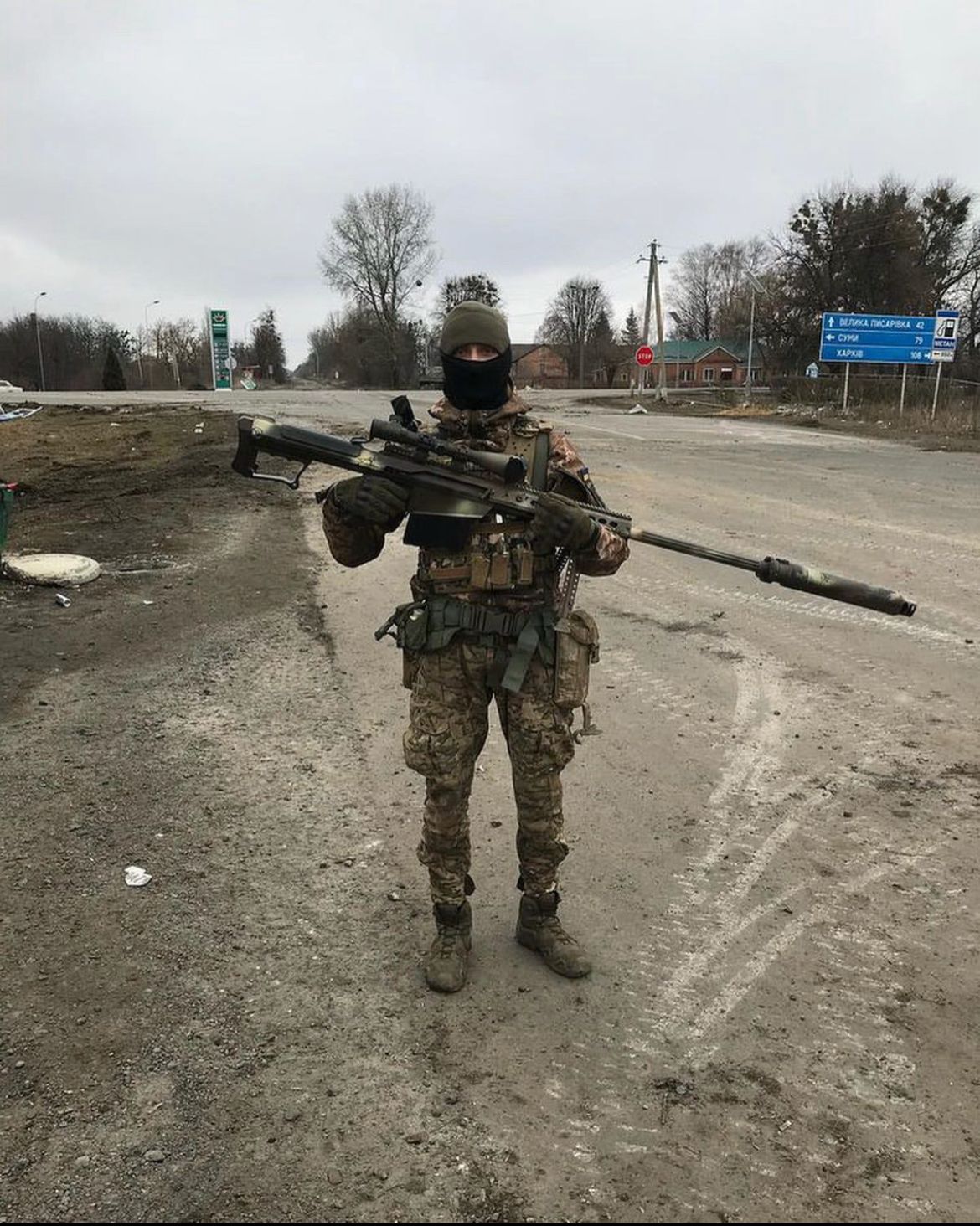
- Have you ever regretted choosing the military path?
- No. I’d be in the army anyway. There are six of us in the family, four sons and two daughters. My older and younger brothers are in the military too now. One is in the Marines, the other serves in the 65th Brigade. The younger one decided he’d join the army the moment he turned 18. And that’s exactly what he did. Both my older and younger brothers were abroad, working for a German company. When the full-scale invasion began, they returned to Ukraine that very day. Both of them wanted to join my brigade, but I told them: "Don’t even think about coming to me, I’ll get distracted from my job, I’ll be worrying about you. If you end up in another battalion, I’ll be on the battalion commander’s back nonstop, and he’ll start treating you differently. That’s not how it should be." I explained the same thing to my mom: "Mom, everyone has to serve the same way, on equal terms." I don’t know anyone in the 65th Brigade; my brother serves like everyone else does. Same with my younger brother. I do know his commander, we served in the Donbas together back in the day. I can call him and ask: "How’s the kid doing?" I’m not going to make decisions for them, they’re grown men, and they’re doing fine. I hate all that pulling-strings crap, who’s whose brother, father of the son-in-law or friend… If that "brother -father of the son-in-law-friend" starts, there won’t be anyone left to fight. I’ve seen plenty of it in Kyiv…
P.S.The soldiers of the battalion commanded by Samara are raising funds for a vehicle after an enemy Lancet drone burned the one that had faithfully served them. You can support the troops via the link:
Violetta Kirtoka, Censor.NET


