



Yermak’s shadow or snap elections: what is being said about president’s latest personnel shake-up
On January 2, President Volodymyr Zelenskyy launched a dramatic political changes. Kyrylo Budanov was appointed as the new head of the Office of the President, while Mykhailo Fedorov was announced as the new defense minister. Denys Shmyhal, meanwhile, is set to become the new energy minister and deputy prime minister. The early-year mystery is whether Vasyl Maliuk will remain at the helm of the Security Service of Ukraine (SBU).
The announced personnel appointments, the president said, are a response to the current state of talks with the United States and the need to strengthen Ukraine’s position if the war continues. They could also be seen as a logical conclusion to the personnel shake-up after Mindichgate. But for some reason, Censor.NET’s sources instead point to Andriy Yermak’s shadow behind all these decisions, and to the president preparing for elections by neutralising his rivals.
New head
The search for a new head of the Office lasted more than a month.
On 8 December, Zelenskyy told journalists that he was considering five candidates for the position of head of the Office of the President. Among them were Minister of Digital Transformation Mykhailo Fedorov, Minister of Defence Denys Shmyhal, Head of the Main Intelligence Directorate (HUR) Kyrylo Budanov, First Deputy Minister of Foreign Affairs Serhii Kyslytsia, and Deputy Head of the Office of the President Colonel Pavlo Palisa.
But nothing moved beyond naming the candidates. In essence, the president had time to decide how and where to move next after the Yermak-shaped landscape he was used to fell apart.
"A choice has to be made. If this drags on for a long time, I think I can manage without a head of the Office of the President, I can live without one," Zelenskyy joked at the time.
This month was also a window of opportunity, when the president could either change the trajectory of his politics by launching a post-Yermak era or make a countermove after he was effectively backed into a corner himself.
Everyone remembers Zelenskyy saying that Yermak would leave that post together with him. The scandal involving Timur Mindich, kickbacks in the energy sector, and schemes in the defense industry became the most painful blow to the president and his inner circle.
In essence, the president had no choice but to choose either himself or Yermak.
The other question was where the president himself would go next. After the summer crisis over an attempt to dismantle NABU and SAPO, many Western media outlets wrote that the Ukrainian president should move away from a one-man style of governance.
And after Yermak’s dismissal, many thought a new version of Zelenskyy might emerge. And a completely different Office, depending on who would lead it: Fedorov, Budanov, or Kyslytsia.
However, the post-Yermak euphoria did not last long. And after the past few days’ news, there were very few people willing to comment on anything at all.
On the eve of the New Year, the president announced he had settled on a candidate to head the Office. On 2 January, he announced that it would be the head of the Main Intelligence Directorate, Kyrylo Budanov.

"Right now, Ukraine needs greater focus on security issues, on developing the Defense and Security Forces of Ukraine, and on the diplomatic track in negotiations, and the Office of the President will primarily serve the fulfillment of these tasks of our state. Kyrylo has specialized experience in these areas and sufficient strength to deliver results," the president said, commenting on his decision.
Over the past five and a half years at the HUR, Budanov has built a state within a state, one whose personnel carried out special operations, but also got involved in highly dubious episodes such as the seizure of part of the Zhovten sanatorium’s grounds. Budanov himself went from a young man who lived with a cash-out operator to becoming one of the war’s heroes, and in recent years, he has ranked among the top five presidential contenders.
Over the past year, it has been said more than once that quite a few "Lyovochkins" and other forced refugees from the Viennese electoral district have been hovering around him, eager to secure their own candidate for the elections.
Budanov, despite having a good relationship with the president, has always stayed away from political intrigue, which has also worked in his favor image-wise. Another advantage of the new head of the Office is that he has both well-established contacts in the United States and certain contacts in Russia, through the work of the coordination headquarters for prisoner exchanges.
"Well, at least it’s not some kind of Yermak avatar," one Servant of the People representative commented on the decision.
However, according to Censor.NET sources, Budanov arrived on Bankova Street on January 2 looking ashen. And he was accompanied by Oleh Ivashchenko, head of the Foreign Intelligence Service.
According to interlocutors, Budanov had hoped to leave the HUR in the hands of his own people, for example, Vadym Skibitskyi. But after the appointment, the president decided otherwise.
And here a nuance matters: Budanov, himself a former Foreign Intelligence Service officer, had long wanted to gain influence over that agency. Ivashchenko’s appointment there was a loss for him. And Ivashchenko’s promotion is a clear sign that the new head of the Office will not have an army of his own.
"Moreover, I have serious doubts that Budanov will be able to appoint his own people to the Office. And in that context, it’s very telling that the president has already appointed Kyslytsia as deputy head of the Office, someone Yermak had seen as the next foreign minister," the source says.
According to him, Budanov is not the kind of person who can be pushed around, but there is also a possibility that he will be as limited as possible in his manoeuvres. Still, if they twist his arm too hard, he will simply walk away.
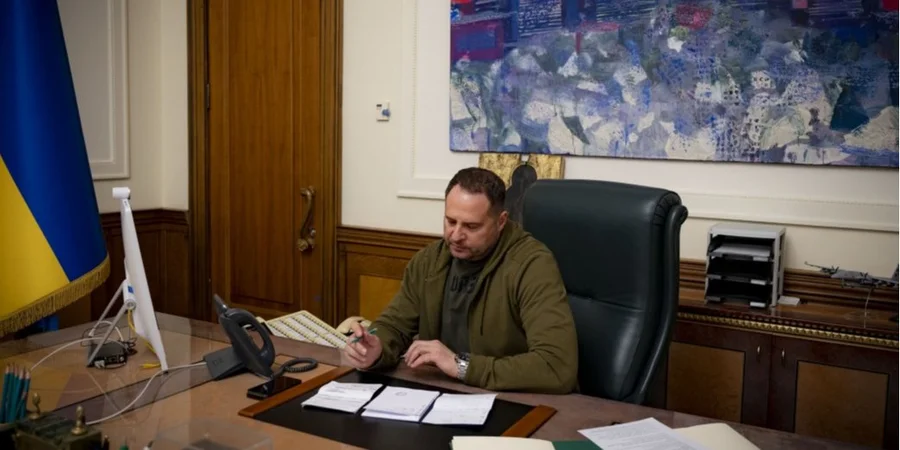
By the way, Telegram posts claiming that Budanov threw Yermak’s belongings and furniture out of his office are not true. "Yermak picked up his things the following Monday after his dismissal, including Zarivna’s painting," the source said.
Budanov also chose a different office on the second floor, rather than the one used by Kliuiev, Pashynskyi, Lozhkin, and Yermak — "so as not to spoil the karma."
In principle, if all the changes had ended with Budanov’s move alone, one could say it was simply a way out of the crisis.
The dream job
But Budanov’s appointment turned out to be only the start of a sweeping reshuffle. By the evening, the president announced that Mykhailo Fedorov would become defense minister.
In fact, this post has long been Mykhailo’s dream. And, frankly, since the start of the full-scale invasion, he has been seriously at odds with Oleksii Reznikov’s ministry. In particular, over drone procurement.
The rumor mill says Fedorov had a hand in Reznikov’s dismissal. But he still never became minister himself, even though he was a step away, both when Umerov was appointed and when they were looking for a replacement for that slapdash minister.
In Shmyhal’s government, Fedorov had two of his own people: Deputy Prime Minister for Digital Development Oksana Ferchuk and another deputy defense minister, Yurii Myronenko, the former head of the State Service of Special Communications and Information Protection.
Notably, in the Defense Ministry under Umerov, Kateryna Chernohorenko was seen as Fedorov’s person, but according to the outlet’s sources, the deputy prime minister quickly lost control over her. That is why, when the minister changed, she was replaced by Ferchuk.
Myronenko, meanwhile, headed the State Special Communications Service of Ukraine after his predecessor, Yurii Shchyhol, was served with a notice of suspicion over alleged abuses in drone procurement.
Although, in terms of digitalisation, Ukraine showcases as its biggest defense-sector achievements the Ministry of Digital Transformation’s Brave1 defense tech cluster and the Defense Ministry’s DOT-chain marketplace launched last year, in reality they compete quite heavily for funding.

"Right now, Fedorov’s people are happy they’ll get into the Ministry of Defense and secure more funding for their projects. But I’m not sure their excitement will last long," a Censor.NET source says.
"If the war continues, our army has to be as technological as possible. Denys Shmyhal has strengths in systematic work, and Mykhailo Fedorov has strengths in speed," the president said on January 3, explaining his decision to replace the defense minister.
Earlier, Zelenskyy also highlighted Fedorov’s involvement in the issue of the "drone line," and said he has been working very effectively on the digitalisation of government services and processes.
In principle, there are no objections to the president’s assessment of Shmyhal and Fedorov, but there are nuances in how the processes are organised. If Fedorov is appointed defense minister, rapid digitalisation of some processes can be expected.
In addition, it would help eliminate one of the key problems of recent years: differing visions between the Ministry of Digital Transformation and the Defense Ministry on how to develop the drone sector.
That said, this does not mean the Ministry of Digital Transformation has always been right on the matter. For example, a year ago, amendments to Resolution No. 1450 initiated by the ministry slowed decentralized drone procurement by almost a month in favor of codified procurement, and the document had to be rewritten.
At the same time, there is a downside to changing the minister. First and foremost, replacing a ministry team and going through the adaptation process takes about six months. In that same period, the minister maps out his own development path. Then a successor comes in, and everything starts over. Meanwhile, departments multiply to make room for their own staff, while systemic processes remain unchanged.
It should also be understood that there are areas where the minister will be little more than a figurehead; the needs and list of weapons are set by the General Staff. When it comes to drones, procurement is done by name, which carries major corruption risks, but no one is in a hurry to change it. Fedorov can scale production as much as he wants, but without money and without changes from the General Staff, he will, in reality, be able to change very little. Yet he will be the one blamed.
Just as he would be blamed for any corruption story about jackets or for food not delivered on time.
In other words, from the very comfortable niche of the digital ministry, innovation, and a strong image that plays well in elections, Fedorov, who not long ago was seen as a potential leader of Zelenskyy’s future reshaped political project, is moving into the biggest zone of turbulence and risk.
So both Fedorov and Budanov will, in a single day, lose the sources that fed their positive image and will be forced to deal either with Augean stables or with paperwork.
Yermak’s shadow, the Maliuk question, and a troubled Rada
As is widely known, both Fedorov and Budanov were part of the group that worked to get Andriy Yermak out of the Office of the President.
And paired with rumors that Vasyl Maliuk is to be replaced by his deputy, Oleksandr Poklad, the story takes on a somewhat different hue.
At least in the interpretation of some political circles.
The outlet’s sources claim that Yermak continues to communicate with the president and remains resentful toward Maliuk for not shielding him from NABU.
"So I have two versions of events: either the president believes early elections are coming and is driving potential rivals into a trap, or this is simply Yermak’s revenge on all the ‘plotters’," the source says.
A similar view was voiced on Saturday by Yaroslav Zhelezniak, an MP from Holos.
"Zelenskyy is confident Zaluzhnyi won’t run, he knows how to make that happen. He has neutralized Budanov and Fedorov (through appointments), and Poroshenko, long ago, with sanctions… So, Poklad needs to be made acting head of the SBU, and NABU needs to be cleaned out," one opposition MP believes.
But while Fedorov and Budanov have already been dealt their cards, the situation with Maliuk remains unclear for now.
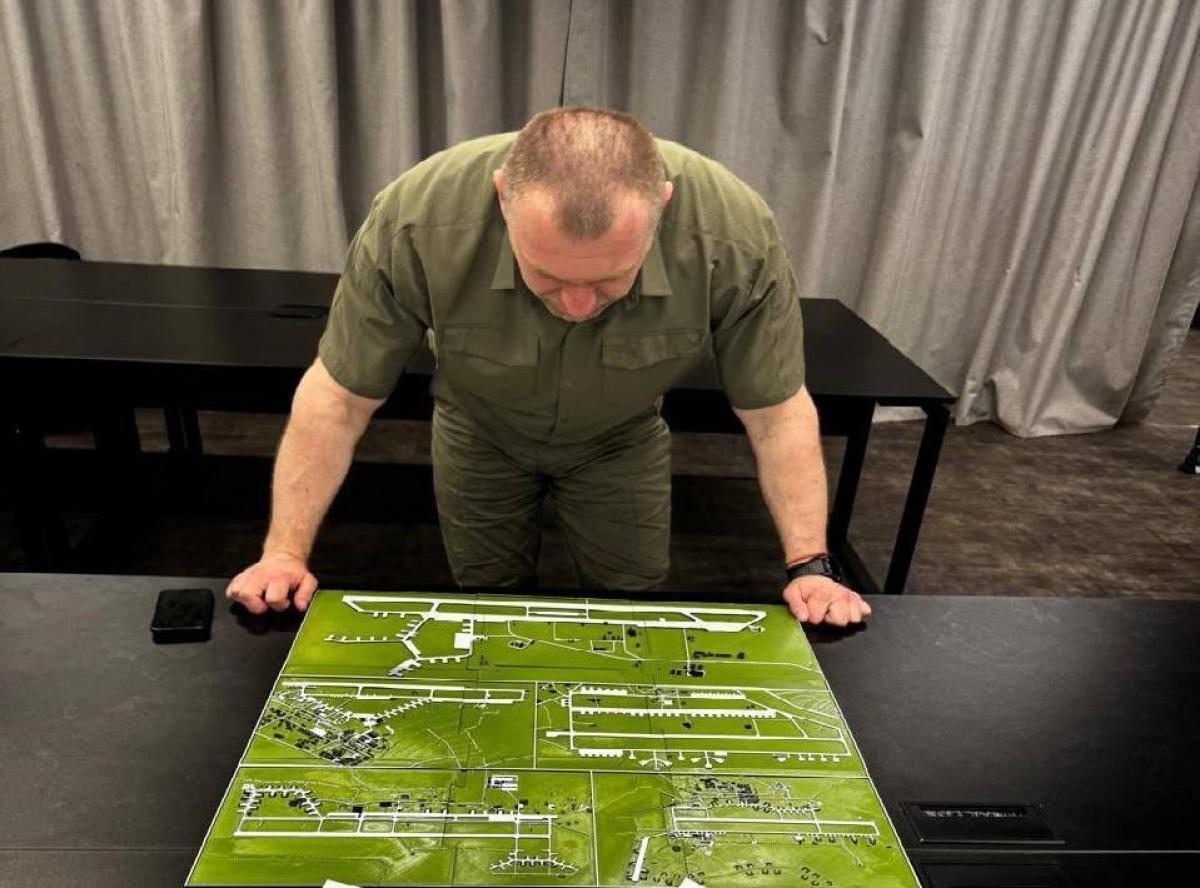
Over the past few days, not only many public figures but also prominent military leaders have spoken out against dismissing the head of the SBU and transferring him either to the Foreign Intelligence Service or to the National Security and Defense Council, Commander of the Joint Forces Mykhailo Drapatyi, Commander of the Unmanned Systems Forces Robert (Madyar) Brovdi, Commander of the 3rd Army Corps Andrii Biletskyi, and Commander of the 2nd National Guard Corps Khartiia, Ihor Obolienskyi.
The president did not give a direct answer about Maliuk, but it appears he has made up his mind.
"As for the entire security component, as for the entire law enforcement system, as I have said, we will, and I personally will, be dealing with rotations of absolutely all leaders. Some of them have been in place for a very long time; there are different reasons. With great respect, we are all on one team. I think everyone will remain in different roles, different high-level roles, but there will certainly be replacements. And there will certainly be reshuffles of everyone, I have said this, just as some things happen with my signature and some through parliament," the president said when answering questions, including about Maliuk.
But there is a nuance with Maliuk. To dismiss him, the Verkhovna Rada has to vote. That is what the Constitution says.
And there are simply not enough votes for his dismissal.
"I won’t vote for that. I don’t really understand the Shmyhal reshuffle either, but Maliuk, definitely not," a source among Servant of the People says.
"It’ll be interesting to see how this all gets voted through in a fragmented Rada… As you may have noticed, we’ve had certain problems (with votes) since July. And now Pavliuk has also raised his head. Even the ones without much agency have started thinking about a backup airfield," another MP said.
In general, only Yermak’s dismissal made it possible for the budget vote to pass without too much pain. After the amounts of alleged kickbacks surfaced in recordings linked to Mindich’s group, MPs were offended that they were being paid too little.
The story of NABU catching Yurii Kisel’s group receiving "envelopes" only added spice to it. MPs who are not very confident about their future do not want to take unnecessary risks.
Therefore, the president may have to pretend that nothing happened in order not to complicate the situation.
It is also unclear who would line up the votes against Maliuk. It is unlikely Arakhamiia would do it and Budanov certainly won’t.
For one simple reason. Three years ago, Budanov tried to remove Oleksandr Poklad from the SBU. And Poklad clearly remembers this. And if there has always been rivalry between the SBU and the HUR, here it is about outright animosity.
Tetiana Nikolaienko, Censor.NET


