



Drone operator Minion: I once spotted b#stard dugout thanks to dog — I just tailed it
Today’s interviewee is a young UAV operator known by the callsign Minion. She was likely given the callsign for both her young age and her petite build. She has been serving for more than a year and is currently with the 1st Separate Medical Battalion. Before that, she spent a year trying to join the ranks of the Armed Forces of Ukraine. She is now working in different directions.
How a young fashion designer who had the option of staying in Germany joined the military and how she is doing there, in an interview for Censor.NET.

I TURNED 17 UNDER OCCUPATION, AND I REALIZED I WANTED TO JOIN THE ARMY
- You signed a contract at 19, even though you could have lived under peaceful skies in Germany, where you and your parents fled as refugees. Tell us how you made that decision.
- I’m from Kharkiv. My brothers were Azov fighters, they had been fighting since 2014. After the full-scale invasion began, my family and I ended up under occupation for six months in the village of Mali Prokhody. We had no communications there, so I didn’t know my brothers had been killed at Azovstal. The time we spent under occupation by the Russkies was extremely hard. Our fence was painted blue and yellow, and we were forced to paint over it. But that’s just a small episode of everything that was happening under occupation back then, all the looting, the brutal treatment of people… I turned 17 under occupation, and I realized I wanted to join the army.
Then we managed to leave for Germany, and I lived there for a while. The thought of joining the army never left me. When I returned to Ukraine and went to the enlistment office at 18, I was turned away. I was upset, but I decided to try again.
My parents did not share my view and thought I was joking. When I turned 19, I tried again. People I knew helped secure a letter of request to a brigade, and I completed Basic Combined Arms Training with that brigade. My mom thought I would be turned away again, but I’m persistent, I kept pushing the TCR with paperwork until they processed everything.
- Have your parents accepted your choice now?
- They didn’t really have a choice, and it was my parents who bought my gear. My mom supports me and calls. During leave, I went to see her in Germany. She says this isn’t the future she wanted for me, but she had to come to terms with it.
- How did you handle the practical part of the training, and how did you become a UAV operator?
- It was very hard physically, I weigh 50 kilograms. At first, everything was difficult for me: shooting, throwing grenades, carrying body armor, and working with drones. At first, I wanted to be a medic, but then I realized I could be more useful as a drone operator. I completed the training, received all the certificates, and that is how my path as a servicemember began.
- Let’s return to your life in Germany. Newly formed Ukrainian communities abroad vary widely in their circumstances, views of the future, and attitudes toward military duty, especially when it comes to men. Did that affect your decision to join the military in any way?
- If I set a goal for myself, I achieve it — that’s my character. I don’t care what people tell me or what they think. I didn’t like living abroad. It’s not my land, not my people. I can’t judge those who found a home there, because everyone’s circumstances are different: some people have no home to return to, some found a loved one, some want self-fulfillment… Not everyone feels patriotic, and not everyone has the ability to come back.
The number of Ukrainian men in Germany really struck me and really angered me. I understood the losses at the front and how long the guys spend in trenches because of the manpower shortage. And I understood that I could be useful under these conditions. In fact, it motivated me, I told myself I would be better than those men.
THE FIRST SUCCESSFUL MISSIONS CAME TWO MONTHS AFTER I STARTED SERVING
- Where did you start? What type of drones do you most enjoy working with?
- I worked and still work on Mavics, doing reconnaissance. It was difficult for me, and I studied for quite a long time. Working with Mavics is work that requires caution and attention. A Mavic is the infantry’s eyes, and it is especially useful when an assault is underway.
I’ve launched bomber drones a couple of times, and I recently mastered FPV as well. And of course, there’s more I want to learn. For now, I like FPV the most. I haven’t had combat sorties yet, but I’ve already gotten comfortable with it.
- What exactly were you doing? The classic variant — adjusting artillery fire?
- We hit dugouts, adjusted artillery fire onto their shelters, or during their rotation.
- Do you remember your first combat sortie and your first successful mission?
- The first truly successful mission came about two months after I started serving. Before that, there was a period of constant training and intense work: I flew, learned, made mistakes, and tried again. I was spotting dugouts and individual enemy positions, gradually building up experience.
The first time we went out to the positions was hard. We were warned about a possible enemy sabotage-and-reconnaissance group (SRG) in the area, so the nights passed without sleep — every sound seemed suspicious. I stayed extremely focused, listened to everything around me, and learned to react instantly.
Over time, the tension faded: I got used to going outside, working in the open, and spending longer at the positions. And the feeling after the first successfully completed mission outweighed everything — it was real motivation to keep moving forward and do the job even better.
- What impression did the Russians make on you as soldiers?
- They hold their positions quite well, so I have to admit we are facing a strong enemy. I observed the Russkies on one specific section. There weren’t many of them, but they seemed bold. So much was flying in there, but they still stayed put, and that surprised me. I don’t know what they were guided by on that particular stretch, but that was the impression they gave.
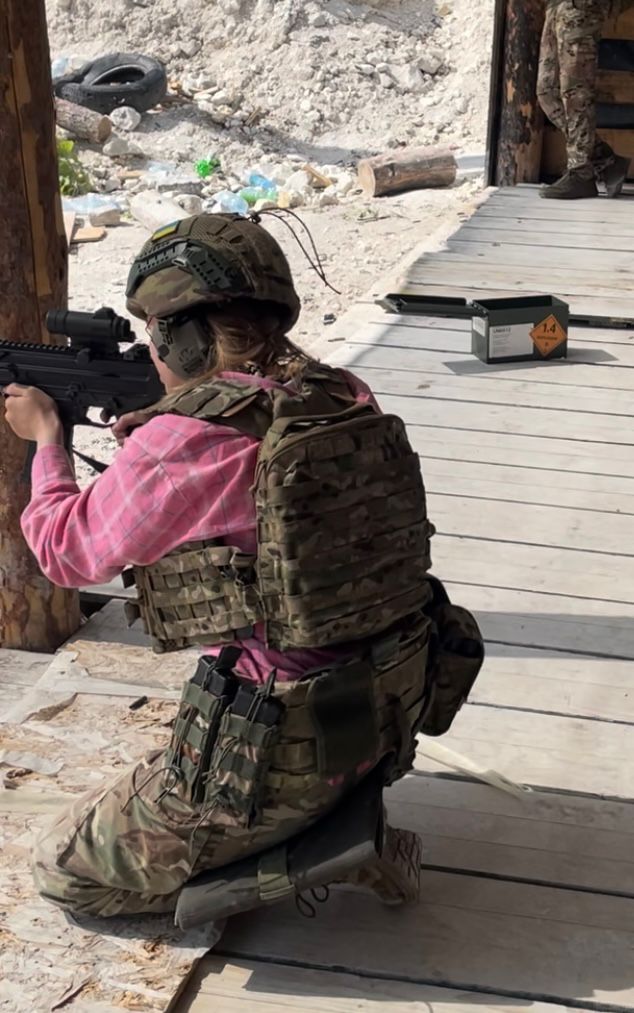
I’VE HEARD MORE THAN ONCE THAT PEOPLE ACT ON MISSIONS AS IF THEY’RE IMMORTAL. POSITIONS LIKE THAT DON’T LAST LONG.
- You transferred to the 1st Separate Medical Battalion six months ago, so do I understand correctly that you are now supporting the evacuation of the wounded? How much do you agree with the view that evacuation crews are under particularly targeted enemy fire?
- There are evacuations where crews still pick people up, essentially under the enemy’s sight the whole time. We carry out evacuations using a drone.
We conduct reconnaissance of the routes an unmanned ground vehicle (UGV) will use to evacuate wounded personnel from the front line. Our task is to ensure the safest possible route so the wounded reach the evacuation point as quickly as possible and without risk.
There is always risk in the air. Our job is to do everything to ensure the drone does not hit a mine and to highlight hazardous stretches in time when needed.
- Have there been situations where your crew’s lives were under a real threat?
- That’s routine. Once an FPV drone went down near our dugout — it was the first time it was that close, and I was genuinely scared. Another blast blew the dugout door off so hard it managed to hit me in the head.
Recently, when we were leaving our positions, we had to hunker down in the woods because an FPV drone was in the air. That sound, when you’re sitting out in the open, and a drone is flying over you, is terrifying: you just freeze and pray you won’t be spotted.
- Have you ever had a chance to take part in a drone duel?
- It happened differently: Russian reconnaissance drones would fly right up to the position and observe. At that time, you can’t go outside, so you don’t reveal the position. You have to treat that very responsibly. I’ve heard more than once that people act as if they’re immortal and just walk around while a Mavic is hovering overhead. Of course, positions like that don’t last long. I haven’t ended up in stories like that, and I hope I won’t.
Our last position was hit; one of our crews was there at the time. But because the position was large, nothing came in on their side.
- When I hear stories like that, I always think about the art of camouflaging positions.
- It’s an extremely difficult task, because new drones have appeared with greater capabilities and can spot even the thinnest wire running along the ground or sticking out from under it. So just an antenna out in a field won’t cut it. A lot of people suffer because they don’t know how to camouflage properly. As someone who used to look for katsap`s positions, I understand that careful observation is very effective. Once I spotted a b#stard dugout thanks to a dog — I just tailed the dog, and it led me there. A cat or a dog obviously won’t be living in the middle of a tree line for no reason, and that tree line was in the gray zone. I saw a dog running and thought: it’s running somewhere. It ran up, a katsap came out and started petting it. I adjusted artillery fire, and it destroyed that dugout.
- By the way, today people mostly talk about how effective drones are, while artillery is mentioned mainly in the context of strikes at very long range. In your experience, is cooperation between drone operators and artillerymen effective today?
- I’ll put it simply: I show them the picture, and they can see what to aim at. When it comes to destroying large depots or other targets, artillery is irreplaceable.
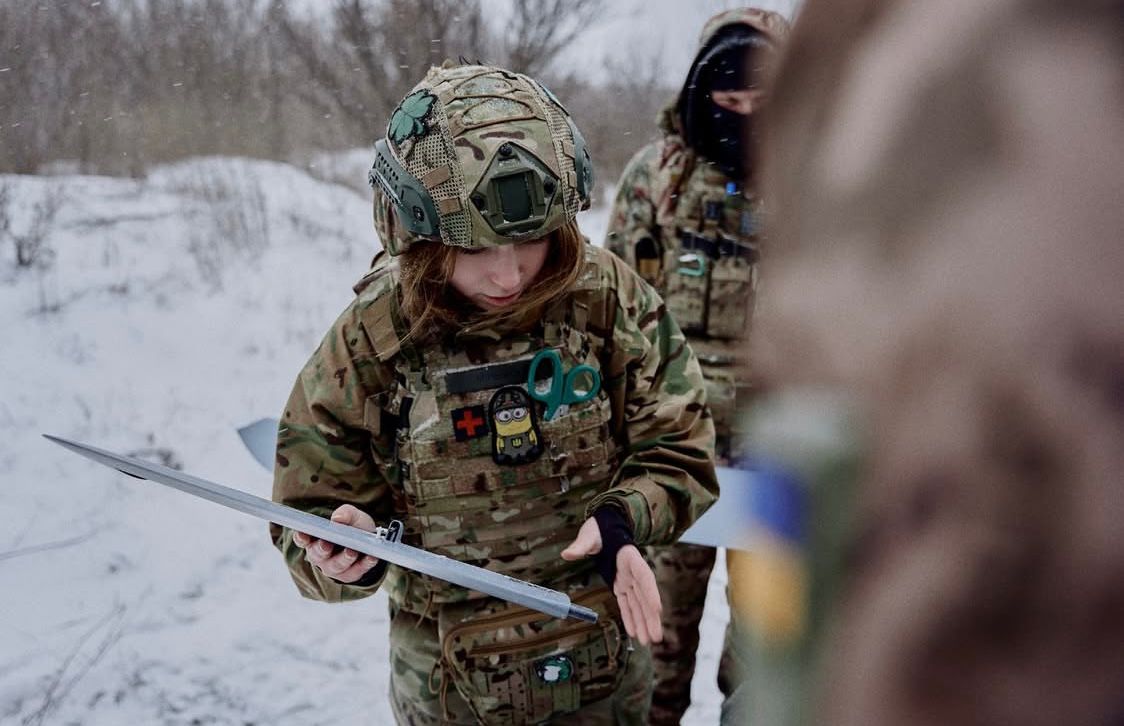
THERE’S NO USE IN THE MILITARY FOR A PERSON WHO CONSTANTLY COMPLAINS AND HIDES
- To wrap up, let’s touch on the gender issue. A lot of things have been addressed already, including women’s military uniforms. But what is the situation with access to medical care, for example? And with being treated as a professional?
- I think it all depends on the unit. In our battalion, there is no prejudice toward women. For example, I once had cystitis, and no one forced me to stay on the positions. I was given medical help, had an ultrasound scan, was prescribed treatment, and was allowed to rest. So they treat servicemembers’ health responsibly. My rights aren’t restricted in other ways either, and we work on equal terms. Of course, I’m not claiming I can lift an antenna or an EcoFlow, but I can help the guys with it.
- You already have significant wartime experience and can speak as a servicemember. We talked about the atmosphere in Ukrainian communities in Germany. But what do you think about public sentiment inside Ukraine itself? I mean the problems with mobilization and the ways people justify it when they don’t want to serve.
- People are getting tired of the war, both the military and civilians, who are also dying. Yes, there are civilians who forget about the war. But I’m not fighting for them; I’m fighting for people who care about our country and will keep building it. I never get drawn into a "shitstorm"— these nasty fights between the military and civilians.
There are people who don’t want to join the army, but I can’t force them to do it. In the military, a person without motivation is useless — it’s better they don’t go and don’t get in the way.
- There are entire units with a catastrophic shortage of personnel. I expect it would be hard for them to agree with you.
- A lot depends on a person’s attitude. If there is no motivation or willingness to do one’s duties, you can’t force someone to work. People like that become a problem for the unit, because those who work at full capacity can suffer because of them. How is someone useful if they constantly complain, are afraid, hide, and avoid responsibility? In the army, the main thing is trust — knowing that in a critical moment they’ll have your back, and that you can rely on your comrades-in-arms. It’s doubtful that someone who dodged service and ended up in the military under coercion will be ready to take risks for others. It’s hard to rely on such people, and they don’t bring much value to the army.
- Have you thought about what you will do after the war? Do thoughts like that come to you at all?
- It’s important for me to get a higher education, preferably abroad. Right now I’m studying languages, and I want to become a veterinarian. Living only for the war would be hard for me.
Unmanned Systems Company, 1st Separate Medical Battalion
For the needs of the Unmanned Systems Company of the 1st Separate Medical Battalion:
🎯 Goal: UAH 1,000,000
🔗Link to the Monobank jar
https://send.monobank.ua/jar/9HgeVSPgzf
💳 Jar card number
4874 1000 2794 9059
Olha Skorokhod, Censor. NET


