



Personnel "kaleidoscope" in "turbo mode". What is Zelenskyy plotting?
It appears the president has decided to carry out major personnel reshuffles in "turbo mode" in the new year, describing them as "internal changes in Ukraine." The first high-profile move was the appointment of Kyrylo Budanov as head of the Office of the President. Zelenskyy explained the decision as a need to strengthen Ukraine’s team for peace talks. For the same reason, he appointed diplomat Serhii Kyslytsia, who has already taken part in the negotiation process, as first deputy to the newly appointed head of the presidential office.
Oleh Ivashchenko, who previously headed the Foreign Intelligence Service, has taken over as head of the Defence Intelligence of Ukraine (HUR). Changes are also planned at the top of the Ministry of Defence: a submission will be sent to the Verkhovna Rada to appoint Mykhailo Fedorov, the current head of the Ministry of Digital Transformation, as defence minister, replacing Denys Shmyhal. The State Bureau of Investigation is also set to be overhauled, with the president’s team drafting a new bill to revamp the agency. For several days, the possibility of dismissing Security Service of Ukraine (SBU) chief Vasyl Maliuk "hung in the air", and even combat commanders spoke out in his defence. However, this did not stop Zelenskyy: on Monday, he appointed Alpha special unit commander Yevhen Khmara as acting head of the SBU. Maliuk remained within the structure to continue combat duties.
"EVERYTHING NOW MUST BE SUBORDINATED TO ONE GOAL – VICTORY IN THE WAR"
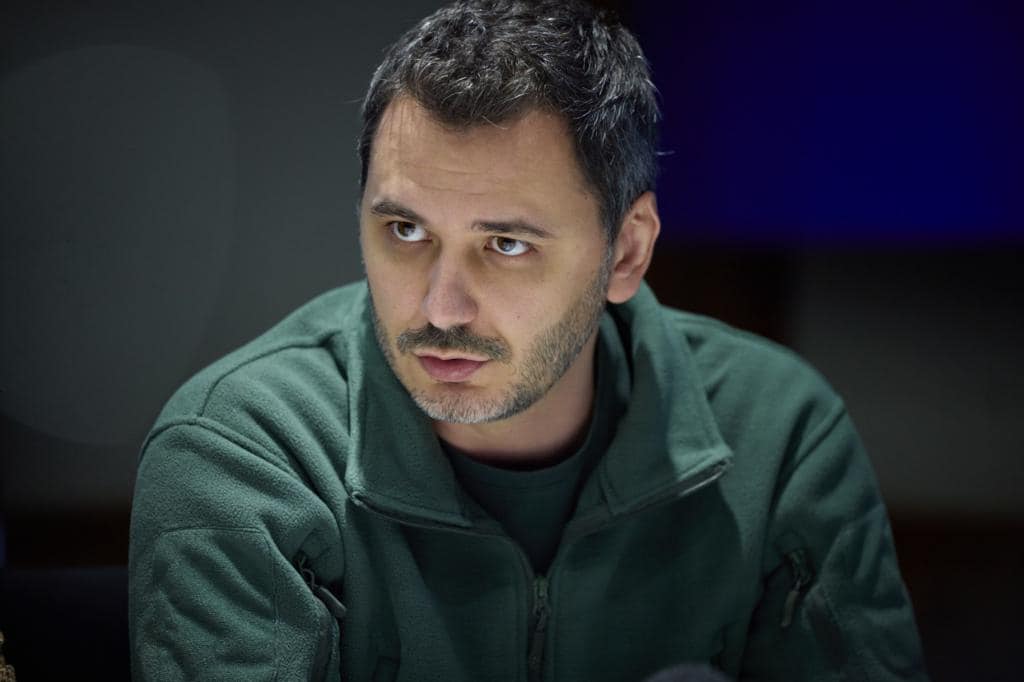
Yehor Cherniev
Yehor Cherniev, deputy chair of the Verkhovna Rada Committee on National Security, Defence and Intelligence and an MP from Servant of the People, believes the president is using these changes to refocus on military matters:
"As the saying goes, if you want peace, prepare for war. We understand that the Russian Federation, unfortunately, is not particularly capable of negotiating in good faith. Our task is to hold out for as long as possible, demonstrating, including to the United States, both our ability to negotiate and our capabilities on the battlefield. We understand that while talks are ongoing, we still have to fight and continue defending our country. It would be good if the war ends in a month or two and some peace agreements are reached, ones that deliver a just peace, not just any peace. But what if that does not happen? That is why, several months ago, we stepped up efforts to secure partner support, knowing we lack funds under the current conditions. That is also why the European Union decided to provide loans to Ukraine as well.
We also understand that the United States has the leverage to push Russia into negotiating in good faith. To that end, we need to hold out until such a decision is made. The Kremlin has already made several mistakes, with those fake "attacks" on Putin’s residence and other planted stories and provocations. And all of this is being seen in the United States. That is why, in my view, sanctions will be tightened, becoming one of the mechanisms for compelling Russia to peace. But we do not know when this will happen or how long it will take. That is precisely why we now need to focus all efforts to the maximum on strengthening our defence capability and our capacity to wage war.
As for Maliuk’s dismissal, I do not know what prompted the president’s decision. This is his quota. But this issue still has to go through a vote in the Verkhovna Rada. When it is brought to the plenary chamber, we will make a decision. Neither I nor most of my colleagues, nor many Ukrainians, have had any questions about the Security Service’s work over the past few years. I mean, first and foremost, its military component. We have seen many brilliant operations carried out, such as "Spiderweb." But as I understand it, the president now has a different vision, perhaps there is an intention to focus the Security Service primarily on these functions. If Yevhen Khmara is appointed to head the SBU, it will confirm those intentions. Our faction has not yet reviewed these personnel changes because we are learning the information, so to speak, "on the fly." Also, before the vote, we need to speak at a committee meeting with the candidates for both the SBU chief and the defence minister. Will there be votes to dismiss Maliuk? We will see on the floor. Indeed, Vasyl Vasylovych enjoys tremendous support and respect not only in the military, but also among MPs, including within our committee. At the same time, I think Khmara could also secure the necessary number of votes for his appointment. After all, he has proven himself an effective head of the Alpha unit, whose work has also raised no questions throughout this time.
As for the defence minister, I would note that Shmyhal was a methodical, process-driven figure in this role. He began putting processes in place which, I hope, will be continued by Mykhailo Fedorov, who more or less understands what the key priorities are right now. His appointment is driven primarily by the need to boost the technological capability of Ukraine’s Defence Forces, move away from Soviet-era standards, and transition to a modern-type army. And in this context, civilians with vision and experience in digitalisation may be a better fit. At the same time, we have to understand that technology is not the whole army. There are many components, personnel management, weapons, military education, and much more, that need comprehensive reform. So I hope these changes will indeed strengthen the army. This week, as I have said, we will meet both with Fedorov and with Shmyhal to discuss the need to preserve the reforms that have already been launched, so we do not lose the sound groundwork that has been laid. Because a lot is still in progress there, including digitalisation and procurement, among other areas. It would be good to add to this the technological approach that Mykhailo brings, having proven his effectiveness as minister of digital transformation.
Budanov’s appointment points to a comprehensive focus on military matters and a drive to direct all effort, including internal resources, toward the needs of the Armed Forces. Everything now must be subordinated to one goal, victory in the war. With strong ties to our partners, the United States, and with his involvement in peace talks, Budanov may be able to put these processes in order internally. The focus is, to an even greater extent, on the military dimension. In other words, both the Office of the President and the Security Service are being refocused primarily on the military component.
As for the State Bureau of Investigation (SBI), I do not know what plans the president has in mind. It is no secret that this agency has faced complaints from both businesses and activists. The Verkhovna Rada has also had questions about it, in particular regarding AWOL cases. I think this requires a comprehensive approach and a coherent vision of how the SBI should operate overall. But I cannot say whether this is another "piece of the puzzle" in strengthening the country’s defence capability. Only the president can see how this fits into the overall logic and into his broader worldview. But once the bill is submitted to the Verkhovna Rada, it will be considered by the профильний committee, and then we will decide on the floor.
"I WOULD LIKE LAW ENFORCEMENT AGENCIES TO PAY LESS ATTENTION TO THE ECONOMIC BLOC AND FOCUS MORE ON COUNTERING THE ENEMY."
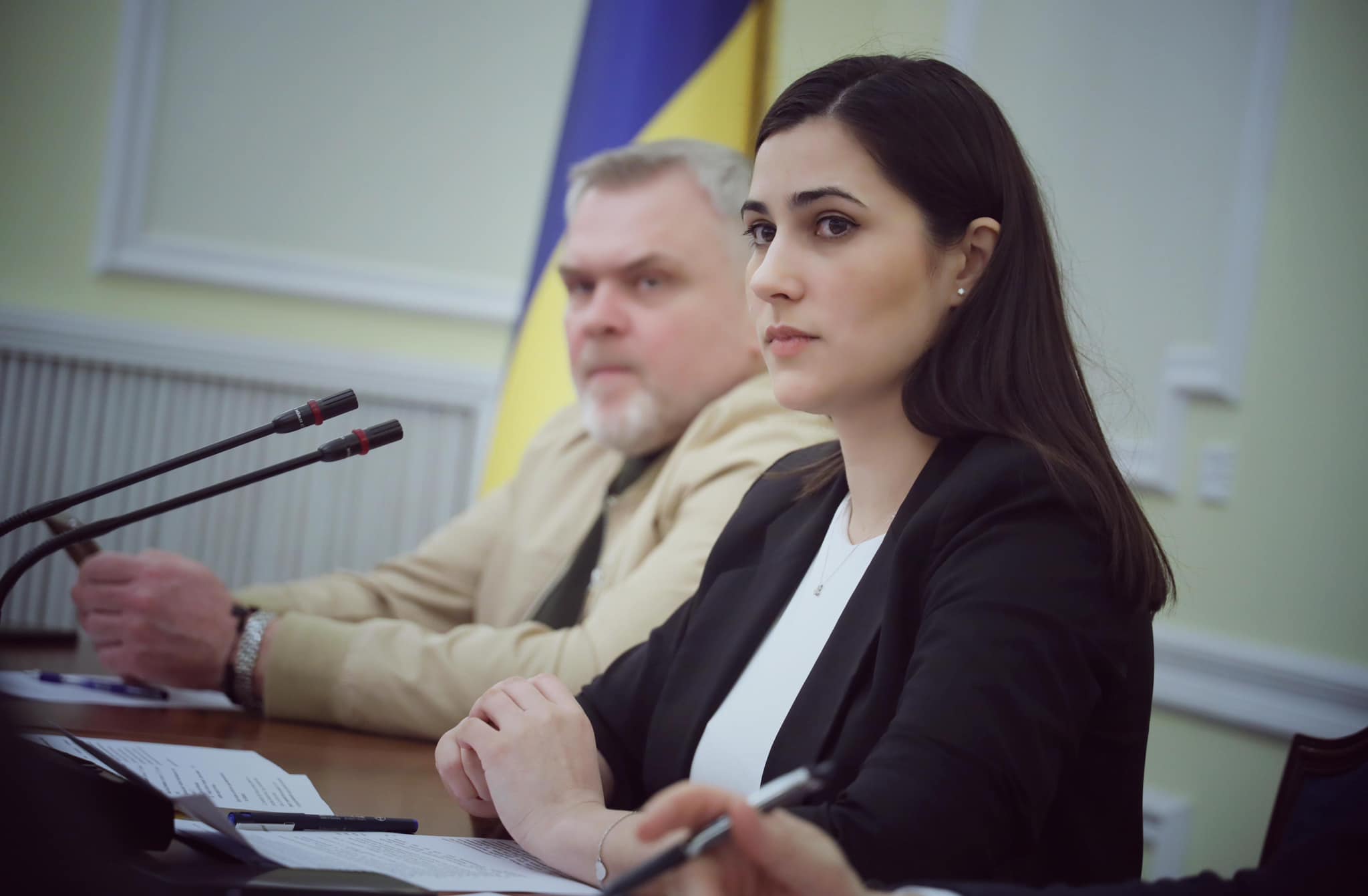
Halyna Yanchenko
Halyna Yanchenko, a party colleague of Yehor Cherniev and head of the Verkhovna Rada Temporary Special Commission on the Protection of Investors’ Rights, notes that the current personnel changes do not affect the economic dimension:
"When we talk about any country shifting onto a "wartime footing", first and foremost, it has to be about the economy. That means setting priorities for the defence industry, maximising spending to support the defence-industrial complex, and so on. This year we made some progress: in the second half of 2025, two bills were passed. But in reality, there are still many draft laws that have already been prepared and are simply sitting in parliament, still not put to a vote. So, in my view, these personnel changes do not affect the economic component and are unlikely to add any clarity on that front. Although, in fact, the Ministry of Defence and the Ministry of Economy could have done much more together much earlier.
"When we talk about putting the economy on a wartime footing, it is not a good sign that during three years of war we had grant programmes for virtually every kind of business, like berry planting, yet there were no grants and not even preferential loans for the defence industry. For example, those preferential loans for weapons production were introduced only a year ago. I do not see how the new personnel appointments in this sector will contribute to a deeper economic understanding of how the country’s defence capability should actually be built up. If I am wrong, I will be glad. But I want to stress again that at least five bills that could significantly help Ukraine’s weapons manufacturers are still registered in the Verkhovna Rada, yet they were blocked for a long time by the Ministry of Defence.
Will the reshuffle of the security bloc affect economic issues? I would very much like law enforcement to stop "hounding" arms manufacturers." Because over the past six months, the Temporary Special Commission I chair has received a whole series of appeals not only from manufacturers, but from entire sectors that supply our army. So I would like law enforcement agencies to pay less attention to the economic bloc and focus more on intelligence, counterintelligence, and countering the enemy. Is there any hope for that? As the saying goes, hope dies last. So we will see how it goes.
"THERE IS A DESIRE TO CREATE THE APPEARANCE THAT SOME CHANGES ARE BEING INTRODUCED, BUT IT IS JUST AN IMITATION."
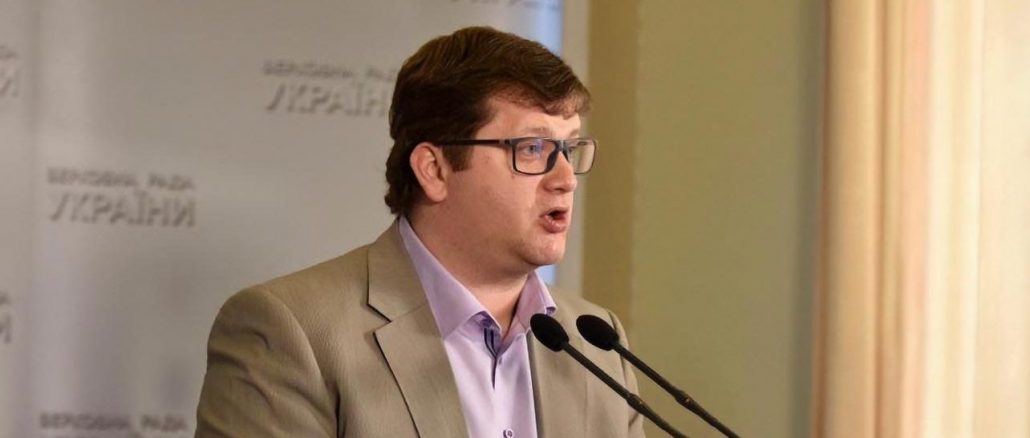
Volodymyr Ariev
Volodymyr Ariev, an MP from the European Solidarity faction, calls the president’s personnel reshuffles a "fifteen puzzle":
"There is a joke: a farmer comes to a rabbi and says, ‘My chickens keep dying — give me some advice.’ The rabbi replies, ‘Cut paper into little squares and hang them over the entrance to the henhouse.’ The farmer comes back: ‘Half the chickens died this week. Rabbi, what should I do?’ The rabbi says, ‘Make triangles out of the squares.’ A week later, the farmer reports that all the chickens have died. The rabbi replies, ‘What a pity, I had so many more ideas!’" That is what these appointments remind me of. Instead of decisive solutions, we are once again being offered some kind of personnel "fifteen puzzle." What we should be doing is having a serious discussion about what comes next, how we survive as fighting continues, which Russia has no intention of stopping, while our resources keep shrinking; when mobilisation has failed; when funding for the Armed Forces and the defence industry is under a big question mark; and when our Western partners raise the issue of corruption at every meeting, something that could affect financial support in the future if there are no serious changes on that front. If reshuffles like this happen every six months, we will definitely get nothing new, and the problems will not go away. What is more, they will only get worse.
Look, the SBU has a commercial wing that shakes down businesses or carries out orders such as countering NABU, and it also has a combat wing that runs operations like "Spiderweb." When you have a chief who can at least plan these unique special operations well, why touch him? The same applies to the HUR. If HUR is conducting effective operations, there is no need to move its head. Because it is a military structure. Moreover, we are talking about special services whose organisation is a bit more delicate than that of the army. An unjustified change of leadership in such a case demotivates personnel, which can affect the quality of countering the enemy. I also do not understand the logic behind changing the defence minister. Shmyhal has been in the job for six months. In that time, we have not seen anything breakthrough, but there has been nothing catastrophic either. Society needs an explanation for why this is happening. We have not heard one. There is simply a desire to create the appearance that some changes are being introduced, but it is an imitation. And right now we need a change in the governance structure, especially in defence, energy, and, more broadly, the key lifeline functions of the state. Instead, we are still operating in a "czar" mode rather than as a European state. If we keep this mode of one-man decisions, "I decided so, so let’s move people up and down the power vertical and across the horizontal", nothing worthwhile will come of it. At best, it will only create additional chaos, which will not help us defeat an enemy that is preparing to intensify combat operations. Everything will be thrown off balance until the new leaders get up to speed. I have the impression that Zelenskyy, playing this "czar" role and making such decisions, is thinking not about effectiveness but about optics, so that later he can show he has not given up the fight for power in elections, whenever they may be; that he controls it; and that he should not be written off politically. He wants to show that he remains the top figure and the most "great." In fact, this is a deeply flawed approach: it does not unite society, but creates imbalance in the structures I mentioned. This is definitely not what Ukraine needs today.
It is interesting where the promised coordination on nominations is, the one Zelenskyy spoke about after the corruption scandal. He gathered his team, after which Arakhamia said nominations would be coordinated between the president, the Cabinet of Ministers, and the Verkhovna Rada. We have not seen any such coordination or even any attempt to discuss it with the Verkhovna Rada. He simply informs them. So the approach has not changed. This is a "Russian world" method, because in this case, the Constitution is not working. Under the Constitution, Ukraine is a parliamentary-presidential republic. And parliament is no longer fully and completely presidential, precisely because internal processes have long undermined trust in the head of state. And all these processes point only to the demoralisation of the parliamentary majority. However, instead of building unity and creating common rules the country needs, Zelenskyy is trying to keep ignoring the Verkhovna Rada and continue acting on his own. This will definitely not lead to anything good. At most, to yet another crisis, one that has been postponed for now. But crises delayed in time do not improve governance decisions, nor do they substitute for the systemic changes the country needed not just immediately, but as of the day before yesterday.
At the faction meeting on Monday, we did not formally decide how we would vote on these reshuffles. But the general mood is that we will not support any personnel decisions (neither dismissals nor appointments). Because we do not see any logic or sense in them, nor any reasons that would prompt us to back them. The only thing that could sway us is improved effectiveness on defence and the defence industry. At this point, no one sees that.
What do the appointments of Budanov and Kyslytsia mean? The current first deputy head of the Office of the President can be described as a professional. Although he is, let’s put it this way, rather condescending toward others, he knows his job. There is an important factor with Budanov: he has the trust of Western partners. But they trusted him specifically as an intelligence chief. At this point, we cannot say with certainty whether they will treat him the same as Zelenskyy’s envoy. Unless he can carry it through on personal contacts. Still, I think the president should have enough wisdom to delegate the negotiating tracks with the Americans to someone who is not so closely tied to him. Because Zelenskyy is an irritant for the U.S. administration. That is just how it has turned out. It simply needs to be taken into account, and other options should be sought. He keeps banging his head against a wall, although now he is trying to put up a "partition" in the form of someone who, he believes, can achieve a better result in building trust. But the wall does not disappear because of that. In any case, one-man decisions still remain the dominant feature of President Zelenskyy’s style of governance. So here, as they say, it’s fifty-fifty: it may produce a positive result, or it may not.
The president has also announced a bill to revamp the State Bureau of Investigation (SBI). It is almost scary to read it. Maybe I am biased on this issue, but everything that has come from Bankova lately regarding law enforcement or security bodies, especially NABU and SAPO, has, to put it mildly, not inspired optimism. But first, we need to see what is being proposed. Although questions are already arising. What about the Prosecutor General’s Office? And what about reforming investigations within the National Police? Security agencies also now play a key role in the negotiation track, including on agreements related to accession to the European Union. If the model differs from the current one, where the SBI is a closed structure that can investigate and oversee itself, as we saw in the aftermath of "Mindichgate", and if truly transparent selection mechanisms are proposed, then of course we will support the idea that such changes are needed. But for that, we need to review the draft proposals and only then draw conclusions. At the very least, I do not think it will be possible under the current circumstances to push through some nonsense like expanding powers, as was done with the prosecutor’s office.
"NOBODY DISPUTES THAT REFORMS IN THE SBU NEED TO CONTINUE."
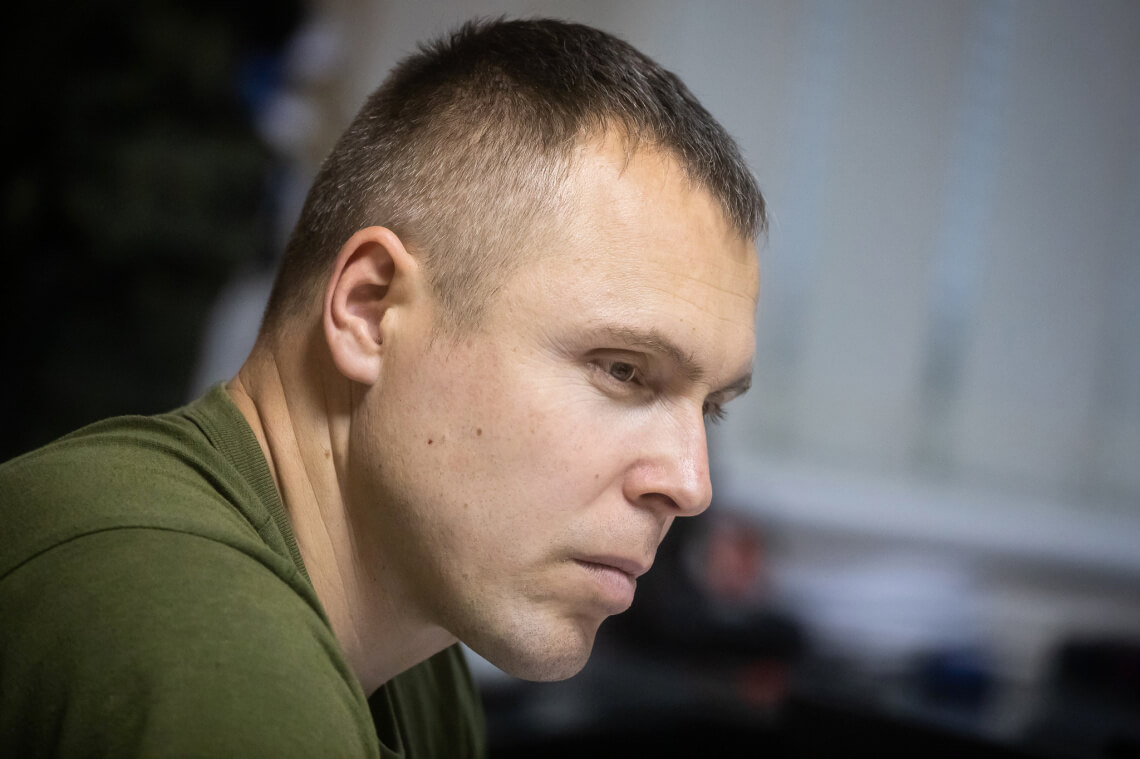
Roman Kostenko
Roman Kostenko, a Holos lawmaker, secretary of the parliamentary committee on national security, defense and intelligence, and an SBU colonel, stresses that any change in the Security Service of Ukraine’s leadership must be considered by parliament on the president’s submission:
- Under the Constitution, the Verkhovna Rada votes to appoint or dismiss the head of the SBU upon the president’s submission. Yes, there was a precedent in 2022 when Zelenskyy removed Ivan Bakanov from the post by decree, citing improper performance of official duties that led to grave consequences or created such a threat. But after the Crimean Bridge attack, efforts to secure control over the Black Sea, the destruction of more than 30% of Russia’s oil refining sector, and Operation Spiderweb, can such negative wording really be applied to Maliuk?! This is not that case. Even if Vasyl Vasylovych has decided to submit his resignation, I personally will not vote for his dismissal. That is my position. Because under his leadership, public trust in the special service has been at its highest level throughout the country’s entire period of independence. And one of the key tasks for the head of such a structure is to ensure it does not become some kind of FSB or KGB. Of course, no one disputes that reforms in the SBU must continue. But the progress already made and putting the service on the right track will be a foundation from which his successor can move forward. If, after Maliuk’s dismissal, General Khmara is nominated, that candidacy should be supported, as he is one of the best options at this moment. I know him well. We came to Alpha at roughly the same time and served in parallel positions. He is a highly professional person with strategic thinking and an exceptionally decent man. He has taken Alpha to a new level. Most of the SBU’s combat operations that we see are carried out by this unit.
I have no information on whether it is true that Budanov pushed for Maliuk’s resignation. I have heard various rumors, but I cannot confirm or refute them because I am not in the loop. But overall, the situation is very strange: someone with such a high rating and authority within the security services is being gotten rid of so easily. In my view, this is unprofessional. I do not know what "undercurrents" are pushing the president to take such a decision, removing an experienced professional who has raised the service to such a level.
As for Budanov’s appointment, the president addressed the issue by noting that he wants to strengthen the negotiation track. And that is about your position, what you need to convey to the world, your connections and how you are perceived from the outside. We know that Budanov has contacts abroad that could be brought into the talks. The key question is: what exactly do they want to negotiate? In his address, Zelenskyy spoke about "ten percent" that will determine the fate of peace. I hope this will not come down to surrendering territory, but rather to protecting national interests and achieving an outcome in Ukraine’s favor.
At the same time, I view it positively that Budanov has been replaced as head of the Defence Intelligence of Ukraine (HUR) specifically by Ivashchenko. He is a personnel, professional intelligence office, someone who came up through the agency and for a long time served as Kyrylo Oleksiiovych’s deputy. When he led the Foreign Intelligence Service (FIS), which falls under the Verkhovna Rada’s oversight, we saw changes for the better under his leadership. There is a chance for good results here. But it is now important not to lose the FIS. He had a strong team there, and that is what we should build on. After all, the FIS is a serious instrument: it shapes our positions abroad and lays the groundwork for the Ministry of Foreign Affairs (MFA), including on sensitive, non-public tracks. It was undervalued largely because previous national leaders lacked experience, so people were sent there "into exile." That is not how it should be. For example, the CIA in the United States is an intelligence service of the same kind, and it plays a key role in the country’s intelligence architecture. In Ukraine, it has been undervalued. Only now has it begun to rise. And in times as difficult as these, this process must continue. That is why, when the Verkhovna Rada was adopting the budget, I fought to secure funding for them to develop their technical and operational capabilities.
As for changes at the Ministry of Defense, I do not agree with the dismissal of Denys Shmyhal, because we have finally seen systematic work and the right approaches there. There is a very strong and professional team of deputy ministers there. They have only just found their rhythm and now another replacement. No matter how good a manager Fedorov may be, he will still need time to find his footing within the system. In my view, it is somewhat unprofessional to say that a minister is needed solely to make the army more technological. There are many other criteria. It must be motivated, properly managed, and, overall, fully supplied with everything needed for war and adequately staffed. Technological capability is just one area, handled by the relevant deputy minister. The minister, however, must see the whole picture. So much more will be expected of Mykhailo than simply creating certain programs, including in the UAV sphere. Yes, drones are important too. But overall, different, more fundamental knowledge is required here. I have no doubt that he will get up to speed and manage, but I am concerned about the loss of time which we already have very little of. Whether the faction will vote for this personnel rotation is something we will still discuss and decide. Personally, I will definitely not support Shmyhal’s dismissal. Not for political reasons. I simply see constructive work and do not want to lose the results. It is the beginning of the year. Plans have been drawn up. Procurement needs to be carried out. I think many people remember how the head of the Defense Procurement Agency (DPA) was replaced last year, after which several months were spent getting processes up and running: manufacturers increased their capacities, but a new team came in and began bringing in their own people. Fortunately, operations there are now on track. But for a time there was chaos. That must not be allowed to happen.
As for the overhaul of the State Bureau of Investigation (SBI), we will consider the matter within the faction once the president submits the promised bill. My colleague Yaroslav Zhelezniak has been keeping a close eye on this issue for a long time, so we will review it in detail.
"THE PRESIDENT IS BUILDING HIS OWN POWER VERTICAL WITHOUT YERMAK ANYMORE"
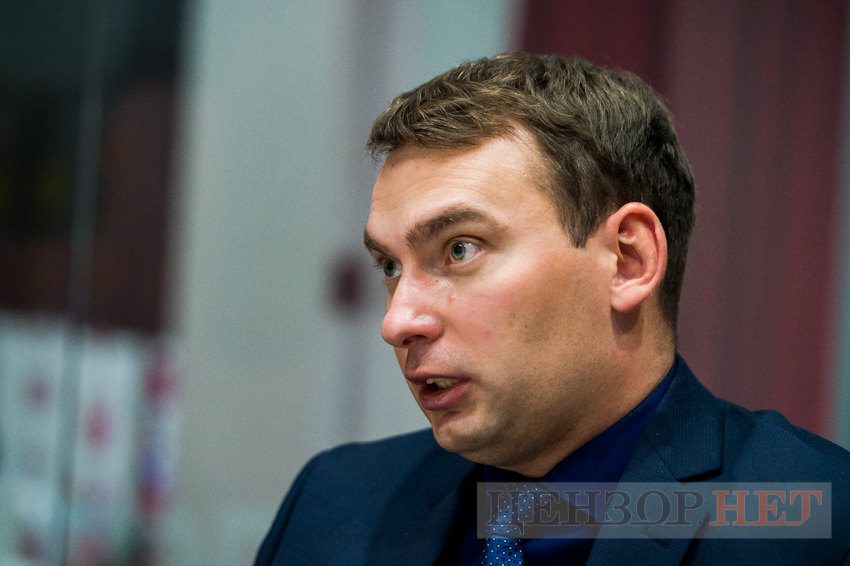
Yaroslav Zhelezniak
Yaroslav Zhelezniak is one of the co-authors of a bill aimed at improving the work of the State Bureau of Investigation (SBI), which provides for a reset of the agency and a change in the procedure for appointing its head in order to eliminate a contradiction with the Constitution. The lawmaker suggests that the preparation of the president’s version of the bill is a pre-emptive move:
"Theoretically, if we lived in a rule-of-law state, the president would not be able to register his own bill at all. But since the rule of law is somewhat shaky here, he will simply register his document and that will be it."
"I will share my own interpretation and version of this initiative, which I would still like to have confirmed by someone else. I think I more or less understand it correctly. The president can indeed summon Sukhachov at any moment and say: ‘You are no longer the head of the SBI, you are now an ambassador to some country. Someone else has been appointed in your place. This entire personnel change would take, figuratively speaking, three seconds. So clearly, some kind of game is being played. I think he is receiving the same signals as I am, that this will be a demand from the Europeans. And he probably also needs to show that he is going to do something about the SBI. So, in order to demonstrate this constant and unstoppable reshuffling of all law enforcement agencies, he chose this path. But while the bill is being drafted, while we argue in parliament over whether it is acceptable, while we vote, organize a new competition and form a commission, Sukhachov will remain in office until the summer. And by then, his term of office will be coming to an end anyway. If Zelenskyy replaces him, some kind of competition will have to be held. Obviously, international partners will demand that the process meet established standards. So, accordingly, the president is simply playing ahead of the curve in this story."
Take note: Zelenskyy keeps everyone who is loyal to him and replaces the rest. What is his attitude toward the SBI? It is said that he was dissatisfied with their handling of the "Mindichgate" case and with how they responded to it.
So what is happening overall right now? The president is simply building his own power vertical without Yermak. Accordingly, the system is being reshaped. But this is not about the country being put on a "war footing." We have simply remained in the electoral cycle longer than necessary. The whole approach is essentially aimed at continuing to govern the country somehow while there are no elections. When elections do take place, it will be an entirely different system.
"THE SBI ISSUE WAS OBVIOUS: THERE ARE MANY COMPLAINTS ABOUT THE BUREAU"
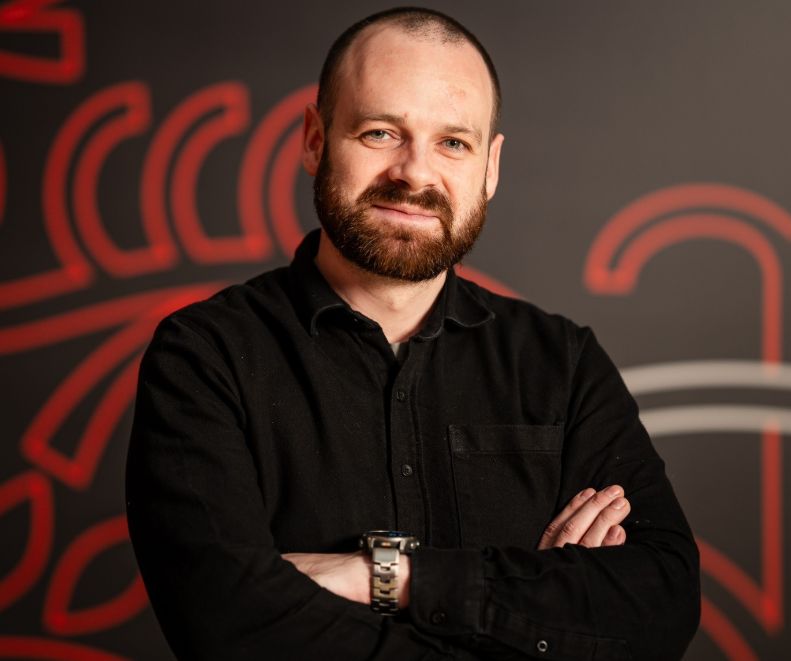
Yevhen Krapyvin
In 2019, there were already attempts to reboot the SBI, recalls lawyer Yevhen Krapyvin, head of the Rule of Law program at the Laboratory of Legislative Initiatives:
"But nothing came of it. The SBI has not been around for very long, it was established in 2018. So when the institution was first ‘rebooted,’ it had been operating for only a year. At the time, its governance model was a kind of triumvirate: the director and his deputies. Under the law, they were interchangeable and took turns running the Bureau. Because there were many questions and complaints about them, including over the so-called ‘Truba tapes’, the outcome was that, bypassing the official dismissal procedure prescribed by law, which requires specific grounds (a disciplinary offense or a criminal conviction), transitional amendments to the law were simply used to state that he was dismissed from office. Why do I stress this point? Because later, in 2021, the Constitutional Court of Ukraine issued a ruling on police certification, and in 2023 on prosecutors’ certification, in which it stated that parliament does not have personnel powers and cannot dismiss people by bypassing official procedures. Fortunately, this is now impossible. That is, we cannot write into a new law, for example, that Sukhachov is dismissed from his post. On the other hand, since this is the president’s team, I believe he could submit a resignation of his own accord.
This entire story that is unfolding now did not begin today. From time to time, there were complaints and questions regarding the SBI in 2023–2024 as well. In 2025, the practice of conducting searches without an investigating judge’s warrant, followed by subsequent "legalization," became widespread, a practice the SBI was particularly fond of using. Not only lawyers began to complain about this, but a much broader range of people as well. When the "roadmap" on the rule of law was being drafted (our key European integration document approved by the government in May last year), the measure addressing an audit and analysis of the SBI’s effectiveness was scheduled for 2026 or 2027. Why? Because initially the idea was to reform the Bureau as a whole, but during the revision stage, negative wording was pushed back by the SBI. The basis for this measure is the EU enlargement policy, namely the annual Enlargement Reports published each autumn. That is one procedure. Running in parallel was another one, the screening, meaning an assessment of Ukraine’s legislation for compliance with EU law. Based on its results, a report was issued a year ago. It is closed and non-public, as required by the procedure. The report explicitly stated that the SBI needs to be rebooted, following the model used for the Economic Security Bureau. By now, everyone knows what that entails and remembers how that notorious law was adopted. In fact, it contains only a change in the procedure for appointing the head, in favor of a selection commission with a decisive vote held by its international members. That is, the SBI director is currently also selected through a competition, but without such a decisive vote. Moreover, the delegation procedure allows the government to appoint not necessarily international experts, but essentially anyone. There is another point, the certification process. At the Economic Security Bureau, it was quite strict and applied to everyone working there. It was launched on November 7. The process will last 18 months: first managers, then all other staff. This idea was included in the screening. The SBI partially "pushed it back", which is why it did not make it into the government plan in that form. However, in February, Yaroslav Zhelezniak made public that such a recommendation does exist. Overall, I repeat, it is not public: that report has neither been published nor leaked online.
After the story with Shabunin, as well as with the Security Service of Ukraine, the prosecutor's office, and the attack on anti-corruption bodies, criticism of the SBI intensified. As a result, Yaroslav and Anastasia Radina registered a corresponding bill in August. They said directly that there was a non-public recommendation from the EU, but we are playing ahead of the curve. And in November, there was an official report on expansion for 2025, which explicitly states that the SBI should be reformed and its leadership should be selected through meritocratic procedures. This means that competitions for all leadership positions should be held according to rules that provide for moderate public involvement.
Why did the president take up this issue amid the current wave of personnel reshuffles? Probably because it was obvious: there are many complaints about the SBI. Just look at the "10 priorities" of Marta Kos and Taras Kachka, which were announced in Lviv in December. I think the SBI was also mentioned there.
Overall, an initial step involving a change of leadership under rules similar to those used at the Bureau of Economic Security, including a certification process, is a good idea. It is indeed something that should be gone through. But is this the entire reform of the State Bureau of Investigation? Definitely not. The agency has many problems. This also concerns what it is actually focused on. Its jurisdiction covers an exceptionally broad range of crimes. At present, it is effectively overloaded with military-related cases — which is understandable given the full-scale war. All remaining resources are spent on mid-level corruption, typically bribes of one to two thousand dollars. Even then, the efficiency is very low: only a limited number of cases ultimately result in convictions.
What the State Bureau of Investigation was originally designed for (combating torture, unlawful detentions, and the fabrication of evidence, that is, crimes against justice and official misconduct) has become its lowest priority. This is despite the existence of a specialized unit dealing with torture cases. The unit was created only recently, and the Bureau is now trying to present it as an area of active work.
Therefore, beyond personnel issues, there is also the question of the Bureau’s jurisdiction, what it primarily focuses on, as well as its institutional capacity. For example, the Bureau of Economic Security established so-called analytical units and introduced analyst positions to work more extensively with databases and registries, prepare analytical briefs, and only then use this material within criminal investigations, particularly those involving business. This is, in essence, a broader trend that now applies to all agencies at the level of state policy. There is the concept of intelligence-led policing. There are European tools such as SOCTA — the Serious and Organised Crime Threat Assessment. And there are a number of other approaches that assume analysts should first process large volumes of data, with SBI investigators stepping in only afterward. This list could, in principle, be extended further. It also includes issues of accountability, internal control units, and the role of public oversight councils. A wide range of such measures is scattered across various documents and should either be consolidated within this draft law or moved into a separate one. However, given how parliament operates, waiting for a second draft law is often simply futile. Let me remind you that in 2019, a law on priority measures to reform the prosecutor’s office was adopted. There was, of course, no law on secondary measures. At the same time, I understand that there is currently no consensus on drafting the entire package of changes in a single document.
Therefore, I expect the presidential draft law to be a variation of what was implemented at the Bureau of Economic Security: changes to the appointment procedure and the introduction of something akin to certification. This may be a more "light-touch" approach, possibly applying not to everyone, but only to senior managers, or only to those against whom complaints have been filed. Beyond that, it is difficult to predict. But to reiterate: if one combs through the existing documents, the comprehensive strategic plan for reforming law enforcement agencies, the rule of law roadmap, and the government action plan for implementing the enlargement policy, there are many instruments in various forms. These include analytical units, internal control, clarification of jurisdiction, public oversight councils, and so on. However, they apply to all law enforcement bodies: the police, the Bureau of Economic Security, and even NABU. Each implements them as best it can, and as it sees fit. So why was the problem particularly acute with the State Bureau of Investigation? Because it strongly resisted and consistently emphasized across all platforms: look, we are a newly established agency, operating for only seven years. Our head was selected through a competitive process, so what are the complaints? Our law broadly mirrors what exists at the Bureau of Economic Security or NABU. And in general, I agree with them to the extent that new agencies are indeed similar in many respects. Ultimately, everything comes down to personnel, who is in charge and how. It also depends on how the agency responds to complaints and grievances. NABU, for example, has an internal control unit that reviews them. The Bureau of Economic Security has also become more active in this area recently. The SBI, by contrast, has almost no such practice. In other words, no matter how many complaints are filed, for instance, over searches conducted without court warrants, everything effectively "slides off" them. That is why I believe all these measures should be implemented simultaneously: the personnel and structural changes I mentioned, and possibly a certain audit as well.
Olha Moskaliuk, Censor.NET


