



"We will initiate the expansion of grounds for the sale of assets belonging to traitors, collaborators, and citizens of the Russian Federation," Acting Head of ARMA, Yaroslava Maksymenko
For ten years, the state essentially did not understand what exactly the Asset Recovery and Management Agency (ARMA) was managing: over 100,000 seized assets accumulated over this period were counted merely as "items," were not always properly described, and were not taken under effective control. Therefore, this state body, which has repeatedly found itself at the epicenter of scandals, is now undergoing a systemic reboot and for the first time is conducting a full identification of assets transferred by court decisions.
About how this situation developed, what the reform should change, and what will happen next with the seized assets, the Acting Head of the Asset Recovery and Management Agency, Yaroslava Maksymenko, told in an interview with "Censor.NET". But we started the conversation with the loudest corruption scandal known to the public as "Mindichgate."
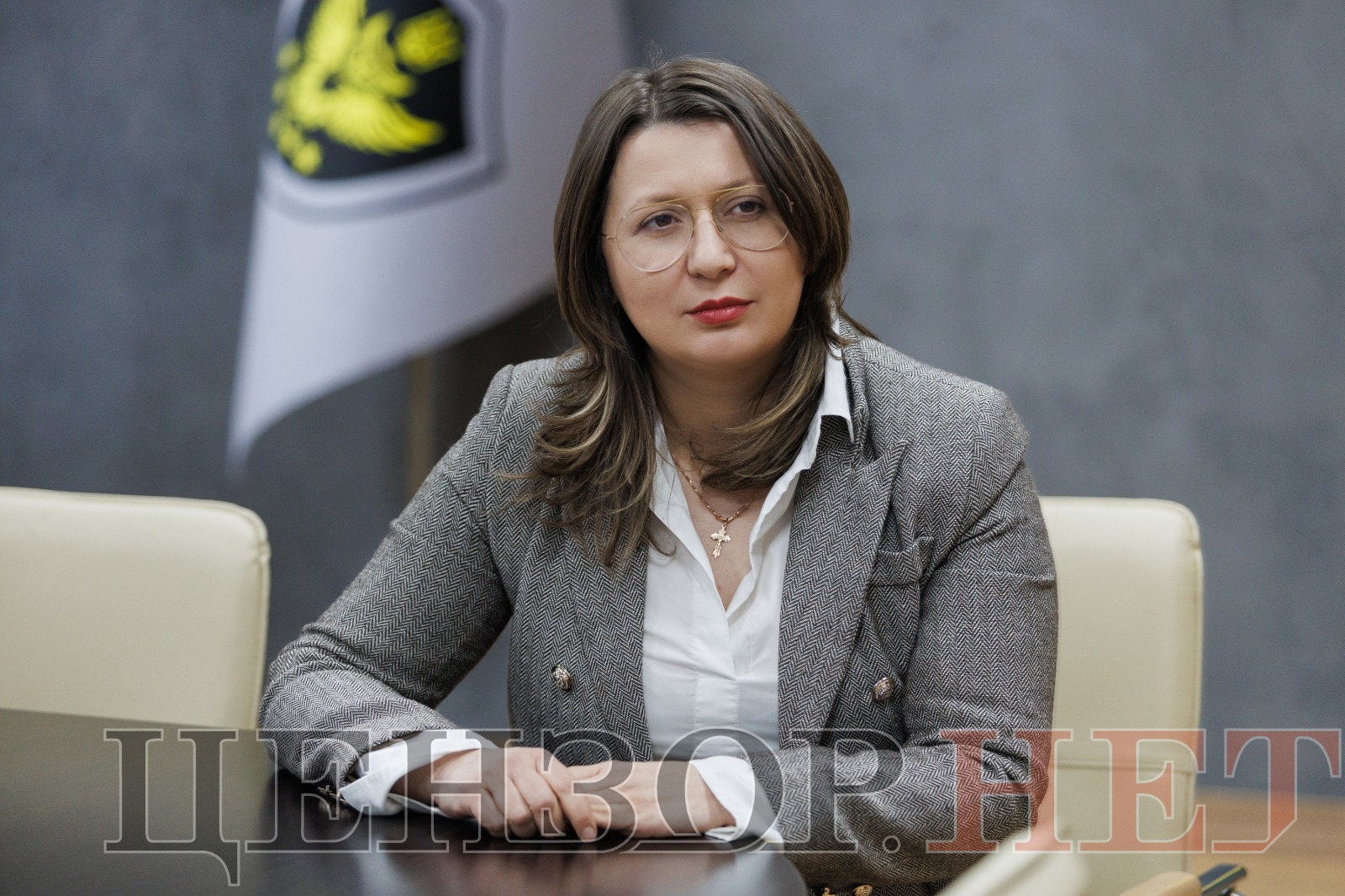
"THE SCANDAL WITH THE SO-CALLED 'MINDICHGATE' CONFIRMED CERTAIN CONCLUSIONS THAT WERE ALSO MADE WITHIN THE INTERNAL AUDIT"
– In November, you initiated an internal inspection of ARMA employees due to the NABU investigation within the "Midas" operation. Are there any results?
– When I came here in August 2025, I started an internal audit of the agency to identify systemic problems and decide how to deal with them. Based on the results, a decision was made that we cannot wait for personnel restructuring; it needs to be started.
The scandal with the so-called "Mindichgate" confirmed certain conclusions that were also made within the internal audit.
During the audit, many people resigned. On the one hand, this facilitated its conduct and the making of some managerial decisions. On the other – it complicated the establishment of certain circumstances. So in the future, we will actively cooperate with NABU, provide them with full information and comprehensive support to establish facts, if it concerns the work of our agency.
– Did NABU conduct any searches at the agency? Or perhaps conducted any other investigative actions related specifically to this story?
– First, we have constant working interaction with all law enforcement agencies. Second, we sent requests to NABU and other law enforcement agencies and received requests from them, providing information in response. So work is ongoing.
Searches or any other investigative actions did not take place in ARMA with the start of "Mindichgate."
– In which areas did the people who resigned work, and what processes did they influence?
– I wouldn't want to talk now about anyone who worked in the agency being linked to the circumstances investigated within the "Midas case." That is NABU's competence. If legal facts are established or an investigation is conducted regarding this, then the information will be made public. For now, the investigation is ongoing. Systemic changes are taking place in the agency, and they strongly affect its work and the results we deliver.
ARMA works with the law enforcement system, and our main task is asset tracing. Asset management, public and political scandals, whether you like it or not, make the work of the agency, which already operates in difficult conditions, very turbulent.
We have assets being investigated within "Mindichgate" or related to the investigation, but talking about the involvement of agency employees in criminal offenses is the prerogative of the law enforcement agency.
– What systemic problems were identified during the audit?
– First, the state and the agency in particular did not have reliable information about which assets were transferred to ARMA's management. Assets accumulated for 10 years, and because of this, their quantity is so large that now taking inventory and making an assessment of the entire asset pool is an extremely difficult task, probably close to unmanageable.
Therefore, priority number one is to understand what ARMA manages, how many assets there are, and how to manage them. For this, asset inventory has been started, and for the first time, thanks to the ARMA reform, we are building a unified logic for asset accounting, management, and monitoring. Primarily to transfer them for defense purposes. We have vehicles, watercrafts, planes, helicopters, spare parts for them. That is, property that can be used for the needs of the Defense Forces and which will not have effective commercial management.
Second, the management procedures that were in place were more formal than they brought real benefit to the state. We don't have many assets that are managed effectively and truly bring benefits. Unfortunately, there are not isolated cases where for asset management, only a security deposit is paid. For various reasons. And asset management turns into non-market rent. This also does not correspond to ARMA's tasks and makes no sense. The ARMA reform aims to change the logic: from formal "transferred for management" to real control over the asset.
Next is the distrust formed around the agency and the procedures by which the agency worked for years. All this also influences management processes.
Moreover, there is no system for monitoring the entire ARMA work process, starting from the process of detecting criminal assets. When the agency receives a request to trace seized assets and finds them, there is often no clear understanding of what happens to these assets: which of them are seized, to what extent, with what restrictions.
This especially concerns assets that could potentially be transferred for the needs of the IDP (Internally Displaced Persons) or the Defense Forces. Hundreds of real estate objects are transferred to ARMA with a ban on disposal but without a ban on use. In this form, they cannot be transferred either to commercial management or for social or defense needs without additional procedural court decisions.
A separate problem – assets are transferred not comprehensively: the real estate itself is transferred, but the status of equipment inside is often completely undefined. This blocks any effective management and requires systemic correction.
Another systemic problem is the lack of proper interaction between ARMA, law enforcement agencies, and courts. In most countries, similar agencies perform the function of a body that gives professional recommendations: how to preserve an asset, whether it is advisable to manage it, whether it is necessary to determine another manager or leave the asset under arrest with a ban on disposal if commercial management is impossible. In Ukraine, this logic was absent for a long time.
Precisely this problem is the basis of the ARMA reform and the law adopted last summer. Now the agency is obligated to identify an asset: determine its location, composition, existing debt obligations, and give a professional conclusion on whether such an asset can be transferred for management. This allows gradually building a system for managing seized assets in Ukraine according to international standards.
At the same time, the complex issue of assets transferred to ARMA earlier but, for various reasons, not managed and at best left idle remains. Among them are those used by third parties without permission, in violation of court decisions. This is a separate block of problems that requires solutions at the system level, not point interventions.
During the audit, I saw that it is impossible to single out one key systemic problem – there are many, and they are all interconnected. Some concern basic things, such as the lack of proper description of assets. Others – more complex legal situations: what to do if legally owned property is located on a seized object, or if an asset is damaged due to hostilities.
Let me give an example. There is a business center, part of which was destroyed as a result of a drone attack. This part belongs to a sanctioned person – a traitor, collaborator, who obviously will not return to Ukraine. Another part of the building belongs to Ukrainian entrepreneurs who live and work here. They are ready to buy out the damaged part, but the law requires the owner's consent, which they will never get. As a result, the destroyed object not only sits idle but also gradually destroys the adjacent part of the building belonging to bona fide owners.
In such situations, formal management does not work. Therefore, these issues need to be resolved comprehensively. We will initiate the expansion of grounds for the sale of assets belonging to traitors, collaborators, and citizens of the Russian Federation. Such assets should not be frozen problems – they should work in the interests of the state.
– That is, sale without their consent?
– Yes. And leave the funds in a deposit account. Use these funds to buy military bonds. That is, apply the same mechanism used for other categories of assets subject to sale.
Let me give you a few numbers so you understand the scale of the problems we are talking about. For example, according to inventory results as of today, 102,332 assets have been identified. Of these, 60,879 assets have been classified.
How did we divide them? Very conditionally. Approximately 37.3% are considered as investment-attractive assets. These are assets that can potentially be entrusted for management or sold.
For another around 10%, the management method needs to be changed. This could be equipment, production materials, etc. For example, iron billets. They cost 3 million dollars. They have been lying for 4 years. They can be sold, but we only have the right to manage them. Managing iron billets is impossible.
Also, a separate part of assets are those located in occupied territories, abroad, or whose location has not been established. Such assets – 11.5%.
What does this say? We have counted over 102 thousand assets. These assets are not appraised, not described and recorded only in terms of quantity, without proper valuation or description. We can say what kind of asset it is – a vehicle, a land plot, an apartment, a share, or corporate rights. But, for example, if it's a car, then where it is located, whether it has an engine, keys for it, needs to be clarified. There are cases when a 2024 car is transferred without keys – accordingly, it cannot even be opened, let alone transferred for management or sale. Without a full description of assets, no management system can work effectively – and this is what we are correcting now.
This also relates to a number of problems.
– If law enforcement transfers some asset to ARMA, you must, so to speak, verify at the initial stage what the asset is and whether there is full access to it. Why take assets with which nothing can be done later? They could remain under arrest, with law enforcement retaining responsibility for them.
– Excellent question. The problem is that criminal procedural legislation for a long time did not provide for ARMA's participation at the stage of deciding on asset transfer. The system worked very simply: there is an investigator's or prosecutor's motion, there is a court decision – and ARMA is obligated to execute this decision. Without the possibility to influence which specific asset, in what condition, and with what restrictions is transferred to us.
This model worked for almost ten years. And it created a situation where some assets were transferred for management, others – not, without clear criteria and logic. Who decided what to transfer today and what – tomorrow? There is no answer to this question because ARMA was not a decision-making authority and did not provide a conclusion on whether such an asset could be effectively managed at all.
Of course, one can talk about selecting only those assets suitable for management. But then another question arises: what to do with all the others? Precisely this gap gave rise to distrust and discretion without clear criteria, which later transformed into a simplified public narrative: you put an asset up for auction – it means corruption, you don't put it up – also corruption.
And it's important to emphasize here: in most cases, it's not about corruption but about a systemic error in the process architecture. Precisely this is being corrected by the reform, which for the first time gives ARMA the opportunity to provide a professional conclusion before transferring an asset for management.
– You said assets are counted but not described. Why did it happen this way? Isn't there a general register where all this information should be stored?
– The register of seized assets is a key tool of ARMA. But information about all material evidence in criminal proceedings is entered into it. Essentially, it's a register of seized material evidence. And if you look at it, you can see seized napkins, seized clothing that was not transferred for management, etc. Then it is necessary to identify assets that can actually be managed.
But consider the cumulative effect. For example, take statistical data for the years of full-scale war. In 2022, about 8 thousand assets were transferred. Of these, transferred for management, approximately a dozen, at most fifteen. Because there is a decision on transfer for management. And so on by year you can analyze.
The system worked this way. Physical transfer of the asset and its physical acceptance from the pre-trial investigation body began not at the moment there is a court decision, but when a manager was found. This is justified because responsibility must be borne for these assets. Accepting it on the balance sheet, utility payments must be paid for it, maintenance costs borne, an appraiser hired. That is, incur quite serious costs that require a separate budget.
There were previous aspirations to transfer ARMA to self-financing, but currently, the agency is financed from the state budget. Moreover, 2025 is general items of the state budget, not even a special fund. In the conditions the state exists today, the funds allocated for the maintenance of this agency cannot fully cover the tasks set before it.
In 2025, funds were allocated for preservation and appraisal, but we started asset identification processes only in October. And these were point procedures that, at least under me, we launched for payment of appraisers' services.
– And for maintenance?
– No. We currently have no real estate or movable assets taken onto our balance sheet. To be able to accept them, this process needs to be structured and regulated. As of today, it is not yet formed as an end-to-end mechanism. We have already developed by-laws – both regarding identification and preservation of assets under the new law. They are at various stages of approval. Since these rules should come into force on February 1, our task is to manage to complete approval by this date and launch the procedures.
Next, we will build the system "from scratch": approve the regulatory framework – define algorithms – assign functions – distribute roles and responsibilities within ARMA itself. Because the organizational structure of the agency for years was adjusted to the old asset management model – and as a result, the actual state of affairs did not correspond to the declared one. And this is not only about corruption risks or subjective discretion. It's also about imbalance: the scale of assets and tasks is not commensurate with the resource ARMA actually operates with, in particular – human resources.
I'll explain it simply: when you have not one suitcase but a hundred, they cannot be carried at once. They can only be carried step by step. That's exactly how we are moving now.
The sequence is as follows: the law was adopted – an audit was conducted – next we expect an international audit, which will help additionally capture systemic problems and best practices for solving them. In parallel, we conducted an inventory of court rulings and the asset pool and carried out personnel restructuring – to select people for new functions and tasks. Because building a management system without appropriate competencies and responsibility is impossible.
– The processes you listed require time. What will happen to the assets during this period? I assume the owners of seized assets will react if they understand that ARMA is doing nothing and the value of certain objects is being lost. What will you answer?
– I have a great example. We have assets of Zakharchenko (ex-Minister of Internal Affairs, auth.), about which we are asked: why are you doing nothing with them and why an effective manager hasn't been found yet. And there are assets of the IDS Ukraine group, about which we are asked: why are you putting them up for tender so quickly? You are probably violating every possible rule. You should do it not so fast and not so slow (smiles, auth.).
Whatever we do, as long as there is no trust to the institution, processes are not built, structured, and there are no decisions made by officials through clear, transparent, and publicly understandable procedures, these questions will always appear.
My task at this stage is to maximize transparency. The process of managing seized assets must be transparent, as must the work of ARMA as a whole. For this, it is necessary to modernize the register of seized assets: the part of information that by law cannot be open must remain closed, but everything that is transferred for management must be maximally public.
We are talking about a full description of the object, documents, access to information, a data room, a clear procedure for inspecting the asset and understandable management conditions. The manager must see what he is working with and what he is responsible for.
This can and should be done, and we are conducting this work. But not in two days.
– "Will these processes be suspended, or will they take place in parallel?
– In parallel.
– This is a difficult task. It's strange that no one systematized anything for ten years.
– I wouldn't say that. A good system for detecting and tracing assets has been built in the agency. International cooperation is well built, which is extremely important. We cooperate with CARIN, Europol, Interpol. We have working contacts with many countries. And this stage is being scaled up, growing.
Yes, there are problems in the seized asset management system. But when you admit you have problems, understand what these problems are, understand the path to solve them, in my opinion, this is no longer a crisis but a starting point for change.
"WE ARE CURRENTLY WORKING ON A LIST OF OBJECTS THAT CAN BE USED FOR SETTLING INTERNALLY DISPLACED PERSONS"
– During "Mindichgate," it turned out that ex-Minister of Energy Herman Halushchenko lived in the estate of Vitalii Zakharchenko in Kyiv, which is under arrest and managed by ARMA. Can you explain how this became possible? And what about Zakharchenko's other assets?
– Currently, an auction for finding a manager for this property is ongoing, where there are five complaints.
I thought it would be difficult to find a commercial manager for this asset, but there is one, and now procedures for appeal by another auction participant are ongoing.
At the same time, we have a legally set deadline – February 1. And if the procedures are not completed by this time, they must be canceled and everything started anew according to procedures that still need to be built first.
– Can you explain, for people who are not following the auction, which specific property is being discussed?
– It's a house in Tsarske Selo and another house in Koncha-Zaspa.
– And what about Halushchenko's residence in the seized house?
– It's difficult for me to comment on this. As I already explained, ARMA did not accept assets until it found a manager. So, there is a court decision, ARMA conducts a competition and finds a manager. At this time, it accepts the asset from the pre-trial investigation body and transfers it to the manager so as not to bear the costs of its maintenance. That's how the system has worked.
– If ARMA does not accept an asset, who is responsible for it, the pre-trial investigation body or who?
– No one.
– Well, how is that possible?
– This was a defect of the system. Because of which the system didn't work. This concerns not only Zakharchenko's houses. I already said that ARMA has court decisions for over 100 thousand assets. But only those assets transferred for management are accepted by the agency.
– Is someone currently living in the house we all learned about during the NABU investigation?
– During the inspection visit to this asset, we only had access to the guest house in Koncha-Zaspa. We failed to enter other houses. As of today, I have no confirmed information about what exactly is happening with this asset. There will be a manager, we will establish physical control and transfer it to him.
– Who must physically transfer it to you? Who has the keys?
– Transfer of a seized asset to ARMA is carried out by the pre-trial investigation body or the prosecutor's office. In this case – the Office of the Prosecutor General or, on its instruction, the State Bureau of Investigation.
At the same time, if the process for selecting a manager is not completed and the procedure has to be canceled, the new model provided by the law allows ARMA to physically take it onto its balance sheet via an acceptance-transfer act – regardless of whether a manager has been determined or not.
– So, you cannot say whether Mr. Halushchenko continues to live there?
– Just as I cannot answer a similar question regarding thousands of other assets under ARMA's management. But we will solve this issue.
– Didn't you have the desire to call the prosecutor's office or the State Bureau of Investigation and ask who gave you the keys to the house?
– I personally had no such desire. I am inclined towards systemic solutions.
I understand the resonance, the political and social component, but Zakharchenko's asset is no different from the asset of Medvedchuk, Fridman, or some other sanctioned person.
– What is the current situation with Medvedchuk's yacht?
– The yacht is under a sanctions regime and physically located in Croatia, on the territory of a naval base. As of today, we have worked through this issue with all relevant bodies and have a clear understanding of the legal situation in four jurisdictions at once, where Medvedchuk's side took measures to block the sale process of this asset.
The asset`s realization path is clear. The key stage now is the renewal of the arrest in Croatia. The prosecutor's office is handling this, and we are in constant coordination to proceed to the realization procedure according to an agreed international algorithm immediately after the arrest is renewed.
Medvedchuk's defense is certainly actively opposing this process – mostly with technical procedural methods. Changing lawyers, numerous motions, appeals – all this is used not for defense on the merits, but to delay. As soon as we demonstrate recorded progress in the investigation, the prosecutor's office will apply to the Croatian government regarding the renewal of the arrest, and we will petition for the asset's realization.
– Journalist of "Ukrainska Pravda" Mykhailo Tkach publicly raised an important question – why hasn't Ukraine sold the yacht, and who pays for its maintenance. And in this journalistic investigation, I noted another important point. The former head of ARMA first states that the yacht was described as having been nationalized, but then it turns out it is no longer under arrest, not transferred to the agency's balance sheet, and another country is forced to impose sanctions on it. What did the statement about nationalization mean then, and can you comment on everything else?
– I can only assume. Commenting on someone's actions, in my opinion, is not correct.
– This is not about individuals but about a state body.
– If we talk about the body, the arrest was in force at that time. Croatia, within the framework of international criminal legal assistance, recognized the right to sale.
The problem is different: over two years, unfortunately, it has not been possible to bring the process to actual sale.
– Who handles its technical maintenance?
– According to maritime law, the captain is legally responsible for the technical and operational condition of the vessel. He is responsible for ensuring buoyancy, safety, and ongoing maintenance, and, according to the information received, it is currently the captain who covers the costs of maintaining the yacht.
– Where does he get the funds? Who finances him, who maintains the crew?
– According to our information from unofficial sources, a certain law firm company finances him.
– Do you not know the company's name or cannot talk about it?
– I can only assume that it is maintained by Medvedchuk's affiliated structures. Looking logically, we see the asset is guarded, the crew hasn't changed, the captain is the same. This gives grounds to assume that affiliated structures are interested in maintaining control over this asset. But I emphasize: this is an assumption that must be verified within the relevant procedures.
– Is it generally normal for persons affiliated with Medvedchuk to finance it?
– Investigation should assess this. If it is established that financing occurs in violation of the sanctions regime or other norms, this should become the subject of a separate criminal proceeding. And, most likely, not under Ukraine's jurisdiction. This is not ARMA's competence – we do not investigate, we work with assets.
– Is ARMA involved in locating other assets of Medvedchuk? Have you perhaps found anything that you can talk about?
– Yes. We discovered another yacht – Amore Mio.
– Where exactly?
– It is constantly on the move. That's why we work in close coordination with international partners and specialized networks – CARIN, Interpol, and Europol.
The yacht Amore Mio is entered into the Interpol database, which gives us a legal basis for initiating international arrest procedures if it enters a port of a foreign jurisdiction. Currently, we are creating a course of actions with partners to act as promptly, in a coordinated manner and in full compliance with international law norms as possible the moment the vessel appears in port.
I will consciously not provide detailed routes or mention specific ports – we receive such information within closed international exchange, and its disclosure could harm tracing operations.

– ARMA is engaged in the search for assets of suspects or accused of crimes at the request of law enforcement agencies. What happens when such assets are found abroad?
– Frankly speaking, not much is happening currently. The exception is monetary funds. Regarding them, we are actively working with the Office of the Prosecutor General: within international legal assistance, requests are being prepared to other jurisdictions for the return of funds, and there is already real progress in this direction.
As for managing seized assets abroad, the situation is more complicated. We are working on this systematically, conducting negotiations with other countries, and during international trips last year agreed on possible cooperation models. There is interest from partners, but the mechanism itself still needs to be built.
Most likely, cooperation will be formalized through agreements on joint management or sale of assets with distribution of remuneration. This is a common international practice: countries agree on managing or selling an asset, and the received income is distributed according to the agreement. Such a model works in many jurisdictions and is understandable to international partners.
– The list of sanctioned persons is constantly growing. Are all assets of these people transferred to ARMA?
– The sanctions regime operates under the Law of Ukraine "On Sanctions". This is a separate legal regime, separate legal consequences.
ARMA works with seized assets. These regimes intersect when the legal (beneficial) owner of a seized asset under ARMA's management is a person under sanctions. The IDS Ukraine group is a very vivid example of this.
There is an asset under ARMA's management. Fridman is under sanctions of Ukraine, the European Union, the United States of America. And the High Anti-Corruption Court is considering the issue of confiscation of the asset in favour of the state.
– There is a lot of diverse information in the media about the competition to select a manager for the assets of the IDS Ukraine group. What is the current status of the competition?
– As of today, the assets of the IDS Ukraine group are fully prepared for the competitive selection. Preparation lasted since October of last year. We consciously approached this process as openly as possible, as it concerns, probably, the largest asset under ARMA's management in the last ten years.
The asset was transferred to the agency by a court decision back in 2022. An attempt was made earlier to put it up for competition, but it did not end successfully. This time, after the asset was prepared and put up again, we faced significant resistance from structures affiliated with the former owners – in particular, with the Fridman group or the owners of the "Morshynska" brand. This resistance has both procedural and media forms.
The information noise around the asset is indeed large, but it is important to look at the facts. Based on the analysis of financial statements, balance sheets, and data obtained from various sources in recent years, we see signs of systematic withdrawal of funds from the IDS Ukraine group. This occurred, in particular, through consulting services and payments of remuneration to top management, which reached about a million hryvnias per month per person. That is why it is fundamentally important for us to ensure the transfer of this asset to effective, controlled, and transparent management in the interests of the state.
– Maybe it's a bonus?
– Every month? That would probably be fine, but this is a seized asset belonging to a sanctioned person. What is important is not the name of the payment, but that an asset under arrest must be preserved in the interests of the state, not be a source of regular expenses without transparent grounds.
That is why we analyze not individual payments but the asset management model as a whole. In the process of preparing the competition, we faced a situation where persons previously involved in asset management or related to it began massively appealing the procedure, not having the right to participate in the competition as managers.
What does this mean? It means the systemic vulnerability of the old model, which allowed blocking procedures through formal complaints. As of today, over twelve such complaints have been filed, and they have practically stopped the auction.
At the same time, ARMA has already accepted the asset for management, executed acceptance-transfer acts, and bears responsibility for it. Within the new asset management model provided by the reform, this asset will be put up for a transparent competition again and will receive a manager – after completing the procedural cycle, but within clear legal frameworks.
This is an important element of the reform: to move from manual management and procedural chaos to a system where blocking through complaints does not stop the process but only postpones it within the law.
As of today, we are recording actions that actually hinder the execution of the court decision. Law enforcement agencies must provide a legal assessment of these actions within criminal proceedings. Precisely for this, all relevant information is transferred in the manner established by law.
– Have you informed law enforcement about all this?
– We will definitely inform law enforcement agencies about this in the manner established by law.
– Why hasn't this been done yet?
– Was fending off attacks (smiles, -auth.). That's a joke. In reality, the asset of the IDS Ukraine group looks as follows. An appraisal was conducted. We conducted market consultations three times. We determined the conditions, publicly declared them, held round tables, communicated with the market, provided consultations, explanations. That is, we conducted preparatory work for a clear, transparent competition to find a manager. We held meetings with the IDS Ukraine group itself, whose representatives declared constructive cooperation, provided documents and information until the asset was put up for auction.
At the end of November, we put this asset up for auction, and it could have taken place on December 12. But since December 12, dissemination of diverse information about this asset in the media and technical blocking have been occurring. The auction is currently blocked. On our part, we are taking legal measures within antimonopoly legislation, public procurement legislation, the ARMA law, and responding to complaints being filed. And, of course, we will inform law enforcement agencies about the obstruction of the execution of the court decision. Because as of today, this asset is seized, and it makes no sense to debate whether ARMA should execute the court decision or not.
– The government is transferring for the settlement of internally displaced persons real estate currently under ARMA's management, stated Prime Minister Yuliia Svyrydenko. What real estate are we talking about?
– These are hotels, resort complexes, and later there will be apartments that we will take over via acceptance-transfer acts and establish physical control over them. That is, assets suitable for living, and which for various circumstances ARMA cannot lease for management.
Currently, we have selected a pool of assets, each requiring individual processing. Because each of these assets has its own individual problems. Sometimes it's related to asset description, sometimes – to its maintenance, use, or legal component. We approach each asset individually. And we are currently working on a list of objects that can be used for settling internally displaced persons. This is indeed very important work with colossal social and economic significance for our state.
– On what terms will real estate be transferred for IDP needs?
– The ARMA law contains a norm that defines a special procedure for transferring such objects. Assets can be transferred to state enterprises, state organizations that can engage in functional activities. A detailed regulation for the use of these objects will be developed jointly with other ministries and state institutions.
– Will people be able to move into such objects this year already?
– If we talk about optimistic realism, we will be ready to start transferring such objects for settlement in the second quarter of this year.
Tetiana Bodnia, "Censor.NET"
Photo: Anhelina Shorokhova and ARMA press service


