



Evolution of threat: how enemy is increasing its use of Shahed-type UAVs
In 2025, the Russian army launched nearly 55,000 Shahed-type drones and their simulators across Ukraine. The number of air attack weapons used increased fivefold compared to 2024.
This indicates that the enemy considers this class of long-range strike and reconnaissance unmanned platforms to be a key element of massive combined strikes. At the same time, 85.8% of them were destroyed by the Ukrainian Defence Forces.
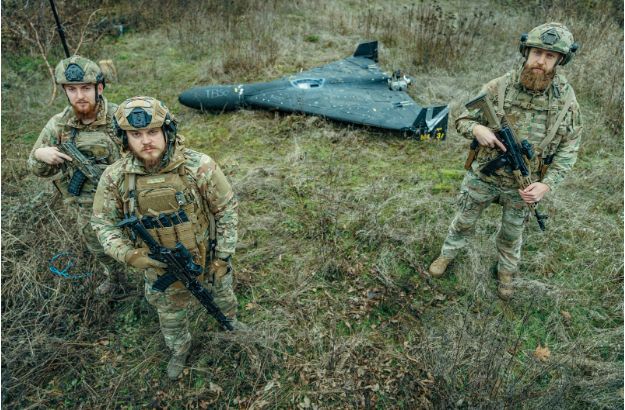
Servicemen of the 1030th Separate Anti-Aircraft Missile Regiment "Aquila" with a downed "Shahed"-type UAV. Photo by the 3rd Army Corps.
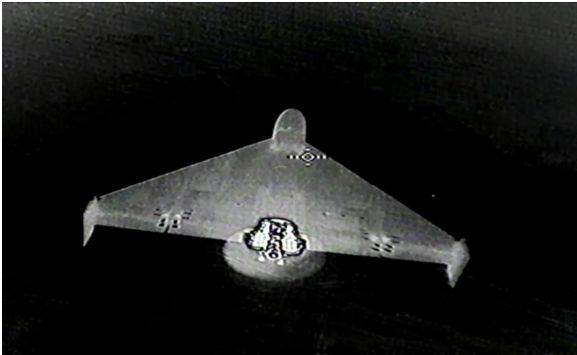
Russian strike drone "Geran-2" before being shot down. Still frame from a video by the 3rd Army Corps.
The main efforts of the Russian occupation forces are focused on expanding the areas of destruction, mass application, and determining priority areas for concentrated strikes. Key targets remain critical infrastructure facilities, as well as operational and strategic facilities — energy, transport and logistics, and military-industrial facilities.
The increase in the capabilities of Shahed-type UAVs is due to a number of factors that the enemy has managed to implement in a relatively short period of time. A significant step towards reducing dependence on external supplies and shortening logistics chains was the development of domestic production capacities for serial and mass production, as well as the creation of engineering, design, and research and testing centres.
The introduction of technical innovations was reflected in the transition from the use of pre-programmed routes and autonomous mode to the use of drones in a controlled mode in real time. The development of a centralised remote control system, increased resistance to navigation system interference, testing of alternative communication and aircraft positioning systems, attempts to integrate computer vision for target identification and automatic capture, an increase in the range of combat units, and the use of models with turbojet engines have all contributed to a significant expansion of the "line" of unmanned aerial vehicles.
Scaling up the network of launch sites and improving methods of application, in particular through changes in routes, altitude echelons and tactical techniques, makes it possible to ensure synchronised attacks from different directions, increase the rate of launches and overload the air defence system.
Thus, cheap and mass-produced air attack weapons such as the "Shahed," while retaining their main advantages and having the potential for further technological development, pose a serious challenge to the country's effective air defence in 2026.

Major Maksym Zaichenko, commander of the 1030th separate anti-aircraft missile division "Aquila" of the 3rd Army Corps


