



When my son celebrated his first birthday, I was killing enemies: story of 27-year-old assault soldier from 78th Brigade of Airborne Assault Forces, call sign Krasavchyk
Assault troops are a special kind of soldier. They go where others stop. They take on the most difficult tasks, which require not only strength, but also cold calculation, quick decision-making and a willingness to fight even in the most hopeless circumstances.
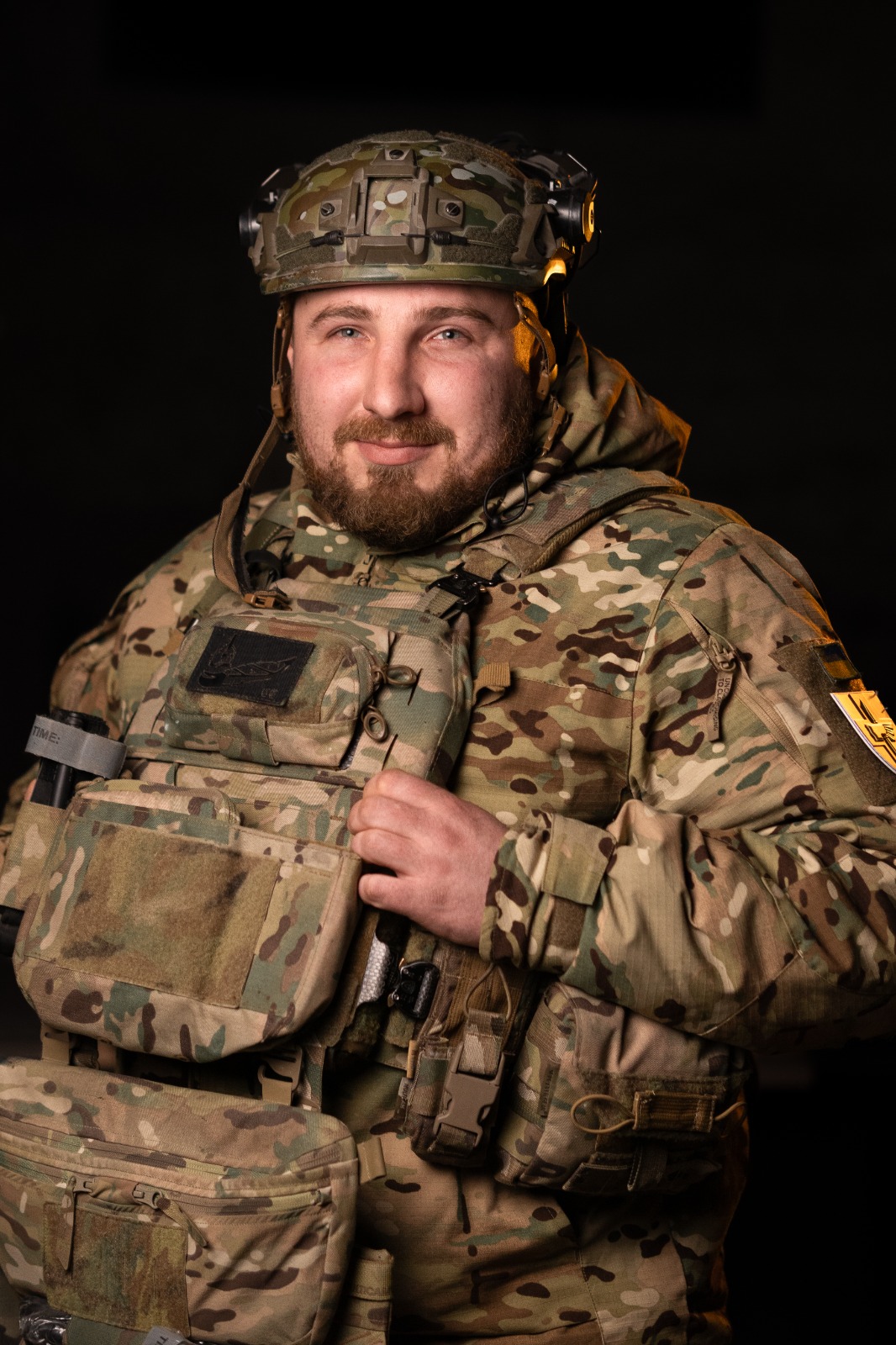
On 7 February last year, three Ukrainian paratroopers held out for a day in Kursk, surrounded by nearly fifty Russian soldiers and North Korean mercenaries. They repelled several waves of assaults, corrected artillery fire from the sky, and emerged alive. One of those three was 27-year-old assault soldier Serhii Krasavtsev, call sign Krasavchyk, from the 78th Separate Airborne Assault Brigade of the 7th Rapid Response Corps of the Airborne Assault Forces.
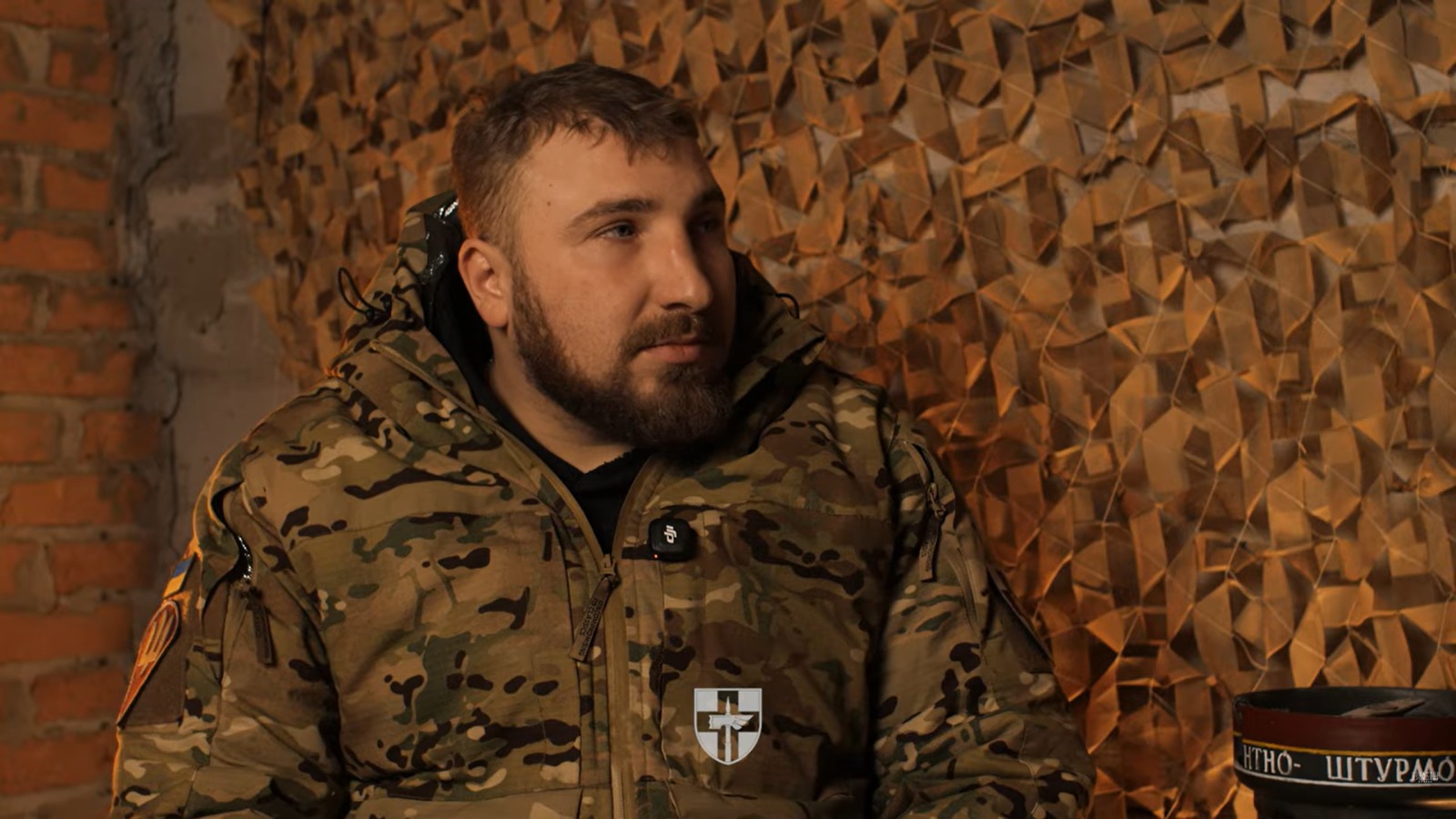
He is not just a soldier. He is a volunteer who came to the military registration and enlistment office himself and insisted on serving in the Airborne Assault Forces. A former builder who became an assault soldier. His story is one of true courage, of a battle that should go down in the history books, and of the price paid by those who defend Ukraine on the front lines.
"Everyone was shocked that I came on my own."
Serhii Krasavtsev is 27 years old. He is an assault soldier and a volunteer. He came to the military registration and enlistment office himself a year and a half ago.
He says everyone there was shocked. It's no secret that people hide from the TCR wherever they can. And here comes a young man saying he wants to serve in the army.
He immediately said, "I only want to join the Airborne Assault Forces." But he failed the MMC twice due to his health condition. He was very upset, even irritated. Then there was a training centre near Chernihiv, and there the recruiters of the 78th Brigade of the Airborne Assault Forces of Ukraine quickly arranged for him to join. That's how he became part of the big family of Ukrainian paratroopers.
Serhii comes from a large family. Two of his brothers are also in the army.
"My older brother was a marine and has many awards. He is currently serving in the area of responsibility of the 117th Brigade of the TDF. My youngest brother was the commander of the assault platoon of the 53rd Separate Mechanised Brigade named after Prince Volodymyr Monomakh. So there is someone to follow," says Serhii.
"I'm in the Airborne Assault Forces because it's cool. For me, as a recruit, training was very important, and here it's the best," he says.
Call sign from the company commander
Krasavchyk received his call sign because of his surname as soon as he became a soldier in the 78th Brigade of the Airborne Assault Forces of Ukraine.
"After the selection, the commanders said to me, 'Serhii, come up with a call sign for yourself. ' But I don't like call signs, nicknames... I said, 'Can I just stay Serhii? ' They didn't allow it and said I had to come up with one myself, or they would give me one. And they did. The company commander, Psikh, came out and said, 'You'll be Krasavchyk. And so that call sign stuck with me," he smiles.
From builder to assault trooper
Before serving in the Armed Forces, Krasavchyk worked as a builder. His speciality was bricklaying and plastering.
"I've been everything. I went from being a labourer to a foreman. My experience in construction came in very handy on the front line — in my ability to assess risks, build fortifications and plan ahead," says the soldier.
His athletic training also came in handy. Sambo, kickboxing, hand-to-hand combat, table tennis. His hobby is riding his motorcycle through the fields, feeling the wind in his hair.
"All of this helped, of course, but even during training, I realised that I was in the thick of war, and I became scared – what would it be like? Real combat, with real bullets. Moreover, I am an assault soldier, and I was trained for specific tasks. When there are two options: either you give up, say you can't do anything, and die peacefully. Or you train, study literature instead of TikToks — what weapons consist of, how to set or remove a tripwire, learn about the enemy's behaviour patterns. Then everything will be fine for you," recalls the fighter.
The legendary battle in Kursk
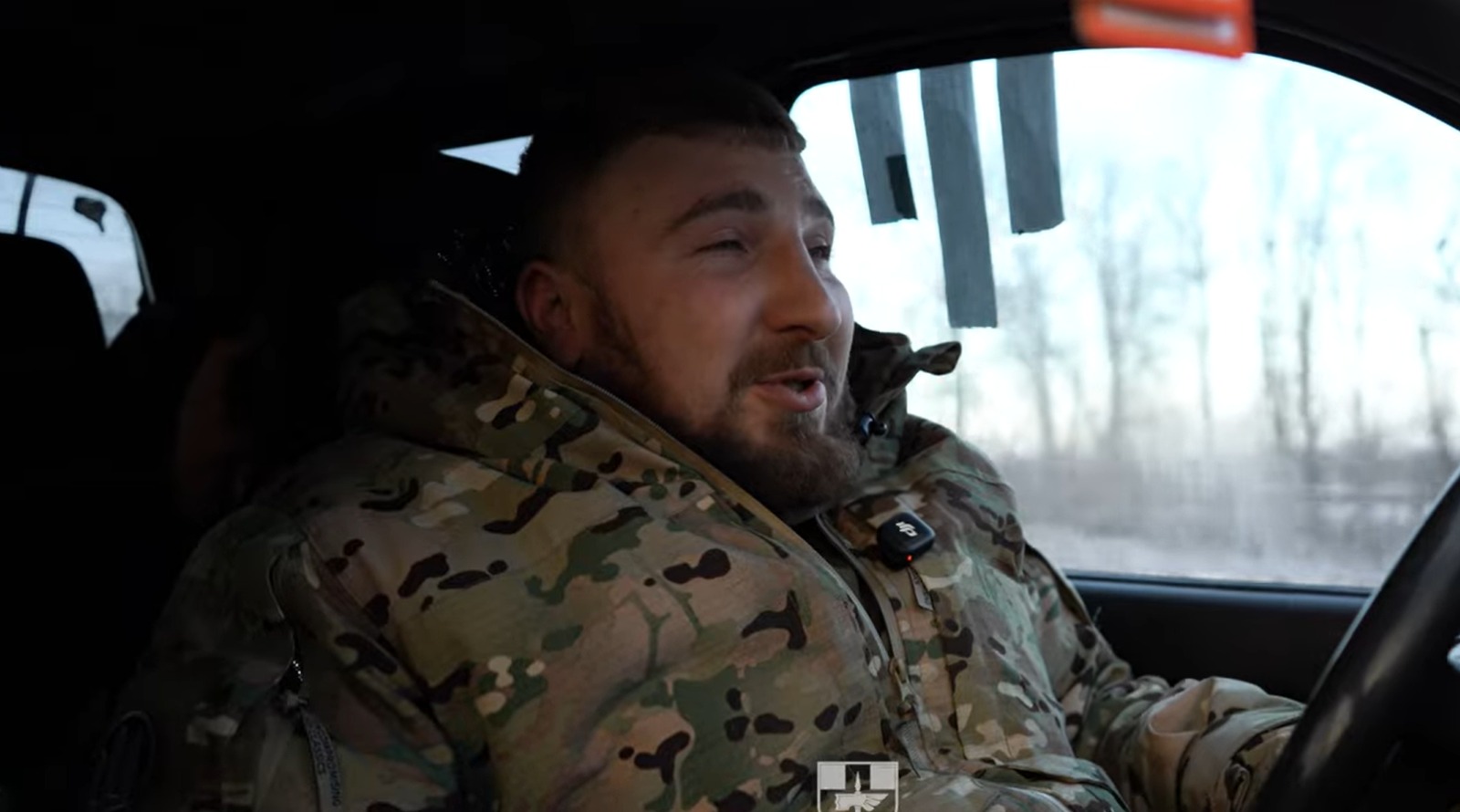
Serhii had been participating in the Kursk operation for a long time, and it was on enemy territory that the legendary battle took place, which the entire brigade still talks about.
"I remember that day very clearly. 7 February 2024. There were nine of them in the first wave. We accepted the battle, but it so happened that one of our comrades was killed and another was seriously wounded and concussed. And while we were defending this piece of land, there was a fierce assault on our positions in the village we were holding. The guys had to retreat to save the lives of Ukrainian soldiers, which is the primary task.
I realised that I was surrounded. To get out of it, I had to enter the enemy's positions. Behind me was a minefield, in front of me were enemies. While we were waiting for help, about fifty occupiers were already rushing towards our position. We met them with a grenade launcher. Then, with the help of air support and the cooperation of the entire unit, we destroyed them all there. We were surrounded for about a day. Three of us left the position," Serhii now recalls these events with a smile, as he does all the other battles he talks about, but his eyes hide the sadness for those guys who will never return.
Ironically, 7 February, when this legendary battle took place, coincided with his son Makar's birthday.
"At home, we were celebrating my son's first birthday. It was a holiday, but on that day, his father was killing the enemy. It turned out to be a nice gift — I'm alive, and the Russians and Koreans are dead."
The command of the 78th Regiment (now a brigade) of Airborne Assault Troops nominated Serhii Krasavtsev for the title of Hero of Ukraine.
Koreans like zombies
In the Kursk region, besides Russians, there were many Koreans. Serhii says that they are very noisy, and when they were wounded, they screamed so loudly that their positions could be immediately detected.
"But ours are silent, no matter how hard it is for them. Even more than that. There was a case when my brother-in-arms was seriously wounded and said to us: 'Get away, I'll cover you!' He couldn't stand on his feet, he could barely hold his machine gun, but he said he would cover us," Serhii says proudly.
The soldier was also surprised that the Koreans went into battle without any fear and were good at pretending to be dead.
"You lay down a row with fire, and they step over their own and keep going. Like zombies. It got to the point where I was three metres away from one of them. I had a PZD machine gun, a radio, coordination from the air on where to direct my fire, and I was leading the battle. But that Korean was betrayed by his white camouflage robe. Out of the corner of my eye, I saw something flash by at night. I was lucky to have a PZD machine gun, which is short and light. And I see that he's shooting at me, and I'm shooting at him. I emptied half a box before he finally fell," recalls Krasavchik.
The psychology of war
In conditions of constant mortal danger on the battlefield, yesterday's strangers suddenly become those to whom you have to entrust the most precious thing you have – your life. And these are not just words. This is the reality of war.
"The feeling of danger quickly brings people together. We learn from each other. Every battle is a lesson. And psychological endurance helps a lot here. In the 78th Brigade of the Airborne Assault Forces, psychologists work with servicemen, starting from the training centre. After combat assaults, they say, 'Let's talk.' And we talk. At first glance, it would seem that we talk about nothing. They ask what we think about this or that, how our families are doing, and we chat about various things. And you realise that it lets you go. That you have to move on, fight for your family, for your country, for your future, after all. Because if you don't fight, you won't live," says Serhii Krasavtsev.
After the war – family, bees and horse
Serhii openly says that now, as an assault soldier in the 78th Brigade of the Airborne Assault Forces, he feels that he is where he belongs. However, his family is waiting for him at home, and they are his support, his lifeline. He does not live for today, but is already planning his life for the future. When there is no war. He says he wants to take up beekeeping.
"I don't want to work for my someone anymore, so I'm unlikely to return to construction. I want to live in the village, buy a horse, and keep bees. I want to raise my son, who is still very small. I want to live in Ukraine and for my family to live on their own land. I want my son to never have to hide in shelters again or, God forbid, take up arms," Serhii shares.

"He fought for his life"
According to the hero, war takes a lot, but it also gives just as much.
"First of all, it's friends, real friends for life, who went through Crimea and Rome with you. This war will be in textbooks, it already is in part. And we are the authors of this story. And then my son will ask me, 'Dad, what did you do then? And I will answer that I fought for my life, I won it. Will everyone be able to answer the question, what did they do? That is why I want to appeal to those who have not yet joined the front: do not wait for the sea to calm down, study, prepare, because war does not wait. And those who have joined: train, learn. There is no need to be afraid. The Armed Forces of Ukraine are not a prison or captivity. They will help you with words and deeds," says the soldier.
Serhii Bondarenko


