



War correspondent Marian Kushnir: "POW broke down in tears when our soldier gave him his Red Bull and started asking about his family"
Today, February 10, Kyiv’s Zhovten Cinema will host the presentation of "Give Me Back My Name," a documentary by Radio Liberty war correspondent Marian Kushnir. The film focuses on missing persons — the repatriation of the bodies of the fallen, their identification, and the restoration of names. It also tells the story of families who spend years waiting for answers, caught between hope and the unknown.
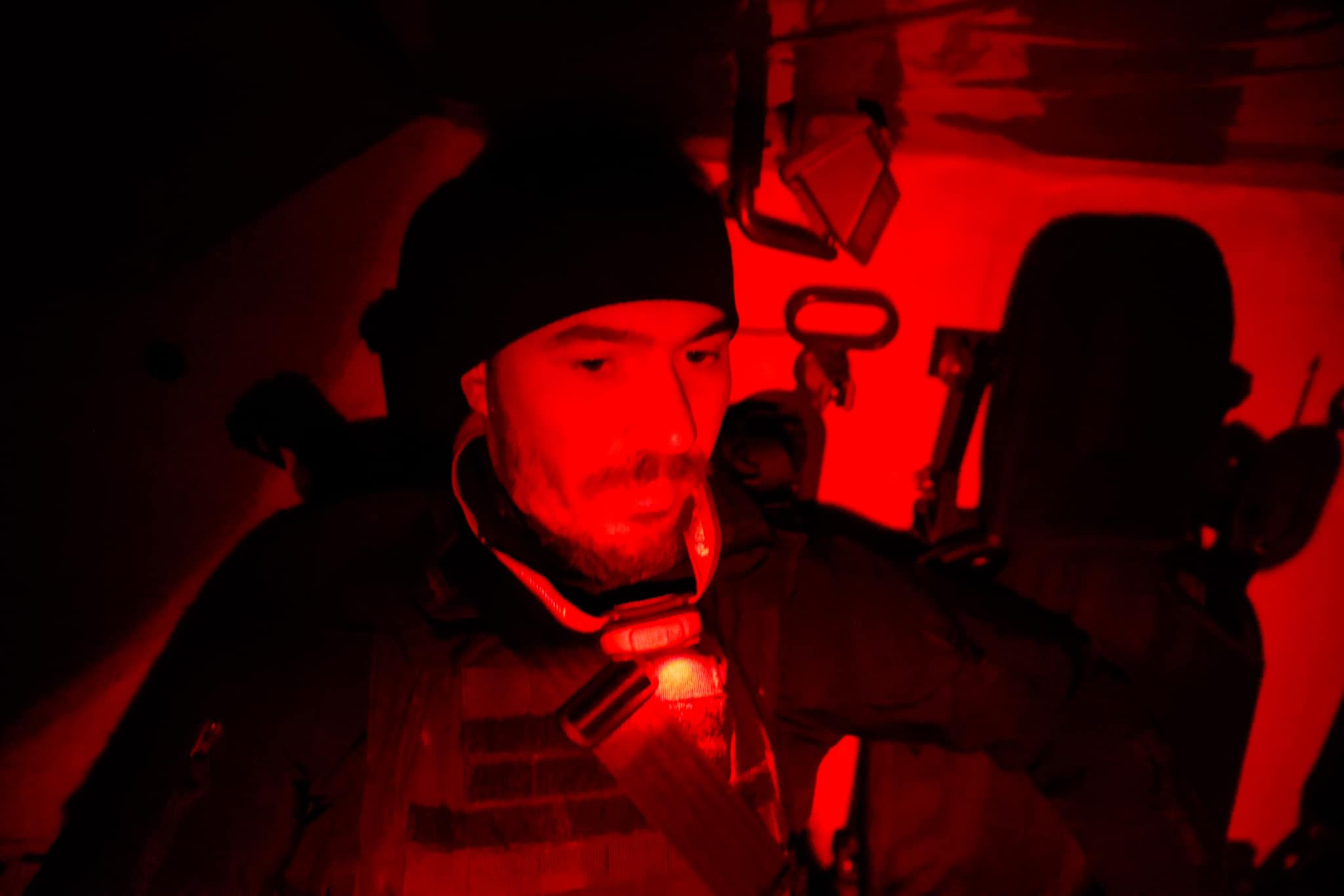
Marian has been working on the front line since 2015, documenting battles, assaults, losses, and life between shellings. But he is known not only for his work, but also for a recent tragic-heroic story. On the night of January 27–28, a Russian "Shahed" hit his home. A neighbor’s apartment in flames, a child amid smoke, split-second decisions, and the war’s brutal collision became not a report, but yet another lived experience. The strike killed a young woman and her civilian partner, but Marian rescued their four-year-old daughter. For this act, he was awarded the Order "For Courage," 3rd Class.
- Please recall in detail what that night was like.
- My girlfriend and I were relaxing, watching the TV series The Mentalist. Then, out of the corner of my eye, I saw a flash in the window and heard a loud explosion. At the time, it wasn’t clear to me what exactly had exploded. As a rule, I always hear drones and react, because I go out to nighttime strike sites during attacks on the capital. And for security reasons, I often try to keep track of things like that. But this time there was no sound at all. And it wasn’t the TV drowning it out; we genuinely didn’t hear it. As neighbors later said, it was the same for them. Maybe because of the weather or something else.
After the blast, I remember my girlfriend ran into the hallway and asked what to do. I said, "Find the cat." And I ran to the window to see where and what had been hit. I suspected it was our building, but I decided to make sure. I looked out and saw a fire on the sixth floor. Without hesitation, I put my shoes on, grabbed my tactical medical backpack, which I always keep ready by the entrance, and ran straight up to the sixth floor. Neighbors were only just starting to open their doors, those whose apartments were badly damaged, those whose flats had burned. They were in this "frozen" state. I spoke to them, they didn’t react, but I understood they were more or less okay. The door to the apartment that had been hit the hardest was ajar. As I later realized, the blast wave had broken the lock. I pushed it open and heard the crackle of fire, and saw flames at the entrance to the apartment’s second level. And there, on the sofa, was a little girl screaming, "Mom! Where’s Mom?!" She was in pajamas. She didn’t understand what was happening. I quickly picked her up and carried her out of the apartment; by then, it was already full of smoke. In the corridor, neighbors were running around in total chaos. I understood: if there was a child, there had to be parents; it was nighttime. And they were on the second level, where everything was burning. Maybe there was still a chance to save them.
Neighbors from the ground floor came up. I handed them the child, and they took her downstairs. I ran back. I shouted to ask if anyone was alive. I tried to go up the stairs to the second level, but everything was already completely on fire. I knew there were wooden structures there, and when they burn, there’s a risk of collapse. Other neighbors ran in; someone brought fire extinguishers. We tried to put out what we could, but it was obviously futile. Still, not even trying to save people was not an option. The neighbors were trying to climb in there, into the fire. Somehow, we managed to hold them back because if they had gone up, we would have had to pull them out, too — either they would have choked on the smoke, or the structure would have collapsed on them. We ran to the neighboring apartment, where there was also a fire. To give you a sense of it: in one room, the bedroom, a couple died, while in another, through the wall in the adjacent apartment, a woman and a child were sleeping. Their place was also wrecked, but they survived and ran out. It was a miracle! So the owner of that apartment was trying to put out the fire. He was wearing a gas mask. He probably put it on automatically, because his job is somehow connected to chemical production. We tried to help. At one moment, I simply lifted my head, and the tongues of flame were already running along the ceiling. There was also a risk it would collapse entirely. We had to drive people out of that apartment as well. Then I went downstairs and looked at my car, which was parked right under the windows. And I remembered that there is still some good in the world: the bricks and all the debris fell neatly around it. There was a tiny crack in the windshield, and something scraped the bodywork, minor stuff. I started the car. I had to pull out of the parking spot almost blind, because the windows and mirrors were coated over from the frost — there was no way to see what was on the sides. I kept honking so I wouldn’t hit anyone. I drove out, put my girlfriend and the cat in the car. We stayed there and watched everything burn — how quickly the fire was spreading toward my apartment, how the rescuers were working. I thought: "I bought it, and I put so much effort and time into it. Maybe it’s not the best, but it’s mine. It won’t burn down now, but they’ll just flood it with water, and it’s freezing. And on top of everything else, you’ll end up homeless." But I got lucky — just like with the car.
- So everything is fine with the flat now?
- Yes. Credit where it’s due: the neighbors pulled themselves together very quickly. After the firefighters had put everything out and doused it to make sure there wasn’t even the smallest bit left that could reignite, the neighbors and I simply grabbed buckets and rags and started bailing out the water that was pouring in. For four or five hours, we worked to save the building so the lower floors wouldn’t be flooded, and it paid off. As of now, there is gas, water, and electricity. The developer has even already installed a new cover over the top and rebuilt the sections that were destroyed.
- I saw in the news that the girl was taken in by her older brother. Did you see him?
- No. That night, I only saw the child’s father, who came to pick her up. And today I spoke to both of them, they were taking out the last things from the apartment that survived. I remember that when I took the car out and ran back that night, police officers and medics were already there, and rescuers had arrived. I posted in the neighbors’ chat: "Friends, does anyone know where the child I carried out of the apartment is? Please take her to the ambulance so she can warm up; maybe they can calm her down." After some time, neighbors wrote in the chat and also told me personally that the girl was okay and that her brother had taken her. Later, her father called me and asked me to come over so I could help him piece together what had happened. I told him what was going on with the child, what condition she was in, and how it all unfolded. I know that he is taking care of her now, as well as his older son. They are in a difficult psychological state, but they are trying to hold on, for that little girl’s sake, in particular.
- I remember how you described the moment when she was being taken away. It was terrifying…
- It really was a terrifying moment. I’ve seen many deaths and all kinds of situations on the front line, including evacuating a 12-year-old girl from Makiivka, when shells were landing right on a house that was collapsing, and a girl came out of it, a girl who had been pinned by a wall overnight. But when you pick up a child who is shaking so violently, as if she is having convulsions, it’s beyond words. I understood it was a hysterical response and intense fear. And I couldn’t say anything to her, because I knew her mother was up there in the fire at that very moment. It’s a very heavy feeling. Before that, I didn’t have detailed information about this family, we met as neighbors, we said hello, so I didn’t know it wasn’t the girl’s father who was upstairs. I thought: what if she has no one else? Her parents have just died, so she’s alone. What will happen to her? The thought even flashed through my mind of adopting her. But then it became clear that, fortunately, she has her father and a brother. There were a lot of thoughts back then, about other people too: neighbors, rescuers. Because, as it turned out, they were initially dispatched to the wrong address. When my girlfriend got her connection back, she called and gave the exact details of where they needed to go. You know, panic is a terrifying thing. This chaos is very dangerous. I knew that perfectly well from experience. I even had to shout at neighbors (because in circumstances like this, a person may not hear well): "Get away from there!" "Don’t go there! It’s dangerous!" Because someone has a lot of experience, and someone has none at all, and they can become a victim. That would not be okay. There are already far too many deaths.
- How do you keep a "cool head" in situations like this?
- I can’t give some universal piece of advice. Some reflexes just kicked in for me. I’ve been in different situations where I expected danger. And when you don’t expect it, it turns out everything works on some subconscious level. It’s like you know what to do; there is a clear mechanism: how, where, and whom to help, in what order. And somehow there’s no panic. You don’t even think about it.
You know, colleagues used to joke: normal people go the other way when something explodes, while the abnormal ones, like journalists, move toward the sound. It’s always like that: for work, you climb right into the epicenter. Here, it simply worked on reflex.
- Do you think the "Shahed" strike was deliberate? Or was it flying past and hit the building by chance?
- It’s hard to say. It was a direct hit. It struck and exploded. Was it a targeted attack? I don’t know. "Shaheds" often fly over us. But before, they were never shot down or jammed over the residential complex, because it’s dangerous; they were destroyed outside the area instead. So they would just fly at an altitude of five kilometers, and everyone had even gotten used to it. That’s the norm for everyone now. But this time, as I said, you couldn’t even hear it. Somewhere far away, it was buzzing and buzzing, and then — bang, bang! It came in from above, straight into the roof. I suspect that due to the weather conditions, maybe its winglets iced up, or its parameters got thrown off, and it dropped down. I don’t know for sure. I don’t think it was jammed, because I didn’t hear air defense at that moment either. But in general, we understand that the Russians deliberately launch attacks when it’s freezing outside.
- Absolutely. In my view, there wasn’t even any "energy truce." They were simply waiting for the coldest night to strike Kyiv again and finish off our CHP plants. Which is exactly what they did on the night of February 3, launching a record number of ballistic missiles (we are recording this interview on February 4 – O.M.). What do such actions by the Russians mean to you?
- It’s a "kholodomor," (literally "death by cold" - ed.note), sheer cruelty. Even the laziest person knows that CHP-5 and CHP-6 are not generating electricity. In principle, they can’t. They are operating only to provide heating.
This is an abuse of the population, the way terrorists usually act. I can’t describe it any other way. They strike on the coldest night to destroy the heat infrastructure. People in Ukraine barely survive in this kind of cold. It is deliberate hatred toward every Ukrainian, on a very high level.
- Why do Russians hate us?
- Because we really are better. We succeed. It is a centuries-old hatred. They starved us, killed us in wars, tried to erase us from history, and turned us into fools so we would not be a nation. How can a regime tolerate, next door, a free, independent, democratic country that is better? They need us not to exist.
- Is it envy? A desire to subjugate?
- I think they want to eliminate us. They’ve been trying for a long time. But they have never succeeded. They won’t succeed this time either. Still, this is specifically about annihilation. Bakhmut, Popasna, Mariinka, and other towns and villages in Donetsk and Luhansk regions have been wiped off the face of the earth. They want to destroy everything, then resettle the area with people loyal to them. Yes, on the ruins. Maybe there will be an outdoor toilet again, and something like that, but they will do it so that it is bad, not as good as it is with us. Because they will never be able to subjugate a land where there is at least one Ukrainian left.
- Thankfully, we are holding on. Even though the enemy is no easy one, and the war is now in its twelfth year. You have been working as a war correspondent since 2015. Why did you choose this path?
- Back in school, I thought that sooner or later I would end up in a war in one form or another. I was fascinated by stories about wars — Vietnam, Iraq, Afghanistan. I even wanted to go to Iraq and Afghanistan. I just didn’t think the war would come to my own home.
In 2014, when I was a student, the Revolution of Dignity began, and then the war in eastern Ukraine. When I entered the profession, I understood clearly: I would cover exactly these events, because it is the most pressing topic in Ukraine today (and since 2022, in the world at large). And why shouldn’t I be the one doing it? I can shoot, I can write, so I should do it. I came to the newsroom and asked: "Do you need someone like that on the front line? The main thing is not to starve, and I'll keep filming as long as necessary." They took me in, embraced me, and sent me to the front. It was a conscious choice. Of course, the war of 2014–2015 and the current one are different. Back then, it was a kind of preview, preparation for 2022. Because I went through it, I survived the start of the full-scale invasion. It seems to me that neither then nor now can a media professional distance themselves from these events. When I went to the front for the first time and saw what was happening there, I realized: war turns everything inside a person upside down. It’s like a sock turned inside out. You see things you normally would never see — in other people, in yourself, in what is happening around you. Your values change. You start to perceive everything differently. You come home and even look at your own home differently. Everything that used to feel hugely important fades into the background and starts to seem like a small thing that no longer really matters. That’s the essence of documentary filmmaking and journalism, when you start to see the emphasis differently, not the way people do in everyday life. And you point to the details people usually don’t notice. That’s why I keep doing this. Because there were years when I had to go to parliament and file news from there. I would spend two weeks at the front, then another two weeks at parliamentary sittings. I saw that some people are "in space," and others are on the ground. I’m glad I didn’t choose political journalism. Better to sleep in a dirty trench than to take part in dirty political games.
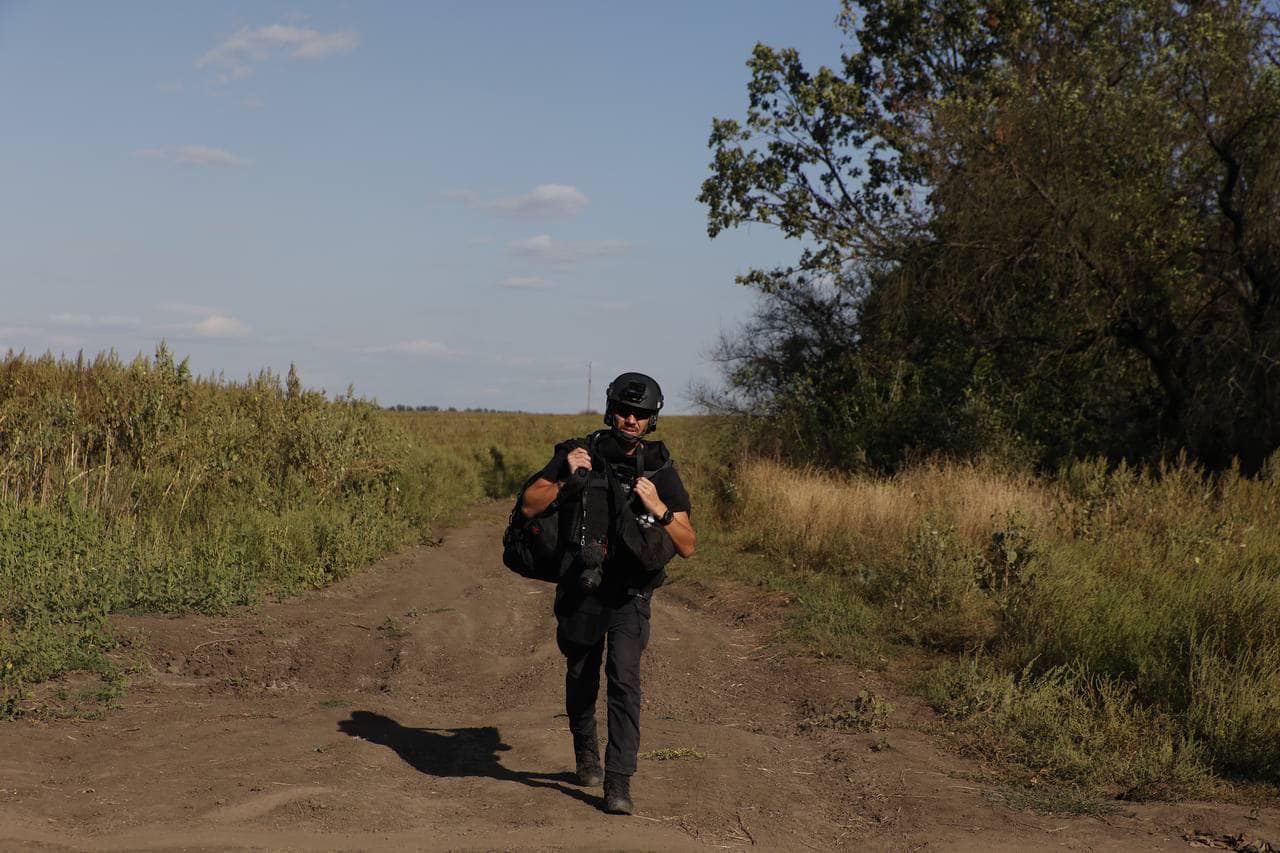
I was also interested in social journalism. It’s about how people live, what problems they have, and how they can inspire someone to tackle their own issues. And of course, extreme journalism, where there are clashes, explosions, movement: the police raid in, warehouses blow up, and then something else. I’m comfortable with that. I know what to do. I’ve always felt in that kind of atmosphere like a fish in water. But still, that was just "the easy part" compared with what began on February 24, 2022. The truly hard part came later.
- Do you remember your first report?
- Not in detail. It was a long trip to the front. Back then, we drove along almost the entire line that had already stabilized.
I remember the first moments I saw in Shchastia in February 2015, before Debaltseve. At first, everything was quiet and calm, and then, all of a sudden, tanks rolled out, artillery opened up, and a fight broke out. For me, it was like, "Wow!" I had never seen anything like that before. Those were probably the first and strongest impressions.
In general, before that, when I wasn’t yet working in the media, I went to the front with volunteers from the Lviv region, delivering packages from home and essential items. We were more often in the Luhansk region. I had already gotten used to the overall situation. But it was in Shchastia that I saw up close how everything flies and explodes.
- And how did the full-scale invasion begin for you?
- In a somewhat unconventional way, because for me the full-scale war began on February 16, when I went to the front. I was in Bakhmut. The next day, the Russians shelled Stanytsia Luhanska, hitting a kindergarten. I went to the 95th Brigade — near Toretsk, Horlivka, Zaitseve. For several days, I kept coming to them and filming. We could already feel the escalation; the situation had changed. Artillery fire intensified. Recording the sound of shelling was as easy as saying hello. And that surprised me. Do you remember when the late Denys Monastyrskyi came under shelling in Novoluhanske?
- Of course!
- It was me running, filming it as it came down. I realized things were about to get really bad. That same night, I went to Krasnohorivka to see Maks Levin. That was when military hardware started moving en masse. My driver and I set off at night near Pisky. It was dark, you couldn’t see anything, the headlights didn’t help. And a tank rolled onto the road right in front of us. We almost crashed into it! Stories like that happened regularly later on and became the norm. But at the time, it was a revelation: tanks, just like that?! They’re supposed to be God knows where, not here! But they were forming up into a battle formation to stop a possible breakthrough. This was literally two days before the full-scale invasion. So we went to Krasnohorivka to wait for a breakthrough. It didn’t happen, so we went back to Bakhmut. And then, on the morning of February 24, my editor called and said, "Marian, wake up, there’s a war." I said, "I know there’s a war. It’s a 15-minute drive from here. Why would I wake up?" He replied, "Planes over Kyiv." That’s when I realized how serious it all was. Then explosions rocked the area from missiles launched toward Chasiv Yar. We had them in our city too. I woke up the driver and a colleague from Current Time. We started thinking what to do. First, we went to Kostiantynivka, then I went to Mariinka. I wanted to film Russian tanks, but they didn’t go there.
Then I got back in touch with Maks and went to Kharkiv, where we filmed a wrecked column in Pivnichna Saltivka. Our troops went to ground near the ring road and waited for the column to break through. We stayed there overnight to film it. We didn’t fully realize the risks that might have come with it. Later, we also filmed burned-out Russian Grads that had entered Kharkiv. And then we headed to Kyiv, because major fighting was already underway outside the city, we needed to work there. That’s how Maks and I kept moving around, each following our own story.
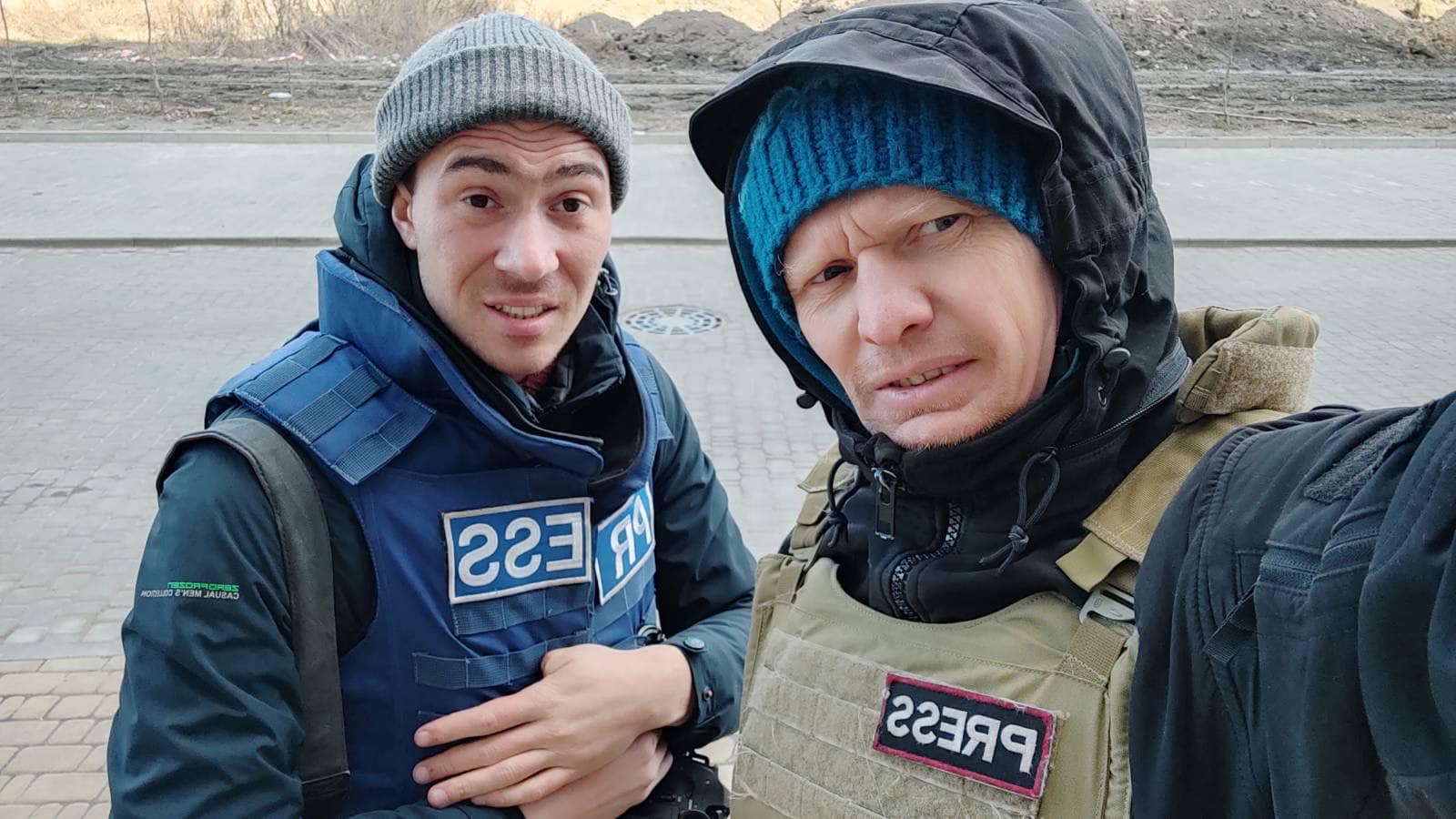
- I know you and Maks ended up in Borodianka when the situation there was extremely difficult…
- Back then, we were chasing Russian columns. We were driving along the Zhytomyr highway as if it were our own backyard, in between our forces and the Russians. Maks had a drone that he would launch two kilometers ahead. We would check whether the enemy was there, whether there was an ambush, and then move out.
What was it like in Borodianka? Maks knew the area very well. The trip took about two days because we were detouring almost everything in a wide loop. We arrived, and the bridge had already been blown up. One of our servicemen was standing near it. We asked if there was anything farther ahead. He said, "Hell if I know." So we decided to check. We drove on. It was already getting dark. There were no cars. Each of us watched our side: Maks to the right, me to the left. If there was any movement or a vehicle, we had to be ready to turn around and run, because we didn’t know who was where. That’s how we entered Borodianka, and everything was on fire. It was about half an hour after Russian aircraft had struck and smashed everything. Buildings were burning, something was exploding, and two medics walked past in a complete daze — nobody said a word. We spent the night there. In the morning, we went to film the central street, all those wrecked buildings, fly the drone, talk to people. We were in a hurry because we understood: if a column had passed through, that meant Russians were somewhere nearby. It could be dangerous. And that’s exactly how it turned out. We went into a hospital, and there were wounded civilians there. Someone was even undergoing surgery. They told us that when they drove past the ring road (the very place we had passed at night), a Russian tank opened fire on them. One had his head smashed; another had a serious injury. We realized we were effectively behind enemy lines. Okay. We filmed the material and left.
Then Maks took a day off and went to deal with his own matters. Around that time, I no longer had a car, so I was taken to Kyiv. The Russians killed Maks then. And I went to my friends from the 10th Separate Mountain Assault Brigade toward Baryshivka, where they were conducting assault operations. I filmed it. At night, an Iskander struck, and I was slightly concussed. After that, there was a lot more war.
- Do you often film assaults?
- Whenever they let me, gladly — assault operations, direct fighting. We covered five or six assault operations.
- Which one stayed with you the most?
- An assault near Bakhmut in May 2023. It stuck with me because once we got out of there, we realized where we had been — that we’d been walking a razor-thin line. On the way out, my cameraman and I took turns helping the soldiers carry a stretcher with a KIA. Only later did we realize we could have been in his place. Because everything was firing at us! I filmed a tank engaging with direct fire, and an RPG hitting it. That’s dangerous. Grad rockets are coming in — okay. Not on me. You keep moving. It feels like you have it under control.
We also managed to film the capture of a Russian serviceman during that assault, the assault actions themselves, and those guys who are no longer with us. One of them is still missing in action. By the way, I’m doing a film presentation on February 10, and the beginning of the film will be about him…
- Sorry, what film is that?
- Give Me Back My Name. It’s a documentary about people missing in action, telling the story of how the bodies of those killed on the battlefield are recovered, identified, and their names restored. It’s also about the families of the dead, who often suffer while left in uncertainty, because officially a person is listed as missing.
I took a long road to making this film. I first raised this topic back in 2023. I have a friend, Colonel Viacheslav Skoriak. He served as the commander for civil-military cooperation (CIMIC) in an army corps. He led assault operations in the Orikhiv direction. It was a counteroffensive operation. And he was also involved in recovering bodies. It so happened that I had exclusive access to the counteroffensive, so I witnessed it. We watched as a body was brought in for examination for identification, checking for bullets and so on. We spoke with relatives. I had the full cycle of that story, but I didn’t film it then. Ever since, I wanted to build a larger narrative, and that is what eventually became the film, with questions that, on the one hand, have answers, and on the other, don’t.
- Tell us what else happened during that assault near Bakhmut.
- That’s when we first saw the so-called "Verdun forest," where the tree line had been mowed down to absolute nothing. Russian "Pions" and "Grads" hit us hard, but they didn’t hit anyone at the spot where I was. It was frightening. However, not at the moment, but afterwards.
- In the moment, is it the adrenaline that carries you?
- Absolutely. After that, I slept for two days, because the adrenaline really drained my body. But what also keeps you going is understanding the situation. We knew where we were going and why. The day before, we discussed with the company commander who was directing the fight how the operation would unfold. We also attended a planning meeting. So we understood what kind of "hustle" was planned: an artillery preparation that we moved in under, tanks, IFVs, aviation, and artillery. It’s like in a movie, everyone is moving, firing, everything is exploding, but everyone is doing their job. When I rewatch it, the infantry guys sitting in the trenches remind me of footage from World War II, maybe even World War I, except the helmets are modern and the rifles are better. You know, the atmosphere is like the pictures we saw in school textbooks. And here, in real life, you’re looking at grimy, unshaven faces with tired eyes. But these people still want to see it through and defend their land.
- That wasn’t your first assault, was it?
No. For the first one, I went with a tactical group without any vehicle support, with just one mortar. We were assaulting about 300 men who had dug in in the village of Lukiianivka (Kyiv region – O.M.) and were holding an all-round defense. They opened up on us with machine guns from three or four firing positions. They "pinned" everyone down. I’m lying under a small footbridge and thinking: "It’s about the tenth day of the war, and you’ve already filmed your last. Nice one!" It was cold. We had to pull back. To get out, you had to either run across a concrete footbridge or go through the water. The battalion commander was walking through the water like Jesus. I decided I’d be freezing if I did it that way. Bullets were ricocheting nonstop. The guys were already starting to take leg wounds. I really didn’t want to go through that water! So I got up, crossed over the footbridge, and even filmed myself getting out. For me, it was the first assault where I saw direct close-quarters fighting. A decision was made to pull out because there was a fatality. The battalion’s intelligence chief was wounded too — his leg was blown off. But he was the man: he kept firing an RPG at a tank until the very end, and the tank fired back. They carried him out, and the decision was made that if the reconnaissance group had already taken losses, the assault had "stalled". However, later they stormed that village, took it, and reached Nova Basan (Chernihiv region – O.M.). Back then, I saw large numbers of dead Russian soldiers. It became a kind of everyday routine: you couldn’t go a day without seeing a dead Russian serviceman. Very many of them were killed. That is why Kyiv is intact and unoccupied.
Those are the two most vivid assaults for me, and, by the way, I received the "Honor of the Profession" award for them.
- In one interview, you mentioned that assault near Bakhmut and said that when a Russian serviceman was taken prisoner, another one blew himself up with a grenade. How did it happen?
- We even filmed it on a GoPro: one of our soldiers orders the captive to come out of cover, and the other one detonates a grenade. Back then, it was quite common. As the prisoner explained, they are told that here they will be beaten, tortured, abused, have things cut off, and so on. In reality, none of that was happening. The Russian was completely shocked when one of our soldiers gave him his Red Bull and started asking about his family, his daughter. He broke down in tears. They put him under cover so he would not be hit by shrapnel. One of our servicemen even read him his rights (in civilian life, he had been a lawyer). To the prisoner, it was all strange because it did not match what his command had told him. Later, he was handed over to the relevant authorities. I even saw a video of him on Volodymyr Zolkin’s channel, he did not have a single bruise. Nobody did anything to him. And what would have been the point? The guys had their own tasks. They were doing their job
- What cover story did this prisoner give? That he got lost during exercises, did he? Or that he was a driver who never fired a single shot?
- He didn’t hide behind cover stories. He said they were mobilized in St. Petersburg. He himself was, I think, from Yakutia. They sent him to the front. Wagner fighters led them to a position, told them to hold it, and left. In other words, they abandoned them in that pit. He had only a few sweets and a sip of water for four days. Just an ordinary soldier doing what he was ordered to do. For most of them there, it was the same. Near Bakhmut, there weren’t many real "hotshots" going in to assault. Those special units were brought in separately. And most of the fighting was done by "Wagner ‘K’" — mobilized men, convicts, all sorts of people. They were given orders, and they carried them out. They went in en masse. When there were bodies, they kept moving over them. They had no way back anyway, because it would be either "sledgehammering" (execution with a sledgehammer – O.M.), or they’d be shot, or something similar. And once they had pushed through a section, the professionals would move in, trained Wagner fighters with combat experience, or "Akhmats" would arrive. That’s how Bakhmut "was crushed" by sheer numbers. I think a lot of people could have lost their minds from the number of bodies they saw there.
- And how do you keep from losing your mind in circumstances like that?
- First, it’s a thorough psychological preparation. You get ready in advance for the worst-case scenario. Every day, you think through every situation that could happen. In my head, I would usually "talk through" different possibilities, including where I would be buried once they recovered my body: whether to take me to the Lviv region (where Marian is from – O.M.), to the Kyiv region, or leave me in Donbas. In other words, you consider everything down to the smallest detail. It helps you hold yourself together.
Second, it’s having a solid partner who isn’t afraid of dark humor. That helps a lot.
- Black humour really does save us – both journalists and soldiers.
- Yes. Without jokes, it’s simply impossible. Sometimes you find yourself in situations where you think, "Well, that’s basically it — ‘’Good morning, sir" And then your partner cracks a joke so well that you think, how can I die now?! I still have to file the story!
It’s also very important to know how to rest, to save yourself in some way. The methods can change. Sometimes you need to go somewhere; sometimes you just need to sit in silence; sometimes you even wander in the forest, the main thing is not in the tree lines. After that, everything falls back into place.
Over the past year, I’ve found a new way to keep my head on straight — I started paying my utility bills on time. Every month, the bill shows up. You curse again: why is it so much? You start punching in the numbers to make sure they’re correct. But you have to do it, otherwise, they’ll take you to court and take your home. And in moments like that, you realize there is ordinary life. That’s how you return to the reality of normal people without war — people who pay utilities, argue about a car parked outside the entrance, and so on. It’s a lifeline for your mental health. Same with the dark humor we mentioned. Not everyone here understands it. You can make a joke like, "Went into the ‘wonder forest’ with both legs, came out without them." Hardly anyone laughs. A lot of people think those who went to war are "a bit messed up." Yeah, a little, because once you’ve been to war, it never fully leaves you. That doesn’t mean we can’t adapt. Of course, psychologists will have to work with some people for a long time. And some won’t need to see them at all. Everyone has their own threshold. Mine is high. I understand the nature of what’s happening. And that sense that there’s a logic to it, that’s what saves you.

- I take it you keep friendly relationships with the soldiers you film?
- Of course. I have friends in the military who have invited me to their weddings and their children’s christenings. I stay in regular touch with a lot of the guys. I’ve had a huge number of contacts. But, sadly, more and more of them are now just saved phone numbers that will never reply again. I’d like to be friends with them, but often that friendship ends at the cemetery. From time to time, there was this ethical dilemma: should you be friends with soldiers or not? But it doesn’t work like that, you can’t not become friends with them. They’re great people! It so happens that some of them have become very close friends of mine. But I really don’t want to lose any more of them. So many of the people in my stories will never answer again. There was this wonderful young guy who was killed during a counteroffensive operation in the Zaporizhzhia region. He was first with the 93rd Brigade, then transferred to the Special Operations Forces. And he was killed…
I had a very good friend who was listed as missing in action in the Kherson direction for six months. After the Kherson region was liberated, we went to say goodbye once his body was identified. He messaged me a day before he went missing: "Come over, you’ll film our guys." I came. We went out together during assault operations. He was a great guy — young, full of potential. I think by now he would have been either a deputy brigade commander, or maybe even a commander. But that will never happen now…
- I was actually going to ask what has been the hardest thing for you in this war. But I think you’ve just described it.
- Losing friends is the worst thing. With the scale of mobilization now, it feels like everyone has someone close to them fighting. In war, the more people there are, the more losses there are. Sadly, there will be losses. War is about destruction and death. All those who died could have created something, contributed something to this world, but now they can’t do anything. Great people are dying. They wanted to live, but they were forced to give up the most precious thing while defending their country because some idiot decided he wanted to destroy us. Those are lives cut short. That’s the most terrifying thing!
You know, with each passing year, the war feels more and more absurd to me. Why should people who were living normal lives, minding their own business, building their futures, suddenly have to give their lives? Someone came into their homes and started killing them. We’re all defending ourselves from someone who’s completely unhinged. We simply have no choice. If we don’t do it, we’ll be killed. But to attack, kill people, and seize land — that’s absurd.
- We’re speaking at a time when another round of so-called peace talks between Ukraine, the United States, and Russia is taking place in Abu Dhabi. Obviously, all of us want this blood-soaked war to end. But personally, I don’t think these talks can put a definitive full stop to this story. What would you say?
- Of course, we want it all to end, because the soldiers are genuinely exhausted. They want to go home. But unfortunately, this war will not end. No matter what the outcome of the talks is. If you look at what has happened since 2015, and if you read history, it becomes clear that it will end only when we are killed or when we win. That may not be in a year or two, it could take centuries. This war will continue, and it will evolve.
As for the current hot phase, Russia will continue its offensive and its abuse of civilians. If you look at it purely tactically, when they achieve success in some sector of the battlefield, they start pushing even harder there. Scale that up to the entire Russian Federation and its intentions. If they understand there will be no consequences for it, when they see that they can apply pressure and achieve results, even at a very high cost, that is exactly what they will keep doing. Why back off when you’re succeeding? It’s like in a game: winning all the time and then saying, "I give up!" That’s illogical.
Yes, they have suffered many defeats on the battlefield. But a lost battle is not a lost war. So Russia will keep pressing us, playing political games with the United States at the negotiating table. It will not stop this war until it has tried to kill us all. At this stage, it will keep applying pressure until it gets the outcome it openly says it wants. And the ambitions pouring out of their mouths were something else. First, they talked about the Luhansk and Donetsk regions. Then they needed Kherson and Zaporizhzhia as well. What’s next? A "buffer zone" — Kharkiv and Sumy regions. After that, they’ll want to take Kyiv’s Left Bank. Then you’re supposed to hand them Lviv. And eventually — Warsaw, Berlin, and "forward, forward."
What I’m getting at is that we’ve entered a period where the world is electrified and wants to fight. It happens once a century: people have to blow off steam, kill millions, and then say, "Alright, let’s make peace, we’ll create NATO again, the European Union." And a hundred years later, we’ll be destroying each other again.
Olha Moskaliuk, Censor.NET
Photos from Marian Kushnir’s social media pages


