



Commission that examined all valuables and holy relics in caves has effectively completed its work – Reserve Director Maksym Ostapenko
The reinstatement of Maksym Ostapenko as director of the National Reserve "Kyiv Pechersk Lavra" was an event not only for the museum community. The man who "drove the Moscow priests out of the Lavra" – that is the reputation Ostapenko has earned. With the support of the Ministry of Culture, he really did manage to do what no one else had dared to do. But he is also a professional who has given new impetus to the Reserve’s research and restoration work.
He was dismissed in the spring of last year on questionable and odd grounds, including the claim that Ostapenko had allowed one of the exhibition halls to be painted red. Within the professional community, there are rumors and insinuations about who may have been behind it. Ostapenko himself is reluctant to speak about it publicly and believes that the main things lie ahead.
In an interview with Censor.NET, he outlined an ambitious vision for the Lavra’s development, aimed at restoring its status and image as a Ukrainian shrine and a center of Ukrainian identity. He also raised intrigue over whether the famed caves will finally be reopened to visitors.
25 YEARS REMAIN UNTIL THE LAVRA’S MILLENNIUM. WE MUST PREPARE FOR THIS DATE WITH DIGNITY
- At whose initiative were you reinstated?
- The dismissal that took place in May 2025 was absolutely unfair and improper in its form. If I had been told that I did not meet certain criteria, I would have written a resignation letter myself and stepped down calmly. Instead, a strange pretext for dismissal was invented.
I am grateful to Tetiana Berezhna, who looked into this matter personally, and instead of engaging in lengthy litigation, we reached an amicable settlement.
- Since your return can effectively be called a second term, what goals are you setting for yourself now as director of the Reserve?
- I understand the enormous list of issues before me, so I must work even better. A wide-ranging body of work must be carried out to preserve the Reserve itself and all of its heritage, its historical and cultural component, and the Reserve’s narrative. On the other hand, there is a major challenge in supporting the Orthodox Church of Ukraine as one of the elements in the struggle against the Moscow church.
Moreover, the Lavra is entering an important historical period, which requires strategic orientation. This year marks its 975th anniversary, and 25 years remain until its millennium. The entire Ukrainian community must meet that date with a fundamentally different understanding of the Kyiv Pechersk Lavra.
- What kind of understanding? Without the trail of Russian cassocks?
- It is a national and Orthodox shrine that, to a large extent, was a key focal point in the formation of Ukrainian identity. Thousands of Ukrainians across different eras were connected to its activities. It is a colossal number of people who shaped the Ukrainian idea. In order to withstand the ideological struggle we are currently in, we must understand the foundation and spiritual roots we stand on.
Therefore, our task is to launch a strategic course that, regardless of the years and changes in leadership, will ensure that the whole world understands what the Kyiv Pechersk Lavra truly is. Unfortunately, after centuries of domination by Russian ideology, most people, especially abroad, perceive the Lavra as a Russian shrine.
The Lavra has become associated with the toxicity of Pasha Mercedes, and it is perceived as a fiefdom of Russian church oligarchs who, in essence, are not Christians. Restoring Ukrainian worship in the Lavra was and remains one of the priorities before us.
- Still, where do you see the strongest continuity between what you did in previous years and how you will act further in this position?
- Our greatest achievement is that we have built a large number of positive communities here that are implementing various projects and shaping a new narrative of the Lavra. It was precisely these communities that supported me after such a strange dismissal. The interaction between the state, civil society, and the church can create the kind of synergy the Lavra must generate for our victory on the spiritual front.
NOW THE ORTHODOX CHURCH OF UKRAINE WILL BE THE ONLY MONASTIC COMMUNITY IN THE LAVRA
- You said that the Russian tinge surrounding the Lavra is particularly noticeable abroad. How do you explain that?
- Even before working at this Reserve, I repeatedly encountered the fact that most people I spoke with about the significance of the Lavra said they considered it a Russian monastery. It was very unpleasant to hear. Most people abroad do not know that Rus was baptized in Kyiv, while Muscovy effectively occupied Ukraine for centuries. Russia invests enormous efforts in the information sphere to promote its own narrative. In the religious and spiritual field, they do no less. For example, the narrative that "in Kyiv, the Russian church is being persecuted." The Lavra played an important role in the information war against us. If you look at Google Maps in Russian, the Kyiv Pechersk Lavra was labeled as the "Department of Propaganda of the Russian Orthodox Church in Ukraine."
Ukraine’s task is to restore to the world the truth about Kyiv as the Christian center from which Rus emerged and to dismantle Russia’s imperial myth of a "shared heritage" that Russians have stolen from Ukrainians for centuries. Our focus in this situation is not to justify ourselves, but to confidently shape our own narrative in which the Lavra is a symbol of continuity, freedom of faith, and the future. This must become a systemic state policy supported by society.
- How realistic is it to implement the aspiration for the Lower Lavra to fully come under the jurisdiction of the Orthodox Church of Ukraine?
- Ukrainian prayer must resound within the walls of the Kyiv Pechersk Lavra. On February 2, 2026, the Ministry of Culture transferred two buildings of the Lower Lavra for use by the monastic community of the Orthodox Church of Ukraine. From now on, the Orthodox Church of Ukraine will be the only monastic community in the Lavra. This is a historic event.
- What is the future of the Reserve’s main jewel — the caves?
- I hope that in the near future we will reopen the caves for free access — both for the celebration of liturgies and for the faithful, as well as for all those wishing to visit the churches of the Near and Far Caves. It was a major source of negativity when, due to the security situation and court proceedings, we were forced to restrict access to the entire Lower territory. Until the conclusion of the court cases, only monks of the Orthodox Church of Ukraine and the Ukrainian Orthodox Church remained there.
The Lavra is a cave monastery, and many people come here primarily for the famous caves, where the relics of 120 saints are kept. I am convinced that even the magnificent churches of the Upper Lavra cannot replace the experience a person gains from visiting the caves.
As director of the Reserve, I accept this challenge. The commission that inspected all the valuables and the relics of the saints in the caves has effectively completed its work. Security issues have been resolved. Only technical matters remain, and I hope that soon Ukrainians and visitors to Ukraine will once again be able to visit the Lavra’s shrines in the caves.
- In light of past events, how will you act in the event of actual confrontation from the Ukrainian Orthodox Church and its fanatics?
- Court proceedings are still ongoing. Until a court decision is issued, no one will evict the monks. Only the enforcement service can do that, and we treat all citizens of Ukraine with respect. The state must ensure control over historical monuments, cultural sites, and spiritual heritage, and we will carry this out. It is a very difficult task, but we must do everything possible to revive the famous pilgrimage to the Lavra’s saints.
- Ukraine is a secular state separated from the Church. You have obviously heard this criticism more than once as head of a state Reserve, and will likely hear it again. How do you personally explain this delicate issue?
- The Lavra is an Orthodox monastery. Moreover, historically, the Lavra was under the stavropegion of the Ecumenical Patriarchate of Constantinople from ancient times until the end of the 17th century. The Orthodox Church of Ukraine now has a Tomos, and therefore has the right to create conditions for worship within the Lavra, since the church of the aggressor state has demonstrated its entirely non-Ukrainian essence. That is why in 2023, there was a consolidated decision by the President, the Ministry of Culture, and the Reserve. In fact, we are now finalizing the legal processes that were initiated then.
In other words, this is not about lobbying, but about the monastery restoring the Lavra specifically as an Orthodox shrine.
THE RUSSIAN CHURCH WAS EFFECTIVELY BUILDING A "LAVRA" RESIDENTIAL COMPLEX, INCLUDING A SEVEN-STOREY HOTEL
- At what stage is the commission assessing the condition of the Lower Lavra and the caves after the presence of the Moscow Patriarchate there?
- I initiated the commission’s work so that it could begin as quickly as possible, although I was not a member of it. We ensured its access to the caves in April 2025. Everything was carried out properly, and as of today, the commission has practically completed its examination.
A similar commission to study the remains of the saints operated only in the late 1980s. After that, no comparable professional examinations were conducted. A vast amount of organizational, scientific, and technical work has now been carried out, as the conditions within the cave shrines are extremely demanding. In addition, everything was done in observance of ritual requirements, although this was not easy due to significant pressure.
- Throughout all the years of the Ukrainian Orthodox Church’s presence in the Lavra, information surfaced in the media about the destruction of authentic interiors and other losses. Can it now be said to what extent those losses are irreversible?
- The key complaint against the Moscow Patriarchate monastery was that for a long period, especially from the mid-2000s to 2015, the Lavra was turned into a site for unlawful development. In 2007, a Territory Organization Plan was adopted that effectively envisaged the creation of a "Lavra" residential complex, including a seven-storey hotel. Seventeen new buildings were erected on the Lavra’s grounds, including two- to three-storey mansions.
In the ensemble of the Far Caves, against the backdrop of authentic 17th–19th century buildings, incredible distortions are visible. We only recently found the territory plan developed by the Moscow Patriarchate. We will later publicly explain how these alterations took place under the dictation of the Moscow church.
As for the condition of the caves, no serious structural changes took place there. However, the narrative broadcast from these sites did not correspond to the truth. As recently as 2023, I heard references to the "Russian bogatyr Ilya Muromets" supposedly buried in the Lavra caves. In fact, Ilya Muromets is a hero of Kyivan Rus and was born in the Chernihiv region.
There have been many such examples of Russian influence and disinformation aimed at erasing the Ukrainian dimension. We will restore historical justice in response to all these narratives.
- What is the future of these unlawful buildings?
- A state decision must be made regarding them after the completion of the inventory. In 2024, the Kyiv City Council finally voted to formalize state ownership of the entire 27 hectares of land beneath this UNESCO site. The next stage is the inventory. The state must analyze which elements of the new development should be removed. At least several of these glaring structures are an outright mockery of the Lavra — hangars and extensions that distort the perception of this holy place.
On the other hand, there are several structures whose demolition would cause even greater damage to the Lavra ensemble. Therefore, this issue must be reviewed by a special commission within the Ministry of Culture, and a decision must be made for each individual site. This is one of the key priorities.
- You have to deal with the consequences of Russian presence in the Lavra not only at the level of narrative, but also in visual markers. Kyiv as a whole must reach a consensus on how to present the history of figures such as Bulgakov or Sikorsky. If we take the Lavra, what do you propose to do with the grave of the imperial prime minister Pyotr Stolypin?
- In Russia, I was called offensive names for proposing that Stolypin be returned to the Russian Federation in exchange for our prisoners of war, the bodies of our servicemen, and stolen cultural artifacts.
A meter away from Stolypin lies a burial made by order of Peter I "as a warning to all Mazepists" — the grave of Iskra and Kochubei. These were members of the Cossack elite who betrayed Ukraine and their hetman, were executed by order of the same Peter I, and were then ceremonially buried here. Thus, a Russian pantheon was formed here over 300 years. At the same time, space was cleared of princely burials and of the graves of prominent figures from the Lithuanian period and the Cossack era. Not even a trace remains of the tomb of Petro Mohyla. Meanwhile, the graves of Russian satraps and generals are in excellent condition.
This is also a challenge we are working on. At the same time, we are restoring to the Lavra the memory of figures from the pre-imperial period. One of them is Konstanty Ostrogski (this year marks the 500th anniversary of his death). In the Dormition Cathedral, his bas-relief is being restored with funding from the Lithuanian side, as he is also an outstanding figure for Lithuania. Identifying and marking the burial site of Petro Mohyla is also among our tasks.
In 2024, we honored the burial site of Archimandrite Yelysei Pletenetskyi, who founded the Lavra printing house and through it disseminated many ideas connected with the formation of Ukrainian identity. By decision of the Synod of the Orthodox Church of Ukraine, this outstanding Ukrainian figure was canonized.
Much is also being done to study the period of the Lithuanian-ruled Kyivan Principality (13th–15th centuries). Many sites are connected with the Cossack era. For example, the de facto founder of the Zaporizhzhian Sich, Ostafii Dashkovych, was buried in the Dormition Cathedral, yet there is not a single inscription or marker to honor him. At the same time, in that very cathedral stands the grave of the man who destroyed the remnants of Ukrainian autonomy — Count Rumyantsev-Zadunaisky. It is a massive monument with a bas-relief and a bust.
Therefore, our task is to return the Ukrainian face and Ukrainian figures of the Lavra to the public space.
The installation of a memorial sign to Hetman Ivan Mazepa is an extremely important step initiated by public figures and patrons. Mazepa is the most prominent ktitor of the Lavra — the person who did the most for its preservation and development. His mother was the abbess of the Pechersk Convent, on whose site the Arsenal was later built. She was buried on that territory in the early 18th century.

OF ALL THE LAVRA SITES THAT BEGAN RESTORATION OVER THE PAST 20 YEARS, NOT A SINGLE ONE HAS BEEN BROUGHT TO A PROPER CONDITION
- The issue of restoration in the Kyiv Pechersk Lavra is perpetual, because with such a number of structures, one restoration ends and another begins. In 2024, work resumed at the Trinity Gate Church. Still, even the external condition of many buildings shows that they are crying out for urgent restoration. Are there plans for a systemic restoration program?
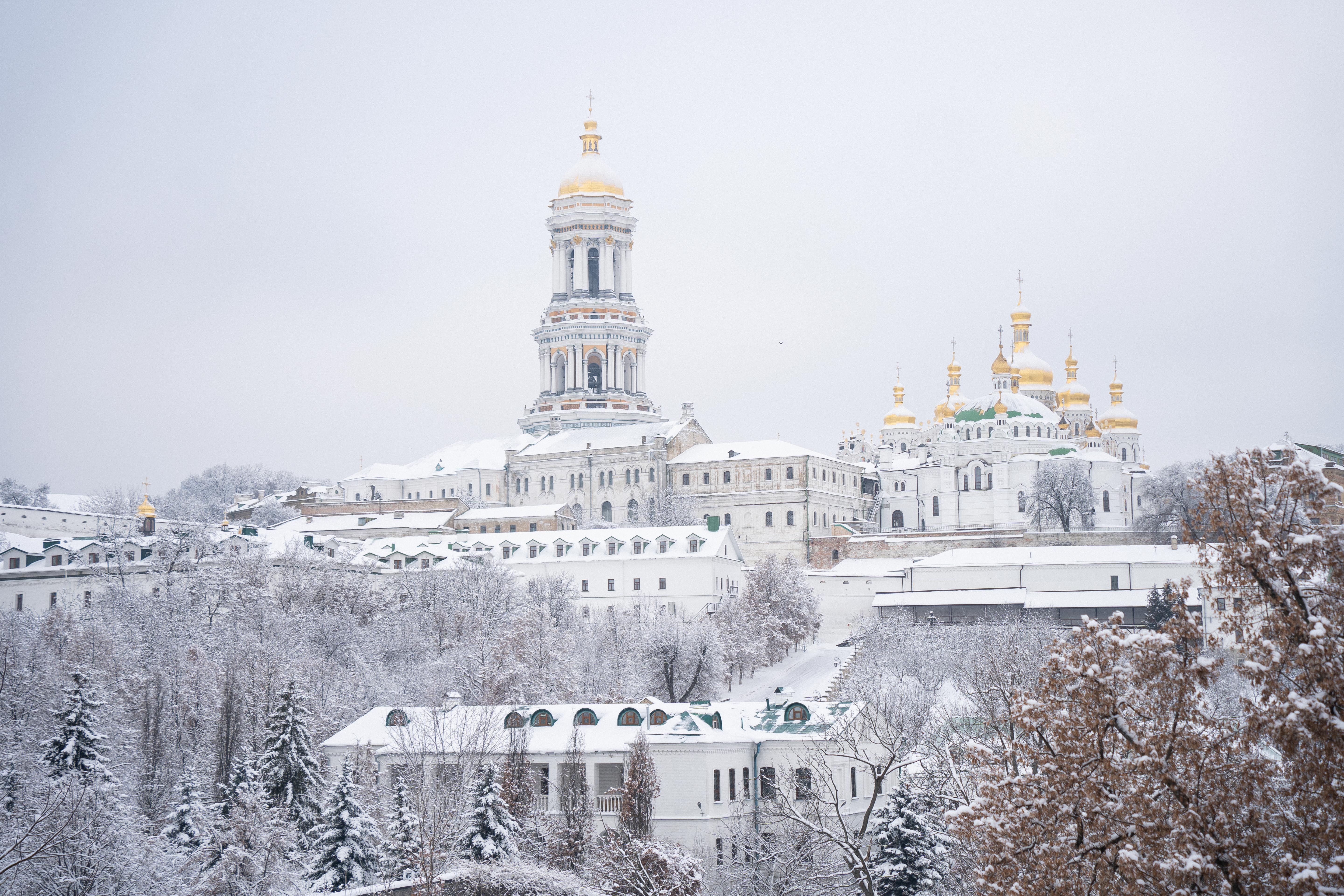
- Systemic work in this area will begin after the approval of the program for preparing for the millennium of the Kyiv Pechersk Lavra. At present, we are dealing with the consequences of decades of underfunding in the cultural sector. For restoration, continuity of funding is critically important. Restoration is like surgery — once you begin, it cannot be abandoned halfway. Unfortunately, of all the Lavra sites that began restoration over the past 20 years, not a single one has been brought to a proper condition. Even at the Great Lavra Bell Tower, only the first stage of restoration was completed ahead of Euro 2012.
The only Reserve site that was fully completed is located outside the Lavra — the Church of the Savior at Berestove. At one time, the Roshen Corporation helped restore it and carry out the full scope of work, from archaeological excavations to landscaping the surrounding area. In other words, this was done not with budget funds. The state has so far been unable to complete a single project within the Lavra itself.
Over the past two years, understanding that the country is at war, I have sought to attract charitable funding. Thanks to this, we carried out repair work on the Bell Tower and were able to reopen it to visitors in 2023. In 2024–25, with the support of benefactors, the restoration of the Trinity Gate Church was resumed. At the end of 2024, the state managed to allocate funds to repair the roof of the Tower of Ivan Kushchnik, where the roofing had been damaged. This issue was resolved, but the tower itself still requires restoration.
Ahead lies an extremely important project — the restoration of the Onufriivska Tower, which Mazepa built as his own burial vault. We plan to open a Museum of Ivan Mazepa there, and as a museum complex, this site is already 70% complete. A tremendous amount of work has been done, but everything was halted because of the war.
There are also a number of other sites that require urgent restoration or at least conservation. Unfortunately, there is no funding for this. In the near future, we will launch a fundraising campaign to restore our shrines, and we have partners who understand that the current war is also being fought over spiritual values.

- The staff of a Reserve like the Kyiv Pechersk Lavra is enormous. Some people have worked here their entire lives and are accustomed to presenting a hybrid Little Russian version of the Lavra’s history that we heard for a long time. To what extent do you feel that the team fully supports your position and your line?
- You cannot get into everyone’s head, especially in a team where some have worked for generations. My task is to motivate people to respect Ukraine and to convey the idea that the semantic and spiritual front is also a front in this war.
Russia turned the Lavra into one of the springboards for brainwashing Ukrainians and destroying Ukrainian identity. Let me remind you where the Anti-Maidan began. Where was its headquarters located? Where did Girkin and Malofeyev organize the exhibition "Gifts of the Magi"? Exactly one month before the shootings on the Maidan, this exhibition of unclear origin was brought in to cover up the Anti-Maidan. Then, from the Lavra, the exhibition traveled together with Girkin to Sevastopol.
Therefore, the task now is to realize that we are all part of the information resistance. Russia does not need the plantations of Donbas. Russia needs the symbols that allow it to mold its neo-imperial construct — to fuse together the narratives of the USSR, the Russian Empire, and the Golden Horde. They have designated the Lavra as one of the symbols of their identity. Society as a whole must understand this.
Olha Skorokhod, Censor.NET
Photographs provided by the National Reserve "Kyiv Pechersk Lavra"


