



Will remains of soldiers be exhumed from memorial cemetery? What will happen after Supreme Court’s decision?
Recently, it became clear that a large-scale memorial project, intended to serve as an eternal tribute to fallen Ukrainian soldiers and as a visualization of remembrance for future generations, has been thrown into uncertainty. The Supreme Court has ruled that the allocation of land for the National Military Memorial Cemetery (NMMC) was unlawful.
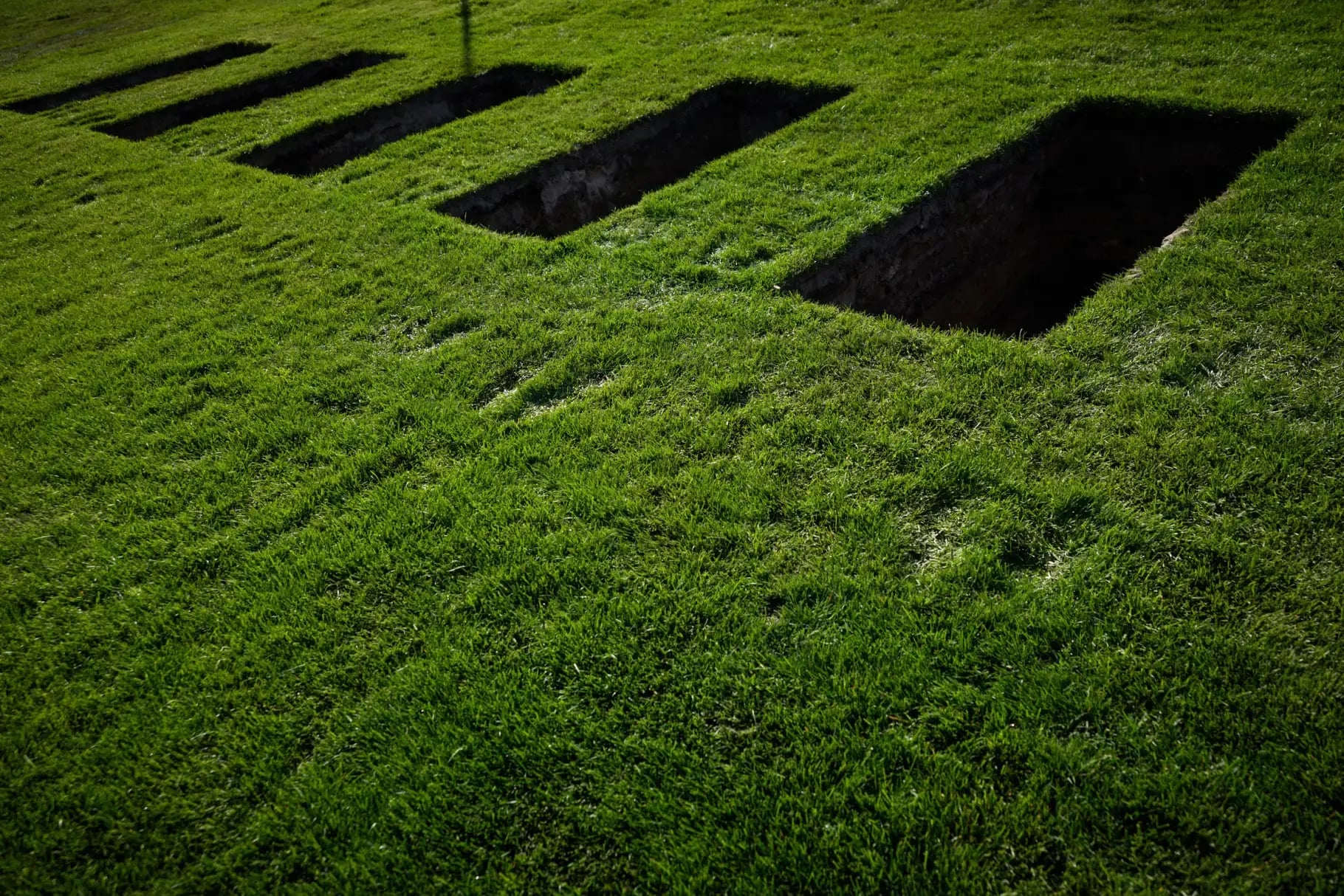
A site for the new military cemetery was not identified immediately, although its necessity today is critical. Around a dozen options were proposed, including some that sparked considerable public outrage — notably a location on Lysa Hora in Kyiv and the Bykivnia forest (where research into the burial sites of victims of the Stalinist period has not yet been completed). In other cases, it emerged that the proposed plots had already been promised to certain developers.
When the choice was made in favor of forest plots near the village of Markhalivka in the Fastiv district, it seemed that a sound option had been selected. However, the authorities’ poor communication with local residents led to conflict, confrontation, and the spread of fears about building a cemetery near the village in an area close to underground and surface waters. Determining how much of this involved manipulation and falsehoods, and how much was grounded in fact, would require a separate article. What matters now is that it was the lawsuit filed by an association of local residents that triggered the current stalemate.
The stumbling block became the largest plot — 258.7298 hectares (3222481200:05:002:0457) near Hatne. In 2024, the Kyiv Regional Military Administration allocated it for the establishment of the NMMC. In August 2025, the first burials were carried out there. Around 200 soldiers have already found eternal rest in this land. Among them are unidentified remains, meaning there is no one to care for them other than the state.
However, the Supreme Court’s ruling of 29 January effectively blocked the activities of the NMMC. Later, the Supreme Court clarified its decision, which can be summarized as follows: "The law prohibits the use of lands within the nature reserve fund for the establishment of a National Military Memorial Cemetery."
The command of numerous brigades and branches of the Armed Forces has already issued statements declaring that relocating the remains of their fallen comrades is unacceptable.
Meanwhile, manipulated photos allegedly showing flooded graves are circulating online, although they are in fact images from the cemetery’s construction phase. The scandal is further fueled by rumors. One version suggests that developers have already set their sights on this plot as well, as construction in this part of the Kyiv region is proceeding at an active pace. There are even claims that the court decisions were personally orchestrated by former Head of the Presidential Office Andriy Yermak...
THE CORE OF THE ISSUE: A LEGISLATIVE CONUNDRUM
Without outlining the entire range of disputes and evidence examined by the judges, the essence of the problem can be explained as follows.
In 2024, the Kyiv Regional Military Administration allocated the plot in question for the creation of a military burial complex and changed its designated purpose. From that point on, the land was classified as "public-use land plots allocated for burial sites, with the right to fell trees and shrubs and to use the timber harvested in the manner prescribed by law." However, under Ukrainian law, a cemetery cannot be established on land designated for environmental protection, and the land in question, based on certain characteristics, falls precisely into that category. Accordingly, the Kyiv Regional Military Administration unlawfully changed its designated purpose, and, as a result, all subsequent steps in the process are legally questionable.
Courts at all levels, including the court of cassation, rejected the Kyiv Regional Military Administration’s argument that the plot was not and had never been part of the nature reserve fund (having been designated "for forestry and related services"). Instead, they pointed out that, pursuant to the Law of Ukraine "On International Treaties of Ukraine," if an international treaty of Ukraine that has entered into force in accordance with established procedure sets out rules different from those provided for in the relevant act of Ukrainian legislation, the rules of the international treaty shall apply.
The land in question forms part of the Emerald Network — a system of areas recognized as important for nature conservation under a European convention in countries that are not members of the EU. The Emerald Network was established in 1998 to implement the Convention on the Conservation of European Wildlife and Natural Habitats (the Bern Convention), which Ukraine ratified in 1996.
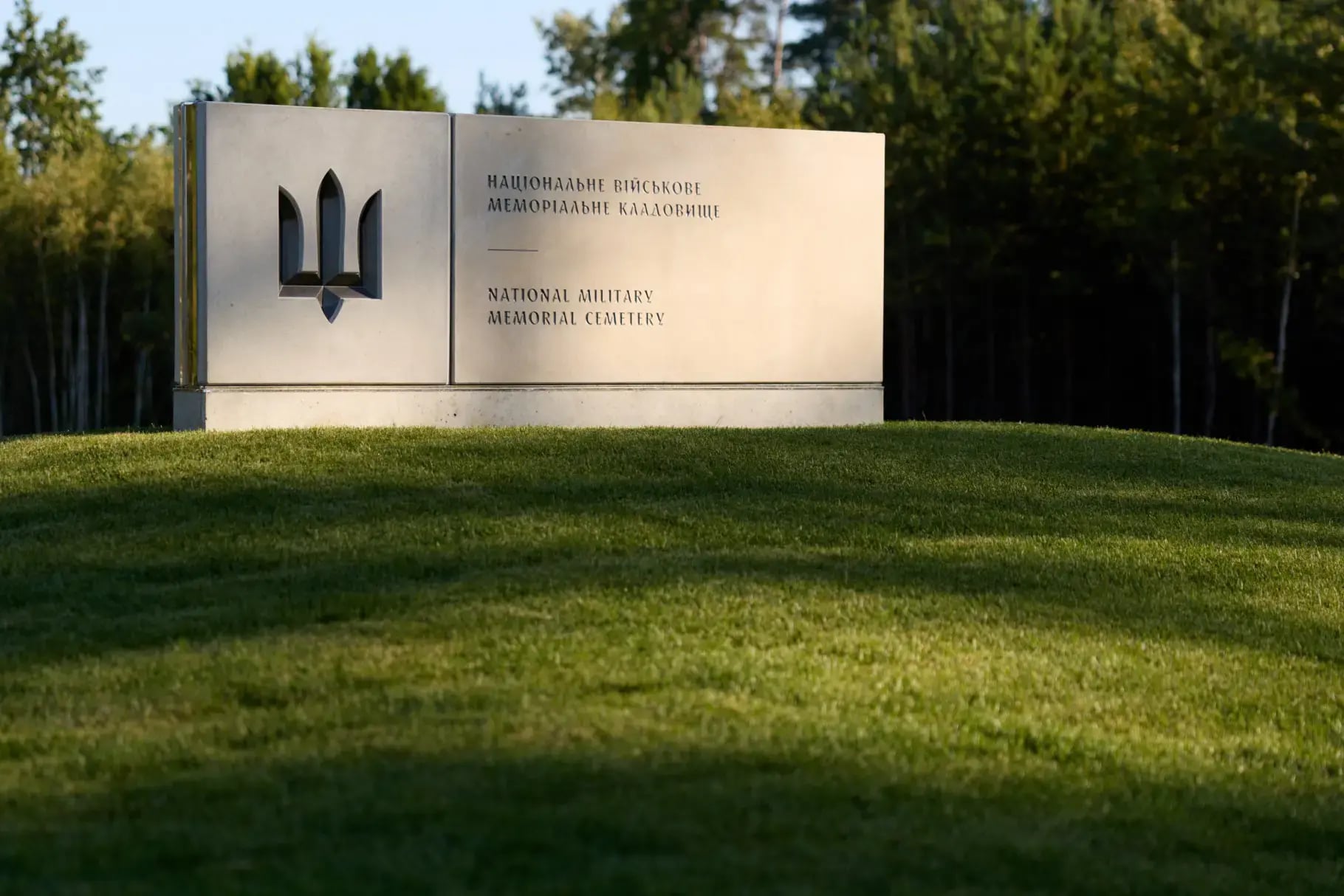
REACTIONS: SILENCE FROM RELEVANT GOVERNMENT BODIES
Minister for Veterans Affairs Nataliia Kalmykova said in her address to parliament on February 3 that the Ministry for Veterans Affairs is working on a legal mechanism to respond to the Supreme Court’s decision.
"Burial sites of our fallen are inviolable. That is why the Ministry for Veterans Affairs is working out a legal mechanism of response, mechanisms to prioritize commemoration when decisions are made on protected natural areas, and is also ensuring proper security and ongoing care for the territory and the graves of 214 defenders buried at the National Military Memorial Cemetery," she said.
In effect, this declarative statement is, for now, the only comment that actually addresses the issue from those responsible for the legal inconsistency.
Meanwhile, Head of the Ukrainian Institute of National Remembrance (UINR) Oleksandr Alforov notes that a National Memorial Cemetery in a country that has been at war for 12 years should have been established long ago. The indecisiveness of state authorities and legal loopholes have led to the current unpleasant situation.
"For me, this story presents a rather ambiguous position both as a civil servant and as a reserve military officer. First of all, there is a huge number of gaps in the law. Regulations on mandatory tenders have not been adopted… We have environmental legislation, and there is also a gap here. There is a draft law No. 4461 regarding environmental zones. At the same time, the court took into account (data) on the Emerald zone, applying international law because there is a gap in our own. Why is there a gap in our legislation? Laws on environmental zones are not being adopted due to the large number of developers or logging interests. A system that rotted in the 1990s and early 2000s is producing these results. The country has been at war for 12 years, and we are still dealing with the consequences of the capitalization of certain oligarchs," he said on air with TSN.
Alforov’s predecessor as head of the UINR, Anton Drobovych, emphasizes the enormous importance of creating a single place where servicemen and servicewomen who died for Ukraine can be buried.
"I currently work at an academic institution and, as a researcher of war memorialization, I can express my views on the processes taking place," he says. "I care deeply about the fate of the National Military Memorial Cemetery because the Ukrainian Institute of National Remembrance, which I previously headed, developed its conceptual framework. At the time, together with the Ministry for Communities and Territories Development and the Ministry for Veterans Affairs, we worked out the relevant draft law. Accordingly, many of my colleagues and I invested significant effort and time into this, and I would like this project to be brought to completion at the highest level.
This is a national-level memorial institution not only in name but also de facto. At present, it is the only military cemetery of such scale built during the years of independence. To be frank, despite criticism regarding inclusivity, accessibility, spatial and infrastructure solutions, it is currently the best of what has been created.
Perhaps in time, the Field of Mars in Lviv, which is now under development, will surpass this project and contribute to the formation of an entirely new memorial tradition. But that lies in the future."
He also emphasizes the legal inconsistency caused by the discrepancy between Ukrainian and European legislation:
"In fact, from the standpoint of documentation, this issue is debatable, namely, the court’s determination that these lands have an environmental protection designation. For example, in the cadastre, in the documents of the previous user, and in land extracts, they never had such a category (under the classifier ‘04 - lands of the nature reserve fund and other environmental protection purposes’). Initially and officially, these were forestry lands (‘09.01 - for forestry and related services’), and it was precisely on the basis of this official land status that the Kyiv Regional Military Administration changed the designation to ‘07.09 - public-use land plots allocated for burial sites.’ Anyone can verify this, as the designation in the Public Cadastral Map has still not been changed. On the other hand, since there is now a Supreme Court ruling, de jure this will have to be acknowledged, as one cannot dispute a higher judicial authority."
The court’s ruling explains that these lands were potentially intended to become a nature reserve and that they formed part of the so-called Emerald Network, whose status still requires legislative confirmation. In other words, it can be assumed that the court adopted this decision with a view to the future, in order to preserve these forests. However, in reality, it is highly questionable whether they would be better protected outside the framework of the National Military Memorial Cemetery. It is precisely the NMMC that has the potential to safeguard and preserve them. By contrast, we see extensive commercial and private development nearby, which for years has destroyed, polluted, and logged the forests."
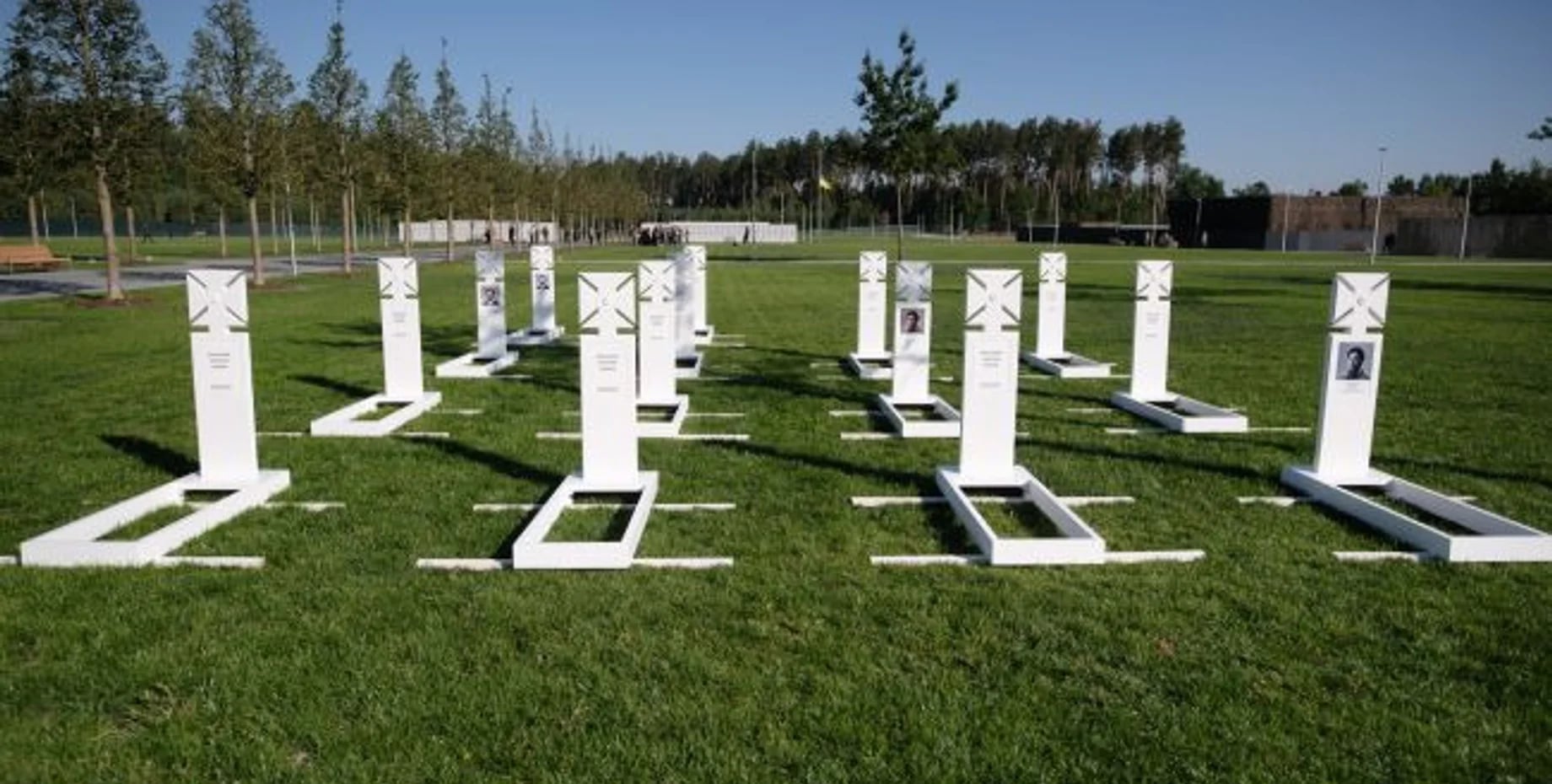
Photo: RBC
WHAT NEXT?
Censor.NET spoke with notary Iryna Kaminska to clarify the procedure for amending the registration data. She emphasizes the need to comply with the court’s ruling; otherwise, even if the status quo is maintained, the National Memorial Cemetery will remain in a legally precarious position.
In her view, the previous owner of the plot — the National University of Life and Environmental Sciences of Ukraine — must first apply to the Main Directorate of the State Service of Ukraine for Geodesy, Cartography and Cadastre in the Kyiv region with the original court decision in order to restore the land’s designated purpose.
After that, an application must be submitted to the state registrar in the Kyiv region to restore the right to use the land plot.
The court’s ruling says nothing about the fate of the structures and graves. Theoretically, additional lawsuits would have to be filed in order to seek their demolition. But would anyone dare to take such a step? It would be a radical move, damaging the state’s image and the memory of the soldiers who gave their lives for this state and society.
Anton Drobovych is the only public figure, directly or indirectly connected to the National Military Memorial Cemetery, who is publicly proposing a possible path to "correct the mistakes."
"What can be done to break out of this legal deadlock? For example, the Verkhovna Rada could introduce amendments to Law No. 3505-IX of 2023 on ensuring the construction and operation of the National Military Memorial Cemetery, which was intended to facilitate the establishment of the cemetery and which contains a prohibition on using land designated for environmental protection purposes to create a cemetery.
It could also stipulate that if such land is used, the state institution National Military Memorial Cemetery must, within a specified period, conduct an environmental impact assessment, which was previously excluded from this procedure. This would be indicative, since part of the cemetery has already been put into operation, with landscaping and drainage in place, and it would be possible to review and verify whether all the alarming claims previously voiced about the site are substantiated. It could also provide for a dedicated unit within the NMMC responsible for forest protection and monitoring the condition of water bodies and the overall environmental situation."
In his view, once the parliament adopts the relevant decision, the Kyiv Regional Military Administration will be able to once again adopt a decision granting permanent use of the land in a manner that does not contradict the previous court rulings. He notes that the existence of a memorial cemetery on this territory is the strongest guarantee of preserving the green zone.
"And the second block of tasks that needs to be addressed is communication," the former head of the UINR says. "There is a great deal of distrust, a great deal of criticism, and many entirely unfounded claims about the cemetery. This does not mean that there are no shortcomings or mistakes, but the level of hate we are seeing now is unacceptable. After all, this is a cemetery where defenders are laid to rest, and respect for this place must be at an appropriate level. We need to restore trust in the process of creating the cemetery and return the discussion of problems to a normal, civilized course, so that it is not only agitated individuals going around claiming that it is a swamp. We showed them: look, this is sandy soil, there has never been a swamp here. If you look around, it is a pine forest. What kind of swamp could there be in a pine forest? And in response, they simply keep repeating the same thing."
There are indeed more waterlogged areas there where burial sectors were never planned. There is even a ravine with water, but that ravine was never intended for burials. Accordingly, to return the situation to a normal course, a roadmap should be developed, for example, for two years, with appropriate monitoring of its implementation. This document would specify which facilities are to be put out for architectural competition, how construction is to be monitored, who is responsible for the environmental situation, and would establish the necessary agreements, as well as launch the relevant competitions and procedures.
Who will carry out ongoing monitoring of the cemetery’s activities? If we are talking about creating a dedicated cemetery department responsible for monitoring the environmental situation, funding must be allocated for this. A foundation could be established to help maintain these additional functions. Alternatively, a supervisory board could be created, similar to those operating in major museum institutions.
Accordingly, this should be brought to public discussion, with agreement that the Ministry for Veterans Affairs would oversee the implementation of these processes. This could be an attempt to break out of the current crisis, because at present the deadlock is deeply unhealthy. The Supreme Court’s decision is pitting military personnel, civilians, civil society activists, and the government against one another.

"Incidentally, there is prior Supreme Court case law which states explicitly that merely revoking land allocation orders that were once executed, after subsequent land documents were issued, construction carried out, and facilities commissioned, is an ineffective means of legal protection."
At present, amid the lack of open communication from state authorities, a sense of confusion prevails. However, if Minister Kalmykova is to be believed, the cemetery continues to operate, and the graves continue to be maintained and guarded.
If relevant officials have an opportunity to demonstrate their ability to navigate a crisis, it is precisely now.
Olha Skorokhod, Censor.NET


