



Mortar operator Oleh Kononchuk, call sign Konon: "I was climbing stairs to close entrance to basement when I saw FPV on fibre optic cable – it was ’staring’ right at me"
Three FPVs flew in and exploded in the basement, where the 68th Brigade’s "Minotaur" mortar battery was stationed. The explosion caused the floor slabs to collapse and bury the shelter. ’I thought we were buried alive there," Oleh recalls his feelings.

Using a knife and rebar, the commander of the mortar platoon of the 1st Jäger Battalion of the 68th Brigade chiselled out blocks of the wall, made a passage, climbed out himself and rescued two comrades who were with him. All three are now undergoing treatment for severe concussions. We spoke with the 32-year-old volunteer, who joined the army of his own accord in 2022 and ended up in a brigade that was just being formed. It is difficult to imagine what our soldiers are going through this winter at their positions. That is why I asked the mortar operator detailed questions – so that our readers would understand the price of peaceful life. But this situation also shows that even in the most difficult and frightening situation, under the nose of an enemy who is lying in wait for you, you can save yourself and those around you.
Let me remind our readers that the 68th Brigade has been in the Pokrovsk direction for almost two years. And it is repelling the enemy very powerfully and effectively. When the Russians infiltrated the city through the positions of a neighbouring unit, the "yegers" rallied and actively drove them out, not allowing them to accumulate. Since autumn, the brigade's fighters have destroyed thousands of enemies in the city. And they continue to do everything possible to prevent them from advancing.
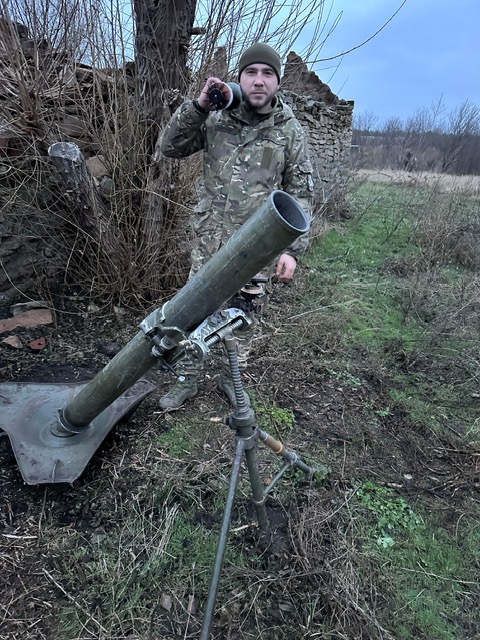
"MORE THAN THIRTY FPVs AND FOUR 'MOLNIYAS' FLYING INTO THE HOUSE WHERE WE WERE LOCATED
"Our position was in the suburbs of Pokrovsk," says 32-year-old Oleh. "We were working with mortars. The situation you are asking about began on 3 February, and on the 5th we left to join our own forces.
At night, an UGV arrived to bring us mines. We met it, but before we could unload, a drone flew in. We realised we had been spotted. We took only two mines from the UGV, and then the FPVs started hitting that spot. The mines caught fire. The FPVs continued to search for us because the enemy saw people from the drone. They targeted one house. More than thirty FPVs and four 'Molniyas' flew at it. We survived the night without incident because that house had a decent basement. At 6 a.m., it all started again. The enemy understood that the UGV was still standing, which meant we were somewhere nearby.

This photo was taken in the shelter that the enemy found and destroyed. It was from here that Oleh and his comrades ran to another basement.
At around 10 or 11 a.m., an FPV flew into the basement, and the explosion revealed everything. I say to the guys: "We have to run to another basement, because the second FPV will fly right here. And then we're done for." I run out first. I run through the neighbouring yard and jump into the basement of another house. But above us, apparently, a "Mavic" was hovering, and the enemy saw where we ran. The guys hid in the basement — luckily, it had a turn. There was no door in that basement, so I blocked the entrance with blocks that were lying nearby. When I had done everything and ran down to the last step of the basement, the UAV flew into the blocks I had stacked. I was thrown onto the guys and knocked out. I came to my senses in a couple of seconds and felt a sharp pain in my chest; it seemed like I couldn't breathe. I felt myself under my armour with my hands – I didn't seem to see any blood. It saved me!
But I couldn't see the other guys in the dust that had risen. I reported over the radio that it looked like all three hundred were there. "Look carefully," the commander replied. "Check everyone." But I lost consciousness again. I came to again and asked, "Is everyone alive?" I wanted to block the entrance with blocks a second time. I started climbing the stairs and then I saw an FPV on fibre optics staring right at me. I ran down and turned the corner. Okay, but the FPV didn't turn, it hit the wall in front of it. I blacked out again.
I opened my eyes — there was so much dust that I couldn't see anything. But the guys were next to me. No one seemed to be injured, but they were deaf. My ear was even bleeding. I got up and saw a third FPV in the passageway. When it broke, the floor slab collapsed and the passage to the stairs was blocked. Only a small hole remained above them, about 10 by 10 centimetres.
I reported over the radio that we were buried. The commander asked me, "Calm down. Check yourself, see where the guys are and how they are doing." At that moment, I didn't understand whether I was injured or not. I was in shock.
At that moment, another 15 FPVs were fired through the hole in the ceiling slab. One after another, they hit that spot. I thought, "Now they'll break through, and we're done for."
I felt like we were being buried alive. But my four-year-old daughter and wife were waiting for me at home. So I decided that this wasn't the end!
The FPVs stopped hitting our basement, but the Mavic hung around until nine in the evening. Maybe the operator was waiting for us to try to get out of there. But we didn't even have the slightest chance to do so.
"IT WAS SO COLD AT NIGHT THAT IT WAS IMPOSSIBLE TO SLEEP. UNTIL MORNING, I THOUGHT ABOUT A BLANKET AND A SLEEPING BAG."
"When the dust settled and I could see clearly, I realised that the basement was uninhabitable," Oleh continues. "Its walls were made of cinder blocks. I had a knife, so I found some rebar and started prying open the joints between the blocks, loosening them.
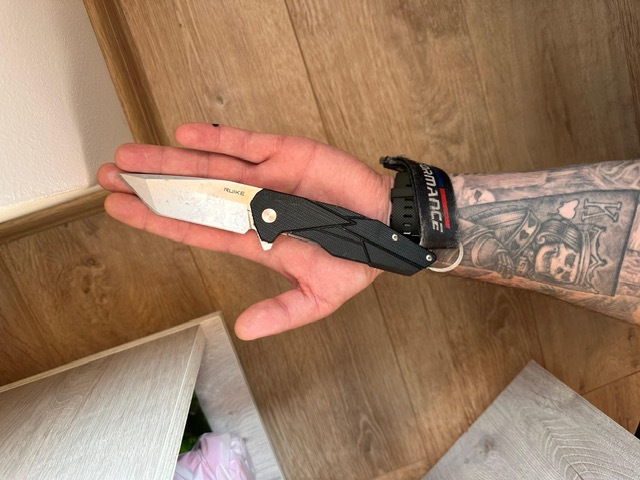
The same knife that Oleh used to dismantle the basement wall
- Did your mates help you?
There was very little space for two people to work there. And one of them was short, so he couldn't reach where he needed to — closer to the ground. He already had poor hearing, and now he was completely deaf. I told the other one to listen for any Mavics hovering above us or FPVs flying around. He had to monitor the airspace above our basement. Meanwhile, I tried to dismantle the wall myself. And I succeeded. After pulling out a couple of blocks, I put them back so that the hole in the side wall of the house would not be visible from the outside.
We had to spend the night in that basement. And it was freezing cold. It was terribly cold. I took a thermal blanket out of the first aid kit. I wrapped myself in it, but it didn't help me warm up. I stayed there until two in the morning, but I was so cold that I couldn't straighten up. No one could sleep in that cold. To keep from getting even colder, we started walking around our basement. It was about three metres long and maybe two metres wide.
We ran from the previous basement so quickly that we didn't have time to take anything with us — no water, no food. I only managed to grab my mortar sight. All our belongings remained in the previous basement, including our sleeping bags.
- Did you have a plan for the morning?
- Yes, I had it all figured out. I thought: I'll be the first to climb out of the hole I dug. If the FPV doesn't chase me, the other guys will follow me. The main thing was that the FPV didn't spot me, because there was nowhere to hide near that building. I had to run to the first house.
At about half past five in the morning, when it started to get light, I pulled out the blocks and climbed out. I thought they were waiting for me: either Mavik or the FPV were sitting somewhere nearby. The hole turned out to be small, but luckily all three of us were thin. I listened - it seemed quiet. I told the guys, "Give me your guns and climb out yourselves." I helped one, then the other, and we walked down the street. The commander guided us by radio, telling us how to get out. I also had a tablet with me and used the map to navigate.
We ran into the first house and waited. We listened to see if an enemy drone was following us. We were afraid that what had happened the day before would happen again. But we were lucky. Everything was quiet. We moved on. We walked down that street for a long time, from house to house. We kept hiding because from time to time it was unclear what was flying above us: was it targeting us, or were our own forces at work? We reached another unit, which didn't even know what had happened to us. But the commander planned to ask them to dig us out if we couldn't get out ourselves... But I think it would have been impossible to dig us out from the outside – a dozen FPVs would have flown in immediately...
- Did you have the strength to get out?
- To get out, yes. When we were buried, to be honest, I felt a little discouraged. But if you want to live, you have to do something, find the strength. Moreover, I kept thinking that my family was waiting for me at home. That gave me strength.
None of us three lost heart. Everyone wants to live! At night, in the basement, I thought about a blanket and a sleeping bag. I didn't want anything else. And when we got out, all three of us wanted coffee and warmth. We were very cold. I even froze two fingers while chipping away at those blocks.
It took us a long time to get out. It was good that I had a tablet — they sent us the coordinates of a point where a car could pick us up. That's where we went. The battery commander met us and took us to the stabilisation point. From there, we were referred for further treatment. Thank God everyone came out alive! I was diagnosed with shrapnel wounds and damage to my eardrums, which is why I can't hear well. The doctors also found a cranial haematoma. I am currently undergoing treatment.
"IN 2022, WHEN I STOOD UP TO DEFEND MY COUNTRY, MY DAUGHTER WAS ONLY FOUR MONTHS OLD. I SEE HER GROWING UP ON VIDEO CALLS'"
- How long have you been serving in the 68th Brigade?
- Since its establishment on 6 March 2022. In February 2022, I went to the military registration and enlistment office and said that I had completed my compulsory military service. They took down my number. About a week later, they called back and said I had two hours to get ready and report to the military registration and enlistment office. It takes me four minutes to walk from my house to the military registration office. They gathered us and took us to Rivne, where we all joined the newly formed 68th Jäger Brigade. That's where I met Pavlo Vyshebaba. We became friends from the very first days.

When the mortar battery was being formed, we decided to go there together because we knew and trusted the people who had been appointed to the command. Two other guys went with us. One of them has already died — our brother-in-arms Yurii Havalko. He spent no more than three months in the mortar battery. He was unlucky. He was killed by a direct hit from an FPV.
- What calibre mortars do you work with?
- 120 mm. We stopped enemy assault groups more than once. After such hits on the enemy, our infantry conveyed their gratitude to us from their positions. And when you hear words of gratitude, or when they shout into the radio: "Do it again. You hit the enemy!" you are ready to work as long as it takes. But in our work, it is very important not to get caught. It is difficult to work at night — the location of the shells is immediately visible. But when everything works out with the first mine, and they say, "Do it again," it really lifts your spirits.
In Pokrovsk in October, the enemy burned down our unit's shelter, and we lost our mortar. By then, the Russians were already actively entering the city. After that, it took us two days to leave the city. After that, we sometimes had to walk 26 kilometres to our position in Novopavlivka, from where we could engage the enemy. We carried water, power banks, batteries – the essentials. By the time you get there, you don't want anything anymore. At that time, mines and mortars were still delivered to us by armoured vehicles, although it was already risky.
Now they brought us ammunition using the UGV. On the eve of that attack on us, the vehicle managed to deliver the cargo six times, and it was also used to transport the dead. The last delivery of mines was unsuccessful.
When a mortar is destroyed, you are no longer effective, you have to find another place to work. But at this time, the infantry is left without support. Therefore, everything must be done quickly. The main thing in our work is not to get caught. It is important to camouflage the mortar well. And if something is flying, wait it out, don't take any additional risks.
- What did you do before the full-scale offensive?
- I was a landscape designer, earning a decent living.
- Are you tired of the war?
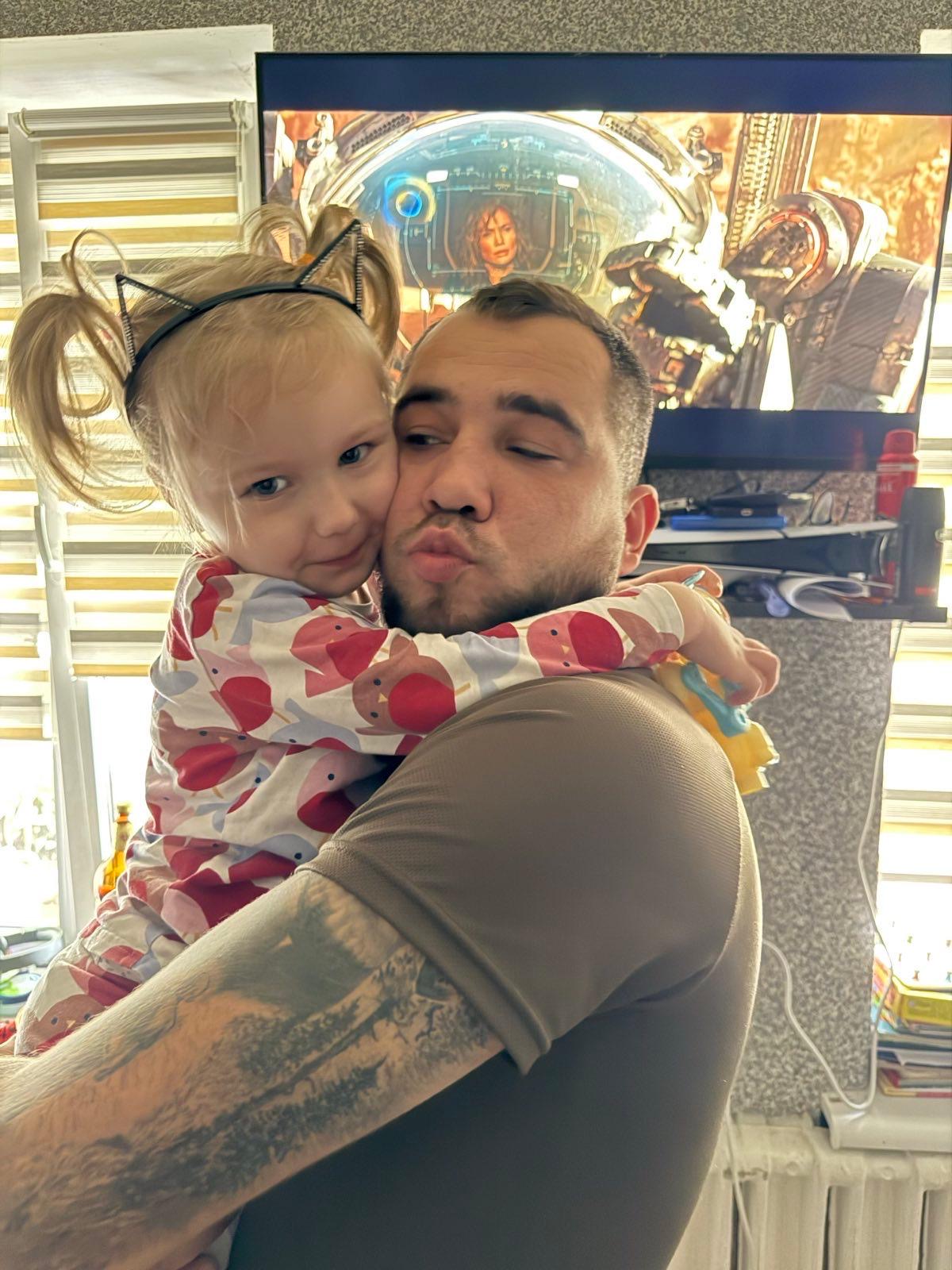
- From time to time, it gets to me, like it does to others who have been fighting since 2022. Everyone has moments when they feel like they have no strength left. It's hard to fight for the fifth year. My child is almost five years old. When I joined the army, my daughter was only four months old. I've only seen her grow up on video calls.
But I will go, and so will the second, and the third... And then what? The answer is simple: in that case, if there is no one left to fight, the Russians will reach Vinnytsia... I know few guys who have been fighting since 2022. Even in the basement with me, there was one completely new fighter; this was his first deployment. The second one had been in the brigade for about a year.
You know, sitting there in the basement, I knew that we would succeed. Although it was scary to be the first to climb out. I think we got a ten-minute window when the pilots were changing shifts. That's when we escaped.
- Did they tell your wife right away what had happened to you?
She didn't know until the very end that my unit had been buried. While I was out of contact, she kept asking if I was okay, Pasha. She always does that. I told her what had happened when they sent me to Dnipro for treatment. And when I arrived at the hospital in Vinnytsia, she came to see me. We had already seen each other.

Violetta Kirtoka, Censor NET


