



Ivan Tsovta: There is virtually no demarcation. There is "kill zone"
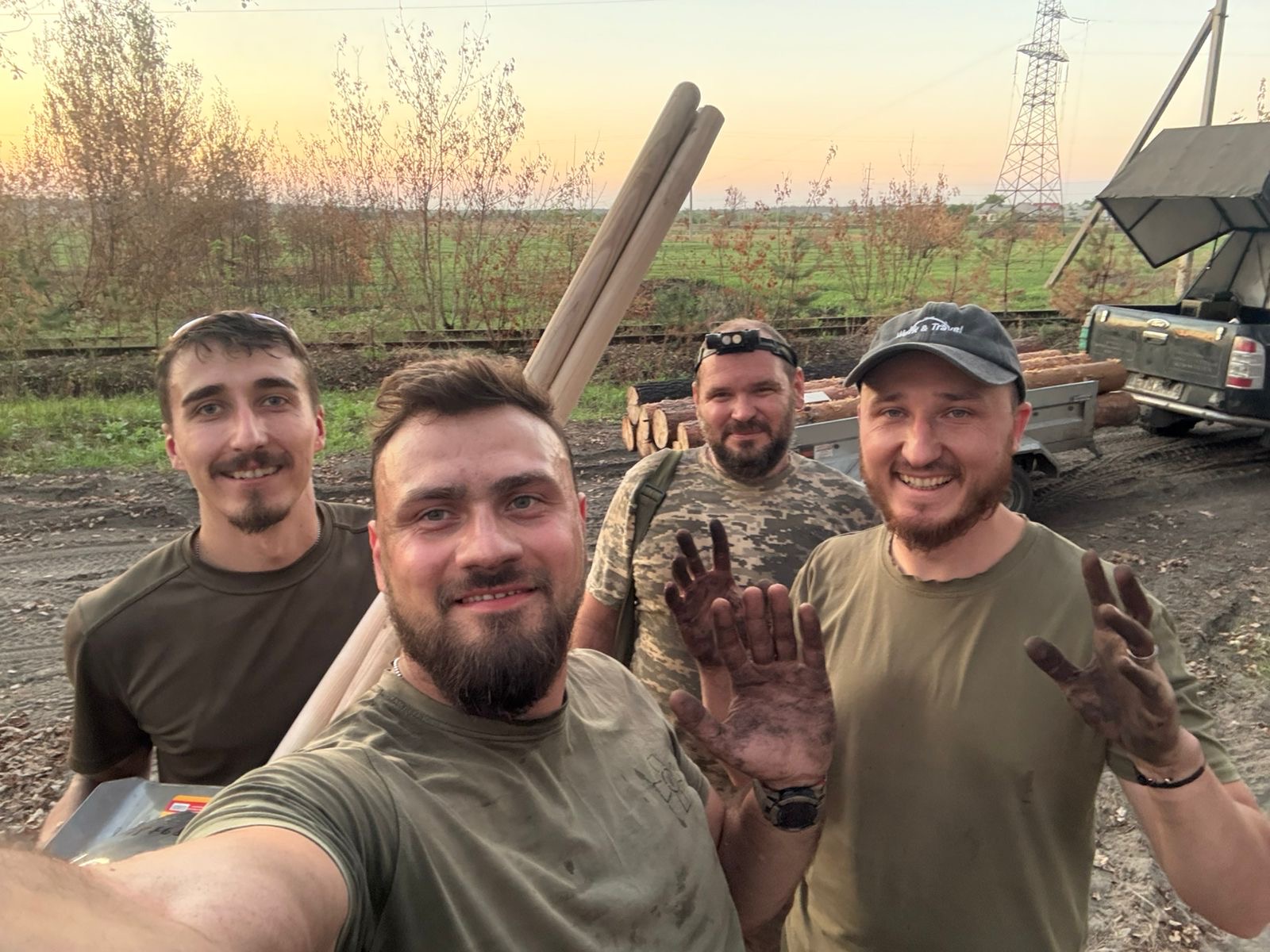
Before the full-scale invasion, Ivan Tsovta worked in the furniture textile industry: he started as a warehouse worker and later became the executive director of "Silk". Now he is a platoon commander and FPV pilot in the unmanned systems battalion of the 63rd SMB, which has been resisting the enemy in the Lyman direction for a long time.
Last year, Ivan's crew became one of the record holders of the Defence Forces in terms of the number of occupiers destroyed - more than five hundred Russian soldiers. For these results, Ivan and his comrades, Artur Doroshenko and Vasyl Zubrytskyi, were awarded state honours.
In this interview, we talk not only about their successes, but also about the daily challenges on the battlefield: flying under constant pressure from enemy electronic warfare systems, changed logistics due to the prevalence of Russian drones, the "kill zone" where there is no clear front line, and the introduction of new technical solutions to improve efficiency. But first, let's remember how it all began.
- Tell us how you ended up on the front line.
- At the beginning of the full-scale war, I registered, but I ended up on the front line in 2024. Before that, I was caring for my grandmother, who was seriously ill. I was the only one who could look after her. A month and a half after her death, I joined the Armed Forces of Ukraine.
- How were you mobilised? Through the TCR?
- I had friends in the 47th and 63rd brigades. They offered me to join them.
So I chose what I wanted to do in the army myself. It's not like many people who come to us now and say, "We weren't given a choice." In fact, you can make your own choice. The TCR provides this opportunity.
- Are the friends who called you also pilots? Is that why you chose UAVs?
- Yes. Although I was already interested in technology when I was a civilian. You know, war has changed so much that drones, after infantry and stormtroopers, are one of its most important tools.

- Did you choose attack drones right away?
- No, at first I was in the aerial reconnaissance platoon. For literally two weeks, they explained and showed me what to do and how to do it. After that, I said, "All right, it's time to go to the position — that's where you can best consolidate what you've learned." About a week later, I went to the Serebrianskyi Forest with the aerial reconnaissance crew.
- What were your impressions of your first flight on the "zero"? It's one thing to fly during training, but it's another to fly in combat conditions.
- The difference is huge, because in training nothing gets in your way, but in combat there are elements that do, in particular, electronic warfare suppression - both ours and the enemy's. Because both our forces and the enemy perceive every drone in the air as hostile.
At first, I flew in the simplest mode. But in order to hone my skills and learn how to get out of the electronic warfare zone when your drone starts to be "caught", I had to switch to free flight mode - basically manual. There, you are the only one in control: wherever you pull, the drone will fly. Hand motor skills and reaction time are very important here. In about a month, I was already conducting reconnaissance on my own.
- Were you successful?
- Of course! Because I wanted to. That's the most important thing in any job.
- Motivation also plays an important role here, which is different for us and the enemy...
- Ours is higher, no matter how you look at it. Most of them come here for money. But I won't underestimate their professionalism, as they did at the beginning of the full-scale war when they said, "They're just mobiks, bastards!" Yes, they are bastards. But they also have special forces that pose a serious threat to our troops. The enemy must be perceived adequately. The fact that we call them f#ckers is one thing, because that's what they are, but we must not underestimate the enemy. We must be prepared for any of their actions. In principle, our battalion under the command of Oleh Valeriiovych shows that we are always preparing for something even more ambitious on the part of the f#ckers.
- You are very successful in destroying them, which has been recognised at the state level: on 26 January, the president signed a decree awarding you and your comrades - Artur Doroshenko, Vasyl Zabrytskyi and commander Oleh Liashko. What does this mean to you?
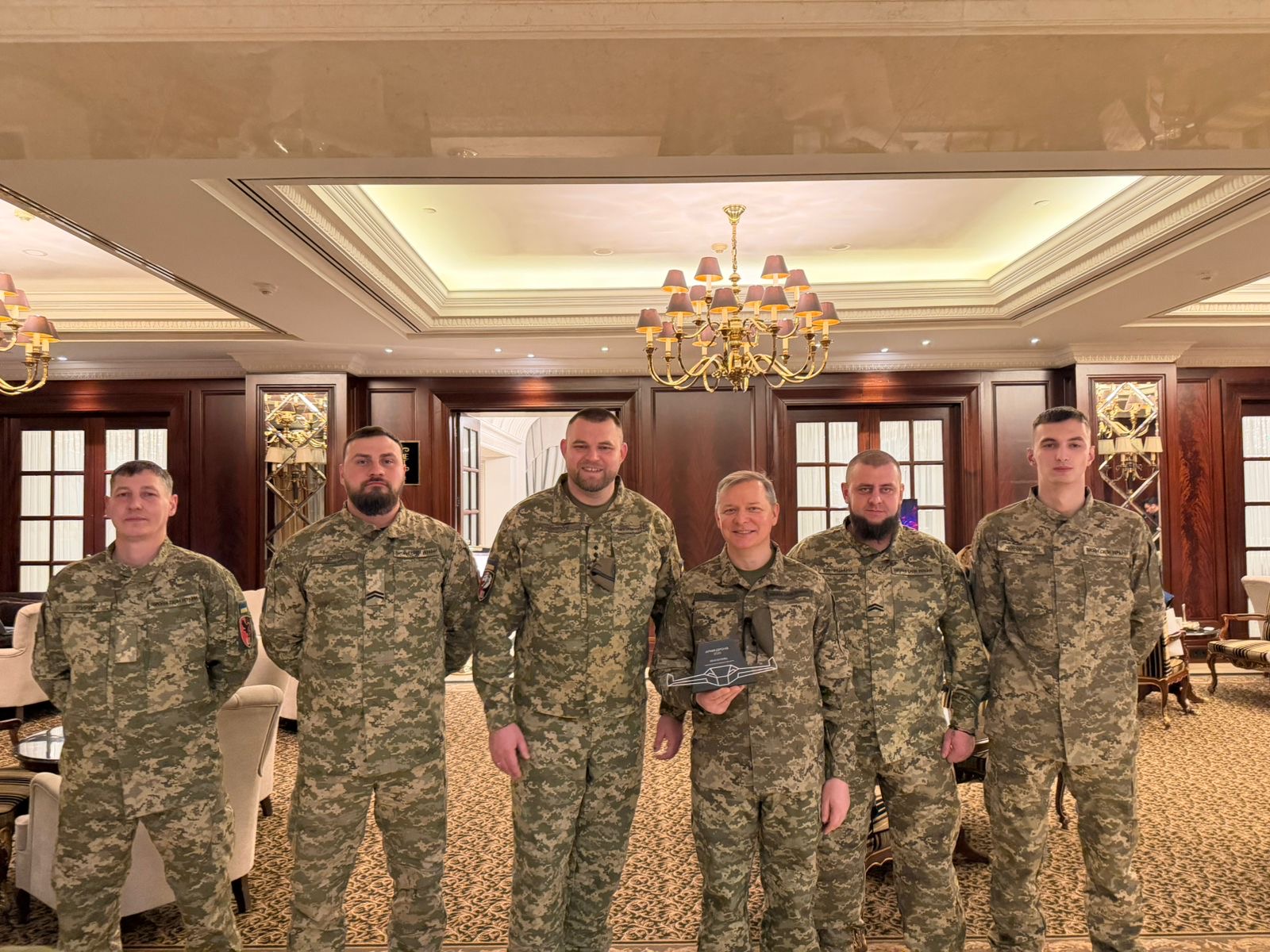
- A lot. No matter what they write on the internet, both the authorities and the command see what we are capable of and what we are doing to contribute to our common victory. This is very important. Some people say, "So what, it's just a medal!" I also take the award calmly — we must continue to work. But it is still confirmation that you are moving in the right direction to destroy the enemy.
- Is this additional motivation to become better?
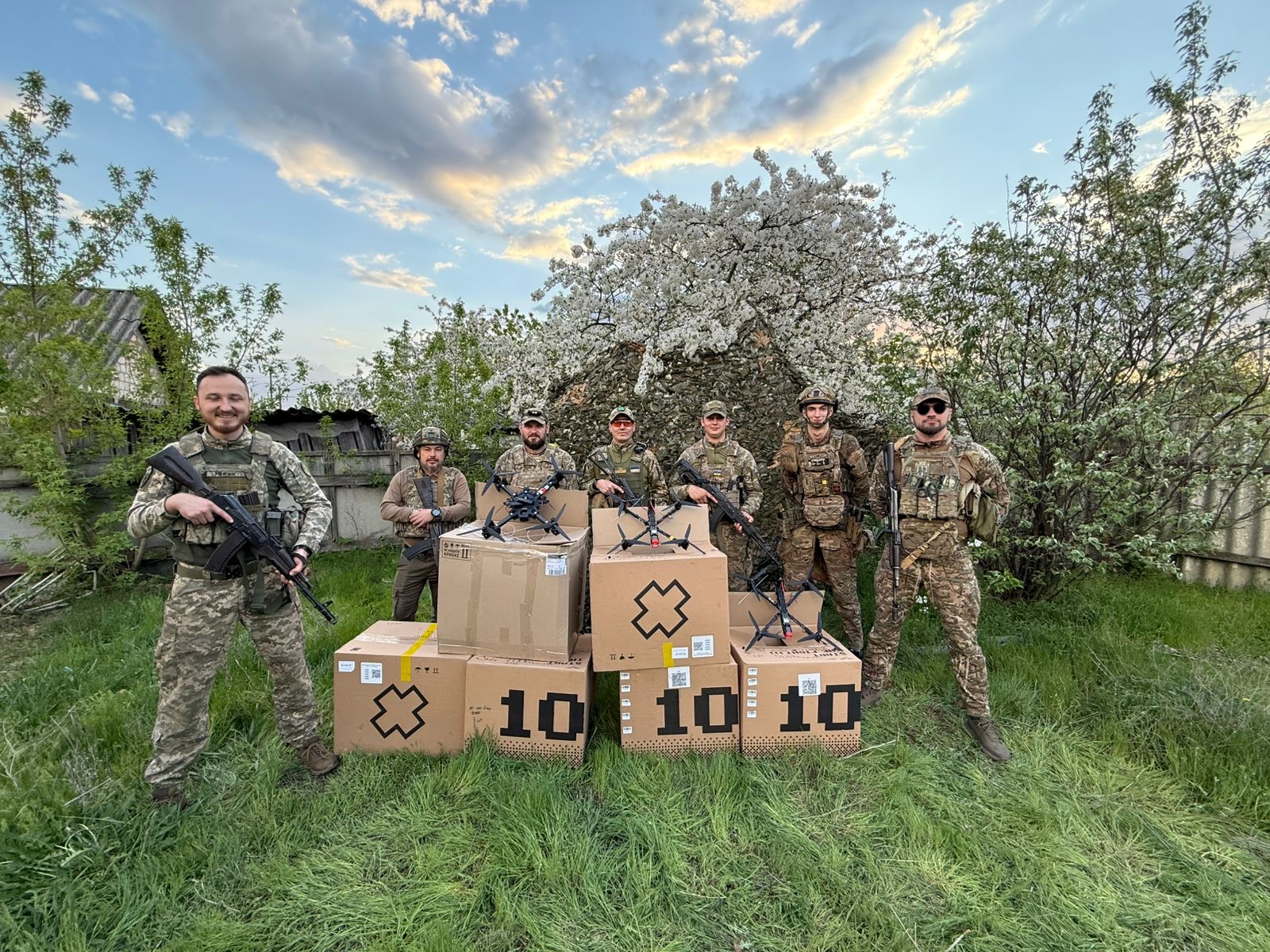
- Of course! Our battalion is constantly working to become better and more effective. We have new additions to our combat equipment and new solutions for UAVs. We test, analyse and implement them. Unfortunately, we cannot disclose any details. But we are trying to keep up with the times.
- By the way, in a recent interview, Andrii Biletskyi, commander of the Third Army Corps, said', he mentioned this and noted that some of your innovative technical solutions have been scaled up to cover almost the entire army...
- That's right. We are indeed trying to become better, in particular through the efforts of our commander. After all, in order to fight, you need a powerful person who will rally the troops and give impetus to new actions.
- Biletskyi also mentioned your commander. He said that personality plays a significant role in your battalion. Oleh Valeriiovych is a well-known politician. Does his former media presence and recognition help? For example, in supporting the battalion.
- When Oleh Valeriiovych joined the army, he completely disappeared from the media. I understand him, because media coverage is media coverage, and we need to do our job well. As Roman Ratushnyi said: The more Russians we kill now, the fewer our children will have to kill. A perfect formulation, in my opinion.
- Once again, I will mention Biletskyi, who drew attention to your teamwork and unity. How do you manage it? People are different.
- Indeed, people are different. We have both those who came voluntarily and those who ended up in the army, let's say, compulsorily-voluntarily. But when they find themselves in our battalion, the concept of how exactly you were mobilised becomes blurred. The process of coordination takes a month or two — we try to teach, show everything, and let them try different areas. That is, we do not determine what a recruit will be. We have options to choose from: you can try being an operator, a pilot or a sapper. There are also professions that support the work of crews, such as FPV, heavy bombers, UGV or reconnaissance. You will develop where the work is closer to your heart.
- Did the programme work for you? "Contract 18-24"? Have there been more young fighters over the last year?
- I wouldn't say so. Although, indeed, there were such people. For example, I have a pilot in my platoon, Artur Doroshenko, who is 21 years old.
- Is it difficult to command a platoon?
- Yes, because it's a big responsibility. You understand that all logistics depend on you. You have to establish communication between units and somehow put everything together like a puzzle - providing drones, ammunition, food, making the right logistical calculations for shift changes and entering and leaving positions. Plus, there is additional training on weekends when the lads go out to improve their skills. It's hard, but I like it because I can see that we are all doing a great job together.

Logistics have become more complicated, in particular due to the prevalence of enemy drones — the so-called "waiting" drones that "sit" on the road and wait to strike transport. How do you cope?
- We analyse enemy movements and raids, draw conclusions, and use them as a basis for when and how we can carry out logistical manoeuvres.
- Your battalion is among the top ten units in terms of enemy destruction. Yurii Butusov wrote an article about you. I will quote an excerpt: "The Archi crew of the 63rd SMB's USF set a record for the number of occupiers killed in a year among all fibre optic drone crews of the Defence Forces – 589 direct hits! Crew members Artur Doroshenko, Vasyl Zubrytskyi and Ivan Tsovta received orders 'For Courage'"...
"Sorry to interrupt, but I want to emphasise that the result depends not only on the pilot, but on every link in the chain, because if the sapper, operator or repeater pilot don't do their job, the FPV pilot won't fly and won't hit the target. Without these four components of the crew, there will be no overall positive outcome.
Our fourth crew member, sapper Yurii Rurych, was also awarded the "For Exemplary Service" award by the Minister of Defence. So I want to emphasise that this was our joint achievement.
- So, you destroyed about six assault companies in a year. How did you manage to achieve such a high standard?
- You know, when I joined the FPV crew as a pilot, it was difficult at first, nothing worked out. It annoyed us a little. We began to delve deeper into the technical side, studying maps and routes in more detail, where the Muscovites move the most. It was only because we had a great desire and immersed ourselves in our work that we achieved such results. Quick reactions and rapid deployment play a big role. There are open areas where the bastards move and closed areas. You have to calculate the time correctly, equip the drone with a sapper, quickly get ready and take off, find the shortest and most effective route, and so on. That's what our crew did. We began to study both the routes and their logistics, as well as the frequency of movement. Plus, our valiant aerial reconnaissance helped us with this. That's how we did it.
- Do you have any secrets to success?
- I think we all have the same one - working towards a greater goal, so that the Muscovites leave here and go back to their swamps and stay there, or disappear altogether. We are working on it.
- Butusov also wrote that pilots, if necessary, engage in combat with enemy infantry that manages to advance through our forward positions. Have you been in such situations?
- Our crew itself - no. However, other crews in our company have engaged in firefights with the enemy. Some have even been wounded. The Muscovites came within 300 metres of us.
- I remember the commander "Achilles" Yurii Fedorenko emphasised that every pilot must have a weapon with them at their position and know how to use it. Do you follow these rules?
- Yes. We also have extra magazines and grenades. In general, our supplies are at a good level. And, as I said, training is conducted on an ongoing basis. As they say in the Third Army Corps: "Ready for any scenario!"
- Last October, pilots from your battalion captured three occupiers. Wasn't that you?
- We didn't capture them. Our aerial reconnaissance and other crews did. I even saw a video that our guys showed me, where the Muscovites said hello to me.
- So, the ones you didn't kill?
- Yes, it's an exchange fund, which is also important. Our guys also get captured and need to be exchanged for someone else. It is desirable that they return from there as soon as possible.
- You said that your supplies are at a good level. What about the Russians? What about their electronic warfare systems?
- Unfortunately, their electronic warfare is a little more advanced than ours. However, our technicians are still trying to come up with something new to bypass enemy electronic warfare.
- Now, in addition to electronic warfare, the weather is also complicating your work: snow, fog, low temperatures. How do you maintain efficiency in such circumstances?
- Our technicians are coming up with new methods of working even in difficult weather conditions. Of course, it's not 100% effective, but we're still working.
This winter has been a real harsh one. In fact, I haven't seen anything like it since my childhood, when there was so much snow and frost - minus twenty. But we still try to create comfortable working conditions. For example, our pilots have special anti-icing devices, such as sprays. We are making some progress in our innovative approach to the conditions of war.
- Did the story of the Starlink shutdown have an impact on you?
- No, because we reacted immediately: as soon as the registration order came in, it took us only a day or two to re-register all our Starlink devices and continue working as usual.
- Did you feel that the Russians had been disconnected?
- It affected their communications, just like when they were kicked out of Discord. You immediately feel how it changes the situation on the battlefield — assaults are different, their devices don't fly the way they used to.
- Soldiers from the Huliaipole direction said that after the disconnection of Starlink, the Russians began to use paper maps more often, and their assaults became more senseless. For the most part, they move around on foot or on motorcycles. How is it in the Lyman direction?
- There were attempts to storm our area of responsibility on 15 motorcycles, with two people on each. It was a strange and naive attempt of an assault. It was summer, around four in the morning, foggy, and our intelligence reported the movement of 15 motorcycle groups. Of course, they didn't manage to do anything, but it was fun.
- That's a good target for you, right?
- Yes! To reduce their effectiveness, you "take apart" their vehicles, while also neutralising the f#ckers.
- As I understand it, you now mostly target enemy personnel?
- Our crew was taken to an area where the enemy's foot routes are located. That's why we "mowed down" so many of them. There was also equipment, but we mainly specialised in manpower.
- Do the Russians move in small groups of two or three?
- From time to time, there were such "jackpots" that we "took out" two or three at a time.
- I recently saw a video released by by "Khartiia" showing a Russian soldier shooting himself after a series of drone strikes. Did you record anything similar?
- There were cases when Muscovites threw automatic weapons, sticks, and radios at the drone, or simply hit it with their hands, but it didn't help them. Some of them crossed themselves before our FPV flew in, but that didn't save them either. Neither did any camouflage. They tried everything! There he is, walking across the field in an anti-thermal cloak, you fly up to him, circle around him a couple of times slowly, and he just keeps moving. I don't know why. Maybe they take some kind of substance before going out that slows down their reactions or awareness of where they are going and why. And so it goes, all day, all night.
- Your team has been holding the city of Lyman and the surrounding area since April 2023. People say about you: they can fly here with their eyes closed because they know the area well. Does that make your job easier?
- When you are in one area, you study it in detail. With the help of in-depth aerial reconnaissance and your own sorties, you understand where and what drones and ammunition to use. Even how to fly there correctly and quickly. Indeed, this simplifies the work for the operators.
- How would you describe the current situation in your area?
- It is difficult, both because of complicated logistics and the intensity of combat operations on the front line. After all, there is currently no such thing as demarcation. There is a "kill zone".
- As someone fighting in Donbas, how do you feel about the Russians' ultimatum that we hand it over to russia as part of the so-called peace agreements?
- They can only dictate such things from a position of strength. But numbers do not always win. Even in our sector, there are many more of them than us. But I believe that quality is more important.
- I also think that they will not stop at those demands. Next, they will demand that we give up the south, Kharkiv, Sumy, and so on until they reach Lviv...
- Events will simply repeat themselves. We have already seen this, particularly in 2014.
If we show weakness now, they will not stop and will go further.
And those who shouted that they would take up arms when the Muscovites reached their region will leave here and go further west. So there is no need to wait for the enemy at home, because he is already here. A quasi-state with imperial ambitions will not stop.
The President recently spoke about the US's desire to end russia's war against Ukraine before the beginning of summer. Do you believe this is possible?
- Not in the case of Russia or any other similar country with the same imperial ambitions.
- How can you trust the Russians at all, right?
- Personally, I don't believe them. But politicians have to steer everything in the right direction. The political arena is causing a lot of fluctuations on the front lines.
- What is the mood in your battalion today?
- We don't believe that this will end quickly. With Muscovy, such an option is definitely impossible. They already ceased fire in 2014. We can now see what that led to.
- But you still think about the future, right?
- Of course we do! We are making plans for civilian life after all this. But I understand that for now we have to do our job. Our comrades feel the same way: no matter how tired it makes us, no matter how desperate it sometimes makes us feel, everyone understands why we are here.
Olha Moskaliuk, "Censor.NET"
Photos provided by Ivan Tsovta


