



Stanislav Starostenko: "B#stards go into assaults with cash and bank cards because they don’t trust their own"
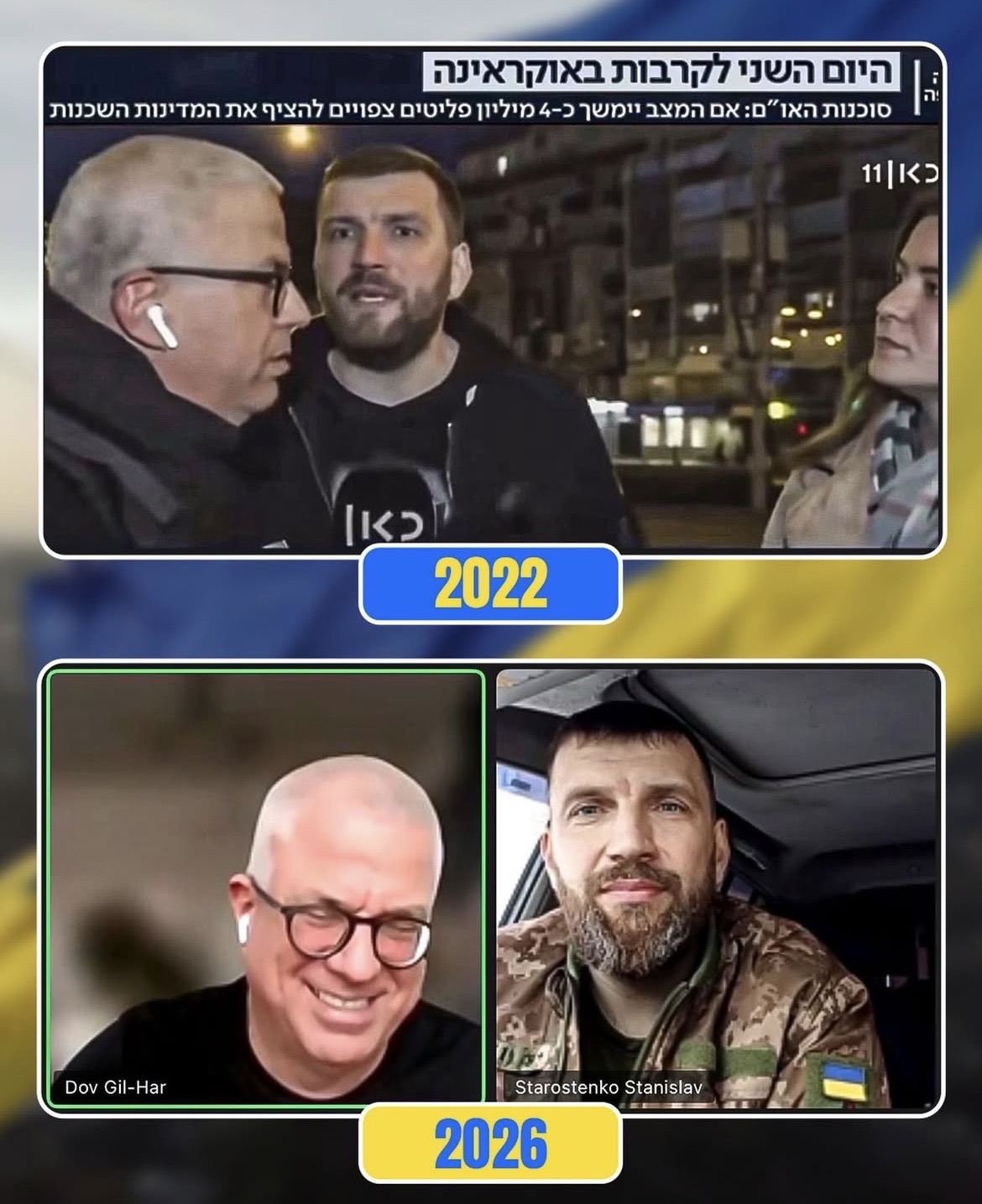
At the beginning of the full-scale invasion, his emotional intervention during a live broadcast on Israeli television quickly went viral and garnered widespread attention. "Stop arguing, guys, we need to help Ukraine! And all you do is flap your f#cking gums! Enough talk!" Stanislav Starostenko said on camera at the time.
Those few seconds of raw, uncensored truth went viral, becoming both a meme and a symbol of the Ukrainian mindset during the early months of the full-scale war: less talk, more action.
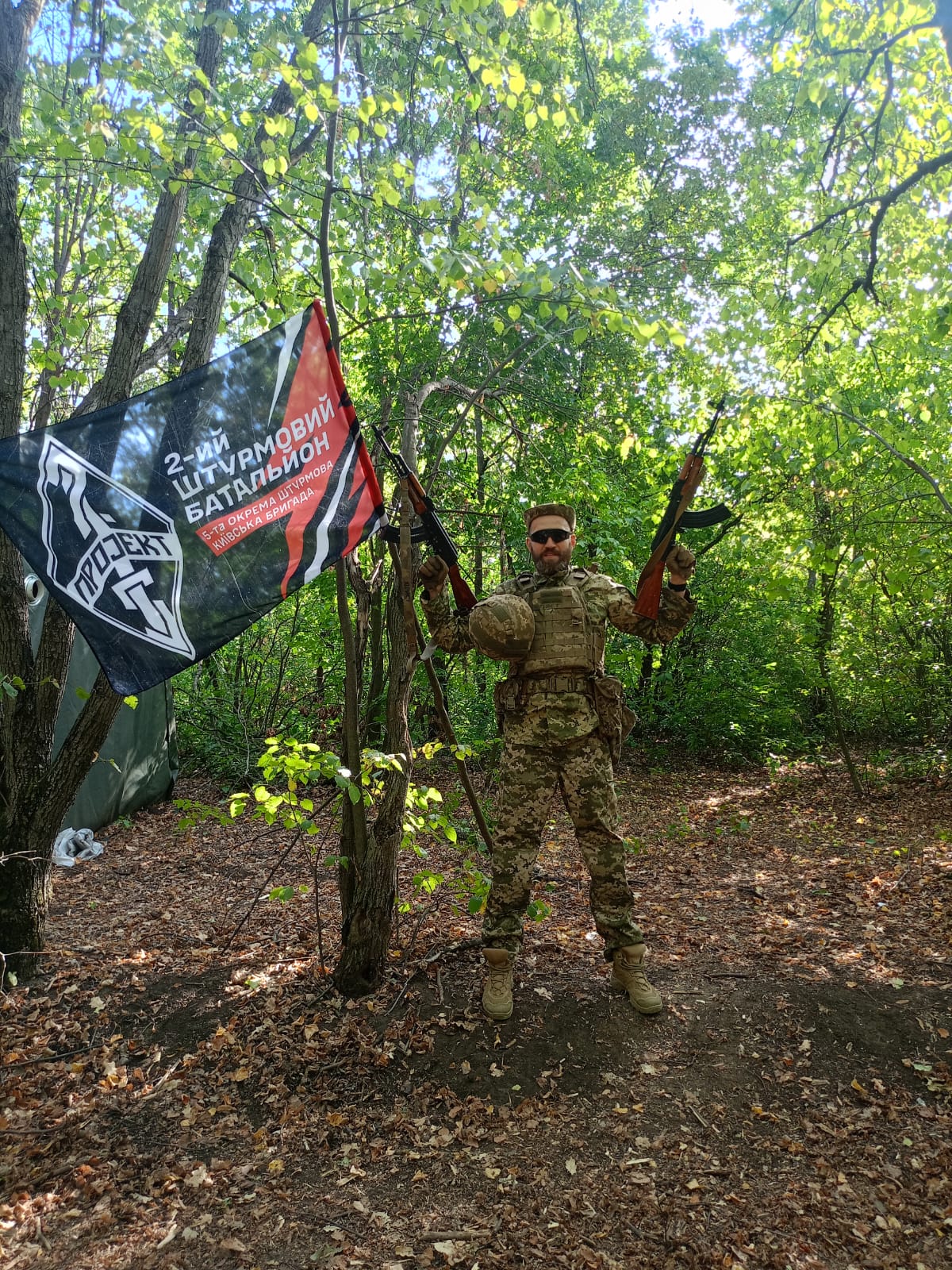
Today, Stanislav is a combat pilot in the unmanned aerial systems company of the 2nd Assault Battalion, 5th Separate Assault Brigade. His call sign is "Yurist" (Lawyer - ed.note), as prior to mobilization, he headed the legal department of the National Museum of the History of Ukraine. However, law is just one facet of his background. Starostenko holds seven university degrees and is accustomed to balancing work with studies: economics, law, public administration, social psychology, special and inclusive education, agriculture, and later, a specialization in gas extraction. He has worked at the Center for Countering Disinformation under the NSDC, served as the director of an inclusive kindergarten, and previously farmed in his native Kharkiv region, in Vovchansk, where he owns land and an orchard. His principle is simple: to achieve results, one must never stop learning.
But for most people, their acquaintance with him began with that short video — emotional, blunt, and completely sincere. It served as the starting point for our conversation.
- Tell us more about that spontaneous encounter.
- Around 3:30 that day, my father called from Vovchansk and said that tanks were driving through our orchard, which is located three kilometers from the Russian border. I waited until morning and went to the Kyiv City State Administration (KMDA) to sign up as a volunteer. But they sent me to the military enlistment office, and they sent me back. They kept giving me the runaround. And then, to top it all off, they said: "We aren't taking anyone without weapons." To show them how serious I was, I ripped a parking bollard out of the ground near the administration building and said: "Are you out of your minds?! I’m livid at the occupiers!" So they signed me up. I went home to pack my things. On the way, near Gulliver, I ran into this film crew. So I said: "You need to stop flapping your f#cking gums and help Ukraine!"
- What prompted you to jump into their conversation?
- First, it’s just what I felt. Second, I’d been getting the runaround all day, so I was truly fed up with everyone just flapping their f#cking gums instead of organizing resistance. I was emotionally wound up. I hate it when people just prattle on but do nothing.
- Recently, in a video on your page, you admitted: "I never thought I’d become a nationwide meme"…
- I certainly didn’t set out to be a meme (he laughs. – O.M.).
- Do you feel like you’ve become famous?
- Not at all! I’m just doing my job.
- I noticed you recently started an Instagram page. Why now?
- I created it because today, unfortunately, many Ukrainians have forgotten that the war is still going on, and donations are drying up. So I decided to set up a page. It was my own initiative.
- Under your posts and in the comments on the news about that incident near Gulliver, people thank you, saying that at the start of the full-scale invasion, you helped them stay sane, and they call you an example of courage...
- I don't consider myself super courageous. I'm scared too; I'm afraid just like anyone else. Every time you head out to positions, you go with that feeling. But you have to do your job well to drive out the damn occupiers. I have to get back to my orchard, after all (he smiles. – O.M.).
- So you never actually joined the TDF (Territorial Defense Forces), right?
- No. You see, I was there at the founding of the Center for Countering Disinformation under the NSDC and worked there until early 2024. I started as an analyst, then became a senior analyst, and later the head of a special sector. The leadership wouldn't let me volunteer. They said: "Stay put, you're needed here." Honestly, we did a lot of useful work in the field of information warfare. At that time, many were eager to join the defense, but few could do what I did. So I had an exemption from mobilization, and I continued to analyze, gather data, and write analytical briefs for NSDC meetings. However, the leadership eventually changed, and following a long-standing Ukrainian tradition, the team left along with their leader.
- And that’s when you were mobilized?
- No. I was working for the Ukrainian Demining Service, I went to demine our territories in the Kherson and Mykolaiv regions. I hadn't been served a summons yet because my exemption from mobilization was still active.
- What is your most vivid memory from that time?
- Snihurivka in ruins. Every yard is a story of a family, a small universe that existed there before. Some farmed shellfish, some did wicker weaving, and some even made tombstones. But all of it was destroyed. I had seen Snihurivka before the war—it was a prosperous, blooming land! And now, everything is ruined and desecrated. It fills you with hatred and rage.
- So how did you end up in the army?
- When I finally received my summons, I went. Though, there was a confusing issue with the TCR (Territorial Centre of Recruitment): I was registered with the Pechersk recruitment center because I lived in that district, but in March 2025, I received a summons from my place of registration—the town of Vovchansk. I traveled there, but they sent me back to Kyiv. Even though I had a deferment through the National Museum of the History of Ukraine, I decided to enlist. My only condition was that I wanted to join specifically the 5th Separate Assault Brigade.
- Why so?
- The training at the center here is f#cking top-tier! During BCAMT (Basic Combined Arms Military Training), I fired over fifteen hundred rounds. All our instructors are combat sergeants. And our entire command has frontline experience. That’s why I specifically wanted to join the 5th.
- Why did you decide to fly?
- (he smiles. – O.M.) It's the army, not me, who decided. Look, a pilot's job is only 25 percent flying. Generally, it requires a very strong intellectual component.
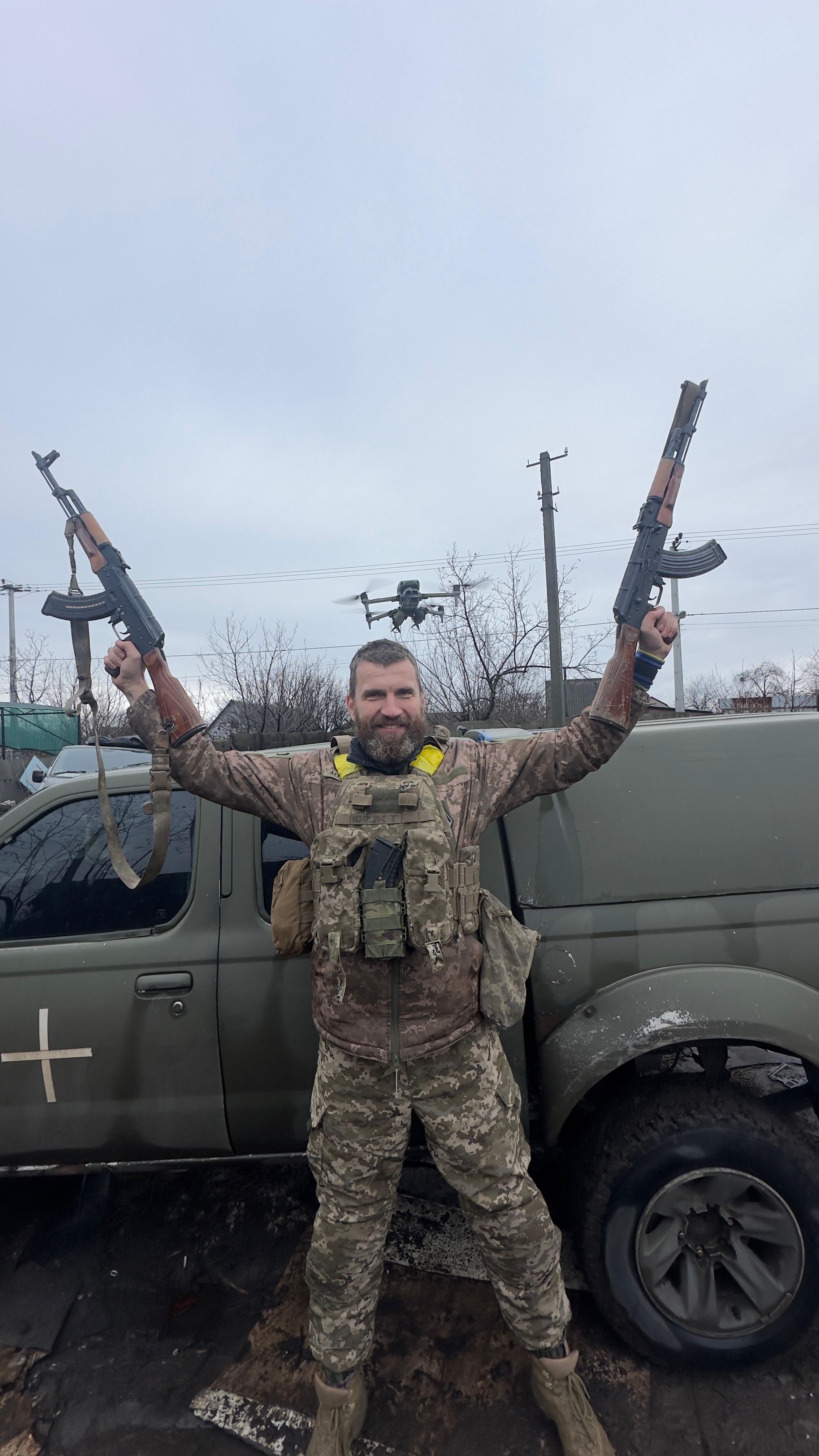
I think because I’m quick on the uptake, they scouted me for this. There were ten of us in training; four went to my battalion, and the rest to other units. We aren’t just pilots, we’re bomber drone pilots. After the training center, they continued to prep us on-site. We practiced payload drops. To give you an idea, I can hit a bucket with a drop from 50 meters. I went out to my first position on my 18th day here.
- What was that first sortie like?
- When my comrade, an experienced pilot, and I arrived at the "zero" line, we were told to deploy the craft. We did. By morning, b#stards had pushed into our settlement. It was a direct engagement. Generally, pilots are positioned a bit further from the front line, two or three kilometers. But because the line was unstable, that’s just how it went, and we ended up working as assault troops as well. Since we were excellently prepared for this at our training center, everything worked out.
I’ll give you an example of how we were trained. We played these role-playing games: attack and defend. The sergeants taught us the tactics. We had rifles with pellets. We started like this: four defenders and eight attackers. The defenders almost always won. But by the end of BCAMT, in the final week, we had four attackers against eight defenders. And we shredded their defense. So when the b#stards appeared in position, we knew what to do. Everything went well. The b#stards are dead. After that first sortie, I went to the sergeants who trained me and thanked them for the lessons. Thanks to such high-quality training, I succeeded. Of course, it was scary at the position. But I sat down and started working. I hope it's not too bad.
- How do you overcome fear in such circumstances?
- Why bother?! Fear should be present. I don't think it needs to be overcome."A healthy dose of fear is necessary to prevent the recklessness that can lead you down the wrong path. Our job isn't to die a heroic death (that's easy enough to do) but to survive and kill as many occupiers as possible. Those are the tasks our leadership sets for us, and we are more than happy to carry them out.
- The Minister of Defense recently stated that we need to reach a point where Russia loses 50,000 troops every month. What do you think about such a goal?
- If it’s needed, we’ll hit it. Our unit contributes to that number every day. We’re working hard. You know, there’s a great atmosphere in our unit. These are real brothers-in-arms. It’s not like with the Russians. I’ve personally seen it, and I know that the b#stards go into assaults with cash and bank cards because they don’t trust their own. We don't have that. We leave our valuables behind and don't worry about them. We truly have a brotherhood. We’ve always got each other’s backs.
- You’re currently fighting in the Huliaipole sector. I recently watched an interview with the deputy commander of the 1st Assault Battalion of the 1st Separate Assault Regiment named after Dmytro Kotsiubailo, call sign "Frantsuz," who is also in the Zaporizhzhia region. He mentioned that the enemy was launching assaults on horseback. Have you seen anything like that?
- I haven't come across that. We’ve seen the b#stards on motorcycles and all sorts of junkers. Mostly, we just watch them go to their deaths and fertilize our land. They carry these huge backpacks, but at the first sign of contact, they drop them and run. We also had a "Rex"-type unit show up, no helmets, no armor. About 100 people. Our platoon of 20 guys shredded them in two days.
- How do they usually conduct assaults now? Do they come in small groups?
- Small groups, infiltration. Taking advantage of the fog, they move in twos or threes, slowly creeping forward. As I mentioned, they also use motorcycles, but we suppress that quickly. That’s why there are so many "stragglers." They’ll jump into a house and hide in the basement, then tell their people: "We control everything here!" Control my ass! You control nothing! But they keep coming. And there are a lot of them. Plus, their high volume of KABs (guided aerial bombs) gives them a bit of an advantage.
However, our pilots are better trained than theirs. Our supply of strike assets is also superior. Yes, they have a couple of powerful units, but we have a great many professionals.
- When do they assault more often—day or night? Or is there no difference?
- There’s no difference. When they get the command, they assault. What personally surprised me is that they move with paper maps. I think to myself: "What can you even make out there?!" But they look for gaps in our defenses to seep through. When the weather is flyable, they don't succeed because we have a systematic operation in place. We monitor every ten meters of the front—we don’t leave it unobserved. So, passing through unnoticed doesn't work for them.
- You noted that the Russians report to their leadership that they control a sector of the front when, in reality, they don't. How do you feel about such claims? Similar ones are made publicly - recently, the Russian military top brass reported that they had captured Pokrovsk, Kupiansk, and even Huliaypole.
- We laugh. Talk is cheap. A fool is rich only in his fantasies. What else is there to say when I’m sitting in Huliaipole and they’re claiming to have captured it before even reaching it? Let them talk. The more they lie to their leadership, the easier it is for us. "Claiming settlements on credit" pushes them into reckless assaults. And in those circumstances, we shred them like Olivier salad. We really love shredding the occupiers. We have one commander who won’t rest until we find the b#stard and kill him. So we hunt them until we kill them (he smiles. – O.M.). No one can hide from us. You see, war has changed so much that it's simply impossible to hide from a night drone.
- But objectively: the situation in your sector is difficult…
- Difficult, but under control. No panic or depressive moods. We work; we do our job. Honestly, the number of KABs is off the charts. Forty can land on a single tree line in a day. But the occupiers are taking a beating, too. Of course, the fog makes a difference now. It allows us to carry out rotations. Yes, they’ve become longer. But not because they aren't pulling us out. It's just that the most dangerous part is when you’re entering or leaving a position. So we try to stay a bit longer, waiting for the right moment to swap with our brothers-in-arms so we can go and rest.
- Do you get a chance to rest?
- Sure. You rest for two or three days. But then it’s back to work. We go to the training grounds to hone our skills—we’re constantly practicing tactical medicine and working with the new recruits. And after a few days, we ourselves ask the commander to send us to the positions because we need to relieve the guys. It’s difficult right now because just getting there has become a challenge. Recently, I hiked 12 kilometers in full gear, with a backpack weighing 45 kilograms. It can take us a full day, or even two, just to reach a position. Our commanders never rush us. The attitude is: if you feel danger, don't rush, don't risk your life—wait it out. The main objective is to preserve the soldier's life and health.
- Fortunately, the enemy treats their soldiers differently, sending them on "meat assaults" in particular. But they have the advantage in numbers, so they keep pressing forward relentlessly…
- Man, they’re crawling in like cockroaches! Sometimes we can’t even swap the payloads fast enough because of the constant stream. Sometimes one will run into a house and hide. You can't get to him so easily then. But then a bomber drone arrives: boom-bada-boom, and that’s it, the house is gone. So then they’re stuck in the basement. They get an invitation to surrender, and that’s that.
- Tell us an interesting story from the front.
- A lot of interesting things happen; it’s hard to pick just one. But, you know, I’d like to thank Ms. Halyna from Huliaipole, who planted roses near her house. When we were stationed there, a Russian fiber-optic FPV drone brought us a thermobaric round. It was headed straight for our shelter, but it got caught in the roses, fell, and didn't explode. Fifteen minutes later, another one flew in along the same path, and it met the same fate as the first one. It was quite ironic: they both fell right onto our Starlink cable. I could take the antenna and the router, but not the cable, because those big bombs were lying right on it. I had a choice: try to move them or stay without a connection. I chose the latter.
It was essentially our second birthday. We found a cart, packed up our craft, waited for the fog, and ran to another position. Four hours later, those thermobars finally exploded. So, Ms. Halyna from Huliaipole, thank you!
- How do you know her name?
- We saw family photos. One of them was signed.
- You mentioned Starlink. In early February, terminals that were not on the so-called "white lists" were deactivated. According to the MOD and the General Staff, this changed the situation on the front, significantly complicating command and control for the Russians. But not all of our units could re-register immediately, which created certain difficulties. What was your situation with Starlink?
- For us, everything went according to plan. We were informed that this would happen. Our unit has a savvy leader, so we were prepared. Everything worked for us; we didn't experience any problems. And we are very dependent on the internet and the live feed we run. So even before these events, we carefully checked every Starlink: who it was registered to, how it worked, and so on.
- Did you feel that the enemy had problems after their Starlinks were cut off?
- Definitely! More paper maps appeared in the occupiers' hands, and their assaults became even more senseless. The intensity of their UAV operations also dropped. But they aren't idiots over there, so we need to be ready for them to find a solution soon and respond asymmetrically.
- They found one such solution right away: they hunt for Ukrainians who can register Starlink in their own names. There’s been information that they even blackmail the families of soldiers missing in action. What do you think about this? After all, we know there will be people who give in.
- I’m not going to judge anyone, people have their reasons. But every single case like that will be sniffed out, and whoever registers a Starlink on the black market will be prosecuted for high treason. Is it really worth risking your freedom for that kind of payoff? Of course, some Ukrainians are just clueless. And then there are those who knowingly help the occupiers. But I believe our renowned intelligence services will track them down. So, I wouldn’t recommend doing things like that.
- At the start of our talk, you mentioned that donations have dropped. I see that trend too. To be fair, there are objective reasons, rising prices, fatigue, and so on. But there are subjective ones too, some still believe the war is about to end. What’s the home front like for you right now?
- It’s a mixed bag, just like the military, it reflects society. The home front is reliable, but it’s also safe. This winter, Ukrainians, especially Kyiv residents, faced the same issues we live with 24/7: no power, no water, no heat. People say, "It’s 8 degrees in the house." Well, it’s minus 8 in ours. And they constantly want to kill us here. We can’t even use heaters because thermals will pick us up, and then we'll definitely be hit.
Generally, people are hesitant to help because of corruption scandals. But they do provide targeted aid to units they actually know. I’d advise people to help the assault troops. Look, it’s hard for everyone, but it’s the toughest for us.
- In one of your Instagram videos, you promised: "I’ll show you the life of warriors—how we serve, the problems in the army, and our achievements." So, what are those problems?
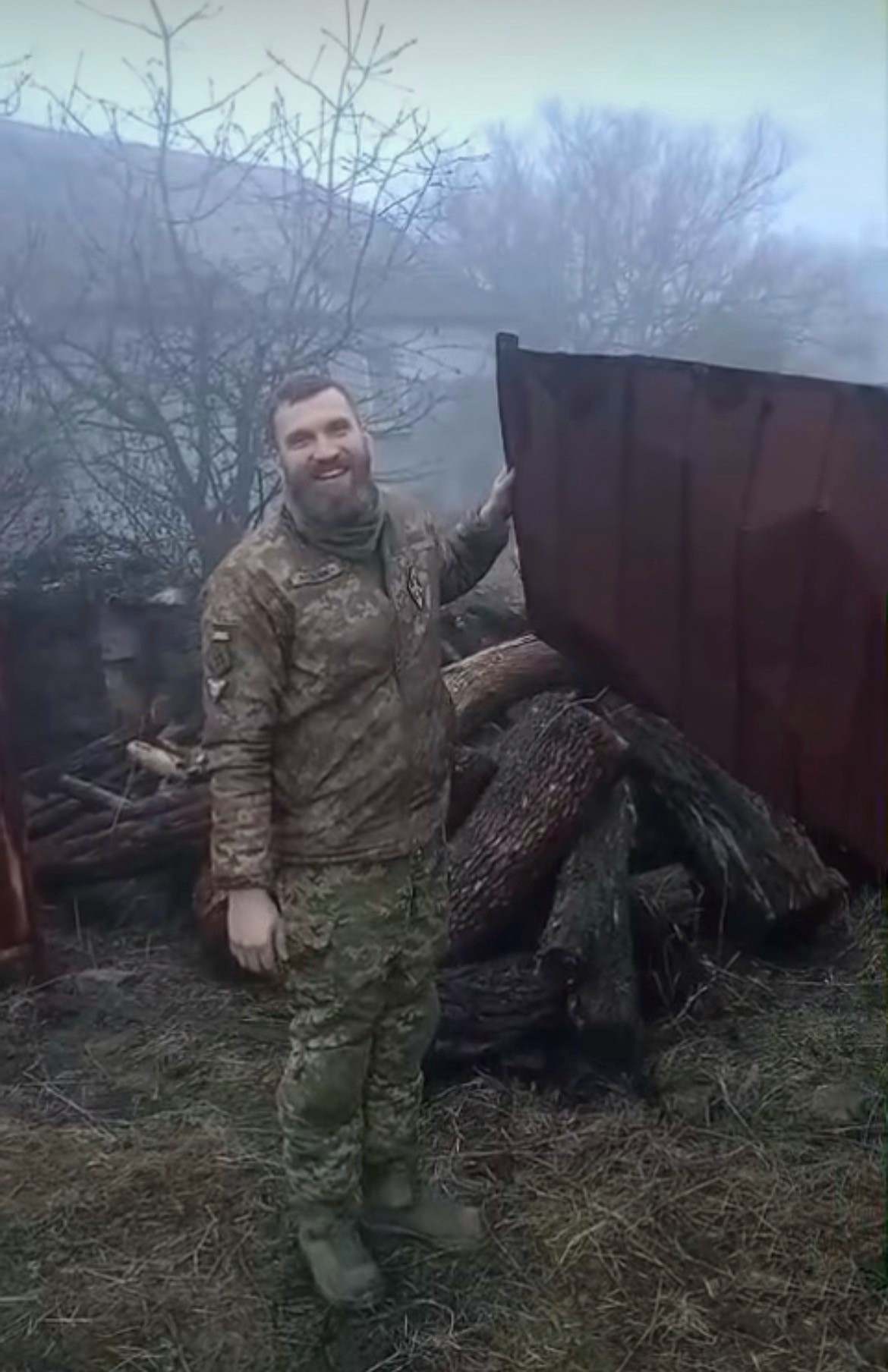
- Just like anywhere else, something is always missing. We have cement, but they haven’t delivered bricks. Or vice versa. You see, this heavy bureaucratic machine is very slow to change. For example, some logbooks were invented 40 years ago, and we’re still filling them out by hand, transcribing data from a computer. It’s not normal. Or take something like electrical tape, there isn’t even a dedicated budget line for it. In one of my videos, I show what we use it for. Our unit spends four thousand hryvnias a week on it. Or take fuel: we have no issues with diesel, but we have problems with gasoline. And we need it for generators. Those aren't even on the inventory because the official ones are diesel, which don't work for us.
And, of course, there’s the problem that people are afraid to join the military; they think they’ll be rushed from the bus straight into a tree line. But commanders aren't interested in someone who isn't motivated or is seriously ill. Who would want to deal with that?! Unfortunately, Ukrainians believe the enemy services, which are doing a pretty good job in that department.
- Do you think about how you’ll return to civilian life?
- Of course! I have my orchard! It’s not a matter of years, but decades. I really want to go back to my hometown, to rebuild my parents' house. For some, the 1991 borders are an ephemeral concept, but for me, the border runs between my Vovchansk and Russian Shebekino. I want to return to my border, to my land. I’ve knelt by every tree, I’ve pruned them and grown them so many times—is someone else going to harvest them? Screw them!
- Vovchansk was occupied at the start of the invasion. After the Kharkiv counteroffensive, we managed to take it back. What did that mean for you?
- I went straight to my parents and to the orchard. My mom said back then: "You could have stayed with us at least a little while, but you’re already running off to your trees!" (he smiles. – O.M.). There were positions dug all over the place. Our guys were already stationed there at the time. We talked with them. And my mom would cook borscht for them.
- In May 2024, Vovchansk once again came under constant fire. By the end of the year, the Russians claimed its capture, but the General Staff debunked this. The city is almost entirely destroyed, isn't it?
- Completely destroyed! Only Bakhmut and Avdiivka are worse. All that’s left of the high-rises are piles of rubble. Vovchansk still isn’t officially recognized as occupied. They say it’s an active combat zone. But the city is uninhabitable. We can’t get any compensation because you need a photograph. How are you supposed to photograph a house under these circumstances?! And what’s even left to photograph?! It’s a real problem.
I was actually home on May 8, 2024, pruning the orchard. I had winter crops sown, I was getting ready to spray them. I had three tons of fertilizer and thirty tons of wheat left there. Given that my house is the closest to Russia (three kilometers from the border), it was destroyed immediately during the offensive.
But we will reclaim our lands. You asked about when the war will end? For me, it’s when I harvest the crops from my orchard—the one I’ve put so much knowledge, effort, sweat, and blood into.
- And hopes for the future?
- Hoping isn't enough; we have to work and bring victory closer every single day. We need to support the military, and they won’t let you down. We must not forget that the war isn’t over yet, and that the regular infantrymen in the tree lines need help right now, not when the cold recedes or whenever. In any case, sitting in a cold apartment in Kyiv is easier than in a cold tree line near Huliaipole.
Olha Moskaliuk, "Censor.NET"
Photos provided by Stanislav Starostenko and taken from his social media pages.


