



"Azov" soldier with call sign Beretta: "They beat everyone in captivity. During interrogations, they are especially cruel"
Eighteen Russian prisoners of war—that was the "haul" gathered by fighters from the International Battalion of the 12th Brigade "Azov" in less than a day. This happened in December last year on the penultimate day of the operation to clear the village of Zolotyi Kolodiaz in Donetsk Oblast.
In total, it lasted 21 days and became an example of the systematic and balanced work of our military. The deputy commander, codenamed Beretta, was also at the epicentre of events at that time. He did not command from headquarters, but worked directly with combat groups. This was his first operation in this unit, although he already had considerable combat experience, having joined the army in 2014 while still a student.
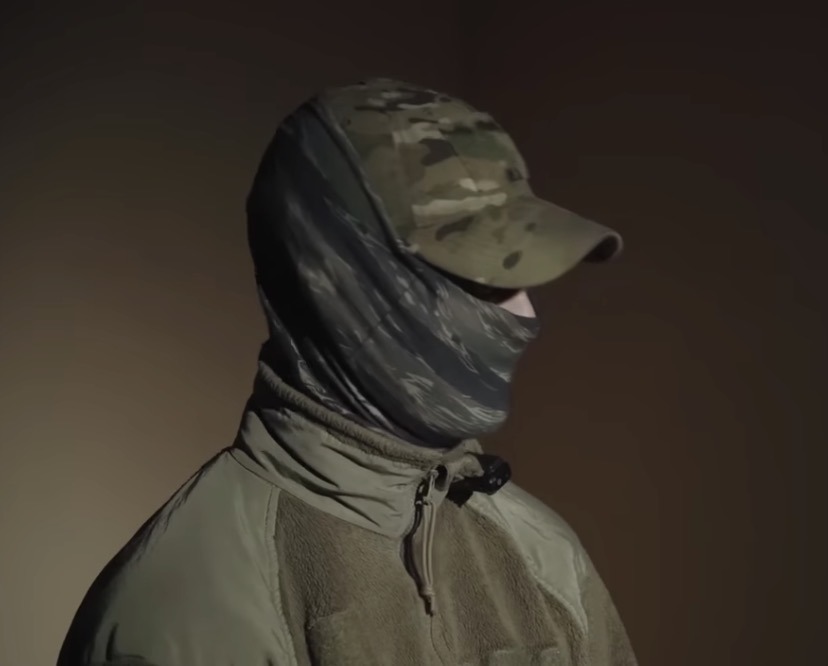
- Where did you fight at the beginning?
My very first battle took place in Ilovaisk. There were several assaults on the city. Then there was the defence of Mariupol. After that, I returned to civilian life for a year. And in 2016, I signed a contract.
- Why did you decide to return to the army? In 2016, there were no longer such active hostilities as before. Before that, the Minsk agreements had been signed twice...
- In my perception, the hostilities were not over. At the beginning of 2015, there was the Pavlopil-Shyrokyne offensive. Then there was the defence of Shyrokyne, which was held by Azov. I talked to my friends and acquaintances who were there. For them, the war was still going on. So I knew I had to go back, that we would still be fighting. Until 2021, the nature and intensity of the fighting varied.
Did you understand that sooner or later a full-scale invasion was possible?
- Yes. We discussed it constantly among ourselves. Everyone knew it would happen.
- Where were you on 24 February 2022?
- In Mariupol.
- Were you at Azovstal?
- Yes.
- What gave you the strength to hold the defence then?
- You know, it's unpleasant to fight when you're surrounded. The team gave me strength. We had a very good team. The people around you are important. In such circumstances, it's difficult to allow yourself to be weak.
- In May 2022, the defenders of Mariupol surrendered "Azovstal" and were taken prisoner. We know about the Russians' attitude towards Ukrainian prisoners, especially those from "Azov". Tell us what you can about that period.
- Captivity is captivity. It was as bad as it could be. But for some people it was even worse. There were those who did not survive it at all. Some were killed on purpose, some accidentally, by overzealousness.
- As far as I understand that you were tortured...
- It's common practice there. They beat everyone. During interrogations, they are especially cruel.
- What did they ask you during interrogations?
- Anything and everything! Their main goal is to fabricate a case. First, they "roast" you, asking questions, some of which have nothing to do with reality - they heard something there, made it up, and that's it. So they ask questions and beat you, ask questions and beat you. You say you don't know anything - often that's really the case. They beat you anyway. Over and over again.
- What kept you going psychologically?
- The thought that it could be worse. No matter how bad things are for you, it's very easy to make them even more unbearable. I always told the guys in my cell: "Don't complain about life, because in this place there is always someone who is worse off than you." That is, the realisation that there can be complete arbitrariness. It's not pleasant. They beat you up during the day, throw you in a cell in the evening, and you think: they don't beat me at night, so it's okay. That's the kind of dialogue you have with yourself.
- How long after the exchange did you go back to war?
- Six months.
- For the second time in our conversation, I'll ask: why did you return to the front?
- I guess it's not right to stay in civilian life after being captured. It's like a game of chess: your opponent has made a move, so now you have to move. If you don't, you lose.
- And we have to win!
- Absolutely! You know, in our unit, both in the ATO and in Mariupol, we had this worldview: we knew that everyone would return to the ranks. And that's what happened. Many have already died in battle after returning from captivity. And in general, the war is not over. In such circumstances, it is difficult to simply live a civilian life. The war continues, which means we still have to fight.
- Yes, the war continues. And the operation to clear Zolotyi Kolodiaz is its historical part. Let's talk about the day when your fighters captured 18 Russian soldiers. How did it happen?
- First of all, it should be noted that these events were preceded by very difficult and rather lengthy preliminary work to clear other streets in the settlement. It was the penultimate day of the operation. In other words, it was preceded by 19 days of combat operations. At the time of the capture of the 18 Russians, we had cleared about 75 per cent of the village. In the final stage, two streets a little further away remained to be cleared — as if they were a separate part of the village, located to the south. The enemy was localised in a relatively small area, which is why there was such a high concentration of them. Of course, we did not suspect that there would be such a large number of Russians there. Before that, we constantly analysed radio interceptions and interrogated previous prisoners, so we had a rough idea of the Russian military personnel who might be there. That is, we knew the minimum number that appeared on the air and their call signs. There was also additional information that there was a person on the western street who was directing artillery fire, and on the eastern street there was a person who was possibly an officer. So we assumed that we had the minimum number of call signs, to which we could add 50 per cent. So I thought we would encounter 10, maximum 12 people there, but it turned out to be as many as 18.
We planned to clear one street in one day and the second the next...
- Why is that?
- First, we already knew that the enemy was localised and would not go anywhere.
Secondly, during such clearances, it is better not to rush and do everything carefully, with minimal risk to personnel, since the situation allowed it.
So, on that day, we began clearing the first street, where we took the first group of prisoners. Then immediately the second, in which there was a person who knew English. We communicated with them. Then we took the third group. It was planned that the sweep of this street could take the whole daylight hours, but it was completed in just a few hours. Why did we expect it to take the whole daylight hours? Because after you make contact with the enemy, if they do not immediately surrender, you can get stuck in one place for a very long time. After all, they also fortify basements, build additional underground passages and tunnels there, so sometimes they are very well prepared for defence. If the enemy does not want to surrender, you, of course, encourage them to do so. But if they really do not want to surrender (i.e. their fear of being captured is greater than their fear of death), they can stay there until the end. Therefore, when planning such operations, you need to allow a little extra time. But, as I said, everything happened much faster than expected, and in just a few hours, this street was cleared. We decided not to postpone the clearing of the second street until the next day, but to move on to it immediately. I assembled a new group, because the previous one had already done a certain amount of work. They were given the task, provided with information and presented with a plan of action. After a brief discussion, we moved on to the second street. We had previously thought that we would move from north to south towards the enemy. But then we decided that we could safely move from south to north. If the enemy fled, we would block them in the south and move north. If the enemy fled north, they would come out onto our positions, which had already been established there. And that way we would trap them. That was the plan.
We advanced to clear the second street and made preparatory arrangements. Based on the information we had from prisoners of war, we headed for the first point, where we expected to encounter about three or four Russian soldiers. In the first basement, we took five prisoners, then immediately moved on to the second. It was very convenient because the prisoners themselves showed us where their friends were...
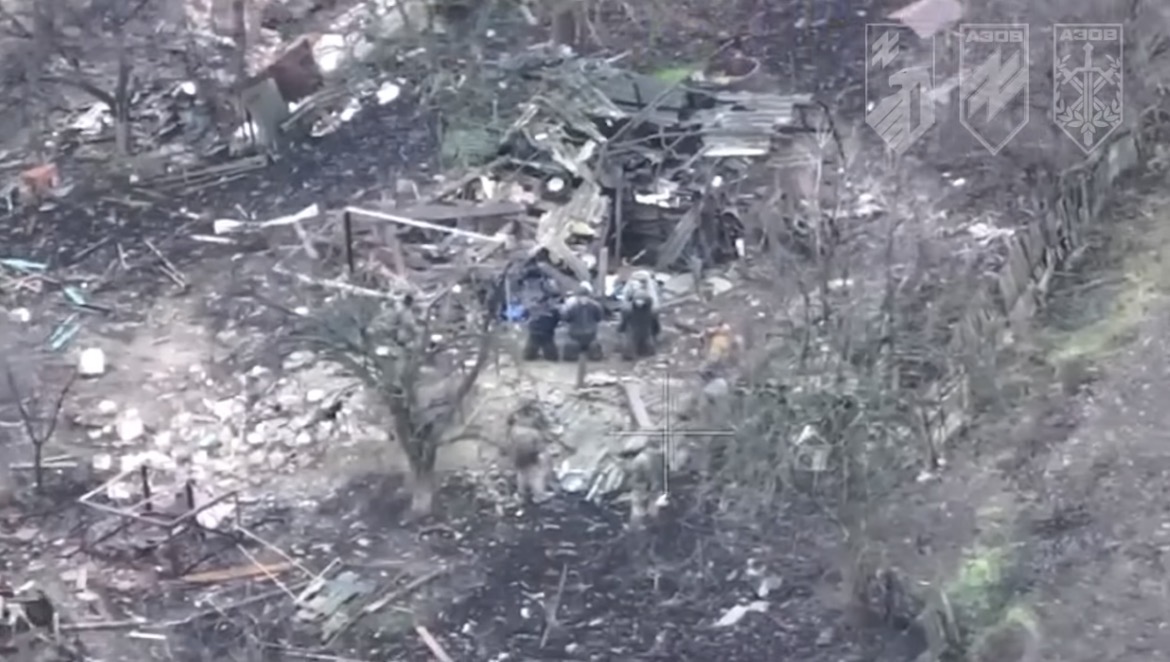
- They didn't lie?
- No, it was not in their interest. So we calmly, quietly and smoothly took another group of prisoners. They told us that there was no one else on this street. They said that the rest of the basements were empty. But, of course, we cleared everything to the end. And the second time, the prisoners did not lie either — all the other basements were empty. Thus, we took eight prisoners on the second street. Together with the previous ones, that made 18. And it took us not even a day, but seven hours. In a day, it turns out, more, because the next day we captured another one. He was not in the village itself, but in a landing a kilometre away. He had been living there for a long time in a pit covered with plastic sheeting. He was wounded in the arm.
- Couldn't he return to his own people?
No, he was forbidden to do so. They told him to stay there and hold his position.
- What supplies did they have there?
- The enemy's breakthrough in this direction was very quick, and they entered a relatively rear settlement where people had large quantities of canned food, potatoes, onions, etc. in their basements, as is usual in villages. There was a shop with a large supply of drinking water, as well as natural water sources – lakes...
- What about wells?
- We also thought about wells, because the name of the village is appropriate, but they had all dried up. However, finding water there was not a problem. That is, there were a lot of food supplies. The enemy could hold out for a long time on them. As for ammunition, communications equipment and other combat and non-combat equipment, logistics were provided by Molniya-type UAVs, which could deliver loads of 4-7 kilograms, as well as FPV for smaller parcels — for example, a few batteries for a radio station, several packs of cigarettes and a small amount of ammunition. Such a drone lands near the basement where all the armed forces of the rf are located, they come out and take everything. So they have both the parcel and the battery from the FPV, which still has some charge left, so they can recharge their devices - mobile phones, walkie-talkies, etc. In general, their logistics were very well planned, quite active and not financially costly.
In addition, not all Russians who were in the village entered during the breakthrough in this direction in early autumn — after that, new groups constantly infiltrated there. The last groups entered in early November. In general, their moral and psychological state before we started working there was quite good. This was because they had well-established logistics, comfortable accommodation and normal communication sources such as Starlink. The first discomfort for them began, probably, when their Mavics could no longer reach there, because this salient began to be "cut off" and the line moved further south. Thus, their UAV positions were knocked out there. But Zolotyi Kolodiaz was not cleared at that time, so the enemy remained there and infiltrated. When they could no longer control the sky, it worsened the situation for them. But since the village was not cleared for a long time (I don't know for what reasons), the enemy was fine there. No one attacked them. So they just lived in the village. Some groups even carried out active operations. They were tasked, for example, with carrying out fire raids on Ukrainian observation or mortar positions, etc. They had contact battles with the Ukrainian Defence Forces. There were cases when they killed Ukrainian Defence Forces soldiers. In addition, they gathered information about the movements of Ukrainian troops, especially armoured vehicles. So, in general, it was a very big problem — we had about 50 people in the rear who were not sitting idle. In the conditions of modern warfare, that is a lot. Another difficulty was that the infiltration routes were not blocked. Those groups knew exactly where they were going, that Zolotyi Kolodiaz was under the control of Russian troops. This made things easier for them and, accordingly, more difficult for us. But when we started working, the enemy was no longer as comfortable as before. In general, we expected there to be 10 to 20 Russian military personnel there. This was based on intelligence information, communication with allies and those who were in the area. In other words, we didn't know there were as many as 50 of them. But, in the end, we managed and cleared the village.
- What about the local residents? Did anyone stay?
- There were three people. An elderly couple who lived in their basement and had no way of getting out. On another street, there was an elderly woman. All three were wounded. We provided them with assistance and evacuated them.
- I watched videos of the interrogations of prisoners. In my opinion, they were very interesting and colourful. I will quote one of the Russians: "The information was as if the Germans were in the village." They didn't understand who was taking them prisoner?
- The Russians call us Germans. We often heard their commanders say this about the Ukrainian Defence Forces during intercepts. They also have a saying: "We won't chase the Germans away like that." Perhaps the person you mentioned took it literally. They knew that foreigners were working there because they heard a foreign language, but they didn't know which one.
Another prisoner said that he wanted to shoot himself so as not to be taken prisoner, but he didn't have any bullets. But they all had weapons, right?
- Yes, they all had weapons, and they all had bullets in their chambers. And they fought back — we had contact with the enemy. Not every basement was easy to take, where you just fire and take prisoners. There were groups that fought back, and a battle ensued, so it wasn't that simple.
- This was your first combat operation in this unit. You were with the fighters in the combat zone, rather than directing it from headquarters. How would you describe it? Was it difficult?
- On the one hand, there were things that made the job easier - the absence of enemy Mavics in the area of operation, low to medium activity of their FPVs, significant isolation of the enemy from their main forces, and little involvement of artillery. In other words, there was generally little activity from indirect fire weapons. This made the task easier.
But the operation was complicated by the fact that the village was very large, with a considerable number of houses and basements — over 200. In addition, it was carried out on the ground by only three infantry groups, with fire support provided by one FPV crew, one heavy drone, one 120 mm mortar, and two Mavic crews. That was all we had. It was not enough personnel to carry out such actions effectively. When clearing a settlement, your fighters are divided into two types: assault groups and reinforcement groups. The former carry out the clearing, while the latter follow behind them and set up blocking positions. The next day, the clearing groups continue. But here, that wasn't possible, so our clearing groups became blocking positions at night and continued their work the next day.
In addition, about 60-65 per cent of the time during the operation there was very thick fog, which made it impossible for us to establish objective control — that is, we could not raise the Mavic and monitor the enemy's progress. Visibility was sometimes no more than 10 metres. In such circumstances, you can clear the building in front of you, but the enemy will be two buildings away, walking around you, and you simply won't see them. And you don't have enough people to set up blocking positions in every building. The situation was further complicated by the fact that the armed forces of the Russian Federation knew the area well, having lived there for about three months. But we still managed.

- How do you find working with foreigners in general? Are there any difficulties? Are there any language problems?
There will always be some language problems, even if you know English well. For example, it is very difficult to understand radio communications, because you don't always understand Ukrainians, and a foreign language in such circumstances is just awful! It's difficult.
And in general, there are language and mental barriers. This adds to the complexity. But for me, it makes no difference whether I work with Ukrainians or foreigners. In fact, who are they? Volunteers. And I understand the spirit of volunteerism very well. That's why I treat them the same way I treat Ukrainians. The only thing is that you have to communicate in a foreign language and, as I said, there is a certain mental barrier. Because people come from different countries. Accordingly, everyone has their own background. Sometimes even certain everyday things are not entirely clear to them, because they used to live in different conditions. But if we went to Vietnam now, some things would be incomprehensible to us too.
- How do you recruit for your battalion? How do foreigners join?
- I would divide the foreigners who come to us into two categories: military personnel who have previous military service experience and civilians. How do they come? Everyone in the world knows about the war in Ukraine. I think many have also heard about "Azov". If a foreigner decides to go to Ukraine to take part in combat operations, there are not many units they can join. The choice is small. In addition, those who already serve with us share information, which also works to our advantage.
- You are currently fighting in Donetsk Oblast. What is the situation in your area?
- In our sector, due to weather conditions and factors that I cannot discuss, the intensity of the enemy's assault operations has decreased slightly. When the greenery grows, it will obviously be more difficult, in particular to cut off infiltration from armed forces of the Russian Federation, as their movements will be less noticeable. The enemy is constantly adapting to changes in the nature of combat operations. And quite effectively. In general, this infiltration tactic is effective. Although it may seem illogical, cannibalistic, resulting in heavy losses and requiring that one ignore one's own wounded, but this is of no significance to Russians. The only question for them is whether it is effective. That is why they operate in this manner.
It would be fine if they could just go in, clear the area and destroy the enemy that had passed through. But today, this is also difficult because any movement on the battlefield is difficult and problematic. If earlier it was no big deal to clear, say, three buildings and two basements, now it's not so easy because the enemy has a lot of UAVs, so coordinated work of their crews makes it really hard for us to move around on the surface, let alone clear areas.
- You said that Russian assault operations have decreased recently. Did the fact that Starlink was shut down have any impact on this?
- Indeed, it has had an impact — it has become more difficult for them to coordinate their UAV crews, which increases their response time and creates problems for them.
- But is this temporary? It seems to me that they will find a way out.
- Yes, they will adapt. It's a matter of the internet. I think they will find some solution, because now there is fibre optic cable that is used for communication. Of course, it was much easier with Starlink. But they will find a way out of this situation too.
- The Institute for the Study of War writes that the Russians are preparing for a large-scale offensive in the south and east in the summer. How likely is this scenario?
- In my opinion, it would be wise for them to carry out such an offensive if they have the necessary forces and resources. Perhaps they are currently building up their reserves, which is why the intensity of the fighting has decreased somewhat. If they do so, it will force Ukraine to make a choice: where to send our reserves – to the south or the east?
- We are talking while the next stage of the so-called peace talks is underway in Geneva (17 February. – O.M.). I don't think we should expect any progress there. But recently, the president announced that the Americans are proposing that Ukraine and russia end the war by June. Do you believe this is possible?
- I believe that only those people who are participating in the peace talks today can comment on all these issues. Everything else is just information noise that is not worth our attention.
- I mean that you, on the battlefield, feel what Russia wants like no one else. As for me, their behaviour is not about peace...
- Why would they stop?! I don't see any logical argument for that. Things are going well for them overall. Those who told us that Russia would collapse were either mistaken or deceiving us. Russia has the resources to continue its military operations and wear down our country's defences, so that is what they will do. Especially if their strategic goal is to capture Donbas, why would they give that up?
- In negotiations, they demand that we simply give up Donbas.
- Of course, it's much easier for them. And if they don't get Donbas, they will continue to wage war. Is it worth hoping that the number of their losses will somehow influence their decision? Well, let's hope so, but we will continue to fight, because the war is still going on.
Olha Moskaliuk, "Censor.NET"


