



Yana Zinkevych: issue of accountability, scandalous case of Anna Niav and personal price of war for "Hospitallers" commander
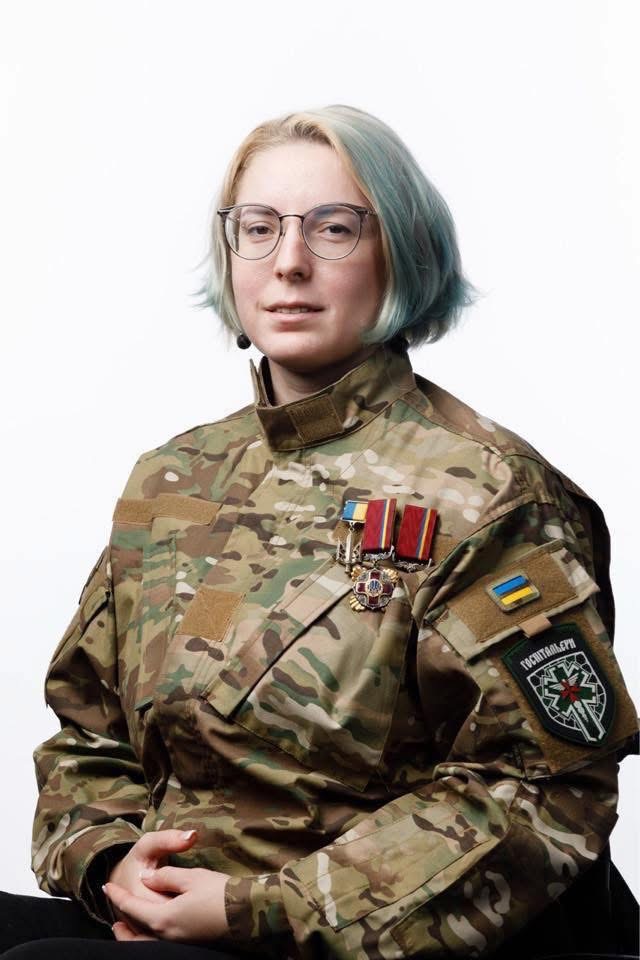
Today, on the Day of the Ukrainian Volunteer, we present a conversation with Yana Zinkevych. At 18, she went to the front, personally saved more than 200 soldiers, and rose from a volunteer medic to the founder of one of the country’s largest medical battalions.
Despite a severe injury, Yana has continued her mission for nearly 12 years, uniting volunteers to save lives in the war. For many Ukrainians, her story has become an example of exceptional resilience.
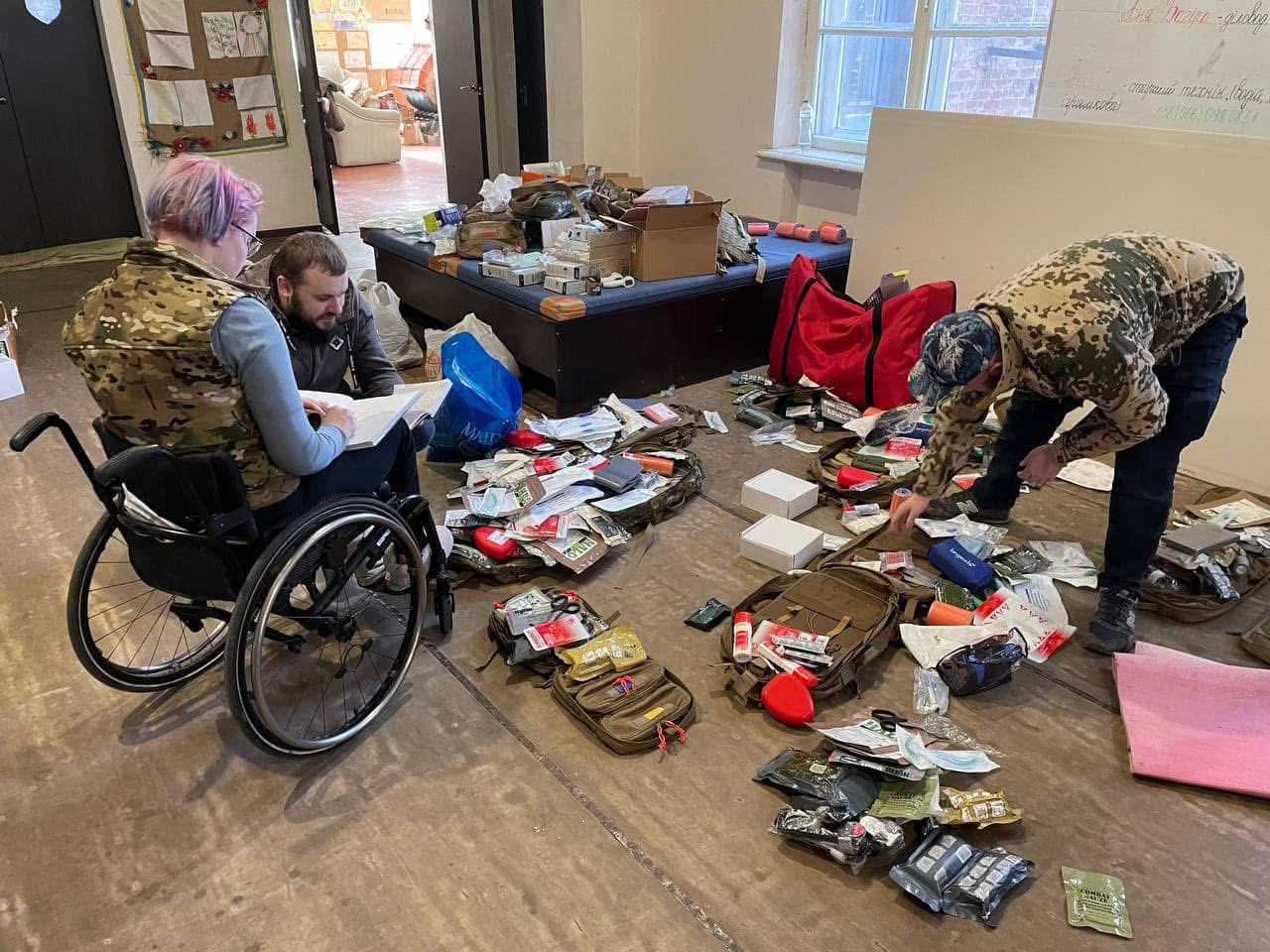
Since 2014, the "Hospitallers" have worked directly in the hottest spots, becoming a life-saving link between the front line and hospitals.
With the start of the full-scale invasion in 2022, the battalion's crews deployed their operations across the entire front line. The use of modern methods for hemorrhage control and resuscitation directly inside the vehicle allows medics to bring even the most severely wounded to hospitals alive.
In effect, this is "resuscitation on wheels," which has saved over 43,000 defenders throughout its years of operation.
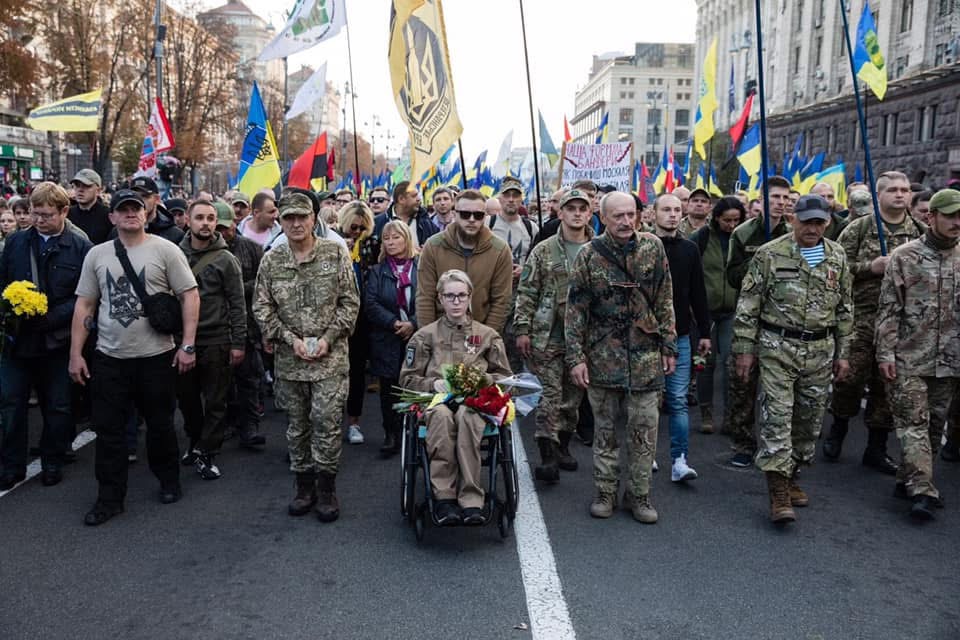
The battalion operates under the motto "For every life," and behind this figure lies a high price: 39 deceased volunteers and 9 who have endured captivity, eight of whom have already been released. In total, more than 1,800 people have passed through the unit, half of whom are currently serving in the ranks of the Armed Forces of Ukraine (AFU). In addition to evacuation, the "Hospitallers" train personnel, teaching medics and civilians to provide first aid.
However, a sharp discussion has been ongoing on social media over the past week. What began with posts by journalist Olha Khudetska regarding accountability and the use of crypto wallets has escalated into large-scale accusations. While society is divided between defenders and critics of the organization, Yana Zinkevych is responding candidly for the first time to all allegations: from the missing donations of Anna Niav to the millions spent on evacuation and the personal trials that have accompanied her throughout these years. We begin the conversation with the most resonant issues currently at the center of attention.
Accountability: the law and public expectations
– Yana, why have you and the "Hospitallers" Charitable Foundation encountered difficulties reporting on the donations received for the battalion's support?
– Our foundation operates strictly within the legal framework. The format submitted by the team is the standard for the charitable foundation’s financial reporting. At the same time, it is important to distinguish between financial and public reporting. The format for public reporting is not legally established; therefore, each organization prepares it based on its resources and capabilities. Even before the start of the information attack, the foundation was preparing a public report; however, it is usually released only after the official financial documentation has been submitted.
We operate transparently and in full compliance with legislation. Our tax reports meet all state standards. They may not be as detailed as the public expects, but it is important to understand: the format of public reporting is not fixed by law and depends on the foundation's capacity. We began working on a new, more detailed format even before the information attack. Traditionally, we publish it after the official financial reporting has been filed.
For a long time, we were a small team with limited administrative resources. However, the scale changed with the full-scale invasion. We understand the public's demand, which is why we have already introduced public reporting on social media. Although the law does not require foundations to disclose every detail, for us, it is a matter of trust. We are learning to be as open as possible, but we have encountered a heavy operational workload.

– But even small organizations have an accountant. Is this person a staff member of the foundation, or do you work with different individuals each time?
– For a long time, we were focused exclusively on the front rather than the administration. In 2022–2023, resources were directed solely toward rescue operations, so we were unable to maintain a large staff; we had no dedicated media specialists; the foundation had one accountant and one clerk.
We published information ourselves on the battalion's social media pages. Now we are working on expanding the foundation, and the situation has indeed changed: we are recruiting specialists who are establishing a clear structure and striving to provide the transparency that the public expects.
– Does this mean the transparency of your foundation is directly dependent on the number of employees?
– In Ukraine, the number of military personnel in rear positions is several times higher than the number of troops engaged in combat missions, according to the current Minister of Defense. In our movement, the situation is the opposite; our specific nature must be understood: we are not a traditional charitable organization, but an organization of volunteer medics who often perform functions similar to those of medical units.
Most foundations simply transfer equipment, and their mission ends there. In our case, it involves supporting crews 24/7. As Hospitallers, we do not just receive aid; we also maintain equipment, repair ambulances, and immediately replace lost gear. This is a massive operational effort that previously relied solely on the enthusiasm of the Hospitallers themselves.
– But the foundation has begun implementing new reporting standards?
– The foundation team began systematic work on this in September 2025, when a professional chief accountant with experience specifically in the public sector joined us. Together, they set a high bar: to reach the level of transparency seen in large institutional organizations, such as the Prytula Foundation.
It is important to understand that the foundation institutionalised itself as quickly as its resources allowed. This process accelerated following the situation with Anna Skolbushevska. The majority of the fundraisers are either subsidiary accounts linked to the foundation's official campaigns, or they operate under a signed fundraising agreement. Therefore, conclusions were drawn, and the results are being implemented.
On February 26, the foundation already submitted its official financial reporting to the tax authorities. However, one should consider the actual resources: the administrative team consists of only four people, the director, a deputy, an accountant, and a clerk. Processing such a massive amount of data in a week while simultaneously putting out daily operational "fires" is physically impossible.
Furthermore, we were restoring documents from scratch after our base in Pavlohrad was intentionally destroyed by Russian Shahed drones. This was a loss not only of property but also of the majority of our paper archives. Secondly, the foundation team was planning to prepare an expanded report by May 1, but due to public resonance, we had to significantly accelerate the process.
– We’re talking about millions. What exactly does the battalion spend this money on?
– The workload is colossal: we support anywhere from 10 to 60 active crews simultaneously during peak periods. This involves over 500 people per year. Maintaining such a unit costs at least 6.3 million UAH per month. The primary expenditure items are fuel, equipment, and tactical medicine.
To put this into perspective: protective gear for just one volunteer medic costs approximately 79,000 UAH. Despite such scales, our evacuation operations cost the Hospitallers significantly less than private carriers or large international missions.
We do not drain state resources; instead, we create added value by mobilizing additional assets, thereby becoming a high-quality force multiplier. We venture into sectors and projects that few others undertake, and often our operational staff struggles to keep pace with these demands.
After their tenure with the "Hospitallers," our volunteer medics frequently join the ranks of the Defense Forces of Ukraine (DFU) with a clear understanding of how to organize and execute tasks. These are trained personnel for military structures who integrate quickly into processes, and we regularly receive positive feedback regarding their performance.
Thanks to mobilized resources and our flexibility, we respond to challenges and create unique solutions, such as the "Kraken" and later the "Austriika" buses. In 2022, few were considering long-distance medical evacuation, but even then, we operated a bus capable of transporting up to six litter-bound patients simultaneously.
We also operate a Patronage Service. Although it was not always called that, it scaled along with the battalion following the start of the full-scale invasion. Prior to that, I personally handled family patronage. We managed to elevate its operations to a high level, specifically due to mobilized funds. This remains a difficult topic for communication: explaining the need for a vehicle or fuel is much easier than justifying the necessity of funding patronage services.
– You frequently request donations for the needs of the battalion's Patronage Service. What are the results of its work in figures?
– For me, the Patronage Service is a top priority. Perhaps this is due to a deep personal responsibility toward every volunteer and their family. Over five months, from October to February, we directed 4.3 million UAH toward this sector. The largest portion of these funds, nearly 2 million, was spent on the medical treatment of volunteer medics. We paid an additional 1.5 million directly to families as financial support. Beyond monetary aid, we help families resolve domestic issues: we purchased 650,000 UAH worth of generators and charging stations, and we provide firewood for heating, along with food and medications from our warehouses. Approximately 140,000 UAH was spent on logistics, fuel and postal costs, to deliver all of this.
This is our social protection system. Unfortunately, in 2024, we lost five brothers-in-arms, and each of the families of the deceased received 1 million UAH in payments as part of the support from the Patronage Service. We have also provided for payments of 500,000 UAH in cases of severe injury or upon return from captivity.
– In addition to the foundation's account, you collect funds on a personal card and foreign accounts. How is this monitored?
– It is not just a private card, but an official account registered with the tax authorities specifically for volunteer activities. Everything is transparent: I submit annual reports to the NACP, and targeted donations to such an account are not taxed.
Regarding foreign aid, our partners from the US, the UK, and Poland usually do not transfer money directly. They purchase and transfer what is difficult to find in Ukraine: specialized vehicles and high-tech equipment. These purchases undergo strict audits in accordance with the legislation of their respective countries.
– Why do you set up two ‘jars’ for the same collection? Doesn’t that confuse people?
– To accumulate funds from various sources more quickly, since both the foundation and I work on supplying the battalion. For example, we are currently raising 4.7 million UAH to fully equip 300 volunteer medics. As soon as 500,000 accumulates in one of the subsidiary accounts, I immediately pay for a batch of body armor. Consequently, I deduct the same amount from the other account so that the overall balance of the fundraiser remains up-to-date, and people can see the actual remaining amount to be collected.
To date, we have already purchased equipment worth 1.46 million UAH. We are currently just 277,000 UAH short of the next transaction. However, the overall goal remains significant, over 3.2 million UAH is still needed.
– Why does the battalion require such an extensive structure consisting of NGOs, foundations, and LLCs? Wouldn't it be simpler to consolidate everything into a single organization?
– We are intentionally building an ecosystem where each unit has its own specialization and area of responsibility. Currently, this consists of six NGOs that cover different fronts: logistics, transport, the training center, and rehabilitation. Consolidating them into a single structure would mean creating a cumbersome bureaucratic machine. Instead, we have mobile units with specific managers.
For instance, in 2025, we established a separate NGO for patients with extremely complex injuries. This is a foundation for the future, as we plan to launch a social enterprise that will not only provide employment for our soldiers but also direct a portion of its profits toward the medical treatment of volunteers. Through the NGO "Rehabilitation," we planned to raise funds to cover medical expenses for fighters without official status (specifically "Hospitallers" and the UDA in general). In 2025 alone, I transferred over 1 million UAH for the rehabilitation of our defenders. This is too specific a sector to conflate with the battalion's operational expenses.
– And what is the role of commercial structures (LLCs) in this system?
— This is our response to the realities of war: donations are objectively decreasing. We do not want to merely ask—we want to earn for the front. Therefore, we are launching social business projects where profits will be used to cover the battalion's needs.
Even if a small project generates 50,000 UAH per month, it is already a victory, because it means I have 50,000 less to fundraise. We are currently preparing a company, "MB," which will handle medical transportation and assistance in rural areas. Several more projects are in the registration and licensing stages. Our goal is to create a model where the battalion has a stable financial foundation, independent of fluctuations in volunteer activity.
– Yana, everyone is concerned about the scandal involving Niav, Anna Skolbushevska. Could you please share the details of this whole story?
– At the start of the full-scale invasion, Anna Skolbushevska was dating one of the Hospitallers. It was he who asked for her to be brought into the battalion. During the interview, she skillfully constructed her backstory. She said she had served as a medic in Aidar. According to her, she had worked on Vika (Dyka)’s crew. Who would seem likely to lie about something like that? She showed photographs from that period in which she really was in the company of well-known fighters, and she spoke about helping with evacuations together with Viktoriia Dvoretska.
She also showed photos of a beaten young woman, claiming it was her after being assaulted by Berkut on the Maidan. She spoke a great deal about her friendship with Roma Ratushnyi, and she had photos with him as well. She did, in fact, have a severely injured limb, and she convinced everyone that it was the result of those events: her arm had supposedly been broken in three places. Allegedly, because of that, she, a formerly talented violinist, gave up her music career, fell into depression, and against that backdrop, went off to fight with Aidar.
– Didn’t you notice any inconsistencies in her story at the time?
– Only now do I realize that just three months had passed between the Maidan and her appearance in the war, and with the kind of injuries she described, it would have been simply impossible to be fit for duty. But in 2022, when I was speaking to several hundred people a day, I did not pay attention to that detail. Ania quickly became ‘one of us’ in the battalion and managed to win people’s trust.
In the summer of 2022, she actively helped us look for lightweight ceramic armor plates. And that is one part of her work for which I am grateful, because they weighed only 2.2 kg, which was significantly less than the 4.7 kg of their steel counterparts. There was enormous demand for them, and she managed to find them at an affordable price. Lightweight and reliable protection is critically important, especially for female medics. They have to carry body armor, a helmet, a medical backpack, and also evacuate the wounded. It is titanic work. I am grateful to her for those plates
– When did the situation start getting out of control?
– By 2023, Ania had already shown that she knew how to bring in huge donations for our needs. But by the end of that same year, she had changed drastically. It got to the point where she openly insulted other Hospitallers: ‘You are all nobodies, and the battalion runs on my money.’ She got carried away by her own importance, became extremely aggressive and toxic, and simply treated everyone around her with contempt. Even her own brothers- and sisters-in-arms stopped talking to her.
That happened to coincide with my health problems. I was barely involved in battalion matters because I was constantly on strong painkillers, and an ambulance had to be called for me every few days. Of course, that immediately affected the atmosphere in the battalion. As soon as I started feeling better, I began sorting things out and was shocked. Since I am not on Twitter, all the information was brought to me by our media officer. When I saw her posts about drugs, partying, and her rude behavior, I was horrified!
– You say the situation got out of control while you were dealing with serious health problems. What exactly was happening to you?
– Here, I should probably add some context, my health was only slowly recovering. It all started with complications after COVID: I developed hypertension and type 2 diabetes. I was prescribed metformin, which in rare cases causes a terrible complication, lactic acidosis. The body basically starts tearing itself apart at the molecular level.
For six months, I could not eat, I was constantly vomiting, and I was losing strength. How are you supposed to have any strength if you cannot eat anything? And they kept treating me for diabetes. Only later did it turn out that this was how I had reacted to metformin. That was what caused the acidosis. To keep me going somehow, they were administering medication intravenously. During one of those procedures, an infection was introduced. Sepsis set in.
When the test results came back showing that the bacterium was not susceptible to anything, I was placed in a medically induced coma and put on oxygen support while they tried to determine what it was susceptible to after all. They hooked me up to the machines and tried seven times to take me off the ventilator. At the same time, the doctors were fighting the infection in my blood and lungs. The lungs damaged by the infection were swelling and pressing on my other organs, which only made my condition worse. While I was in the medically induced coma for 14 days, my body was not clearing itself naturally, and severe intoxication set in. The doctors even considered creating a stoma — it would have been extremely risky. Thank God, it did not come to that.
They kept packing me in ice, literally covering my whole body with bags of ice cubes. No other methods helped bring down my temperature of 45 degrees Celsius. It is believed that at 42, a person already burned up. My chances of recovery were estimated at only 3 to 5 percent. No one gave any guarantees. Nemo was just beside himself: he would arrive at the clinic at eight in the morning and stay until eight in the evening. The entire month, he simply sat next to me and held my hand. I could neither see him nor respond. He went through a real hell, because seeing the person you love in that state is a brutal ordeal I would not wish on anyone.
– How did you return to life after the coma?
– At first, they thought it would all pass in five to seven days, but in the end, it turned into almost a month. On the eighth attempt, I finally managed to breathe on my own and regained consciousness, but I still could not speak because of the tube in my throat. Gestures were the only way I could communicate. Nemo brought me a special board, I do not even remember now whether it was magnetic or one you write on with markers. I tried to write something, but my fingers would not obey me. Instead of words, all that came out were scribbles, worse than a doctor’s illegible handwriting.
In total, I spent two months in intensive care, and then another month in a rehabilitation center. And at that point, my condition was genuinely worse than after my spinal injury. Because after the spinal injury, at least I could move my hands, look at things, read. But here, the muscles throughout my entire body had atrophied so badly that it took me more than a month just to relearn how to use a phone. I simply could not type in a password. Everything had been lost to such an extent that I was rebuilding my skills virtually from scratch, like a child.
Just to sit up in bed, I had to move my hands step by step. It was incredibly difficult, I spent more than a week learning how to sit up. It is a real horror to be that dependent on other people. During that period, my husband and I even made an agreement: if I could not regain my functions, he would help me die. I could not have done it myself. I am not sure he truly meant to follow through, but he promised. It was hell. During that time, I barely ate and was losing weight catastrophically.
And when I was discharged from the hospital, all my muscles had atrophied. I was relearning how to raise my arms and move my fingers. I still do not fully have control over my own body, and then this whole story with Skolbushevska comes crashing down on my head.
– How did you find out that she was pocketing the donations?
– I do not read Twitter, so my colleagues brought me the information when I started feeling a bit better. It turned out that Ania, who had been raising ‘every last penny for evacuations,’ had started acting aggressively, saying: ‘The battalion runs on my money.
Then the story about her rehabilitation abroad surfaced, she was kicked out for inappropriate behavior. This was a top-tier psychological rehabilitation program for medics, one that is almost impossible to get into. But Ania somehow managed to become the first person ever to be expelled from it in a scandal. Because of her, the path to that program for the Hospitallers nearly got shut down, and it took real effort on our part to persuade the team to keep working with us. I was told she had simply gone off the rails: she was rude to everyone, told the program leadership to get lost, and ignored the schedule of important sessions. When they gave her an ultimatum, either you work on yourself like everyone else, or you fly home at your own expense, she left the program.
– Did you see her bank statements?
–That is when it also came out that she had been running fundraisers for ‘Solomianski Kotyky,’ but the money never actually reached the volunteers. The most interesting part is that this only surfaced in June, even though she had washed her hands of fundraising for our needs back in December. Ania had promised a raffle for some kind of collectible item that attracted a lot of young people on Twitter. People threw in their last hryvnias and waited for the results. She kept stringing them along for a week with promises like, ‘yes, yes, the transfer is coming soon,’ and then she simply vanished.
That was when the whole uproar really began. When she stopped answering her phone, one of our brothers-in-arms who knew where she lived went to her home. He was one of our Hospitallers. He went inside and saw a real den, littered with drug baggies and bottles of expensive alcohol. When I saw her statements, I almost fainted: there were payments for trips, airline tickets, transfers, Booking reservations. A hotel for 40,000 hryvnias for three nights!"
– Why did you not issue a public statement right away, and instead cover her debts to other organizations?
– I understand that I should have gone public and openly admitted: ‘Yes, something terrible happened in the battalion. A drug-dependent person was raising money for the Hospitallers’ needs on her personal card. We uncovered it and are taking action.’ Instead, I gave my own money to a brother-in-arms so that they could transfer the funds to Solomianski Kotyky that same evening.
The transfer was made, but people still asked why it was coming from a different bank and a different sender. Then there was also the issue of the other organizations Anya had deceived. In the following months, when I decided to take responsibility and help, I had to sort through all the debts: buying what she owed others, covering those loose ends with my own resources.
Why did I take that on? Because I judged by myself and did not want my colleagues’ work of saving lives and training others to come to a halt because of the actions of a dishonest person. I believe I acted humanely. When I started talking to her, she avoided the subject for a long time, but in the end, she admitted that she had gambled away all the money and did not know how to report on it.
– What made you take responsibility for a person who had effectively set the battalion up?
– First and foremost, I saw an illness — addiction is a severe illness that requires treatment. This person had once risked her life to save the lives of others. I wanted to save her life. The idea was this: first treatment, and then she would come back and work until she had worked off all the money she had stolen. Of course, I do not mean any specific job in particular. I simply understood that if she could be pulled out of that drug-dependent state, it might also be possible to secure the return of the money. Yes, it would take time, but I wanted to believe that she would work honestly and repay what she had stolen from people.
– Money has been stolen, people have been defrauded, and yet Anna faces no punishment. In your opinion, why is this the case?
– For over a month, the police refused to accept the report from the "Hospitallers." The reasoning provided was: "No corpus delicti." Why? Because people voluntarily transferred money to her card; she did not take it from their pockets by force. This is a critically important point. The police were waiting for victims to come forward. We barely managed to persuade three people - Nariman Aliev, Maksym Shcherbyna, and another woman whose name we are not disclosing for security reasons, to file reports. We searched for witnesses through social media because 100% of those who gave Anya money, ranging from 5 UAH to 150,000 UAH, simply remained silent. Their position was unanimous: "This does not concern us, these are all your problems, you are the ones obligated, we are not involved, handle it yourselves, we will not file any reports.
– Do you feel that you did everything possible to close this story with dignity?
– For six months, she underwent therapy, received support, and began to recover slowly. Unfortunately, a relapse occurred during the process: her mother sent alcohol from abroad, and she relapsed again. The rehabilitation center where she was treated even offered her a position as a media specialist, but they refused to work with her after the second relapse. I planned a meeting with her and toxicology testing, but before I arrived, she fled abroad, allegedly fearing for her life. No one had threatened her even once throughout the year.
I could have turned this story into an example of recovery and strength, demonstrating that even after serious problems, one can recover and return to a normal life. We even agreed with colleagues from the battalion that this case could be used as an educational project to show that recovery is possible. Problems with gambling, drugs, and other addictions exist at the front, and they are worth fighting; at the very least, one should try to pull a person out. I do not regret extending a helping hand to Anna; rather, I regret that she neglected this help.
– Why was there so little public reporting from the Hospitallers about this scandal?
– They keep throwing it in my face now that, after the Skolbushevska scandal, there was no promised report on Twitter, but that is not so simple either. As for the promise of a report on Twitter, one of the foundation’s key staff members left the team, she took this whole story very hard and essentially burned out. She was the one who had previously handled reporting there. But she was unable to continue that line of communication because of sheer emotional exhaustion. Other team members were not as deeply involved in the discussion and simply did not know all the details at the time. The Hospitallers’ page there had basically turned into an ‘Ania Niav museum,’ where the latest posts on any topic drew nothing but comments about her. Our media officer was focused on running Facebook and Instagram. I always gave public interviews in which I spoke about the situation, about legal support for those affected; in the end, we ourselves were looking for victims, and that was public. So it is simply not true that there was no communication at all.
The personal cost of war
– Yana, you have devoted your entire conscious and independent life to the Hospitallers. The battalion is known across all branches of the military, and more than 43,000 service members owe their lives to the Hospitallers. How did it all begin in 2014?
– At the time, I had only seen tactical medicine in YouTube videos. But what we desperately needed back then was an evacuation system — what today would be called CASEVACs. Our first vehicle was a captured pickup truck, and the second was a blue Volkswagen T4 that we affectionately nicknamed Voloshka.
Inside, it looked horrifying: instead of modern stretchers, there were old Soviet ones laid directly on blood-soaked mattresses. Near Stepanivka, three kilometers from the Russian border, we came under such intense fire that soldiers at the checkpoints did not even check documents. The sight of the mangled vehicle and the persistent smell of blood made them wave us through with just one message: ‘Get out of here as fast as you can.’
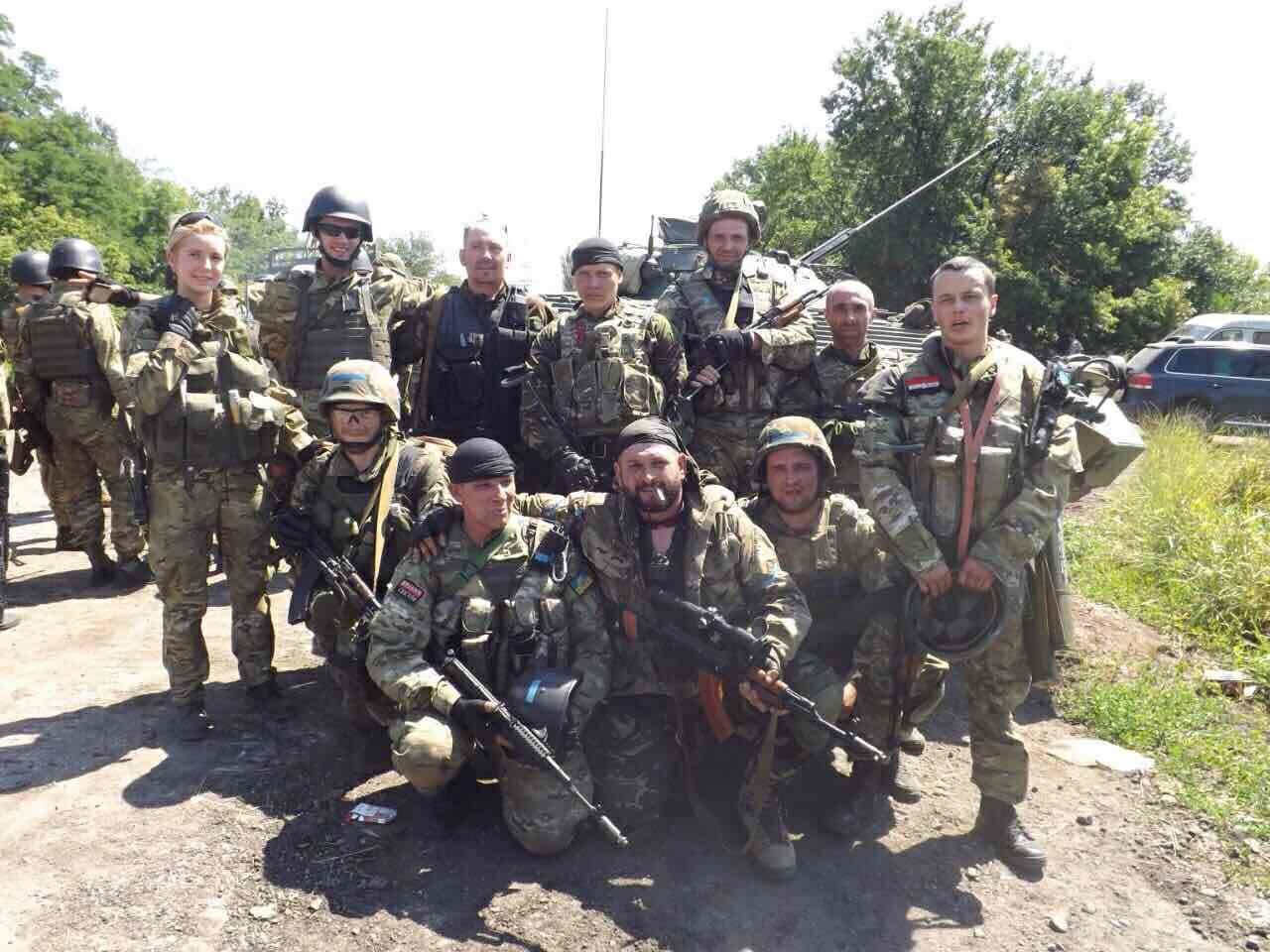
Yarosh forbade taking girls on missions, so I disguised myself: I wore shapeless clothes and a balaclava. I was skinny and tall, so I looked like a teenage boy.
In June 2014, near Karlivka, we came under serious artillery fire for the first time, and that was when the general retreat began. I always moved in with the first ranks and pulled out last so as not to leave anyone behind. Yarosh was passing me with his security detail, and then someone shouted from behind: ‘Wounded!’ I stopped and turned back.
‘Where are you going?’ Yarosh asked.
‘There is a wounded man there. I am going to get him.’
‘No, you are not.’
‘I am already going.’
He gave me some men from his security detail, and we carried that guy out ourselves. After that mission, he called me in, gave me his Glock combat knife, and offered me command of the medical service. But he set one condition: ‘You do not take any girls.’ It was only in the fall that I managed to convince him to change his mind, and I brought in the first of my sisters-in-arms: Zoia, Kuba, Stasik and Mam
– You were only 18. How did you gain authority among adult men?
–At that time, I still dyed my hair with cheap green toner! It took me three months of intensive combat, evacuations, and liberating cities to earn authority. First, I fought for the right to be heard, then I proved my professionalism, and only later did full trust follow. There was often a "clash of expectations": a 50-year-old man would walk in and ask, "Where is Yana? I need to discuss a rotation." And I would reply: "I am Yana.
– What was Yana Zinkevych like back then?
– I was a maximalist. I could not compromise on nuances. If I said it would be this way, it meant it would be this way. Now I can compromise and listen to arguments because I have been in everyone’s shoes. But then, youthful ambition was boiling. When you are facing a 45-year-old man and you are 18, you cannot be gentle; I had to be heard, so I sometimes resorted to blunt communication, I was a bit of a bitch.
Oksana Korchynska often recalls our first meeting. At that time, large-scale training was taking place for medics from various units ("Holy Mary," "Azov," "Donbas"). Yarosh told her he would send the head of his medical service. We spoke on the phone; she didn't understand anything over the call, but when I arrived, she saw me.
Right in front of me, she called Yarosh and started shouting: "Who did you send me?! She’s 18 years old, she knows nothing!" Of course, Ms. Oksana changed her mind later.
– You are 30 now. What has the battalion become, which started with six people and two vehicles?
– Today, the "Hospitallers" consist of hundreds of paramedics and drivers who head to the front line every day. We have grown into a large structure with our own training center, where we have trained thousands of people, and a fleet of armored vehicles that allow us to retrieve the wounded from places we simply couldn't reach before. But despite this scale, we remain the same volunteers who work not for salaries or awards, but simply because someone's life is worth any effort. It has not been just my "brainchild" for a long time; it is a massive family of professionals joined by more and more people who share our values.
– Aside from the story with Anna Niav, have there been cases where people from the battalion betrayed your trust?
– There is one personal story that pained me for a very long time. It concerns my close friends—Frost and Tania Moroz. Frost was one of the first chaplains of the "Hospitallers"; we had incredibly warm communication for years. When I was pregnant, he and Tania would constantly visit us.
Unfortunately, they both developed cancer. Tania recovered, but Frost died of stage four brain neuroblastoma.
Later, when court proceedings regarding child support and the termination of my ex-husband's parental rights began in Rivne, my lawyer discovered something strange: the opposing side's lawyer was her good friend. She organized a meeting for us. At the time, I had just undergone another surgery, for a month and a half, I could only lie on one side, and a terrible pressure ulcer had formed all the way to the bone. I was lying on a special mat as we discussed the defense strategy.
And then this lawyer says:
‘You know, I think you should know this: the godmother of your child is paying for my services.’
I was taken aback: "Which godmother?" He describes her: "Well, the one with the long braid." And I realized he was talking about the woman who baptized my Bohdana. The person I considered my best friend was financing a lawyer against me behind my back.
After Frost's death, she got a new husband, also a soldier. When he required hospitalization in Odesa, she turned to me. I already knew everything, but I didn't try to clarify anything. I simply replied: "Okay, I'll do it." And I helped. Because the guy was wounded, and he deserved help regardless of whose husband he was. I am not vindictive.
But something else finally broke me. She started writing curses to me from the deceased Frost's page. Because of this, I had to block Frost's page. And he was one of the best in the battalion. Now I can no longer visit his page to look at photos or shared events and memories. The situation with Tania probably hurts the most.
– You mentioned the court proceedings with your ex-husband. Your separation story began almost immediately after childbirth. Why did you divorce?
– Despite the pregnancy, I continued to command the battalion. My condition was terrible: at a height of 186 centimeters, I weighed only 42 kilograms. I looked like a prisoner. My body rejected even water; I was constantly vomiting. At that time, my ex-husband couldn't even simply bring food to my room, although our cook prepared meals for everyone.
When my mother arrived for the wedding and saw all this, she and my stepfather Vasyl both quit their jobs and came to me at the battalion base. This was during the seventh month of my pregnancy. They essentially nursed me back to health and fed me. Thanks to them, I gained weight, at least up to 52 kilograms, and I finally developed somewhat of a baby bump.
Bohdanka was only six days old when I left. Before giving birth, I did not issue any ultimatums, it was important for me to carry the child to term. In principle, that was the last time they saw each other.
He didn't give a single penny, not even for a pacifier. It was sheer despair when you are twenty years old, you have a Group I disability, and your parents are caring for you and your infant around the clock. With no ability to work, without a penny in your pocket. We couldn't even buy formula for sixty hryvnias.
I filed a lawsuit when Bohdanka was already three years old. The court proceedings lasted a year and a half. Over these years, he never once saw the child. The Children's Affairs Service participated in the process: they inspected the living conditions, spoke with neighbors, and summoned him. Ultimately, they testified in court that he had made no attempt to participate in her upbringing. He served in Rivne, on the exact same street where we lived, but in all those years, he never once visited his daughter.
The lawyer advised filing for the termination of parental rights at my place of registration, as it was in the best interests of the child and myself. That way, the service could inspect the living conditions. Furthermore, for a certain period, I did not officially register my disability, although I had grounds to do so. I was afraid of our judicial system: what if they decided that, due to my health condition, the child should be left with him? I waited for the divorce to be considered fully "legally competent" in the eyes of the court.
Ultimately, we filed for both child support and the termination of parental rights. Since I registered my disability while still married, the lawyer pointed out that I was entitled to alimony for myself as well. We decided to use this as a "bargaining chip." He is very greedy for money, so we added this demand. The court granted everything I requested. To avoid dragging it out further, we reached an amicable agreement: I waived the alimony for my own maintenance, and in return, he gave up the child. He literally sold out for a few thousand hryvnias. He sold out as a father.
But it is for the best. I would not have been able to look at the person who left me unable to walk.
– Until now, the details of that crash had remained unknown. What really happened that morning?
– On the day of the crash, I had won a competition for a base in Pavlohrad. We went to celebrate in Dnipro, to MakhnoPub. My ex-husband, Maksym Korablov, started openly acting like a thug, nearly picking fights with some guys. When I tried to calm him down, he simply shoved me away. I went inside, paid all the bills, and came back out to wait for a taxi to the hotel. It was December 5, cold, with light snow falling. So I would not freeze, I got into the car, started it, reclined the passenger seat and simply passed out. I woke up only because of unbearable pain

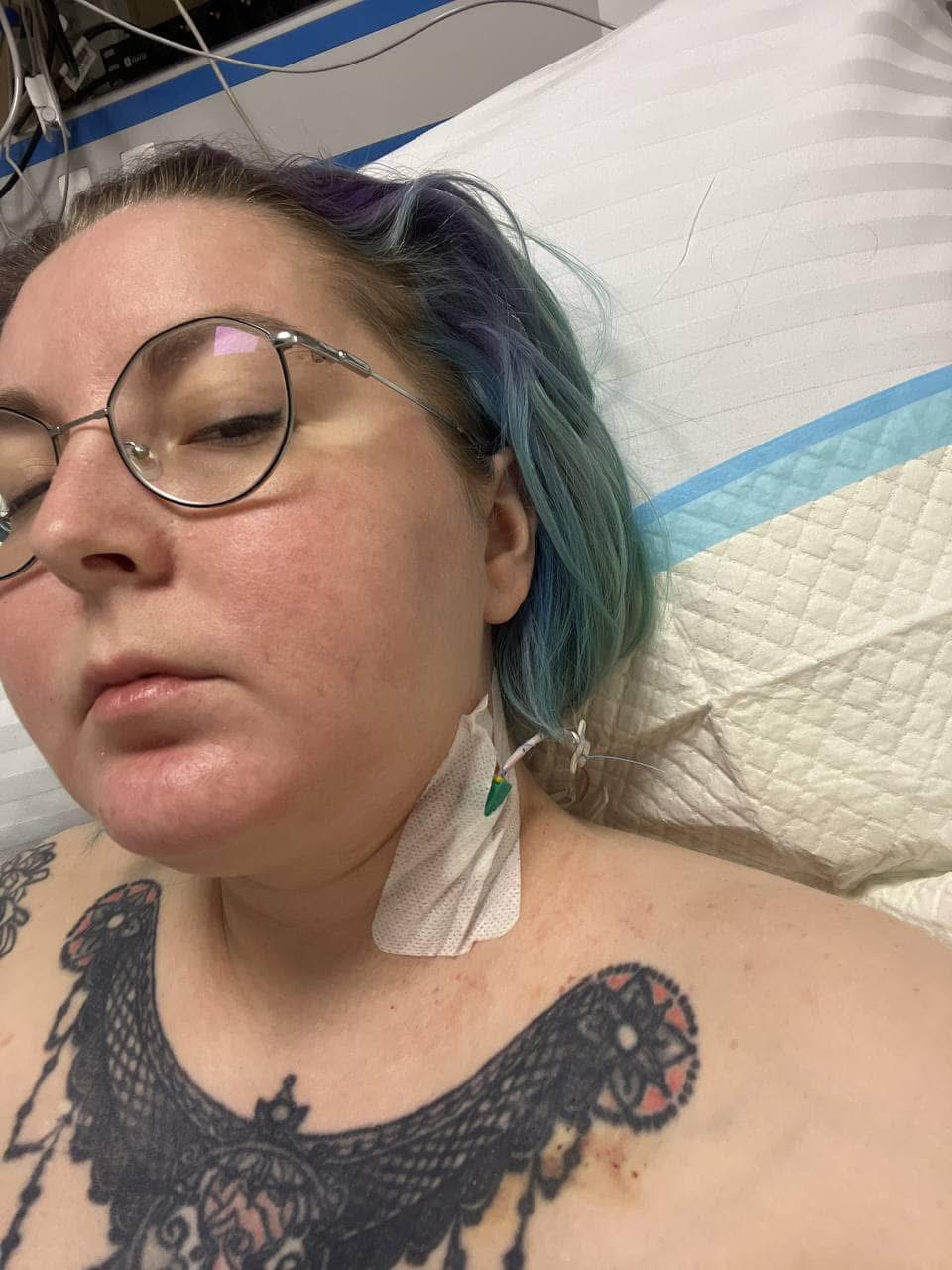
He got behind the wheel dead drunk, his blood alcohol level was 2.1 promille when he was tested at 6 a.m. in the hospital. (That is, this reading was taken more than 6.5 hours after he had left the pub.) That is a whole bottle of vodka drunk on his own and washed down with beer. The crash happened at about 5:30 in the morning. The car rolled several times and flew into a ditch, and I was thrown out of the vehicle.
On the very next day, while I was barely conscious in intensive care, a whole crowd of journalists pushed their way in. I was young, naive and terrified. I was afraid that if I told the truth — that it was not only Maksym Korablov who had been driving, as was reported, but also the condition he had been in — no one would help me with treatment. I hid that truth because I felt defenseless.
Six days after Bohdana was born, he was not at the base. My parents and I packed up within two hours and left for Rivne. Back then, his influence seemed enormous to me. I thought that if we split up, no one would believe me and no one would help me.
That is exactly what happened. He was charismatic, and at that time most people in the battalion sided with him. Even those who had been drinking with him were ready to testify in court in his favor. He enlisted almost immediately, not out of patriotism, but to qualify for amnesty in the criminal case over the crash.
The investigation and court proceedings turned into a ten-year marathon of cynicism. In the first instance, he was sentenced to six years in prison. But he did everything he could to stay out of jail. He even married me only so he could use that fact as a mitigating circumstance and try to get the case closed. He acted very cunningly. At the appeal stage, he simply stopped showing up in court, constantly inventing reasons to postpone the hearings. This legal stalling was dragged out deliberately for years. He was waiting for one specific date — December 5, 2025. That was the day when exactly 10 years had passed since the crash, meaning the statute of limitations for prosecution had expired.
Because of that sabotage in court, the criminal case was closed. But the worst part is not even that. Along with the criminal liability, the civil liability was effectively extinguished as well. He did not pay a single kopeck in compensation. The person who made me disabled did not pay for a single course of rehabilitation, even though I have to undergo them two or three times a year, every year. And each one costs 70,000 to 80,000 hryvnias. He completely avoided any obligation to help with treatment or cover any expenses related to my condition.
He simply waited out those 10 years, manipulating laws and people, and came out of the situation completely clean in the eyes of the state. To him, I was only a tool to avoid prison.
For my part, all the money I managed to raise for rehabilitation after the crash, I spent on the battalion during that same year. Because of the pregnancy, I could not undergo full rehabilitation anyway, so I directed those resources to where they were needed most.
– And how did you decide on the pregnancy?
– I was walking with my mother, my ex-husband, and a close brother-in-arms near the Western Wall in Jerusalem; we visited the Church of the Holy Sepulchre, the very one where the Holy Fire descends. Suddenly, a priest approached me. He spoke in English and said a strange thing: "You will soon have a daughter; name her Theodora, which means 'God-given.'" And just two weeks later, I found out I was pregnant. I still get goosebumps when I remember it.
Three months prior, doctors had diagnosed me with the inability to carry a child due to my injury. When they learned about the pregnancy, their reaction was categorical. In one voice, they insisted that I have an abortion, citing the extreme risks.
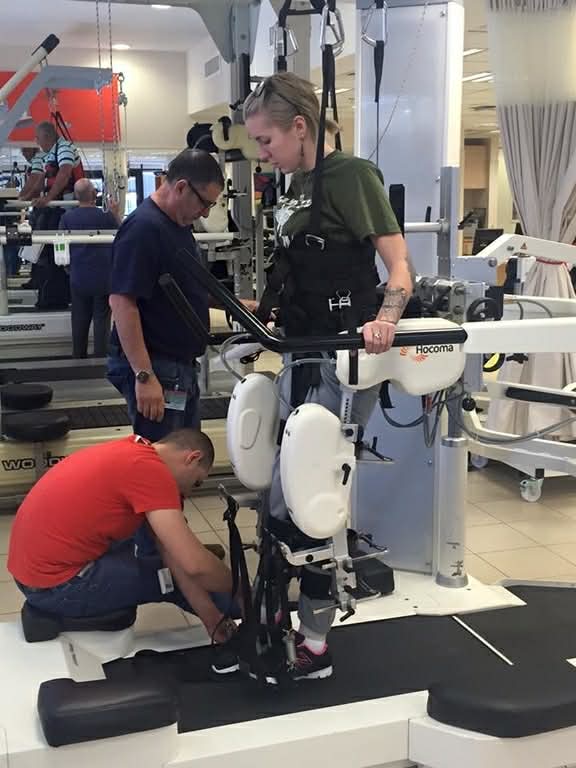
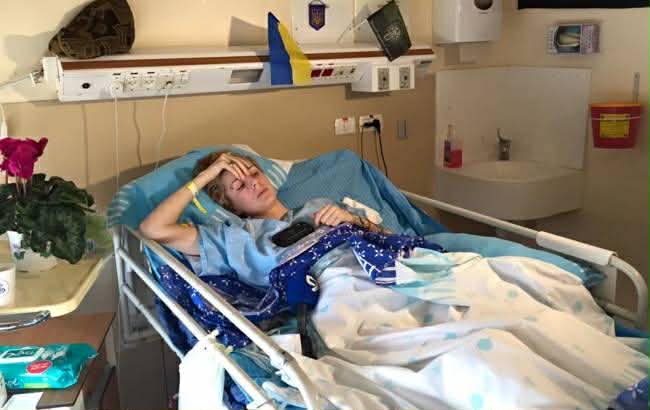
But I was steadfast. Because back then, during my treatment in Israel, I already clearly understood that the technologies for my full physical recovery did not yet exist and were unlikely to appear in the coming decades.
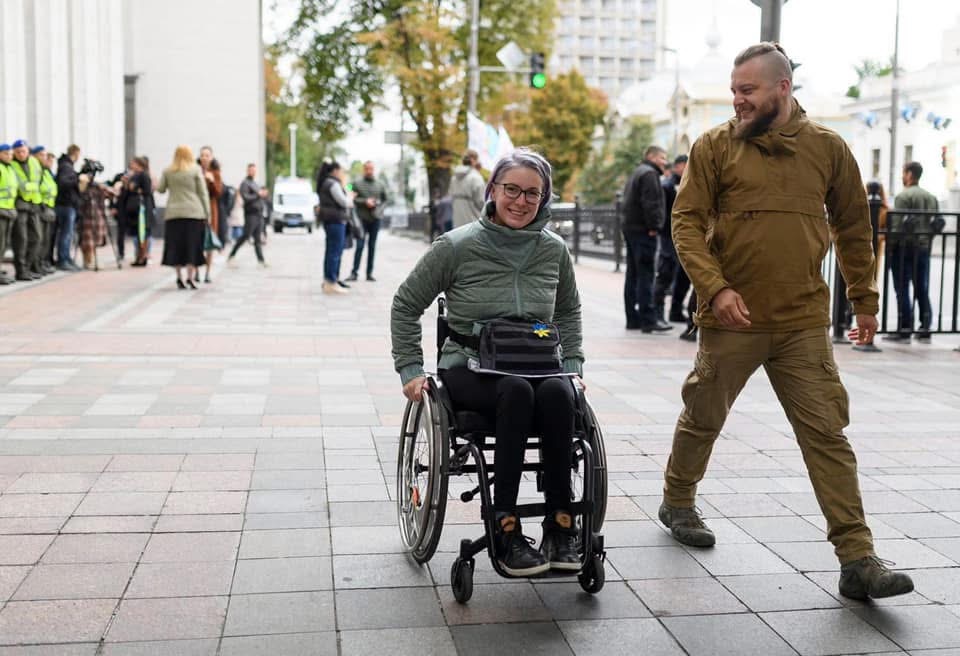
I understood my outlook. It is one thing to use a wheelchair. The major problem is the pain. Pain and a lack of independence. Meaning, simply going somewhere outside the territory of the base, it requires either "Yoda" or "Nemo". I cannot go anywhere by myself. Well, yes, I could learn to drive a car with hand controls. For a person who works on a phone, that is not an option. Therefore, the biggest problem is the pain. I realized that I wanted to go to Switzerland for euthanasia. Because doing it myself somehow, shooting myself, taking something, or whatever? those are not 100% reliable methods. And I truly decided that I would go to Switzerland.
I was preparing, I was ready, and the only thing that stopped me was the pregnancy. If it weren't for Bohdana, I would no longer be here. Just enduring this to live a little longer, honestly, it makes no sense.
It is very painful, very difficult, physically extremely difficult. So, of course, I was going. In all seriousness, I was going to go, and then, since it happened that I became pregnant, I made the decision for myself that it was my destiny to get pregnant, and therefore, I must give this child a chance.
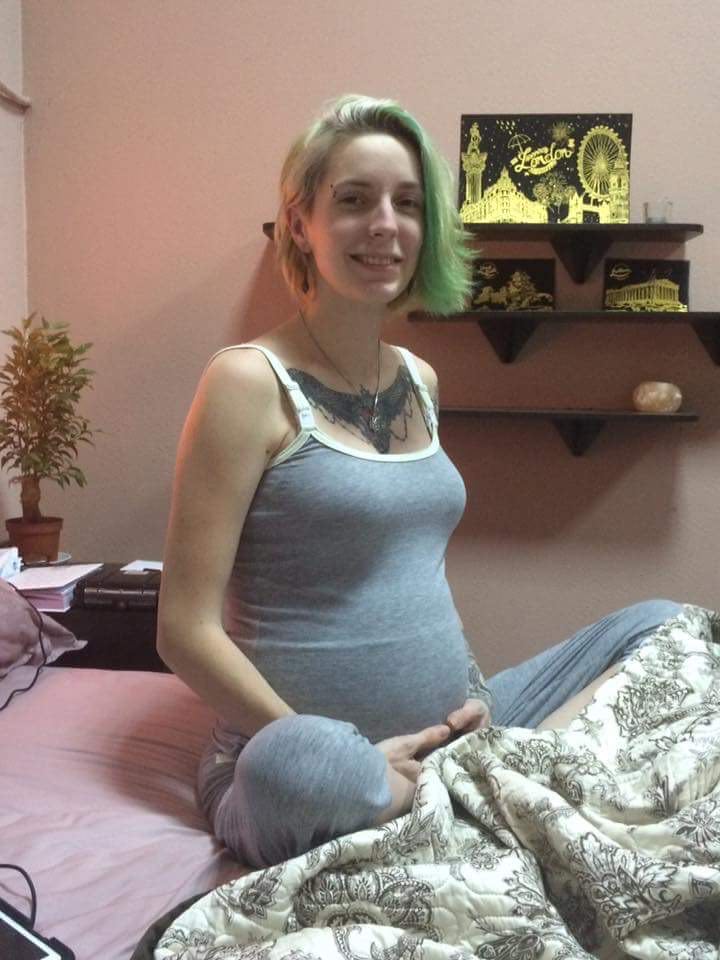
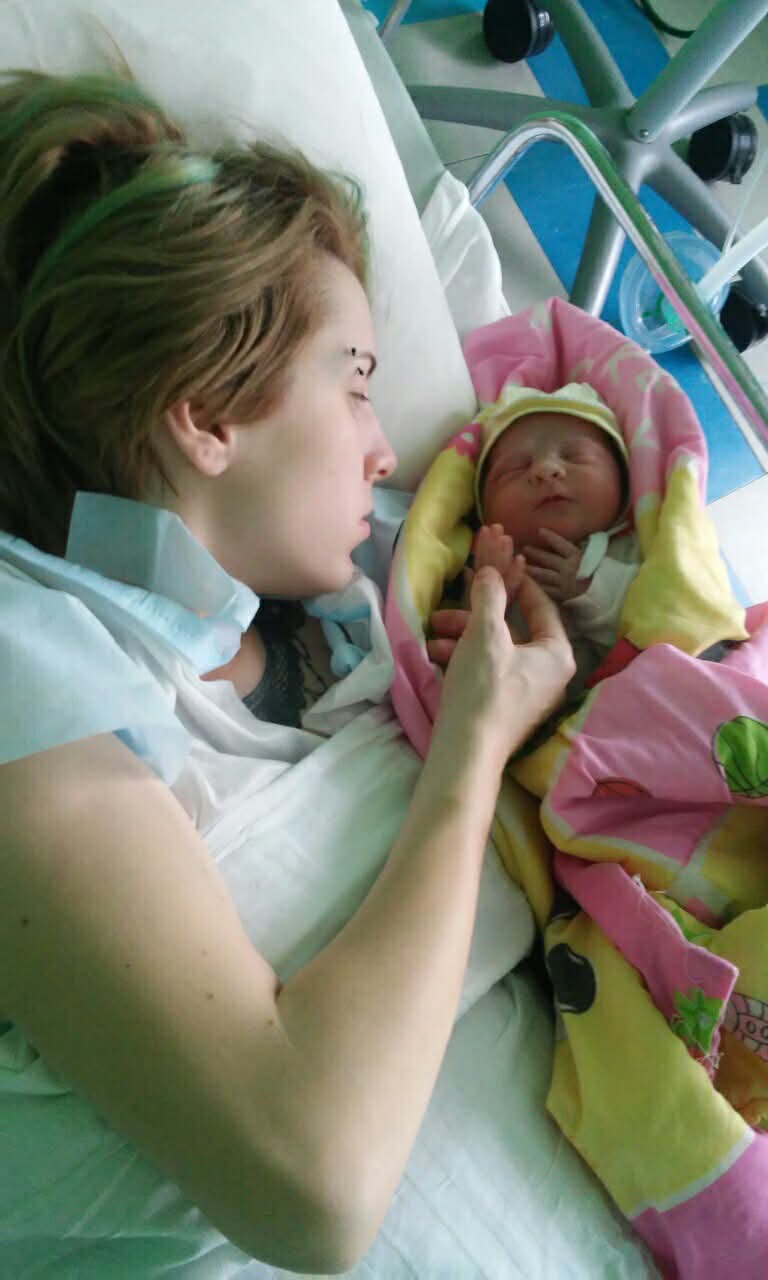

Although in reality, the chances that she would be born healthy were very slim. And yet I have a healthy, bright daughter, and thanks to her coming into this world, I am alive.
– Despite the injury, you continued going to the front. How did your role in the battalion change after the injury?
– Even in a wheelchair, I continued making the rounds of positions — Vodiane, Shyrokyne, Marinka. A commander has to look their fighters in the eye and understand their needs on the ground. But now I no longer go all the way to the zero line. In the age of FPV drones, I could become a burden: if something happened, someone else would have to risk their life to pull me out, because I would not be able to jump out of the vehicle myself. That is an unjustified risk.
Although, I admit, I miss the front terribly. I dream about it often, and they are good dreams, because that was where I felt most alive.
It was during one of those rotation trips that I met my husband. At the time, he was preparing to join the Special Operations Forces and volunteered to go with us to the base. That is how it all began.
– Tell us your story with Nemo.
– Nemo became my legs. We met in the summer of 2017, when my daughter Bohdana was only eight months old. I was 22 then, and he was 30. He never knew me healthy and walking — he had only heard about me from the front before that.
Once, near the Mechnikov Hospital in Dnipro, I had a falling out with my driver at the time. Finding myself alone, I realized that, quite simply, there was no one to help me get to Pavlohrad and carry me up to the second floor. I messaged Nemo. He arrived, drove me there, helped me… and three days later, we began living together. He simply came to visit and stayed forever.
I set a condition immediately: either a serious relationship or nothing. After everything I had endured, I could not have survived more betrayals. Nemo became the first and only person I allowed into my heart. It was important to me that the man had combat experience; I simply would not have found common ground with anyone else. Nemo is a scout with significant combat experience—one of those who has seen the enemy face-to-face from a distance of a few meters. He began his journey in the "Dnipro-1" battalion and later fought as part of the 59th Brigade. He did not become a Hospitaller immediately; it took me years to slowly involve him in the battalion's affairs.
I am currently his direct commander, but this does not create problems. Nemo is reserved by nature; he does not seek public leadership. Ours is a partnership built on absolute trust and understanding. This summer will mark nine years since we have been together.
Nemo became a true father to Bohdana because he has been in her life constantly since she was eight months old—every trip, every meeting with Bohdana is something we only do together.
Bohdanka, Nemo, my mother, and my stepfather Vasyl are the people thanks to whom I exist. And my brothers and sisters-in-arms, the Hospitallers, are the people thanks to whom the battalion exists.
We are a unit free of restrictions. We have people of all religions, ages, and views. It is important to us that our values align. And our primary value is saving lives.
For me, everyone who has come to the "Hospitallers" for even a single day is a person I will cherish.
Once, Oksana Korchynska gifted me a trip to Rhodes, where the Castle of the Knights Hospitaller stands. For me, it was a symbolic place. But there was one problem: hundreds of steps led up to that castle.
Nemo carried me to that castle in his arms. He would carry me 30–40 steps up, sit me on a stone, go back down for the wheelchair, carry it up to me, and do it again and again. I sat among those ruins and thought: we do not know what will happen in 500 years. Perhaps one day the "Hospitallers" will be more famous than the Red Cross.
– Due to recent events, everyone is talking about the "Hospitallers," yet it is your name that has ended up at the epicenter of the scandal. How is this story affecting you and the overall atmosphere within the battalion?
– Naturally, it is unpleasant when your name becomes part of sensational headlines. It is psychologically taxing, but at the same time, it hardens you. Being at the center of attention due to suspicions of dishonesty is not a pleasant trial, but my position remains unchanged: I have nothing to hide.
– What is the hardest part of being a battalion commander for you?
– Calling the families. I personally bury my fighters. I do not have some designated person who calls parents at three in the morning.
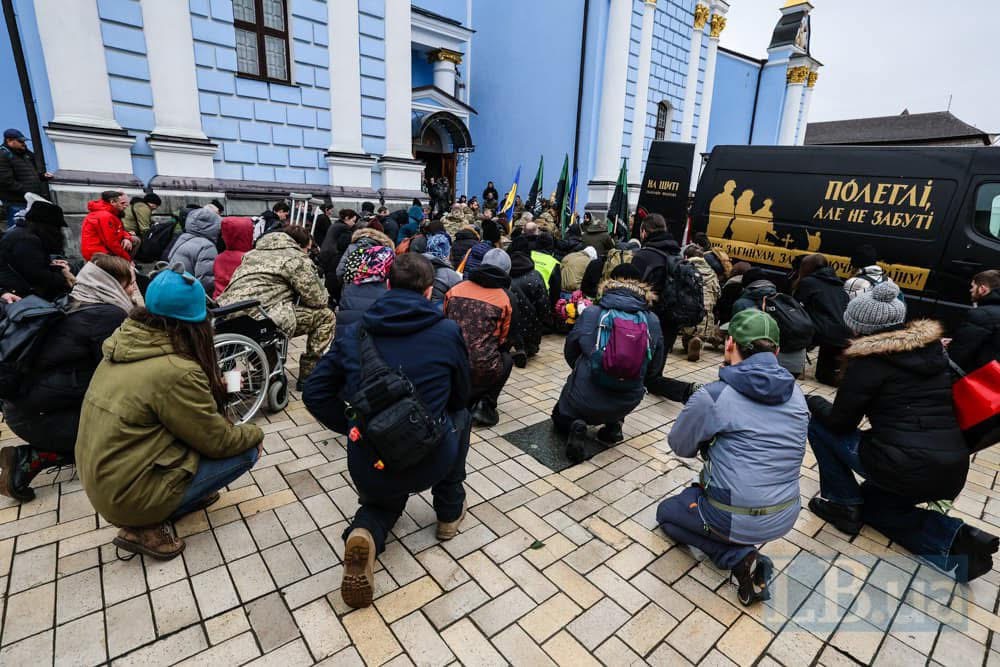
Out of the 181 fallen from the UDA and Hospitallers units, and (formerly) the Right Sector Volunteer Ukrainian Corps, I personally notified the families in about 120 cases. In our battalion, 39 Hospitallers have been killed or have died.
You sit there for 10 minutes thinking about whom it is better to call, the mother or the father. It is a terrible burden. Back then, no one knew about the patronage service; people died from illnesses or the consequences of their wounds, and the unit might learn about it only after the fact. Now, expectations of our patronage team are extremely high. We provide the best clinics and care, because these people gave up their health
– And what is the hardest part for you about life in a wheelchair?
– A lot has happened in my life: threats, unstable people, stalkers. There was even a stalker case. It got to the point where Nemo had to walk me to work all the way to the door every single time.
It all started in 2016 or 2017. I had put up a ‘meet me for a donation’ lot to raise money for a seriously ill child. My lot was bought for 15,000 to 16,000 hryvnias, at the time, that was a huge amount of money. I met this man in a café: I had promised coffee and interesting stories. He was around forty, I was twenty-five. I noticed right away that something was off: he was sitting there tense, with dilated pupils, though he did not look high. Just very suspicious.
He brought flowers, we talked. When Nemo arrived to pick me up, that man decided to walk me to the car. I thought: ‘To hell with it, he paid that kind of money for the child, I can put up with another five minutes.’ But next to the car he suddenly tried to kiss me. I shut it down immediately: ‘No, boy, you paid for a meeting, not sex.’ That was the end of it, and we went our separate ways. Nemo missed the whole thing while he was putting my wheelchair into the trunk.
But that was only the beginning. ‘Gifts’ started being sent to my service hotel: gold, chains, rings, earrings. This man started creating fake accounts and writing to me. At first, I tried to explain that this was unnecessary, then I just started blocking everything one after another.
Two years passed. In 2019, there was another charity meeting in Rivne. I thought: ‘Well, the last experience was a bad one, let’s try again.’ And he bought my lot again.
I got in touch with the organizers, found out the amount of the bid, and simply paid that money to the foundation myself just so I would not have to see him. We marked the lot as ‘successfully purchased,’ and that was that.
Last year, when Lesia Lytvynova once again put up a meeting with me as a charity lot, I set a strict condition: no anonymous accounts. I gave them a list of all his possible pseudonyms and warned them: if it is him, do not accept the bids; this person is stalking me. Fortunately, a girl won.
It never rose to the level of a criminal case, but it is horribly unsettling. When you live alone in service housing, walk the same route to work every day, and understand that you are in a wheelchair, you cannot run away, and you cannot fight back. If I were on my feet, at least I could kick.
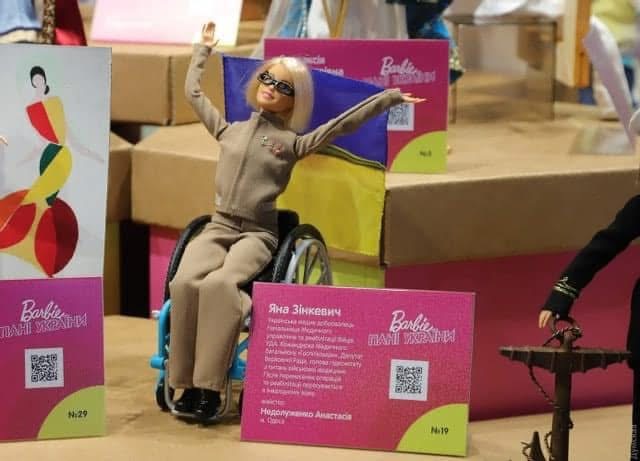
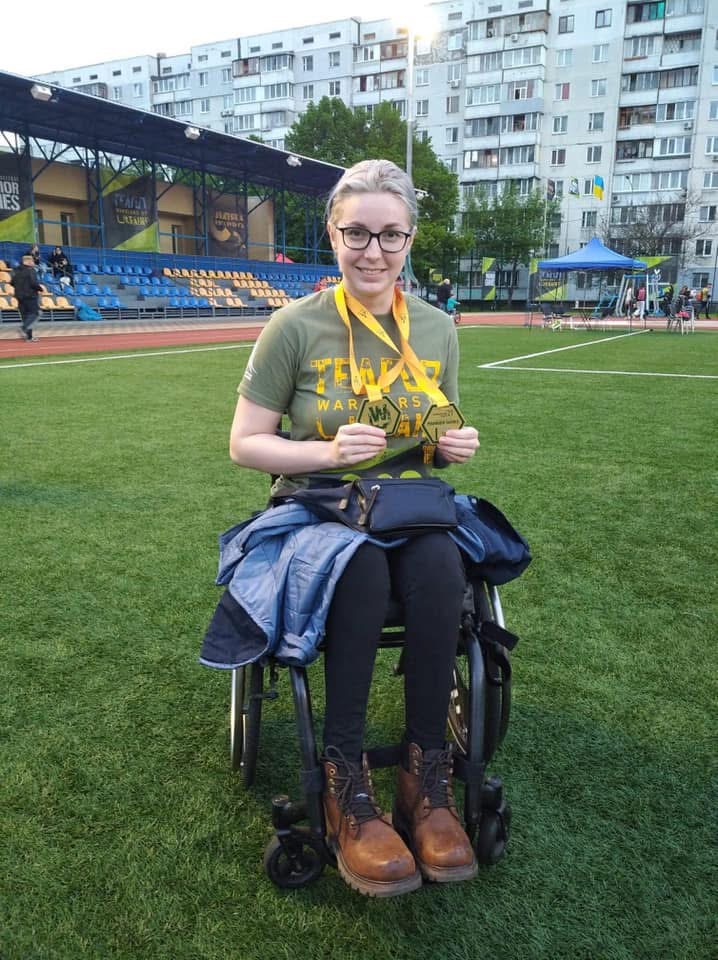
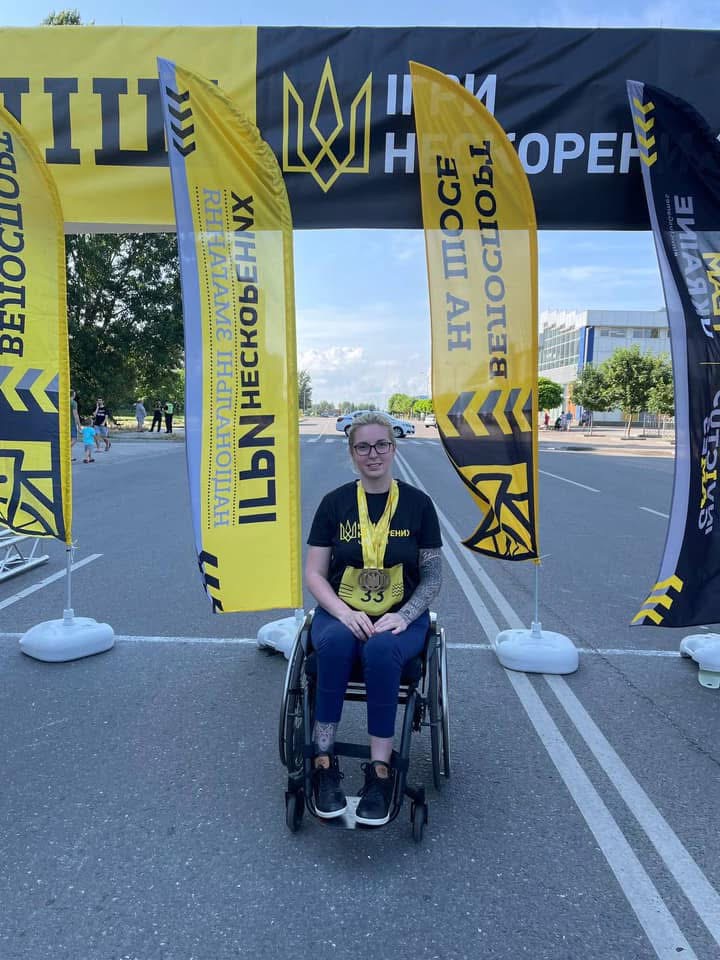
Life in a wheelchair means constantly needing to have someone nearby, because complete independence in everyday life is, unfortunately, impossible. It is a daily struggle with the body: prolonged sitting causes pressure sores that require constant attention and care, and chronic pain is a constant companion. At the same time, a wheelchair is simply a different way of getting around, one that does not prevent you from going to the theater, taking part in sports competitions, or working fully. In the end, it does not prevent you from living a full life!
– Outside of work, do you have any hobbies?
– Currently, I am seriously engaged in genealogical research and have purchased about twenty genetic tests integrated into major global networks. I plan to organize a large family gathering to collect samples from all the eldest relatives. Simultaneously, I have been working on a family tree for two years: I have a person who has been traveling to archives this entire time, photographing documents, and studying records of who lived in which village, how many children were born, and who managed to survive. Thanks to this work, we have traced our history back to 1820, and since my entire family is from the Rivne region, I can say with confidence that I am 100% from Rivne!
This interest in my roots appeared when I truly fell in love with history for the first time in my life, although it was not easy with this subject in school. Our history was taught by the principal, and he was incredibly irritated by the piercing I got in tenth grade, and tried to hide under my bangs so that nothing would be visible. He was constantly arguing, snapping at me, and even summoned my mother, hoping for her support, but she always stood up for me.
I remember how, after another conversation, he walked out irritated and remarked: "Like mother, like daughter," because my mother made it clear to him: if the daughter wants to wear a piercing, she will wear it. This was around 2011; I graduated from school in 2012. At that point, my mother and I might not even have been on speaking terms due to my teenage rebellion, but she stood by me regardless.
The female lineage of my family consists of four generations: grandmother, mother, myself, and my daughter Bohdana. This experience of unconditional support became the foundation of my understanding of sisterhood. For me, sisterhood is one of the most valuable experiences in life, and these are the values I implement daily in the "Hospitallers" battalion.
Myroslava Malyk, for Censor.NET


