



Oleksandr Kharchenko: "By next winter, both Kyiv and other cities in Ukraine will be much better prepared than they were for this one"
Last winter was a severe ordeal for Ukrainians, not only at the front but also in the rear. Massive rocket and drone attacks on critical infrastructure led to prolonged power outages, as well as disruptions in water and heat supply in cities across the country. The Russians struck the capital particularly hard, seeking to cause a total blackout there: during the most difficult periods, entire neighborhoods were left without power and unable to heat their homes steadily.
In some places, temperatures in homes dropped to critical levels, and for many this meant living in the cold, in the dark and in a state of constant uncertainty, or being forced to move.
The authorities and local communities scrambled to find solutions to support critical infrastructure, whilst energy workers laboured tirelessly to repair damaged facilities. Despite all the immense challenges, the system held firm. At the same time, these events sent a clear signal: preparations for future seasons must be systematic, thorough and timely.
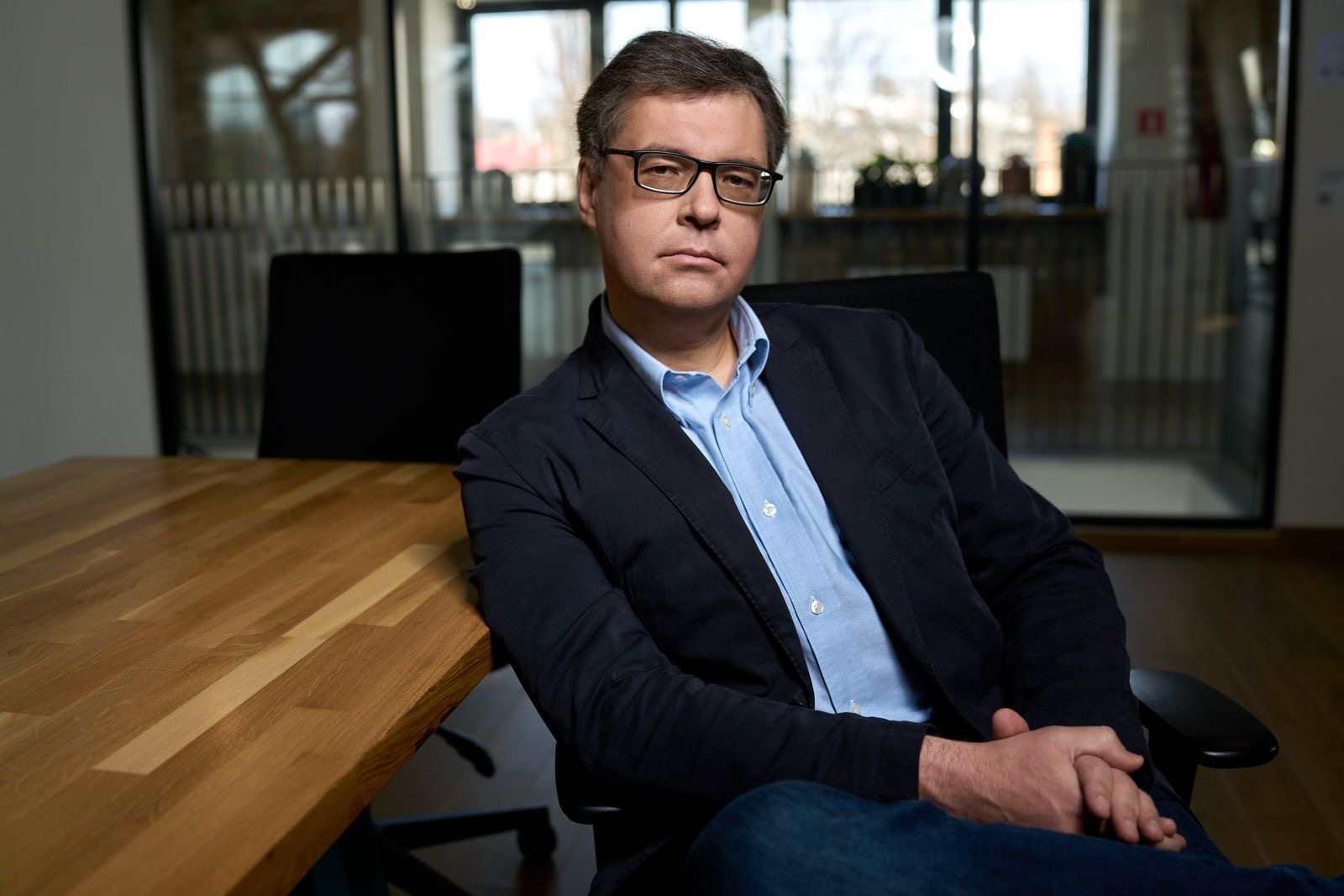
We spoke to Oleksandr Kharchenko, Director of the Centre for Energy Research, about exactly how we should prepare for next winter and what is already being done to prevent further crises.

- What needs to be done right now to avoid a repeat of the crisis situations we experienced this winter?
- Let’s start with the fact that the process of preparing the relevant plans is currently being widely publicised, which is a good thing in itself. As is the fact that there is communication and no attempt to isolate the process of preparing for the next heating season, to make it invisible or unknown. That is already positive news. In other words, everyone understands: the situation is genuinely complex, and to avoid the kind of crises we all experienced this winter – not just in Kyiv, but in many other cities too – we need to prepare thoroughly.
What does this mean in practice? Essentially, every city needs to understand a few things. First and foremost, how prepared it is to operate in the event of a power cut, and whether its critical infrastructure can function if a regional blackout occurs. That is, when the city finds itself without an external electricity supply. What would that mean? Will the water supply pumps and boiler rooms still work, as we assume this could happen during a cold snap, and do all key stakeholders know what they will do in such a situation? If you take any large city, it has elements that are very closely interlinked. For example, we have all realised that if there is no electricity but the heating is working, it is possible to survive. In other words, when it is dark but warm, life is bearable. But when it gets cold, a serious problem arises. Therefore, to ensure that even in the worst-case scenario during winter attacks, it will still be warm, we need to realise the following: firstly, the heating system runs on water. Therefore, we must ensure that water is available. This means, on the one hand, that the city’s water intake is protected, and on the other, that its electricity supply is as secure as possible. Ideally, it should be as follows: in addition to normal operation from external electricity grids, there is an understanding that if a regional blackout (emergency power cut) occurs, a certain amount of mini-generation will be allocated – a cogeneration plant or several such plants – which will ensure the operation of the water utility’s pumps and the necessary pumping stations within the city itself. In other words, the water will keep flowing. This is the first condition, because without it, you definitely won’t have heating. The formula is simple: no water, no heating.
Once we were sure that water would be available, and having analysed that a missile strike could target the water supply system, we realised that we needed either a backup water intake, or, even better, both that and a network of boreholes across the city from which water could be drawn individually to maintain the heating system – directly, for example, at the so-called heat supply stations.
You must have this complex ready for operation: there are main and backup water intakes, boreholes, and all of this is equipped with a backup power supply so that even if everything goes down, in the worst-case scenario, diesel generators (sometimes very powerful ones) switch on at the facilities themselves, ensuring the flow of water. This is the first element of the system.
Secondly: for the heating to work, the boiler rooms must also have electricity. Although they mainly run on gas, they require electricity both for gas combustion (the ignition system is still electric) and for pumping hot water, as the pumps run on electricity. Therefore, every boiler room must be equipped with the best possible backup power supply. That is, by connecting to a separate cogeneration unit – a gas piston or gas turbine engine – and, even better, in addition to this, to a suitable battery system. Because what happens if there is a diesel generator or cogenerator to which the pumps are connected, but a blackout occurs and everything switches off? If there is no battery system, the power to these pumps will be lost, even if only for a few minutes. What could the consequences be? Unfortunately, during such an uncontrolled shutdown, the pumps can simply break down physically – a water hammer occurs. Because they stopped unexpectedly when they shouldn’t have, and in a completely incorrect mode. Something inside them may simply break down.
Therefore, in the ideal scenario, all these installations, apart from a powerful diesel generator and a gas cogeneration unit (such as a gas piston engine or turbine), should also be backed up by a battery. Because only a battery bank is capable of instantly compensating for a power loss and ensuring there are no water hammer effects or emergencies in the heating system, so that it simply continues to operate normally. If such a system is in place, then effectively no loss of external power will result in people being left without heating. Yes, it will be dark, but water will still flow from the tap, hot water will continue to circulate through the radiators, so it will be warm.
There is another threat. As we understand it, the Russians may well try to destroy the boiler houses or combined heat and power plants themselves – it doesn’t really matter what they’re called. The only difference is that in a boiler house, only water is heated, whereas in a combined heat and power plant, electricity is also largely generated. But in any case, as we have seen in Kyiv, there could be an attack that simply cuts off the heat supply – the boilers themselves will be unable to operate. What do we need in this situation? To understand how we can switch the heating system so that it operates, even if not at 100 per cent, at reduced capacity. We have already realised that plus ten degrees in a flat is much better than zero, let alone minus five. Therefore, in this situation, for each specific building and each specific heating zone (since the whole city is, in any case, divided into such heating districts), we want to know which alternative supply will be activated so that, even at reduced capacity, heat can still be supplied to the area where its main source has been cut off. Essentially, this amounts to creating a decentralised heat supply system that provides a backup for the main sources. Accordingly, across the entire city, we need to understand what will happen if a particular heat source is destroyed – how we will respond. There are several scenarios for how this could be implemented. In every city, of course, this must be worked out separately, because the heat supply system is, in fact, very complex. There are a host of parameters that need to be calculated: how the water flows, at what pressure, in which direction, and how it all works. It’s not simply a case of us taking water, heating it up and pumping it into some pipes. No! It is a very sophisticated system involving a huge number of calculations to ensure it works correctly. So, what do we want at this stage? To have a clear map of exactly how we reserve heating capacity across the city. And here we often come to the conclusion that, unfortunately, it is simply impossible to reserve all the capacity in, say, Kyiv within a single year. In other words, there is no real technical possibility to simply reserve all the heat supply in Kyiv’s heating system within a single season so that every building can be connected to one source and then, if necessary, quickly switched to another. That is why we need to provide for one more thing. In addition to the work plan, which over two or three years will enable us to reach a situation where every building has an alternative heat supply, we must create what is known as a ‘heat emergency service’ right now. That is, to keep mobile boiler units in reserve – primarily diesel-powered, as there are virtually no other alternatives here – as well as mobile generators. If, during the coming or next season, any part of the city finds itself without heating in freezing conditions due to attacks, mobile boiler units and generators must be deployed there promptly and, even in the event of a blackout, connect those homes that are currently receiving neither electricity nor heating. Because this winter’s experience has shown that if the worst-case scenario occurs, even just having electricity in the home helps. Some turn on the air conditioning for heating, others use other appliances. But one way or another, additional sources of electric heating appear, helping people to cope somehow. This ‘emergency aid’ in the form of mobile generators is the last line of defence.
- How many are needed? For example, in Kyiv.
- Here, for emergency situations, we need to ensure the availability of approximately 1,700–1,800 mobile generators and around 130–150 mobile boiler units, which, in the event of a major heat source being cut off from the supply system, can be driven into the area, connected and put into operation. This is very expensive and incredibly inefficient. But in a critical situation, this could be the only way to save people from freezing. That, broadly speaking, is what this system should look like.
- It should. But what about in practice? Recently, the National Security and Defence Council approved Comprehensive plans for energy and infrastructure resilience for all regions of Ukraine, except Kyiv. The President has instructed NSDC Secretary Rustem Umerov to oversee their implementation. Do you know what’s in those plans? Do they include at least some of what you’ve just mentioned?
- I don’t know, because most of the information is classified as ‘For Official Use Only’ (FOU). I was involved in developing the Kyiv plan specifically. I can say that all these elements were modelled and included in the plan. I simply haven’t seen the other plans, so I can’t comment.
- But initially there was no plan for Kyiv…
- It was approved in the end, too. It was just a matter of a certain bureaucratic procedure.
- How do you assess this work in preparation for the next season overall?
- Look, from the perspective of energy specialists and preparations for the next season, winter is already upon us. We have very limited time and resources. Active work is currently underway to ensure we are as prepared as possible, and that the elements I have just described to you are as ready as possible for potential connection. Time is limited, and we never have all the necessary resources available – neither material nor technical – plus, there is always a shortage of staff. There is an enormous amount of work to be done here. We have to work very intensively and under strict supervision at every stage.
- Should people rely on the authorities? Or should they seek independent solutions in their preparations? For example, purchasing generators or installing inverters.
- Certainly, at the level of a specific block of flats, everyone must look after their own safety. That is sensible. There is a whole range of things that residents of apartment blocks can do. The simplest is to ensure that the heating system in the building is working properly: pipes aren’t leaking, pumps aren’t broken – and, incidentally, these also need a backup power supply. After all, if the coolant is circulating in the pipes but the circulation pumps that are supposed to circulate hot water throughout the building have shut down due to a lack of backup power (batteries from an inverter or generator), it will be cold.
It is also important to check the insulation of the pipes, ensure the system is serviced by the management company in the off-season, and protect the pipes in attics and entrance halls so that they do not freeze. For example, if your entrance hall is not insulated against the outside cold, the pipes there may well freeze, and the whole building will have a problem. So people must carry out these checks. No one else will do it for them.
The heating system as a whole will be in good working order; it will function. I do not see any major risks. But every building needs to start preparing for next winter right now. And, apart from the residents, once again, no one else will take care of this on the ground.
- Colleagues report that, according to the Cabinet of Ministers’ estimates, implementing these resilience plans will cost 270 billion hryvnias. We understand that this is a substantial sum. Part of the funding is planned to be covered by the state and local budgets, whilst the main burden will fall on international partners. Denys Shmyhal has been appointed as the spokesperson. I remember when he was appointed, in one of the interviews you noted that in his six years in government, he had not been involved in a single major corruption scandal. Following ‘Mindichgate’, which also affected our international image, will he be able to achieve positive results in attracting the necessary volume of investment into the energy sector? This is, after all, important.
- Of course, this is important. And this work needs to be carried out at all levels. As for the Deputy Prime Minister for Energy, I still believe that he is stepping up international cooperation. I see many public signals regarding negotiations with partners, ongoing dialogue to secure real assistance for the electricity sector, and preparations for the coming heating seasons. But each region must also work independently. Denys Shmyhal has genuinely improved the ministry’s performance in a very short time, but at the moment it feels more like ‘firefighting’. That is why action must be taken at the local level too. One might ask why this wasn’t done earlier, why it wasn’t started two years ago? But people often forget that resources are limited at both national and regional levels. Everyone tried to reassure themselves with the thought: ‘We’ve got electricity and heating, so things will work out somehow.’ You were absolutely right to say that we have now realised that we need to spend huge sums of money. Quite a few energy experts, including yours truly, have said: such Russian attacks and threats exist and will be carried out sooner or later. To which we received the reply: "Are we supposed to spend billions now to prevent some theoretical attacks?! We’ll be torn to pieces for that!" Every local authority thought: Should we build five roads and two new parks now, or modernise some obscure heat-generating facilities that nobody notices? The choice was obvious. And until the threat became a reality, those who said things would go badly were not believed. That is a fact.
Now the situation has changed. Consequently, everyone sees the reality of the threats and has even assessed them in monetary terms at the national level. But that doesn’t mean we can now just sit back and wait. We really do need to find this money. I will repeat myself: not only at the level of the Minister of Energy, the Prime Minister or any other Deputy Prime Minister, but also in every city and town. Everyone has twin towns. Services or departments for cooperation with international partners must be operational. It is absolutely essential that this work is stepped up as much as possible at all levels, whether in Kyiv, Odesa, Dnipro, Kharkiv, Brovary, or Chernivtsi, and so on. That is why, today, at the level of specific projects, we need to explain to our partners exactly what we need: how much money, what specific equipment, and so on. In fact, there are many people willing to help, both in Europe and the US – not just at the level of administrations, but also among citizens. But here it is very important that they are told exactly what kind of help is needed. Because if they continue simply to collect money and send blankets, it will not help us at all. But when they receive clear signals about what exactly we need, the situation changes immediately. I have many examples where effective communication enables us to mobilise resources.
- Is Kyiv, for example, working on this issue?
- It is. I cannot disclose the details, but as a consultant, I can see that this process is underway. We, the Centre for Energy Research, advise many companies and local authorities. The request from Kyiv is very significant. And not just from Kyiv. There are other cities actively working in this direction.
- By the way, Ukraine has recently received a complete set of equipment for a TPP from Lithuania. This complex is capable of supplying electricity to around a million Ukrainians. What do you think about that?
- We certainly use old equipment from Europe to repair our damaged power stations. A lot of it is being dismantled there, or has already been dismantled and shipped out. Indeed, this is a source of spare parts for those of our facilities that can be restored. In Europe, there are several sites that, at various times, were either dismantled and stored or simply mothballed, and are now being dismantled and transported. They are a source of spare parts for restoring damaged facilities.
- The issue of damaged TPP plants in Kyiv now needs to be resolved. In early February, following another large-scale shelling, the Darnytsia plant was shut down. TPP-5 and TPP-6 were also significantly damaged. Does it make sense to restore the old TPPs? Or is it better to invest in new technologies?
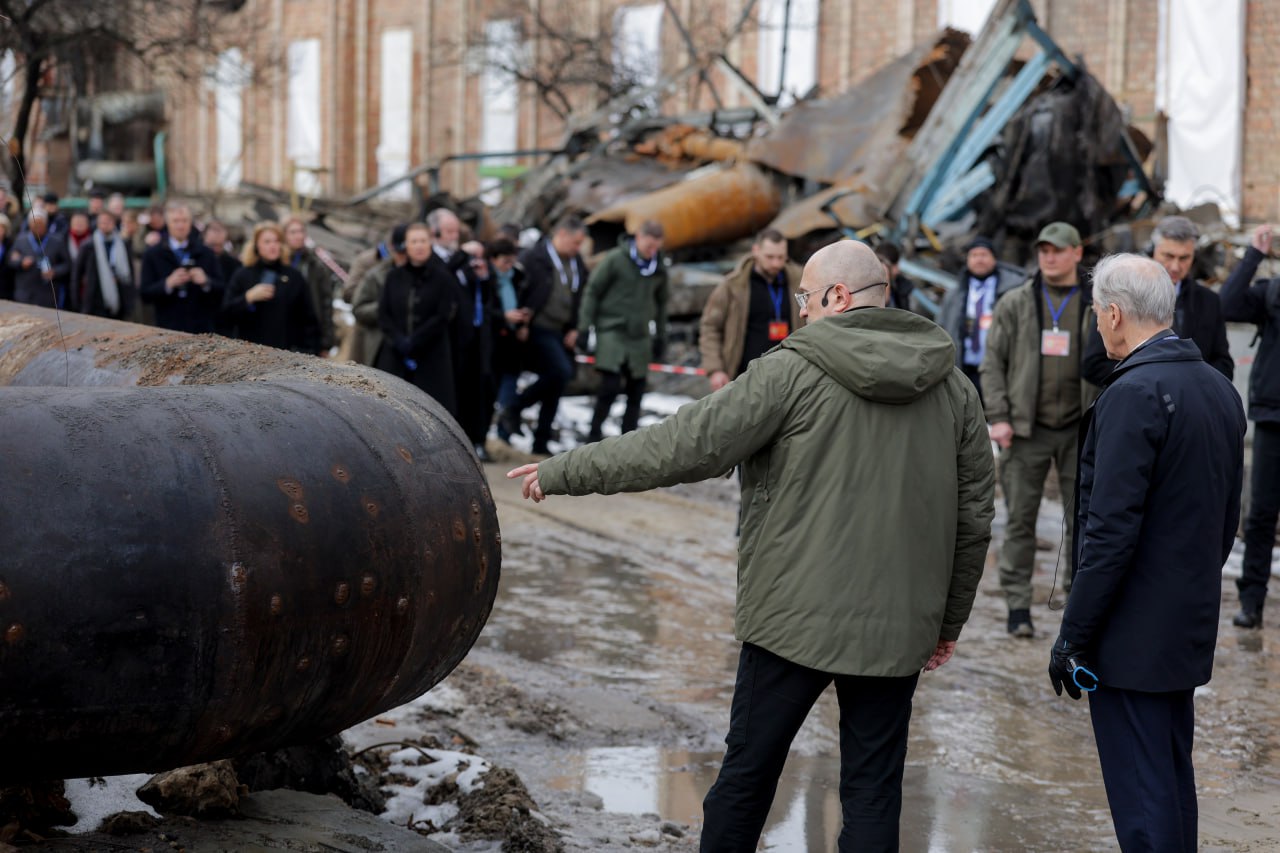
- When drawing up the relevant plans, all possible scenarios and courses of action were analysed. The conclusion is clear: without restoring our old capacity, we won't be able to get out of this in the short term. There is currently no alternative to restoring the damaged TPPs. At the same time, the process of creating reserves and decentralisation, which we have discussed, must proceed in parallel. These are parallel processes. Without restoring the TPPs, Kyiv will face serious problems. Therefore, this is the only short-term option. But at the same time, there must be an intensive process of investing in new thermal and cogeneration capacity to back up the heating zones currently under the responsibility of the TPPs, and to be able to switch to another source if they are affected. Such plans, and quite detailed ones at that, have been drawn up, but they require substantial investment. Work on this is ongoing.
- Kyiv is periodically held up as an example by Kharkiv, where they have quite successfully switched to a model of many small sources instead of one large one. Is the capital lagging behind, or what?
- Let me refrain from commenting on purely political statements. If we’re talking about technical solutions, then as a specific example of foresight I would rather cite Dnipro, where the large source – the Prydniprovska CHP – was indeed backed up and decentralised, and a certain number of districts were switched to smaller alternative heat sources. They have been working on this for the past year and a half. Kharkiv is also working on this. If we take into account how much new decentralised capacity has been built within the city, it turns out that the absolute figures will still be highest in Kyiv.
- We’ve talked about preparing for next winter. But first, we still have summer ahead of us, when electricity consumption rises, particularly due to the heat. Should we prepare for prolonged power cuts?
- I am no Cassandra who can predict what further attacks on our power generation facilities lie ahead. No one can say with 100 per cent certainty that this is exactly the scenario that will unfold.
If we assume that, as a result of our conversation, there will definitely be no attacks on power generation, then I would say that in July and August there may be moderate power cuts – restrictions for households. That is, one power cut per day. But, unfortunately, we cannot predict what attacks will take place, or exactly how.
- As the war continues and the enemy has not abandoned its plans to destroy Ukraine, we can assume that such attacks will continue. The Russians specifically attack our critical infrastructure. There is currently much discussion in the press that they now want to destroy our water supply system. What should we do?
- Strikes on high-voltage substations have been occurring constantly since October 2022. Ukrenergo is a company prepared for this. They understand what to do. Yes, there may be difficult periods, but overall they know how to act, how to prevent the worst consequences, and how to quickly restore the operation of the facilities.
What happened this winter? The water supply was simply ‘cut off’ from the electricity – from the high-voltage lines that power the water supply system. That is precisely why, when preparing for the new season, water supply systems must be particularly carefully powered up and made self-sufficient in terms of energy supply. A great deal of work is needed there.
- We are currently talking a lot about the war, so to speak, going underground. In civilian cities, too, people are thinking about how to stay safe, in particular by opening underground schools. Can we place energy equipment underground?
- We can. In Kyiv, in particular, this work is already underway. But it is very expensive, which really slows down and increases the cost of the process.
- And in the long term?
- Step by step, this will inevitably happen. In principle, we will have to convert the power system into the safest possible format. That is, to build new facilities that are fully protected, relocate existing ones, and gradually create an underground or semi-underground power system with a second level of fortification. But we must understand that we are talking about billions of funds and years. Much has already been done. If not, as far as high-voltage networks are concerned, we simply wouldn’t have any electricity.
-Given the circumstances, it is unlikely we can hope for the war to end in the near future. But even when it does, we will have to live with power cuts for some time, won’t we?
- The energy sector isn’t sitting around waiting for something good to happen. Rather, we’re operating on the assumption that the war will continue for the next two to four years. We are adapting to wartime conditions and constant risks, and gradually building a system that will be as resilient as possible. It is not easy, it is very expensive, and it cannot be done quickly. But the fact that this process is underway, and that these regional resilience plans are driving it forward, is also a fact.
- With the arrival of spring, the role of solar power generation is growing. How significant is it for us? The Russians attack these objects as well. How great is the threat here?
- Solar and wind power are a stochastic affair. This means they cannot be controlled. So solar capacity plays a secondary role in the power system. It serves mainly to reduce the cost of electricity, simply because it has no fuel component. And when it is operational, the price of electricity falls accordingly.
As for the security aspect, they are of no help to us, because if we imagine ourselves at 9 p.m. on 10 December, neither solar nor, most likely, wind generation will contribute much. Therefore, when we talk about the generation capacity we need in terms of the security and reliability of energy supply, we mean controllable generation capacity. This is, first and foremost, gas-fired generation, the remaining capacity of our coal-fired generation, biomass, biogas and, of course, battery systems that help store energy for later use. Naturally, this also includes large-scale hydro generation. For example, the situation is quite comfortable at the moment, primarily because it is spring, with the spring floods and high water levels; we have sufficient large-scale hydro generation capacity to support the power system. In winter, unfortunately, large hydro plants cannot provide such support – they simply do not have enough water.
Solar power, on the other hand, can be a solution for individual homes. Combined with a battery system, this can form a solid foundation for personal energy security.
- Recently, solar power stations have increasingly been used not only for homes but also, for example, for medical facilities…
- Of course, this is a logical solution. Firstly, to reduce the cost of electricity for that specific facility, as during the sunny season the hospital will simply pay less for electricity.
Secondly, if solar generation is properly installed there alongside a battery system, then even during power cuts, this hospital (or school, administrative building) will most likely be able to supply its own electricity and continue operating normally, and will not require a generator, which is, in any case, very expensive, as fuel also significantly pollutes the environment through combustion emissions, and, ultimately, it is simply very noisy. Therefore, overall, such systems are undoubtedly quite effective on administrative buildings of all types and on private homes.

There are already many housing associations and apartment blocks that are also installing solar power systems and battery banks for security purposes. This works very well.
- Let’s talk about NPPs. There are constant repairs taking place there too. Is this according to schedule?
- Reactor maintenance takes place every year – it’s a routine procedure that can be adjusted. As we speak, this year’s maintenance campaign has already begun, and all reactors in the territory controlled by Ukraine are undergoing maintenance on schedule, in accordance with all regulations. This takes place between March and September. These procedures differ each year because fuel is loaded and unloaded. It’s like with a car: each subsequent service is usually slightly different. The same applies to reactors: technical maintenance and preventive repairs also vary each time.
- Is there a risk that these repairs will become more frequent?
- There is always a risk that something might go wrong. But, as experience shows, Energoatom’s engineers carry out all the necessary work to a high standard and on time. And we have, let’s say, very few instances where reactors would be shut down due to any technical issues. I don’t see any particular risks. Energoatom’s engineers are qualified professionals who know their business very well.
- Is there a need to modernise and upgrade the NPPs?
- This process is also ongoing. Control software is being improved, as are certain pieces of equipment. Of course, work to ensure the reactors are in good condition is carried out on an ongoing basis.
- To sum up our conversation, things aren’t actually that bad here, are they?
- On a positive note, I am certain that by next winter, both Kyiv and other cities in Ukraine will be much better prepared than they were this year. It may not be perfect, but the efforts currently being made to prepare are significantly different from what we saw last year and the year before. And this applies at both government and local levels. We must do everything we can, and then we will have a much better outcome.
– So why did this happen this winter? Have we relaxed?
– Exactly! Let’s remember how difficult the summer of 2024 was, when we had so many power cuts. But then everything was fine. The winter of 2024–2025 passed without restrictions. Last summer was fine too. Indeed, everyone relaxed during that period. Let’s be aware of that. And then these severe attacks began. What happened this winter confirmed that we mustn’t relax!
Olha Moskaliuk, "Censor.NET"
Photos provided by Oleksandr Kharchenko and from the internet


