



We spoke to enemy face-to-face from distance of 5 metres. Then we had to engage in close-quarters combat," – Lieutenant Colonel Ihor Yaniuk
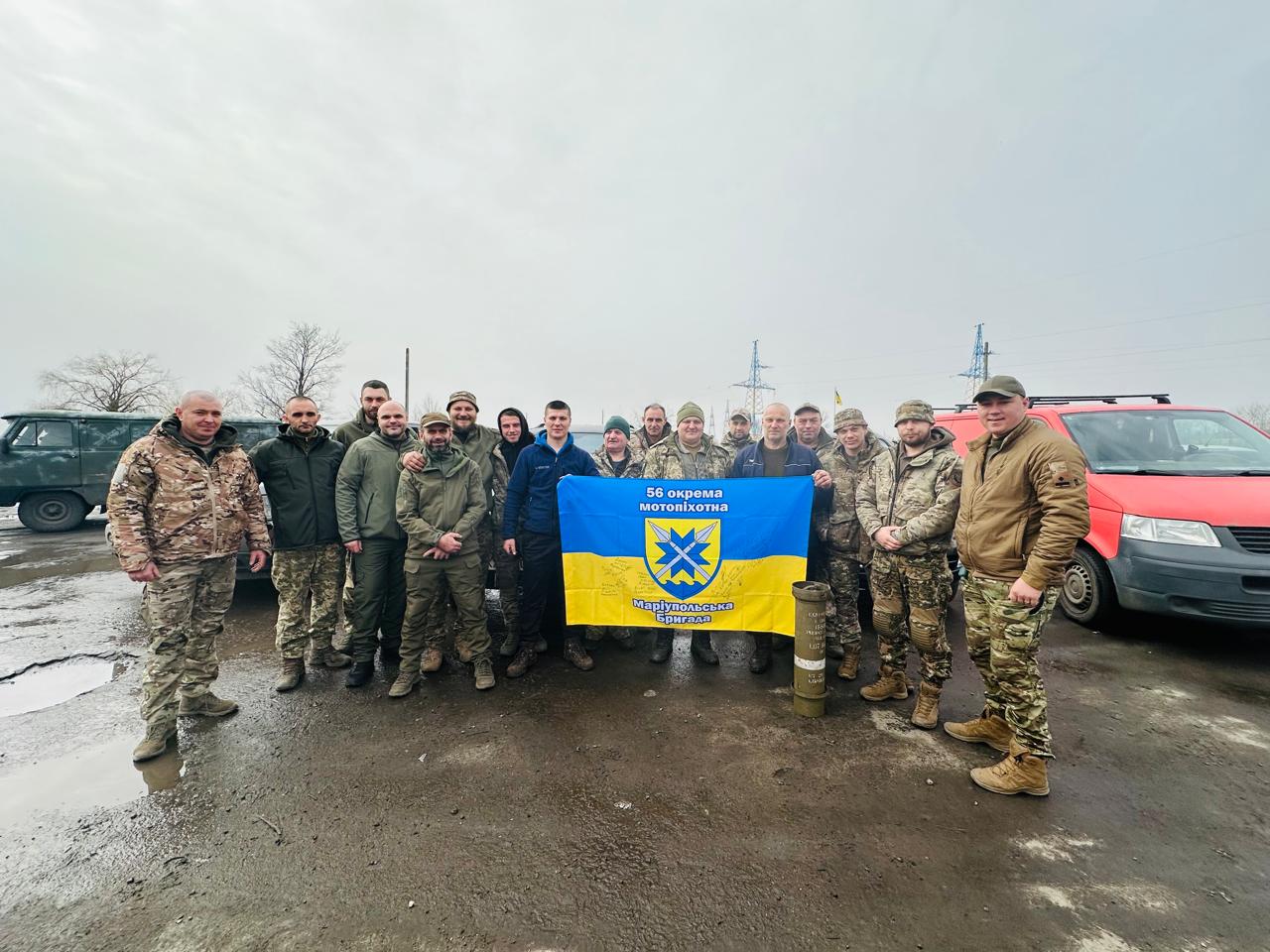
Lieutenant Colonel Ihor Yaniuk (Hetman) from the Lviv region set up, on his own initiative, a combat group of assault sappers, which sounds impressive in itself. He has spent nearly 14 years in the military overall. Since 2020, he has served in the 56th Separate Mariupol Mechanized Brigade.
"I came here as a lieutenant and rose to become the commander of a UAV battalion," he sums up. He has now transferred to the 44th Brigade as deputy battalion commander.
Most Ukrainian soldiers have their own names for the Russians on the battlefield. Ihor Yaniuk calls them "dastards." About close combat and other encounters with those "dastards" in an interview with Censor.NET.

THE ATO TAUGHT US HOW TO FIGHT, DEFEND OURSELVES, AND THINK BETTER
- I have been in the military since 2010, starting with conscript service. I served continuously until 2016. Then I enrolled at the Hetman Petro Sahaidachnyi National Army Academy in Lviv, graduated in 2020, and was assigned to the 56th Motorized Infantry Brigade as platoon commander of an engineer-sapper company. Later, when I was a senior lieutenant, I was appointed company commander, also of an engineering unit.
By then, it was already the Joint Forces Operation, and we were deployed in Pisky. There were not enough engineers and sappers. So I came up with the idea myself that we needed to create a small mobile group of sappers that would also carry out assault missions together with me.
- How did you explain that to the soldiers?
- When I was recruiting the guys, I was completely upfront with them and asked them directly. I picked those who agreed straight away, without questions, and that is how I formed a group of nine men.
I am not boasting when I say that we started doing truly incredible things. We got so close to the enemy that when our drone operators spotted us on their screens, they radioed their command saying: "Either they do not know where the enemy is, or they have balls of steel." Back then, there were still very few drones, and cases like that were rare in general. But we made it to places that, otherwise, you could only reach with a drone.
We were sent to Volnovakha, Pisky, Velyka Novosilka, and Zolota Nyva. Then to Huliaipole, and from there to the Bakhmut area, where we are serving now.
- You have enormous combat experience. Looking back at yourself as a young man, do you remember how you steeled yourself for life on a war footing?
- I am 32 now, yes. You can work out how old I was in 2014. I was just a very young guy. I built up my combat experience step by step. During the first shelling, I had no idea where to put myself. I immediately hid under the vehicle, and then realized it was packed with the ammunition we were carrying for the rotation. Company commander Oleksandr Oleksandrovych Buhai told me plainly: "Son, do not worry, everything will be fine. Just relax and do not stick your head out where it does not belong. When your intuition tells you to, that is when you move forward." That was my first experience of fear.
The ATO taught us, at least to some extent, how to fight, defend ourselves, and think better. Overall, the ATO was a learning experience for our army. Yes, it was a form of learning that cost many lives, and many people and families suffered. But it also taught us how to plan our next moves.
Over time, I somehow learned to overcome fear and adrenaline. When you make it out of a critical situation and talk it over with the guys, you feel like a hero. Though in reality, as they say, your backside was clenched so tight that probably not even a needle would have made it through.
WE JUMPED INTO THE TRENCH, AND THERE WERE TWO DASTARDS IN IT, EVEN THOUGH RECONNAISSANCE HAD REPORTED THERE WAS NO ONE THERE...
- What does combining engineer-sapper work with assault work actually involve? Do you go in on the attack while clearing mines, or is it the other way around, and you lay them?
- Our task was always to bring in the infantry, the recon teams, and the assault troops. We had to go in first, check whether there were any explosive devices, and then bring the guys through safely. Then, as we put it, seal them off, that is, lay non-explosive and explosive mines on the approaches. And in the end, get ourselves out safely.
We did not always manage to make it to the point, because sometimes it turned out the enemy already knew we were coming. And once the enemy started using drones on a mass scale, it became very difficult. But we never turned down a single mission. Over the whole period, we had only wounded, not a single KIA.
- How do you deal with enemy drones?
- We also switched to using reconnaissance Mavics and similar drones. We have reached the point where we now have a mini-factory producing munitions. We use all kinds, starting from 250 grams and going all the way to custom orders for any drone.
- Any drone?
- Yes, even for the 27-kilogram Perun, no problem.
We also work with non-explosive obstacles. We modified concertina wire and similar materials for drone use, all so that engineers would not have to go deep into the front line and risk their lives, and the UAVs could do the job for them instead.
- How did you get started working with drones?
- Later, I was appointed commander of an engineering obstacle group. I spent about a year and a half in that position, and then I was offered the post of UAV battalion commander.
The battalion is only five months old now, but it has already made it into the top 50 in terms of effectiveness, thanks to the combined efforts of the pilots, the command team, and our mini-factory producing munitions.
As for drones, there has been a real revolution. When the first drones appeared in 2022, not even Mavics, it was a wow moment for me personally. Let me describe how we operated without them.
We would walk a kilometre and a half to two kilometres to carry out a mission without understanding what lay ahead of us. We did not even know where we could take cover in case of shelling; we navigated purely by the whistle of incoming rounds. I would give every infantryman a state award. When there were not as many drones as there are now, we could move around the zero line more calmly. Now, for an infantryman simply to reach a position and relieve his brothers-in-arms is an incredibly difficult task.
And my pilots are absolute top-notch: they work miracles.
- Who mainly supplies you with drones — the state or volunteer foundations?
- The state does supply UAVs, and that system is expanding. For a battalion to operate at full capacity, you really need between 40 million and 50 million hryvnias a month. That amount is not always available, so volunteers bring in a lot as well, though it is often not fibre-optic systems but substitutes.
I am all for volunteers focusing their efforts on exceptional items and covering real needs. For example, it still really gets on my nerves when some poor volunteer brings fighters wet wipes and things like that. I feel like saying: man, you get a salary, you get combat pay, so please, buy your own wet wipes.
- Your most incredible combat stories are still mainly about sapper work itself.
- Once, we went in to seal off a position on the very edge of the line, meaning the guys holding it were the first Ukrainian infantry facing the enemy.
We had to lay mines in front of the position so the enemy would not be able to get at our guys. I have a stupid habit of going as far as I can. I tell myself and the guys: if we have crawled to the designated point, then we can keep going, right? So we kept crawling until we jumped into a trench and found two dastards sitting there (then another two came running up). Even though reconnaissance had reported that there was no one there.
What saved my men and me was that the dastards were eating, so their rifles were off to the side. We did the job, cleared the place, sealed it off, and got out calmly, but we had one wounded man — he was grazed by a stray bullet.
AS SOON AS WE GOT TO WORK, A TANK STARTED POUNDING US
- Were there moments when you thought you were not going to make it?
- There were times when we were spotted. We reached the point and were about to get to work, sealing off the approaches to our positions. But they saw us. A tank started pounding us. The building we were in was almost destroyed. One of the guys, Titan, was buried right before my eyes. Just before that, he had fired one shot. Then, I guess, something jammed. But I was not thinking about that, I was worried the tank would fire again. The first round came straight through our window. We were taking cover right by the wall next to it.
I truly said goodbye to myself. I thought Titan was done for, too. And then, 30 seconds later, he climbs out from under a pile of bricks. He dusted himself off and said words I will never forget: "Holy shit, bitch, he actually hit us."
In reality, war has a lot of false endings to a fight. For example, when the artillery barrage was already winding down, we would think it was all over, and then the enemy would come up, and we would end up in close combat with them.
Then, in 2023, Titan and I got into another situation in the Huliaipole direction. At that time, one brigade, as they say, had lost its positions, and we were sent there, even though our brigade had just been pulled back for recovery. We carried out the mission in a different way. We had to get past them. (At the time, the Russians often wore our uniforms and body armour.) We spoke to the enemy face-to-face from about five metres away. I do not speak Russian very well, unlike Titan, so he handled the conversation. He started explaining to them that we were supposedly from some unit, that we had gone in there and there had been khokhols there, but we had wiped them all out and now they were gone, and we were heading back. Those two dastards believed us, even though I kept silent the whole time. But then I raised my head, and maybe they spotted the patch with our flag on the back of my body armour. I had forgotten to remove the patch from the water-bottle pouch. It should not have been visible, but apparently, they noticed it. I sprang up right away, and we went into close combat.
There was also a time when our entire group walked into an ambush. It was near Velyka Novosilka and Vremivka, back when half of those villages were still under our control. The mission was this: together with an adjacent unit, we had to go almost into the enemy’s rear, lay mines, and get out. The guys from the neighbouring unit arrived, and we hit it off right away — all of them are top-notch. Then they heard someone call me "Anatolich." They were told I was the company commander. At first, they could not believe a company commander would personally lead men on missions like that.
In short, the task was to get into the enemy's rear. We set out at 11 p.m. It was 12 kilometres one way. We were fully kitted out. Everyone’s backpacks were crammed with weapons, ammunition, food, and water. I even asked back then: "What are we doing, heading out for a week?" They told me it was supposed to be a three-day mission. I said: "No, no, no, that is not how we work. We go in today, do the job, and get out." There were times when we carried mines for 12.5 kilometres ourselves, but we still completed the mission quickly.
On the way, if we came across enemy mines, we cleared them. We reached the designated point — 400 metres from the enemy. I later learned that snipers were covering us. We could not even go to the toilet.
I asked, "What is going on?" And they said: "Command said that, God forbid, if even a hair falls from anyone in your group, we’re done for." It was both interesting and gratifying to realize we had built up such a reputation that word of it had spread to others.
We completed the mission, but on the way back, I ran ahead to check the route. I had moved a kilometre and a half, maybe two kilometres, away from the group when I heard the sound of vehicles. I slipped into the bushes and heard it again, then voices. I realized straight away these were sure as hell not our guys, and my group was coming up behind me. I was afraid to use the radio in case they heard me. So I hunkered down in that tree line. I thought that once our guys got closer, I would open fire and draw the attention to myself. Maybe they would have riddled me, but I was ready for it.
But dastards just talked for a bit, got back in, and drove off. And I was drenched in cold sweat. I slowly made my way back and passed the word to our guys. We split into small groups and got out bit by bit. Two days later, we learned that an enemy tank had blown up where we had laid the mines, along with other equipment.
- Even from what you have already described, it is clear that you came into very close contact with the Russians. Aside from the obvious fact that they are the enemy and dastards, what do you think of them?
- When I am on a mission, I am thinking about how to get the job done and get out as quickly as possible. I do not have time to think about the enemy.
Once, we took two of them prisoner. They were shouting, "No fucking way I’m surrendering!" Then it turned out it was their squad leader yelling that. One of the two prisoners was his own brother. We took in those young guys. They immediately started playing the pity card: children, family, and all that. But the fact that we have children and families, too, means nothing to them.
- Did you ever catch yourself thinking that, in war, you feel more of what people call the hand of God?
- There was one telling story in that respect, near Pisky. The guys arrived when a torrential downpour was coming down. They were unloading what was needed for the job, mines among other things. Naturally, in all that mud, everything got stuck. I was in a vehicle, and they managed to call me. I dropped everything and rushed there in the vehicle to pull the guys out. But when I got there, I realized they had stopped no more than a kilometre short. They had called me so they could take more with them, because they would not have managed to carry it all by hand.
So we hauled it all, loaded up, and drove off. We cared so little about anything in that rain that we even had the headlights on. And, oddly enough, there was not a single strike on us. Then all of a sudden, Sashka (Strila) smacks the vehicle and bangs on the window. I slammed on the brakes, and he said to me: "Commander, another 30 centimetres and you would have driven onto an anti-tank mine."
Even though when we took over that field from another sapper unit, they had told us they had found nothing there. But it was only about eight metres from the road.
SERGEANTS AND TROOPS HEARD MY PHONE CALLS WITH COMMAND, SO THEY DID NOT WANT TO BECOME OFFICERS
- Many of those who have performed well in combat do not want to become either officers or sergeants, even though there is a clear demand for combat-experienced officers and senior NCOs. They say: why would I need that, it is just an extra hassle and extra restrictions. Clearly, many do not plan to stay in the military after the war. On the other hand, there are frequent complaints about the shortage of good officers. You obviously all talk among yourselves, how do you discuss this?
- Yes, my sergeants, who are capable of more, also do not want to become officers. When I was a senior lieutenant and later a captain, I went out to positions with the soldiers and went on assaults with them, and the troops respected that. But at the same time, they heard my phone conversations with the command. For example, I get assigned some task or, excuse my language, get chewed out for nothing. They ask why we failed to get onto a position. I say that I could have gone in, but I understood that I would not be able to get my men back out afterward. So people see that it is easier to be an ordinary soldier: you carry out the mission, and that is it, no further responsibility. An officer, meanwhile, is responsible for the mission, for the men, and for making sure all the paperwork is in order. Paperwork is a whole separate issue. My fighters see that when I receive something as basic as tape, I have to fill out several forms for it. It is absurd!
And some may be afraid that a higher post and more money will change them for the worse. I know more than one example like that: a man was a captain and a perfectly normal person, then got promoted and went bad.
- When you decided to go and study at the military academy, what was your motivation? Was the deciding factor that your commander had essentially asked you to do it?
- If I am honest, I did not even know I had gotten in. It was pretty much the way you describe it: my commander asked me to. But at the time, I was perfectly fine being a squad leader, and I resisted it for a long time. Then the unit commander called me in and told me to go back home for a while (I am originally from the Lviv region, from Chervonohrad, now Sheptytskyi). And he said: "Go on, you should probably head to the academy." I said: "What do you mean, what academy?" Something like that.
I had no motivation to take the entrance exams and thought I would fail them on purpose. But I changed my mind when I saw the other applicants. Back in 2016, they were running an experiment: they put civilian school-leavers entering after graduation together in one intake with those who had already proven themselves well in the ATO (and there turned out to be quite a lot of the latter).

- You received a higher military education before Russia’s full-scale invasion, becoming part of the circle of officers who were supposed to form the backbone of the army. What is your impression of how the command staff were trained, or are being trained?
- The academy taught me the most important thing: trust no one. Though I genuinely liked sapper work, and for me it was the most worthwhile subject.
I had serious discipline issues because I argued a lot with my superiors about what was appropriate and what was not. If you expect people to live by the military regulations, then at least follow them yourselves first, instead of showing cadets by your own example that they do not need to be followed. In my third year, the deputy dean for moral and psychological support at my faculty got down on his knees in front of me and begged me to quit. That was because I kept arguing with him and proving that he was not doing his job. He could influence the guys who had enrolled straight after school by shouting at them, but that did not work on me. What irritated them was that a cadet was trying to prove something to an officer. Yes, he outranked me, but I had more combat experience.
On the other hand, there were many officers who can be seen as role models. I try to be that kind of officer too.
- You recently changed posts, moving from battalion commander to deputy battalion commander in another brigade. Why did you make that choice? Was it also because of your "character"?
- I will not retell the details. I am now in a place where I am valued and where I can be as effective as possible.
Olha Skorokhod, Censor.NET


