



BGMT in action: what mobilized personnel are taught in Ukraine and under what conditions. Report from AFU training center
Do you know, dear reader, what BGMT is? In broad terms, you probably do: Basic General Military Training. This is exactly what mobilized personnel without experience, contract soldiers, and, as of September 1, 2025, students are engaged in at training centers.
The standard duration of the BGMT course is 51 days, of which 45 are training days, and 6 are days off. "This is," the Ministry of Defense informs, "a set of training measures for the formation of basic military knowledge and skills in enlisted personnel."
Well, theoretically, it is probably clear. But how does it work in practice? What exactly are the cadets taught? What does a typical mobilized soldier look like and feel?
In search of answers to these questions, a Censor.NET correspondent, together with colleagues from other media outlets, travels to one of the largest training centers in one of Ukraine's regions. The various locations of this center are scattered over a rather large area, and it is impossible to walk around them in a single day. Unless you drive around...
We must note right away: we were invited to the training center by the Ministry of Defense of Ukraine, and that day, we were shown exactly what they planned to show. Therefore, this report is by no means a universal reflection of all the country's training centers and what happens inside them. But we did our job honestly, describing what we saw and heard in a place where reinforcements for the Armed Forces of Ukraine are being trained for the fifth consecutive year.
And we begin our acquaintance with the world of BGMT from the Psychological Obstacle Course. Here, cadets are met with explosions, fire, and loud noises.
The first stage of the course is called "Controlled Fury." Cadets overcome the barrier of physical destruction of the enemy by means of bayonet and knife combat.
"The basic techniques of bayonet handling are accompanied by means of motivation," Iryna, a specialized officer, explains to us. "The cadets first watch a film titled 'Aggression is Your Weapon' using VR glasses. Then, psychological stress is applied to develop aggression—to switch them from a psychological state of 'freeze' to a state of 'run and strike'. In addition to this, the soldiers do breathing exercises that promote aggression."
And indeed: there is plenty of psychological pressure on a single individual here. Gunshots and explosions echo in the air at intervals of a few seconds. They are sudden, the Censor correspondent reflexively blinks in surprise every time. They are loud, almost deafening. Continuous pressure is applied to the psyche; meanwhile, we journalists are merely observing, whereas the cadets also have to act quickly.
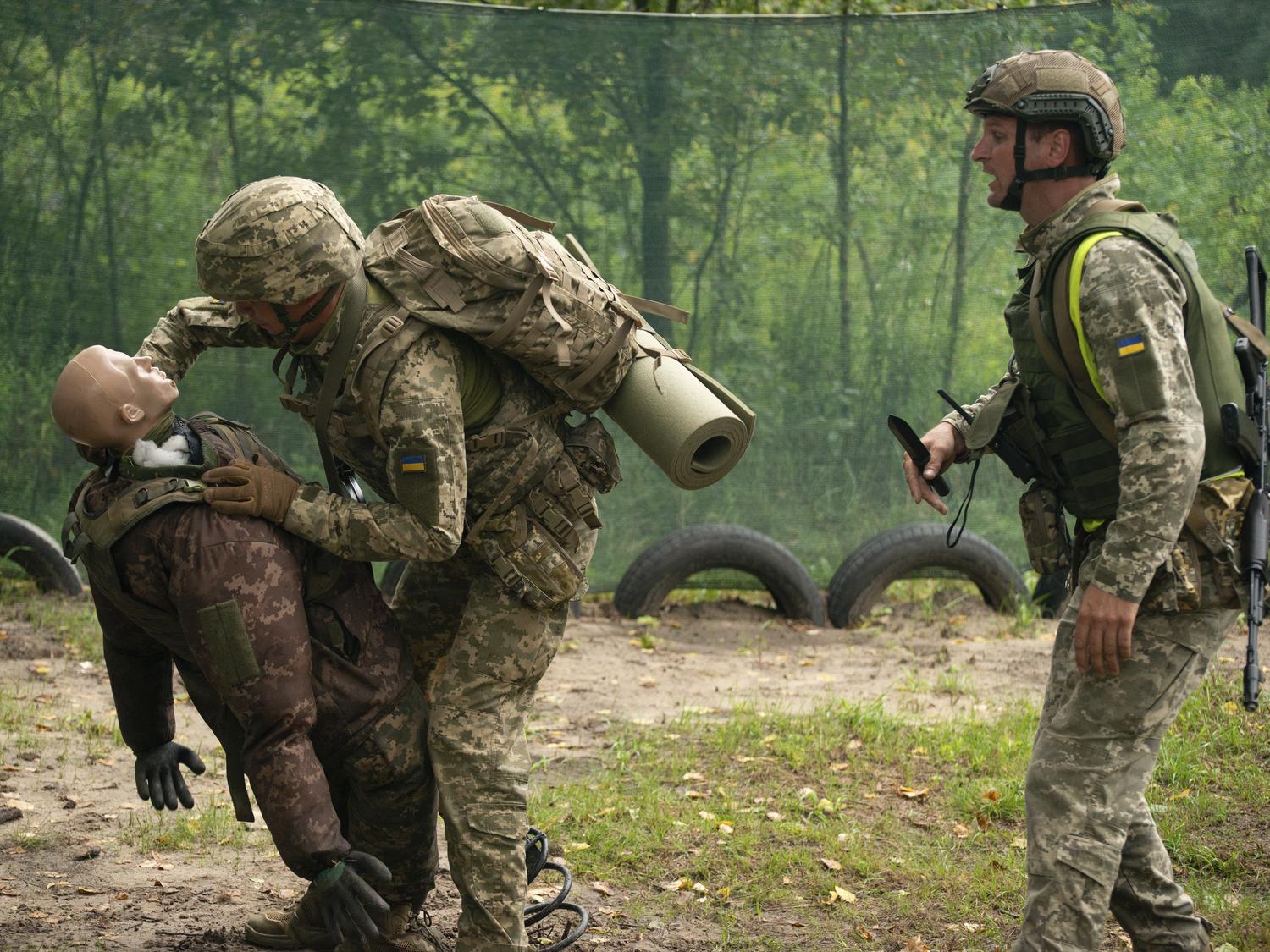
Training on the Psychological Obstacle Course takes place year-round. Photo: Training center
The mannequins positioned behind the net receive knife strikes, and harsh shouts ring out in the air:
- Come on, come on, come on! Strike! Forward! Strike! Come on, come on!
And now, this stage of training is complete. The instructor commands the cadets from the group:
- Repeat after me: Stop the aggression!
- Stop the aggression!
- The goal of the lesson was for you to understand: aggression must be under control. Direct your aggression only against the enemy; never do this with your brothers-in-arms. Understood?
- Yes!
- Ready? Moving to the next training location! Left, forward march!
While the cadets move on, I speak with the instructor, Volodymyr.

- The theme of this lesson, he says, is overcoming the psychological barrier of the physical destruction of the enemy. The goal is the formation of combat-controlled aggression using the method of bayonet and knife combat. So that cadets understand: in combat conditions, decisions must be made quickly.
- You told the cadets: aggression must never be directed against brothers-in-arms. This implies it sometimes happens. How can this be prevented?
- First of all, these are breathing exercises to calm down. Breathing should be rhythmic and slow. A short inhale through the nose, holding the breath, then a deep exhale through the mouth. In order to reduce the oxygen supply to the body, so that the body does not mobilize, but calms down.
"The personnel are under constant observation regarding how they handled the task," Volodymyr continues. "An after-action review is conducted: what they felt, what fears emerged, and how they can best manage their aggression."
To the sound of explosions, gunfire, and various sirens, we move on. The instructors emphasize that training on this course never stops. Generally, the morning hours before lunch are dedicated to a single company.
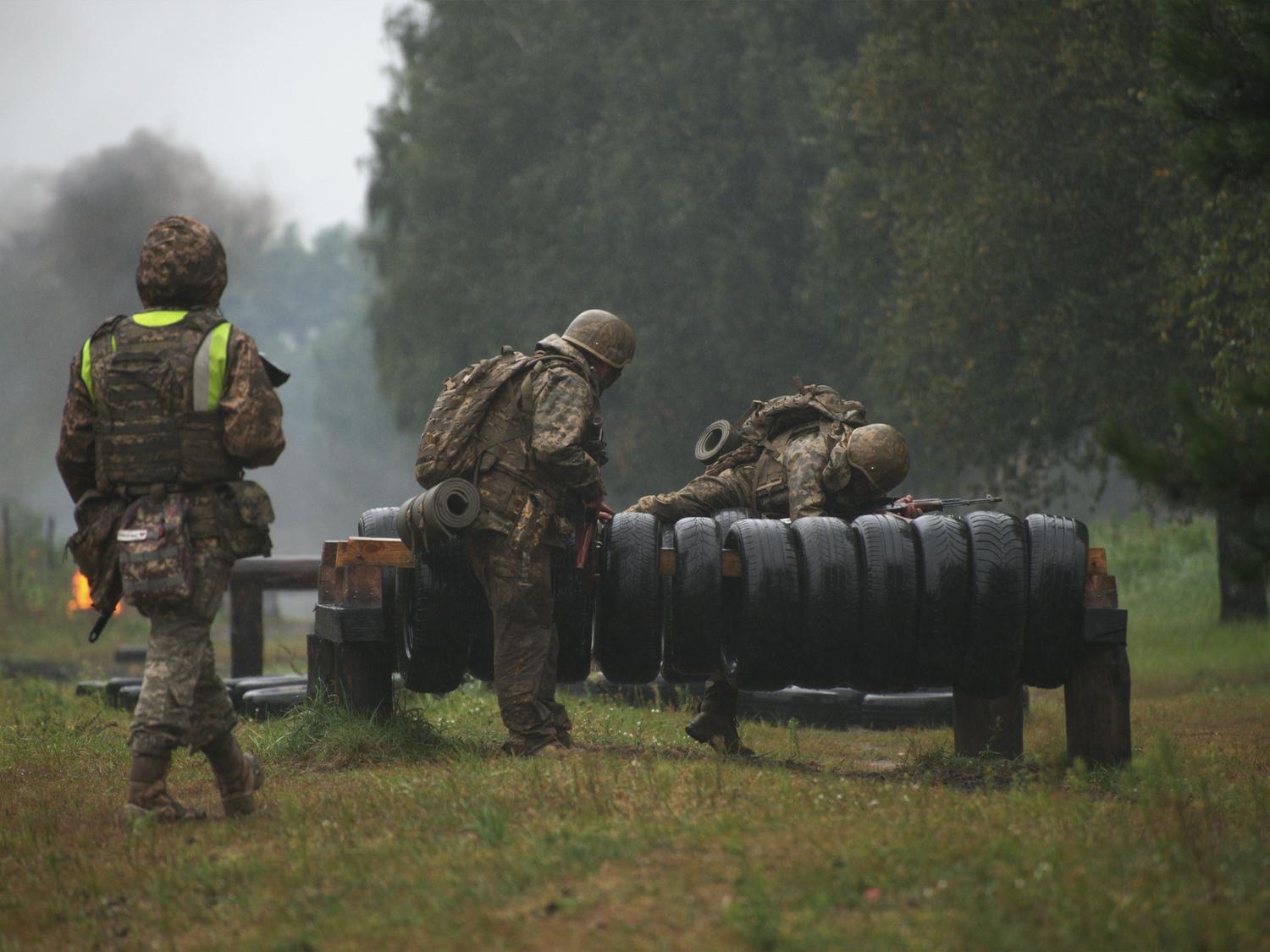
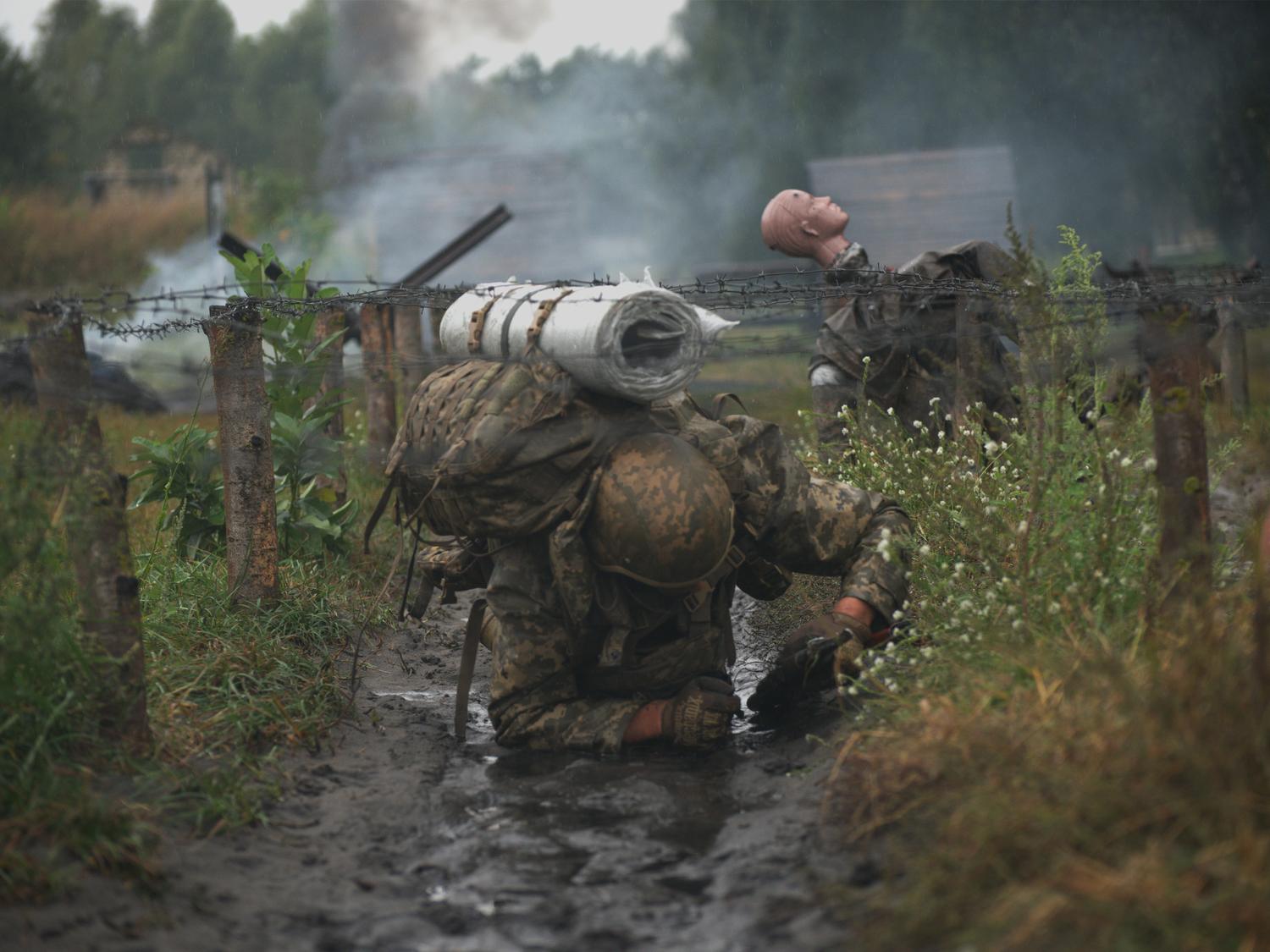
The preparation of future soldiers takes place here daily. Photo from the Training Center archive
Another stage of training is navigating the fire obstacle course. Cadets in gas masks and protective gear execute the instructors' tasks, advancing through fire and smoke.

Even observing from the sidelines feels somewhat unsettling, but the cadets, having completed the course, answer journalists' questions cheerfully.

Photo from the Training Center archive
Such as 40-year-old Serhii from the Khmelnytskyi region:
- Our training started 12 days ago. What have we been taught? To handle weapons, to orient ourselves in smoke-filled rooms.
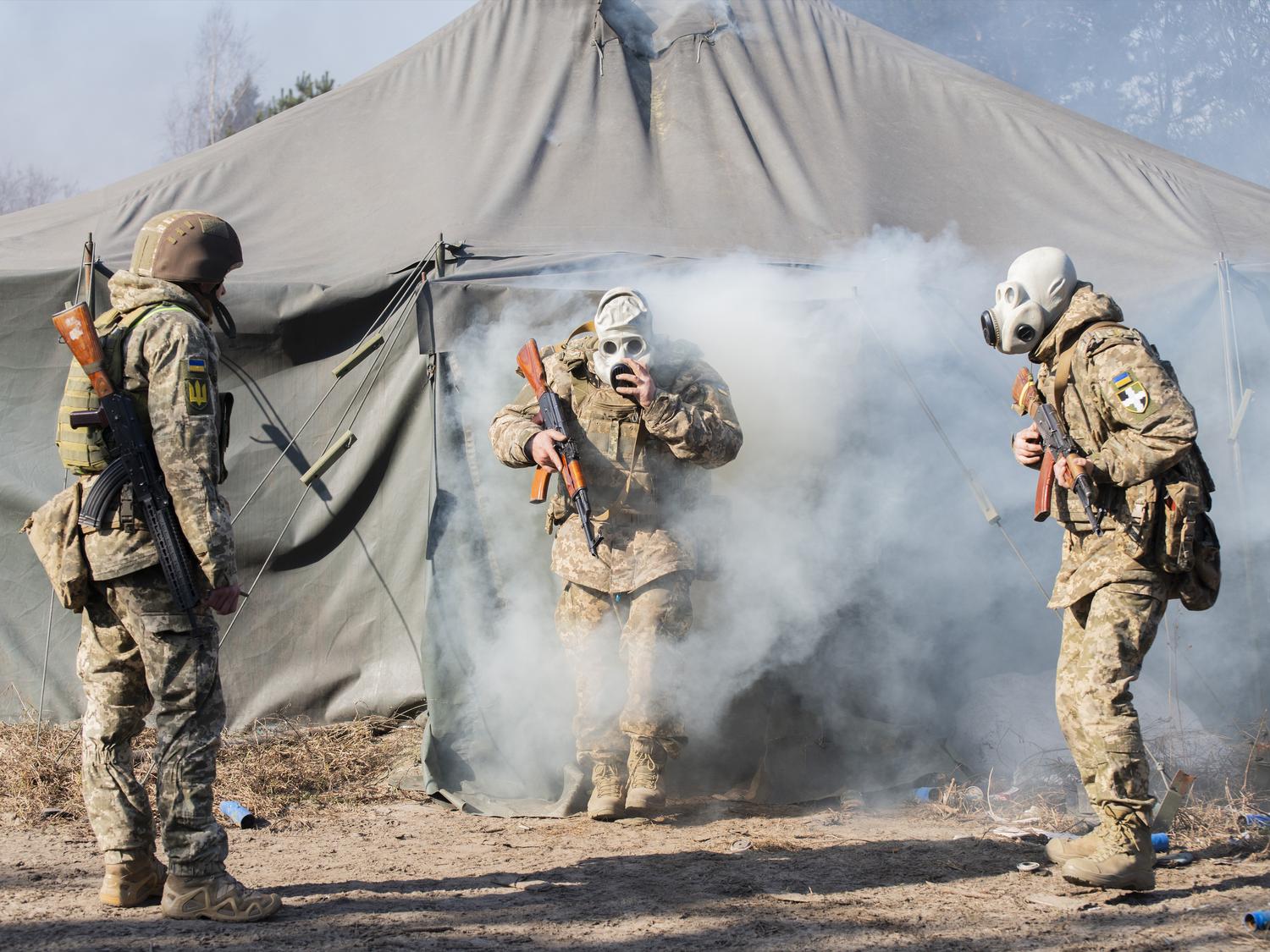
Many other things as well. Overall, it's interesting! Was I scared running through the fire? No, it's warm, but not scary. We are properly equipped...
- Where do you live here, Serhii? - the Censor.NET correspondent approaches him.
- We live in tents, about 28-30 people.
- Were you personally mobilized by a draft notice?
- Well, how should I put it... the TCR & SS... you know...
- So, generally, you did not want to join the army?
- Well, I have my own circumstances...
- The people you train, eat, and sleep with here—what age are they mostly?
- From 35 and older.
- Are you allowed to use phones and messengers?
- We are allowed - at a designated time and place.
- Are there those among you who are really struggling here?
- Well, I wouldn't say so—overall, they treat us with respect. They ask questions, of course: how do you feel about this, why did you do it this way...
- I mean something slightly different. Are there any among you who find it difficult here—physically, psychologically?
- Things happen, people are different—older, younger; bigger, smaller; some are robust, some not so much...

...And when physical strength is not enough, robotics comes to the rescue. And here, at the training ground, they learn how to use it in various crisis situations. For example, to evacuate wounded soldiers.
We move on. We enter a room where cadets are sitting at tables wearing VR glasses. The guys are "watching a movie." Nearby are props relevant to this type of film.


An instructor with the call sign Yukhym comments:
- Currently, the cadets are watching a VR video titled "First Battle" to immerse themselves in the situation of their first combat engagement and reduce their psychological stress factors. The goal is to prevent panic, hysteria, aggression, or stupor. In other words, the soldier must be familiarized with what awaits him and successfully complete the mission.
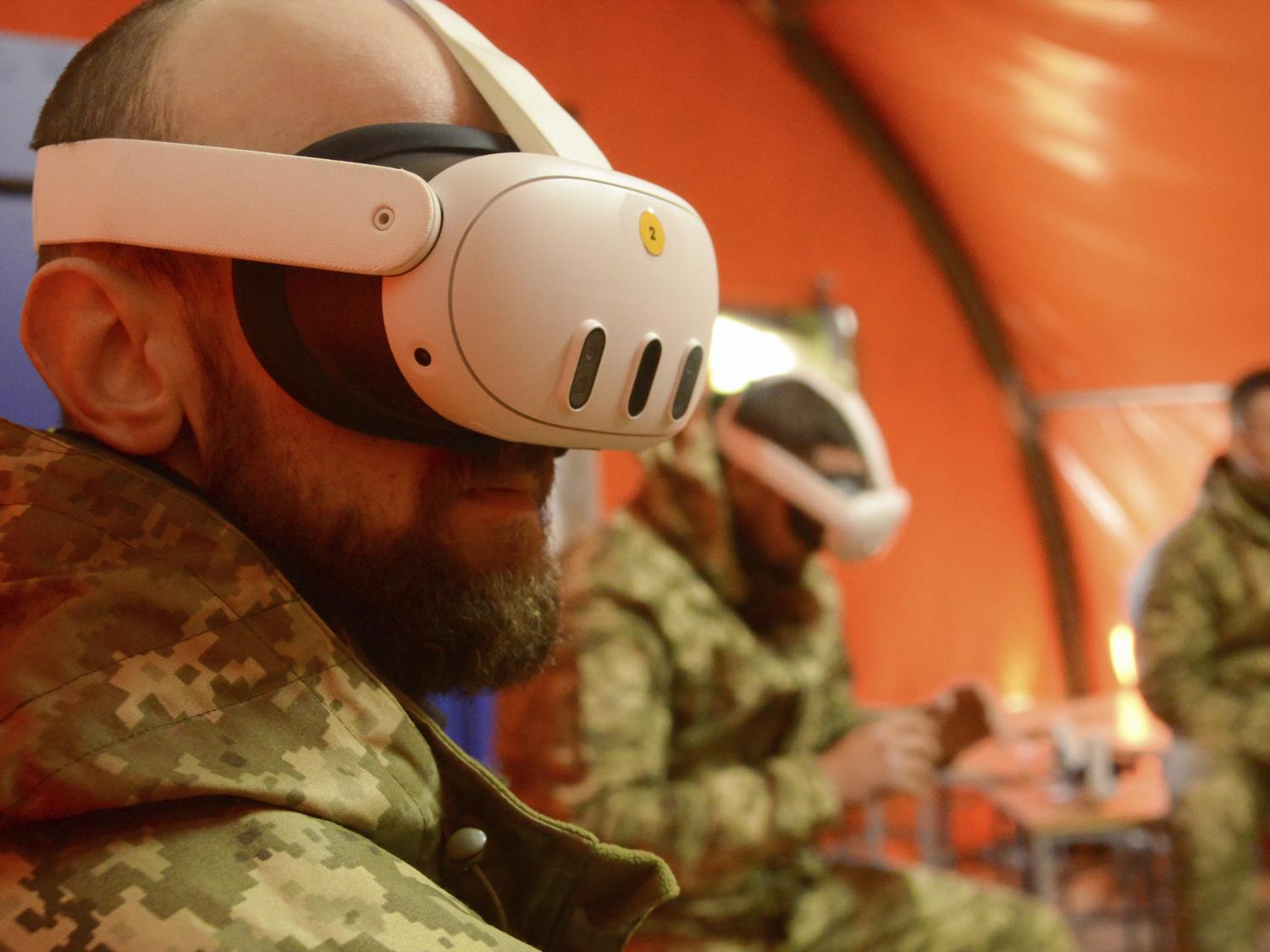
Putting on the VR glasses, I find myself at the top of a snow-covered ravine. I turn my head and see a treeline in the distance. The weather in this reality is wintry and gloomy. It’s a full immersion effect, only the snow doesn't crunch underfoot. Just in case, I lift the glasses slightly and sigh with relief: around me is a classroom and cadets immersed in the same reality. Phew...
But there is no time to wait for the battle (or whatever comes next), because we need to hurry to the next location: the anti-drone countermeasures sector. VR glasses are also utilized here: they are used by cadets handling anti-drone guns.
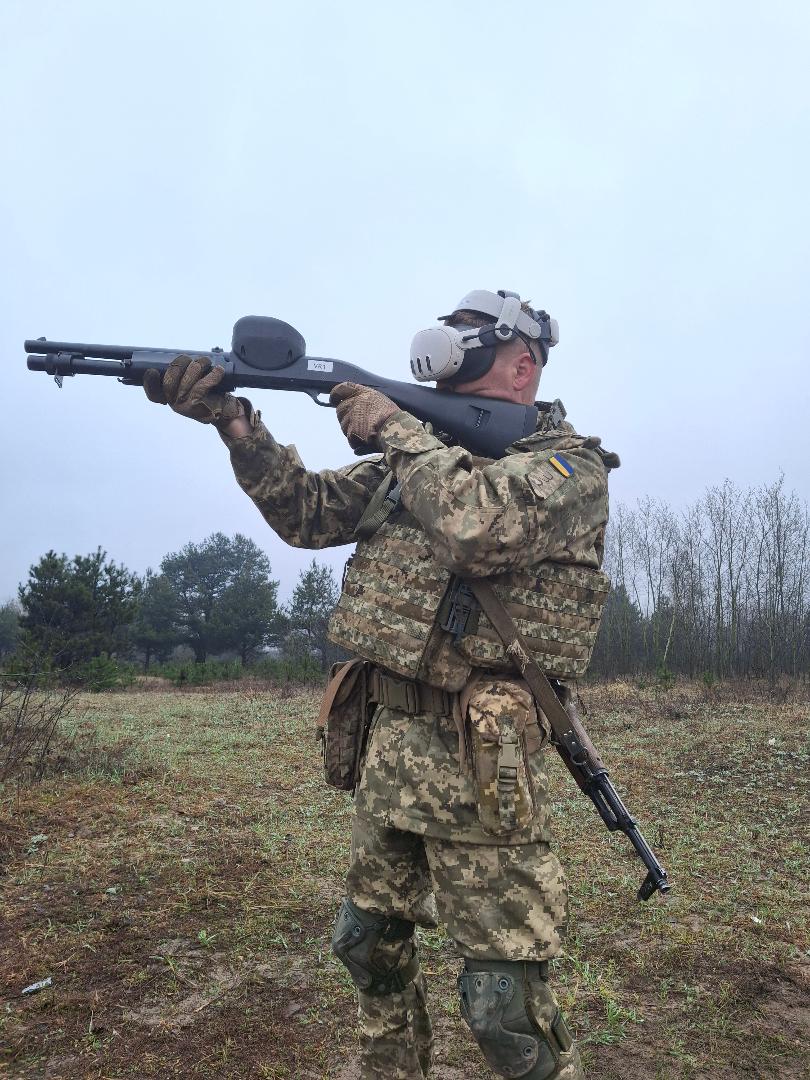
- How much does one such gun cost with everything necessary? - I ask the specialized officer, 46-year-old Oleh.
- The complete set, meaning the gun, tablet, glasses, and the rest, costs several hundred thousand hryvnias.
- At what "altitude" do the guys shoot down drones?
- Well, this is virtual reality, so just today there was a soldier who shot down a drone from 70 meters. But in reality, obviously, a semi-automatic shotgun doesn't shoot that far.
Nearby, devices are laid out for operation, including both UAVs and various anti-drone equipment. Censor.NET asks Mr. Oleh to describe each of them.
Where are we going next? To the armored vehicle training location (and countermeasures against it). Here, cadets learn about both the equipment and various types of RPGs. By the way, the vehicles used here participated in battles during this war. Repaired in some places and modernized in others, they are now used for cadet training.
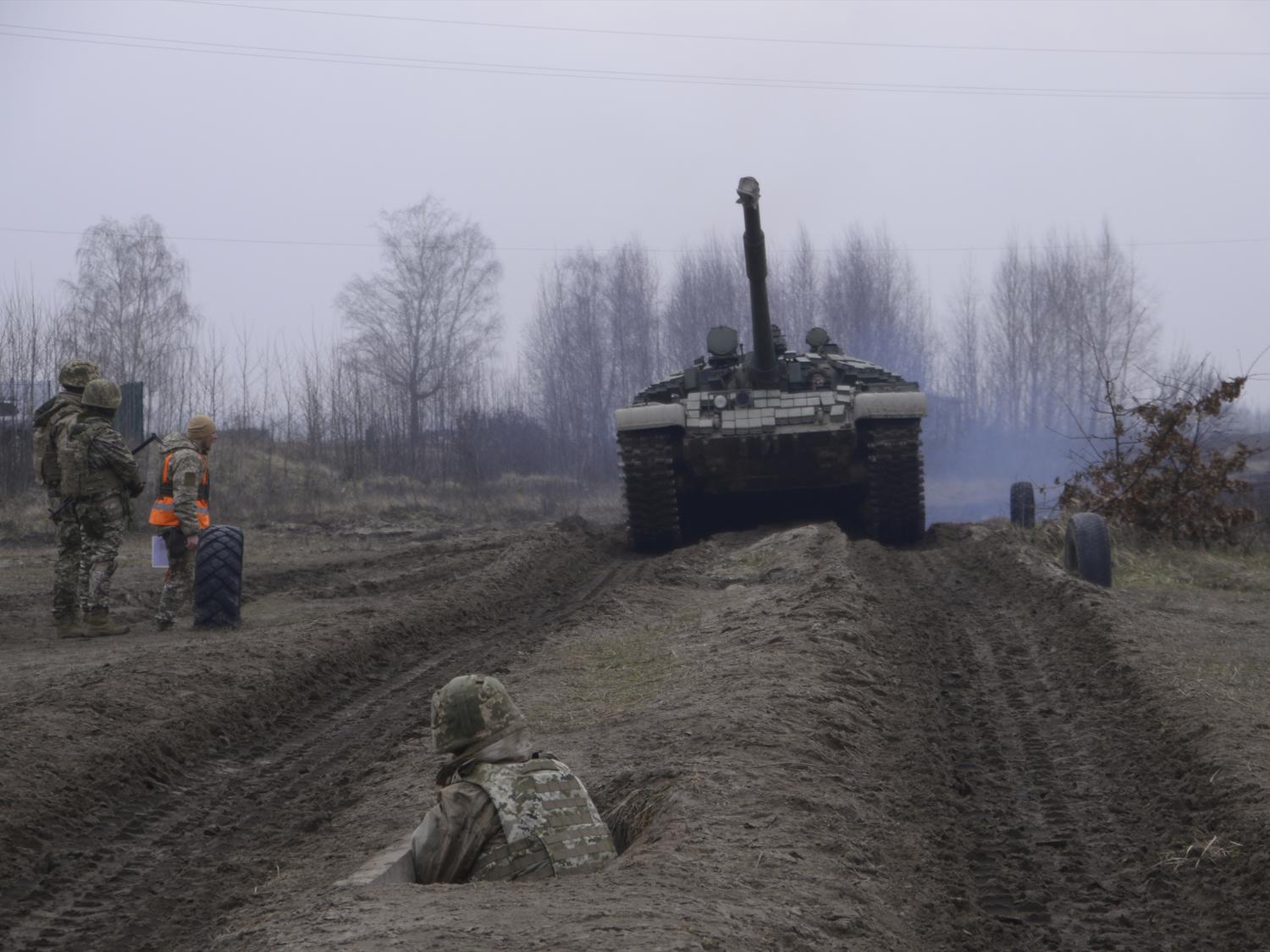
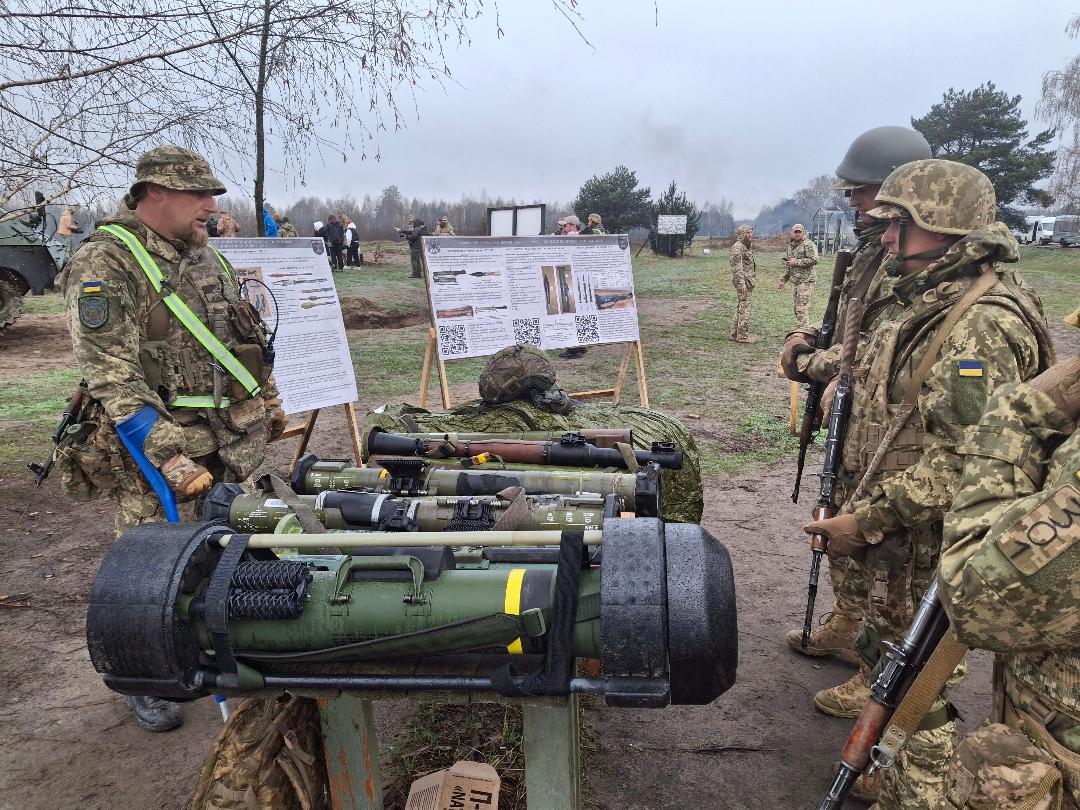
"The vulnerable spots here," company commander Vitalii explains, "are the areas where the driver looks, and small arms fire is directed there. With a grenade launcher, we strike from the rear because the fuel tanks are located at the back or on the sides. It is specifically the tanks or the tracks that are the weak points we must exploit to stop enemy equipment... Here, we teach cadets about the grenade launchers, both domestic and foreign, in our inventory. Then, we practice on enemy vehicles; first on those that are stationary, each cadet crawls under it to overcome this fear of heavy machinery. After that, we work with vehicles in motion: we enter the lane, lie down, let the vehicle pass over us, and fire the grenade launcher, then the lesson concludes. Afterward, the cadet is briefed on their strengths and weaknesses."
A typical task for the cadets here is to let a tank or an APC (in this case, an MT-LB, a Soviet amphibious tracked armored carrier) drive over them—and then fire an RPG at the enemy's "rear."
My colleague did not end up firing at the MT-LB this time, but she got the highlight for her report.
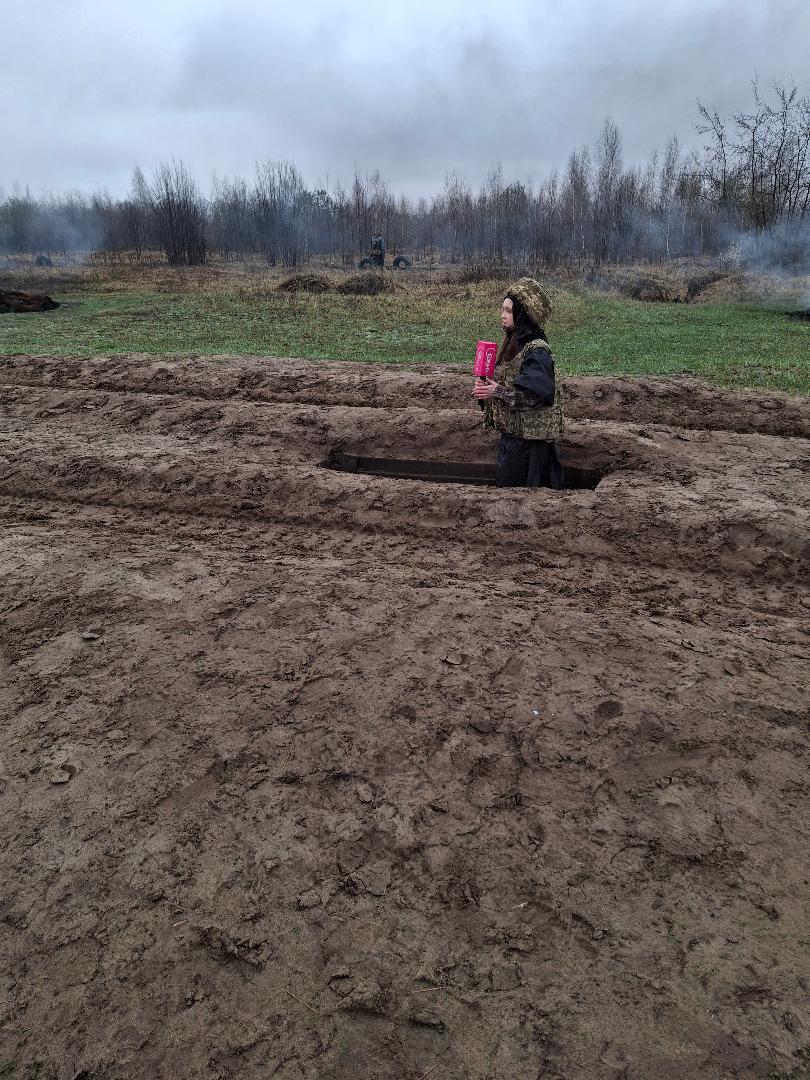
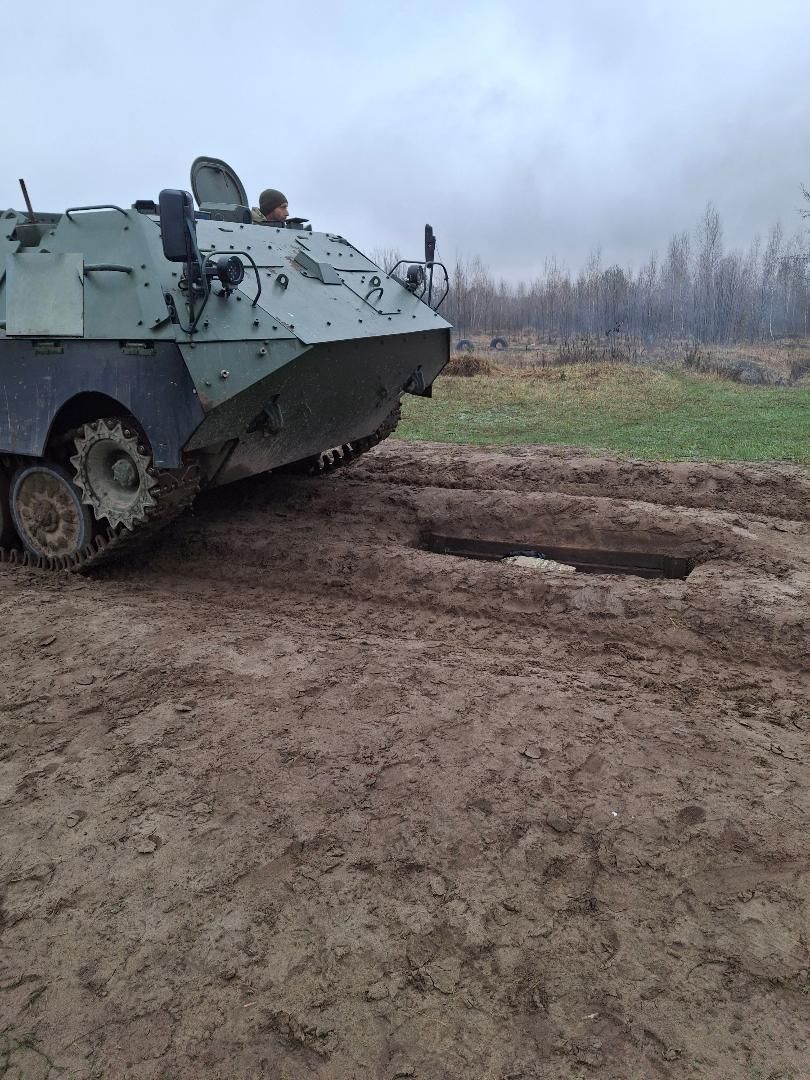
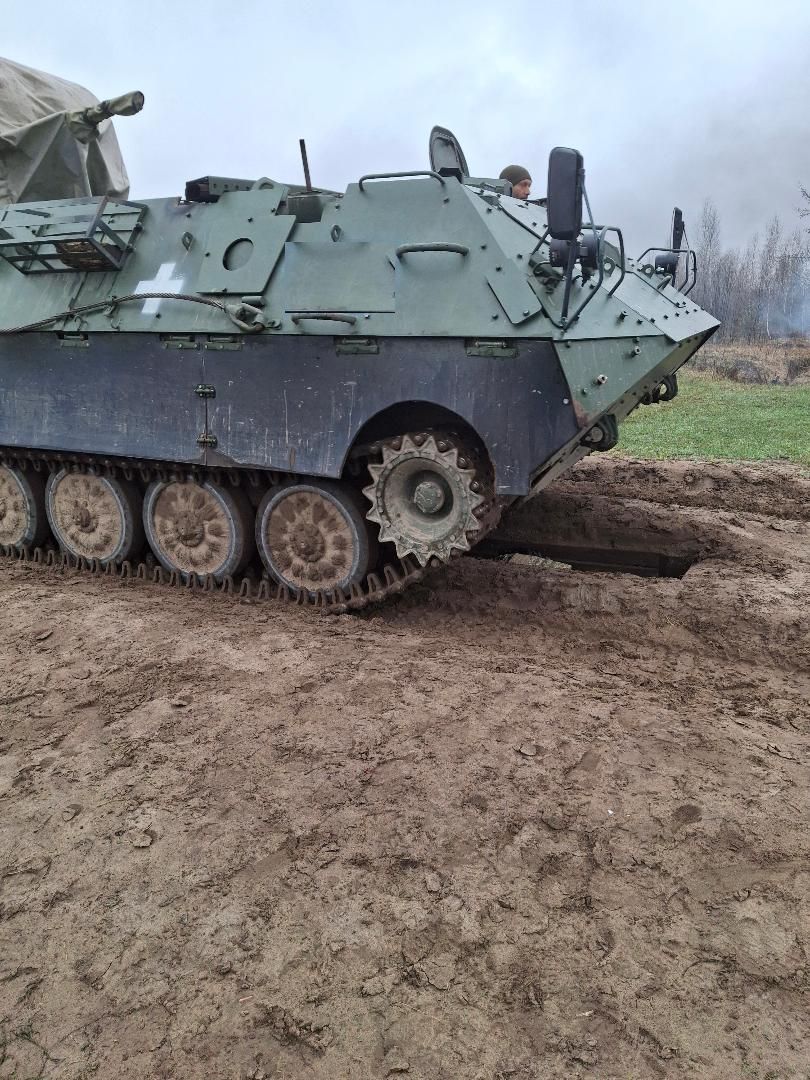
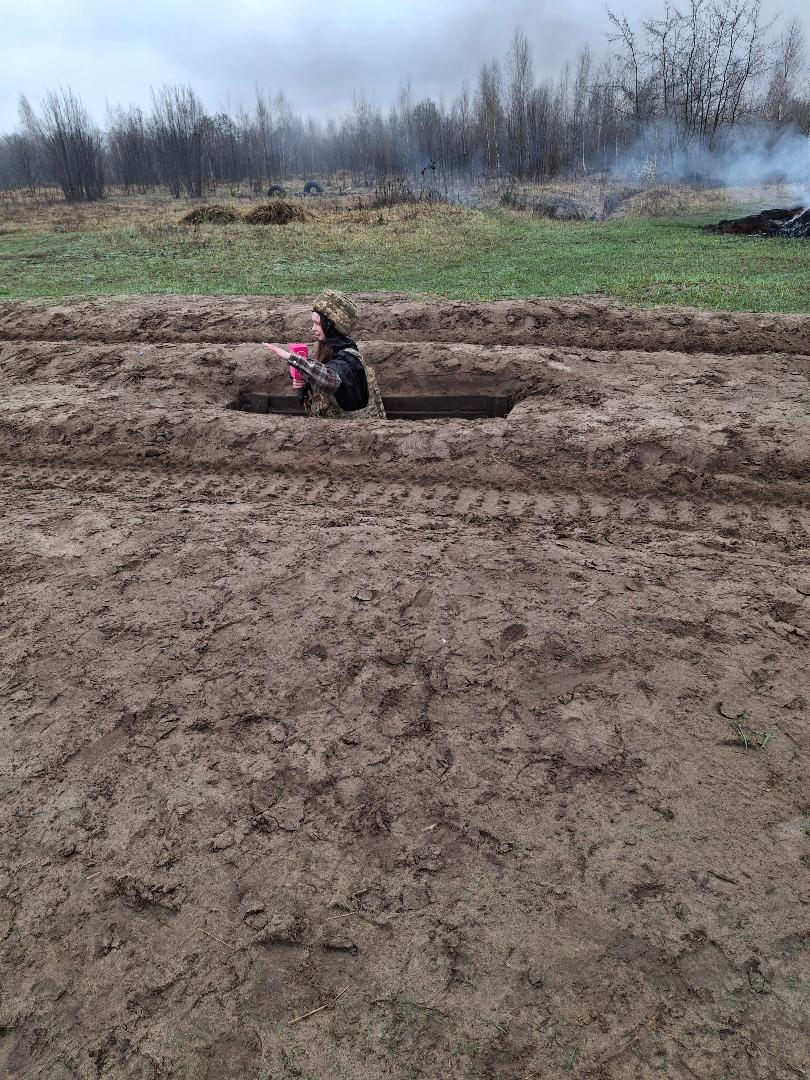
We move to new locations—this time, shooting ranges. Today is exactly the second day of the first block of marksmanship training for the 13th training company. The block is called "Precision and Accuracy" and lasts for 4 days. Then there will be other blocks: No. 2 - "Binocular Shooting" (lasts 3 days), No. 3 - "Gaining Experience" (2 days): more complex exercises take place there. Finally, the 4th block—which lasts two days—is "Firing at Aerial Targets." And then the cadets move on to CTE (Control and Tactical Exercises), where, as part of the BGMT marksmanship component, they perform two exercises: one in offensive combat, and the other in defensive.
But all of this will come later. For now, the cadets of the 13th company are starting with the basics. Their company commander, Vadym, explains:
- Today, our training company is completing the first block of firearms training. We have training stations set up across the areas where they practice and consolidate the training material. The personnel came from civilian life; some of them have never held an assault rifle in their hands, today is their first day. We start from the simple and move to the complex. We teach the cadets how to properly execute a smooth trigger pull and aim correctly. All of this needs to be explained to them, requiring a lot of practice. With time, they will start to get the hang of it.

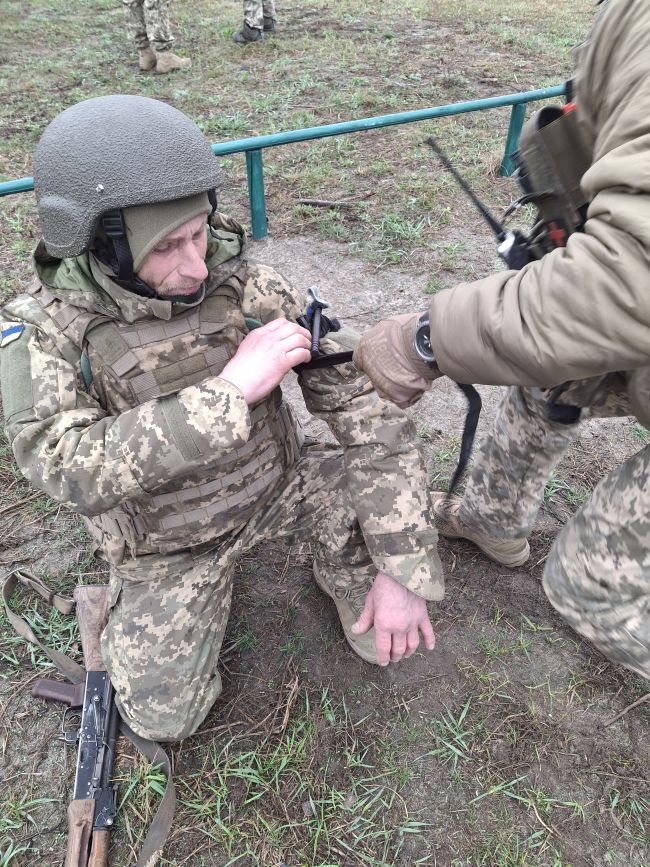
Nearby, a group of cadets is learning to use a tourniquet.
- ...and you tighten it here, - the instructor says. - Got it?
- I think so. Can it be tightened higher up?
- You can, but you must feel the proper fixation zone yourself.

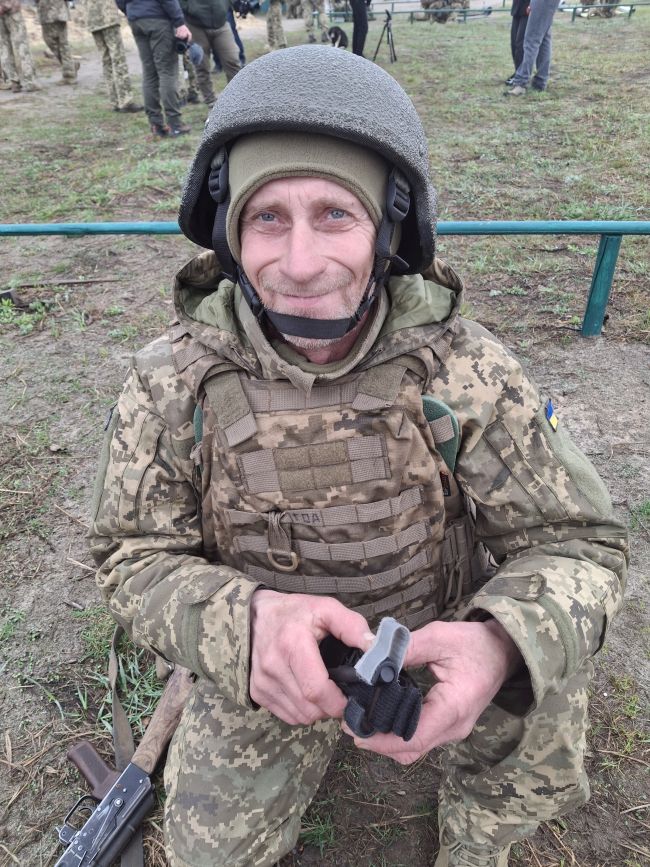
I approach one of the "secured" cadets. We introduce ourselves; before me is Oleksandr from the city of Kovel.
- Is this your first time dealing with a tourniquet?
- Yes, the first time. The instructor was just showing how to apply it correctly.
- What is the main thing you have realized about the tourniquet?
- I realized that even though it hurts, it saves lives.
- Did the instructor mention that a tourniquet must also perform its functions for a limited period of time?
- He did. The tourniquet should be on for 2 hours, and then—evacuation.
- How long have you been here, Oleksandr?
- Third week.
- Was it a bit tough in the first few days?
- Well, like in the army.
- Have you served before?
- No.
- Then how do you know what it's like in the army?
- Well, I guess that's what it looks like.
- Out of what you were taught here, what went well, and what do you still need to work on?
- I still need to work on movement. How to shoot, how to move in groups.
- Oleksandr, how old are you?
- 57.
- And by profession, you are...?
- A tractor driver - machine operator
Unfortunately, it was not possible to learn more about Oleksandr's life path and how he was mobilized and is undergoing BGMT at 57—the group was just being moved to another location. I return to the 13th company commander, Vadym.
- How many people do you have under your command? - I ask.
- 165 cadets.
- How do you characterize this contingent?
- Well, how else: people come from civilian life. We try to talk to them constantly—so they feel they have joined a team; that we care about them. And even if some family issues arise, we try to help them in some way. They see our attitude and try to do what is necessary for themselves.
- Many of these people in civilian life, let's say, did not have very settled lives...
- (Interrupts) ...I will tell you that after our training, such people make excellent soldiers. A person may have had their own, not always perfect, path in life, but here they have entered a circle of 150 men. And we treat him humanely, we help. We are all human, and here in the military, we understand that.
- Thank you for that. Have you encountered completely antisocial trainees?
- Things varied. I also had many cadets who had served prison sentences. And they trained with dignity, there were no complaints about them. I tell them right away: that was your life before. Today you are military personnel, your task now is to defend our Homeland, your families... And they performed exceptionally well in training.
- Vadym, tell me, with your experience, how do you identify leadership qualities in cadets? After all, you have to recommend people for platoon leaders later.
- Platoon leaders are visible immediately, because there are people who prove themselves from the first days. We pay special attention to those who have served conscript service; who have already been in combat. We appoint these individuals as squad leaders and their deputies. And then they are the ones who hold talks with the personnel: they explain what works and how. The personnel then understand where they will go and what they will do. They get their first experience from conversations.
- How old are you?
- 58.
- Based on how and what you say, your combat experience is evident. Where did you fight?
- 10th Mountain Assault Brigade. Bakhmut, Horlivka...
...Cadets gain shooting experience at this training ground not only in open spaces. There are plenty of shooting ranges here, including a multimedia one.
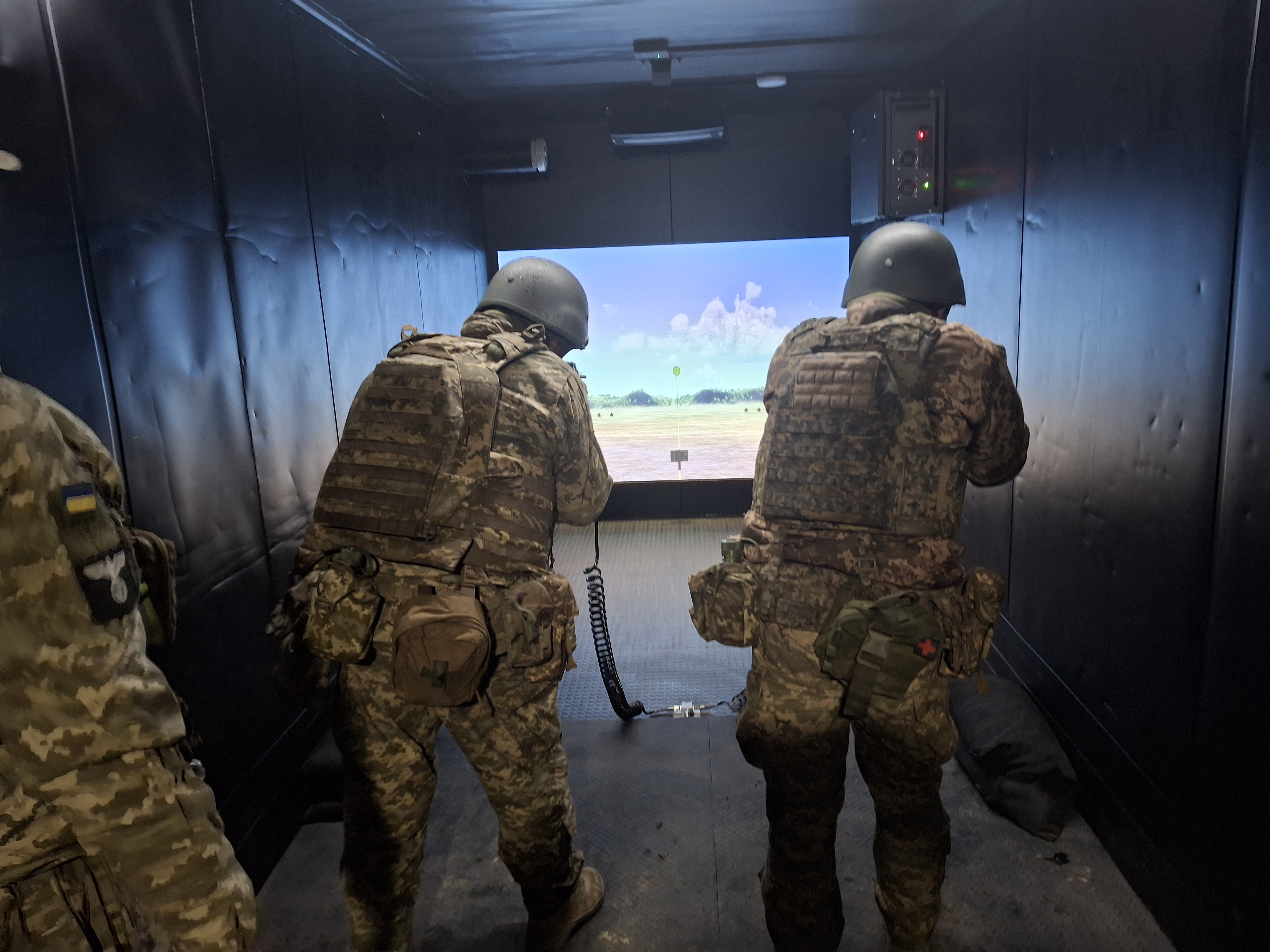
- Reload! - the instructor commands. - Change position, kneeling fire. Do not rush, control your breathing. Front target, open fire!
- Look, - he comments to the Censor.NET correspondent, - here we can practice shooting at targets at both 100 meters and 400-500 meters.

Lunch. In the mess hall, journalists are fed the same meals as the cadets. Today, it is solianka, rice with meat and Korean-style carrots, uzvar, and an apple.
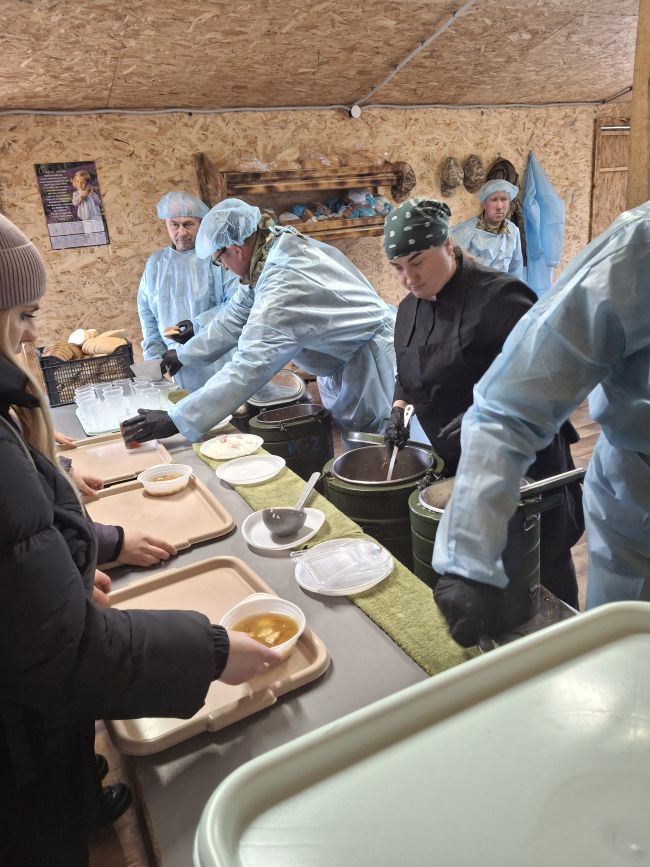
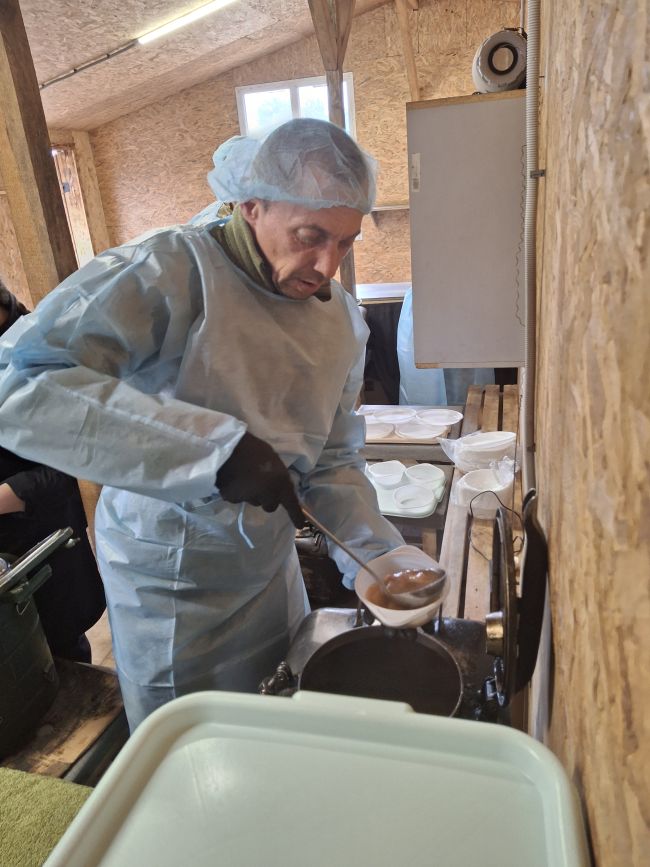
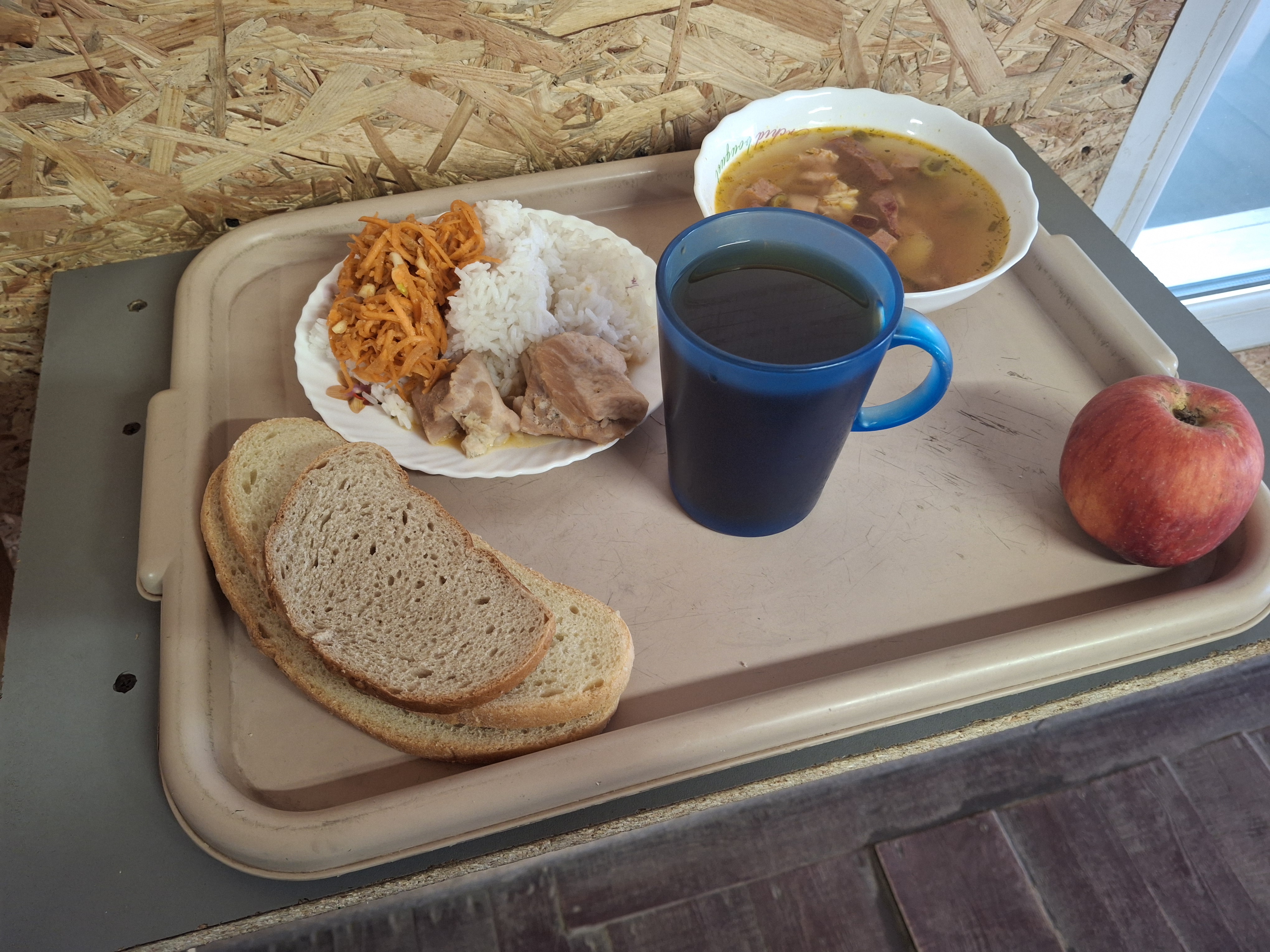
Had we arrived the next day, we would have had pea soup, bulgur with pork, beetroot salad, uzvar, and a tangerine for lunch. An assortment of ketchup and mustard is available daily.
What can I say, it is filling. Having eaten, the Censor.NET correspondent catches up with the medic who monitors the cadets' health—both during training and off-duty. The medic is 27 years old, his name is Vlad, and by education, he is a surgeon.
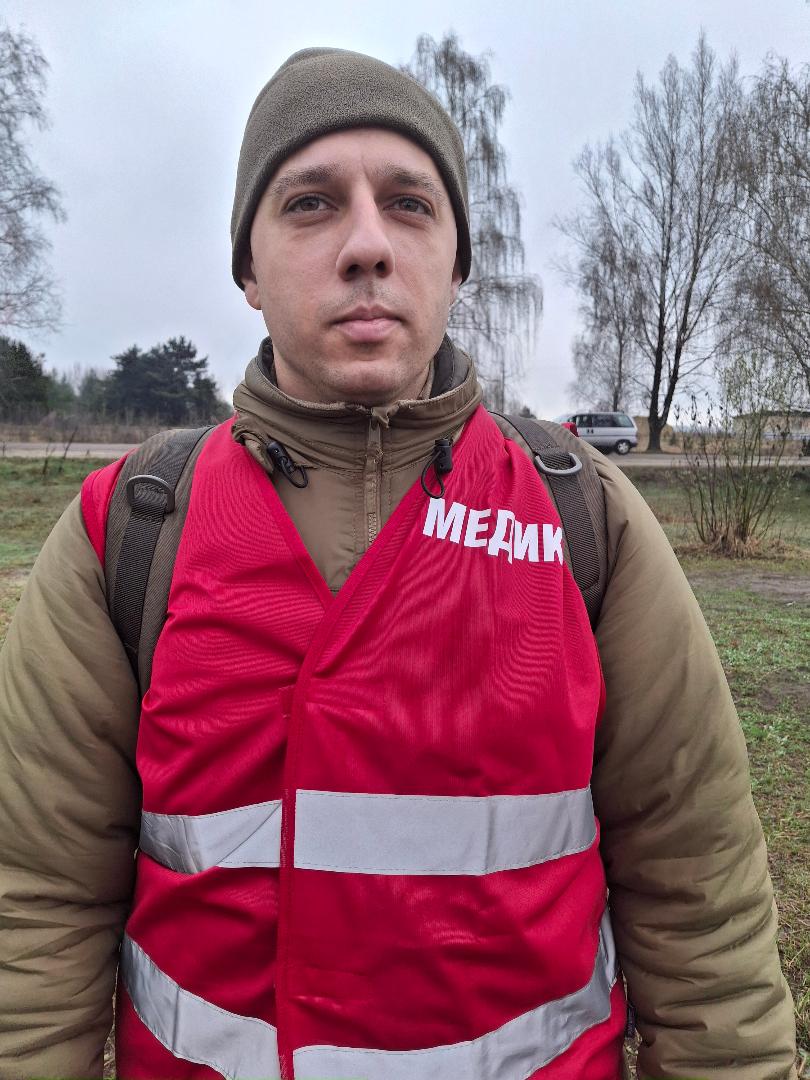
- What do I have to deal with? - he repeats. - If we are talking about cadets navigating obstacles, it is hypertensive crises complicated by severe tachycardia: a pulse of 160-170, or even higher, which increases the risk of a stroke, or even injury.
- And generally, what issues do military personnel bring to the medical station?
- Usually, these are chronic, neglected (sometimes for 10 years or more) illnesses that they did not treat, and now they are resurfacing because it is physically demanding here.
- And now they say, "Vlad, help me with this"?
- Of course. Look, we have plenty of doctors for this, namely: a general practitioner, a traumatologist, a surgeon. They are ready 24/7 to provide them with a wide range of consultations and examinations. We have the necessary equipment from the Ministry of Health—the "Limstar" device, which we use for ultrasounds and ECGs. There is an otoscope and a dermatoscope. The only problem is the lack of an X-ray machine and a basic clinical laboratory for further examinations.
- What is the average age of your patients?
- Mostly 40+
- Have there been cases when you had to urgently transport someone to the hospital?
- Of course, there have been. As well as cases of clinical death. No one here is immune to a heart attack, a stroke, or a cerebrovascular accident. We know everything, we are familiar with all the protocols, and we are ready to provide the full spectrum of available care.
Continuing with the military-medical theme, we head to a series of tactical medicine training locations. Here, personnel train both indoors...
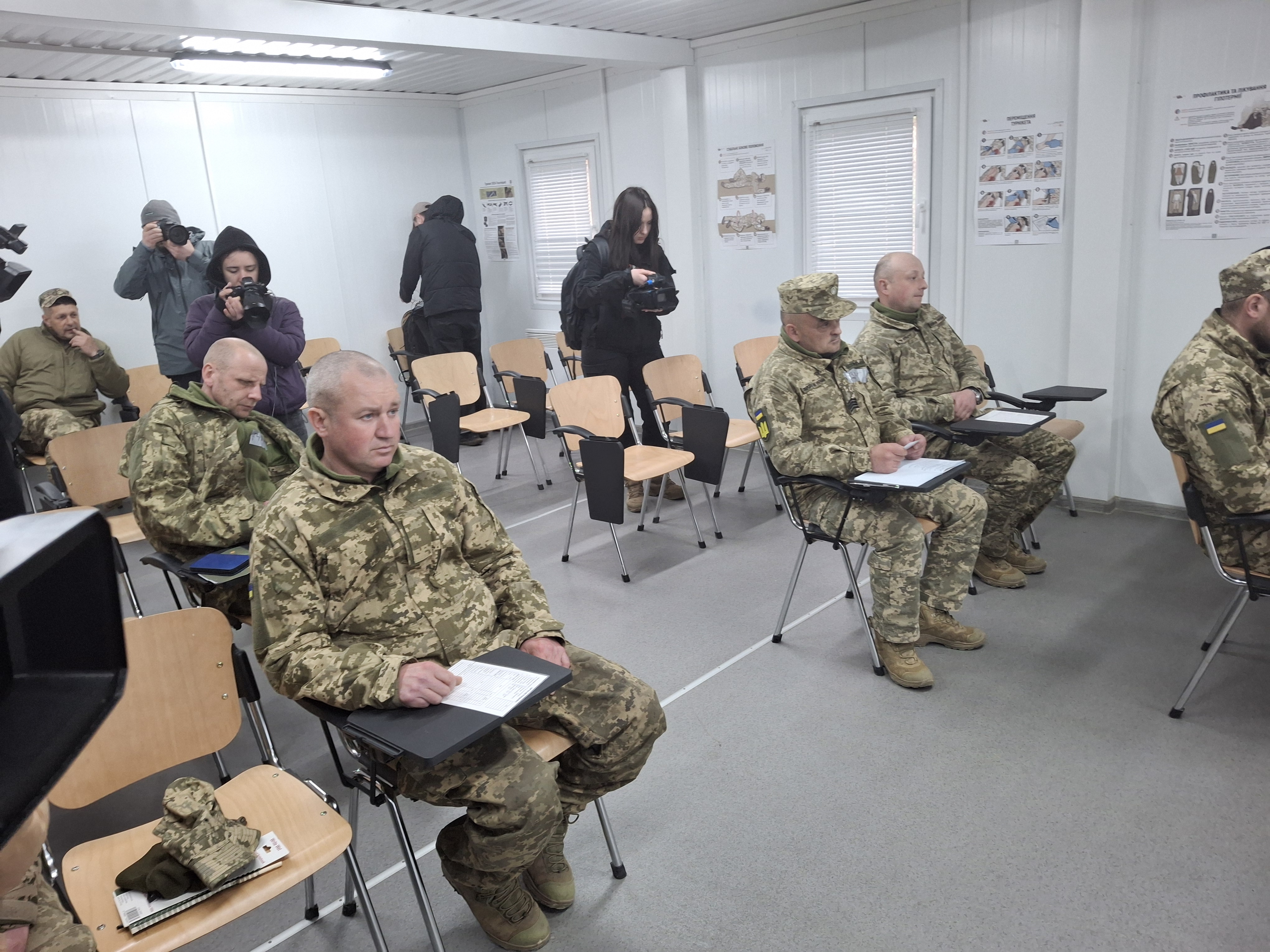

...as well as outdoors.
Journalists observe the evacuation work of another group with unflagging attention. Firstly, because they operate under the same stress method as on the Psychological Obstacle Course: something is constantly shooting and exploding nearby (several people are involved in creating such pressure). And secondly, the wounded man not only has an imitation of a severe leg injury, but he also behaves as if he is starring in a war movie.
- Ow, ow, ow, it hurts! - he screams.
- Everything is fine, friend, - one of the medics encourages him, - everything will be fine, hold on!
- My leg, what's wrong with my leg?! I can't feel it! Where am I? I want to go home! Mooom! I don't want to die!
Some of the journalists laugh, but not for long. Everyone understands that this is a fairly accurate imitation of a combat situation, and the guys work quickly and efficiently.
- Faster! Speed up!
- Oh, it hurts so much! My leg, hold my leg!
- Faster, the enemy is approaching!
Some cadets tend to the wounded, while others, with weapons at the ready, control the directions from which the enemy might appear.
The group with the wounded moves to an area with mountainous terrain. And here is the climax—the wounded man is masterfully transported over the river to the other bank.
- Guys, get me out of here! - the wounded man continues to wail, who a few moments ago, was hanging over the abyss.
And the guys take him away. A few minutes later, the training ends, and the "wounded man" is surrounded by journalists. It turns out that he is an active instructor, call sign Znakhar, who has participated in the defense of Zaporizhzhia, Soledar, and the Kherson campaign under his belt. And he was carried by the cadets whom he trains here.
- Today I played a wounded soldier, - the instructor says, smiling, - I was morally distracting them from their movement. I screamed that I would die, and so on. But the guys coped, did not give up, did the job, and saved me!
- Well, OK, some of it was an imitation, but you were actually flying over the river!
- Yes, I trust them 100%. And I know that after completing the course, they will save more than one life.
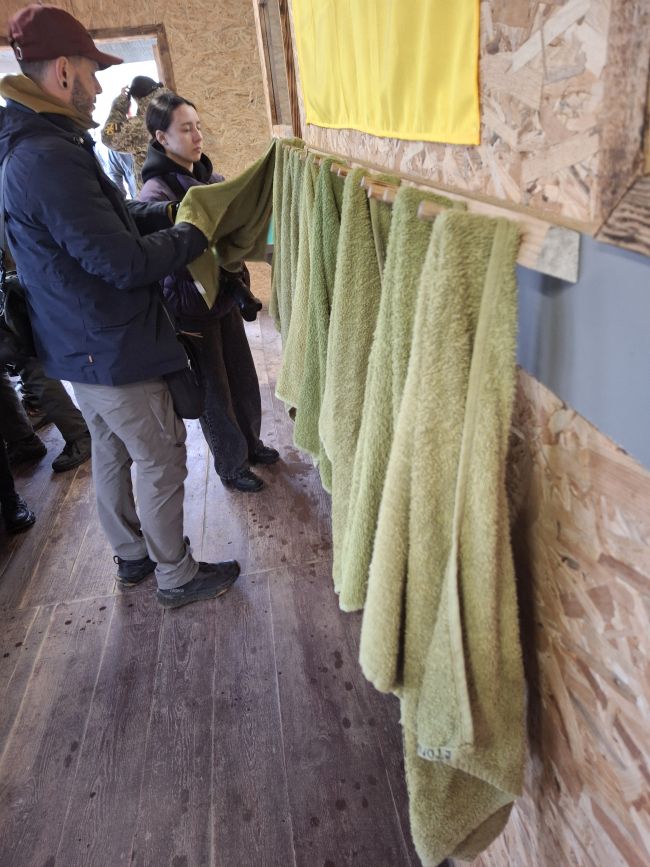
And here is where these guys live during the hours when they are not saving their brothers-in-arms. In an underground block of modules connected to a power supply and equipped with heaters. This is what an individual module looks like.
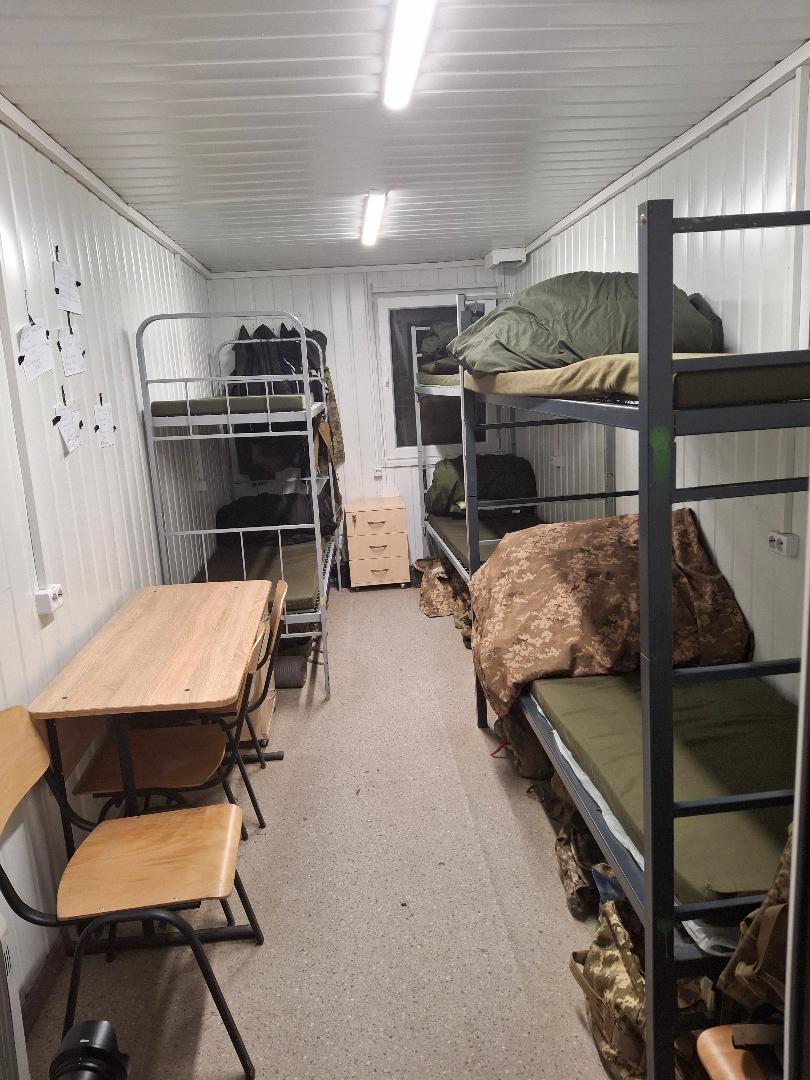
Up to 6 people live in each module; the shower and laundry points are on the surface.

Finally, we move to a group of locations where UAVs and their pilots play the main role. Here they train both behind monitors...
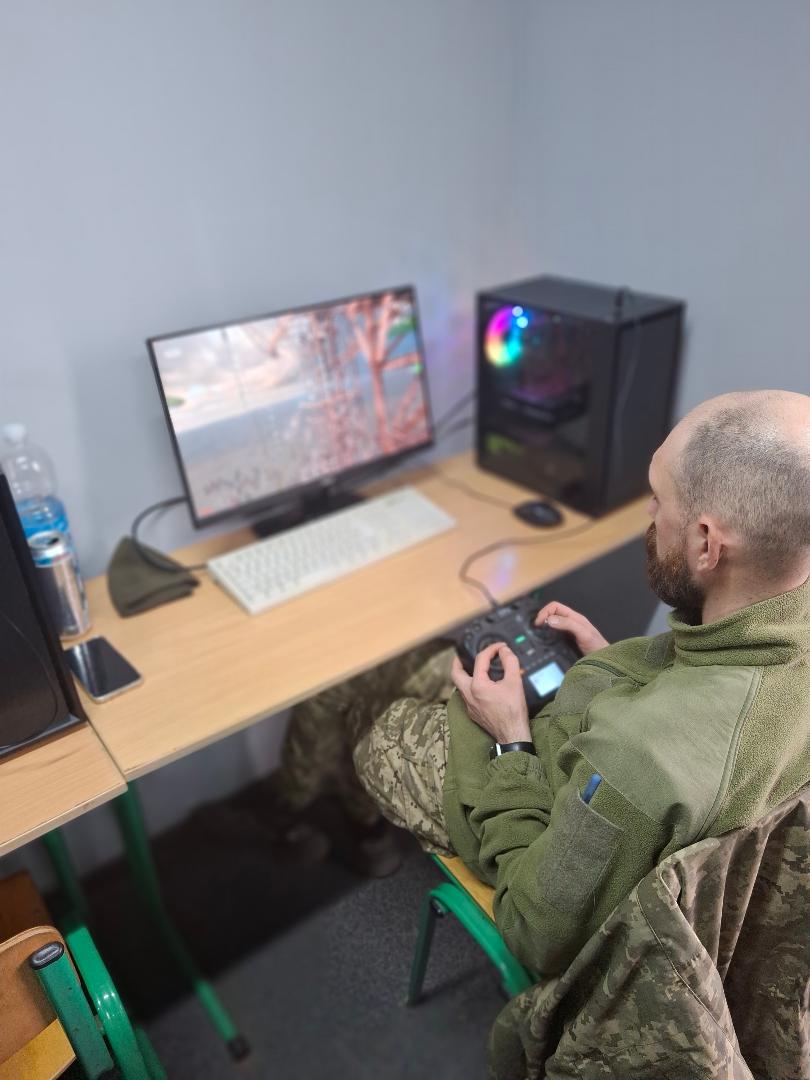
...and in VR glasses, performing delicate operations with tiny drones...
...and take exams (where they are allowed to review material from their notes until the last moment).
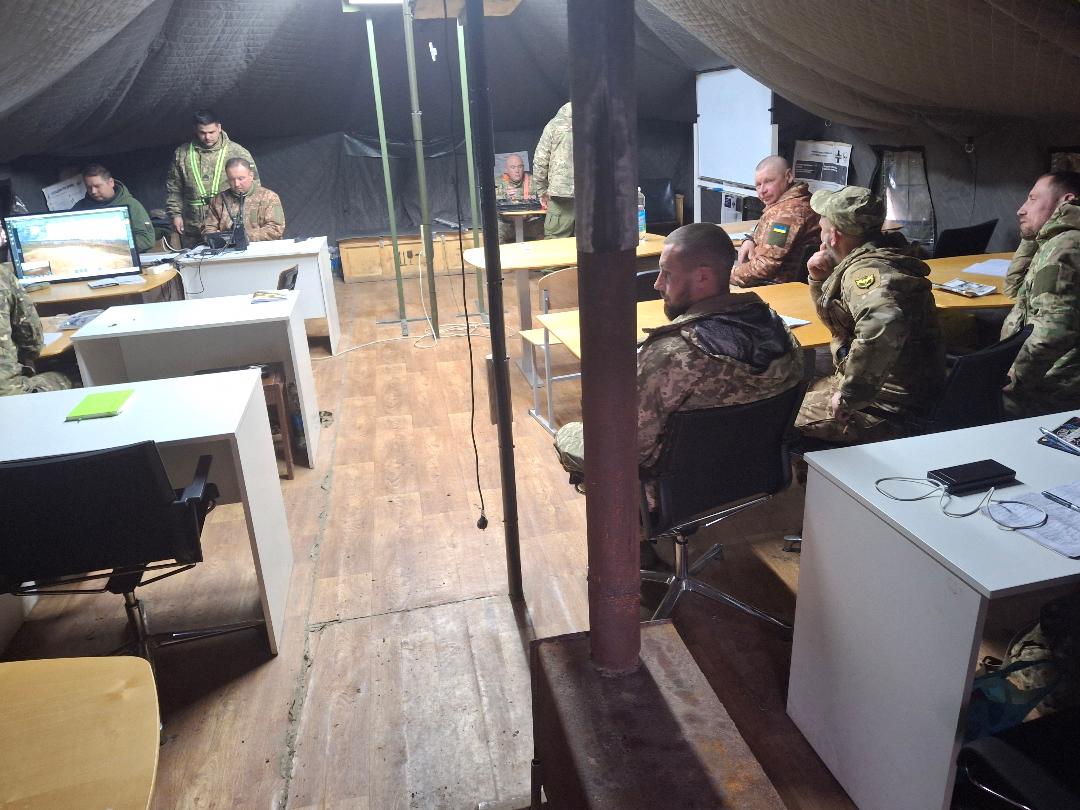
And in the open area, other drones and their pilots are doing their job. We will tell you more about them, as well as about the training of future staff officers, another time. For now, just photos:
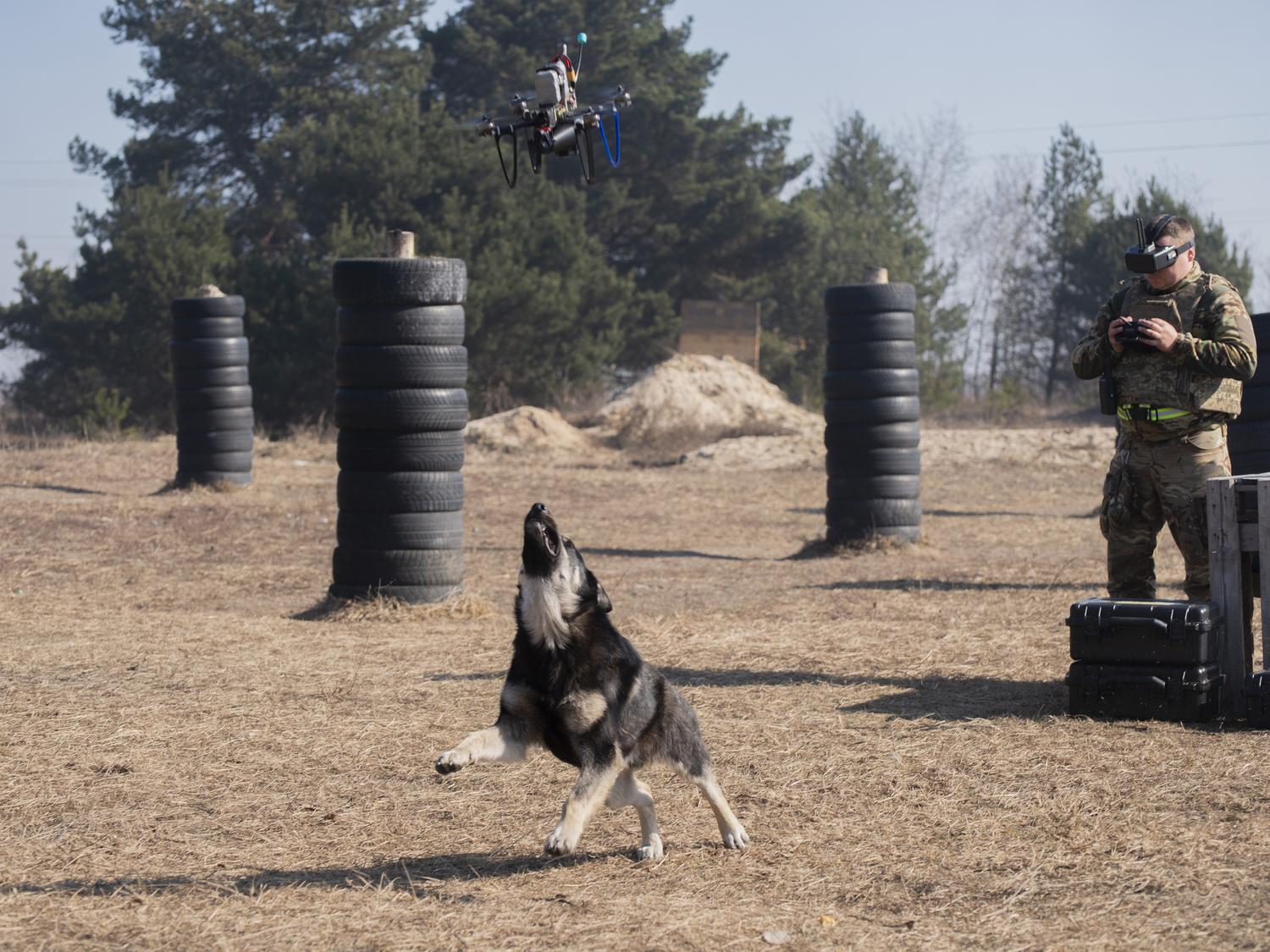
Photo from the Training Centre’s archive
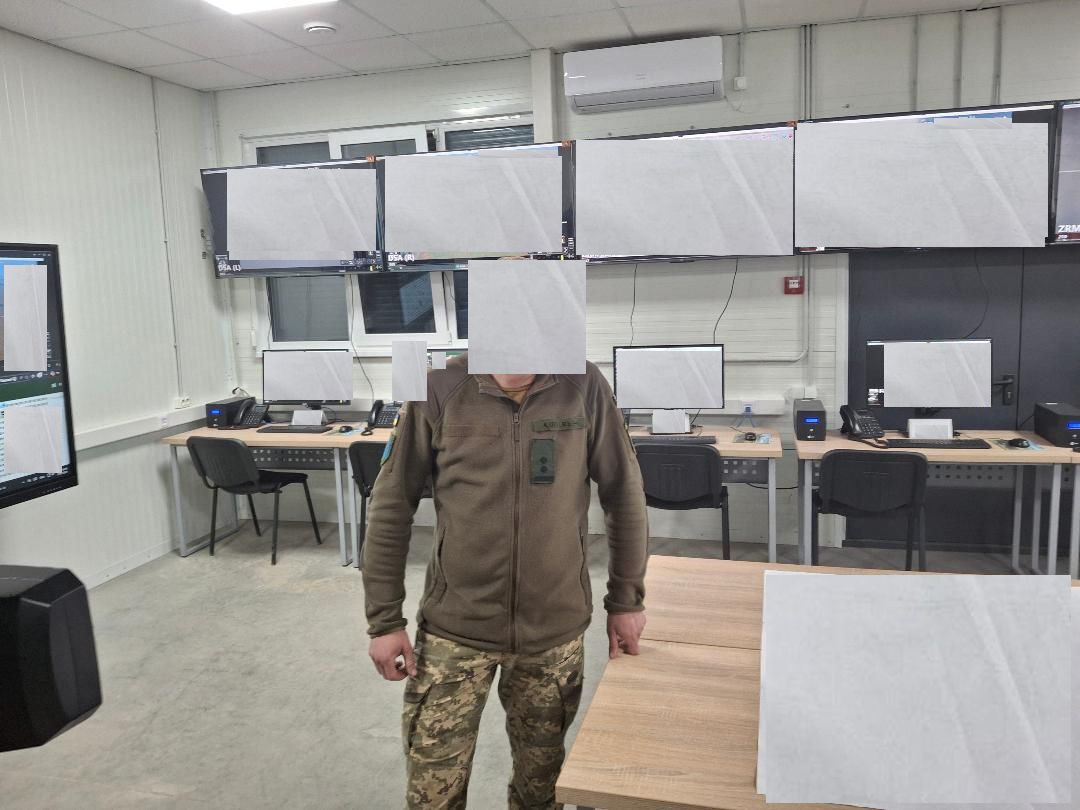

And we will conclude this story with an introduction to the FPV platoon commander, whose call sign is Yoda.
- Why such a call sign? - I ask. - Are you a "Star Wars" fan?
Yoda laughs.
- You guessed wrong, - he says. - I was given this call sign because I cannot fly while standing up. Only sitting down!
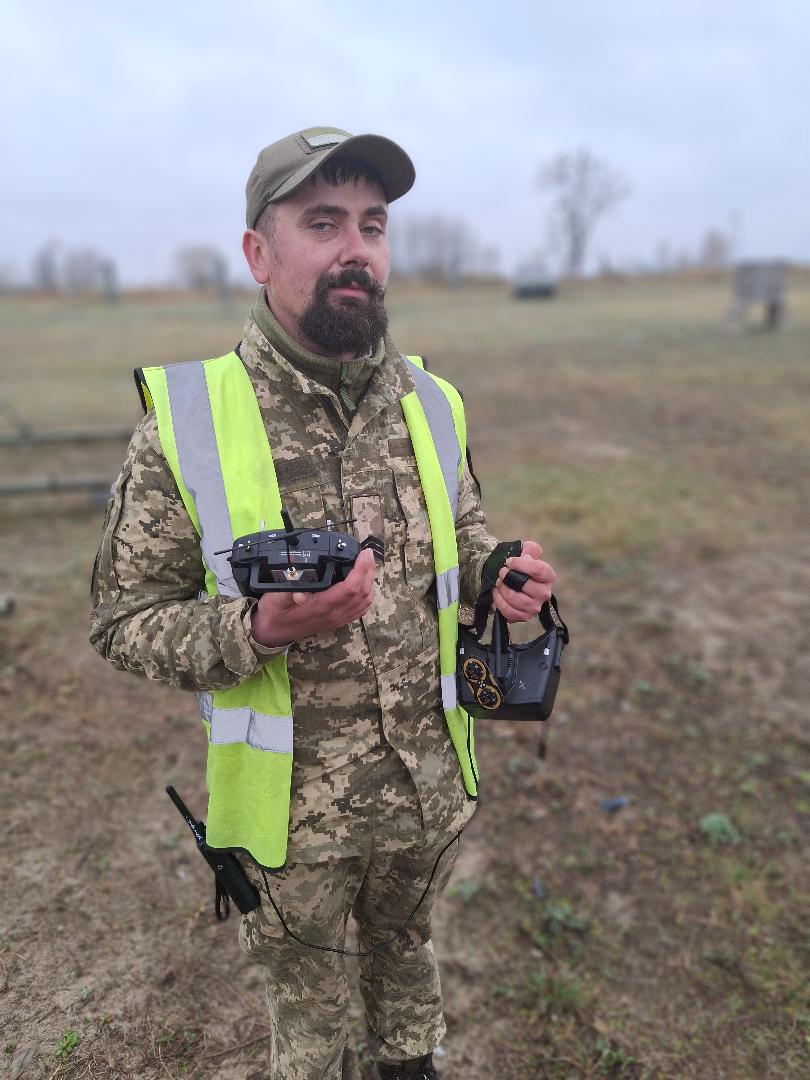
Standing or sitting, he does indeed somewhat resemble the legendary Master Yoda. Isn't that true?
Yevhen Kuzmenko, "Censor.NET"
Photos: by the author, Training Center


