ENG




16813 visitors online
The European Union is playing a pivotal role in supporting Ukraine through substantial financial aid and military assistance. Recently, €6.1 billion was approved for Ukraine to bolster its defense with drones and PAC-3 missiles. This funding is part of a larger €90 billion loan package dedicated to Ukraine's needs. The EU’s commitment highlights its dedication to Ukraine’s sovereignty and territorial integrity, underscoring the importance of air defense capabilities during the ongoing conflict. Additionally, Ukraine's path towards EU membership remains a focal point as the country works to align with European standards and secure membership in both NATO and the EU. The combination of financial aid and military support plays a crucial role in solidifying Ukraine's future in the European community.
Why is the European Union providing financial support to Ukraine?
The European Union is providing financial support to Ukraine to aid in its defense against ongoing military aggression and to support the country's integration into European structures such as the EU and NATO. This support includes substantial loans for purchasing defense systems like drones and missiles.
How much is the European Union loaning to Ukraine, and what is it used for?
The European Union has approved a €90 billion loan package for Ukraine. This funding is intended to support Ukraine's defense capabilities, including the purchase of PAC-3 interceptor missiles for the Patriot air defense systems, and to address other crucial needs amid the ongoing conflict.
What role does the EU see for Ukraine in its security framework?
The European Union sees Ukraine as a critical partner in its security framework, emphasizing the importance of supporting Ukraine's defense to safeguard Europe's overall security. Strengthening air defense and enhancing border protection are key objectives in this partnership.
What are the implications of Ukraine's EU membership efforts on its defense strategies?
Ukraine's efforts to join the European Union are closely linked to its defense strategies. EU membership would enhance Ukraine's security ties with European nations, ensuring greater military support and collaboration in defense initiatives, thus improving regional stability.
How does the EU manage financial requests from Ukraine for defense funding?
The European Union carefully evaluates financial requests from Ukraine to ensure efficient allocation of resources. Such evaluations consider the strategic importance of the assistance and the effective use of funds in bolstering Ukraine's defense capabilities against aggression.
What concerns have been raised regarding Ukraine's financial requests to the EU?
Concerns have been raised within the EU regarding the efficiency of Ukraine's spending of financial aid and the need for transparency. There is an ongoing dialogue to justify new financial requests and ensure the funds are used effectively for Ukraine's defense and recovery efforts.
What steps is Ukraine taking to join the European Union?
Ukraine is actively working towards EU membership by implementing reforms and aligning with EU standards. Officials are focused on meeting the EU's requirements for accession, reflecting Ukraine's commitment to integrating into the broader European community despite challenges posed by the ongoing conflict.
News European Union
 EU will not reinstate sanctions against Usmanov and Fridman in near future, - Kallas The EU’s High Representative, Kaja Kallas, has stated that the European Union will not, in the near future, raise the issue of reimposing sanctions on the Russian oligarchs Alisher Usmanov and Mikhail Fridman, who were recently removed from the sanctions lists. 335 0 Previously in trend: EU sanctions against Russia
 EU may open two further negotiation clusters for Ukraine as early as next week, - Kos The European Union may open two further negotiation clusters for Ukraine and Moldova as early as next week. However, for Ukraine to make progress, the Verkhovna Rada must adopt legislative amendments concerning the educational rights of national minorities. 153 2 Previously in trend: Ukraine EU accession
 EU is preparing special accession terms for Ukraine: access to agricultural market and subsidies could be significantly restricted, - FT The European Commission is preparing a reform of the EU enlargement process that provides for special conditions for future members, including Ukraine. For Kyiv, one of the key exceptions could be a significant restriction on access to the EU’s agricultural market and agricultural subsidies,... 2 280 19 Previously in trend: Ukraine EU accession
 Russia’s threats will not stop European support for Ukraine; EU delegation remains in Kyiv, - Maternova The European Union’s Ambassador to Ukraine, Katarina Maternová, has responded to Moscow’s threats against diplomats, emphasising that the EU delegation will remain in Kyiv. 696 4 Previously in trend: Putin’s threats
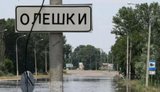 EU called on Russia to ensure humanitarian access to occupied Oleshky The European Union has called on Russia to ensure safe humanitarian access to the temporarily occupied town of Oleshky in the Kherson region and to allow the civilian population to leave the town. 865 6 Previously in trend: Humanitarian crisis in Oleshky
 EU has refused to release funds to Ukraine ahead of schedule from €90 billion loan – FT The European Union has rejected Ukraine’s request for an early disbursement of a portion of the funds from the 2027 financial support program. Brussels expects Kyiv to implement the agreed-upon reforms necessary for further disbursements. 4 417 73 Previously in trend: Aid to Ukraine
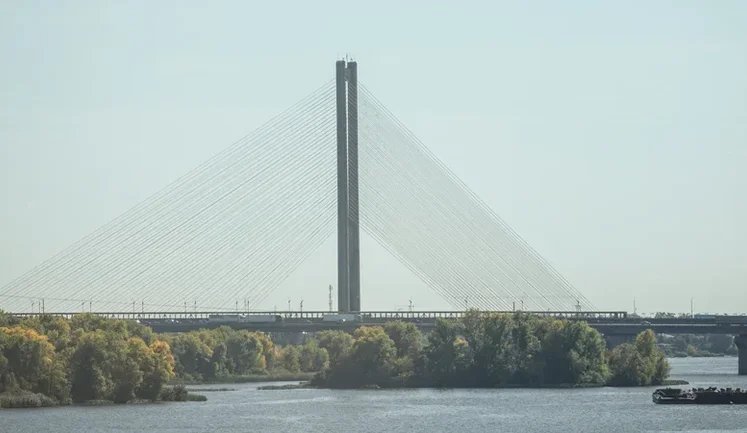
 Fourth Russian attack on Pivdennyi Bridge, first details of Ukraine’s FP-7 ballistic missile use and €2.9 billion from EU: Top stories for October 2. VIDEO Russia has struck Kyiv’s Pivdennyi Bridge again, and traffic across it has been completely halted. Traffic restrictions have been introduced on three other bridges during air raid alerts. The EU has provided Ukraine with a new €2.9 billion tranche under the Ukraine Facility programme. In... 3 573 4 Previously in trend: News of the day
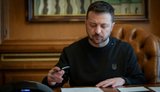 Zelenskyy signs law on Ukraine’s participation in European Defence Fund President Volodymyr Zelenskyy has signed a law ratifying the agreement between Ukraine and the European Union on Ukraine’s participation in the European Defence Fund. This is expected to deepen cooperation between the Ukrainian and European defense industries. 689 9 Previously in trend: Defence contracts EU defence sector Defense products
 Ukraine has received €2.9 billion from EU under Ukraine Facility Ukraine received another tranche of funding totaling 2.9 billion euros from the EU under the Ukraine Facility after meeting 10 performance indicators, three of which were achieved ahead of schedule. 824 10 Previously in trend: Aid to Ukraine from Europe Ukraine Facility
 EU has refused to speed up disbursement of loan to Ukraine and is demanding reforms, - Bloomberg The European Union has refused to speed up the disbursement of a loan to Ukraine to cover the additional shortfall in military funding and has called on Kyiv to implement reforms more actively. 4 581 38 Previously in trend: Aid to Ukraine from Europe
 We expect all clusters in EU accession negotiations to be opened by end of year, - Deputy Prime Minister Chentsov Ukraine expects to open all clusters in its EU accession negotiations by the end of 2026. 741 12 Previously in trend: Ukraine EU accession
 Ukraine agrees with European Commission on format and timeline for meeting financial and defence needs for 2026–2027 – Zelenskyy President Volodymyr Zelenskyy announced agreements with the European Commission on meeting Ukraine’s financial and defence needs in 2026–2027. 896 16 Previously in trend: 2027 budget
 EU and Ukraine identify means to cover budgetary and defence needs for this year The European Commission and Ukraine have identified the means to cover Ukraine’s budgetary and defence needs for 2026. 877 3 Previously in trend: Aid to Ukraine from Europe
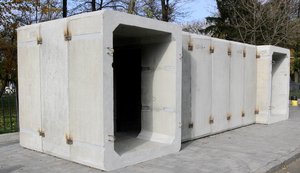
 EU to allocate €10 million for mobile shelters in Ukraine: 840 planned along school bus routes in frontline regions. PHOTO The European Union has announced €10 million in funding for mobile shelters across Ukraine. Separately, Ukraine has presented international partners with a project to install 840 such protective structures along school bus routes in six frontline regions. 593 4 Previously in trend: Construction of shelters Shelters in Ukraine
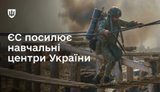 Ukrainian Armed Forces training centres in Ukraine to be modernised with EU support – Defence Ministry With the support of the European Union, funding will be provided to modernise several military training sites in Ukraine. 556 5 Previously in trend: Aid to Ukraine from Europe
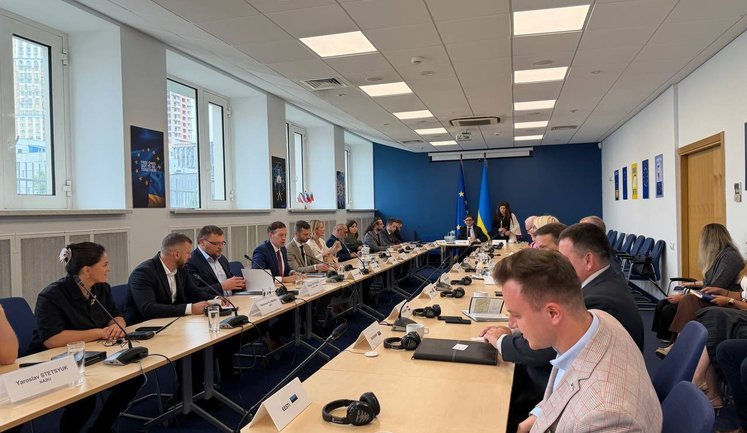
 Stefanchuk and Kos discussed financial support for Ukraine and advancement of reforms on path to EU Ruslan Stefanchuk, Speaker of the Verkhovna Rada, met with Marta Kos, European Commissioner for Enlargement. The two discussed continued financial support for Ukraine, the parliament’s work amid Russian attacks, and the advancement of reforms necessary for European integration. 822 17 Previously in trend: Ukraine EU accession
 Fifty luxury cars stolen in EU: members of Ukrainian branch of criminal organization to stand trial. VIDEO+PHOTOS The pretrial investigation into members of the Ukrainian branch of an international criminal organization that stole luxury cars in European Union countries has been completed. The indictment has been sent to court. 2 194 0 Previously in trend: forgery of documents
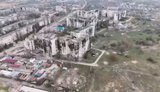 EU is trying to secure humanitarian access to occupied town of Oleshky The European Union, together with international organisations and Ukraine, is attempting to secure humanitarian access to the temporarily occupied town of Oleshky in the Kherson region. The European Commission has described the situation in the town as unacceptable and is demanding unhindered... 863 2 Previously in trend: Humanitarian crisis in Oleshky
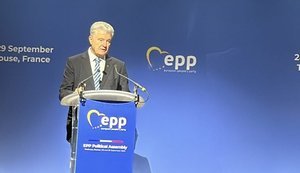
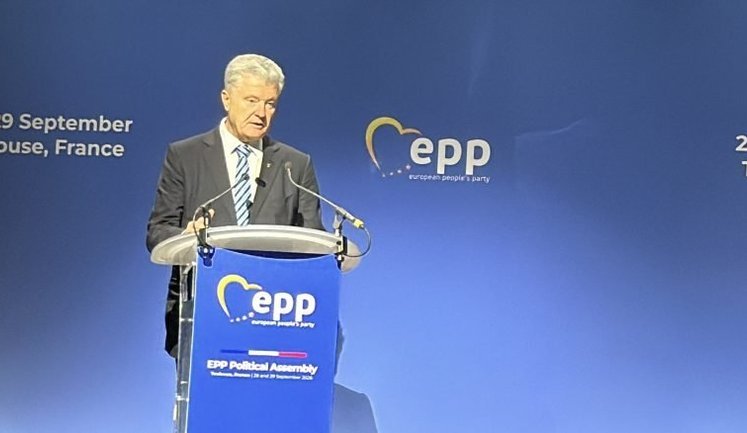
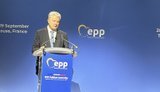 Poroshenko called on EU to immediately scale up military production: Ukraine is buying you time. VIDEO During his speech at the European People’s Party Political Assembly in Toulouse, Petro Poroshenko called on partners to urgently scale up the production of modern types of weaponry. 2 060 49 Previously in trend: Sanctions against Russia Ukrainian defense industry
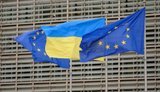 European Union will once again attempt to overcome Hungary’s veto on clusters for Ukraine On September 29, the EU Council’s Working Group on Enlargement (COELA) will once again attempt to approve the results of the screening of negotiation clusters 2 and 3 for Ukraine, which is necessary for further progress toward their opening. 1 015 8 Previously in trend: EU Membership
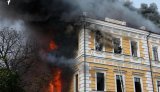 Third phase of Operation ’Vivaldi’, Russian strike on building of National Academy of Sciences of Ukraine, and government’s prioritisation of public spending: top news stories for 28 September. VIDEO The Third Army Corps has liberated a further 51 km² of Ukrainian territory and taken more than 250 occupiers prisoner as part of Operation ‘Vivaldi’. Russia has struck the building of the National Academy of Sciences of Ukraine. The Cabinet of Ministers has set spending priorities due to the... 1 501 4
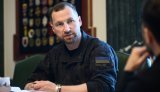 Defense Minister Khmara called on EU to fund interceptors for "Shahed" drones Ukrainian Defense Minister Yevhen Khmara called on European Union countries to help fund measures to counter Russian "Shahed"-type jet drones. According to him, Ukraine is already shooting down such targets, in particular with interceptor missiles, but needs significantly more resources. 2 439 34 Previously in trend: Destruction of Russian drones Countering Russian drones
 Poland is set to receive over €600 million in compensation from EU for weapons supplied to Ukraine In 2026–2027, Poland will receive over 600 million euros from the European Peace Fund as partial compensation for the weapons supplied to Ukraine. Warsaw will be able to use the funds received to modernise its own armed forces. 1 230 13 Previously in trend: Ukrainian Arms
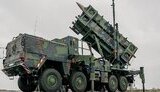 EU fails to agree on supplying Ukraine with additional batches of Patriot missiles – Kallas The defense ministers of EU member states were unable to make new commitments to provide Ukraine with interceptor missiles. 3 543 32 Previously in trend: Patriot missiles for Ukraine
 EU agrees on terms for allocating €6.6 billion from European Peace Facility for Ukraine EU member states have agreed on the terms for allocating €6.6 billion from the European Peace Facility for Ukraine. 1 166 3 Previously in trend: Aid to Ukraine from Europe
 Zelenskyy on $27 billion deficit: EU and IMF ready to support Ukraine The European Union and the International Monetary Fund have responded positively to Ukraine’s need for financing to cover the state budget deficit and are ready to support our country. 1 861 24 Previously in trend: Aid to Ukraine from Europe IMF financial assistance
 Costa calls for using all available leverage on Russia to end war Russia’s war against Ukraine already has global consequences, so the international community must use all available leverage on Moscow to bring it to an end. 786 4 Previously in trend: negotiations with Russia
 EU has approved disbursement of nearly 3 billion euros to Ukraine for implementing reforms under Ukraine Facility Ukraine will soon receive nearly 3 billion euros under the Ukraine Facility. The Council of the EU has approved the eighth regular tranche following Ukraine’s completion of the ten milestone actions set out in the Ukraine Plan. 1 531 2 Previously in trend: Ukraine Facility
 Ukraine is proposing that EU impose sanctions on Russian billionaires Lisin and Potanin instead of Usmanov and Friedman, - Politico Following the removal of Alisher Usmanov and Mikhail Friedman from the EU sanctions list, Ukraine is proposing to impose restrictions on two other Russian billionaires—Vladimir Lisin and Vladimir Potanin. Their companies have a significant presence in the European market. 938 9 Previously in trend: EU sanctions against Russia
 Latvia was only EU country to oppose lifting of sanctions against Usmanov and Friedman, - Prime Minister Kulbergs Latvia remained the only EU country to oppose the removal of Russian oligarchs Alisher Usmanov and Mikhail Fridman from the sanctions list. In particular, this decision was supported by Lithuania and Estonia. 1 107 7 Previously in trend: EU sanctions against Russia
 There is certain "sanctions fatigue" regarding Russia within EU, but pressure on Moscow must be maintained, - Dombrovskis Europe must overcome "sanctions fatigue" and step up economic pressure on Moscow. 1 229 10 Previously in trend: EU sanctions against Russia
 Sybiha on lifting sanctions against Usmanov and Fridman: Moscow is celebrating because it got what it wanted Foreign Minister Andrii Sybiha commented on the European Union’s decision to remove Russian oligarchs Alisher Usmanov and Mikhail Fridman from its sanctions list. 3 479 22 Previously in trend: EU sanctions against Russia
 EU to extend sanctions against Russia for three years while removing Russian billionaires Usmanov and Fridman – Reuters EU ambassadors agreed to remove Russian billionaires Alisher Usmanov and Mikhail Fridman from the sanctions list. At the same time, they agreed to extend restrictions on the remaining approximately 3,000 individuals and entities for a full three years. 2 493 11 Previously in trend: EU sanctions against Russia
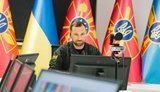 Khmara held talks with Kubilius: they discussed speeding up funding for Defence Forces’ critical needs The Ukrainian Minister of Defence, Yevhen Khmara, held a telephone conversation with Andrius Kubilius, the European Commissioner for Defence and Space. The parties discussed accelerating funding for the critical needs of the Ukrainian Defence Forces. 551 0 Previously in trend: Aid to Ukraine from Europe Defense Forces funding
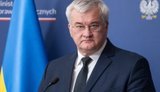 Lifting sanctions against Friedman and Usmanov would send wrong signal to Moscow, - Sybiha Foreign Minister Andrii Sybiha has called on the EU not to ease the pressure of sanctions on Russia and not to remove Russian oligarchs Alisher Usmanov and Mikhail Fridman from the sanctions lists. 1 055 7 Previously in trend: EU sanctions against Russia
 France’s stance threatens continuation of EU sanctions against Russia, - Politico France’s position on removing certain Russian businessmen from the sanctions list could jeopardize the extension of the European Union’s personal sanctions against nearly 3,000 individuals and entities linked to Russia. 2 577 5 Previously in trend: EU sanctions against Russia
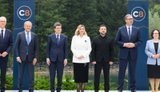 "Carpathian Eight" summit, "astronomical" funding shortfall and destruction of Russian launcher used to strike Kyiv: top news for September 18. VIDEO Ukraine and seven European states have launched a new cooperation format, C8 — the "Carpathian Eight". The European Commission is awaiting contracts from Kyiv for the purchase of Patriot missiles before releasing payments, while Zelenskyy has reported an "astronomical" funding shortfall. 2 204 6 Previously in trend: News of the day
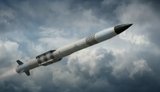 EU cannot purchase Patriot missiles for Ukraine because Kyiv has not submitted signed contracts Ukraine has yet to submit signed contracts for the purchase of interceptor missiles for Patriot systems to the European Commission. As a result, the EU cannot make the corresponding payments from the €90 billion loan. 10 530 64 Previously in trend: Patriot missiles for Ukraine Missiles for Patriot
 We hope to open two EU accession negotiating clusters in September–October, and two more by end of year – Zelenskyy President Volodymyr Zelenskyy said Ukraine expects to open two EU accession negotiating clusters in September–October and another two by the end of the year. 842 12 Previously in trend: EU Membership
Ukraine is preparing for meeting in US regarding country’s financial stability, - Zelenskyy President Volodymyr Zelenskyy announced preparations for a meeting in the United States regarding Ukraine's financial stability. 1 543 31 Previously in trend: Aid to Ukraine
 Ursula von der Leyen announced allocation of 3.3 billion euros to Ukraine for defense On September 18, the European Union is set to allocate 3.3 billion euros to Ukraine as part of its latest defense aid package. 1 582 13 Previously in trend: Aid to Ukraine from Europe
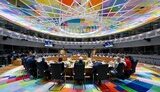 Zelenskyy to take part in EU summit: Funding for Ukraine to be discussed EU leaders will discuss Ukraine with President Volodymyr Zelenskyy during the European Council summit in Brussels on October 15–16. 1 076 11 Previously in trend: External financing
 Ukraine needs more aid ahead of difficult winter: Tsahkna urges EU to use frozen Russian assets Estonian Foreign Minister Margus Tsahkna said he had expected stronger signals of support for Ukraine in European Commission President Ursula von der Leyen’s annual address. He called on the European Union to increase economic assistance to Kyiv, step up pressure on Russia and accelerate EU... 545 3 Previously in trend: Transfer of frozen Russian assets to Ukraine Use of frozen assets of Russian Federation
 EU will launch new program of joint projects with Ukrainian defense industry, - von der Leyen European Commission President Ursula von der Leyen stated that the EU will step up its support for Ukraine this winter, particularly in the areas of energy and air defense. 553 0 Previously in trend: Aid to Ukraine from Europe Ukrainian defense industry
 Pressure on Russia must be maintained by closing all loopholes for circumventing sanctions, - von der Leyen The EU should step up pressure on Russia, in particular by closing loopholes that allow the circumvention of sanctions already in place. 548 3 Previously in trend: EU sanctions against Russia
 EU sanctions against Russia extended for only seven days – until September 22, not six months The European Union has extended sanctions against Russia for only seven days instead of the usual six months. The restrictions will now expire at midnight on September 22. 3 545 16 Previously in trend: Sanctions against Russia
 "Ukraine has given Europe time to prepare for worst-case scenario, but we are not making most of it," - Latvian Prime Minister Kulbergs By resisting Russian aggression, Ukraine has given Europe time to prepare for the worst-case scenario; however, European countries are not making the most of this time. According to Latvian Prime Minister Andris Kulbergs, every day should be devoted to strengthening preparedness for potential... 1 592 29 Previously in trend: Security of Europe
 European Commission on charges against Kryvonos: Ukraine must guarantee protection of anti-corruption bodies The European Commission is monitoring corruption investigations in Ukraine. 5 636 22 Previously in trend: Pressure on NABU Suspicion of Kryvonos
Page 1 of 76
more news