



Bohdan Krotevych: "Things won’t get better until Commander-in-Chief and system he built are replaced"
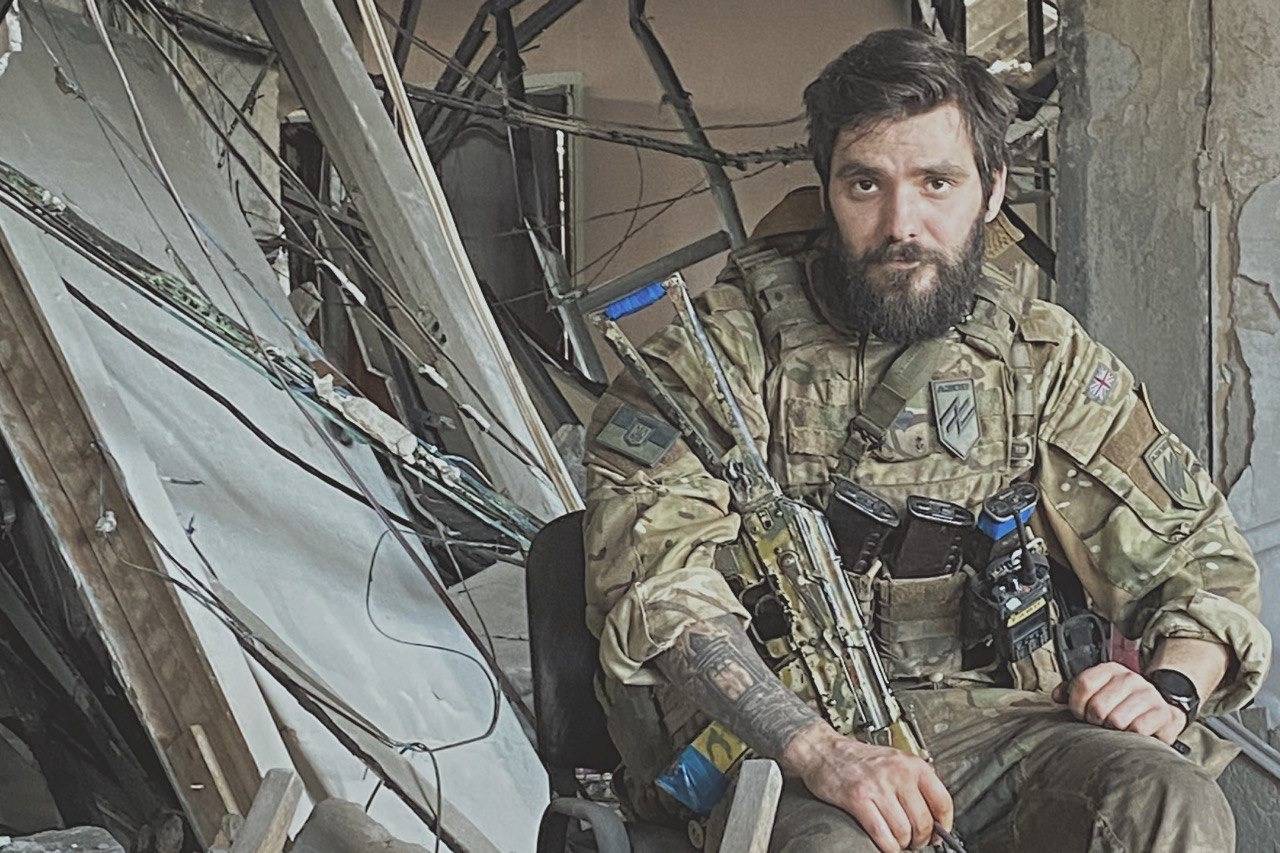
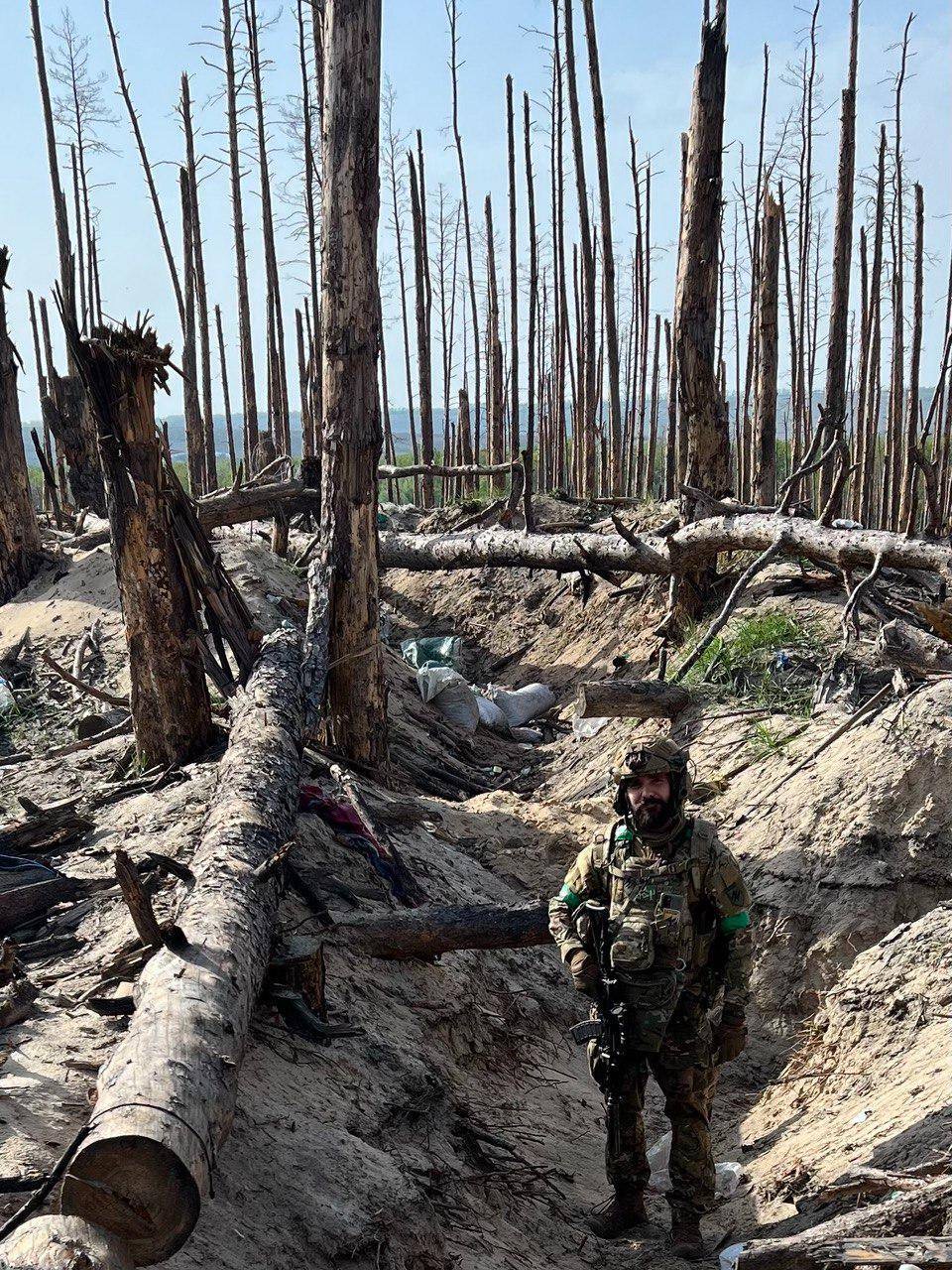
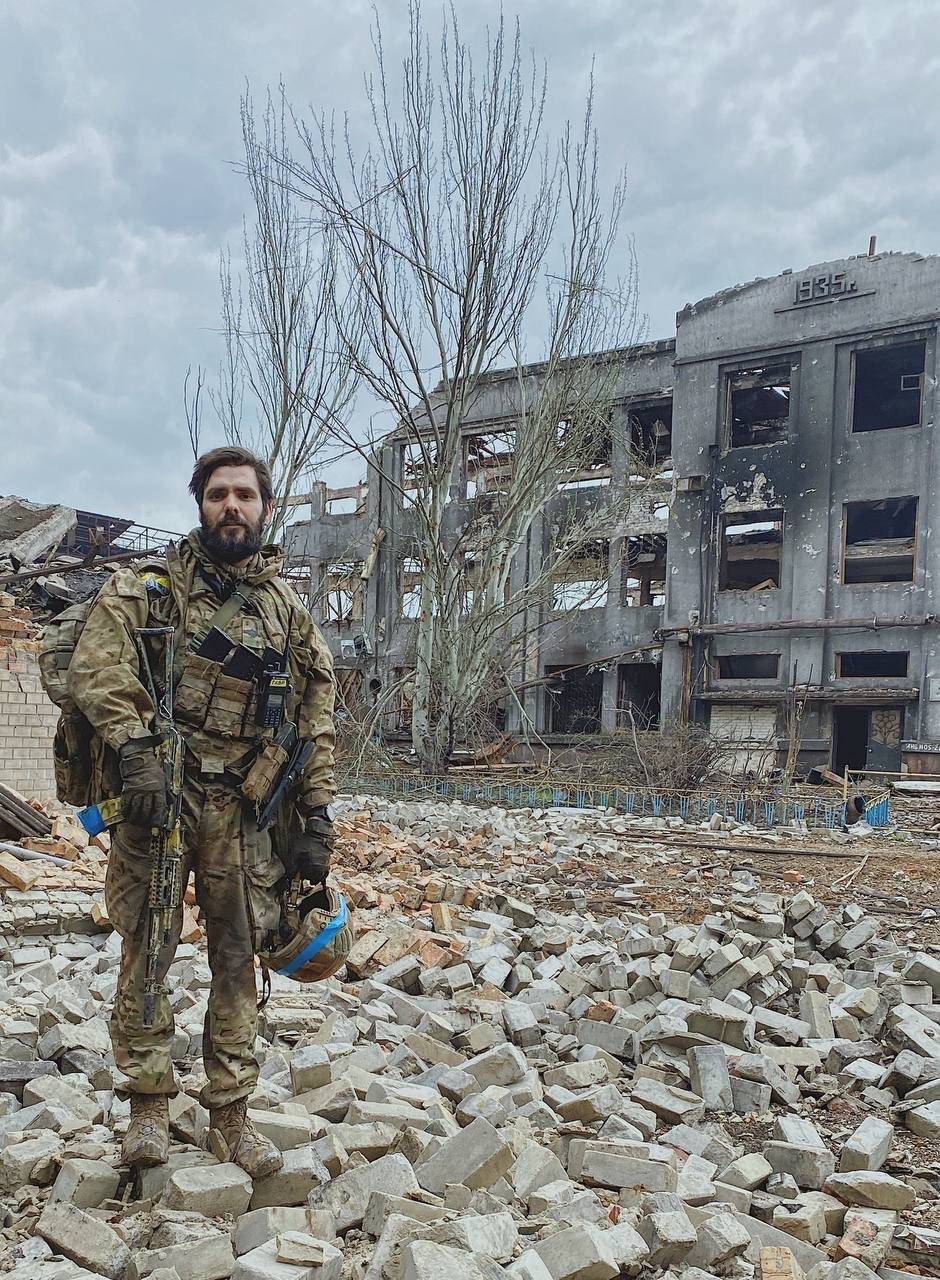
Bohdan Krotevych, former Chief of Staff of the 12th Special Purpose Brigade "Azov" of the National Guard of Ukraine, is a seasoned serviceman who returned to civilian life a year ago. At the same time, he continues to speak about the military in a way few others do. His words are sharp, direct, and sometimes shocking: regarding the casualties of assault units, chaotic command, systemic errors, corruption, and risks to human lives.
He speaks about what is happening at the front, not in the language of political statements, but through his own experience and observations: how new recruits end up on the front line without training, how decisions made "at the top" can cost hundreds of lives, and how Ukraine is fighting not only the enemy, but also its own internal problems. In our conversation, we touched on some of those issues, but began on a personal note.
- Tell us, what has this year after leaving the service been like for you?
- You know, I joined the military when I was 21. At the time, I was a student, having just finished my fourth year at the academy, and living in a dormitory in Kyiv. In the summer of 2014, I joined "Azov", which was still a police battalion then. And I remained in the army until February 2025, rising from private to Chief of Staff (I also served as acting brigade commander). For me, the main problem turned out to be that I did not know how to live independently. Yes, I lived in a dormitory and was formally independent, but while studying, you still depend on others in many ways. And in the military, you belong to the army and the state. So, a year ago, I started learning how to live on my own. It is quite a challenging start. But on the other hand, I never built up this story in my head that I was somehow owed something, that I had defended the homeland and now everyone owed me. I am used to relying on myself. And in that sense, it was, of course, easier for me to integrate into civilian life.
- Some service members who come home on leave or travel on temporary duty to cities in the rear admit that there are certain things they do not like. For example, there are loud parties here. Some believe there are too many draft-age men in the streets who are evading service. Did anything irritate you when you came back?
- I genuinely understand service members who say that, and I do not judge them in any way. But think back: even before the full-scale invasion, during the ATO and JFO, the situation was the same. The war was going on, just not in such a hot phase. Back then, too, people would ask: we are fighting there, and you here do not even understand what is happening?! Personally, I adopted this position for myself: if civilians do not feel the war, that means I am doing my job properly, because that is how it should be.
Now, of course, when we are talking about a full-scale invasion, about a country at war, I understand: this triggers the military even more, and they have an absolute right to express such opinions. On the other hand, I would break this down into two separate issues. The first is recreation. I believe it is necessary, and it is normal, up to and including clubs, parties, and certain cultural events (that is, those that do not cross the line into immoral behavior). I am 99 percent certain that service members who have returned from rotation are also present at these events. We must not forget that many of them went to war at the age of 18 or 20. In fact, they had not experienced life and entered the war not like we did in 2014, but literally plunged into a frenzied "meat grinder." Therefore, they have the full moral and legal right to rest as they wish. Because, for the most part, they risk their lives for the state every day. I make allowances for this kind of recreation. Everyone has different tastes. Some people like raves. I, for example, do not—I have never been to one and most likely never will be. But I know many good service members, particularly reconnaissance and assault troops, who enjoy going there. They do not abuse anything there (at most, they will drink a beer); they simply enjoy dancing to techno. Others like to vacation in the Carpathians or simply stay home. As I say, tastes differ, but the rights of the military must be taken into account.
The second area is draft evasion. Right now, the issues of draft evasion, mobilization, and AWOL are very complicated. These are all interconnected matters that cannot be separated. Of course, there is the law and the obligation of men over 25 to serve. No one is questioning that. However, I was a serviceman myself, and I understand why some people do not want to join. Overall, I am an absolute supporter of recruitment. I naively believe that if military service complied with the requirements of the law and with the promises the state itself sets out (when recruitment itself emphasizes: you join our ranks and will serve 100 percent where you chose for one or two years, for example in air defense, and that is exactly where you will remain), the process would not look the way it does now. There would be enough people willing to serve without any coercive methods.
In addition, the state must make sure that people who evade service face certain difficulties in civilian life — blocked personal bank accounts, the inability to pay by card, and so on. Measures that restrict you and ultimately force you to go to the TCR&SS (Territorial Centers of Recruitment and Social Support -ed.), at the very least, to register for military service and appear when you are summoned there.
But I repeat: I understand why people do not want to go. Because they do not know what will happen to them after mobilization. I believe that the units engaged in forced mobilization, in this case, the TCR&SS, must be completely removed from the structure of the Armed Forces of Ukraine and placed under the authority of the Ministry of Defense. This is essential. The military has a rather interesting kind of professional deformation (I have it too) — a certain excessive rigidity, an extremely rapid pace of decision-making, and a habit of meeting needs immediately.
Once, an officer from one of the military administrations said, "Syrskyi set me a quota, and I am going to meet it." But that is not how it should work. Because the Commander-in-Chief, of course, must think in terms of the front and formulate the military’s needs for the Ministry of Defense, but the ministry, in turn, must exercise civilian oversight over the General Staff. That is not happening now. That is why we sometimes see, frankly, sheer absurdity in the streets. And Russian propaganda amplifies and distorts it. We also understand that complete distrust of the Territorial Centers of Recruitment and Social Support is being spread through the media. Over the past month, there have been a great many attacks on TCR&SS personnel. People are beginning to think that it is easier to kill or wound a TCR&SS representative or a police officer, go to prison, and avoid ending up in the army. Because it is immediately framed as meaning assault regiments (Syrskyi’s – O.M.). You see, this is a very complicated issue. It is only becoming more complicated with each passing day. Because there has been no response to their creation, to what is being shown on social media. And the further this goes, the harder it will be to solve the problem.
- That is exactly the point: attacks on TCR&SS personnel have become more frequent, and more aggressive and brutal. For example, over the past two weeks, there have been three stabbings that look like deliberate acts. What are servicemen supposed to do when they have to carry out their duties knowing that they could be killed while conducting mobilization measures?
- The worst part here is that you can be killed by your fellow citizens. We continue to fail at information policy in this country. In effect, it does not exist. What we have is, essentially, an entirely reactive policy: we respond to various challenges and specific problems, but we do not think strategically, either at the state level or within the Armed Forces of Ukraine. Unfortunately. Although, separately from this issue, on a positive note, I can say that the Unmanned Systems Forces have finally begun paying more attention to the operational level than to the line of contact.
Of course, what is happening in the streets is terrifying, but this situation can be corrected if a system of governance is built not only within the Armed Forces of Ukraine, but also above them, that is, this "Ministry of Defense - General Staff" link, which does not exist today. I personally saw that the Ministry of Defense of Ukraine paid no attention to the General Staff whatsoever and took no account of it. It was doing some work of its own, allocating certain funds for the sustainment of the Armed Forces of Ukraine, and that was it. The Ministry of Veterans Affairs exists separately altogether. Although, in my personal opinion, that should not be the case. There should be a Veterans Department within the Ministry of Defense of Ukraine. This, too, has separated the Ministry of Defense from the General Staff. And the Ministry of Defense should be involved, including in veterans’ affairs, so that it understands what such a person is thinking about, what they are feeling, what problems they have, and so on. This oversight must emerge, again, not reactively, not for a specific individual, but as a systemic component. Then, if the defense minister or the Commander-in-Chief changes, the system will continue to function anyway. So this problem will be resolved.
And right now, the situation is that we make promises at the level of the state and the Armed Forces, but we fail to keep them. I will say it again: an ordinary person will be afraid to go somewhere if they do not understand what will happen to them next. After all, they read not only Russian propaganda but also, for example, the accounts of relatives of missing soldiers from certain units, who say that the military unit disregarded them completely and failed to explain what happened. We see killings both in the Territorial Centres of Recruitment and Social Support and in military units, where people, as recently occurred, die of pneumonia two days after arriving at the unit. Naturally, this does not inspire a desire to serve in anyone. On the other hand, the only thing I will continue to recommend is to enlist voluntarily, while you still have the opportunity, in those units that you trust and that keep their word. I consider "Azov," the Third Army Corps, "Khartiia," and so on. There, you have guarantees that you will be employed according to your professional background, abilities, and traits. This needs to be communicated to the citizens. Unfortunately, the state cannot say, "Look, we have bad units, and here are the good ones," because that would mean admitting its own mistake. But I will speak about it. I can just give an example. I have never judged people who have not served in the military. Every person has their own motivation, perspective, social circle, and so on. I do not know what kind of life they have lived. However, I had an instance where I told an acquaintance who did not want to serve: "If you do not want to end up as an assault trooper, you can learn Word, Excel, and CorelDRAW, and they will take you to draw maps. Meaning, you have the opportunity to master a certain specialty while you still have time. Then you can apply through a recruiting center." The person hesitated for a long time and took no action. Recently, I received a message saying this person had been mobilized, asking, "Can you help?" I asked: "Perhaps he became some sort of IT specialist?" Because then, upon arriving at the unit, he could demonstrate his skills and be utilized in that capacity. No, because he never learned. Consequently, this individual has a high chance of ending up in the infantry, and of course, in assault units. The only question here is—will he be properly trained? Because a person might not want to serve, and might be forcibly mobilized, but if they undergo high-quality training, they will fight well in assault units. They might even think: "What a fool I was for not joining sooner." Such stories happen, too. And training goes back to what we discussed earlier: if you promise that a person will be prepared, will undergo training, will receive knowledge, protection, and provisions, that is a different matter. After all, that is exactly how war should be waged.
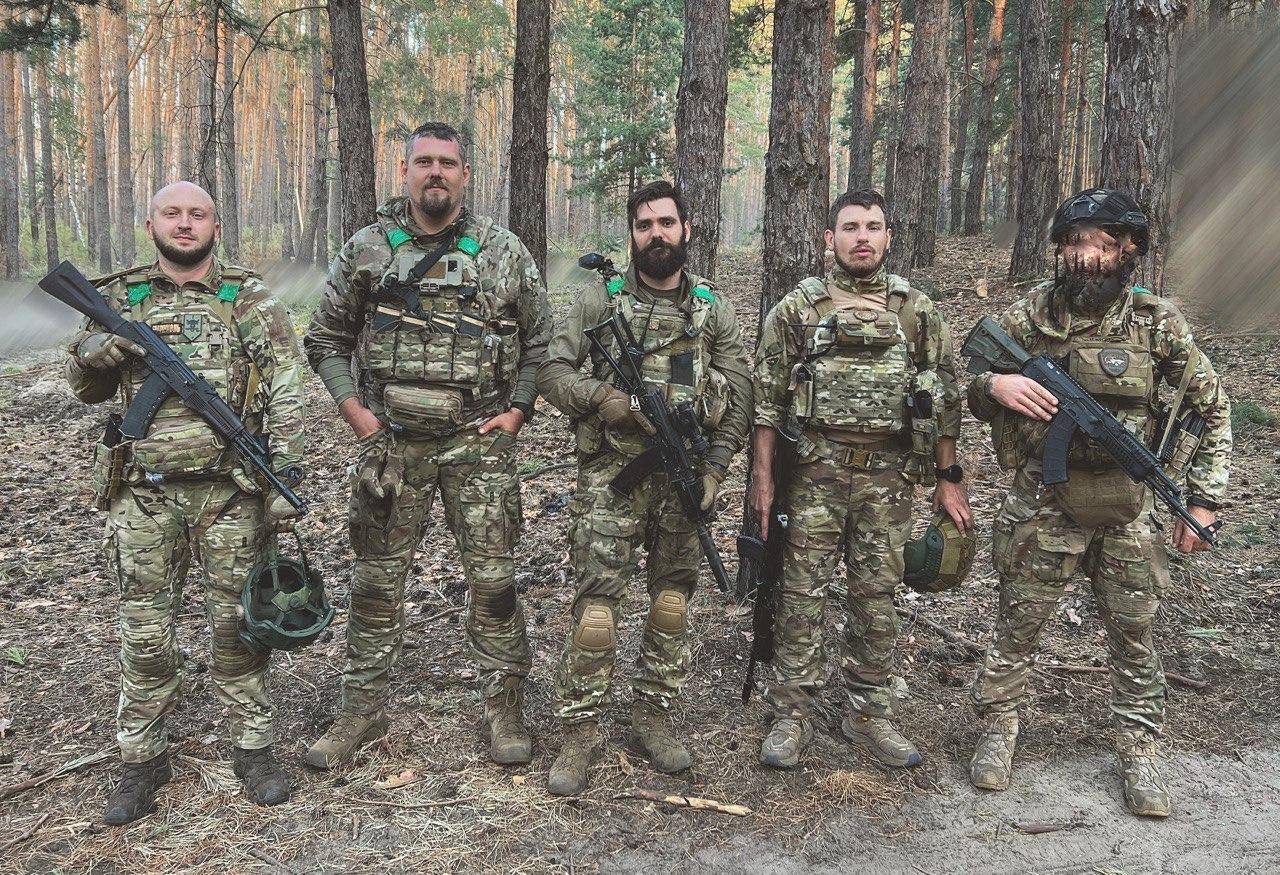
- A person who was forcibly mobilized can, as you say, become a good serviceman, or they can go AWOL. The defense minister cited the figures, more than 200,000. That is, to put it mildly, quite a lot...
- That is a very large number. As I understand it, that is about 20 percent of all our Defense Forces.
I know that in the units I mentioned and consider the best, the number of AWOL cases is low. But look, we have introduced a position such as a military ombudsman. I watch the interviews, and there are a lot of words and talk about having identified violations. Lubinets likewise recently identified them at the TCR&SS. But I do not see any results. For example, servicemen who had been connected with some assault units recently wrote to me, after they had managed to transfer out, saying it gets to the point where training grounds can be mined. In other words, in rear areas, the outskirts of training grounds where training is conducted are being mined so that people cannot go AWOL. When this is circulating on social media, someone should not be giving interviews, but going out to check it, and only then not merely speaking before the Verkhovna Rada (with all due respect to the members of parliament, I do not believe in their power, because I do not see it), but writing to the State Bureau of Investigation (SBI); if no proceedings are opened, filing a lawsuit, going to the Security Service of Ukraine (SSU), and so on. In other words, I believe the job of ombudsmen and of those who are supposed to protect people’s rights is not simply to record violations, but to do something about them. They have such powers. Personally, I do not observe that. Yes, I see that they exist, but unfortunately, I do not see any results.
They also need to pay attention to the egregious things that are happening. I will give another example from the assault operation Sternenko wrote about, and I posted a photo from Skala’s Twitter showing how they had lined up quad bikes moving in a column with a two-meter gap between them.
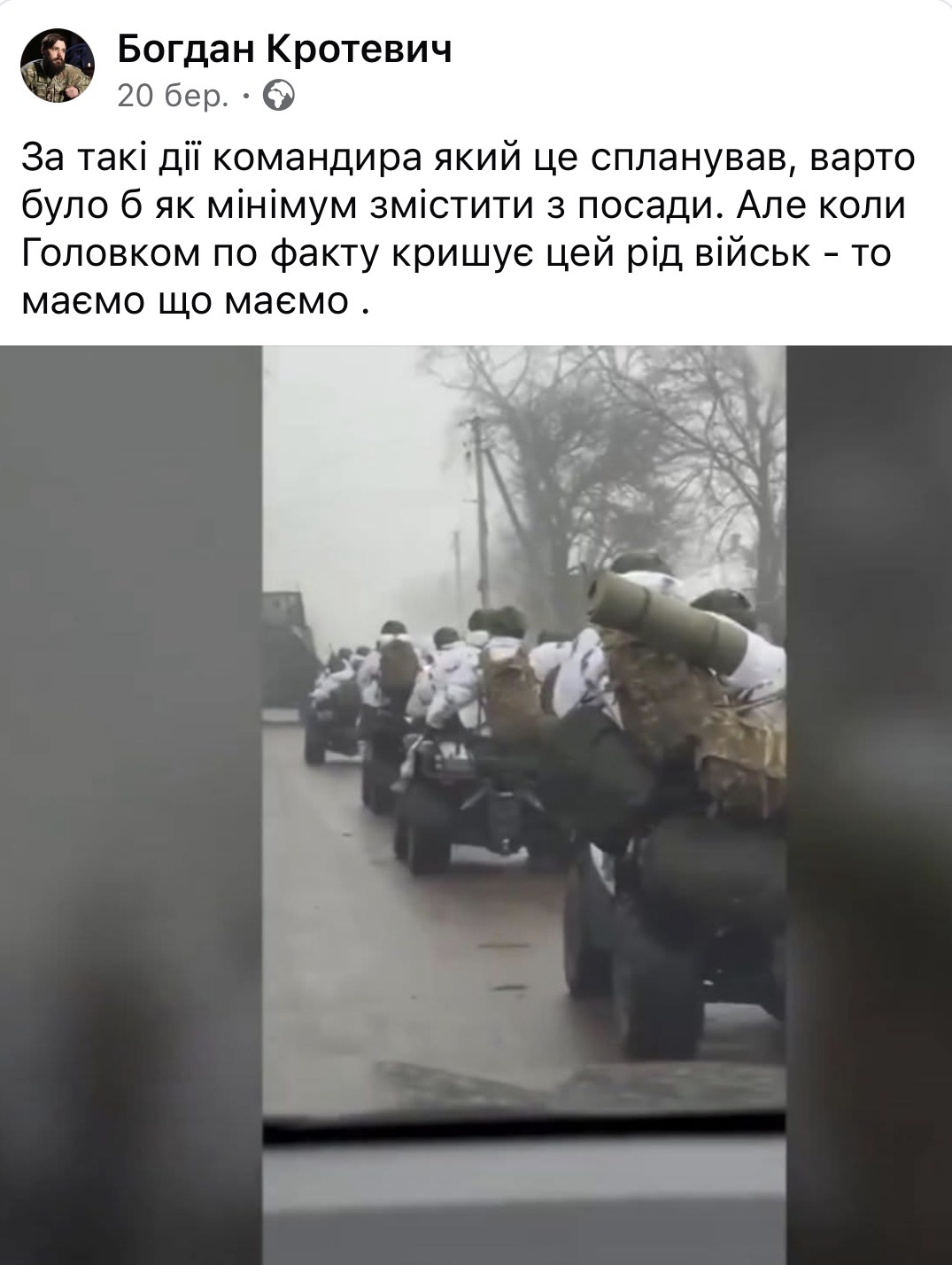
(Translation of the original Ukrainian post: For actions like these, the commander who planned it should at the very least have been removed from his post. But when the commander-in-chief is effectively covering for this branch of service, that's the way it is. - ed.notte)
I understand what I am talking about — I served for ten and a half years. Even as a march column, that is absolute incompetence. Because if someone slams on the brakes, everyone will crash into each other. Even traffic rules provide for proper spacing. So everyone saw this farce because the unit itself posted it publicly, without understanding that it was doing something not very smart. This needs to be investigated.
- To solve a number of the problems we are discussing right now, the President instructed Mykhailo Fedorov to implement a reform, specifically to sort out the issue of mobilization. The Ministry of Defense is still preparing the corresponding changes. Do you think we can hope for, if not a breakthrough, then at least a change for the better here?
- Unfortunately, things won't get better until the Commander-in-Chief and the system he built are replaced. Let me give you an example. The President and Palisa communicate that they will review the distribution of mobilized personnel. Prior to this, we all understood: the majority of them went to assault regiments. Then Palisa writes on Twitter that there will be the first reinforcement, fair distribution, and so on. A few days ago (we are recording this interview on April 6 – O.M.), a commander of one of the brigades wrote to me saying that he is being given up to 40 service members this month, while "Skelia" was given a thousand in a month. He says, "If I received that many, I wouldn't ask for people for a year." This is according to his words, I cannot confirm it 100 percent because I do not have the documents, but I believe him. He also told me that prior to this, they were not given any reinforcements at all. These 40 per month, as I understand it, are the "fair distribution reform." I think that the creation of a separate branch of the military, which has not been approved by the President but still exists, is, forgive me, a clown show. These assault regiments exist separately and report directly to the Commander-in-Chief. I think he arrived at this idea after the Kursk operation, because before it was conducted, he gathered all the paratroopers and, as far as I know, said: "You are either with me or you are not." Some brigade commanders opposed this, after which they were removed. The story here is to create units that will unquestioningly execute absolutely all tasks assigned to them. I do not know what to call it—cronyism, corruption, or working for personal gain. By covering some sector, making a media splash: we advanced somewhere, recaptured some village, an appearance is created that the Commander-in-Chief is doing something. But the fact that the enemy will recapture this village in two or three days, and that in storming it we might have lost up to 600-1000 people, no one reviews.
The only explosive moment could be the public disclosure of the casualties in these assault regiments; if that happens, it will just f@cking rock the country. I once wrote about a specific unit after seeing the documents: in July 2025 alone, it lost more personnel than our brigade did in two years of offensive operations, even though our area of responsibility was larger. And the following month, they were given even more personnel—around 800. Because I know how this all operates, I cannot be a staunch critic of draft evasion. Yes, of course, there are idiots, pro-Russian individuals who refuse to join the Armed Forces of Ukraine, and those who do not care about the state and its future; they infuriate me, and I will never make excuses for them. But I also see the person who wants to serve, yet does not understand the process and fears the unknown. They might be ready to die for their country, but consciously, not because of landmines in training camps. There are countless situations where a person never even saw an assault rifle during basic training and only held one for the first time upon arriving at their unit. The issue here is that the political leadership, unfortunately, is not making the decision to replace the Commander-in-Chief and take a serious approach to the system. When the situation reaches a breaking point, protests may begin to erupt. And when that happens, the question will arise: why was it allowed to get to this point, and why wasn't it fixed earlier? After all, we are talking about human lives! Do you know what infuriates me the most? The fact that corruption scandals can trigger massive media coverage, but when it comes to human lives, the picture is completely different.
- It seems that Syrskyi’s assault regiments are being mentioned more often in the information space now. For example, in one recent interview, Oleksandr Shyrshyn, former commander of the 47th Separate Mechanized Brigade "Magura," said that soldiers there are being sent into positions through deception and by force. Do you know about such cases?
- Soldiers who served there have told me about this. They do this because they are under the patronage of Oleksandr Stanislavovych Syrskyi, who does not know how to fight any other way. If you look at the entire history from Bakhmut onwards, this mixing of units into a "hodgepodge" is his standard approach to work. In Bakhmut, it was completely unclear who commanded whom and who was in what positions. Assault regiments are quite a convenient reserve that is thrown into any battle. Syrskyi provides them with everything: Bradleys, Leopards, Strykers—they genuinely have everything! They lose them in assaults and calmly receive new ones, and they also lose people, excuse me, but f@ck, a thousand a month! His part of the deal is provision; theirs is to do everything he says. And how they do it is of no concern to him. To me, this is a standard organized crime group system. I am restraining myself from reminding everyone where this person is originally from...
- Why? Everyone knows he’s from Russia.
- I do not want my words to sound like something personal. I have absolutely nothing personal against Oleksandr Stanislavovych. When he assumed the position, I said we needed to observe for a year and see. Then I wrote 17 pages of my vision so as not to turn this into a personal matter. But in this organized crime group story, I just feel the Russian approach. Where did I get this screenshot of the column that I mentioned in our conversation? From a video by "Skelia," which made a clip from a stream by Russian opposition blogger Michael Nacke, who says (also in Russian): "Usually, we do not see Ukrainian assaults, but here we observe how 'Skelia,' according to their words, successfully assaults, and this happens in the way we are used to seeing in Russian assaults: cope cages, a multitude of infantry in one sector, and so on." And they didn't even realize that this was not a compliment! They posted it on their page. It is just some kind of surrealism! When I start thinking about this, when people from these sectors write to me, I simply cannot comprehend how this happens?! Why do only Shyrshyn and a few other military personnel have the courage to speak about this?! I know countless wonderful, worthy officers, but when they are asked during an interview about their attitude toward Oleksandr Stanislavovych, they say that he is an absolutely good commander. This way, they protect their unit, which is normal. In general, you can write a good post on Facebook about Oleksandr Stanislavovych and receive weaponry and equipment in return. It is not an explicit agreement, but that is how it works. Cronyism has always existed, but right now the scale is simply insane. It will always exist under any Commander-in-Chief: whoever is liked more gets more. But today, this is not hidden; it is completely out in the open. However, these officers who behave this way will not win the war with their units alone. Because only a unified army can do that. But in the meantime, it is simply suffering! Therefore, we need to step away from the personal and move to the general. That is what infuriates me—they do not understand this. But Shyrshyn understands. Tomorrow, he could come out and, like some commanders, say that Oleksandr Stanislavovych is a genius strategist, get a position, for example, as a brigade commander, and then his brigade would be more or less spared. In this way, he would save a thousand or two of his subordinates, but the war would be lost, and there would be fewer people. We have more than 200,000 cases of AWOL and two million draft evaders. Under such circumstances, do you really not plan ahead?! Even if you do not think about the state, understand this: if Russia advances and captures you, you will simply be eliminated. At least think about that! Or perhaps they have a Plan B; they will go abroad and drink wine with Russians on Lake Como, talking about how they fought on the front lines. This is the problem. There is also a pragmatic issue here. There is the problem of corruption. From what I know, even if you end up in an assault unit, for a certain regular fee, you can remain in logistics somewhere in Dnipro and do nothing. It even reaches the point where businesses are seized. For instance, a person could be an entrepreneur, but they give up their business just so they don't have to storm a tree line. You see, it is this stupid human psychology: maybe I will get away with it, and they won't touch me. But sooner or later, they will touch you! I say: we will create some sort of unit that will simply kill all Ukrainian traitors and corrupt officials abroad.
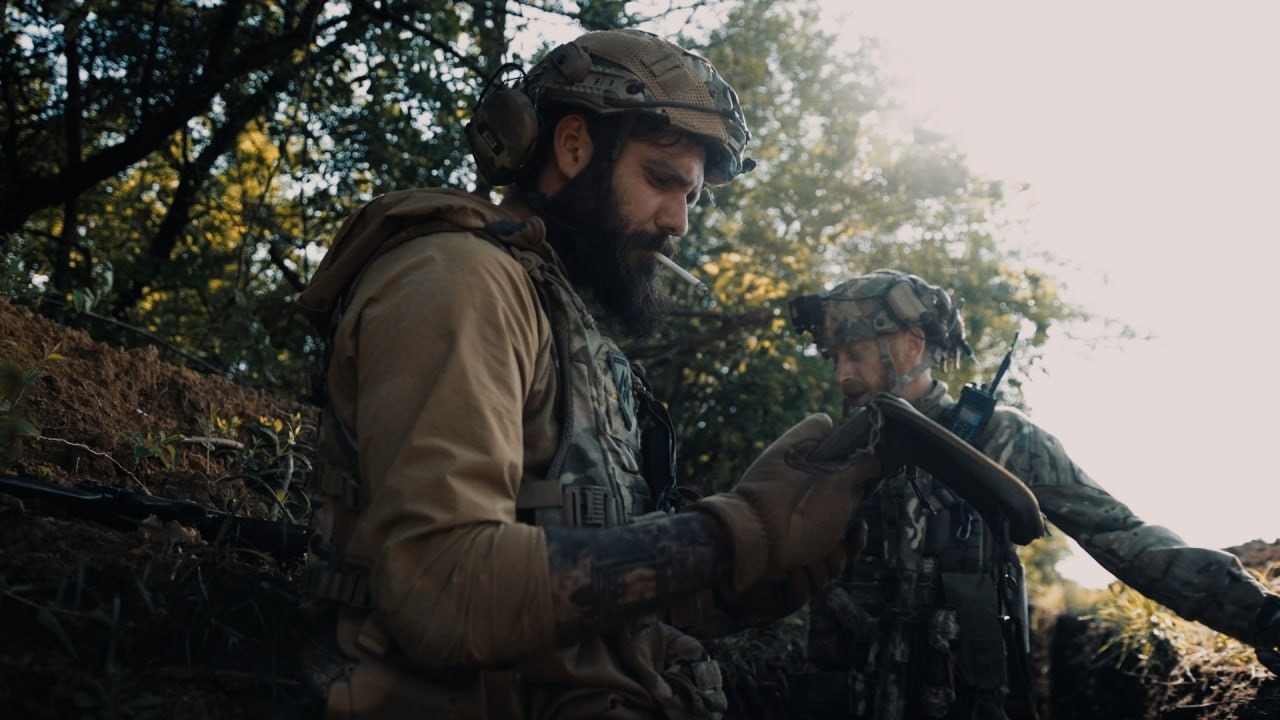
- Shyrshyn also said this about Syrskyi: "Once he has made a decision, no one will change it." Colonel of the Armed Forces of Ukraine and Hero of Ukraine Dmytro Kashchenko stated that the Commander-in-Chief is building an authoritarian system in the military. In your interviews, you periodically draw attention to the fact that Syrskyi relies on direct micromanagement of the troops. Where could all this lead?
- The army must have a certain system. But not an authoritarian one. I am strictly opposed to the position of Commander-in-Chief. I believe that Ukraine should have a Chief of the General Staff, and that is it. Furthermore, a Defense Forces Staff of Ukraine should be established, which still does not exist, so that the commanders of the National Guard, the Air Force, and so on, would be represented there. We have a systemic problem here. If the position of Commander-in-Chief is eliminated and the Chief of the General Staff is retained, the approach will be slightly different. Of course, the Chief of the General Staff could, in theory, effectively turn into a Commander-in-Chief, but it still represents a different approach to work. A commander's task is to give orders. And the task of his Chief of Staff and this entire structure is to figure out how to implement them. In my normal understanding, the President is the Commander-in-Chief who sets the tasks, and the Chief of the General Staff must think about how to accomplish them. That is all! Meaning, the level of a Commander-in-Chief is not about sending a company, for example, to cover Pokrovsk. Syrskyi simply does not understand this. And to understand this, one needs to sleep longer and do fewer push-ups.
- Listen, have you received any feedback regarding your criticism of Syrskyi? Perhaps something was passed on from him?
- When I was still serving, he met with bloggers and discussed the replacement of brigade commanders with them, which, by the way, is a military secret. I wrote a tweet: imagine if Gerasimov in Russia held such a meeting and discussed which corps commanders he was going to replace. This is complete disrespect for the military! I had a secure line, so he could have called and said something. But he didn't say anything to me personally.
- You resigned from the military partly because of his anti-systemic management. If Syrskyi is replaced in his position, is there a possibility that you will return?
- I never actually dreamed of becoming a military man. I always admire those who consciously choose a military career, because I believe they are the best people in the country, who link their life path with its defense, not only during wartime. Today, while it is ongoing, even more so. I know how to do this a little bit, and I enjoy it in terms of the management and execution of military operations. It is quite a creative job. If, under the circumstances you mentioned, I am invited to some position, I will consider the offer. In general, as long as our war is ongoing, I do not see myself being uninvolved in military affairs and the defense of Ukraine.
- You left the army just before "Azov" became a corps. What can you say about the corps system? Is it effective at the current stage of the war?
- It has proven its effectiveness 100 percent. If we did not have it, our front line would have collapsed. The thing is, previously there were OTGs and OSGFs. Now there are corps. But the system is built in such a way that manual micromanagement occurs. It is difficult to see these current positive changes because there are more of the negative aspects. War is like discipline. You cannot just achieve discipline and assume everything will be fine. It must be maintained. So right now we have both positive and negative sides. However, there are more negative factors.
Corps are one small step forward, but assault regiments, mobilization, and AWOL are 100 steps back. I was a proponent of an absolute divisional system, because I understood the step-by-step approach. Meaning, you cannot just get up and run a marathon if you have never run before. First, you need to run 500 meters, a kilometer, and so on—to develop. Corps are definitely not a negative, but a positive story. It is at least something.
- Do you miss the army?
- I miss the good people and the operations. By the way, I recently saw Yurii Butusov, and I told him: "This operation in Kupiansk conducted by 'Khartiia' is simply excellent. Well done!" I am confident that at certain levels, where commanders are more independent like this, there will be such military operations. That is what I miss. And I realize that we have opportunities to win on the front line that we are not realizing.
- And how do you generally assess the current situation at the front? The Russians are ramping up the pressure. A spring offensive has been discussed for quite some time. What is your take?
- I see that our capabilities are shrinking, while the Russians have plenty of them. I will not say that everything is great for them and they have no problems. I believe that Russia is currently planning offensive operations not only on the line of contact but also on the border, where our defense is weaker. It might also dare to launch an offensive from Belarus. It still has enough, excuse the comparison, of these "trump cards" that it has not yet used. If they are not doing this, it means they can still afford to wage the war the way they are currently continuing to do. I would take this into account.
In fact, over the past two months, there was a slowdown in the offensive, there was no deployment of armored vehicles and the like. There was an accumulation of both manpower, as well as equipment and weaponry. The question here is where they will deploy it. If it is on the Russia-Ukraine border, where there is no serious line of defense, it will be very bad for us. Especially since we are not accumulating reserves; there is no such strategic vision. This is how it works for us: they transfer a thousand troops to an assault unit, conduct some minor offensive action, liberate a village for two days, which the enemy then recaptures and we lose a certain number of personnel. But when this offensive actually happens, we will need to send reserves there, which, in fact, do not exist. We have, let's call them: mobile strike units of the Commander-in-Chief's personal reserve, called assault troops, which he sends to various sectors. But they are also being depleted and suffering because they signed up for absolutely any of his ideas. And the idea is this: wherever there is a media failure, there you go. There is Huliaipole—assault troops go there; there is Pokrovsk, they go here. But when there are five such sectors (and Russia can afford this), who will we be able to send then?! There will be no one left! And it will start all over again, just like a year ago: transfers from the Air Force, Air Defense, and so on. And then we will be asking why our air defense is not shooting down everything flying at civilian cities. This story has been somewhat forgotten, but it happened.
You see, when we talk about the current Commander-in-Chief, we simply have so many problems that in our conversation I jump from one to another because I do not know where to start—there are just countless of them! Right down to the management of the Armed Forces of Ukraine. Our Commander-in-Chief constantly sits at the command post of some corps or brigade and manages things, presumably, from his phone, while the Chief of the General Staff is involved in negotiations, which we constantly see in photographs. I have a question: who is managing the General Staff, the Defense Forces of Ukraine?! It is obvious: if the Chief of the General Staff is constantly in negotiations with international partners (and this is one of the top priority issues for Ukraine), he is likely preparing for them, rather than arriving with his head crammed with information from the entire front line.
If the Commander-in-Chief sleeps four hours a day, is constantly at a corps command post, and does 150 push-ups, he probably does not know what is happening near Sumy or anywhere else. Even a trip to the front takes a minimum of seven hours one way. This is basic logic. Of course, one must go there. It is necessary for people to see you, to talk with commanders, to arrive at the General Staff and compare what is being reported to you with what you heard directly from the battlefield. But decisions must be made right there, at the General Staff. It does not just exist for nothing! It is there to collect all the information, analyze it, and provide proposals (preferably several), from which you choose, justifying why one is better than another.
- By the way, what can you say about the negotiations? Do you have any hopes for them?
- No, I absolutely do not believe in them. Unfortunately, for us, this is a negative scenario, while it is more advantageous for Russia. I have no vision of what will happen if there is a ceasefire and political events begin. Half of the military, most likely, will also go into politics. They have every right to do so here. But Russia can exploit this. Hypothetically, even if a ceasefire is established and fair elections are held, imagine that somewhere in the middle of the process, the Russian Federation launches an offensive. What then? The Chairman of the Verkhovna Rada temporarily becomes the Supreme Commander-in-Chief. And what comes next?!
Moreover, like anyone else, I understand that negotiations must be mutually beneficial to both sides. Although they are not beneficial to us, we are obliged to participate in them because our partners, the US, demand it of us. We are dependent on the supply of Western weaponry, as well as financing, so we are forced to take these steps. But why does Russia need this? Yes, to talk, again, for Trump's sake, but why actually do it? I cannot find a single reason why it would halt the front line right now.
- Precisely to just talk at the negotiations rather than reach an agreement, Russia constantly repeats that Ukraine must withdraw its troops from the Donbas. Knowing full well that for us, this is an unacceptable proposition...
- You know, despite all the internal political nuances, on the international level, I fully support President Zelenskyy's position. I am glad he understands that withdrawing troops from any territories means surrendering them without a fight, and the war will still happen later anyway, but from a worse position for us. I recently read his statement that if we leave the Donbas, other regions will follow. And that is a fact.
- It seems obvious, doesn't it?
- It is obvious to you, to me, and to certain other people. But I know for a hundred percent that even for some Members of Parliament, it is not. And I wouldn't say they are a small minority. They want to live their best lives: stealing or not stealing, earning or not earning, traveling abroad without explaining the reasons for their trip. They have problems like: why do I have to say that I flew to Bali for a vacation?!
- But they are required to report it!
- Again, this is obvious to us, but they do not understand it. I liked how Mykhailo Tkach quoted a post by MP Koriavchenkov's wife, where she talks about them being stressed because they were treating their dog. I am sure she wrote it sincerely. And when Mykhailo approached him, he actually said: "Maybe you shouldn't show where I live, because we are in a state of war?!"...
- In a state of war, for some reason, in Spain.
- Exactly! Are you out of your f@cking mind?! Excuse me, I don't like to swear, but how is this even possible?!
- Finally, I want to ask you what you think about the global situation? How will it affect us, considering that we are also helping?
- I like that the President is traveling to meetings in Middle Eastern countries. For example, he was recently in Syria. This is a positive development for Ukraine, which is gradually becoming an actor in its own right after long being treated as an object. In such a political squeeze, this is super difficult. I can't even imagine how much. One must understand the complexity of managing a state in a state of war against the country with the second largest military potential in the world, while also facing pressure from the first—that is, the US. But the fact that they are asking us for help right now, and that we are helping, is very important.
I understand why our developers are offended that they cannot independently negotiate abroad and sell their products. They have more business interests, while the country has state interests. Sometimes they may run in parallel or intersect somewhere. But there is the state's position. We want to survive. I know that some Ukrainian manufacturers have already received requests from Middle Eastern countries regarding the transfer of air defense systems. They applied for export through the state procedure, but here they were told to pause. Because before that happens, a politician must go there and negotiate what we will get in return. It is clear that the company will receive funds, with which it can help our army a little more, as they are also doing this. But when we talk about diplomacy, it is a slightly different story, one that is exceedingly important. This is how we build relationships with the countries of the East, and with Europe.
- So, we have shown the world that we do have "cards" to play after all?
- Exactly! You said that the international situation affects us. I think we affect it no less. And that irritates everyone. Many people right now do not like the fact that our President travels to Eastern countries and possesses some agency. They are not used to this. For the major countries that have recently been actors, Ukraine is, in my opinion, like an upstart. Recall how the CEO of Rheinmetall said about our manufacturers, that they had done nothing innovative, and that they were basically housewives printing their drones on 3D printers. Of course, that is an emotional reaction. In other words, he does not like the fact that when it comes to UAVs, people are going not to them, but to Ukrainians. That irritates him, because they have a history stretching back many years — the company was founded before the First World War. And then here is a country they had never really known, one they always confused with Russia before 2014, a country that is now living in part on foreign aid, and it starts producing things, and people go to it. Of course, that breeds resentment that at some point borders on hatred.
The same goes for our diplomacy: many countries with agency will take offense and will not accept Zelenskyy and Ukraine because Ukraine is acquiring agency. So they will keep throwing obstacles in our way. We need to understand that we are fighting not only at the front and not only against Russia. I am not saying we are fighting against other countries, but the fact that they may create obstacles for us in one place or another is real.
- A truly historic time.
- Absolutely! On the bright side: if World War III has already begun (and there is a high probability that it has), Ukraine is the most prepared country in the world. Even Russia is second after us, because everything happening to us forces us to find solutions faster. Returning to the Armed Forces of Ukraine: right now, the main question, as far as I know, is who will replace Syrskyi? That question actually scares me a bit, because it is irrelevant. There is always the possibility that things could get harder—another person might come in normal, but the environment and the situation will change them for the worse. Problem-solving must always be systemic: whether with energy, corruption, or the army, and so on. Meaning, we should not be looking for a new person to replace this one just so they can fix something. We need to focus on finding a system that will ensure this mistake is not repeated. In some areas, we are indeed doing this. I hope that in the Armed Forces of Ukraine, we will reach a point where we build the right system that I was talking about—where the Commander-in-Chief (if such a position remains), or the Chief of the General Staff will not have complete personal freedom of action. Because this always leads to impunity. When there are no boundaries, you cross all the Rubicons and can no longer stop. So you head into some very, very shitty situations, which we have listed in significant numbers today.
Olha Moskaliuk, Censor.NET
Photos provided by Bohdan Krotevych and from his Facebook page


