



Oleksii Yukov: "When we go out to recover bodies, we understand that this mission could be our last"
He operates in conditions where most would not last an hour—among bodies, human remains, and constant explosions, during very brief intervals of silence. His work is to bring home those whom the war seeks to erase, not only physically, but also from memory.
In the combat zone, every mission is a risk. Drones in the sky, mines in the fields, and roads that may offer no return. Yet, he still goes out with his team, recovering the bodies and remains of the fallen, navigating highly complex routes, and risking his life daily. Oleksii Yukov, head of the Platsdarm search group, has been engaged in this work for over 27 years, since his teenage years, when he first participated in the search and recovery of remains from World War II. Over the years, his operations have taken on an entirely different scale. Today, he and his team collaborate not only with the military but also with search groups from the General Staff, the Security Service of Ukraine (SBU), the Ministry of Internal Affairs (MIA), and the State Emergency Service (SES).
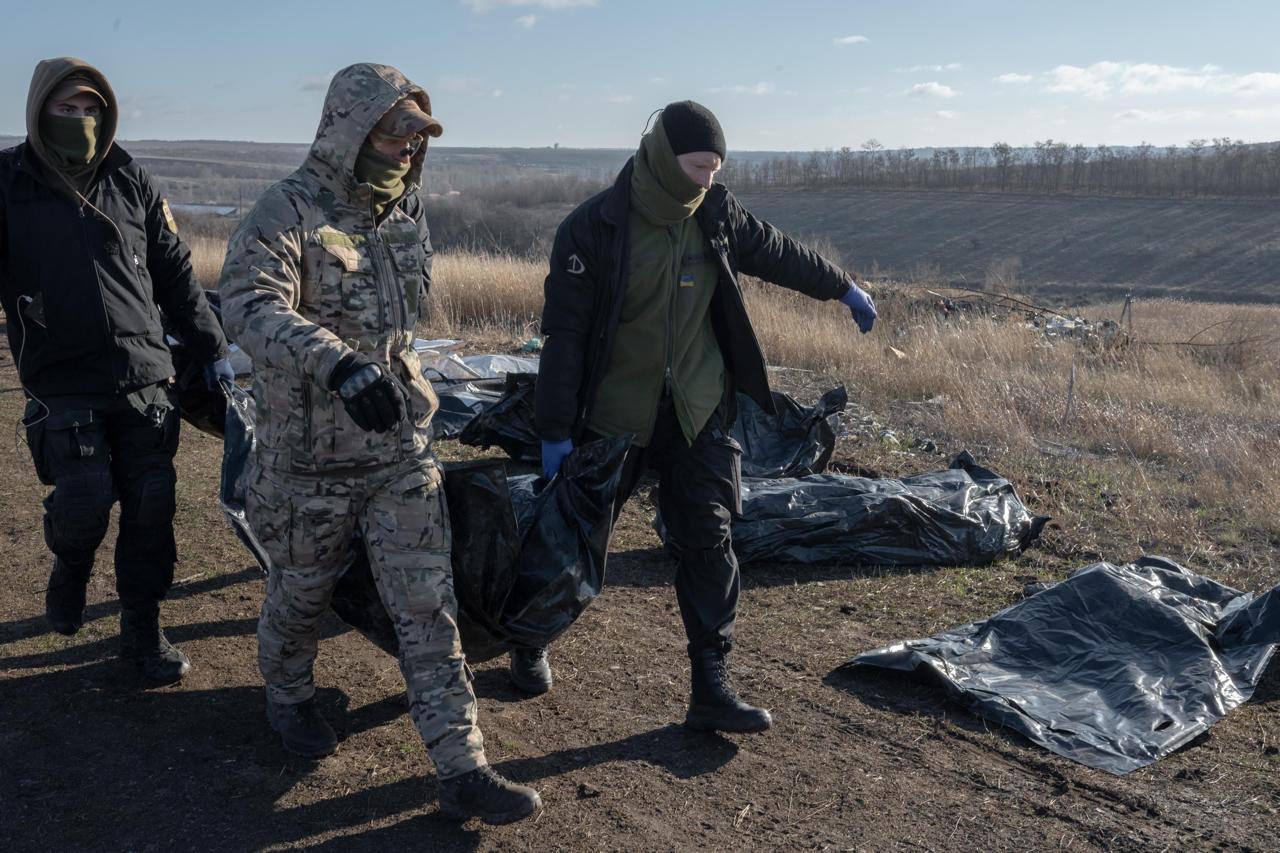
Our interview is not just a conversation about the Ukrainians' struggle for their future. It is an attempt to understand the boundary between life and death, the exhaustion that drains the soul, and the humanity that does not vanish even where bodies end. And it is about the ultimate question: who do we remain when no one is watching us?
- You are currently in Donbas, where things are extremely difficult, particularly due to the prevalence of drones hindering your work. How would you describe the situation in which you operate today?
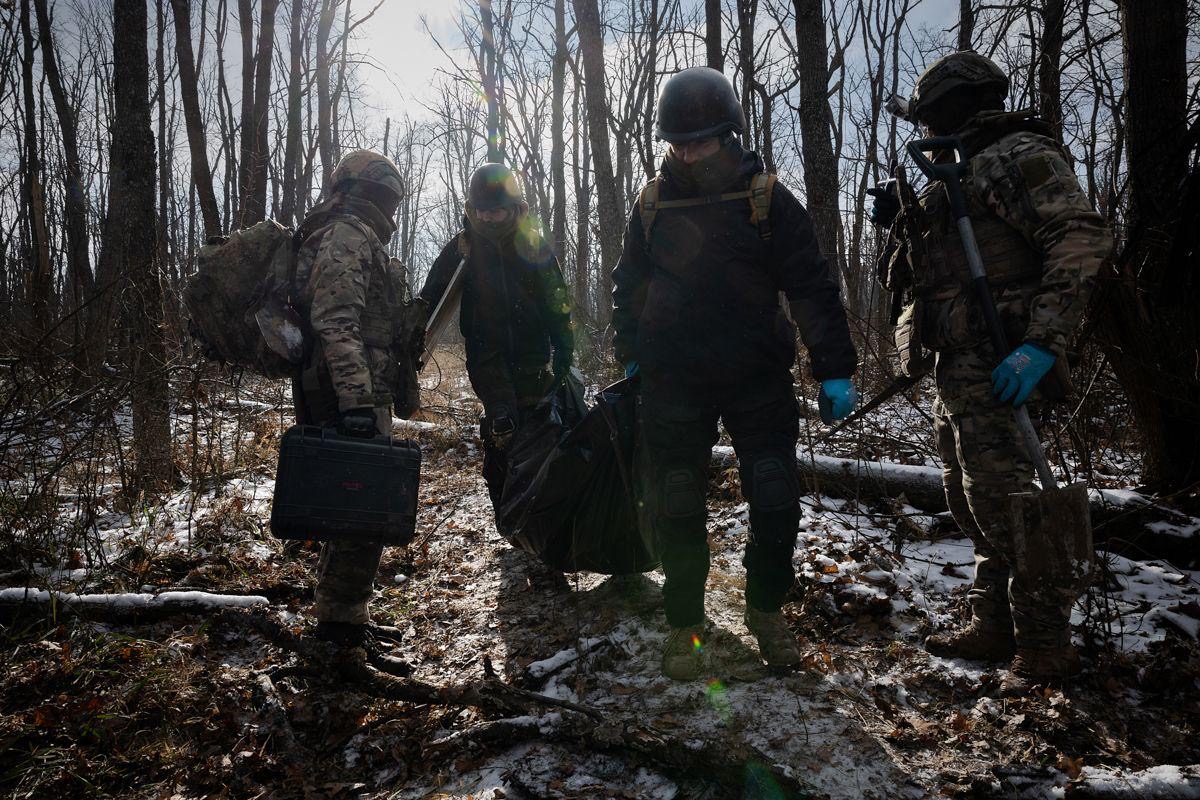
- Regarding the searches, it is total chaos. The situation changes every minute. Whereas before you could enter and maintain radio contact, now everything changes so rapidly that you don't even have time to respond. The sky is simply swarming with enemy drones. I have never seen such numbers in my life. To give you an idea, at least 15 or 20 flew over me in a single minute, ranging from Mavics to FPVs. You simply don't have time to move. The whole sky is buzzing! That is when the weather is more or less favorable for them. When it rains, of course, there are significantly fewer. But walking in the rain is not very convenient either—there is a lot of mud that you get stuck in. When you have to cross a field, it’s game over! Not only do you get bogged down, but because of the fallen grass and weeds, you can't see anything under your feet. And there could be terrifying minefields there. Plus, the Russians are constantly shelling us. If they spot movement in a tree line, they engage remotely. That is, they don't hammer with artillery but with mines. And that’s it, getting out is nearly impossible. Because, for instance, these POM-2 and POM-3 mines drop and go on "combat duty." And you are trapped. Then another two or three FPVs fly out. It is very difficult to get out under such circumstances. Especially not just getting out yourself, but also pulling out those guys you promised to recover. You are wearing body armor, carrying a backpack, a shovel, knives, grappling hooks, an anti-drone gun, and so on. In other words, you are carrying over 30 kilograms of your own gear. By the time you reach the location, you have no strength left. And you know you still have to take the body and drag it back. What if there is more than one? Then you try to move them one by one from point to point so as not to leave them behind; you don't just take one and leave, because next time, you likely won't be able to get back in there.
- How do you operate under such conditions?
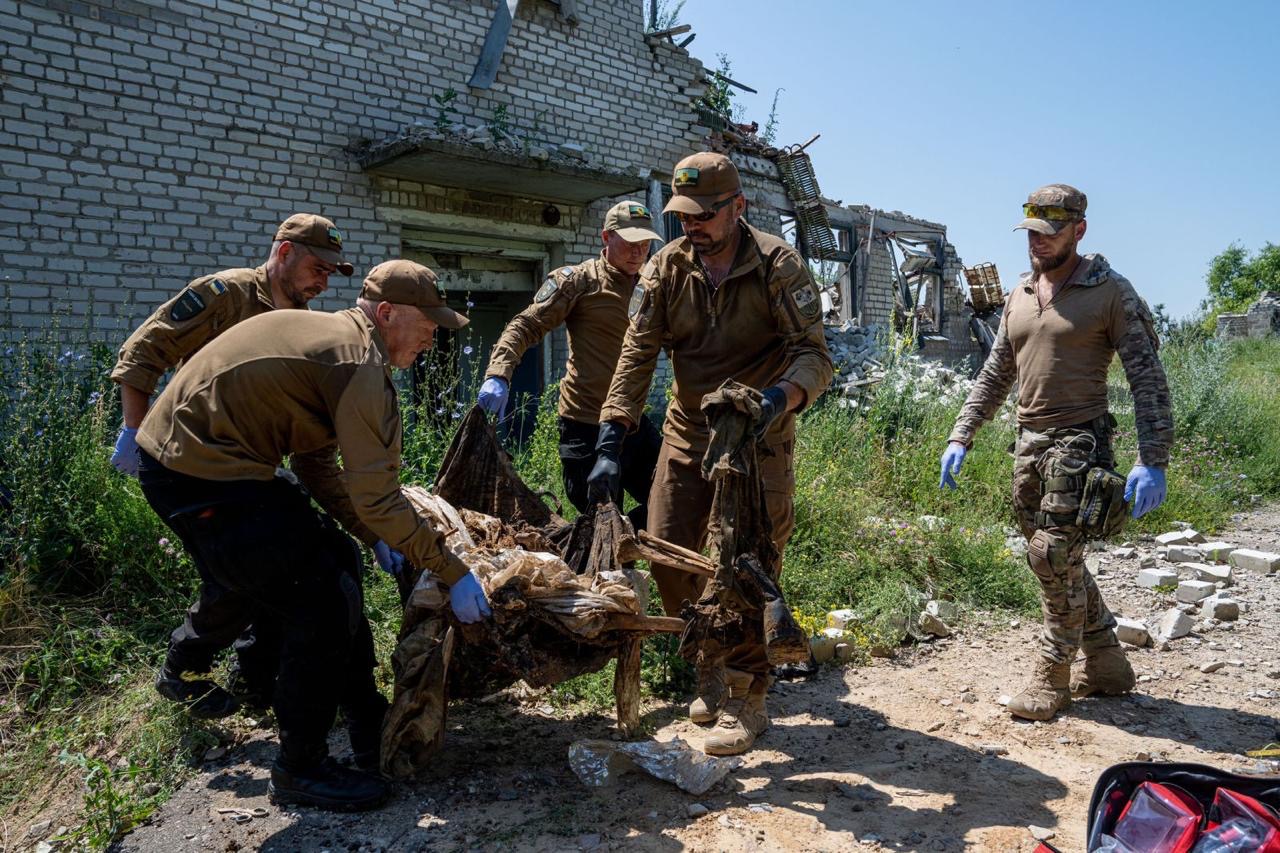
- Where possible, we use unmanned ground vehicles (UGVs). It is a more reliable option. But you still have to carry the deceased to a certain point yourself. There is a chance this UGV will be destroyed as well, either on its way to you or on the way back with the bodies. This has happened repeatedly. They destroy the systems regardless of what they are carrying—food, water, a wounded person, or a corpse. This is war. And there are no rules here. If any vehicle or person is moving, the enemy strikes all targets. For them, unfortunately, everyone is currently a relevant target. Therefore, they direct full fire at everything. Once they spot it, they won't stop until it is destroyed.
- How long ago did you start using UGVs?
- Since around the end of 2023. Initially, we had one without Starlink. It worked like this: it approached, we loaded it, and it left. A year later, we started using those equipped with Starlink, meaning they can travel long distances and recover a body loaded by either the military or us, depending on the security situation and whether it is possible to reach the location. If not, the guys on the ground help with this. For example, personnel from the K-2 and the 93rd Brigade. They also have extensive experience. In fact, they generally do the impossible. We try to cooperate with them and recover the fallen. We understand: if we don’t do this, the chances of their return decrease over time.
- Can we talk, without specifics, about whom you recovered on the eve of our conversation?
- Four Russian soldiers who remained here after the retreat, and two of ours.
- What does it mean to you when you recover the bodies of enemies?
- It is about humanity, about the kind of people we are. Every person must ask themselves this question. We must define what kind of people we are and what kind they are. I believe each of us must look within to see who we are and what actions we take. Yes, the enemy came to kill us simply for being Ukrainians. It is horrific! Truly, it is incomprehensible when you are being killed based on your national identity. It is nonsense! To give you an idea, even the military helps recover the bodies of Russian soldiers, those who were just shooting at them and storming their positions. What does that say? It speaks to every individual, to who Ukrainians are. They are ready to defend their land to their last drop of blood. But remaining human under such conditions, when you are being destroyed from all sides, is very difficult.
Let’s face the truth: Russian soldiers are people too. They are simply those who have lost their minds and come to kill us. We do not need their deaths on our land. We simply don’t! Nor do we need their mass graves here. But if we do not purge the war from our territory, it will never leave. This means the bodies of Russian soldiers will keep attracting more of them here. The next ones will claim that their soldiers lie here, having "shed blood for the motherland." I ask again: why do we need these mass graves? For what? To start a war all over again? We do not need the bodies of their soldiers. We did not invite them here! We are at home. But what about them? Here is a question for the Russians: Are you at home? Why did you all come to us? Your life is priceless! Just like any human life. Why waste your life for the political interests of some crazy old man?! It is simply incomprehensible! Using people, their own citizens, for the sake of personal ambition and enrichment is utter nonsense and a crime against the entire people. Not only against the people of Ukraine, against whom they started this unjust, cursed war, but also against their own people, whom he sends here by the thousands for self-destruction and to kill others based on their national identity. What is this all about?
- Perhaps about mental disorders, of which a colossal number of people are held hostage?
- We must understand what is happening. There are also those there who fight the system. We should not paint everyone with the same brush. If we say there are no people there, then who is fighting in the Russian Volunteer Corps (RVC)? And who is sitting in prisons for being against the war with Ukraine? There are always questions. The war will end sooner or later. And who will we talk to on that side? Because there will be conversations. Negotiations are ongoing now. Everyone sees that we have to talk to those who are killing us. They smile in all our faces. But we must understand that there are people in "dungeons" there, dying because they stood up against the system. There is a very large difference between Russian citizens and the "Russkies." We don't want to talk about this because those who came to us want to kill us. And it doesn't matter what they call themselves. They came to kill us based on national identity, to take away our children's future. That is why our boys and girls, our nation, stand in defense of their future. It is all we have left. We have our land, which holds the culture and spirit of the nation—us. The human resource is the foundation of this nation. Without it, everything is just territory. With us, it is already a country. It is very important to understand how you perceive yourself: as a population or as a nation.
Often, people shout: "A nation is something Nazi." But why have you decided that a person who loves their land, the people living on it, their culture, language, and history, is just a part of the people? No. They are an individual. A person ready to fight for what is beneath their feet, for what is beside them—the territory, the history, the children, the future, friends, acquaintances, family. All of this is the nation. All of this is us. And, you know, right now it is extremely difficult to see how we are losing our best warriors.

- When you spoke about the difference between territory and land, it made me think about how much of our land is soaked in blood...
- I actually have the impression that we are knee-deep in the blood of our own people and our enemies.
I have the impression that we are standing knee-deep in the blood of our own people and our enemies. And we no longer know what to do about it. But we continue to fight for our land, so that our children have a future here, so that there is life in our cities and villages. We are fighting not to be slaves, like those who came here with weapons. They want us to become like them. But we cannot; we are not built that way. It is simply not in our genetic makeup.
- Has it ever happened that Russians found you and thanked you for recovering the bodies of their loved ones?
- Often, their parents write to us, even in the comments, thanking us and apologizing to us, meaning to Ukraine, for what their children have done, for coming here. Some apologize, while others might write simply so that we return the body. What matters is that we have the chance to convey to at least one person on that side that there is no need to go to war and kill people just because they live in a different country, speak a different language, and see the world differently. This means saving the lives of our own people, not just theirs. Because if one person doesn't come here with a weapon, perhaps someone else won't follow. We must understand: if there is a chance to prevent them from coming, we must take it. God grant they never come here with weapons again. So this is a struggle for humanity, an attempt to awaken it in those who haven't yet come here to kill for nothing. It’s nonsense! Why kill your own kind?!
- That is a complex "construct." But many of them come here for the money. Some even talk about it when they are taken prisoner...
- They get caught in a cycle: if a soldier has been in captivity once, they won't let him go home until he is "worn down" to nothing.
- "Keep cycling them back in?"
Of course! Until he dies. That’s how they think there: they have no use for traitors.
For them, if you are taken prisoner, you are not a hero, but a traitor, even if you survive. During an occupation, people who retreat and are captured on their own land are those who fought. But those who invade, kill, and are then captured that is different. Their logic is: you came here to kill, not to surrender. How could you do such a thing?! It means you're a traitor. Do you see how they think? If you're not with us, you're against us. If you turned against us, you're an enemy. It’s total nonsense! So, of course, they come for the money and then find themselves unable to escape this bondage. They stay there until they die.
- And then you find them.
- Yes. But this situation is beneficial to their system. That is, for them to completely destroy their psyche by killing, raping, and looting, and then return to their country where they are no longer needed. That is why they are simply being "ground down." It has always been this way: they tried to eliminate those who killed the most, the most combat-ready, so that by the end of the war, they would not be left to contend with. They want to "kill two birds with one stone." That is how I see it. Perhaps I am mistaken in some regard, but based on the historical facts of World War II, I am simply conducting my own analysis.
I see the same Soviet-style system in Russia today. It has only become more veiled, behind political agendas, agreements, and so on. However, in reality, the system remains the same.
- You actually began searching for the remains of those killed back in World War II. It has been over 27 years now, correct?
- Yes, I have been doing this officially since I was 13. Before that, for several years, we would just go out, dig in the woods, and find remains. Back then, I would bury them lightly and put up small crosses. But what does a cross do?! Someone could take it or knock it down, and the person would vanish once again—missing. Again, they have no grave, no place to bring flowers. This is a crime.
And, unfortunately, the Soviet authorities effectively committed a crime against the very soldiers who fought for them. It was so massive and insidious that people were simply recorded as missing in action (MIA) to avoid paying compensation to their families and relatives.
- I suspect it was also to avoid the hassle of searching and proper burials.
- Can you imagine how many people would have had to be buried individually? Instead, many were simply dumped into a pit like dogs and labeled a "mass grave." But how does that name even fit?! There is a multitude of different people there: each with their own life, family, thoughts, and dreams. Yet they were thrown into a heap like trash. This is a crime against people's spirituality, against their individuality! There should be no such concept as a "mass grave." It is pure folly! Every person should have a place where someone can come to visit them—not just a pit filled with bodies. It is anti-spiritual and utterly inhumane.
Therefore, of course, the Second World War had a profound impact on me. And when I saw those piles of bones, I was in such shock that I didn't know what to do with myself, how to fight it. Sometimes I thought: how did I even end up on this planet of senseless people who don't value life, which is so f@сking priceless! Every person has received such a great gift—a soul. You must cherish it. And this is done only through your actions. Not with food, not with money, not with some kind of thrill. No! It is nourished by what you do. Depending on those actions, that is how it feels. It is constantly restless because each of us does something that is not good, knowing it. I, too, am ashamed of certain moments in my life. But I am ready to be held accountable for them. Because the world of the dead is a separate reality. To enter it, you must accomplish something here. We, the living, can do something for ourselves, but the dead no longer can. Only their actions and the actions of the living toward them remain. We have forgotten that these two worlds are like two sides of the same coin. Light and shadow. We believe that the most important thing is the world of the living. When we say, "Look at the state of the cemeteries in the cities," I personally am shocked by them. And this shows the kind of people we are. Are you ready to take responsibility for dead people you don't even know? I have met very few such people. Anyone can shout. But taking responsibility for a body and a soul, that is something else. It’s easier to say, "God will help; He will take the soul." But as they say, trust in God, but keep your powder dry. Now, how would you want your body to be treated? To be buried humanely or thrown into a tree line? We all bury our loved ones; we want children and grandchildren to come to the grave, to remember, to tell stories about their lineage.
At the same time, we ignore those who have no one to stand up for them, the fallen. Who will do it when they lie in a field? Who will bring them back? I see no point in making excuses or seeking explanations. We all know it is unjust when someone dies, and they are not recovered. When we go out to recover bodies, we understand that we are risking our own lives and that this mission could be our last. The soldiers tell me: "Lokha, if you f@cking die out there, who will look for us, bro?! We’re of no use to anyone except our loved ones, our comrades, and you!" I say: "Guys, I don't know! I just can't leave him behind!" They say, "We'll go with you." But I realize: if four of us go now, someone might die. And what will I say to the parents of those who went with me to recover a dead body, only to remain there themselves?!
But if we speak of humanity, what kind of people the hell are we if we do not recover those who ate, drank, fought, and covered our backs in the same trenches? What about those boys who shielded us from the enemy with their own lives? F@ck, what kind of people are we then if we do not fight for their lives?! I have seen parents of the missing in action standing with posters, while people simply walked past them, turning their heads away. And as a person caught between two worlds, the living and the dead, I cannot bear to watch it; it is so painful. Do you really not feel their pain?! You see that they cannot eat or sleep normally, that they are out there on that battlefield alongside their loved ones. And until he is returned, they will remain there with their child, husband, father, or partner. People, do you not understand this?! Just put yourselves in their shoes. It could be any one of us. I don't know where the "humanity switch" is in these people. Where?! In a recent interview, I already spoke about this using profanity because my heart simply cannot stand watching this situation. And someone in the comments writes: "Look at his lack of culture, he speaks in nothing but curses." I want to ask: where are you, my dear, while they are in the trenches?! In culture? Where are you when they are perishing, when they are dying and crying out, "Mom!"? There he lies, already without legs, knowing he is done for because his guts are spilling out, and he calls for his mother. F@ck, where are you at that moment?! Where are you all?! It’s easy to leave such nice, polished comments, talking about how we swear or whatever, but what are you doing?! Personally, my psyche just cannot handle seeing how indifferent you all are to what is happening here at the front. Do you really not understand: if we lose our independence, we will never be able to return to Ukraine. Because it will no longer exist! This is our final struggle. And if we do not win it now, then, like a game of cards, we will lose not only our own future but the future of our children. And this is no game; it is the life of an entire nation. The people who are "endemic" to this land. We were born here. This is our land—our steppes, forests, rivers, sea, and sky. We are engaged in a heavy fight here, in the Donetsk region, in the "heart" of the steppe. That is, we, the people of the steppe, are the first to do this. And if we do not stop them here, we will not be able to stop them where they hold the priority.
- It’s no coincidence that the Russians demand the surrender of Donbas during negotiations, is it?
- When I hear such things in Ukraine, I say: "Then give up your own apartments and houses!" Why do you want to trade away other people's homes while risking nothing of your own?! That is the first point.
Secondly, is there any understanding of what happens when we all stand together, naked and barefoot, by a great pit already filled with the bodies of women, children, men, and the elderly, looking at one another while the sound of rifle bolts clicking echoes behind us?! What will you say then? Can anyone truly believe they will stop there? It is like dealing with a maniac: he has seized a child, has begun to tear at her and rape her, and she asks: "Maybe you could just not rape me?" Will that stop him?! No! Is anyone prepared to hand their child over to a maniac? I am not! I am not prepared to surrender any territory of our Ukraine. It doesn't matter how small a piece. You all fight for language, for culture—so why are you not prepared to fight for the lives and the future of new generations on Ukrainian soil?! For the land for which so much blood has already been spilled and so many lives sacrificed. Why are we fighting then? Let’s just give it all up. Let’s just die in these shared pits at gunpoint. And that’s it—let’s end this. Or, let us unite and become a nation, and show one another what kind of people we are.
Of course, it is easier not to take responsibility and say: "The government should do this. It’s all their fault anyway." It is easier to shift the blame onto someone else and then sit in your kitchen, badmouthing everyone. However, the question remains for every individual: what have you done to push this war further away from Ukraine? What have you done to help the people fleeing death, fire, and murder—those who came to you for help, only to be pushed away? What did you do for them? And for the guys who returned home without limbs, with shattered psyches? And for Ukraine, for everything that surrounds you? Let everyone ask themselves these questions. But many do not want to, because the answer is terrifying.
People have grown accustomed to living irresponsibly: acting in a certain way and shifting the problem onto someone else. "God will forgive, the body no longer matters, God will take the soul." But why have you decided that the body is not important? Why is it that in all religions, it is buried, and funeral rites or other ceremonies are performed? It is not simply discarded. We are not like that. Yet here we are, saying: "What does the body matter? Let’s just light a candle for the soul, and that’s it." How is that possible?! Explain this to the parents, wives, and children: "Why look for them? The dogs and worms have already eaten them. Why bother with these remains?" Yet you do not leave your own loved one behind. If they lie dead in bed in an apartment, or on the road after being hit by a car, you recover them, bury them, and weep. Is that a different kind of grief, or what?
There are no strangers. You see that we collect even the bodies of our enemies. This is the kind of people we are! And this is our will, our freedom, our right to choose. Our country is so free that we have the right to choose our actions. But they have none of that. There, there are no rights, no choice, nothing!
- That is why we do not want to turn into people like that.
- God forbid! Because I look at all this, and it terrifies me. We cannot even imagine how terrifying the truth can be. Because we all fear it. Everyone shouts: "Everyone has their own truth!" I say: "Friends, your truth is whatever is convenient for you. But truth is singular. Justice is truth. Only when everything is just will we talk. When every one of our fallen warriors returns home, and when the enemy who died here also returns to their own land, and they weep there with the same tears, only then will we say what kind of people we are."
- Oleksii, please tell us about your most difficult evacuation.
- The most difficult… I cannot even say which one it was. Because you experience everything personally. Every evacuation is unique and horrific. All these landscapes of war are a nightmare. But the most dangerous moment was when we were recovering bodies and were under constant fire. As we were leaving, we were surrounded by the Russians. At that moment, I thought: that’s it, we’re done for!
- Are you referring to the case where you had to pose as Russians?
- Yes. It was pure horror! But we managed to get out.
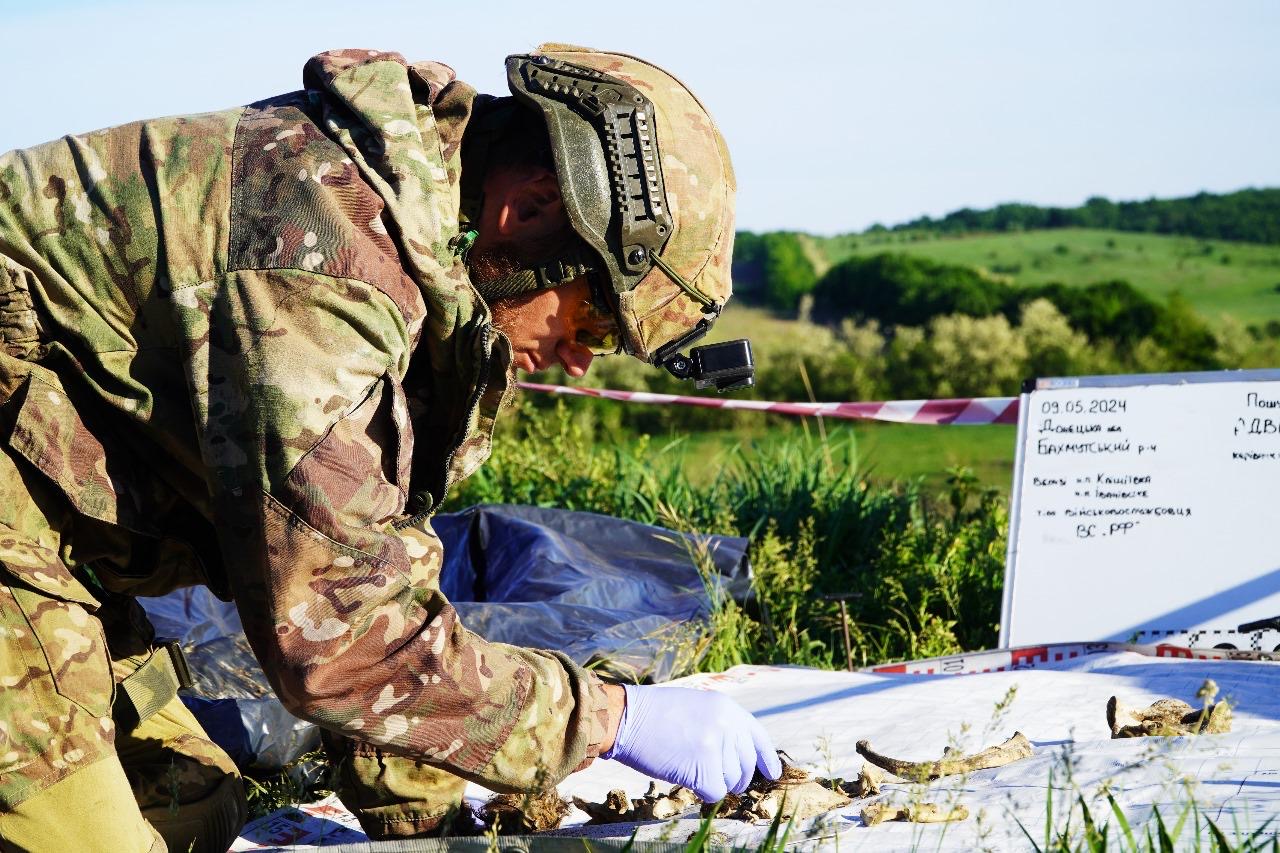
As for the searches, the hardest were probably Klishchiivka and Orikhovo-Vasylivka. The shelling there was so intense, and there were so many bodies that you would collect 30–40 in a single day. Can you imagine what it’s like to haul that many in one mission?! You’re standing there, practically dying of exhaustion. Then you collapse and just lie there. But you still have to load them, get behind the wheel, and drive out under fire. You’re just stunned! You realize that tomorrow you’ll likely have to go back because the situation is changing. And if you don’t take them now, you might never be able to. You sit down, and you just want to, f@ck, cry. You look at them, and they are all so different. And they aren't even from the same period: some are mummified or already skeletal, others are "fresh." How can you not take them all?! How can you choose who goes today and who goes tomorrow? I can’t! They tell me, "There’s one of ours lying further down." I reply: "I can’t move forward until I take these. I have to take them too." I take everyone: civilians, soldiers, Russians, ours. All their fragments and parts. Even helmets and body armor with names on them, to return to the parents. Because for a family, every little fragment is what they live for, what gives them the ability to keep breathing. I simply cannot leave them there. So we go. Two of us approach, and there are seven of them. And we have to carry them three and a half kilometers. I’m like, "Bloody hell, what do we do?!" Even though some are mummified, each weighs between 25 and 60 kilograms. And you only have three body bags. So you search through the bushes for at least some backpacks. You find them. You fold it in half and stuff it into the backpack. You squat down, put it on, brace yourself against a tree, and stand up like that, because otherwise, you can’t get up due to the weight. And you're wearing armor on top of that. Plus, there are three more we need to take. So you're like: okay, we put these in a groundsheet, tie them up, put on straps, wrap ropes around our hands so they don’t slip. That’s two of them, another 65 kilograms minimum. You take another one by the clothes, like a sack, heave him over your shoulder, and his head keeps hitting your helmet. You walk like that; ahead of me, Artur is also carrying one in a backpack, the remains of another wrapped in a groundsheet under his arm, holding someone’s leg in one hand, and dragging a bag with the other. The two of us drag ourselves across open ground. Then we enter a tree line cluttered with fallen trees and crawl over them. By now, the incoming rounds are starting because it’s getting light, everything is visible, and everything around starts buzzing and flying. You’re dying. You scramble out, collapse near the tree line, and your breath is so short, everything inside is burning, and your head is spinning. You think: I’m going to die right now! You lie there like a turtle on this backpack, legs dangling, head resting on it, and you think: I have to move, because they’re about to start hammering even harder. First, you roll onto your side, get on all fours, crawl to a tree, grab it with both hands, and pull yourself up, because you can't stand on your own. Your legs are cramping. But I get up and yell: "Artur, where are you?" I hear back: "Coming!" I say, "You drag this bag, and I'll take the other." I clip it to my body armor with a carabiner, start moving, and support it with my other hand because the bag is already starting to wear through. I stop because bone fragments and clothes start falling out. I heave it back, tie it up with some rope or a grappling hook, and we move on. By the time you reach the pickup location, you're "dead" yourself. But you tell them: "No, boys, I’m going to carry you all the way!" You pull with your last bit of strength. I was so tired, it’s impossible to describe.
- This is painful even to listen to. And psychologically, how do you handle it?
- Fine, because you understand what you are doing and why—that you are bringing them home where they are expected. But physically, in such situations, you’re practically dying. You walk and talk to them: "Guys, I’ll bring you back now, your mother will meet you, you’ll be buried... I’m so sorry you died." You have these conversations so you don't lose your mind. So you don't drown in your own thoughts. You’re already walking, sweat is pouring down your face, your helmet is sliding around, and your head is "boiling." And it’s hard to adjust anything because your hands are full. So you stop, lie on a bag, and just stay there. This goes on for several hours. It’s very hard, very hard...

- When I watched Marian Kushnir’s film "Return My Name to Me" featuring you, I even wrote down a quote that really struck me: "It’s an unfulfilled dream, to return every soldier from this war. I won’t have enough of a lifetime"...
- Yes, I won’t have enough of a lifetime! I’m so afraid of this! Sometimes I wake up at night, sit on the bed, and realize that I won’t have enough time. I woke up in a bed, while he lies out there in a field, in a trench, or under rubble. Damn it! But you sleep because you have to rest. Although how can you rest under such circumstances?! And you have this dialogue with yourself. On one hand, you realize: if you don’t rest, you’ll die. On the other, you understand that they don’t have time. And you won’t have enough of it either. I can’t even talk to my own child. We came to Kyiv, and the parents of the boys are all here; they all want to meet me. My wife tells me, "Losha, at least spend some time with the child." I say: "I can’t leave them. They are in such despair! It’s as if all doors are open, yet there is no hope. I am like a lifeline for them. I can’t refuse them!" So I go. In one day, meetings with the parents of five or six soldiers. They won’t let me go. They hold on to me so tightly... And I can’t be everywhere at once. But I try as much as I can. People tell me, "You should be awarded." You know, the dead have never mattered to anyone. The living—even less so. For me, this isn’t about awards. I don’t even think about that. If before I wanted some medal to show my child and say: "This is what we carried out of there, this is how many souls I saved." But not now! They tell me, "We’ll nominate you for Hero of Ukraine."
What for?! That’s for the people to decide based on our actions. My main thing is that they just don't stop me from retrieving them. And if they helped, it would be great! Just give me more strength and resources. I’ll work. We’ll bring more of them back.
If only the other side would let me go and collect the guys there, I would go. I wouldn’t sleep for days or nights; I’d collect them. But they don’t let us. I still don’t understand why they don't allow us to retrieve the bodies of all the fallen...
- Do you mean in the occupied territories?
- Even in the "gray zone." Why on earth are you shelling us, killing us?! I go out, and they cover us with mortar fire, launch drones, and shoot. Can’t you f@cking see that we are gathering corpses?! What kind of people are you?! What happened to you that you would do such a thing?
A woman once said to me, "Oleksii, you think about the dead so much that you don't realize people simply don't give it a thought." But how can you not think about it?! They must return home. The war will never end. Don’t you understand that the Second World War dragged this one along with it? To shout "No one is forgotten!" and carry portraits of your loved ones on sticks, what is that?! It’s a disgrace! Carry them in your f@cking hands! Honor their memory. My question is: what do you even know about this grandfather? What year was he born? What kind of life did he lead? What did he get his medals for? Nothing! It’s their victory, not yours. They gave their lives for it. Where is the respect from your side?! We didn't search for the bones of those soldiers who gave their lives. We pretended they were all buried in mass graves, and if some "searchers," f@ck, some "grave-diggers" are digging somewhere, then it's as if that's just the way it's supposed to be. You know, at schools, they always asked me: "Why do you show these bones to children on video?" I reply: "How else do you want to show war to children? Do you want to tell them that war is heroism? So they think being heroes and killing people is cool?! Do you see how many people on both sides that side has sacrificed with this 'coolness'?!"
So World War II brought this war "on its shoulders" because of our collective folly, because of the refusal to acknowledge memory and justice. And here another question arises: why fight against World War II monuments?! I don’t understand. They fight the dead, they fight Bandera, who has been gone for a long time. What the f@ck are you doing?! Symbols—no questions there. But why touch the graves?! Morally, I cannot allow myself to destroy any grave. I just can't! Maybe someone else is capable of that, but I am not. Let me tell you about a situation I had before the war, in 2013. We were working on World War II sites near Svyatohirsk, in the village of Dolyna. There are many fallen there, both German and Soviet soldiers. We recovered more than two thousand from that area. One time, we were driving to Izium for glasses and lenses. In Dolyna, there is a large World War II memorial. We saw a bus with "Luhansk–Kharkiv" written on it. As we pulled up alongside it, we saw men by the monument pissing on the slabs, while women were relieving themselves slightly higher up on the hill above it. My future wife (my girlfriend at the time), who was with me, said, "Did you see that?" I said, "Turn around!" We pulled up, and without a word, I just started a fight with them. They ran into the bus and started shouting that they would call the militia. I said: "Call whoever you want! You aren’t human! What are you doing?! This is a cemetery!"
It was a massive shock for me. That is why I say that there is no one to stand up for the dead. Ideological issues can be resolved, as can those regarding symbols, but why fight the dead? Burials must be approached from a human standpoint. People of various nationalities lie in those graves. We have already acknowledged that most of them were victims of the Soviet Union: they were driven into machine guns, they perished; some of them were heroes who shielded others with their own bodies. It is the same now: boys jump into trenches, blowing themselves up to save the lives of their comrades. One remains at a position and shouts, "Guys, pull back!" But, I repeat, every human life is priceless! That is why whenever I drive past a monument, I honk my horn as a sign of respect for the dead, those who gave their lives for the senselessness of the senseless. I cannot fight the dead. It doesn't matter which monument you destroy, be it from the First World War, the Second, or this war. We know that the Russians destroy everything in the territories they have seized. My question is: do you like that? Why step on the same rake?! Must we really become like them?! Find within yourself the definition of what kind of person you are. The word "Ukrainian" should be synonymous with the word "human." Then you will understand what kind of Ukrainians you are. Each and every one of you. Just think: these people gave the most important thing, their lives, even for those they didn't even know! They are priceless to our nation. They are our treasure!
Olha Moskaliuk, "Censor.NET"
Photos provided by Oleksii Yukov


