



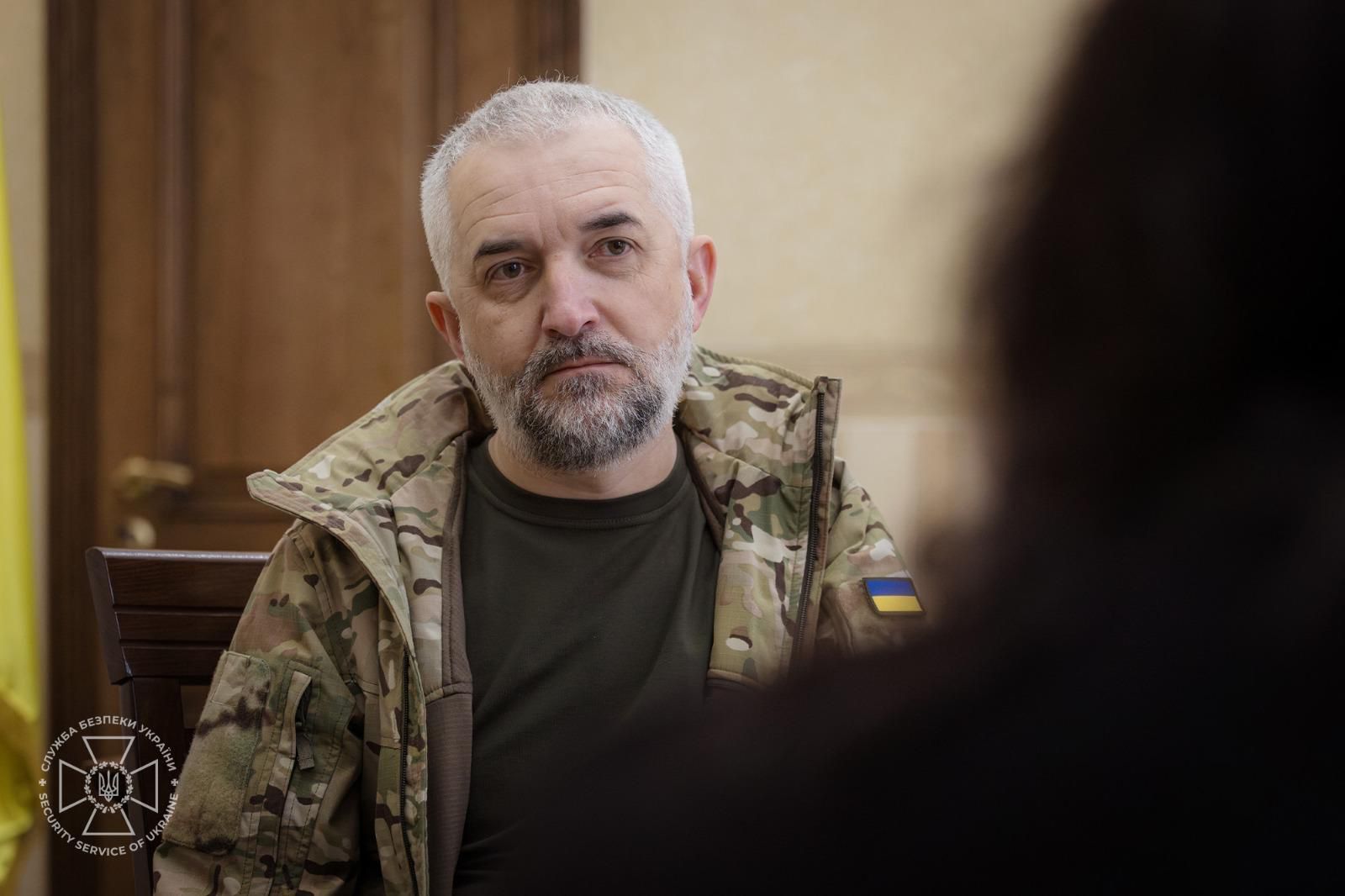
"Parubii’s assassination was planned for year," – Head of SSU Main Investigative Directorate Andrii Shvets
While at the beginning of the Russian Federation’s full-scale invasion of Ukraine, in our conversation with the Head of the Main Investigative Directorate of the Security Service of Ukraine (SSU), Andrii Shvets, we discussed the so-called "kill lists" with which the Russian military entered our territory, now we are discussing assassination attempts on prominent politicians, public figures, and volunteers, carried out by agents trained by Russian intelligence services. About who selects the target, how the perpetrators are trained, and how much they are paid for it.
In an interview with Censor.NET, Andrii Shvets also spoke about the investigation of a number of high-profile cases, including the terrorist attack in the Holosiivskyi district of Kyiv, the assassination of Andriy Parubiy, the supply of substandard mines to the army, the case of the former Chief of Staff of the SSU Anti-Terrorist Center Koziura, and others.
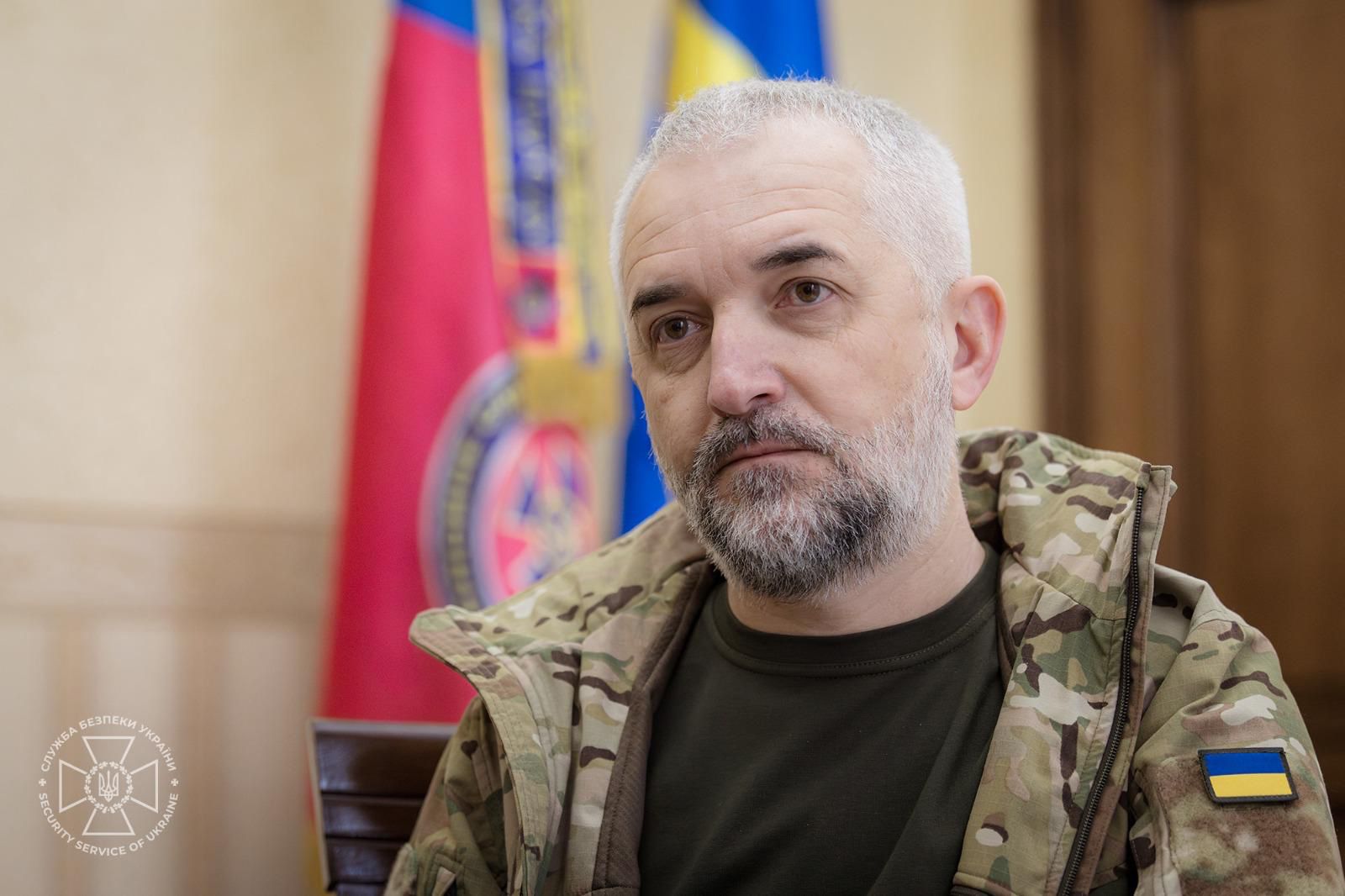
"DURING THE PRE-TRIAL INVESTIGATION, NO DATA INDICATING A LINK BETWEEN THE MURDER OF ANDRIY PARUBIY AND IRYNA FARION HAS BEEN OBTAINED"
– The SSU is investigating the tragic events that recently occurred in the Holosiivskyi district of Kyiv. Are there any preliminary versions yet?
– Currently, the investigation has only just begun, so it is premature to speak of a final version of events. The investigation is exploring all possible avenues.
A phone containing audio and video files was seized from the attacker. His contacts, social circle, and possible links, including those to representatives of the Russian Federation, are being checked.
These materials are currently being analyzed and will be taken into account when establishing the motives and all circumstances of the crime.
One of the main versions being considered at this stage is the commission of a crime based on personal animosity. It is important to establish the motive for his subsequent actions.
A number of forensic examinations have been ordered, including a forensic psychiatric examination regarding the attacker's mental state.
More definitive conclusions can be drawn after receiving the results of the forensic examinations and conducting the necessary investigative actions.
– The Security Service of Ukraine has completed the pre-trial investigation into the murder of Member of Parliament Andriy Parubiy and has sent the indictment to court. As reported by the Prosecutor General, the investigation established that the 53-year-old Lviv resident acted as an agent of the Russian intelligence services. Has it been established how exactly he was recruited and on what terms the cooperation took place?
– Yes, it has. He had a son from his first marriage who went to fight in 2022. Initially, he was in the Territorial Defense Forces, and in 2023, he was mobilized into the 93rd Separate Mechanized Brigade "Kholodnyi Yar." This brigade participated in the defense of Bakhmut, and that is where he went missing.
The father began searching for his son, including through Russian Telegram channels. He corresponded with various individuals, asking if they could help determine if his son was alive and in captivity, or if he had died, whether his body could be recovered for burial. In this way, he began communicating with individuals who, as we have established, are affiliated with the Main Intelligence Directorate of the Russian Federation. They promised to find his son.
He had a strained relationship with his son because the young man was pro-Ukrainian, while the father held pro-Russian views. There was even a situation where, at the son's wedding, he and the other guests were asked to wear vyshyvankas. He was the only one who did not come in a vyshyvanka and spoke in Russian. He was asked to leave.
Furthermore, in his correspondence with his son, he did not hide his pro-Russian views, as we saw in the phone seized from him. This was also evident in the correspondence he maintained in Telegram channels with Russians.
– Did the Russians set any conditions when promising to find his son?
– He effectively offered his services to the Russians himself and added that he was ready to go to Russia to look for his son among the prisoners of war. They, in turn, promised to search for the son's body near Bakhmut, in the area where he went missing, and to help arrange his burial.
He was not sincere with us, but from what we know through his correspondence with his handler and through interrogations, we were able to establish a picture of how their collaboration unfolded from the beginning until the moment of his detention.
In his posts, he did not hide his negative attitude toward Ukrainian politicians, whom he held responsible for starting the war. He himself suggested that he could be of use to the Russians.
He was asked which prominent politicians lived in Lviv and whether he could track any of them to determine where they lived. The first person he named was Andriy Parubiy. He knew where Parubiy lived because a friend of his, with whom he repaired household appliances, lived on a neighboring street. Therefore, he reported that he could track him and establish certain circumstances of his life. After that, he stated that, in principle, he could kill him.
Parubiy's assassination was prepared for a year. He conducted reconnaissance and obtained the tools and means necessary to commit the crime: he purchased a car, an electric bicycle, a helmet, a Glovo bag, clothing, and mobile phones.
For example, while he had his own car, he purchased another one registered to another person. The car used for the surveillance of Parubiy was registered to a serviceman currently in Russian captivity.
– Did the Russians offer him money, or was this, so to speak, an ideological matter?
– Ideological. They paid him money, but it was not a reward for what he was supposed to do. It was compensation for his expenses in purchasing the items I mentioned. This amounted to approximately 3–4 thousand dollars.
– During the year spent on preparation, did they give him any instructions or advise him on how to behave? Because if someone has been repairing household appliances, they are unlikely to know how to properly conduct reconnaissance and plan their actions in such a situation.
– We checked whether he had any past involvement with law enforcement agencies or military service. We established that he had none and had indeed been repairing household appliances for 20 years. However, over the course of a year, he prepared quite well for the commission of this crime.
Undoubtedly, he was consulted and assisted. In particular, he was provided with documents for purchasing the vehicle and weapons with filed-off serial numbers so that they could not be identified.
However, during this year of preparation, he began to feel like such a specialist that after committing the crime, he personally instructed his handler, explaining where mistakes had been made and why his identity was established, and also advised on how to act next time to avoid self-exposure and arrest.
– Was this already after the detention?
– Yes. Certain measures were carried out, and we established that he attempted to communicate with his handler.
– How were the funds transferred to him?
– He received the funds by conducting cryptocurrency purchase and sale operations through relevant online platforms and cryptocurrency exchanges. This data was established through an analysis of the movement of funds across his accounts and the identification of suspicious banking transactions.
Indeed, during the pre-trial investigation, 10 individuals were identified within Ukraine who transferred funds to the accounts of the person accused of Parubiy's murder while purchasing cryptocurrency on the exchange.
– Did they know they were working with Russians?
– No, they didn’t. They were unaware of the situation and were simply earning money from the transfer of funds.
– The Prosecutor General's statement mentions that since 2024, the accused had been passing information about UAF units in Lviv to the enemy. What kind of information was it, and where did he obtain it?
– He monitored the movement of rail cars carrying fuel for the military and equipment; he stayed near military units, took photographs, indicated addresses, and recorded who entered these military installations.
– Why did he need a car purchased in the name of a prisoner of war?
– He acted quite cunningly. Initially, he conducted surveillance in his own car. Later, he purchased another vehicle, providing documents of a serviceman missing in action in the Kursk region, and an electric bicycle. To store these two vehicles, he rented a garage far from his place of residence. He would travel to the garage in his own car and, to avoid "exposing" it while tracking Parubiy, he would switch cars there and later change to the electric bicycle.
– And how did he register the car using the documents of a person officially listed as a prisoner of war? Did a notary help?
– He simply asked the owner to issue insurance in that person's name. He paid him 1,600 dollars and took the vehicle registration document from him; there was no formal notarization.
– The Makarov pistol, which, according to open sources, the investigation considers the murder weapon, was found in a forest park. But not immediately. Did he reveal where he hid it himself?
– According to his testimony after detention, he allegedly disassembled the weapon and threw it into a pond—the same place where he threw the disassembled bicycle. However, the pond was drained, and the weapon was not found there.
A few days later, we began tracing his movement routes, and a "stash" was identified where the pistol had been hidden. Forensic examinations confirmed that this pistol had indeed been in his hands, and the cartridges and bullets found at the crime scene were used with this specific pistol.
– If the assassination was so meticulously planned, how was the identity of the accused established so quickly?
– Work was carried out simultaneously in several directions. Technical reconnaissance was conducted, CCTV footage from across the city was reviewed (routes taken, possible escape routes), and so on.
The work proceeded simultaneously in several directions. Technical reconnaissance was conducted, and CCTV footage across the city was reviewed (movement routes, possible escape routes), etc. Specifically, based on video from surveillance cameras operating near the crime scene, it was established that a person traveling on an electric bicycle with a Glovo backpack might be involved in the crime. During subsequent tracking of this person's route, the location where traces and tools of the crime (the electric bicycle and clothing) were destroyed was identified. Furthermore, based on the tag from the burned trousers, the place where they were sold was established. It turned out that two people had purchased them.
We also reviewed surveillance footage at that location, as he used neither a bank card nor a loyalty card from that store.
Additionally, the location where he purchased the helmet was identified, along with the person who sent it via Nova Poshta, as the helmet was quite exclusive.
We also identified the brand of the bicycle and found it was purchased through an online platform. You have likely seen the video we published showing him picking it up from a Nova Poshta branch.
Subsequently, we compared movement routes and identified the registered owner of the vehicle he was using. We tracked him traveling in this car to reach his own vehicle. Thus, as I mentioned, it was a comprehensive set of measures.
– How did he react when they came for him?
– I believe he was prepared to be detained but hoped he could leave Ukraine, travel to Moldova, and then proceed to the Russian Federation to continue the search for his son.
– Had the route been discussed in advance with his handler?
– To start, he was supposed to reach the Khmelnytskyi region and wait there for instructions on how to proceed and secure his exit. That is where we detained him.
– Video of the murder was leaked online. Has it been established who published it?
– This is footage from a surveillance camera on a building near the crime scene. In connection with this fact, National Police authorities are conducting a pre-trial investigation into the unauthorized dissemination of restricted information under Part 2 of Article 361-2 of the Criminal Code of Ukraine.
– Was the possibility of the accused having accomplices in Ukraine considered?
– The theory regarding possible accomplices in Ukraine was investigated; however, it was not confirmed.
– Was it possible to establish how the pistol and the prisoner-of-war documents were delivered to him?
– We found the location where the "stash" had been set up, but we did not identify who did it.
We also found additional weaponry that he had prepared in advance. This was a sawed-off hunting rifle, which was packaged and hidden in a cemetery.
– The Head of the Lviv Regional Prosecutor's Office, Mykola Meret, stated a few hours after the politician's murder that there was no information linking the assassinations of Iryna Farion and Andriy Parubiy. Was such a potential link explored during the investigation?
– During the pre-trial investigation, no evidence was found to suggest a link between the murders of Andriy Parubiy and Iryna Farion.
We were interested to find out if the suspect himself followed this story, whether he watched the court hearings in the Farion murder case, looked for the perpetrator's mistakes, or observed the progress of law enforcement in identifying Farion's killer. We found nothing to indicate that he was fascinated by his predecessor's crime.
– Even during the pre-trial investigation stage, the accused confessed to the crime in an interview with journalists in court and noted that he would request to be exchanged for Ukrainian prisoners of war held in the Russian Federation. Have there been any official requests regarding a possible exchange from the accused or his lawyers? Is such a possibility being considered by state authorities?
– Such an application was filed, but it was explained to him that we do not make such decisions. This matter is handled by the Coordinating Headquarters for the Treatment of Prisoners of War. He has not applied there.
– When such requests are made, is your opinion as the head of the pre-trial investigation body sought?
– Yes.
– If this person were to officially apply for an exchange, would you give your consent?
– I do not know. It depends on who we could exchange him for. It depends on how valuable he is to them.
Furthermore, perhaps it is worth asking Andriy Parubiy's relatives how they would feel about this person being exchanged for our servicemen.
– Handing him over to the Russian Federation after such a murder is like granting an indulgence. Much like handing over traitors who will only feel their sense of impunity.
– We have traitors who worked in the Cabinet of Ministers, in law enforcement agencies, and other state structures, who were identified several years ago. Russia has offered to take certain individuals back. However, they remain in custody—some have been convicted, while others are at the trial stage.

– How often are relatives of servicemen missing in action targeted for recruitment to carry out further crimes?
– Currently, information is only available regarding isolated cases. Counter-measures are being carried out by operational units regarding these facts. People must understand that cooperation between relatives of the missing and the enemy does not accelerate the prisoner exchange process but can only cause harm. Therefore, if someone is targeted for recruitment, they should contact the SSU to not only prevent this but also to avoid criminal liability.
"SOMETIMES AGENTS RECRUITED BY THE RUSSIAN SPECIAL SERVICES WORK ON ADVANCE AND, AS A RESULT, RECEIVE NO MONEY AT ALL"
– It recently became known that the SSU neutralized a reconnaissance and combat network of the Russian GRU that was preparing the assassinations of public figures in Ukraine; one of the potential victims was a volunteer and advisor to the Minister of Defense of Ukraine, Serhii Sternenko. During the special operation, a hitman was neutralized, and more than 10 other network members were taken into custody.
How long did this network operate on Ukrainian territory? How were the roles distributed among the participants?
– It had been operating since February 2025. The individuals involved lived in various regions and were engaged in different activities. Among them were a forensic expert, a deputy dean of a university, retirees, and the unemployed. They did not have a common leader; their actions were managed by representatives of the Russian Federation, whom we have identified.
Various reconnaissance tasks were assigned to the agents, including: gathering information on the concentrations of AFU (Armed Forces of Ukraine) servicemen and military equipment, their movement routes, locations of defensive (fortification) structures, and the results of strikes on targets in Ukraine. They also carried out visual reconnaissance of the residences, workplaces, and locations of military personnel, prominent public figures, and volunteers, planning and preparing for terrorist acts, including those aimed at eliminating Ukrainian figures, volunteers, and servicemen.
Regarding the distribution of roles: for example, one of them conducted active reconnaissance in Poltava, Lviv, and the Kyiv region, passing valuable and sensitive information to employees of the GRU of the Russian Armed Forces. This included locations of SSU and Main Directorate of Intelligence of the Ministry of Defence of Ukraine (HUR of MoD) units, a UAV manufacturing enterprise, AFU personnel, residences and temporary stay locations, and movement routes of servicemen from a National Guard unit, the Russian Volunteer Corps (RVC) under the HUR, a native of the Chechen Republic wanted by Russian law enforcement who advocates for Ingushetia's independence, and the advisor to the Minister of Defense (a well-known volunteer), as well as information about their families.
Another agent simultaneously conducted reconnaissance in the Zhytomyr region and provided the Russian special services with information containing the exact coordinates of AFU units and weaponry.
A third conducted reconnaissance in the Kharkiv and Kyiv regions and passed on information about the regular locations of a National Guard member, as well as the actual residences and temporary stay locations of an RVC serviceman and his family.
Simultaneously, three residents of the Donetsk region conducted reconnaissance using their own vehicles, collecting and transmitting video recordings showing the locations of AFU servicemen near the front line in the city of Kramatorsk, Donetsk region.
Four individuals were identified as the primary targets for liquidation: a National Guard serviceman, an RVC serviceman under the HUR of MoD, a native of the Chechen Republic serving in the Armed Forces of Ukraine, and a volunteer (currently an advisor to the Minister of Defense). The potential victims were determined directly by representatives of the hostile Russian special services.
In the criminal proceedings regarding the attempted assassination of one of these individuals, investigators identified both the perpetrator and those whose actions facilitated the commission of the crime.
– Was the activity of these agents paid for?
– They received funds for so-called "business trips"—up to 20,000 hryvnias for expenses related to current costs (car repairs, purchase of fuel and food, etc.).
Bank accounts registered to front individuals and crypto wallets were used to transfer the funds. Measures are currently being taken to obtain information from banking institutions to identify those who facilitated these processes.
– How were the perpetrators selected for the elimination of the people identified as potential victims?
– The handlers knew who, based on their place of residence and physical and moral qualities, was capable of carrying out such work, and they communicated with each of them individually.
As I mentioned, these people were not connected to each other by any single leader.
– The official SSU statement mentions that the handler was a forensic expert.
– He coordinated the members of a small group, while others acted independently. A hitman, who was neutralized during the special operation, also acted separately.
– A professional hitman?
– It depends on what you mean by that term. Is he capable of shooting? Yes. Did he train? Yes.
– I mean that he did this for a living. Are there any other murders attributed to him?
– Information regarding his involvement in other murders is currently being verified.
We officially reported that he originates from the temporarily occupied territory and underwent training at a Russian military base, after which he was deployed to Ukrainian-controlled territory in the Sumy region. Russian handlers sent target coordinates directly to him.
– Did people notice they were being followed?
– One such instance involved Ilya Bogdanov. The man conducting surveillance was following him with a phone, but Bogdanov noticed this and simply knocked the phone out of his hands.
– Is the formation of reconnaissance and combat groups a new enemy tactic?
– I cannot tell you how many such groups are currently being documented, but the process is ongoing. This is not a new trend. We speak publicly about some operations, while others remain undisclosed.
I should remind you that back in 2023, Putin introduced the "Diversionary Noise" plan, and the Russians began searching for perpetrators of crimes. Since the SSU "purged" the ranks of their ideological supporters and "waiters" during the first years of the full-scale invasion, they shifted to a new form of motivation: money. They started with arson attacks on cars, TCR & SS offices, and Ukrposhta branches. Later, they used their agents as carriers of improvised explosive devices and as suicide terrorists. Such networks are also a stage in the work with intelligence assets.
It must be understood that it is not only the FSB operating across Ukraine, but other Russian special services as well. We should not forget about the Belarusians; there have been cases of operations conducted in the interests of that country's special services. Every such agency has units specializing in subversive activities. Some focus on sabotage, some on information gathering, and others on recruitment for espionage or obtaining classified documents. For instance, to recruit our citizens, Russian special services are currently sending them summonses demanding they appear before an SSU investigator or another Ukrainian law enforcement agency. Almost every day, I am sent such summonses with the question of whether they are from our investigators. They list a general SSU address, a room number where no investigators are actually located, and non-existent ranks.
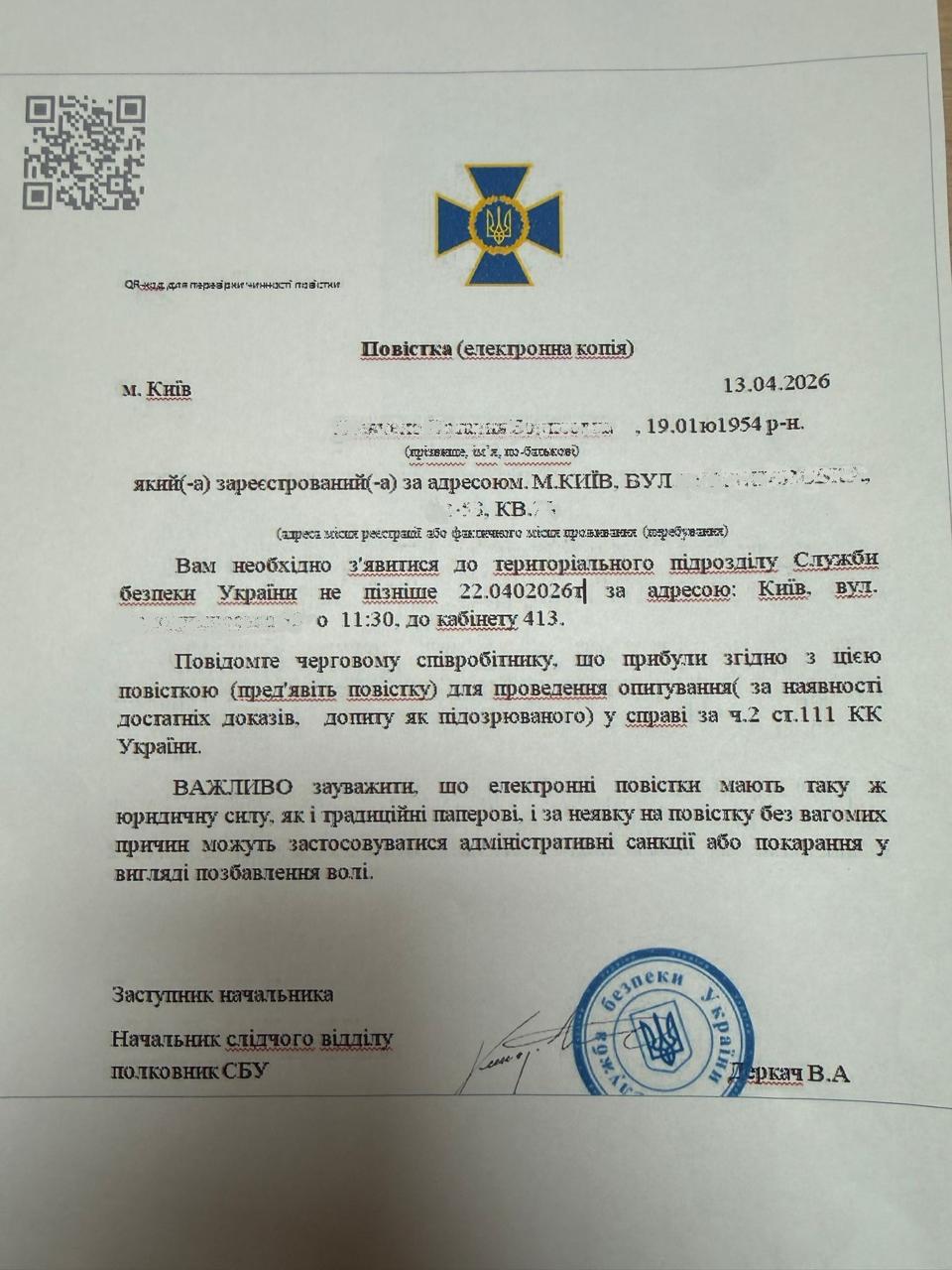
– To whom exactly are they sent? How are the people selected?
– We investigated this. It turned out that in some cases, people had purchased Russian-made medicines through an online store in Kharkiv in 2023. Apparently, the Russians gained access to this data. When they reach out to these buyers, they say something like: "You bought medicines for such-and-such an amount, which means you financed the enemy's army. You're going to prison!" People get scared and ask what to do. Then they are given an offer like: "Can you take a photo of an unscrupulous Ukrainian who is working for the Russian Federation?"
There are cases where people sell their real estate or vehicles to pay off the blackmailers and transfer the money to those who contacted them in this manner.
Fortunately, they usually start by sending summonses, and some people still contact us to double-check. Of course, we process such reports. There are cases where we detain individuals committing these illegal acts against our citizens. Specifically, two weeks ago, we detained individuals who were receiving funds from the sale of real estate.
I want to emphasize that SSU representatives do not demand the installation of third-party software on phones and, under no circumstances, assign any suspicious "tasks." Therefore, if you receive a summons that seems suspicious or are contacted by unknown individuals claiming to be SSU officers, please report it to the SSU hotline at 1516.
– The SSU has managed to prevent a number of assassination attempts on public figures, activists, journalists, and law enforcement officers. However, as is known, sometimes the killers still manage to achieve their goal. This was the case with the murder of Colonel Ivan Voronych. Have the masterminds been identified?
– The investigation is still ongoing, and work is being conducted, including the involvement of colleagues from other countries. There is an understanding of the situation. However, I cannot say more at this time, as there are still certain individuals we are working on.
– The District Court in Zamość, Poland, sentenced a 50-year-old Polish national to 3.5 years in prison for spying for Russian intelligence. He gathered information about the Rzeszów-Jasionka Airport, which could have helped Russia plan an assassination attempt on the President of Ukraine, Volodymyr Zelenskyy. This was reported by the spokesperson for the Polish Minister-Coordinator of Special Services, Jacek Dobrzyński. How many assassination attempts on the president have been prevented during the full-scale war? How many proceedings on this matter is the SSU investigating?
– There are such proceedings, but I do not want to state the number. Nor will I comment on the individuals involved, those detained, or those being screened. This is quite delicate work that is ongoing.
– Has it been established during the investigations of criminal proceedings regarding assassination attempts on politicians, prominent public figures, or journalists, how the perpetrators are trained? Does it mostly happen as it did in the situation with the murder of Andriy Parubiy, or are those who already possess certain skills recruited instead?
– There are various approaches and methods of elimination. Bombings, close-range shootings, and the use of FPV drones. To a certain extent, the approach to selecting the perpetrator and their training depends on this.
Take, for example, one of the assassination attempts on Sternenko. It was carried out by an ordinary woman who had been recruited. At the same time, a police officer was found to be involved in the illegal activity, using the "Safe City" municipal video surveillance system to collect and transmit information about the victim's location.
Or, for instance, the assassination attempt on Budanov, which was prevented in 2024. The Security Service of Ukraine uncovered a network of Russian FSB agents that included a colonel from the Department of State Guard of Ukraine, an official. It was surprising for us to observe at the beginning of the documentation process how he personally traveled to Odesa to "retrieve" a stash there.
There are many more examples, but I cannot speak about all of them as the work is still ongoing. This includes cases involving a former head of the SSU and leaders of law enforcement agencies. I cannot name specific individuals because when we establish that someone is under threat of elimination, appropriate measures are taken to ensure the person's safety.
– In our last conversation, we spoke about the beginning of the full-scale war and the so-called "kill lists" with which the Russians entered. Do they still have similar lists now? Have they updated them in any way?
– We do not currently have information regarding such lists, but we see where the targeting is directed and whom they are prepared to eliminate.
For example, in December 2025, an assassination attempt on one of the leaders of the Federation of Employers of Ukraine was prevented; it was planned to be carried out by detonating a remote-controlled improvised explosive device (IED) in a public place. The explosion was organized by a resident of occupied Donetsk, who was recruited to eliminate prominent public figures by an employee of a Russian FSB unit whose specialized activity involves sabotage and terrorist acts on Ukrainian territory.
The consequences could have been tragic given the potential number of victims. Furthermore, such actions always carry a broader resonance than the crime itself, as they diminish the sense of stability and security within the state.
The threat was averted, and both the perpetrator and his FSB handler, E.R. Islamov, have been notified of suspicion of committing a crime.
– You mentioned that there are fewer of those who are, so to speak, ideological. So, do the perpetrators mostly work for money?
– Yes. Sometimes agents recruited by the Russian special services work on advance and, as a result, receive no money at all.
– In January of this year, journalists from Slidstvo.Info discovered an underground school at the UOC-MP "Holosiivska Pustyn" monastery in Kyiv, where children were taught using Soviet textbooks, shown Russian films, and taught Russian songs. Has a proceeding been opened regarding this? Has it been established who organized it, when, and for what purpose?
– Yes, this information is being verified within the criminal proceedings under Part 1 of Article 436-1 of the Criminal Code of Ukraine ("Production and dissemination of communist or Nazi symbols and propaganda of communist and national-socialist (Nazi) totalitarian regimes"). As of today, it is known that the "students" of said underground institution, which operates under the guise of a "family club" at the UOC (MP) "Holy Protection Holosiivska Pustyn" monastery, are actually students of "Khotyanivskyi Lyceum 'Rancho School' LLC." Investigators have ordered a semantic-textual forensic examination of the statements made by the "club" participants, and the institution's activities are being reviewed by specialists from the Ministry of Education and Science and the child services inspection. A corresponding procedural decision will be made once the findings are obtained.
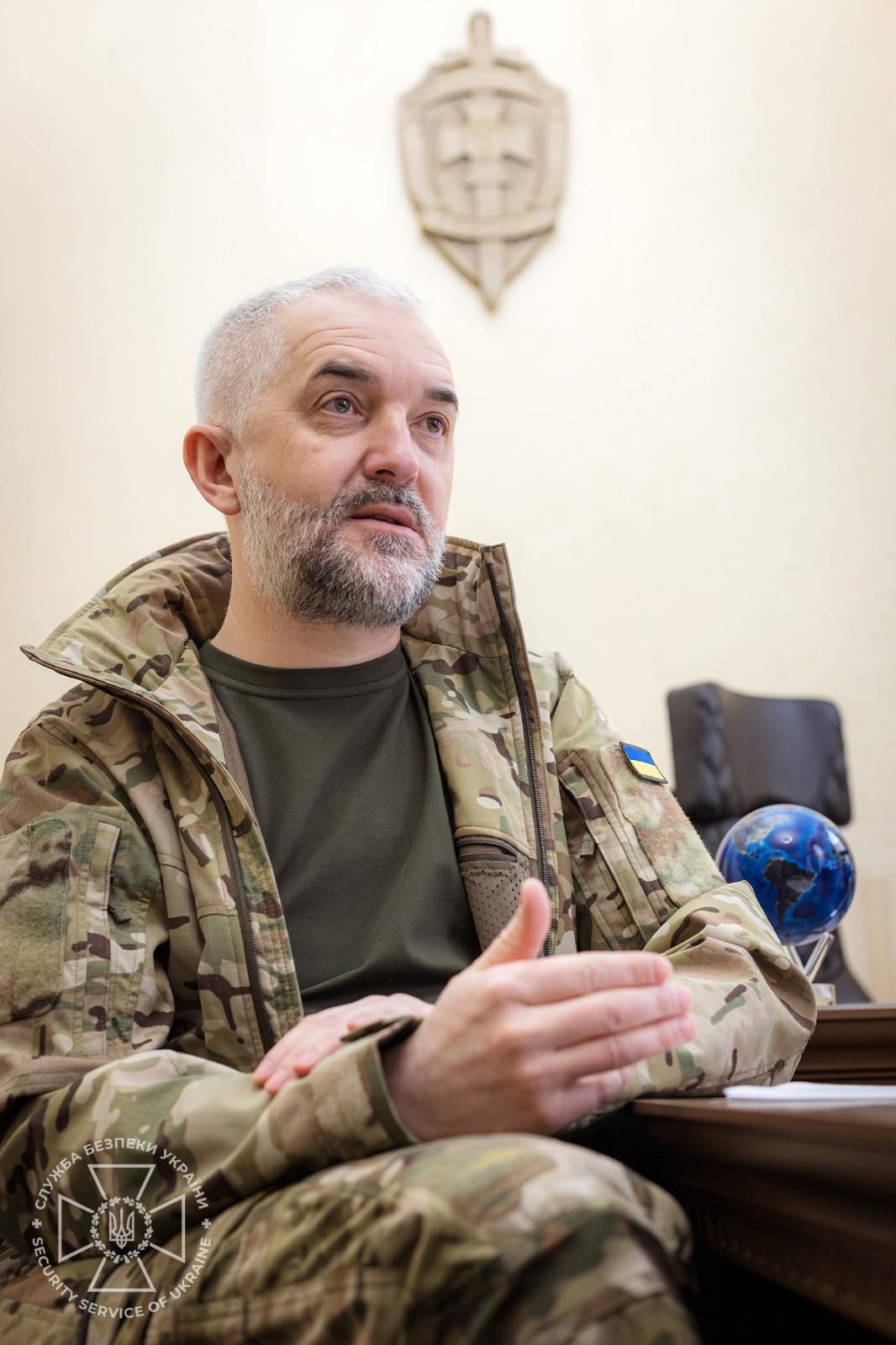
– On April 29, 2025, the SSU detained the management of a defense plant in the Dnipropetrovsk region that had supplied defective mines to the Armed Forces of Ukraine. What is the current status of this case?
– The investigation has been completed. The indictment against the former General Director of the State Enterprise (SE) Scientific-Industrial Association (SIA) Pavlohrad Chemical Plant (PCP) and his deputy has been sent to court for trial.
During the investigation of the criminal proceedings regarding the obstruction of the lawful activities of the Armed Forces of Ukraine, it was established that they intentionally supplied over 233,000 unusable mines. Specifically, this included 100,000 units of 82mm mortar rounds and nearly 133,000 units of 120mm mortar rounds, resulting in 3.3 billion hryvnias in damages to the state.
– During the investigation, was it established why exactly the mines were produced in this manner?
– During the pre-trial investigation, it was established that, amongst other things, the substandard and untimely supply of mortar rounds was carried out with the aim of obstructing the lawful activities of the Armed Forces of Ukraine.
According to the forensic examination, the use of the specified propellants led to the unstable performance of the powder charge as a whole, and consequently, the inability to use the mortar rounds for their intended purpose in the Armed Forces of Ukraine.
In effect, aware of the missed deadlines for the delivery of the first batches of mines to the Armed Forces of Ukraine, in August 2024, the General Director and his deputy forged a corporate order to suspend production, allegedly due to damage resulting from missile and drone strikes by the aggressor state, which was not the case. Subsequently, the subjects used the forged order to obtain certificates from the Chamber of Commerce and Industry of Ukraine and to extend the term of state contracts concluded with the Ministry of Defense of Ukraine's SE "Defense Procurement Agency," which in turn allowed the SE SIA "PCP" to avoid the accrual of penalties under state contracts.
Furthermore, the pre-trial investigation body is investigating the theory of a profit motive for the commission of the criminal offense. A pre-trial investigation is currently underway regarding the possible overpricing of specific grades of propellants manufactured by a U.S. company and purchased from a UK-resident company.
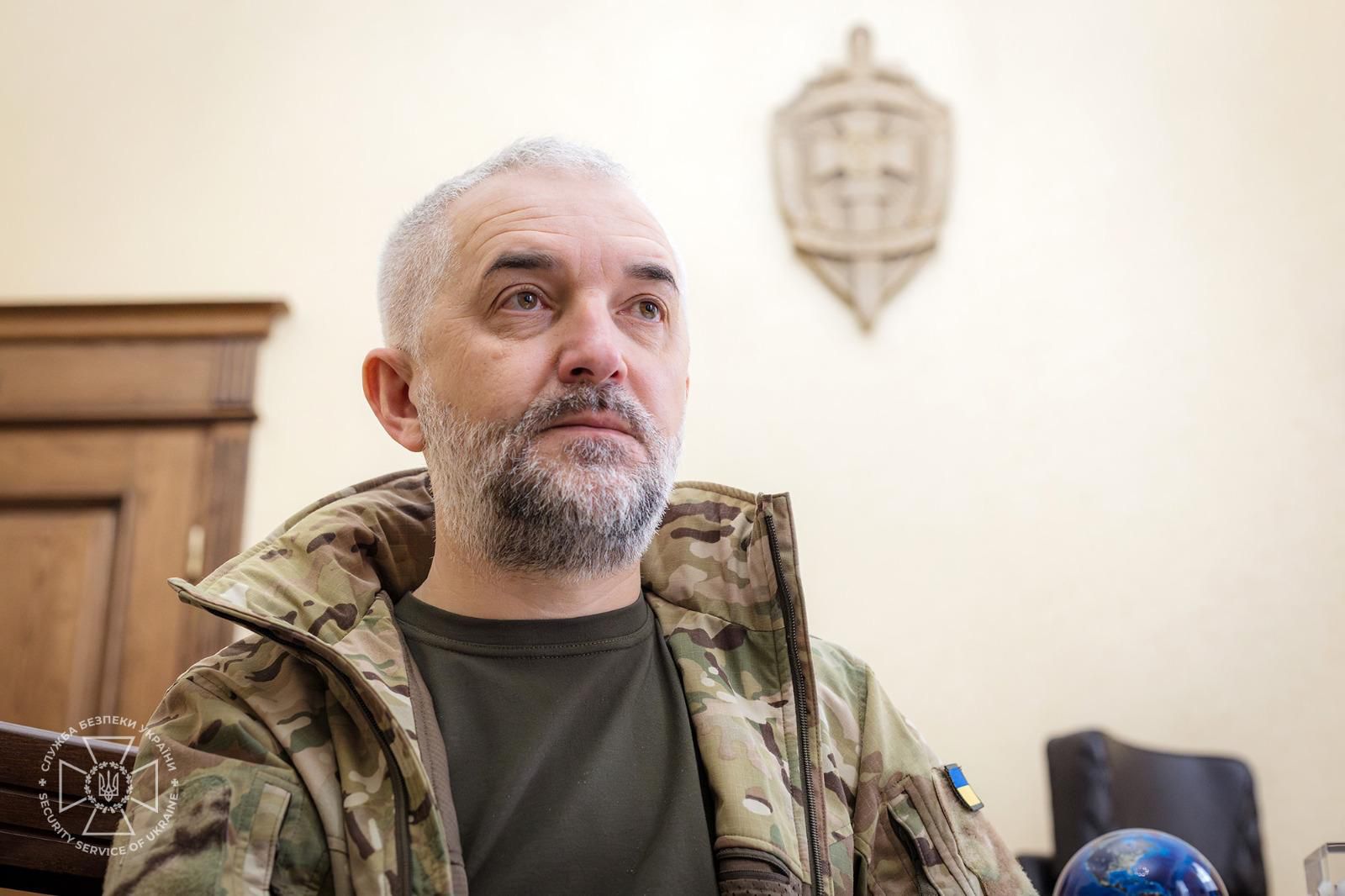
– Were these mines disposed of?
– During the investigation of the proceedings, investigators seized 480 units of 120mm rounds and 70 units of 82mm mortar rounds, which were subsequently sent for expert examination.
The mortar rounds returned after the examination were recognized as material evidence and transferred for safekeeping.
A decision regarding the fate of the specified material evidence will be made by the court upon delivering the verdict in the case.
At the same time, on November 20, 2024, the Logistics Forces Command of the Armed Forces of Ukraine issued a directive prohibiting the issuance of the remaining 82mm mortar rounds to the troops, and on November 23, 2024, a directive was issued prohibiting the issuance of the remaining 120mm mortar rounds to the troops.
Subsequently, the specified products were sent to the manufacturer for a reclamation claim.
– Returning to the topic of ideology, I also wanted to ask whether the investigation into the case of Pavlo Lebid has been completed?
– Yes. The Investigative Directorate of the Main Department of the Security Service of Ukraine in Kyiv and the Kyiv region conducted a pre-trial investigation in the criminal proceedings regarding the suspicion of the Abbot of the Kyiv-Pechersk Lavra of the Ukrainian Orthodox Church (UOC), Pavlo Lebid, of committing criminal offenses stipulated by Part 1 of Article 111, Part 3 of Article 161, and Part 1 of Article 436-2 of the Criminal Code of Ukraine.
The investigation established that he engaged in justifying the armed aggression of the Russian Federation against Ukraine during conversations with believers.
Furthermore, in March 2023, he made a public video appeal to his believers and the police, during which he demeaned the honor and dignity of a confessional group, characterizing the OCU (Orthodox Church of Ukraine) as a whole in an extremely negative way, as he emphasized its ruin (destruction) of spirituality, holy lives, and taking the last from people.
In particular, the video recording of the speech titled: "WE ASK FOR JUSTICE FOR OUR CHURCH" was subsequently uploaded to the video hosting site YouTube, specifically to the channel "Lavra. Put spaseniya" ("Lavra. Path of Salvation"), at the link: https://www.youtube.com/watch?v=eg00by5hPHU.
On October 20, 2023, the indictment in the criminal proceedings against Pavlo Lebid was sent to the Pecherskyi District Court of the city of Kyiv. There is no verdict yet.
– Did he ask to be exchanged?
– No, he did not.
– And how many UOC (MP) priests have been handed over to Russia during exchanges?
– Two. They were exchanged for 26 Ukrainians, including military personnel and civilians.
– Last year, the Chief of Staff of the SSU Anti-Terrorist Center, Colonel Koziura, who had worked in the intelligence service for over 20 years, was detained. Has this case already been sent to court? And does he want to be exchanged?
– He does. The case charging Dmytro Koziura has already been transferred to court. The hearings will be held in closed session.
– When it comes to exchanges, this primarily concerns the lives and freedom of our military personnel. And here it is impossible not to raise another important topic: crimes against prisoners of war, whom the Russians torture and kill both in captivity and upon capture on the battlefield. What is the status of the investigation into this category of crimes?
– The investigation of crimes against prisoners of war is a priority and, at the same time, one of the most difficult areas of our work. To date, thousands of cases of violations of the laws and customs of war have been documented, specifically relating to the cruel treatment of prisoners, torture, and, unfortunately, extrajudicial executions of our military personnel on the battlefield and upon their capture by servicemen of the aggressor's armed forces. All these facts are registered by us with the legal qualification of war crimes (Article 438 of the Criminal Code of Ukraine).
As for the last of the listed categories of crimes, namely the extrajudicial executions of our military personnel on the battlefield and upon their capture, this is one of the gravest types of crimes both in establishing and proving the guilt of the Russian Armed Forces servicemen involved in their commission, and in establishing the actual event of the crime and the identity of the victims.
This is precisely because the crime scene is almost always the line of contact and the territory where active hostilities are ongoing and direct combat engagements with the enemy take place.
This circumstance prevents not only the conduct of a full range of investigative actions there, but sometimes it is not even possible to gain access to our killed serviceman and identify him.
From February 2022 to April 2026, 116 criminal proceedings are being investigated regarding the executions of 306 Ukrainian prisoners of war on the battlefield. The most massive and brutal cases of extrajudicial executions of our servicemen are recorded in the Kursk and Donetsk directions. It is also here that the most brutal methods of execution are noted (mass shootings, decapitations, dismemberment).
At the same time, we can say that the extrajudicial executions of our military personnel by servicemen of the Russian Armed Forces are systematic and large-scale, and are effectively sanctioned by the political leadership of the aggressor. Thus, after the start of the "Kursk" operation in 2024, the President of the Russian Federation emphasized in his speech that all Ukrainian military personnel participating in this operation are terrorists and are subject to elimination. Such actions by the aggressor's servicemen were subsequently met with incentives from the Russian military leadership for their actual commission of war crimes.
Unfortunately, the work of an investigator under the conditions of an aggressive war waged by the enemy is associated with obstacles in identifying every war criminal and bringing them to criminal responsibility. As of April 15, 2026, 9 servicemen of the Russian Armed Forces have been notified of suspicion. Indictments against 7 individuals have been sent to court, and 5 individuals have already been convicted.
– How do you establish that it was specifically these Russian military personnel who committed the crime?
– Throughout 2024–2025, instances of cruel treatment by servicemen of the Russian Armed Forces toward captured servicemen of the Security and Defense Forces of Ukraine, as well as the killing of the latter on the battlefield upon capture, have noticeably become more frequent.
These crimes are recorded both directly by servicemen of the Security and Defense Forces of Ukraine and by operational officers of the Security Service of Ukraine during the performance of their official duties, as well as by investigators through the monitoring of information on the Internet. In addition, there are cases where such facts are discovered during investigative actions with Russian Armed Forces prisoners of war in other criminal proceedings, which are being investigated for other circumstances unrelated to executions.
The difficulty in investigating these crimes is, as I have already said, the absence, in most cases, of the bodies of the deceased servicemen of the Security and Defense Forces of Ukraine and their identification; and the lack of access to the crime scenes.
However, during the investigation of criminal proceedings regarding the execution and torture of military personnel, our investigators, in cooperation with operational officers, have developed a mechanism for documenting such crimes that allows for conducting an investigation and collecting sufficient evidence to establish the fact of the execution of prisoners of war and the identity of the perpetrator.
This is painstaking work that combines classical forensics and modern digital technologies. We use several primary methods:
- eyewitness testimonies — our military personnel who have returned from captivity are key witnesses. They identify their torturers by photographs, voice, call signs, or distinctive features;
- digital evidence — we analyze the contents of seized phones, interceptions of phone conversations, radio interceptions, and video from reconnaissance drones.
- OSINT reconnaissance — our specialists monitor social networks. Often, Russian military personnel post evidence of their own crimes or boast about them, which allows us to identify the unit and the specific perpetrator of the crime;
- use of advanced systems and databases. For example, using artificial intelligence, we compare images from photos, cameras, or drones against databases of Russian Federation military personnel.
– Are Russian military personnel who have committed war crimes returned home during exchanges?
–There is a widespread belief that the conviction of a Russian serviceman closes the path to exchange for him. However, this is a myth. In reality, Ukrainian legislation was specifically adapted following the full-scale invasion so that the legal process would not interfere with the return of our defenders home through an exchange for Russian prisoners of war, including those who, after being captured, were brought to criminal responsibility for committing war crimes.
This mechanism works as follows. A convicted person—in respect of whom an authorized body has made a decision during the serving of their sentence to transfer them for exchange as a prisoner of war, and who has provided written consent for such an exchange—is released by the court from serving the assigned sentence.
If a pre-trial investigation or judicial proceeding is ongoing against a person, in the event an authorized body makes a decision to transfer them for exchange as a prisoner of war, the court cancels the preventive measure, and such a person is transferred under the supervision of the authorized body to organize and conduct their exchange as a prisoner of war.
The primary position of our state is that the life of our warrior is more valuable than the term of imprisonment of an occupier. The exchange of a convicted war criminal does not mean their exoneration. It means that Ukraine has fulfilled its legal mission, recorded the crime for future international tribunals, but used this invader as an exchange fund to save its hero.
In this regard, it is also important to understand that if the exchange falls through for any reason (mostly this happens due to the aggressor's failure to comply with its agreements on the exchange of prisoners of war), such a convicted person simply returns to a Ukrainian penal institution and continues to serve their sentence.
Alongside this, one cannot fail to mention the numerous facts of cruel treatment, torture, and deaths of Ukrainian military personnel during their captivity.
To date, thanks to the efforts of the leadership of Ukraine, and with the assistance of our international partners, 7,202 Ukrainian military personnel have been returned home from captivity. And I can confidently state that during their captivity, at least one (and in most cases, several) types of cruel treatment and torture, which are considered serious violations of the Third Geneva Convention relative to the Treatment of Prisoners of War, were applied to each of them.
At the same time, we document cases of such cruel treatment not only by the personnel of the penal institutions where our military personnel are held, investigative prosecutors, or special services officers, but even by medical personnel, who are supposed to provide at least minimal medical care and assistance to prisoners. Instead, they resort to the most brazen, cruel behavior towards them (torture with stun guns, sexual violence, disfiguring faces and bodies with scars in the shape of Russian-Nazi symbols, and others).
One such torturer we have identified is a paramedic at one of the penal colonies located in the Republic of Mordovia of the Russian Federation, known among the prisoners as Doctor Evil. We have collected a sufficient volume of evidence of his commission of war crimes against our military personnel during their captivity, and he has been notified of suspicion for his actions under Article 438 of the Criminal Code of Ukraine. Currently, the case materials are being prepared to be sent to court in absentia, and we hope that the result of the judicial review will be a fair verdict for this monster.
Tetiana Bodnia, "Censor.NET"


