



199 days in position: two soldiers of 128th SHMB replaced their wounded comrades
It is a story worthy of a screen adaptation. One is a former police major who signed a contract with the Armed Forces of Ukraine in 2020. The other is a volunteer who came to the military enlistment office on 24 February 2022. During unit coordination in the 128th Separate Heavy Mechanized Brigade (SHMB), they volunteered to replace their wounded comrades in the village of Prymorske, Zaporizhzhia region.
This settlement lies 20 km from Zaporizhzhia and is critically important for the defence of the regional centre. The soldiers engaged in small-arms battles with units of Russia’s 108th Air Assault Regiment and 135th Motor Rifle Regiment. At times, they even had to engage the enemy in dialogue in order to buy time and open fire first.
The heroes of our interview spent 199 days in this hell.
Hennadii Maksymov, serviceman of the 128th Separate Heavy Mechanized Brigade "Dyke Pole."
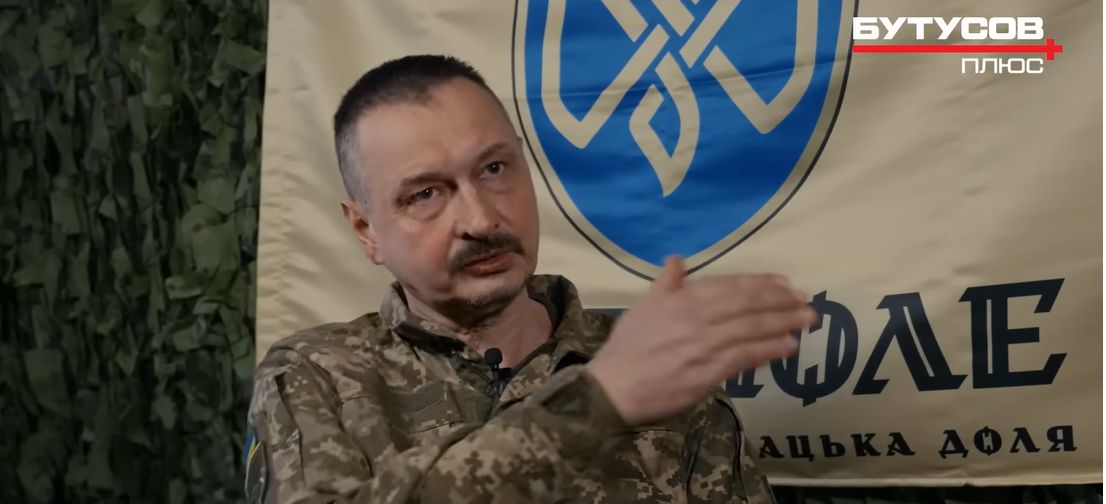
I had been serving under contract since 2020 in the 38th Anti-Aircraft Missile Regiment as a driver-mechanic and crane operator. In August 2025, I was pulled from a replacement assignment. The chief sergeant told me that several others and I were being transferred to another unit. I did not know where. But I had no combat experience.
What rank did you hold when you left the internal affairs bodies?
Police major.
Tell us your story. How did you end up in the Armed Forces?
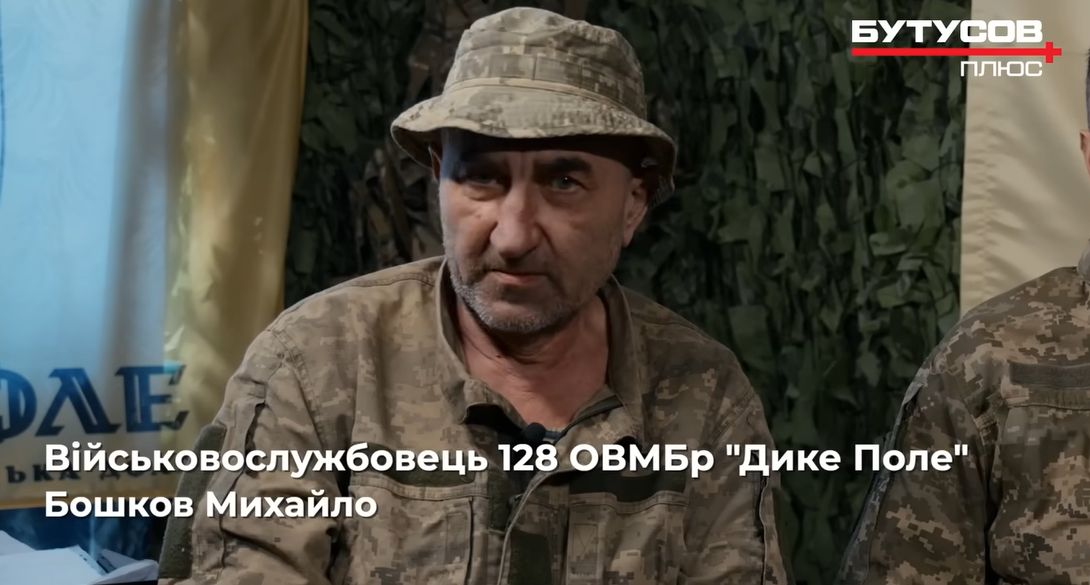
Mykhailo Boshkov, serviceman of the 128th Separate Heavy Mechanized Brigade "Dyke Pole":
On 24 February 2022, I went to the military enlistment office and was assigned to the same unit, the 38th Regiment. They kept sending me on temporary duty assignments, and in August, I was transferred to the 128th. They said it was needed. That was it.
What did you do in civilian life?
I worked as a security guard, a watchman, and a loader. Mostly as a watchman.
Why did you decide to go to the military enlistment office on 24 February?
Because there was no hope in people like that, not in the contract soldiers. I knew they would screw up the country. They were avatars and dolphins. If not for us, the mobilized guys, where would the country be now?
You had already taken part in combat. Where was that?
In 2022–2023, in the defence of the island, until I was wounded. We were shelling from Dzendzyk and the spit.
Is your leg the result of that wound?
Yes. Complications with the heel.

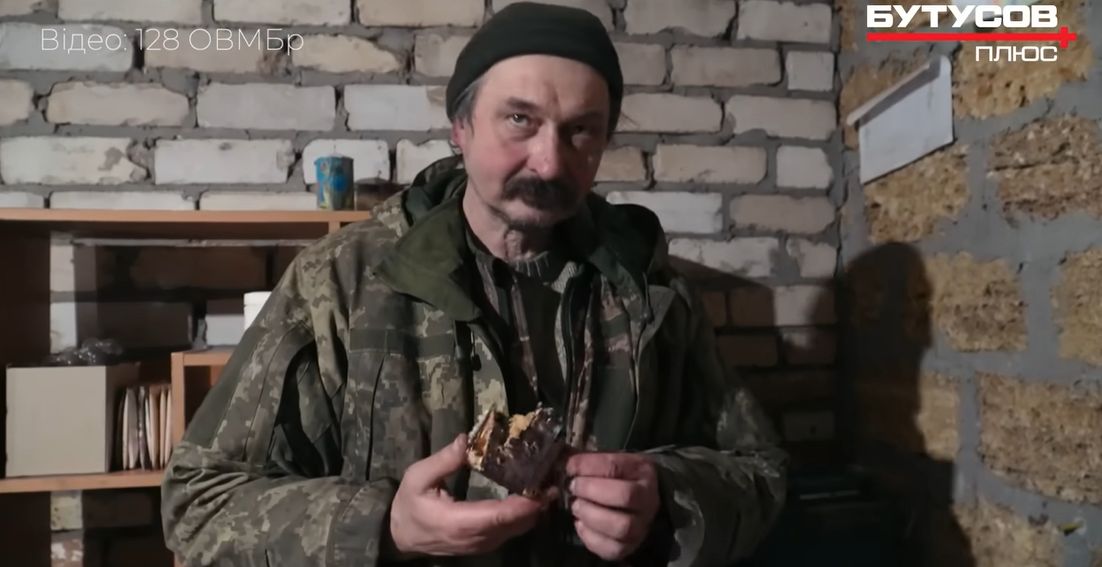
At what point were you told that you would be heading to the position?
We were still going through unit coordination. The instructor said they needed two volunteers to replace adjacent troops who had been wounded and concussed.
Who made the first move out of those 30 men?
Hennadii: He made the first move, turned to me, and asked, "Will you go?" I said I would.
How did things unfold at the first position? Did the enemy try to attack?
The enemy moved in small groups. Sometimes they would go around us at 100 or 200 metres. Our drones spotted them, we passed the information on, and kept watching. Some of them, after being hit by our drones, rushed straight at us. But we had been told it was better not to leave the house, so we would not be spotted from the air. We did our job from the window of a construction trailer. From the windows, we dropped them right next to the house. We passed information about another house about 30 metres away from us. Our guys took off the top of it, but it was a solid building, so the ground floor remained, though they gave them hell in there. They started running around adjacent plots, shouting. Two of them ran up to us and tried to break down the door and climb in through the window, but the frames were narrow and had no glass. We did not let them break in. We fired at the door, sprayed low by the windows, and drove them back. They tried to throw a grenade at us.
My partner is a Russian speaker, with no accent. I speak Surzhyk (a mixture between Ukrainian and Russian languages, used in certain regions of Ukraine - ed. note). He started talking to them and bought me a few minutes so I could get my bearings.
What did you say to the Russians?
Mykhailo: I do not remember anymore. I was saying something; otherwise, he would have thrown the grenade.
Hennadii: I remember. "Guys, we’re your own." "108th Regiment," and he replied, "I’m 108th Regiment too."
The Air Assault Regiment.
"What’s your call sign?" He said nothing. Then a few more words. Then he said, "Man, if you don’t open up, I’ll throw a grenade." That was when I realized the dialogue had hit a dead end, when I asked for the surname of his commander in the 108th Regiment. I understood we had to act first. So I started firing from the window. It was awkward because the window frames were narrow. I was not aiming precisely, just firing in bursts. They ran, and then we finished them off together. One of them tried to pull the pin on a grenade, but he did not make it.
I saw something flash in his hand. When I started firing, they began running along the side of the building. The building was small. They started running, and I saw a grenade flash. I was curious, so three weeks later, in the rain, I went out, turned it over, and saw that it was a defensive grenade, a heavy F-1, not an offensive one. Even when we were finishing them off, that Russian was still trying to pull the pin. We did not know his call sign, so we nicknamed him "the grenadier."
Where did that kind of composure come from?
I say that some of my police skills carried over, for example, controlling fear. That stayed with me. And making decisions quickly. That all came from my previous job. That is just part of who I am. My partner had more army experience, and in some moments, he explained things to me about weapons, including grenades. Before that, I had only seen grenades in pictures.
How is the enemy equipped in general now? These are Air Assault troops, considered the elite of the Russian Federation.
They are well-equipped. Better equipped than us. Their body armour is better, for one. Imported armour. But one of them ended up with the gear I took off him. One of them was in Multicam, only one was wearing a Gorka suit. He was that type, clearly a patriot. He even had a St George ribbon. A child of propaganda. He was the youngest one. Big on the VDV. That's the kind of fanatic. In the good sense of the word.
How old was the youngest one, roughly?
Twenty-four.
No, no, no. More like twenty-six, give or take.
No way. He just looked rough.
Well, their average age was around 33 to 35.
How old are you?
52.
And you?
51.
A pair of old rogues.
You could still work like a horse. (he laughs — ed.)
At what point did it become necessary to change position?
Well, that was not our decision. It was made by the duty officer. I still do not fully understand the real reasons, but we were glad to be moved. First, the place was not really suitable for defence, and second, we had been there for a very long time. Enemy activity nearby was also increasing. We kept hearing them infiltrating deeper into the area more and more often. So we were very glad that the situation changed and that we were moved to a different position.
Then came December, and it was a very cold winter. Do you remember the coldest period — when was it?
Well, 1 January. I remember going out for a package and eating frozen stuffed cabbage rolls.
Yes, frozen stuffed cabbage rolls. We even got frostbite on our earlobes, and I personally ended up with sores afterward. We were outside for the package for just five minutes, and that was enough for an ear to freeze. Though under the floor, indoors, it was a few degrees warmer.
Did the cold affect the enemy’s actions in any way?
Of course it did. It affected them, too. In fact, it worked to our advantage. They had to move for several hours, so they were frozen by the time they reached us; their hands were not working the same if they had to fire. Again, the frost was on our side.
Some of them even ran up to us looking for food.
That was on 3 March, right? Well, he had a phone on him, and the data on it is why we know he was from Kemerovo, and we know his surname. Judging by the documents, he arrived there in late September 2025. He was probably still getting parcels up until December.
I know you killed nine enemy soldiers, right?
Well, yes, confirmed. There was a night battle.
A night battle?
Yes, yes. We were firing at voices, and my partner threw a grenade because we did not have night-vision devices. That is expensive equipment. We heard that they had rushed up to us.
They were young, fast, running across those plots like saigas. They started trying to force their way into our house.
They began breaking the bars we had secured there.
First, Hena spoke to them, then I threw a grenade. After that, well... our hospitality did not seem to be to their liking, so they dropped their weapons. One ran off immediately, the other a few minutes later, while we were reporting the combat engagement. They left us their gear, weapons as trophies, and personal belongings. But we still hope that was actually our tenth one. He was moderately wounded, and he ran off into the freezing night without a medical kit; he left everything with us. We regret a bit that we did not have a night-vision device, because we could not...
It could have been done more effectively, right?
Yes. They would not have got away if we had had one. As it was, we were just firing at voices; that was all.
On the 20th, one also tried to get into the house, and Hena took him out.
On 20 January?
On the 20th. I was on duty, and my partner was resting after his shift. I thought I would kill two birds with one stone and reinforce the door. There was a door there, and the blast wave had warped the frame a bit... I thought I would set the frame back in place and secure it with self-tapping screws and whatever clamps I had at hand. Then I heard a noise. And I always kept my rifle with me, in the toilet, when sleeping, everywhere. I used it as a pillow. There was only one room. I was nearby, so I cut him down with a short burst.
Then on the 24th, we took out the Czech.
Why "the Czech"? Was that a call sign?
A Chechen. An abreк. He barely spoke Russian at all. We exchanged a few words. He understood that he had ended up with the wrong people — pixelated jackets and backpacks were lying around nearby.
You’re a Russophobe. (joking — ed.)
Oh, come on...
And what had that penultimate Kalmyk ever done to you?
He came onto my land.
It is striking how many different ethnic backgrounds you encountered in Prymorske, in the Zaporizhzhia region.
And Hena and I both speak Surzhyk.
My father is Russian, my mother is from western Ukraine.
I have four bloodlines. On my father’s side, Gagauz and Bulgarian; on my mother’s side, Russian and Tatar.
At what point did you realize you were going to be rotated out?
We did not realize it. About an hour before the rotation, the duty officer explained what was going to happen. At first, we did not believe it, but we were glad.
When I came in and saw you with a cane, I could not believe you had been in that condition.
I am not always in that state. These are old wounds — my heel and Achilles tendon are damaged.
It flared up.
When you have to move a long distance in full combat gear, with drones flying overhead and not knowing where ours are and where the enemy are...
You said that when you first went in, it was easier, right?
Yes.
So what’s changed?
There were more UAVs.
There were more little UAVs, and there was no greenery. There were also more enemy troops who had infiltrated deeper into the area. In terms of intensity, we could hear shots somewhere there, return fire against our drones, and other things going on.
So in effect, you were coming out through a grey zone where the enemy was partly present?
Yes, it was mixed. In some places, it was us, our guys, and in some places, the enemy.
It was simply the desire to survive, to get back to our families, to see them again — for both Hena and me. Yesterday morning, my granddaughter was born. My wife sent me a photo.
Your first granddaughter?
My sixth.
Sixth? Wow.
Three and three. Three grandsons, three granddaughters.
The man keeping Ukraine’s demographics afloat.
And how many children?
Four.
Four children?
Girls. Of course, that is wonderful. If she had given birth to a boy as well, we would have been completely happy. But I am grateful for the girls, too.
And what is your family like?
Two daughters, both students.
Well, I do not know about professionals, but clearly craftsmen. (laughs — ed.)
Yes, great, a big family.
But a close one.
After you came out of the position, at what point did you call your families?
At the first opportunity to make a call.
As soon as we stepped into the yard.
The guys set up Wi-Fi. Gena started calling, then I did. When I got out, my elder daughter was at home; she lives separately and is studying. And all of them, my daughters and my wife, I got on a video call with them. They were standing there, and I could see they had frozen. They had been very worried, not seeing me. I was worried too. We spoke for a few minutes, and then I said there was stuff to sort out here, I would call back later, and we would talk in more detail.
And you, my friend, how did you get in touch with your family?
The same way, I called. My wife was crying. At first, she did not answer for a long time, but it turned out she simply could not press the button. I guess she froze when she saw it was me calling. Of course, they were happy. The main thing is that we came back alive. God willing, may the other guys come back, too. Alive in any case. Wounded or not wounded, but alive. Not left there. Because there is no possibility of evacuation.
You are going on leave now, right?
We hope so...
Yes, we hope we have earned it.


