



Interviews with captured Russian troops: Draft officer came to pretrial detention center: "Talks are under way now, war will end. For now, it’s boot camp, boom, and you’re already home... Maybe you’ll get lucky." No such luck
Captured Russian troops recount how their commanders abandoned them.
How did you end up in the Russian army?

Aleksei Yermilov, a serviceman with the 121st Regiment of the Russian Armed Forces:
From a pre-trial detention center.
What were you in for?
I was not serving a sentence. I had not been convicted.
What article were you charged under? Why were you arrested?
Article 222, for explosives.
Who suggested you take the deal?
Draft officer from the enlistment office. He would come to the pre-trial detention centers once or twice a week and make offers. They kind of talked us into it, saying it was September. Negotiations were underway; the war would end soon. You go through boot camp, boom, and you are already home. From the village. Maybe you get lucky. No such luck. They took us to Voronezh. From Voronezh, we went on to Markovka. All in one day.
What is there? A training ground?
Yes, yes, yes.
Boot camp?
Yes, yes, boot camp.
How long did the boot camp last?
Twenty days. Then, by the evening, they issued weapons: an assault rifle and ammunition. That was it. They loaded us into a Ural truck and took us away. We drove through the night and arrived in the morning. How do I put it? Well, a forest. That is where they brought us. A backpack. There was more ammunition in the backpack, just a few loose rounds. A grenade, a poncho, a compass. That was it. They kept us there until the evening.
That was the left bank of the Oskol, if I understand correctly?
Yes, yes, yes. Well, once they issued all that gear, we went with a guide. I stayed on the bank of the Oskol until nightfall. At night, I crossed the Oskol by boat, and they pulled the boat back with a rope. Then a UAV guided me.
What date was that?
October 12 or 13. Around those dates. And the UAV guided me. It led me all the way to Kupiansk. I did not even know I was in Kupiansk.
How did you realise you were in Kupiansk?
When I was brought there, there was a man on the outskirts. He met me. I said: "Where am I, at least?" He said: "Kupiansk." I said: "Great." I asked: "And what is here?" He said: "What do you think? War."
I stayed there until the next evening. Then the UAV guided me again, this time through Kupiansk.
You were mobilised, right?
Viacheslav Pavelichev, a serviceman with the 1427th Regiment of the Russian Armed Forces:
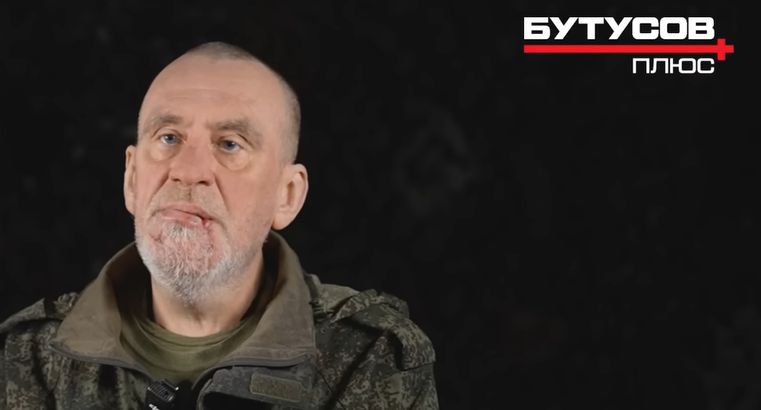
Yes.
When were you mobilised?
The stamp in my military ID says September 28, 2022. In May 2025, they took away our mortars and said they would be transferred to our regiment, which was supposedly in Kursk Oblast. Then they began taking personnel from our mortar battery and sending them in as infantry. They said we were going toward Kupiansk.
You were sent from a mortar crew into the infantry. Did that not surprise you?
You do not ask questions there, and no one is going to answer them anyway. My personal opinion is that there was a shortage of personnel. That is my personal opinion. Because there were no reinforcements, nothing. Those of us who were directly from the mortar battery were brought in one by one.
Where did you enter Kupiansk?
I do not remember the street in Kupiansk; I showed it like this. The start was near Nova Poshta, but those were already urban buildings, I think there were five-storey apartment blocks there, not far from the cathedral on the square. I do not remember the street there. When I arrived, there was already a comrade from my unit there, call sign Marik. He had been dragged in earlier than me. On October 2, 2025, after our FPV delivered a package, Marik went to a designated place to pick it up. About five to ten minutes after Marik left, I heard single shots and Marik shouting. I went down to the first floor. He had run into them; a group of soldiers from Ukraine’s Armed Forces had spotted him. Marik was mortally wounded, meaning he ran into the entrance hall and died. On October 22, 2025, I moved out myself. My point was over there on the other side, on Kharkivska Street, a lyceum, I do not remember its number, a three-storey red building. The command told me over the radio that two comrades with call signs were supposed to be waiting for me there. One had the call sign Stroitel, the other Big G. Stroitel was sent farther on, to the south, southwest. And they said I was now the senior man, and Big G was under my command. The task remained the same: visual and acoustic observation. If we spotted or heard the sounds of moving equipment or an enemy group, we were to report it to command immediately by radio.
Is Big G a foreigner?
No, Big G is a call sign. He is a man from Africa, from Kenya.
Joseph Wairoto Kabugi, a serviceman with the 121st Regiment of the Russian Armed Forces:
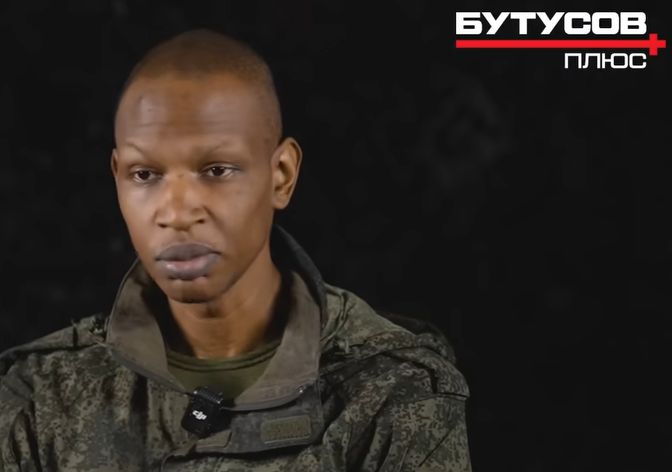
My name is Joseph Wairoto Kabugi. I am from Kenya. I was born in Nairobi. I was born and raised in Nairobi. And I live on Nairobi Street, in a place called Uiru.
How did you end up in the Russian army?
I came here to look for a better life. And this job, this opportunity, came up. Novgorod. That is where we signed the contract. Okay, the person who told us said we would serve in the war for a year, and then maybe you would choose another job. Maybe you would install control systems, video surveillance, or work as an engineer or in radio communications. I also worked with radios.
When did you come to Russia?
In August.
In 2025?
Yes, in 2025.
How many foreigners were with you?
There were five others with us.
Also from Kenya?
Yes, we met here, but we did not arrive at the same time.
How did you communicate with him?
Pavelichev:
As they say, with gestures. He did not speak Russian at all. Then, after some time, I only taught him swear words, and Russian ones at that, because it was not that he flatly refused. And I am not a teacher, and he sort of...
Did you not find it strange that a citizen from all the way in Kenya was in Kupiansk?
Same thing.
Were you shocked?
We were shocked. Plus, he did not have a radio. There was only one radio in their two-man team, and only Stroitel had it. So he took it with him, because he was guided by a UAV. And we were left with one radio, two assault rifles between us, and he was not even given grenades. Well, I was not given any grenades either. And eight magazines for the two of us.
Joseph Wairoto Kabugi:
A few words. If you tell me, "Let’s go," I know that we are going. If you tell me, "sit down," I know. If you tell me right, left, I know. These are the basic words you need to understand.
At that moment, when you reached the point where there was another man from your regiment, what was his call sign?
Yermilov:
Don. I moved over to him, to a house. It was an ordinary house, normal. There was a basement there and everything. And we stayed there. Well, he was... Yes, he was cooking food. He lit a fire. He was preparing it, and the wall heated up. And at night, a Baba Yaga drone tore that house apart. So we moved into this three-storey building. Somewhere in what looked like an atelier or something. And we stayed there.
And what happened to Don?
He went to look for something, to find some food or a package. There was nothing to smoke. So he went to look. And the drones. They smashed him up. I told him, "Drones, surveillance is overhead." He said, "Come on, they are not after us." But he had been there earlier, since September. Since early September. Well, I will not lie. Basically, he said he had been walking around, and nothing had happened, and there had not really been many drones. And when I was there until November, there was not really anything like drones constantly hovering overhead. You could move around freely. Maybe surveillance would hang overhead for 10 or 15 minutes, maybe half an hour, and then you could move freely. Movement was not a problem. In early November, mortars mainly started working, but not against us; farther away from us, deeper into Kupiansk. That would be to the northeast. Not against us. And then against us, too. We went from that house into a basement. Then, on December 25, they smashed that basement. Another basement, then a third, a fourth.
They chased you around Kupiansk, right?
Well, around Kupiansk, yes, within the grid square, because we were not allowed to leave the square or retreat.
Joseph Wairoto Kabugi:
At some point, I got scared. I even told Yogo: I do not want to die in Kupiansk.
Pavelichev:
From December 25, when our basement was discovered, we were with Soyuznik, three of us officially.
Late last year, Sergei Kuzovlev, the commander of the Zapad Group of Forces, told Putin directly that Kupiansk had been captured, and he received the title of Hero of Russia for that.
This is the first I am hearing of it from you. We were not told anything like that. They said we still had many combat missions ahead. That is basically what the command told me after every report, back when supplies were still normal, over the radio. My radio was working 24/7. Our capture happened after four positions, as we were running between them. I got exposed when I went to pick up a package. They saw me from surveillance. Soyuznik got exposed somewhere, too. And on March 17, 2026, they were simply clearing the area so they could assault us, because there was a slab piled up above us. And beside us, that opening, the one we had dug out ourselves, we would block it with bricks, both during the day when we fetched water and, accordingly, at night.
Yermilov:
We placed a TM mine about three meters from the entrance to that basement. The basement was inside a house, and the house had collapsed over the basement. We dug through there; there was a passage. But I was concussed. By then, there was no food or water left. What can you do when you want to live? I dug those bricks out and climbed out. There was fog. The weather was good. I knew where to get water. I quickly slipped through, filled up some water, and dropped it down into the basement. There was no food. I thought, there is fog, it is fine. So I went to the neighbouring house. I opened the door, and there were two assault rifles pointed at me. I closed the door. They shouted: "Stop." There was another rifle through the window. They said they would not shoot. They opened the door. That is how I was captured. They already knew where we were. Then they asked: "Will the other two with you surrender too?" I said: "How would I know what is in their heads?" They said: "Well, let’s go." They specifically led me there. They knew where we were. They had four more TM mines lying there. They said that if I had not come out, that would have been it. They would simply have buried us there, and that is all.
Pavelichev:
About 10 or 15 minutes later, I was near the exit and heard my call sign. They shouted to me and said that he had been taken prisoner. And right away, I heard the soldiers of Ukraine’s Armed Forces offer us a chance to surrender. So I surrendered immediately. I said: "Big G, we are coming out to surrender."
You spent quite a long time in Kupiansk, with constant problems with water and food. Did you not think about surrendering earlier, before it came to that?
Yermilov:
Well, how do you surrender either? Damn, you are scared. They will just kill you. To get up and go surrender. God knows, maybe they will shoot you right away or torture you. Well, on the one hand, yes. And the drones, everything. But somehow surrendering was not really an option.
Tell me, you have a wound. What caused it?
Pavelichev:
The wound is a gunshot wound. It happened on February 25, 2026. I went to pick up a package, a little present. Then fire opened on me from the left. I did not see where from. I think it came from the direction of the railway. That is near Kharkivska Street. I had already picked up the package, but I dropped it, of course. Then I ran back to the house where we were staying. Well, to the basement.
Where did the bullet hit you? Was it only a grazing wound?
Here, yes. Well, it went straight through and slightly caught my jaw. My teeth ended up like this. So I was lucky. I was lucky, you could say, several times. The first time was when I ended up in direct fire contact with a soldier from Ukraine’s Armed Forces. The second time, I was lucky with the bullet. The third time, I was lucky that they offered me a chance to surrender instead of eliminating me right away.
Do you think you will be lucky a fourth time?
You mean a fourth time, with a prisoner exchange? For example, I will do everything I can to avoid being sent back here, if the leadership of the Ministry of Defense sends me, if I do end up in an exchange or if nothing like that happens here. I will do everything I can not to end up here again. Well, this is not my war. In general, this war is wrong.


