



"Mission accomplished": how SOF recovered body of Lithuanian volunteer from enemy territory
Thomas Valentelis was a 20-year-old Lithuanian volunteer with the International Legion of the Armed Forces of Ukraine. He came to fight for Ukraine—and was killed on March 13, 2025, in combat in the Kharkiv region. At the time, evacuating his body from enemy territory seemed nearly impossible. Eventually, fighters from the 8th Special Operations Forces Regiment took on the task. A brief window of opportunity opened when the snow began to fall. The command rang out: "Plus, start. " A little over an hour later, the report came: "Mission accomplished."
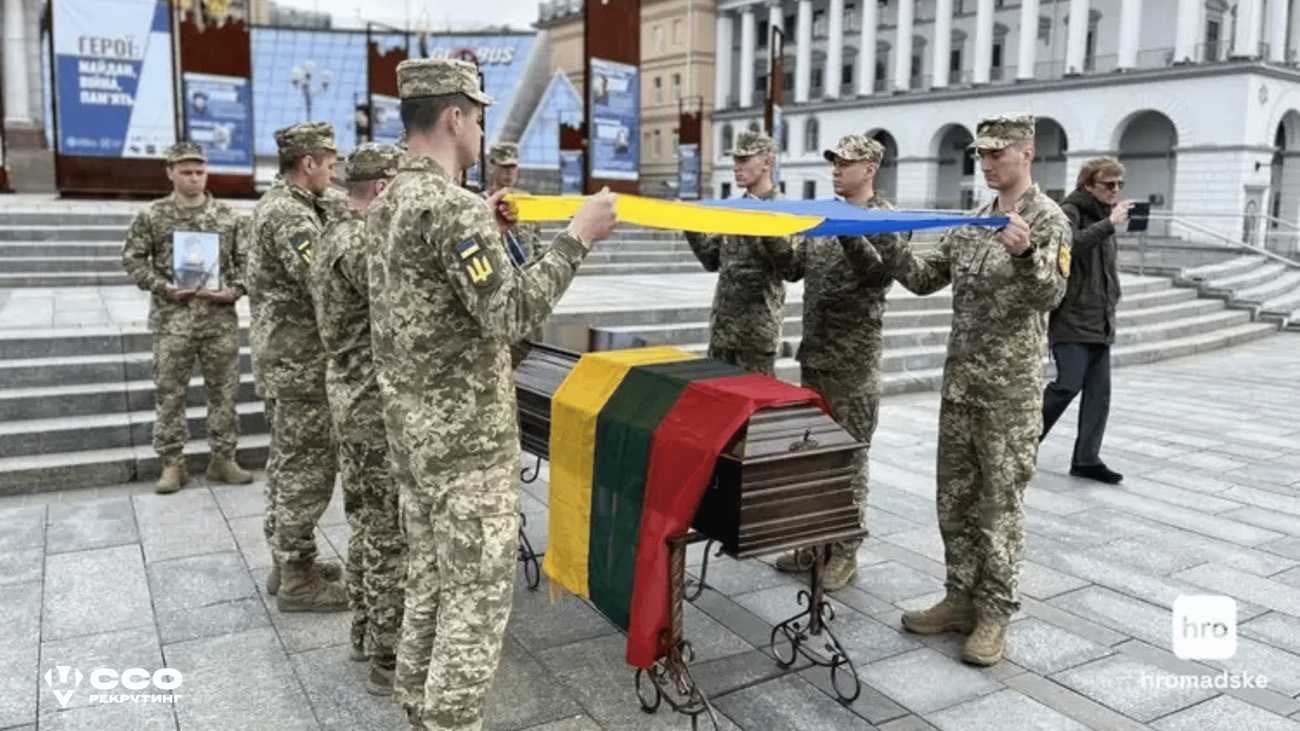
This special operation was codenamed ‘Envoy’. The Special Operations Forces had been preparing for it for over a week: conducting reconnaissance of the area, training, and planning the exfiltration route and diversionary actions. As a result, the Lithuanian’s body was successfully evacuated from right under the enemy’s nose. For their professionalism and bravery, members of the Special Operations Forces were awarded a state honour – the "Order of Merit of Lithuania" – by Lithuanian President Gitanas Nausėda.

The participants – fighters from the 3rd Detachment of the 8th Special Operations Regiment with the call signs ‘Skif’, ‘Saian’ and ‘Shustryi’ – recounted the course of what was, without exaggeration, a unique special operation.
Thomas’s first combat mission
Tomas Valentelis was born in Lithuania, lived in the UK for a time, and when full-scale war broke out in 2022, he openly supported Ukraine. In the summer of 2024, he joined the International Legion of the Ukrainian Armed Forces.
"Who wants to go on the mission?"
Thomas raised his hand.
"Are you sure you want to go? Aren’t you afraid?" the commander asked again.
"I really want to," Thomas confirmed.
Thomas’s father, Dainius, was told the exact words of this conversation, which took place in early March 2025. By that time, Thomas had been in the army for almost six months. He had trained well and did everything with enthusiasm. And now he had the chance to go on his first combat mission. It seemed straightforward: to dig in positions on the second line of defence, north of Kupiansk, near Dvorichna.
However, a hundred metres away, the Russians had planned to do the same. A firefight ensued, and one enemy soldier was killed. As Thomas and his comrade were retreating, they were pursued by drones. After a grenade was dropped, Thomas sustained a fatal wound.
In this sector, the front line was shifting rapidly, and the enemy was advancing. The body remained behind the line of contact.
Why it was so important
"We received orders from headquarters," recalls Skif, chief of staff of the Special Operations Forces tactical group. "We had to act quickly. We met with a representative from the Lithuanian side. We found out certain details, returned and drew up an initial plan."

They considered various options. It was over 10 kilometres on foot to the target. In other words, getting there wasn’t a problem, but how could they remove the body and remain undetected?
"Of course, there were doubts; we assessed the risks involved in the special operation," continues SOF operator Saian, who took part in its planning. "This man had come from abroad and shed blood for our country. It was an unconventional special operation; it did not alter the tactical situation on this section of the front, but it had a different significance – a human and inter-state one. Within the Armed Forces, this task could only be carried out by the Special Operations Forces. That is our speciality – crossing the front line, operating behind enemy lines."
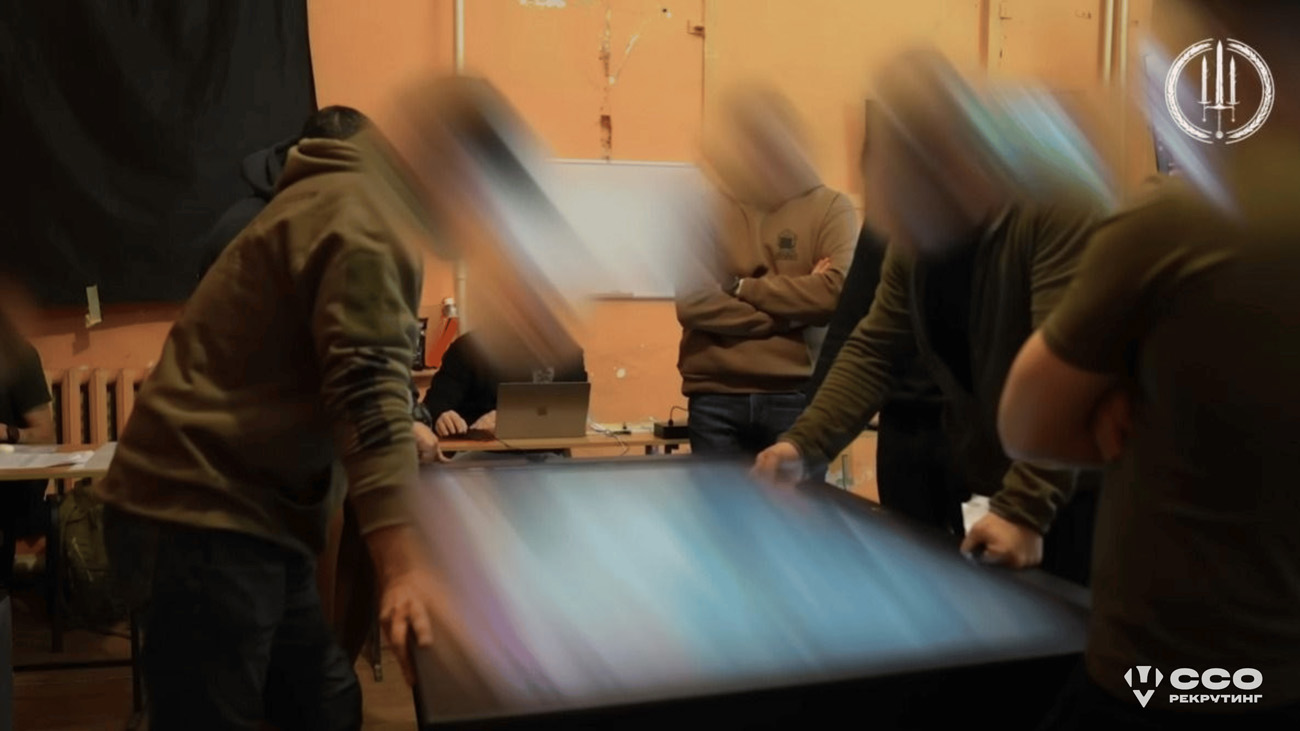
Hundreds of factors were taken into account during planning. Where to enter from. How to move. What protection was needed. And what to do if things didn’t go to plan. Previously, Special Operations Forces units had carried out tasks of varying complexity, including the evacuation of VIPs and cargo. The main thing was to plan the group’s actions and coordinate support. A similar wooded area and the exact same ravine where the body lay were found for the training exercises.
A plan with no room for error
Infantry units were asked to provide data on the location of enemy positions. Three evacuation options were developed.
A foot patrol, a gradual advance on foot between friendly positions, and a rapid raid using light vehicles, such as buggies, quad bikes or "Hummers". After assessing the risks, the latter option was chosen: it offered the chance to move in quickly, retrieve the body and withdraw before the enemy had time to react.
"We chose buggies for transport because they are more spacious and have high off-road capability," explained Skif.
We coordinated separately with neighbouring units of the Defence Forces. We informed the infantry units, and an officer was stationed at the command post for rapid response. After planning the route, the special forces first walked the path they were to take later. Based on the weather forecast, two dates were set for the special operation. On the first date, everything was ready, but the weather did not deteriorate. The launch was cancelled.

Under cover of darkness
We had to wait four days for the second attempt. At one o’clock in the morning, the group set off for the target in two buggies. "We waited for about another hour. We watched what was happening in the area, how the enemy was operating, where the shots were coming from, and where the artillery fire could be heard. Then the weather played into our hands – heavy snow began to fall, exactly the kind we’d been waiting for," recalls Shustryi of those moments. "We reported over the radio that we were starting, as the weather was favourable. In reply, we heard: ‘Plus, start’.
At the same time, diversionary manoeuvres were prepared for the enemy. In one area, two ‘Hummers’ carried out a simulated attack, whilst in the neighbouring area, smoke shells were fired from a mortar every five minutes. "The main idea was that, just as our group approached the target, the enemy would be distracted by the huge column of smoke produced by the shell from our mortar," explains Skif, describing the multi-stage plan.
The weather was ideal for the raid. Deep into the night, heavy snow. No enemy "Mavics" or FPVs. But poor visibility and wet ground slowed the buggies down. What saved them was that every special forces operative knew their actions down to the last detail, and what to do if things didn’t go to plan. The route was clearly marked on the map.
"The road was difficult; we had to drive through potholes and open fields, bypassing enemy positions and mined areas. This requires experience and skill from the driver," says Saian. "The operators monitored the drones; we had two electronic warfare teams, two reconnaissance teams, FPV drones and strike bombers. In case of an emergency, a rapid response team in ‘Hummers’ was on standby. Evacuation points were also designated for the medical evacuation vehicles to go to. All actions were coordinated in real time by headquarters."
Our "Mavic" kept the group in view from about a kilometer away. In other words, we could see small dots moving across the terrain. Thanks to the "Harris" radios, we had a stable connection with headquarters.
The group quickly reached the spot where the fallen Lithuanian lay. We stopped 50 metres away, each taking up a position in the sector. We checked whether the object was mined and began to carry out the body. Four minutes later, the group came under small-arms fire, and an enemy mortar began firing.
"We assessed the situation quickly; we were armed with assault rifles, and our heavy weapon was an M249 machine gun. We suppressed the enemy’s firing position with machine-gun fire, retrieved the body and quickly moved back," says Skif. The group remained at the site where the Lithuanian had been killed for no more than ten minutes. And within another half an hour, they returned to the point where they were expected.
An operation supported by dozens of people
The evacuation of Tomas Valentelis’s body demonstrated the effectiveness of small groups when it comes to a specific but crucial task. Yet behind every action of a small group lies a vast system.
That night, the entire unit’s command staff was at headquarters. The duty shift, the battle captain, the signalmen… The reconnaissance team, the armoured group, the evacuation team, and the drone pilots were all at their posts. It was this combined effort that ensured the successful execution of the mission.
"I wouldn’t say it was difficult. Every task requires a serious approach. We carry out analysis, planning and support. And only when we are certain that everything will be safe do we begin work. From the first to the last minute, I was one hundred per cent confident in my team," Shustryi concludes.
How often are special forces assigned such missions? We only find out about the vast majority of completed operations after the war has ended, and it is by no means certain that they will be declassified. At the end of May, it will be the tenth anniversary of the creation of the Special Operations Forces, and the number of special operations carried out runs into the thousands.
"Such tasks arise constantly," says Skif, speaking from experience. "We searched for pilots of downed planes or helicopters on the enemy’s territory. Whenever there is fighting, such challenges arise. There was no question that this operation had to be carried out. For us, it was a matter of principle. Thomas came from another country, fought for Ukraine and died on our soil. We had to return him to his family. And the fact that the SOF were specifically tasked with this mission speaks for itself."
These are precisely the kinds of operations carried out by Special Operations Forces personnel. Want to serve with the best? contact SOF Recruiting.
Phone: 0800357174
Dmytro Zemskyi for "Censor.NET"


