



Call sign Klever: "FSB officer held pistol to my knee and asked if he should shoot. I started laughing out loud"
The full-scale invasion caught him as a teenager—at a moment when everything was just beginning and the future seemed open and full of possibilities. Instead, he faced occupation, checkpoints, interrogations, his first acute firsthand experience of real war, leaving home, and signing a military contract at 18.
Since that morning of February 24, 2022, his path has been rapid and uncompromising: from civilian life to the front line, from the unknown to responsibility.
Today, he is a UGV company commander of the 53rd Brigade of the Third Army Corps. His call sign is Klever. Every day, his unit performs tasks that until recently seemed like an experiment: delivering ammunition and supplies, evacuating the wounded, and taking on risks that previously fell upon people. This interview is about growing up in war, the cost of decisions, the evolution of modern combat, and how technology becomes a way to preserve the most valuable thing—life.
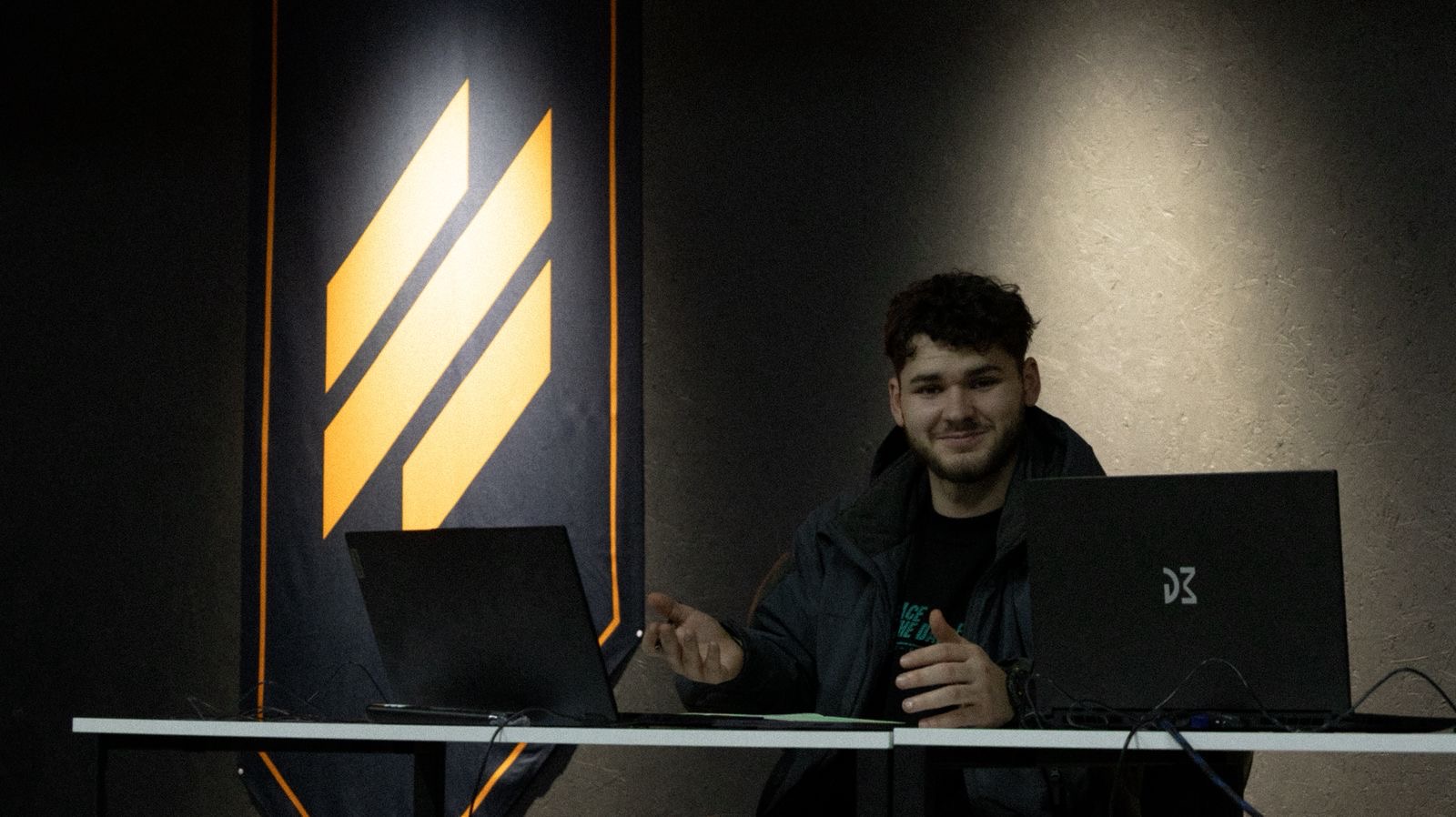
"When the war started in 2014, I was in secondary school," Klever recalls in our conversation. "That was when my father went to fight. He was a tanker in one of the AFU brigades. He fought for a year, returned, but remained in the service. I used to visit him at the training ground. I remember how they gave me an AK-74 in the summer. I grabbed it by the wrong end, and the barrel was so hot that it even burned my hand."
- Such trips often cause excitement among teenagers. How did you react in general? Did you talk to your dad about the war?
- We talked about the service. I asked him what the military was like, what they actually did there. He told me about ranks, conditions, etc. However, back then, the army was still of the Soviet model. At that moment, I understood that I wouldn't join such an army.
- When the full-scale invasion began, you were still in school. What was it like for you?
- Yes, I was studying at the Kherson Science Lyceum of the Kherson Oblast Council. I lived in a dormitory. But due to the pandemic, we were sent home two days before the invasion. On the morning of February 24, my mother woke me up: 'Wake up, the war has started!' I thought: why joke like that?! My girlfriend called and also said it was war. I get up, see my dad bustling about, packing a backpack, and my mom helping him. I washed up, took a cigarette rolling machine to roll him some cigarettes to take with him. Then I go outside and smell gunpowder. I hear bursts of AK fire and realize: looks like it's a real war! Dad packed up and left, while my mom and I stayed behind. We ended up under occupation.
- How did the Russians find out that your dad was a serviceman and that you were texting friends, demonstrating your attitude towards the occupiers?
- My mother and I were driving to Lazurne on business. I had brought my phone along to write down information about scooter spare parts. There was no internet, so I planned to use it for taking notes. So, we are passing through their checkpoint. They ask: 'Do you have a phone?' I immediately gave myself away, my hand automatically reached into my pocket, and I realized it was too late to say I didn't have one. They told me to get out of the car, left my mother there, and sat me on a sun lounger. I lounged back, crossing my legs. They went: 'Are you f@cking crazy?!' I sat up straight. They took the phone, handed it to a person who, as I understand it, knew how to work with it, and the check began. Meanwhile, the other b@stards asked me history questions. They asked when the Second World War started and when the 'Patriotic War' did. I replied: 'The Second World War in 1939, and the Patriotic War in 1941.' They didn't want to admit that they were the aggressors back then, too. They kept repeating that they had now come to liberate us, and so on."
They also asked about "Azov." After all, they saw in my chat history that I had talked about it with a friend. They asked what I knew about Khimik (a fighter who joined "Azov" at 18 — O.M.). I said he was a warrior. They started trying to convince me that all "Azov" members were criminals, Nazis, and things like that.
They also found out that my father was a serviceman. They questioned me about him, too. They looked through my phone gallery, where I had photos of greenhouses. They claimed these were their hangars with military equipment. I explained that they were just large greenhouse tunnels near our house. They didn't believe me. They thought I was transmitting coordinates. And in my chat history with my dad, I had sent a bank card number so he could transfer some money. They decided those were some kind of coordinates. They started checking them, and they actually matched: it showed the Hola Prystan district. Just a coincidence. They didn't believe me either; they didn't listen. They were saying: "What the f@ck are you lying about?!" and so on. After that, I didn't even try to prove anything to them. There was no point.
- Did they use force against you? Did they beat you?
- Yes. They even held a pistol to my knee when the FSB arrived about two and a half hours into the interrogation. In fact, these were Russians who had lived in Ukraine for about ten years before the full-scale war, and then activated upon receiving a signal.
- How do you know that?
- After this situation, I told one of my buddies, and he knows the guy who came. So this FSB officer held a pistol to my knee and asked if he should shoot. I started laughing out loud; that was how my defense mechanism kicked in. He went: "You're f@cking crazy!" But he didn't shoot. A few minutes later, he actually wanted to shake my hand, tried to hug me, something like that. I never did figure out what that was about.
Then my mom stepped in, she started saying that they would re-educate me, that I would read books like Pushkin's. We had to come up with something on the fly. They let us go. We arrived in Lazurne, I caught my breath, and I felt my head pounding and my heart racing! And when we were returning, they didn't stop us. My father called. Because they had tried to call him too, but couldn't get through. He realized something was wrong because I don't normally do things like that. Mom told him what had happened. My parents decided that we had to leave. We booked tickets—there were people who helped families get out. A week later, we left. In general, the whole process takes a long time, checkpoints, inspections. They didn't pay much attention to me because I wasn't 18 yet. You know, when we arrived in Ukraine, I even felt that the air was different here. I just wanted to breathe. It's simply beyond words. At first, we were in Zaporizhzhia, then we met my father in Vinnytsia. We were later told that a couple of days after we left, the b@stards came to our house, they were looking for us. It wasn't for nothing.
- So you left just in time?
- Exactly. My mother wanted to go back a few times to finish some things. Moreover, our property was left there. But it was impossible. We lived in Kyiv. I was studying at KPI. I finished my first year. But everything just didn't feel right to me. It was online learning, after all. I didn't attend classes, didn't really talk to anyone. I just sat and listened to the lecturer. I didn't really like that. After the New Year, I thought: I'm about to turn 18, and I'm joining "Azov." I only told my father. He tried to talk me out of it. But then it turned out that both my mom and relatives already knew. A month later, I met with my dad. He told me to go to Poland, and then to Canada to my godfather, who also called me. The conversation lasted an hour. I spent the entire time keeping silent and listening to why I needed to leave. Eventually, they convinced me together, and I went to Poland. They started preparing my documents since I didn't even have a passport. While waiting, I worked. And then I turned 18. I finished working for a month and bought a ticket home. I told my parents over the phone that I planned to move to another Polish city where an acquaintance of mine lived. And so I arrived in Ukraine. My dad calls and asks, "Where are you?" I say: "Well, in Kyiv." I rented an apartment here. For a week, I thought about what to do. Then I told my parents that I was going to fight. I came to the recruitment center, where they told me about the "Triika."(the Third Army Corps - ed.) I didn't know about it, only about "Azov." They explained everything to me. I passed the first stress test, where you had to do squats, jumps, push-ups, run, etc., they were testing endurance to the maximum. Some people gave up. I managed. They told me where to come and what to bring. I had to gather the necessary documents. There was a problem with my school certificate because I couldn't physically collect it from the Kherson region. I only had an electronic version. Eventually, we resolved this issue.
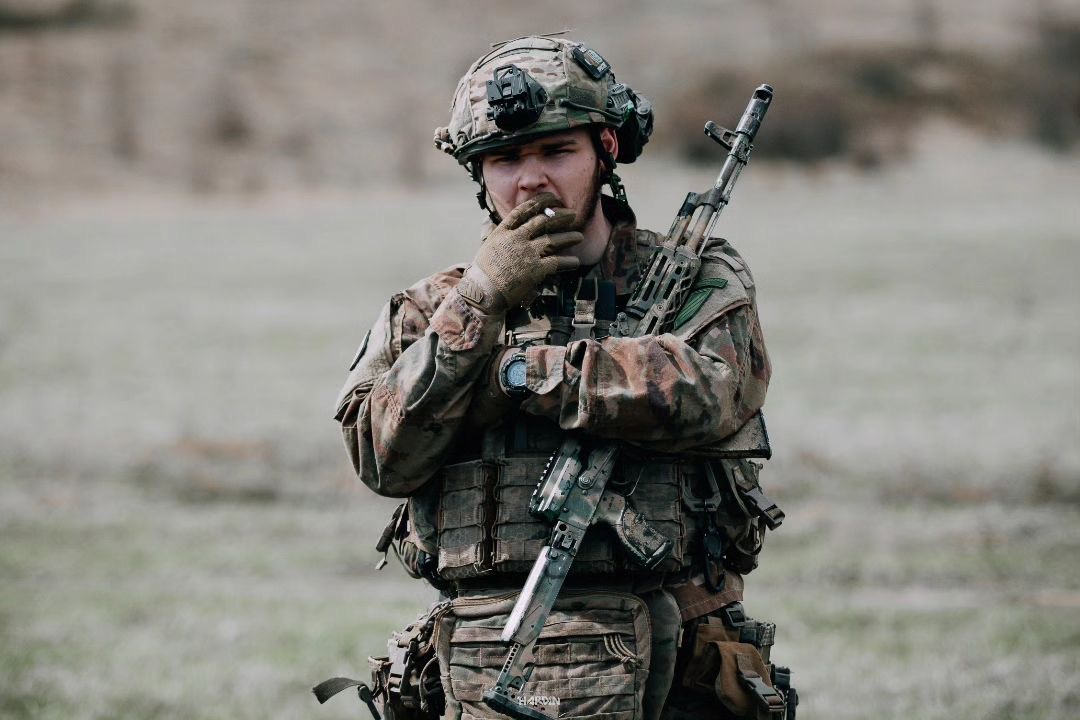
- And so you ended up in the "Triika".
- There was a group of us taking special courses. The commander of the third company of the second assault battalion came to visit us and told us about his unit, the cult of the three grenades, and so on. Basically, he recruited us. That's how I became an assault trooper. Though I actually wanted to join the infantry. First, we had training and combat coordination. Then we ended up in Avdiivka. There, the second assault company and our third company from the "Triika" held the most difficult sectors, where there was a lot of close-quarters combat with the enemy.
- Tell us how you lured several Russian assault groups to your position there and killed them.
- Through an operation by our intelligence, we found out the b@stards' password: "Belyi-belyi! Monakh-monakh!" ("White-white! Monk-monk!"- ed.). At that time, we had constant clashes with the bastards. They wanted to advance. Their commanders told them that it was marked on the map that their guys were there, so they needed to go; that's how they deceived them. The first groups were walking completely relaxed. We would wipe them out on the spot. And so, during one firefight, we realized they couldn't see us. At the moment, we just decided to say the password: "Belyi-belyi!" They replied: "Monakh-monakh!" And then a conversation started: "Guys, are you on our side?" Before that, we had fucked up three of their IFVs with troops, a tank, and captured Kalashnikovs that had their companies and call signs written on them. Their documents listed their brigade. So we used those to introduce ourselves. I remember: Demon from the ninth company (I can't recall the brigade anymore). They went: "Oh, bro!" We said: "Come over to us! Everything's f@cking great here!" Five of them were already walking toward us, without a care. From two sides, we just raised four barrels like this—bam, and bam-bam-bam-bam! We f@cking wasted all of them.
Later, there was a second time when the bastards were so scared that they answered very cautiously. But we kept calling them over anyway, saying we were their guys. They still came, but warily. By that point, about 60–70 corpses of the bastards were already lying around us. These guys were just walking around them. We used the exact same tactic again: firing from two sides with four barrels. When we saw we hadn't killed everyone, we had wounded a few, we pelted them with grenades and finished them off.
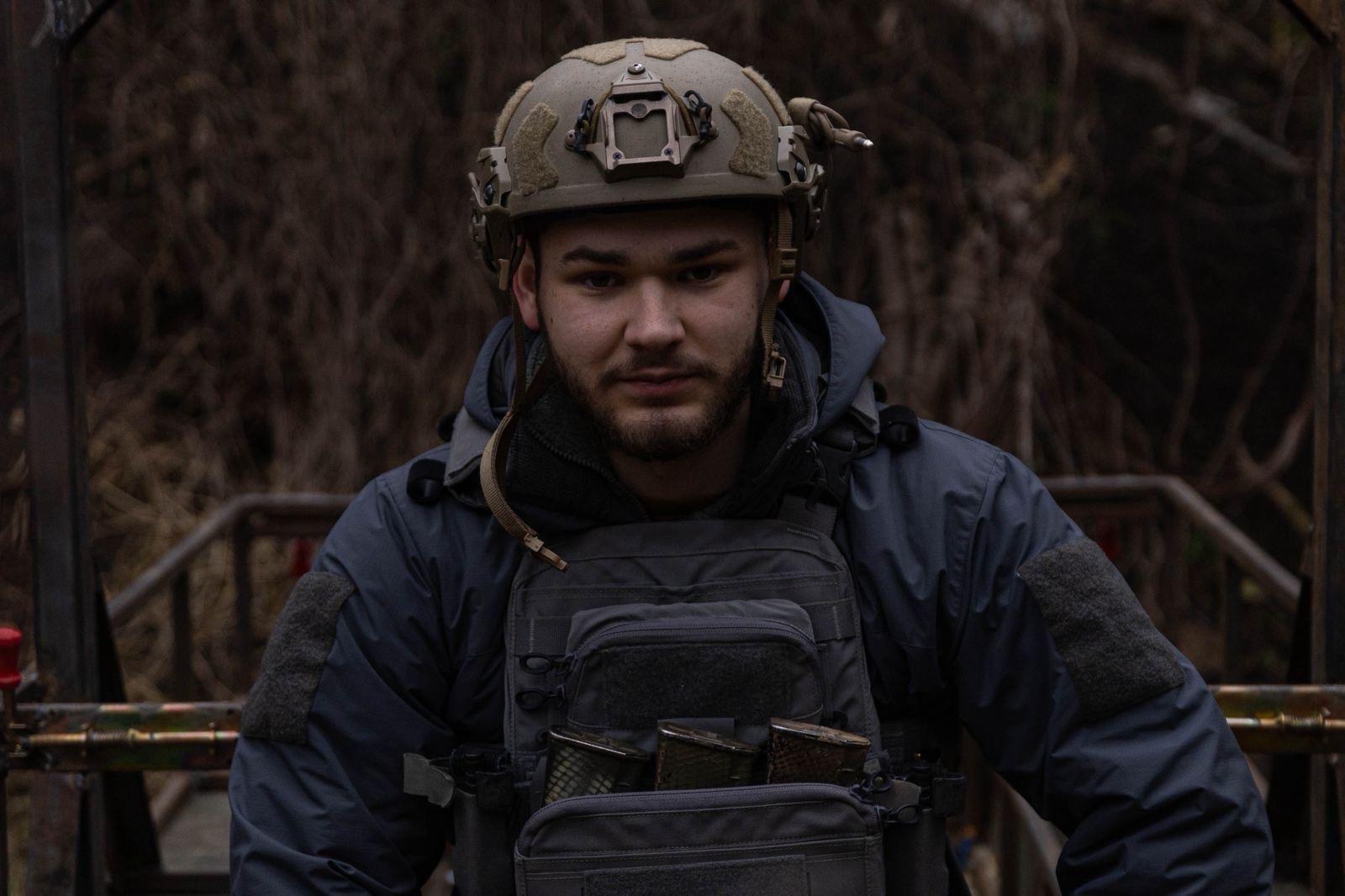
- Couldn't you take them prisoner?
- The situation didn't allow for it. You start taking him prisoner, and you'll just get shot from another house. There were plenty of positions from which you could be killed. Although we did try to capture some of the wounded, they didn't want to themselves.
- How did you transition from the infantry to UGVs?
- I'll explain. When I was still in the "assault trooper school," Mavics, FPVs, and so on were already appearing. And when we were in Semenivka, it was very difficult for us to carry supplies and ammunition; the logistics were tough. We had to build up a defense, but we couldn't bring in items like logs to reinforce our positions. There weren't any on the front line. We dug trenches from scratch.

And the shelling was intense, artillery pounded us constantly, and drones started flying around too, especially FPVs, which immediately wounded some of the guys. Makar (the squad leader) figured we needed to make it easier to handle logistics. UAVs weren't the answer. Even with a "Vampire" drone, you can't carry a log or two. And that's a problem! They are badly needed. If you don't fortify your positions properly, they'll overwhelm you, if not with artillery, then with drones. In a day or two, you're gone; at best, you'll end up WIA. So we had to look for options. The brigade had UGVs, but few people used them. The first UGV operators in our unit were Zador and Khymera, who were already carrying out operations in Orlivka and Semenivka, transporting supplies and even the wounded. Yes, it was a bit difficult. But we needed to show that it works and will become a standard thing in the future, so let's invest in it. That's exactly what Makar said. He and Bar decided to kickstart the UGV action. They asked the guys if anyone wanted to do it. I did. But nobody was going to let me go, I hadn't even spent a year in the infantry yet, so I had to wait, and then we'd see. Makar left. Zhovtyi took over his position, and then it was my turn. I went to sergeant courses, became a sergeant, and served as one for a bit. My last infantry positions were in Makiivka and Nadiia. By that point, things were very difficult for me because I had sustained multiple concussions. When 20 FPV drones land and explode near you, it really takes a toll on your head. In Makiivka, I would feel physically awful at the positions. So much so that I couldn't stand on my feet at all. Dizziness, headaches, nausea, and vomiting. Pills weren't helping anymore by that time. And we would stay at the positions for two weeks at a time. I really didn't know what to do when I felt that shitty. I decided: as soon as I get out, I'll talk to the commander, I need to get checked out and see what's going on. I went to a Kharkiv hospital. Got checked out. I received such a huge stack of paperwork that I was a bit stunned. I showed it to the commander: "Here's the situation. I'd like to transfer to Makar." He approved it. So another guy and I transferred to UGVs. For a month, we went to training grounds, driving them around there. During this time, I started feeling a little better physically, but my condition still wasn't great. I was told I needed proper rest. I worked in the rear for a little bit. It got even better. I returned to the positions. After three missions, I already became a crew commander...
- What did you transport back then?
- A lot of things—provisions, ammunition, even the wounded (WIA). I managed logistics, operations, and operators. That is, I was doing more organizational work. I went out to the positions as well, but not as often. I was a duty officer because there were few of them, and some people had arrived, so we had to work. Then Makar and Bar, who created this unit, moved on to form a strike UGV company. Meanwhile, Lakosta, Shorokh, Maior, and I were left behind to continue developing the platoon. Later, I received an offer to set up the UGV unit of the 53rd Brigade. If it has to be done, it has to be done! Alright, we'll do it. I already had some experience: infantry, crew commander, duty officer, all of that came in handy. I understood the specifics of the work because I had gone through everything myself. This also played a role in the guys' attitude, they don't look at me as some young idiot who came into power...
- By the way, it's very interesting: are there any signs of ageism?
- No. I have guys who are 30 and some who are 50 years old. None of them looks down on me. You can notice this just from the way we communicate. I give an order — they execute it. Often even more than what is required.
- Is it difficult to command in general?
- There must be strict discipline and an understanding of what we are doing. I'm used to facing various situations together with the guys. I talked to them as equals. Back in the day, those older than me taught me that I should address them informally, not formally. We all came to fight. Some would say: "You've already been through a f@cking lot, unlike me. You and I are in the same environment, in the same trench. If anything happens, you'll pull me out, and I'll pull you out."

- And what's this story about you being Santa Claus on New Year's and delivering presents?
- We were in the Pershotravneve sector. They brought us 800 logs. We delivered all of them in about a month and a half. And on New Year's, we were transporting not just logs, but also provisions, water, cakes, and other things for the guys so they could have something to eat and drink in the trench.
- At least creating some kind of atmosphere, if one can even put it that way...
- Of course! Though overall, we didn't set up a Christmas tree in the dugout or hang up fairy lights. Nobody was resting. We were working.
- Recently, your brothers-in-arms from the 60th Brigade of the corps evacuated an elderly woman from the kill zone using a UGV. Have you had anything similar?
- I don't recall anything like that. But if needed, we will definitely organize such an evacuation. And that case, it was a great job. We must preserve the lives of both civilians and military personnel as much as possible. We don't have as many human resources as the b@stards do. We want to work more with technology, to improve, so that our results are even higher in the future than they are now. We have already shown that UGVs are pretty cool. For example, my unit currently makes 20–30 logistics runs a week. This is an indicator that it makes sense. Because carrying this cargo on your back would take a very long time. And you'd waste a lot of energy. In our reality, it's better to move without heavy baggage, carrying a fancy anti-FPV shotgun, rather than hauling everything on yourself. Even if you don't walk but drive, you risk the driver and the car. That's why I say: it's better for a UGV to get blown up than for a person to get hurt. Not to mention efficiency: can a human carry five hundred kilograms? No. But a UGV can. You can't even compare the two.
- Given the situation on the front line, particularly such a dominance of enemy UAVs, do you lose drones often?
- Of course, drones are lost. So we just select the most favorable conditions for us, when the b@stards aren't flying, and we can move. Let's put it this way: we work according to a system.
- The other day, even the President spoke about unmanned ground vehicles. He instructed the Ministry of Defense and the General Staff to supply the army with 50,000 UGVs this year. It seems that their significance is already understood and recognized at the state level as well?
- That's very good, but the situation is such that they were needed the day before yesterday, not tomorrow. It's cool when you don't have to worry about the number of UGVs. But when you only have one, and you realize you need to deliver supplies to a lot of guys, and you get a flat tire, or an FPV drone hits it, and that's it, the asset is gone. When it's damaged, you have to go and retrieve it, and at that moment, you're risking people's lives too. It would be ideal not to have to do that. Just like with Mavics and FPVs, you should know that it's a consumable. Meaning, it gets f@cking hit, and you don't care. But as it is, it gets f@cking hit, and you clutch your head: damn, where am I going to get another one?! Unless you buy it out of pocket.
- So, besides the general situation, there is also constant worry about the drone?
- Of course, the operator needs to worry about the drone reaching its destination. If they have a careless attitude, that's bad. And if I don't punish them for negligence, that's not real work anymore. It's the same with the duty officer and the position. My duties consist of quickly catching such f@ck-ups in the early stages and dealing with them. I have pre-built a system to avoid this altogether. My people prepare before every departure; we conduct maintenance on the equipment, and so on.
- Do you think about how the war will end? Obviously, it won't happen tomorrow or the day after, relatively speaking. There are no illusions. But do you make at least some plans for the future?
- I'm often asked when all of this will end. I tell everyone: not anytime soon. I don't look at politicians. From the front line, I can see that the war is dragging out. Therefore, we need to give it our all just to hold out. And later, if we all snap out of it, help, support, and carry out reforms, everything will be fine. But for now, we fight and don't think about the end of the war. We must constantly remember that it will continue. Because when you think only about the good, you are not ready for the bad. While hoping for the best, you still need to constantly prepare for the worst-case scenario possible. If it happens, you are prepared; if it doesn't, then that's great.
Olha Moskaliuk, "Censor.NET"
Photos provided by Klever


