



Call sign Kometa: "We realized that flight to Mariupol with landing force was one-way ticket"
He dreamed of teaching history, but the war forced him to become a direct participant in it. The Deputy Chief of Staff of the Brigade Artillery Group of the 12th Special Purpose Brigade of the National Guard of Ukraine "Azov", call sign Kometa, went from being an "indoor guy" who did not know how to open canned food, to an officer who is responsible not only for himself, but also for his people.
He joined "Azov" in 2014 due to friends and a sense of duty, and later survived "Azovstal", a wound, a helicopter evacuation, and a return to the war. Kometa speaks openly about fear, losses, a commander's responsibility, and his main dream — the return of all captive "Azov" fighters home. He admits: he still considers humane treatment, brotherhood, and preserving the lives of Ukrainian military personnel to be the most important things.
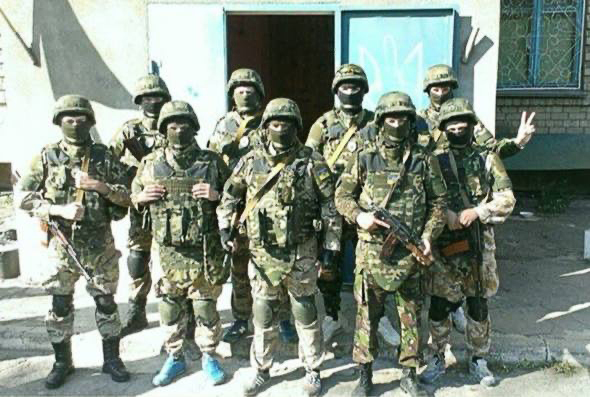
- You joined "Azov" in September 2014 after your birthday. How did your parents react to this decision?
- I hid it for half a year. I told my parents that I would be studying in Zaporizhzhia. Every day, I promised that from the new semester, there would be documents for a transfer. And since the Anti-Terrorist Operation had already begun by then, I told them I was traveling to Zaporizhzhia to volunteer. And every time I took a leave from the base to come home, I would give a couple of hours' notice, saying I was heading to Zaporizhzhia. My grandfather later said he had guessed, because it looked very strange — sometimes I would forget and say I was leaving, and thirty minutes later I was suddenly at home. The only one who knew was my younger sister. Because at that time she was studying at a Mariupol technical college, our mutual acquaintances told her there. She came to see me, cried a little, and that was it.
After half a year, I finally confessed. Of course, everyone was worried, but it was my choice, and no one could influence it.
- Where were you at the beginning? Shyrokyne, Marinka?
- I was in Shyrokyne. Then, in Marinka, but not at the beginning of the fierce battles in which the "Azov" battalion participated, I just had a combat mission.
Overall, I lived at the base on the left bank. "Azov" had three bases, but my friends and I immediately went to the Mariupol one, where we stayed at that time.
- Mariupol is your hometown. That probably adds some peace of mind?
- Of course! Besides, it is convenient: 40 minutes and you are in Shyrokyne; another 40 minutes and you are already at the base, changing clothes and going about your business. It was very comfortable.
- Did you participate in combat?
- In Shyrokyne. Frankly speaking, I was not ready at all, not in the slightest. I was, as they say, an "indoor boy". When we tried to storm an enemy checkpoint during the first firefight in Shyrokyne, I was very scared. And I constantly replayed in my head: "This is a real war, this is a real war, this is a real war!" That is, I just couldn't believe it.
For you to understand, I was so unprepared for all of this that I didn't even know how to open canned food. The guys laughed. I never planned and couldn't even think that I would be a serviceman. Never! I am a humanities person. My dream was to be a lecturer, a history teacher. I definitely did not want to serve. I began to grow up and understand everything about five years after the start of my service. Then I became truly interested in military affairs. Before that, I was there out of a sense of duty, conscience, and principles. I had to be here next to my friends. Even from a historical point of view, it was necessary. Otherwise, it didn't fit into my worldview. But as for having a desire to fight, or proving myself to be some kind of "Rambo", then no. It was very difficult for me. I served in an infantry company. But I was no hero. I had friends who were the first to go on the attack. They joke now: there are those who are born for war, and those who are not. Well, they were in the vanguard. And I was not. I tried to do the maximum I could, but I was not the main hero of these events.

- You served until 2016. Then you left the service, but still participated in the life of "Azov". In 2020, you returned to service. Why?
- My friends were serving. And when I was doing recruiting and was involved with the "Civil Corps", I also became interested in drones. I even unofficially went to the Anti-Terrorist Operation line of contact. We tested different things there. When, as I mentioned before, I grew up a bit, I started to get interested in military affairs again — not just out of the call of my soul, conscience, or necessity, but as a direction of development. My friend, who was serving, offered me to return to "Azov", specifically to his unit, because at that time, UAV operators were in high demand, and I already had some skills. I agreed. Why not?! So that is how I went to serve again, already as a UAV operator, an artillery spotter. I liked everything.
You know, if you compare the resources we used back then and now, it is simply a colossal difference! At that time, our mortar battery chipped in for a drone, which we bought with our own money on credit. I remember, brothers-in-arms chipped in, if I am not mistaken, 100 hryvnias a month for batteries. We had several drones, which we protected and valued very much because the resource was limited. Everything relied on our own initiative, which, in principle, has always been characteristic of "Azov" fighters throughout the entire time.
- What kind of drones did you have exactly? Mavic, Autel?
- Yes. But the priority was Mavic. We only had one Autel. It was more difficult to work with it.
Also, we assembled an FPV drone ourselves, hoping to turn it into a reconnaissance drone, but, unfortunately, nothing came of it, and we exchanged it for batteries.
- You faced the full-scale invasion at the Svitlodarsk bulge, where there were no active hostilities. But you were heavily shelled. You stayed there until March 21, 2022. Then you went to Kyiv. How were you offered to participate in the air operation to break through to Mariupol?
- Indeed, we, eight "Azov" fighters, were on a combat mission at the Svitlodarsk bulge. When everything started, we wanted to get to Mariupol. But we understood that such an opportunity no longer existed. Therefore, we made the decision to go to our friends, acquaintances, and "Azov" veterans who were fighting, to be together with them. Because we were with adjacent units under the same command. It is not very comfortable to face a full-scale invasion with fighters whom we do not know personally. So we made contact and found our brothers-in-arms who were fighting for Kyiv at that time. They offered: "Come to us. We will send you transport." This was important because we had expensive equipment that could not be left behind. We asked the command from Mariupol if we could participate in the defense of the capital. We were told: "No problem!" We arrived in Kyiv. And here another perspective appeared — to fly to Mariupol. The command confirmed: yes, there is such an opportunity.
- Did Redis confirm it?
- As far as I know, yes. I did not communicate with him personally. This was done by the commander of our group (our "eight"), our brother-in-arms Mielkyi, who, unfortunately, was killed in Mariupol. He told us, "There is an opportunity — we have to fly." And everyone agreed.
- This was the first helicopter flight to Mariupol for reinforcement, rather than for delivering ammunition and evacuating the wounded, as it was before. Did you realize that it was a "one-way ticket"?
- Of course, we were perfectly aware of that! You said it correctly: this was the first flight specifically with a landing force for reinforcement. There were eight of us "Azov" fighters and, if I am not mistaken, about 24 volunteers. Many of them were also "Azov" veterans whom we knew personally. The commander of this reinforcement group was our brother-in-arms Kelt (who also later died). He was originally from Mariupol, an "Azov" veteran, who returned from Europe and immediately said he would break through to the city. He is, without exaggeration, a legend!
So I said goodbye to my sister and my girlfriend at the time (she is now my wife). She was just then leaving Mariupol for Dnipro, where I had rented an apartment for her. And I was already there, at the base, waiting for the flight the next night. She wrote: "I have left, everything is fine. Waiting for when we will see each other." She thought I was at the Svitlodarsk bulge. I replied: "Great! Learn to live on your own. Do not count on anything" — all sorts of romantic moments like that...
- So, she did not know you were flying to Mariupol?
- No. She found out only after I was wounded and was already in the hospital. I called her. She arrived. She saw me all bandaged up and said, "The only thing that calmed me down was the knowledge that you were not in Mariupol." I answered: "Sit down, I will tell you something now." That was the story.
- In one of your interviews, you said that you really wanted to see the reaction of your friends when you arrived in Mariupol. So how were you greeted?
- I bought them snus, e-cigarettes, sausages, and cheese with all the money I had. There was more food in my rucksack than bullets. And when I met my comrades there, the reactions varied. Some were surprised, some swore: "Why on earth have you come?!" But the best welcome was from my closest friend. He was simply shocked: "What are you doing here?! How did you end up here?!" I said: "I’ve come down from the heavens" (I’d even rehearsed that line the day before). That was probably one of the few pleasant memories. Because everything else was different. I’ll never tire of repeating: what my comrades from the regiment in Mariupol did was the work of titans. For two or three months, they repelled infantry assaults every single day, under fire from helicopters and artillery, whilst the enemy had complete dominance in terms of equipment and aerial reconnaissance. I don’t know how they held out. Compared to them, I felt like a ‘tourist’.
The third company, in which I fought, consisted of people of the highest caliber. I was shocked. I thought I understood where I was going, that I would be ready, but no. Neither morally nor physically. On the second day, I was already boiling inside — I realized the scale of what was happening. And they had been living like that every day for over a month. It is impossible to describe in words.
- Many of them are still in captivity, right?
- Unfortunately, yes. This is the most painful topic. They deserve to be exchanged in the first place. Even now, in the fifth year of the war, there has not been a situation like the one in Mariupol back then. That is, even the guided aerial bombs (KABs) that the enemy has now, air supremacy, drones, reconnaissance — it is not quite the same. There, in essence, was a cauldron. I literally saw what they wrote in textbooks about the siege of Leningrad. Information was even passed to the positions like this: printed on pieces of paper and distributed among ourselves, because there were no other means of communication at the time. Everyone re-reads the news, as they said, from the "big world". In the same way, when I arrived, I went to the positions and said that I had just come from there, they surrounded me, and I could talk for a long time: Kherson is holding, Kharkiv too, Kyiv stands. They constantly asked about different cities. They worried about others. They understood that Mariupol played the role of an "anvil".
- How were you wounded?
- As I was told, it was a shot from an enemy RPG. Possibly an AGS. Honestly, I do not know for sure. I received a shrapnel wound. It was the sixth day, if I am not mistaken, the third day exactly on the infantry positions. The enemy began assault operations. My brothers-in-arms destroyed a tank with an RPG, knocked out enemy equipment, and engaged the infantry. It seemed like everything was going fine. Then – bam! And that was it – a ringing in my ears, I lost consciousness. I was wounded. That is what I remember.
You know, those who flew into the city were taken out of action very quickly. Some, unfortunately, were killed, and some were wounded. It was very difficult to adapt to such an excessively rapid and fast pace of combat. For example, out of our "eight", our brother-in-arms Mielkyi died, if I am not mistaken, on that very day. Brother-in-arms Kelt - within 24 hours. They dropped out very rapidly. In this regard, due to some circumstances, I was simply lucky – I got off with only a wound. Unfortunately, not everyone had such luck.
- You were also lucky in that the next day, you were evacuated by helicopter, right?
- Yes, it was a coincidence of circumstances. One could think for a long time about why it happened that way. But it turned out the way it turned out.
- The evacuation was difficult. Your helicopter was hit, but you made it on one engine. Back then, the pilot even congratulated you on your second birthday. How long were you treated after that?
- About a month. They removed shrapnel from my head. They said that literally a few millimeters to the right and that would be it – I would not be able to speak. My arm also healed relatively quickly. There are consequences, of course - periodic headaches, slightly worse hearing in my right ear, but it is not critical.
- Why did you return to the war so quickly?
- It seems to me that I even delayed my return. Because my brothers-in-arms, even while I was still undergoing treatment, were already at training exercises and returned to the ranks earlier than me. They constantly called me and said, "How are you doing there? Come on already!"
- And so you returned to the artillery. I recently heard this phrase from a mortarman: "Artillery is mathematics plus adrenaline". What would you say?
- For me, a consolidated brigade artillery group, as it is now, is a synonym for the word team. Again, why am I specifically in artillery? Because after Mariupol, when I returned to the ranks, my brothers-in-arms, whom I know personally, were already in a newly formed mortar battery. They said, "Come to us!" And so we kept going: we started with one mortar, and today we have a brigade artillery group. I ended up here again because of my friends. If it were a different unit, a different structure, I would still go where I feel comfortable working with people.

Speaking of work, I was more involved in artillery reconnaissance: command, control, reconnaissance assets, drones, observation posts, and groups. But generally, artillery itself is mathematics, training, reaction speed, and discipline. Just like in any other unit.
- Where exactly did you fight upon returning to the front?
- Donetsk Oblast.
- It was already a different war: not like the one before the full-scale invasion, or the one in Mariupol. What do you remember from that time?
- After Mariupol, my first deployment was associated with 2014, when a unit was initially being built. That is exactly how it was: "Azov" was being recreated anew, formed again. It was a great responsibility. Because I returned to the ranks and thought I would serve quietly so that no one would bother me. But they started giving me new tasks: "Prepare the people, train them!" and so on. During the invasion, honestly, I was not a very responsible person — my brothers-in-arms will confirm this. My task, as it seemed to me then, was to do the bare minimum so as to be left alone. But it turned out to be the exact opposite: a huge responsibility to myself and to my brothers-in-arms, particularly those who are in captivity.
And so we began to build the structure anew — literally from scratch! We gathered the veterans, the defenders of Mariupol — there were five or six of us. With this core team, we started recruiting people, training them, and this is how the unit of the brigade artillery group was formed. It gradually expanded. Then, the guys who were exchanged from captivity joined us. That is how we grew. For a certain time, specifically in artillery, we had, in my opinion, one of the strongest core groups consisting precisely of Mariupol veterans — a highly cohesive team with experience that yielded the maximum possible result.
- What is the most difficult thing in your line of work? What should a conscription-age man be prepared for if he is considering the option of joining an artillery group?
- The main thing is a thirst for development. But there is a strict ban on the use of narcotic substances, as well as alcohol, while performing tasks and wearing a uniform. Everything else is about desire. Even if a person is physically lacking in some way, we still find a place for them. From my experience as a commander, I have realized one thing: the most important element is motivation. Everything else falls into place. A motivated person does incredible things. And if there is no motivation, it must be provided. Otherwise, there will be no development. Modern warfare is a constant arms race. If you stand still, you lose. And that means casualties. And the worst kind is specifically the loss of personnel. That is why motivation is needed.
- But now, unfortunately, motivation is more difficult than at the beginning of the full-scale invasion. Today, joining the army is often not a voluntary matter, but a compulsory one. Such people are mostly frightened by the unknown — what will happen? As a commander, tell us how to work with such people?
- Fortunately, we do not have many of those. How did I work with them? You have to communicate with the person. Explain what we have and what they can expect here. Tell it like it is — without embellishment. Then give them freedom of choice: who do they want to be, what can they do? We observe, match them, add tasks, and gradually integrate them into the process. This calms the person down. You correctly noted that the unknown is about fear. Therefore, it is necessary to speak honestly, tell them what to expect in the future, and build on that.
Of course, humane treatment also plays a major role. In the brigade, they are currently trying to maintain this to the maximum extent: helping families, evacuating relatives from frontline cities, providing support, and working with lawyers and medics in the rear. That is, we try to communicate and keep in touch with the relatives of the servicemen, maintaining the brotherhood within the brigade at a maximum level.
A fighter must feel that he is not alone. He knows: when he is performing a task, a brother-in-arms or a special service of the unit will come and help his wife or mother. This creates a sense of security and respect. For me personally, this is key. Because when I was a soldier, I saw how commanders treated us. Humane treatment is one of the most important duties. Otherwise, none of this works.

- Today, the situation on the front line remains challenging. The country's military leadership speaks about this as well. When I ask the military to describe it, I mostly hear: "It is difficult, but under control." Is it the same in your sector?
- To summarize, I would answer the same way: difficult, but under control. Battles are ongoing. Unfortunately, there are injuries and casualties. And that is the hardest part, when we lose our soldiers.
But no matter how difficult the situation is, the guys are doing their utmost. I do not want to go into details; however, I will repeat that I am most concerned about casualties. Even one wounded person a day is already a loss. If Ukrainians are dying, it is already bad. That is all. My task is to ensure the enemy suffers as many casualties as possible. That is the only thing that brings satisfaction in this work.
- But if we evaluate your sector: what is the Russian artillery like now? Or are they already more focused on UAVs?
- The enemy's artillery situation is fine. That is a fact. Although lately people like to say that a "drone war" is taking place now, it is impossible without infantry. And artillery plays a significant role here. That is 100 percent! Today, the enemy is also actively striking the rear, in particular with multiple-launch rocket systems. Plus guided aerial bombs — all this completes the picture. So we try to destroy enemy guns, of which the Russians have many. From what I have seen, their number is not decreasing — they have the resources. There were even cases when it was discovered that they were being supplied with artillery pieces and shells from North Korea. Unfortunately, they have plenty of artillery.
- On April 16, "Azov" stated that they had taken control of all enemy logistics routes around occupied Donetsk: "Strike UAV pilots are hunting Russian logistics in the deep operational zone. Drones are keeping all logistics routes around Donetsk under control." What does this mean? From what can be disclosed.
- I will put it briefly, because this is the work of the entire corps. In general: we have strike assets that allow us to engage enemy logistics at such significant distances — around Donetsk and key logistics routes. These are the routes by which the enemy brings in personnel, ammunition, and equipment, including artillery. Our corps has shown: we can kill them, we see them, and we strike them.
- We also face certain logistics issues due to those same enemy drones. For instance, these so-called "sleeper drones" (drones lying in wait - ed.) that stay on the roads in standby mode. Nowadays, to avoid unnecessary risks, it is better to deploy an unmanned ground vehicle (UGV) rather than walking or driving. Has it become more difficult for you, too?
- The logistics situation has indeed become more complicated due to drones. We try to counter them with electronic warfare (EW) systems, air defense, and drones that strike enemy UAVs, as well as with small arms — everything we can. That is, most of the means are classic and logical. UGVs, of course, also help. But resources are limited. There are other nuances too — for example, you cannot quickly deliver artillery ammunition to positions in large quantities. Therefore, most tasks are performed by people — a lot rests on the shoulders of the infantry. Huge respect to this branch of the military.
Unfortunately, there is no panacea against drones yet. It has not been created yet. The only thing is that we are trying to significantly increase the number of our unmanned strike assets so that the enemy cannot achieve a greater effect. That is, we are trying to "crush" them with the quantity of drones.
- How would you call the current stage of the war? Do you have any hope that it might be the final one?
- I only have the hope and expectation of living to see all the prisoners of war return. This is my main dream.
The current stage is a war of attrition: who will be exhausted first and unable to continue the fight. In my opinion, any unexpected front-line breakthroughs, like at the beginning of the invasion, are currently difficult to achieve for either our side or the enemy due to the dominance of unmanned systems. And even if it is possible, it would only be with massive losses. That is, I hope there will be no breakthroughs of tens of kilometers by the enemy.
If Ukraine can secure full air supremacy at the operational, tactical, and strategic levels, then perhaps Russia will finally end this absurd war. I hope for this.
- But for now, there is no sense in making plans for the future, right?
- Right now, my planning horizon is a maximum of three days. And even that does not always work out. So I try not to look too far ahead.
The only thing I do is check the exchange lists every time in the hope of seeing a familiar surname. That is, in essence, all that worries me right now.
- But do you find familiar surnames?
- Yes, but very few — three or four people out of a hundred. This is extremely sad.
I am glad for everyone who returns, but personally, I would like to see more defenders of Mariupol.
- You mentioned that it is difficult for both sides to make a breakthrough on the front line right now. By the way, the president recently stated that Russia is not winning the war. We see that the negotiations have come to nothing (we are recording the interview on April 30 – O.M.). We have been saying for a long time that they should not have been relied upon. What do you think?
- I do not believe in negotiations either. It is all a farce and an absurdity. I believe in only one thing: if we have dominance at the strategic and tactical levels, then we can force the enemy to abandon their plans by force.
As for who is winning on the front line... You know, earlier I might have said something more specific: we are winning, we will go to the end, and so on. Now I constantly think about the fact that our best people are dying. And to me, it no longer looks like a victory. I very much hope that unmanned systems will help reduce personnel losses. The most important thing is to save the lives of our military personnel. If we preserve Ukrainians, then we can think about the future of the country. Today, we are holding back the enemy. That is a fact. But at the cost of our people. This is what saddens and depresses me the most.
Olha Moskaliuk, "Censor.NET"
Photos provided by the "Azov" press service.


