



Military vs. Dynamo: stories of soldiers participating in football match of Timur Special Unit of Main Directorate of Intelligence of MoD of Ukraine, supported by She Protects foundation
They are accustomed to a completely different field — assaults, special operations, and landings behind enemy lines. The Timur Special Unit of the Main Directorate of Intelligence of the Ministry of Defence of Ukraine is known for the battle for Zmiinyi Island, operations on the Boiko Towers, raids into occupied territories, and battles in the hottest sectors of the front. This time, the soldiers stepped not into an assault, but onto a football pitch — against Kyiv’s Dynamo. The charity match took place with the support of the She Protects charitable foundation.
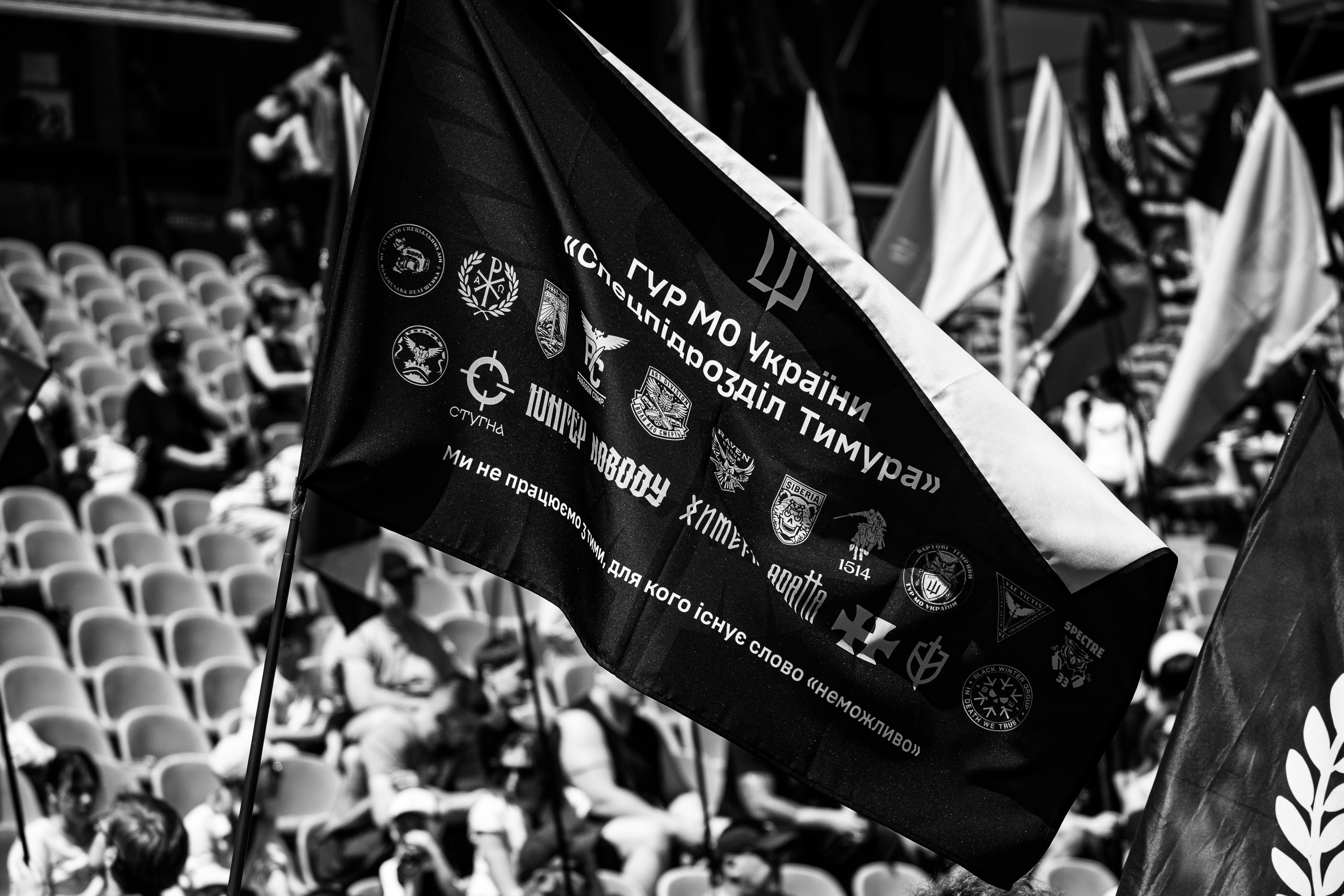
The Dynamo lineup featured stars of Ukrainian football, including Andriy Yarmolenko, Volodymyr Brazhko, Denys Popov, Oleksandr Karavaiev, and Mykola Shaparenko.
They were opposed by equally well-known representatives of special units — Belarusian volunteer Yanki, former MP and commander of the Stuhna unit Linux, battalion commander of the Bratstvo unit with the call sign Borghese, RVC ideologue Cardinal, while the commander of the RVC, Denis White Rex, took the position in goal.
The stands were buzzing from the first minutes. The soldiers were supported by their brothers-in-arms, relatives, and friends — every dangerous attack drew chants and emotions. The players of the special unit were the first to break forward. Just as at the front, they gave their all on the pitch.
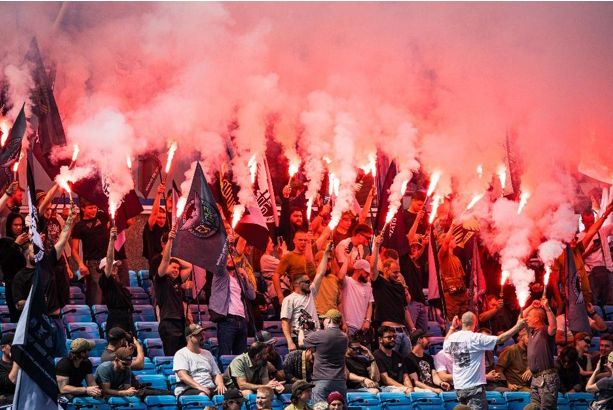
The game remained tense until the final whistle. Ultimately, the friendly match ended in a hard-fought draw — 10:10. After the game, the footballers and military personnel shook hands and thanked each other for the match.
We tell the stories of four soldiers among the match participants — individuals with diverse backgrounds who made the choice to stand in defense of Ukraine, where its future is being decided today.
Oleksii "Borghese" Serediuk, commander of the Bratstvo battalion within the Timur Special Unit of the Main Directorate of Intelligence of the Ministry of Defence of Ukraine:
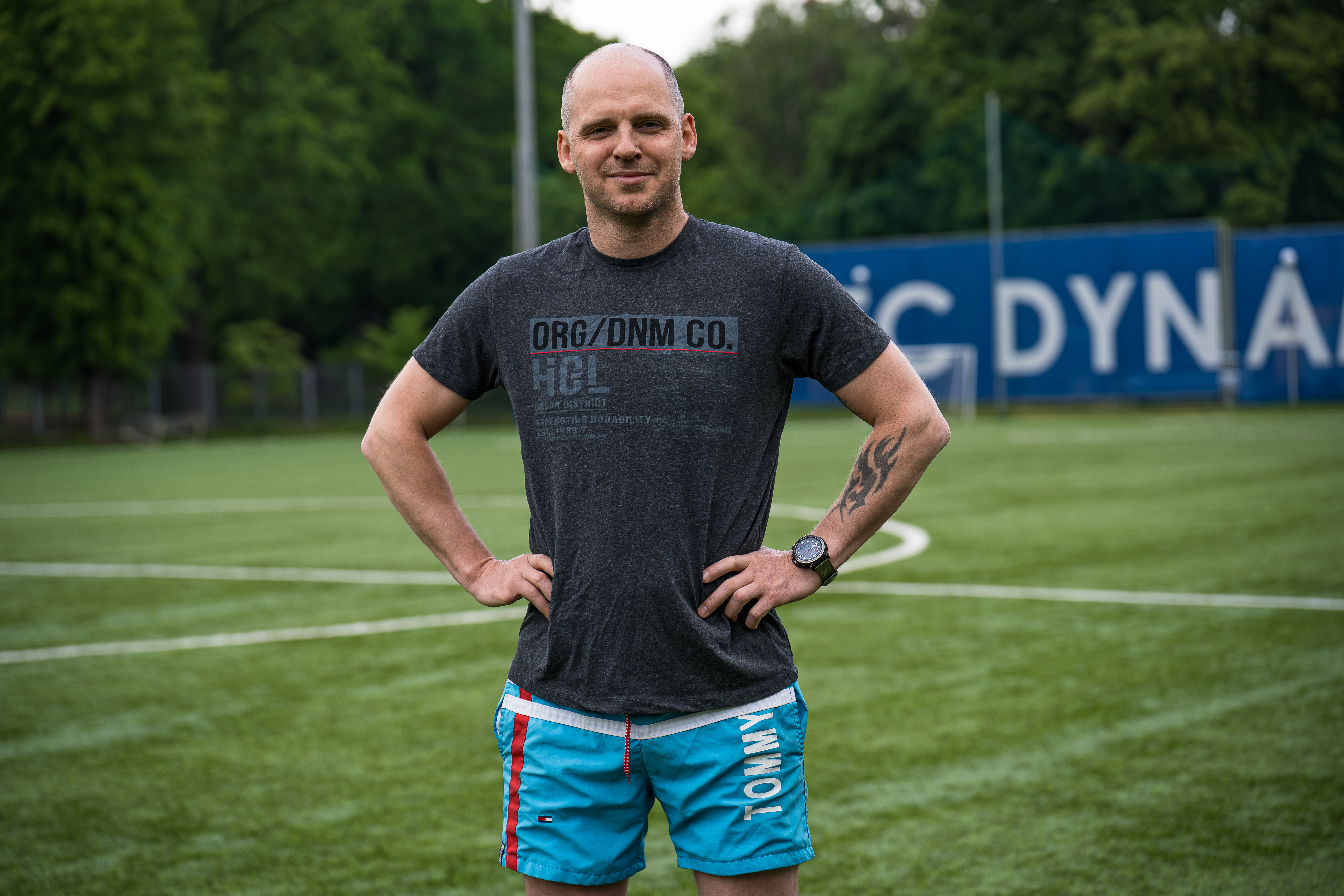
"I have been in the volunteer movement since 2014. First, I was in Azov, then in the Shakhtarsk battalion, later — Sviata Mariia. Subsequently, I went into civilian life, but with the onset of the full-scale war, I returned to the military. We created a volunteer unit, which was later integrated into the Main Directorate of Intelligence. Initially, I headed the unit I arrived with, and later it expanded into a battalion. Today, I command the Bratstvo battalion within the Timur Special Unit of the Main Directorate of Intelligence of the Ministry of Defence of Ukraine.
Timur gathered us all, gave us the opportunity to develop and do things that seemed impossible. We were always attracted to something heroic. We did not want routine. Undoubtedly, there are enough heroic deeds in all branches of the military, but our team always wanted movement, challenges, and adventures.
It all started when I was invited to Timur's headquarters at one point. I saw how their planning takes place, felt the spirit of camaraderie, and this military romance. And then I realized — I had come home.
That is how it continued in life — romance and adventures pursue me constantly. The tasks set at that time by the Chief of the Main Directorate of Intelligence, Kyrylo Budanov, impressed and fascinated me. On the one hand, it was highly dangerous, but on the other hand, it was a challenge. It seemed impossible, but we still told ourselves: 'We will do it.' And that is exactly what happened.
We conducted many operations. In particular, I am very grateful to the Main Directorate of Intelligence for entrusting my unit with the landing on the Crimean peninsula. They believed in us — and we succeeded. It is precisely such operations that have always fascinated me the most. I wanted even more, even more complex tasks. And I understood that this is possible only within the Main Directorate of Intelligence.
This specific special operation is the most memorable, because at that time it seemed almost impossible. It was my idea to conduct the operation on water scooters. It required maximum imagination — and my imagination turned out not to be empty, but yielded results.
I consulted with all the special services and units that had any relation to the sea. Everyone said that landing even on boats was unrealistic, let alone on scooters. But I sat down and calculated everything: petrol, distance, capabilities. I put it all together and realized — it is realistic.
I remember that dawn. The first call came via satellite phone from a crew, reporting that they were returning, that everyone was alive, and the operation was successful. I simply went outside, prayed to God, and thanked Him for this incredible gift.
And then other crews started calling. One by one, they reported that they had returned alive. And this is a colossal distance — essentially like going from Kyiv to Odesa, but on a water scooter.
It was a true miracle. I was amazed that we did it without casualties. All the crews that departed for the mission returned alive. And all the soldiers perfectly understood how risky this operation was. Moreover, some were convinced it was a one-way ticket. But we succeeded in everything.
We even joked that the day will come when we will be told, 'In a month, you need to land on Mars.' We will reply: 'But how? Without spacesuits? Such rockets haven't even been invented yet.' And we will be told: 'You still have a whole month! Invent something!'
Perhaps it sounds cliché, but there are two people who are role models for me — Kyrylo Budanov and Timur. I was deeply impressed by the history of Budanov, who also landed in Crimea in his time. And perhaps that is precisely why our special operation was so important to me. In high positions, one can always hide behind office doors, but he, on the contrary, participated in operations, took risks, and executed tasks personally.
The same goes for Timur. He commanded operations not from headquarters, but directly in battle. He personally landed on Zmiinyi Island together with his team when everything there was mined and lethally dangerous. And this is the best example for the soldiers. Because when you see that the commander himself goes forward, you simply have no room left for doubt.
Undoubtedly, the foundation of everything for me is faith in God. I am convinced that the main meaning of everything that is happening is the path to God. And I see true meaning only in this.
The success of our unit is connected precisely to this. The majority of my soldiers and my team also believe in this. When I look at other units, not within the Main Directorate of Intelligence, but in the military in general, I see how people are often consumed by apathy, exhaustion, and disappointment. And it seems to me that this happens when people do not have a goal.
Any other motivations — career, ambitions, or even patriotism — are not as strong or as enduring as faith in God. It is faith that provides the meaning to wake up in the morning, move forward, remain energetic, and not break, regardless of what is happening around.
Apart from everything else, I am a writer and a romantic. In my youth, I hitchhiked across almost the entire world. I was most impressed by Tibet — a mysterious place unlike anything else. And the second country I truly fell in love with is Sudan. My wife and I even agreed that one day we will buy a country house there and travel there to spend the winters.
Speaking of global dreams, since childhood, I have dreamed of becoming the emperor of the world, and, in principle, I still dream of it. I imagine my palace, something like a mix with the Pentagon, and huge armies that I will command.
It is no coincidence that my favorite movie is "Dune". I have always been fascinated by this aesthetics of world rulers. Therefore, for me, this is not just some childish fantasy — I still live with this dream. And as one smart person said, "Dreams, unlike plans, often come true." Therefore, I believe that mine will also come true one day."
Commander of the Company of Jesus Christ special unit within the Bratstvo battalion (Bravyi):

"In peacetime, I worked at an extracurricular education center — I worked with children. Concurrently, I worked as a geodesic engineer. I combined work with continuous learning. And at the same time, I was always involved in public initiatives and movements.
I began my path in the war in the volunteer movement in 2022. My group consisted of fighters who later became known as the Brotherhood Four. On the first day of the full-scale war, they called me, saying, 'Brother, come join us, we are already receiving weapons.' And from that moment, everything began.
We were simply doing what we considered right. And then we were noticed by the Main Directorate of Intelligence. It was there that our fraternity was able to fully reveal its talents. After many special operations of various nature, it became clear that we could do more. Thus emerged a separate Christian order: the Company of Jesus Christ — formed by me within the Bratstvo battalion. Today, these people are the elite of the unit, individuals who undertake the most complex and risky missions with a single goal: to carry the glory of God among the enemies!
We have a very talented leader, Timur, who saw the spark in our eyes and gave us the opportunity to realize our potential. We ourselves did not fully understand what potential we had, but we were given a chance to prove ourselves. At first, everything looked simple: 'Let's do what we can.' And then it turned out that we could do much more.
Undoubtedly, there were times of victories and times of sorrow. But my entire path in the military has proven one thing to me — nothing is impossible if there are people with burning hearts next to you.
I want to speak separately about a person who has become a great example and inspiration for me — Kyrylo Oleksiiovych Budanov. I am fascinated by the path he has traversed, as well as his endurance and calmness.
During this time, there was much that was varied, but there were events that truly changed the course of things. Starting with the feat of the Brotherhood Four, who were the first to transfer the war to the enemy's territory. This became the turning point. We understood that we are not just defending our land — we are returning the war to where it came from.
One of the already known operations is the Kakhovka special operation. It was an incursion deep behind enemy lines when almost no one believed that such a thing was even possible. We completed the task, killed enemy personnel, and captured officers, leading them through all the forests of the reservoir to our positions. In general, it was a pleasure to work in this sector, considering that I had previously sailed here on sabotage missions to Enerhodar, together with Sviatosha, Nepypyvo, Tarasii, and Apollon. It is precisely because of such things that we chose the Main Directorate of Intelligence. Here, there is an opportunity to create events that affect not only Ukraine but the entire world.
It was the same with the landing in Crimea. Many said it was impossible. But we had a task and, most importantly, the audacity to dare to do it.
It was during this special operation that I remembered one story. On one of the vessels with us was a fighter with pagan views (I do not remember how he got there). Together with him was our brother, and the whole way, he talked to him about God. Ahead lay a difficult operation, a restless sea, the unknown, and our brother calmly speaks about God. And that fighter listens to him attentively.
Then I remembered an old story about Greeks. Two Greeks were sailing on a ship and discussing the agrarian question. There was a storm all around, ropes were cracking, the ship was rocking, people were panicking — but they continued to talk about their topic. The ship had already sunk, the survivors were sitting in lifeboats, and they saw that these two were still calmly debating the agrarian question. And then the ship's captain said, 'I realized that these are such strong people that it is better to have nothing to do with them. And I deeply do not envy our enemies, because they will not have such an opportunity.'
And at the moment of our special operation, I saw the same strength in our people. Our brother talked about God the whole way. And when the task was completed, and we began to return, with a huge distance home still ahead, the sea suddenly calmed down, the storm stopped, and absolute stillness ensued. And our Brother says to him: 'You see, God grants us this. And after this, you don't believe in God?' And he replies: 'Yes, I believe, I believe in God.' It was a very sincere moment.
I am confident that the world is first built on a spiritual level, and only then do physical processes form around it. Therefore, my main dream is a strong Ukrainian state. A state respected in the world. Whose opinion is taken into account. Which is looked up to.
In life, my main support and motivation is God. In the hardest moments, during the most complex special operations, we saw many things that can only be called miracles. And I believe that everyone has their own path to God. He reveals Himself to everyone differently and at different moments — but always exactly when it is most needed."
And just as we are created in the image and likeness of the Creator, we must also create and build. Periodically, I stop and look at the work done, at the built-up unit with inspired soldiers, and recall the words from the Book of Genesis: 'And it was good!'"
Commander of the third section of heavy strike UAVs of the 6th special purpose detachment within the Timur Special Unit of the Main Directorate of Intelligence of the Ministry of Defence of Ukraine, Kristian Udarov:
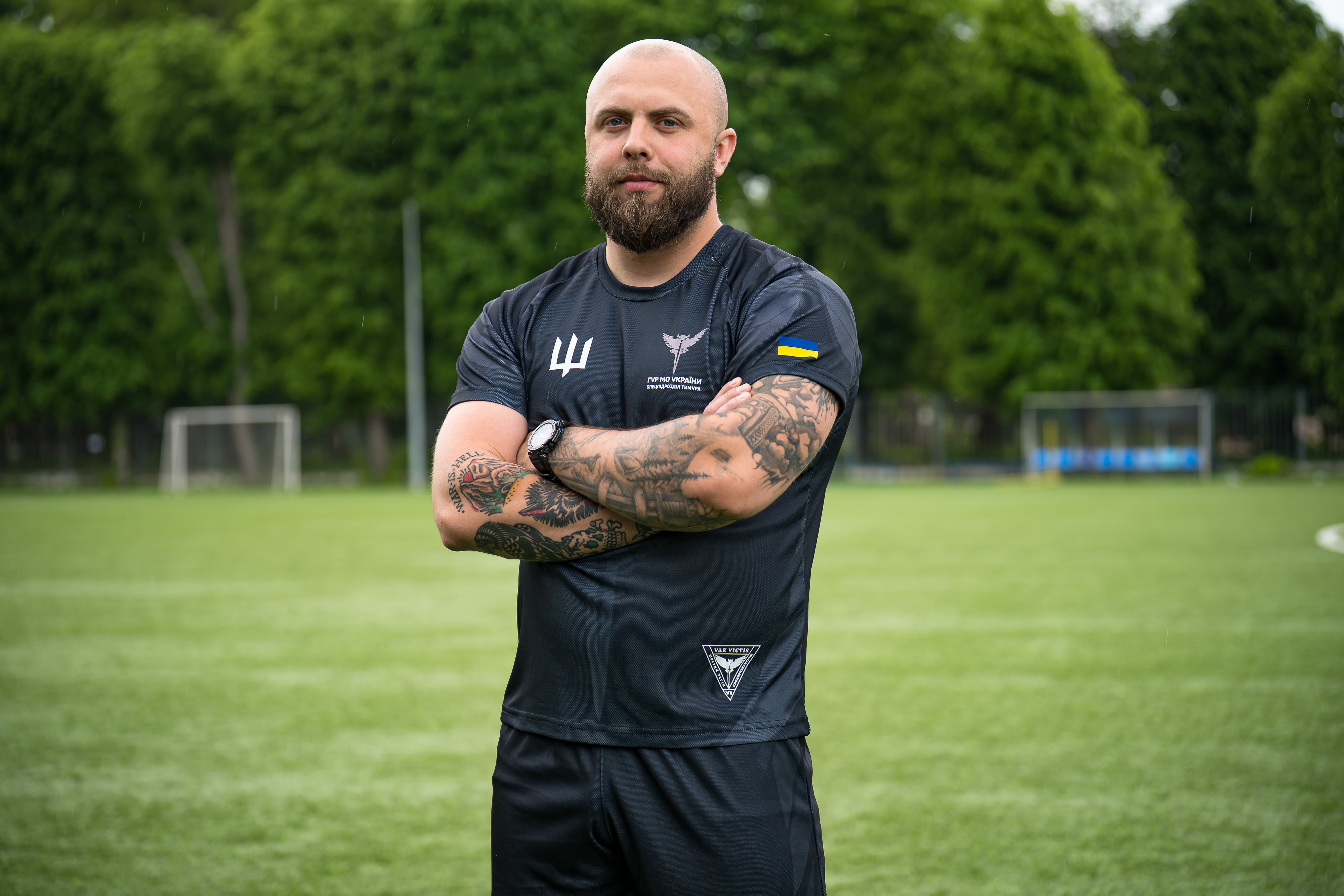
"The most terrifying assault is not the first one. You are even somewhat indifferent to the first assault, because you do not yet know what it is. The most terrifying are the second, third, and fourth assaults. You have already seen the dead and wounded; you know the consequences. But people who are not afraid do not exist. Everyone is afraid. What matters is only how you deal with this fear: you either move forward, or you retreat and forfeit your life.
I came to the war entirely from civilian life. I was engaged in public activities, was interested in weapons, and did sports. In 2016, I was a volunteer in the Right Sector. I spent about half a year there; however, I did not witness active combat. But during this time, I understood what weapons are and how to handle them.
On 24 February 2022, at five in the morning, a friend called me and said, 'It has begun.' We were warned that there could be a major war. We knew about the accumulation of Russian troops on the Belarusian border; we understood that it would happen someday, but we still did not fully believe it. Yet despite this, my war backpack was already packed. I took a 12-gauge shotgun, which, in essence, made little sense in this war at that time, but it was at least some kind of weapon. Then I went to meet my friends at a location we had determined in advance.
When weapons began to be distributed to civilians, we received them and immediately went to the Baryshivka direction. We participated in the liberation of the Kyiv region. We fought without formal enlistment, but we carried out combat missions on par with active military personnel. At first, it was reconnaissance, and then assaults.
A full-scale assault on a village became a new experience for us, when you advance without armored vehicles, you do not understand what war is, everything around is flying and exploding, and you do not know what is happening. You see the wounded, people without legs, you try to help someone.
I adapted fairly normally; I was not under severe stress. The only thing I worried about was my loved ones. I thought: if I die now, who will protect them?
I was 25 years old at the time, and I had lived here all this time, worked, and developed. This is my home, my parents, relatives, and loved ones are here. And suddenly someone comes and wants to take it away. For me, there was no question: 'What to do? Maybe leave for Poland? Or hide in the west of the country?' We had such a team — combat-ready guys. At that time, among 15 people, we had almost no real combat experience. There were a maximum of two or three real military personnel. But we still gathered and went. Later, we collectively made the decision to sign a contract with intelligence. Because the tasks set by intelligence are highly diverse and interesting. There is nothing like it anywhere else.
Now, after almost four years of war, I already consider myself a true military professional. And the mindset really changes. It is like in boxing: if a professional athlete stands against a novice, the novice can be dangerous precisely because of their unpredictability. It is the same in war. We advanced on enthusiasm, adventurism, bravery, and a sense of duty to the country. Every operation, every mission, even every deployment is a distinct spectrum of emotions. But there are many things that cannot be discussed.
I regularly engage in sports, predominantly contact sports. Right now we attend football training, preparing for the match.

The person who inspires me is my direct commander. I serve in the Timur Special Unit of the Main Directorate of Intelligence of the Ministry of Defence of Ukraine, and Timur is a role model for me. We have a lot of initiatives. If you look at the history of these four years of war, the special unit has conducted such a number of operations that will go down in history. Children will be reading about this in textbooks and scolding us because there will be a lot to learn.
Giving ourselves completely to the war, we sometimes forget that we are an example for someone. People in uniform, with weapons and body armor, are the ones others look up to. That is exactly why we participate in various events, especially if they are initiatives for children. Children must see the right example.
We want to show that we can exist not only in war. We can express ourselves everywhere — even in football. Right now, in the country as a whole, in my opinion, there is a certain decline in sports. But, I believe, it is necessary to start precisely with an example for the youth, because they are our future."
Ideologue of the Russian Volunteer Corps, Vasil (Cardinal) Kiriushchenko:
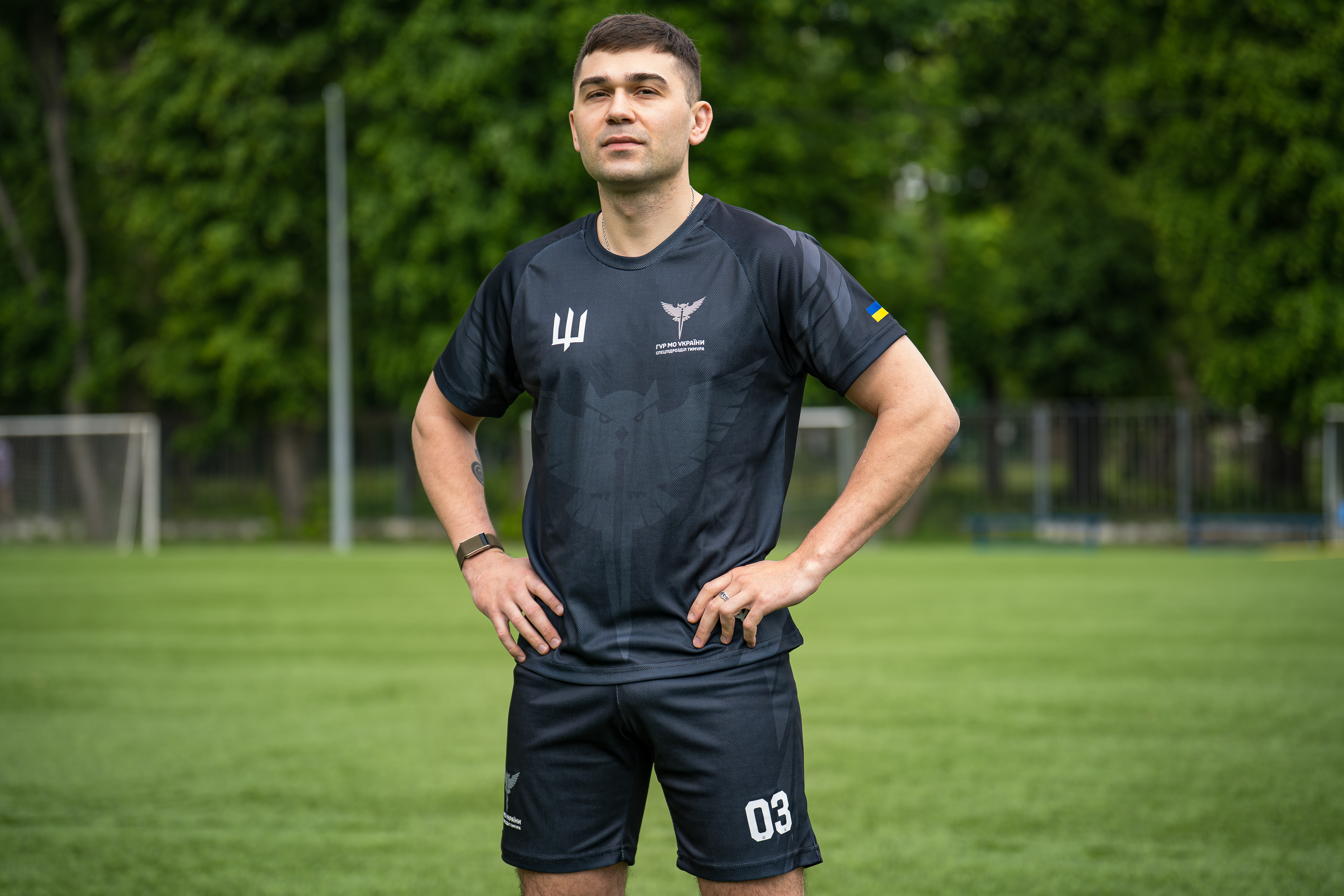
"I was born, grew up, and did not die in White-Stone Moscow. I have had the fortune since childhood to constantly visit Ukraine, because my parents are so-called 'conquerors of Moscow'. My father was born in Kharkiv, my mother in Rybinsk, but from the age of one, she actually lived in Bakhmut, because my grandfather, who was in the military, received an apartment there. By the way, after drone flights, the apartment is still standing, although no longer in the same condition as before.
Since 2011, essentially from the age of 17, I participated in the Bolotnaya protests. And gradually, my vision of the situation increasingly diverged from the vision of the Russian leadership. I disagreed with the general policy of the state. I disagreed with the fact that they practically decided to build 'USSR 2.0': to blur all the national communities existing in the country and create a new 'Soviet people', only now under the name 'Russians'.
My life in Russia was quite successful. I was the territorial manager of the Ozon company in the Central Administrative Okrug of Moscow. Everything was going well for me: an office in Moscow City, a Mercedes, an apartment — everything was great. But what can be more important than an idea? In reality, nothing. There is no amount of money for which I would go to war without an idea. But there is also no amount of money for which I would not go where the idea leads me.
Before 2014, I constantly traveled to Ukraine. And I noticed that I felt more comfortable here. I finally moved in 2021. I applied for citizenship a month before the start of the war. Then the full-scale invasion began, and everything was put on pause. I understood that war was inevitable. I had known Denis, our commander, long before the war. I practiced MMA, and he trained us back then. Two weeks before the invasion, we discussed this. He asked: 'Do you think there will be such a large-scale war? Missiles, all that?' I answered then: 'Yes, it will be a total war.' And he said: 'Well, no, I think everything will be limited to Donbas.' But it turned out differently. Everything was leading to this. By the way, a week before the war, I bought a plate carrier. Admittedly, a level three one — I decided to save two thousand hryvnias. In vain.
In 2022, we quickly rallied around our commander, Denis Kapustin. Initially, there were five of us. Then we went to the front ourselves. Later, the Main Directorate of Intelligence noticed us. That is how we ended up here.
Now we are accumulating the protest segment of society around ourselves. I think today we are among the leaders of the Russian opposition. Because we are not only a unit of the Main Directorate of Intelligence, but also a military-political organization.
The further we go, the more we become an irritant for the regime. We are the only opposition figures who gained control over a part of the territory of the Russian Federation for at least a week. No one else has done this.
That was Nova Tavolzhanka. There is even a sort of meme that under our control, there was not a single rape there. And already in 2025, some Russian mobilized soldier raped a woman and killed her husband. We wrote then: 'Under us, there was nothing like this.' And this is true.
I remember how we entered the Bryansk region. We emerge from the forest in a line — and see two elderly women who just silently enter a house. No one was ready for this. In the Belgorod region in 2024, everything already looked different. When we entered the village of Liubechany in the Bryansk region, Russian propaganda claimed the 'shooting of a bus with children'.
But one must understand what the border area is. Until 2014, these were relatively wealthy regions that lived off the transit of goods. And after 2014, it became a backwater. People of non-retirement age do not live there at all.
We began to be noticed also because we started to resonate with the residents of the capital. People who graduated from prestigious Moscow universities started coming to us. We reached the audience, the authorities fear the most. Because they do not pity the 'deep people'. But when it comes to Muscovites — that is a different story.
Furthermore, unlike the majority of the opposition, we began to use force.
That is precisely why Putin stated in March 2024 that although a moratorium on the death penalty is in effect in Russia, the so-called 'Russian volunteers' should be treated as if they are always on the battlefield. Practically, this means: any methods are permitted against us.
I perfectly understand what I signed up for. Especially considering what the RVC is. I am on the list of terrorists and extremists; my face is known. The Head of the Investigative Committee of Russia, Bastrykin, cited me as an example of a 'collaborator' back in January. And I understand: if for the majority here the war will end someday, for us, it will not. Until the regime falls, it will not end for us.
Today, we are doing our job here, as part of the Timur Special Unit of the Main Directorate of Intelligence of the Ministry of Defence of Ukraine.
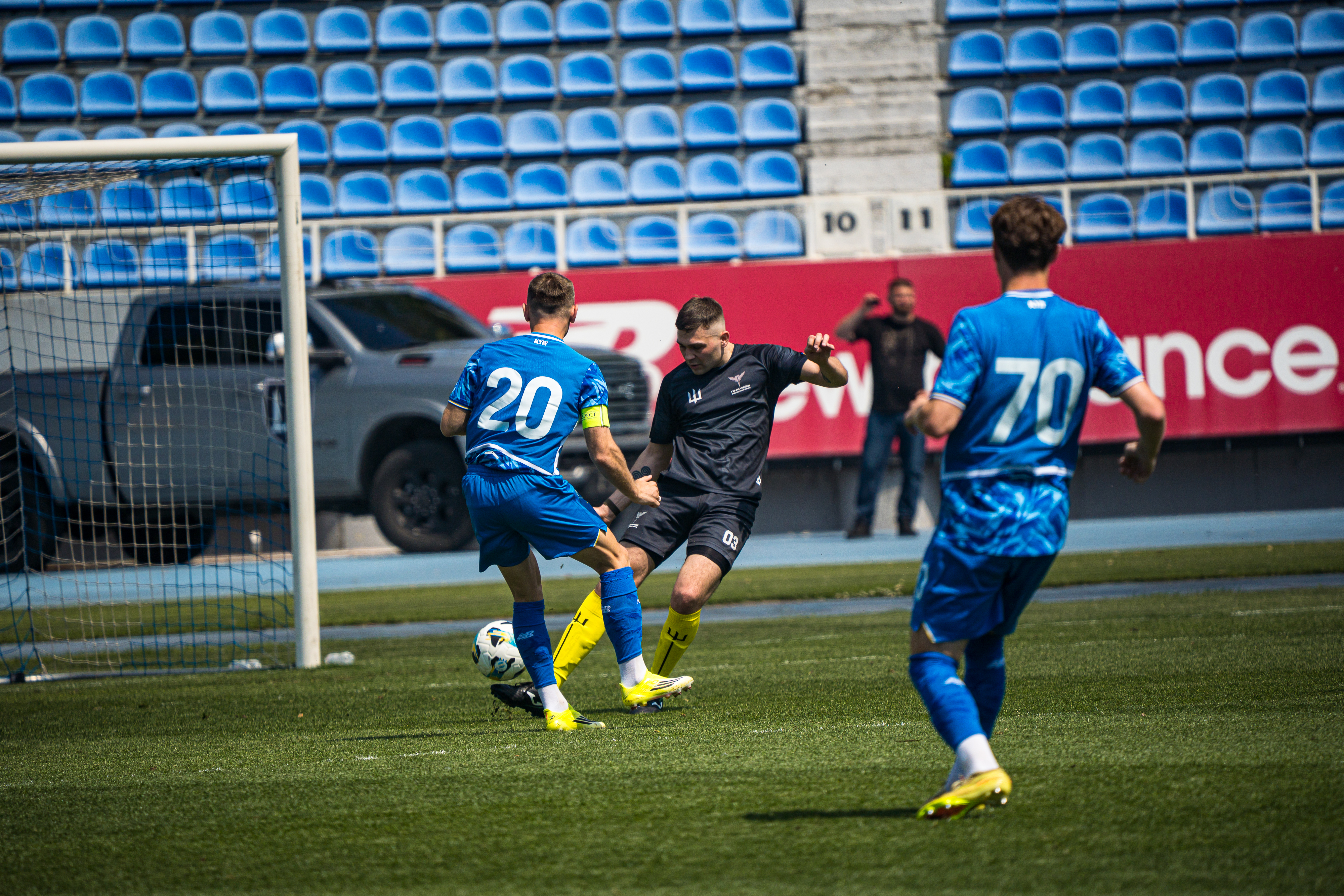
Regarding the events organized by our unit today, so that such stratification does not arise in society, so that the army does not become a separate world but remains a part of society, it is important to hold such initiatives and meetings."
Ivan Bondarenko


