



Frontline disaster in June-October 2024 was halted by extraordinary heroism of soldiers – Captain Ihor Tokovenko
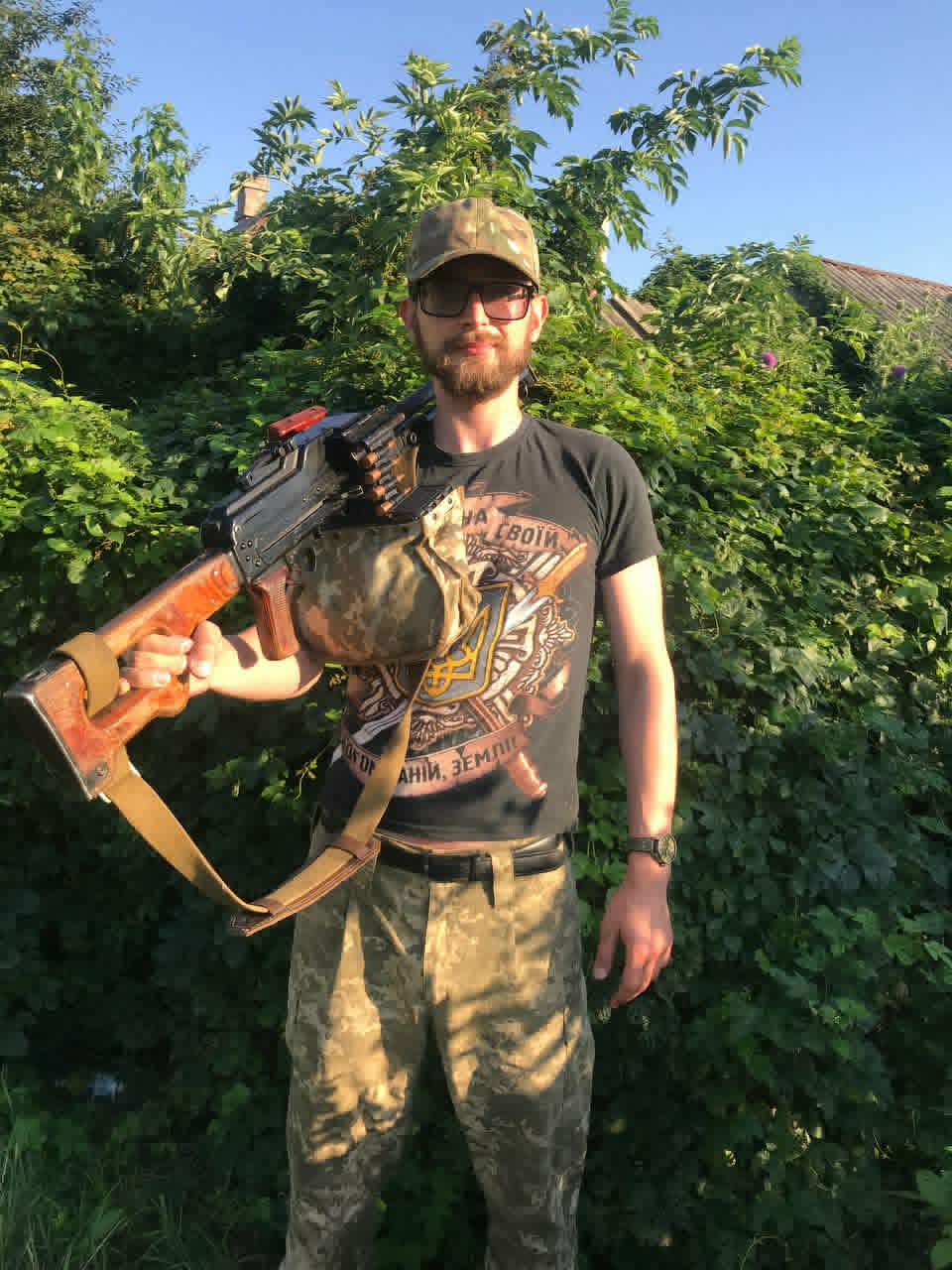
Captain Ihor Tokovenko (Nardep) of Ukraine’s Armed Forces could have been discharged from the military on health grounds more than once. Instead, since 2022, he has served in four different units, working as an infantryman and a clerk, often combining both roles. He now does analytical work in a unit he cannot name and remains firmly committed to staying in the military until victory.
How he joined the military in 2022 almost straight from a political rostrum, how he helped create several units, and how he stormed slag heaps and tree lines, including one where he killed many enemy troops, is the subject of this interview with Censor.NET.

AT THE ASSIGNMENT, I WAS ASKED A "FATAL" QUESTION THAT HAUNTED ME LATER: "DO YOU KNOW WORD AND EXCEL?"
- At the time of joining the Armed Forces of Ukraine on March 4, 2022, I had 10 years of human rights advocacy in labor law behind me: I defended the interests of employees, including in courts, as well as before employers. I was a co-founder, lawyer, and head of a number of independent trade unions. In particular, the Trade Union of the Mining and Metallurgical Complex (not to be confused with the Trade Union of Miners and Metallurgists, which is subordinate to employers). My position as a leading lawyer in the Trade Union of Medicine and Pharmacy "Public Health" is still reserved for me.
All my achievements in this activity, namely the reinstatement of 18 illegally dismissed employees, were of a very limited nature due to the fact that the rules of the game are determined by employers, who are simultaneously lawmakers; with trade union, social, and environmental activists. Therefore, I realized that we need to be the ones who write the rules of the game, and for this, we need a majority in parliament. That is why in 2020, along with other trade union activists, we founded the working people's party "Narodovladdia" (People's Power). In the fall of 2021, I was nominated as a candidate in the by-elections in the 184th district of the Kherson region, centered in Nova Kakhovka, where pro-Russian sentiments were the strongest. And exactly within the framework of another by-election campaign, we nominated the head of the independent "Public Health" Trade Union for the district in the city of Chernihiv. It was there, in Chernihiv, that February 24, 2022, caught me, and from this, my path began during the ongoing war.
- So you went to the war from Chernihiv?
- We evacuated in an emergency manner using our own transport. I disembarked in the Cherkasy region and appealed to the TCR and SS in Chyhyryn, but they refused me. They said they did not know me, so I should apply at my place of registration. Therefore, I got home with transfers, and when I came to the Novomoskovsk District TCR and SS, they offered me the Territorial Defense Forces. At that time, there was an idea that the Territorial Defense Forces would guard their own settlements exclusively, so I was not interested in it. I wanted to go into battle.
I liked the identity of the 93rd Brigade, and I insisted on joining the Kholodnyi Yar brigade. I wanted my specialty to be recorded as a "rifleman," but since I had very poor eyesight (more than -6), I refused a more detailed examination in favor of getting into the army faster.
In early March, there was no stable front, and it was not clear whether I would have time to participate in hostilities. It seemed to me that we could either lose or win quite quickly, so I tried to get into combat as soon as possible. But still, given my poor eyesight, I was assigned the specialty of a "clerk," and ultimately this influenced the fact that the next day, on March 5, when we were brought to the 93rd Brigade, at the personnel assignment, the chief of personnel asked me a "fatal" question that would repeatedly haunt me during my service: do I know Word and Excel? I decided to tell the truth, that I know how to use them, and I am a lawyer, so he assigned me to the personnel and supply records section of the personnel department.
- But this is not the case you were looking for – to go into battle. You were also doing a useful job.
- I consoled myself — they say, right now I do not understand anything about military affairs, so maybe I was indeed appointed where I am needed the most at the moment. The 93rd Separate Mechanized Brigade is one of the flagship brigades from the times of the ATO and JFO, and yet, at the beginning of the full-scale invasion, it was on the smallest peacetime establishment. For more than a week, almost without sleep, we were busy transitioning the entire brigade to a wartime establishment. A week later, this work was completed. A significant part, mostly men from the administrative and personnel staff, were sent to the front to some rear command post. I offered myself for these services, but I was told to stay.
That is, I found myself in reserve to some extent. I walked around like that for a few days and realized that I was just wasting my time here. Fortunately, I had a familiar officer in the 1st Mechanized Battalion, and I asked him to petition for my transfer to the infantry.

IN THE FIRST SUCCESSFUL OPERATION, WE USED OUR MINDS INSTEAD OF JUST RUNNING AT THE ENEMY SHOUTING "HURRAH!"
- Now this sounds unusual to many: a voluntary transfer from the headquarters to the infantry.
- At that time, it was understandable because my blood was boiling. Ultimately, since I was quite persistent about it, they let me go. Although well-wishers explained to me that I did not realize where I was going.
I really didn't understand it. My happiness knew no bounds when I went to the 1st Mechanized Battalion at the permanent deployment point (PDP) within the same unit. I was finally issued a weapon — I had just arrived on the second day of Basic General Military Training (BGMT), which, although not entirely official, was organized at the unit's base with uncertified but very good, experienced instructors. At the end of April, we were sent to the Izium direction.
- How did you experience your first participation in combat? Were you disappointed by the realities at the zero line? After all, life in the trenches is primarily about daily routine, even despite the dynamics of the front in the spring of 2022.
- The first deployment to the positions was very chaotic because, despite supposedly having training, I trained in one set of gear during the BGMT, but I went to the positions for the first time in another, and some of it was not properly fitted. It was immediately obvious that a person who had no relation to war and the army went to the positions and to the zero line for the first time.
The subsequent deployments were more normal in this regard. The very first night at the OP (observation post) showed that I needed a watch with luminous hands so as not to illuminate everything around with my phone when checking the time to maintain the observation log. That is, I caught the stage of the war when we were ordered to keep an observation log, to record every incoming strike at the zero position.
Despite this, I liked this risk, the first whistling of bullets. Plus, I was highly motivated to be next to the people whose rights I had fought for during 10 years of my human rights advocacy — regular workers or small entrepreneurs. There was a platoon commander, a small entrepreneur from the Luhansk region. We spent several nights with them at the OP, exchanging our life experiences. There were ordinary hard workers from the west and east of Ukraine.
- Do you remember your first success, perhaps an operation that you consider the most successful?
- After a month of shifts at these OPs at the junction of brigades, the next task came at the end of July. Together with the assault group of the 3rd Mechanized Battalion, Schnapps's group, we received the task of knocking out Russian paratroopers from a section of the forest protruding in our direction. It was across the field, 3 hours away from the OP, where we had been on duty for a month; there was an enemy platoon strongpoint there.
We knew that there were about 15 enemy paratroopers there, but without vehicles. However, by the time we departed for this assault around 3 a.m., they had received reinforcements of 2 units of equipment and personnel.
At the time of our entry, there were already about 30 enemies and two APCs, and we assaulted them with a smaller force. By the time we flanked them and bypassed them from the rear, 2 more units of equipment and another 15 enemy servicemen were driving in. A battle broke out; during this battle, we disabled at least one unit of enemy armor, but our grenade launcher operator from Schnapps's group was wounded.
All three of our groups pulled back and made a decision not to resume assault operations on the same day. And another unit of equipment hit a mine set by Schnapps's group. That is, we used our heads, not superior numbers: we bypassed this platoon strongpoint and mined the rear. And just as we withdrew, one unit of equipment blew up on this minefield, and the other was blown up by the grenade launcher operator, who was wounded during this shot. All three of our groups pulled back and made a decision not to return to this position immediately.
Instead, we returned the next morning and, essentially without a fight, entered the position and occupied the platoon strongpoint, or maybe it was even a company strongpoint, because the territory occupied for it was quite extensive. We captured four units of equipment, two of which were destroyed. And some small arms as well. This was probably the most successful operation in my memory in which I participated as an assistant machine gunner. And it largely shaped my understanding of how such operations should be organized.
That is, one should not simply run bravely at the enemy's weapons shouting "Hurrah!", but act thoughtfully and sometimes withdraw in order to try again at a more favorable moment. In this situation, in fact, except for one WIA (wounded in action), we had no casualties, captured enemy equipment and positions, also brought consolidation groups there, and successfully withdrew without additional losses.
- I want to clarify: formally, you were an assistant machine gunner, weren't you?
- Until the end of June, I was listed in the 1st Mechanized Battalion as a rifleman-medic, but I never participated in hostilities with the 1st Mechanized Battalion itself. A bizarre story happened: during the assignment in the settlement of Barvinkove, another guy with the call sign Pianist and I were randomly assigned to a KAMAZ truck with Georgian volunteers. They had signed contracts with the 93rd Brigade literally shortly before we completed our BGMT, and they were the ones assigned to the 1st Battalion, which, as it turned out, had suffered heavy losses during the defense in the Izium direction at that time.
These losses needed to be replenished, so they were sent there. But they quickly realized that they had arrived a bit outside their specialty. About half of them were special forces operators — army special forces, police special forces, intelligence special forces, and Saakashvili's security detail from his presidency. The rest were young people who were still planning to gain experience. There was a fighter who had passed the selection for the French Foreign Legion. This group requested a personal meeting with the brigade commander (at that time, Colonel Shevchuk). I was impressed that he personally traveled along the front line. A relative front line, of course — the village of Vesele. Together with him, we hid from incoming cluster munitions. The brigade commander quickly realized that these guys were unusual; they had certain skills and experience, in particular from Abkhazia and South Ossetia. Therefore, a separate assault group was created from them. Back then, assaults from our side were an extraordinary phenomenon; we were holding a dead defense. That is how I ended up in this Georgian group, which became part of the deputy brigade commander's personal reserve.
IN 2022 IN SOLEDAR, THE INTENSITY OF ARTILLERY SHELLING WAS AT ITS PEAK FOR THE ENTIRE WAR
- Did you later participate in the liberation of certain territories in the Kharkiv region, or perhaps somewhere else in the Donetsk region?
- No, the majority of the forces and assets of the 93rd Brigade at the start of the 2022 counteroffensive were redeployed to Bakhmut. We were based in Bakhmut but carried out missions in Soledar.
It was the Soledar slag heap of the "Knauf" enterprise. It was called a slag heap, but in reality, it was a quarry dump. It had important tactical significance because it was a commanding height, and whoever controlled it dominated the entire eastern part and eastern outskirts of Soledar.
At that time, it was the second capture of the slag heap by the soldiers of the Armed Forces of Ukraine. By the time of the operations in Soledar, the Georgian group as such no longer existed; its remnants merged into another assault group from the brigade commander's reserve — "Pirates". Our task was to enter this slag heap with a group from the reconnaissance company. We secured the entry of the reconnaissance company group, but since our element of surprise was ruined, the enemy detected us on the approaches and began to cover us with tank and mortar fire.
For about forty minutes, we were pinned down in an open area at the foot of the slag heap. Our group commander coordinated with the command and withdrew us; that is, we brought in the reconnaissance company group and retreated. And a few days later, as part of a subgroup from our group, I spent the night reinforcing the infantry on the top of this slag heap, where we were again quite mercilessly shelled with cluster munitions.
I think that the intensity of artillery shelling at that time, especially in Soledar, was at its peak for the entire war. Neither in 2023 nor in 2024 did I see more intensive artillery work. However, at that time, there were no FPV drones and practically no drops from Mavics. By digging in well, one could significantly increase their chances of survival.
But participation in the counteroffensive in the south — that was as part of another brigade.
- You spoke with great enthusiasm about the Georgian group and the operations you conducted. What made you change the brigade?
- In September 2022, our group was disbanded, and the commander was discharged for family reasons. Both Pianist and I, as well as our subgroup commander, ended up at the PDP. We were given the opportunity to go on leave. After that, I passed the Military Medical Commission (MMC) and was deemed fit for limited service.
This was the first wave of sending those fit for limited service to the TCR&SS. I was transferred to the regional TCR&SS, where I immediately expressed a desire to continue my service in a combat brigade. I said that I could bring a letter of request for a transfer to a specific brigade. I was told that the 23rd Separate Mechanized Brigade was currently being formed, specifically for the counteroffensive. Taking into account that the brigade hung around the concentration area for some time before the counteroffensive. That is, globally, the active formation took about 4-plus months. And these are ultra-short terms. I believe that the brigade was formed quite successfully. And its commanders did a great job.
I was offered to become a squad leader. I was very happy. At most, I hoped for a machine gunner position, but it turned out I could even become a group commander. But in order not to sit idle for a year, I found something to do and went to study drones. Fortunately, I received official temporary duty (TDY) to a non-governmental organization that trains UAV pilots, and after this training, I was assigned as a UAV squad leader.
- I didn't know about this role of yours. How long did you work with drones?
- In fact, I never performed aerial reconnaissance missions because as soon as I got into this unit, the question I had already been asked immediately caught up with me: "Do you know Word, Excel?" I understood where it was going, sighed, but told the truth. So I was once again assigned to receive personnel, but now in a company.
I started to figure out the life and work experience of the people, how they could be useful, and then suggested to the officers a rational deployment of personnel based on their experience, skills, and wishes. This led me to the position of master sergeant, and about 4 months later, I was awarded the rank of junior lieutenant and appointed to a platoon that performed both combat and management tasks.
That is, we prepared reports, other documentation, were responsible for communications, and at the same time could go to reinforce our assault groups or to an OP. We burned enemy equipment. It was precisely then that the most combat-intensive situation for me occurred, when I managed to eliminate the largest number of enemy servicemen. This was during the counteroffensive operations in the Zaporizhzhia region, approximately on July 4, 2023.
- Was it an assault from your side?
- Before us, another group assaulted the position, advanced forward along the tree line, consolidated in the gray zone, and we replaced them. Assaults using armored vehicles were ongoing. An analyst from my platoon burned a tank that was standing literally right in front of me. Burned it with an RPG... and went on to do his analytical work, while I replaced him at the position. My first task was to bring and camouflage anti-tank mines (TMs), including near this burned tank.
Then, together with an infantry unit, we repelled an enemy assault. Since I was a machine gunner, and there were, fortunately, as many as 4 machine guns, I shot to my heart's content. We shredded the enemy well. By the way, at that time, it was still such a unique situation that a fully manned squad was fighting at the position on our side. It was a motley crew of "mechanics", "Territorial Defense Forces members", and generally people who were not supposed to be at the positions, including several analysts. One of the senior members at this position was very surprised when he found out that I was an officer. He point-blank asked: "What are you, an officer, doing here?" But the task had to be completed.
At the decisive moment of the battle, when the enemy began digging in near us, I took the initiative into my own hands, contacted the commander of the 3rd Mechanized Battalion via radio, and requested adjustment of AGS (automatic grenade launcher) fire from a UAV (back then, this was not as obvious as it is now). Literally 15 minutes later, the AGS started hitting exactly on target. The remnants of the enemy assault platoon retreated, leaving their killed commander, Belka, on the battlefield.
After this operation, the very next day, we returned to the work of receiving personnel. So the work was interesting and varied.

IN 2024, I FELL INTO THE FIRST WAVE OF THOSE FIT FOR LIMITED SERVICE WHOM THE TCR AND SS RETURNED TO COMBAT POSITIONS
- How did you end up in a staff position in the 151st Brigade after that?
- From the position of platoon commander, the higher command offered me a transfer to a staff officer position in the next, even more newly formed brigade — the 151st Separate Mechanized Brigade.
While the 23rd Separate Mechanized Brigade was mostly joined by people with volunteer motivation who fought with enthusiasm, during the formation of the 151st Brigade, the overall motivation of the personnel was already falling. This especially applies to the reinforcements we were given before deploying to the area; it was psychologically difficult to look at them. I told you that in December 2022, I fell into the first wave of those whom the TCR and SS discharged as fit for limited service. And so, in the spring of 2024, I fell into the first wave of those fit for limited service whom the TCR and SS threw back into combat brigades to combat positions.
- So you had to deal with people unfit for war?
- These were literally people on crutches, with bleeding psoriasis all over their bodies, with severe hypertension, hepatitis... More than half of these people a priori, could not perform tasks in their assigned positions. Therefore, I tried to walk among these dozens of buses of people, most of whom did not want to be transferred to us, and persuaded them, calmed them down, and offered them positions more related to logistics. That is, I was looking for well-read people capable of performing intellectual work. Well, and simply brave people who had motivation similar to what we had in 2022-23.
- Tell us about the battles the brigade participated in.
- Initially, the 151st Separate Mechanized Brigade was in the second echelon in the Zaporizhzhia region. And then we were redeployed to the Donetsk region. That is exactly where the events began, which I personally characterize as the collapse of the front. The front was frankly crumbling, and we were in the center of a military disaster. I think that a great many civilians underestimate what was happening in June-October 2024. In my opinion, there was a chain of catastrophic situations that was plugged, literally, by the extraordinary heroism of the soldiers, sergeants, and junior officers. It was necessary to plug these holes at the front; otherwise, the front would now be along the Dnipro at best. People threw themselves forward like water into a flame, hoping that sooner or later we would extinguish this attack, and it was indeed possible to extinguish it and stop the enemy at certain lines.
Many of the soldiers gave their lives and health because of this necessity. And also because of command mistakes. And also for beautiful media headlines. Once I witnessed a situation where a colonel from the Operational Tactical Group (OTG) ordered personnel — about one and a half squads — to be brought into a settlement occupied by the enemy, while he did not want to hear about the real state of affairs in this settlement. The intelligence information regarding the number of enemy personnel satisfied him only when it was downplayed. He did not want to hear that there were enemy special forces there. Based on these distorted data, he succeeded in having a unit brought in there, which died there immediately.
All this was done under the slogan: "You bring infantry in there, and tomorrow the news comes out with headlines that the 151st Brigade has liberated the settlement." That is, I consider the command's thinking in terms of newspaper headlines to be absolutely criminal. Fortunately, this is not about all commanders.
- Ultimately, you transferred from there too, as I understand it. You are now in a brigade you cannot talk about.
- At some stage of my service in the 151st Brigade, I did everything that depended on me. As a person inclined to organizational work, after a year and a half of service, I realized that my task there was exhausted. I prepared an adequate replacement for myself and transferred to another unit for work that we will conditionally call analytical.
THE MOST TERRIFYING MOMENT FOR ME DURING THE WAR WAS WHEN I WOKE UP IN THE MORNING IN BARVINKOVE AND THOUGHT ABOUT THE UNKNOWN
- Warriors find different ways to cope with fear, including destructive ones. What path did you choose for yourself?
- Fortunately, after passing the BGMT, I developed some kind of psychological block on alcohol; I almost completely stopped consuming it. Regarding fear, it is funny that the most terrifying moment for me during the entire full-scale war was when I simply woke up at the assignment point of the 1st Mechanized Battalion of the 93rd Brigade in Barvinkove, still being a soldier in 2022. I just thought about the looming unknown. I realized that I could die and became paralyzed with terror, at one point literally with a spoon in my hands. But I pulled myself together and went forward with the belief that we are fighting for a good cause, the Lord is on our side, and everything will be fine. And so it happened, because on the same day, within an hour, I got into the KAMAZ with the already mentioned Georgian volunteers, and a series of lucky accidents followed one after another.
And directly in battle, it sometimes happens that fear pierces you with a cold that goes from the stomach somewhere up to the larynx. This happened during the first whistling of a bullet nearby. Or my last deployment to the zero line, which occurred in the summer of 2024, when there was no defense line as such in some areas in the Donetsk region, and instead there was one large gray zone where it was unknown where our forces were and where the enemy was. And in these conditions, a soldier came running in a panic, shouting that people had disembarked behind us — possibly enemy infantry. I told him to calm down and take his position. I was physically shaking, but there was no way around it. You have to tell your body: relax, these are ours; if they are not ours, we will shoot them.
Plus, it is very important to have a plan and trust your commander who is in the field with you. But in that situation, the group commander was killed, and I, as the officer patrol, was left in charge. From the very beginning, the plan was that I, as an officer, would be able to lead the people out under conditions where no one would give them such an order, even when the situation was already hopeless. Therefore, a few hours later, I took responsibility for leading the remnants of this group out of what later turned out to be an encirclement.
- How did you break out of the encirclement? Were you sent reinforcements?
- I figured for myself that if we were surrounded half a day ago, then perhaps some corridor was still left. As it turned out later, we had a 500-meter corridor, and we had already been surrounded for a day.
The personnel who made it out later became the basis for the defense of the next settlement, where the enemy already suffered gigantic losses and did not advance significantly further past it until the end of 2025.
- Did you have experience interacting closely with Russians, or perhaps capturing them? It is clear that they are enemies, but did you manage to understand their thoughts, how they cover up their crimes, and the crimes of their state?
- I had the opportunity to interrogate one prisoner of war. He has a typical story for the recent years of the war. This is a worker who lost his job and had housing loans. And he could not think of anything better than to sell his life to the Russian occupation forces. He had no great motivation; there was not even a need to apply any measures to him for him to tell everything he knew, including the company command and observation post, where their units are located in depth, in dugouts.
And this is a fairly typical picture among enemy forces. Overall, the backbone of the Russian army today consists of socially marginalized elements. And as long as the enemy is mostly fighting with this lumpen proletariat, virtually everyone there is fine with it. That is because one of the key principles of their regime is that someone else must do the fighting. So, as long as they avoid general mobilization, it is pointless to expect any major social upheaval in Russia.
And as long as a significant part of the population of Russia is enveloped in a chauvinistic great-power myth that transitions into fascism, I do not see a sustainable peace in the future. All the great empires in Europe — the French, British, Spanish, German, and the Netherlands — all became more or less civilized countries only as a result of military defeats, and many military defeats at that. And Russia will cease to be a threat to Europe and Ukraine only as a result of a series of military defeats. We, of course, do not like this, but we are dealing with the reality that exists, not the one we would like it to be.
- What are your plans regarding service, because as I understand it, you can be discharged for health reasons? And do you think about what you will do after the war?
- I personally still plan to serve, although my eyesight has indeed significantly deteriorated during the war. I became an officer through a five-year contract. I haven't had any wounds as such, but repeated incoming strikes battered my head, and this negatively affected my eyesight.
After my service, I plan to fully return to political activity. I am convinced that we must change the rules of the game in Ukraine, not in favor of multimillionaires, as is the case now. There must be a movement toward social justice, which is also a movement toward greater defense capability for two reasons. First, when our wealth is concentrated in the hands of the richest one percent, they do not end up in defense, in particular. And the second reason is the indirect harm to defense when labor rights are slashed, when the wealth gap between the richest and the poorest grows. And these poorest people, who form the backbone of combat units, especially the infantry, without whom the existence of our country up to now would have been impossible. They have less motivation to fight. If the country does not care about them, then the question arises for them as to why they should fight for this country.
We find idealistic explanations for ourselves, such as Ukraine and the Ukrainian people. But we must not forget that people also live by their material conditions. Therefore, I believe that this activity of mine will be no less important than direct participation in the defense forces. However, this will be either after the war or if, despite my wishes, I am ultimately discharged from the military. For now, though, I am here until the end.
Olha Skorokhod, Censor.NET


