



Head of State Customs Service Orest Mandzii: "There is some tension and concern among businesses that customs will become yet another monster"
Customs is often said to give the go-ahead and then take its cut, while the mocking phrase "a customs officer’s little cottage" usually refers to a grand mansion visible from afar.
One can imagine how unpleasant it must be for honest customs officers to hear all this folklore. But over the years, a certain attitude toward the customs service has taken shape in society, and it is not easy to change. That is why "rebooting" such an institution, especially amid a full-scale war, is a serious challenge.
That made it all the more interesting to speak with a man who, before taking over the State Customs Service, exposed corruption at customs while working at the National Anti-Corruption Bureau of Ukraine (NABU).
Censor.NET journalists spent several hours questioning State Customs Service chief Orest Mandzii in his office about how the "reboot" will work, why customs needs the status of a law enforcement agency, where Ukraine’s current smuggling hotspots are, and what businesses and customs officers themselves should expect.
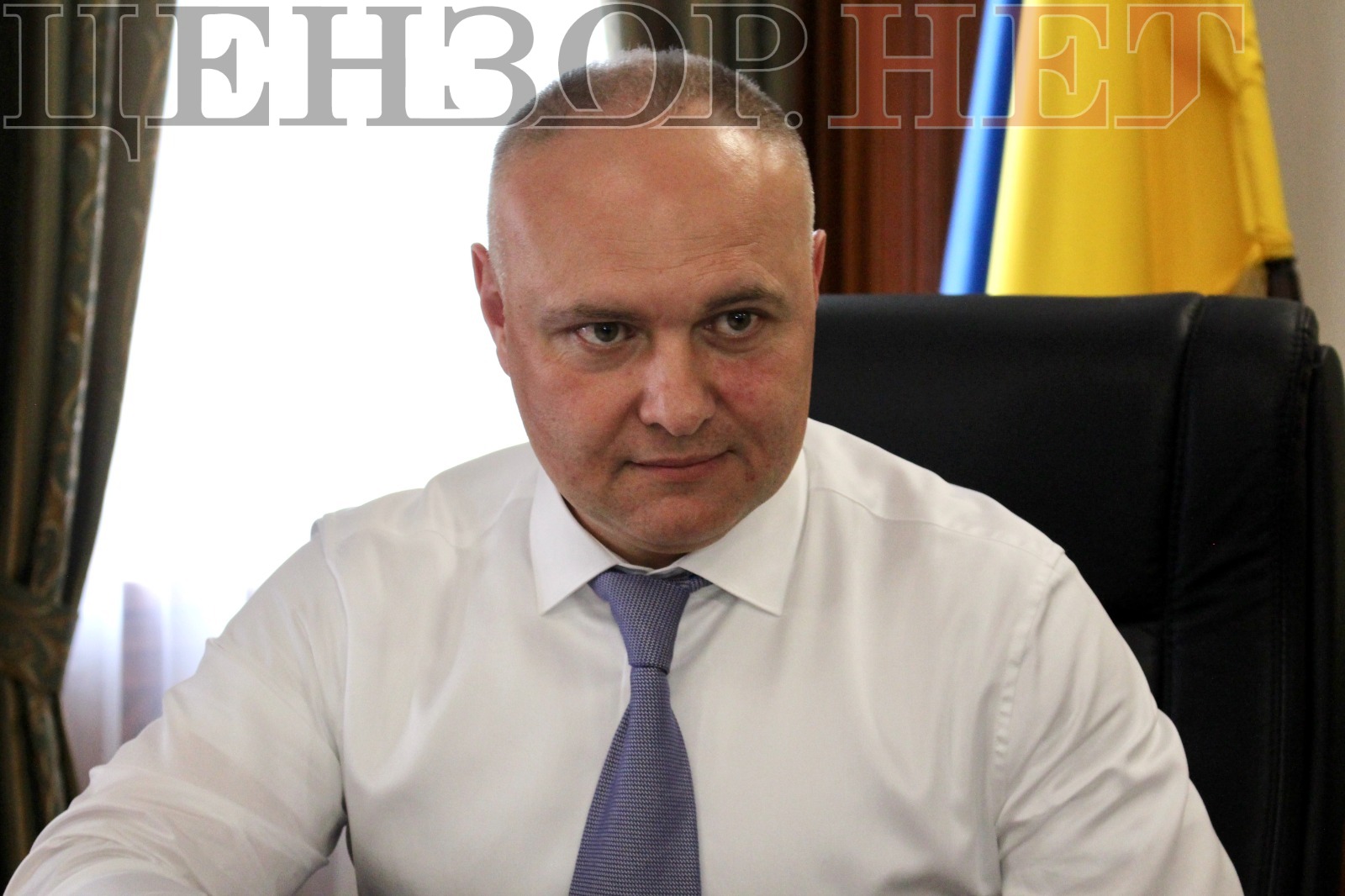
"FOR US, THE CURRENT PRIORITY IS TO ELIMINATE THE LARGE-SCALE SCHEMES CAUSING SIGNIFICANT BUDGET SHORTFALLS."
– The new version of the Customs Code provides for granting the State Customs Service the status of a law enforcement agency. But amendments also need to be made to the Criminal Procedure Code and other laws that are important for its future work in that status. Is this currently being discussed at the level of the State Customs Service, the Finance Ministry, and MPs from the relevant Verkhovna Rada committees? And what, in your view, should its investigative jurisdiction be?
– Indeed, the draft of the new Customs Code stipulates that a specialized unit for combating smuggling will be established within the State Customs Service. It will receive the status of an entity authorized to conduct operative-search activities and, accordingly, of a pre-trial investigation body for crimes involving the smuggling of goods. If we analyze the current Criminal Code of Ukraine, there are now three articles dealing with the smuggling of goods: Article 201-1, "Smuggling of timber"; Article 201-3, "Smuggling of goods"; and Article 201-4, "Smuggling of excisable goods." In principle, we could limit ourselves to these three articles.
If we are talking about all articles whose wording includes the word "smuggling," then, as a rule, this is classic smuggling, involving cultural property, weapons, and explosives. This is Article 201 of the Criminal Code, which falls under the investigative jurisdiction of the Security Service of Ukraine (SBU). Or it is Article 305, smuggling of narcotic drugs.
We are not currently laying claim to such a broad range of criminal offenses. I think that in our case, it would be enough to focus on the three articles concerning the smuggling of timber and goods, including excisable goods. This is exactly what is set out in the European Commission’s recommendations and what has been repeatedly stated by the World Customs Organization and the International Monetary Fund.
At present, the question of how to delineate the investigative jurisdiction of the future pre-trial investigation body within the State Customs Service and the Economic Security Bureau of Ukraine (ESBU) remains a matter of debate. We are actively discussing this with Oleksandr Tsyvinskyi (Director of the ESBU – ed.). We have a certain dichotomy here: Negotiating Chapter 24 on Ukraine's accession to the European Union calls for institutional changes within the ESBU, while Chapter 29, "Customs Union," stipulates that customs authorities should be granted operative-search and investigative powers in relation to smuggling-related offenses. Society perceives this as an imbalance because, in effect, the code removes certain powers from the ESBU and transfers them to customs. We want to find a compromise solution.
– What do you mean?
– If the position of our fiscal policy bloc, involving the Finance Ministry and the Cabinet of Ministers and reinforced by the legal position of relevant EU bodies, is that this should still fall exclusively under customs’ investigative jurisdiction, we accept that option. If, however, we move along the track of finding a certain balance between our involvement and the powers of the ESBU, we are considering, as one possible option, a division of jurisdiction similar to that between NABU and the State Bureau of Investigation (SBI) in investigating official misconduct offenses. In other words, we would delineate investigative jurisdiction based on the subject involved, the value, or the object of smuggling. That option would be the compromise. We do not yet have a clear decision, but we are working on it.
– It may turn out that customs officers document an organized criminal group, do all the main work, and then have to hand over the case materials to the ESBU because the amount involved falls under the Bureau’s investigative jurisdiction. Does that make sense? You will already, to some extent, be competing with NABU, which will continue fighting corruption within customs authorities.
– My opinion is not decisive in this matter. I will repeat: there must be a consolidated position from lawmakers, the government’s economic policy bloc, and our European partners.
As of today, customs has practically been stripped of the ability to detect, document, and dismantle schemes. Our focus is mainly on carriers or officials of foreign trade operators, non-resident companies, who are often not even aware that they have come to the attention of Ukraine’s customs service (since everything usually comes down to drawing up protocols and having them reviewed in court). Unfortunately, however, the economic effect of recovering these funds leaves much to be desired.
We are now living in wartime conditions, so I will borrow a bit of military terminology. We are all watching the situation on the front and can see how it has changed since the start of the full-scale invasion. Modern war is a war of technology. And we are talking about deep strike, middle strike, and front strike.
So, using that terminology, customs should be dealing with middle strike (dismantling schemes that have ultimate beneficiaries) or with deep strike. Doing this without full-fledged operative-search powers is impossible by definition. That means we remain hostage to the goodwill and certain resources of the pre-trial investigation bodies we cooperate with and to which we provide materials.
Of course, we can continue using the tactic of "a thousand cuts," that is, locally detaining drivers and seizing goods. Perhaps that would be okay if we were talking about a defensive strategy. But it is nowhere near sufficient to achieve the overarching objective.
As for the legislative changes you asked about, we have already worked out a draft law together with the Finance Ministry to amend the Criminal Procedure Code and the Law "On Operative-Search Activities." But since one of the articles of the CPC, specifically Article 216, is still being coordinated, we proposed that the package of innovations concerning the law enforcement status of customs should, by virtue of a deferred-effect clause to be set out in the transitional and final provisions, enter into force only after the relevant amendments are made to the sectoral laws. This way, lawmakers can already begin working through the draft of the new Customs Code. Everything related to this disputed law enforcement status will be introduced through the next tracks, as amendments to these key laws are being made in parallel.
– ESBU Director Oleksandr Tsyvinskyi said in an interview with Censor.NET that Bureau employees still do not have access to customs posts, but that it is important for them to obtain it in order to work more effectively. What is your view on this?
– I have excellent working communication with Oleksandr Ihorovych. I am following their latest operations with great interest. As of today, we already have several amendments to the memorandum on information cooperation between the State Customs Service and the ESBU. They have effectively gained access to the entire body of information administered by the State Customs Service.
As far as the analytical component, or work with information databases, is concerned, all the conditions have now been created for them.
We also fully support ESBU initiatives related to amendments to legislation and departmental orders aimed at bringing the economy out of the shadows.
We are now talking about bringing the electronics market out of the shadows. The key question here is how Apple products, or products from other manufacturers, illegally enter Ukraine. As a first step, we propose obliging all "white" importers to include information on smartphone IMEI codes in customs declarations. This would then give the ESBU a tool to monitor which phones entered the country legally and which came in outside customs control. In other words, we are providing every possible assistance.
As for ESBU employees being present in customs control zones, Oleksandr Ihorovych and I have also discussed this. My position remains unchanged for now. I believe this would amount to excessive interference in the work of customs.
When I worked at the NABU, we also had the right to be present in customs control zones by order of the director or deputy director. And as the head of a unit that operated in Ukraine’s border regions for nine years and made a significant contribution to countering systemic corruption at customs and smuggling, I can say this: we never used that right once. Because there is a lawful way to enter a customs control zone on the basis of a ruling by an investigating judge and conduct a search in any administrative building of the customs service. It is also possible to do this through urgent searches, which are then legalized through rulings by an investigating judge.
I believe that the presence of such a number of law enforcement officers at border crossing points would definitely not help the State Customs Service perform its functions. At the same time, our working communication continues as we look for a final solution.
– When you worked at NABU, were you on friendly terms with Tsyvinskyi?
– Oleksandr Tsyvinskyi and I have known each other since our joint service in units of the Main Directorate of the Ministry of Internal Affairs of Ukraine in Lviv Oblast. He served in investigative units, while I served in operational units. As for our work at NABU, we did communicate, of course, because the number of staff detectives was small, and any operations initiated by the central office, including support for certain investigative-search actions, required the involvement of regional units. We communicated with him on this issue more than once.
We have good communication, including personally. I cannot say we are friends; I would describe the relationship as more cordial. But even now, this helps our communication in many ways. Again, regardless of the individuals currently heading the ESBU, my priority is for the State Customs Service to become a reliable partner and take a proactive position in detecting and documenting smuggling. Since the ESBU is currently the lead agency in investigations, meaning it has exclusive investigative jurisdiction, we are dependent on our communication and are ready to do everything to ensure that the schemes we document receive an appropriate response from the pre-trial investigation body. Such facts must be investigated, the organizers of schemes and ultimate beneficiaries must be held accountable, and the state must see an economic effect from this. That is why we are strongly in favor of intensifying this cooperation. Unfortunately, in the past, the customs service had a certain tilt toward cooperation exclusively with units of the Security Service of Ukraine and the National Police.
– What other pros and cons of law enforcement status for customs do you see in terms of state efficiency and balance?
– As for the downsides, there is some tension and concern among businesses that customs will become yet another monster, one that acquires coercive powers and may have a negative impact on foreign trade operators. People are worried that a customs service that has not been fully reformed, after receiving such powerful tools, will pose a threat to business and create regulatory obstacles.
So, when we meet with representatives of business associations and the Public Council under the State Customs Service, we explain that this is a distorted perception. It is "white" business that should be the first to be interested in us receiving powers to conduct operative-search activities. Because then we will be able to dismantle "50 shades of grey" schemes, which, unfortunately, are actively used, and counter smuggling in situations where goods are moved entirely outside customs control.
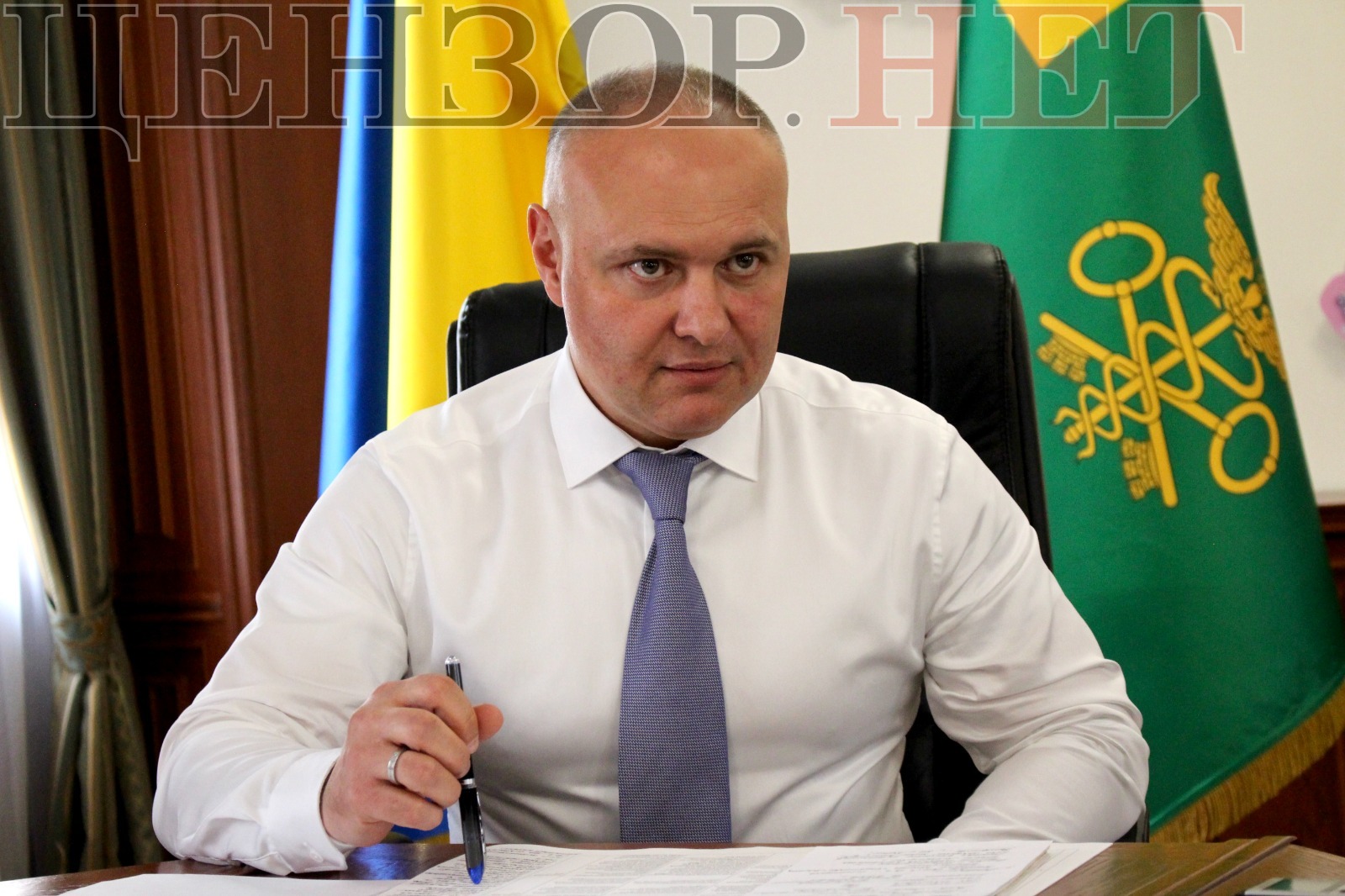
– Based on your own experience at NABU, can you say what level of customs officials came to the attention of detectives? Who facilitates these schemes at customs?
– To answer that question, I need to explain NABU’s investigative jurisdiction. The Bureau does not investigate smuggling as such; we qualified such actions under a combination of offenses. As a rule, these involved tax evasion by foreign trade operators and certain official misconduct offenses by customs officials.
Among the landmark cases in which I personally took part, I would single out two criminal proceedings linked to the activities of two criminal organizations. One operated within the area of responsibility of Chernivtsi Customs, the other within that of Volyn Customs. In the first case, there was a criminal organization made up of three autonomous criminal groups. The organizer of one of them cooperated with the pre-trial investigation body and voluntarily compensated UAH 83 million in losses. There was also a voluntary donation of around UAH 180 million to support the Defense Forces.
The organizer of the second criminal group is currently on the international wanted list. According to our information, he is in Romania, and at the moment, the Ukrainian justice system cannot reach him. But I hope that, through joint efforts, we will still bring this case to a conclusion.
The third organized criminal group consisted exclusively of top officials of Chernivtsi Customs. This involved the then head of Chernivtsi Customs of the State Fiscal Service (SFS), the head of the department for combating smuggling and customs violations, the head of a customs post, and several other unit heads.
The criminal organization that operated at Volyn Customs focused on the illegal movement of highly liquid industrial goods manufactured by Apple. It was organized by a former employee of the Security Service of Ukraine who had the relevant experience and expertise to run the scheme with the involvement of customs officials, from the heads of customs authorities down to rank-and-file inspectors.
In this case, some plea agreements have already been approved by the court, while others are still before the High Anti-Corruption Court (HACC). I hope verdicts will be handed down soon, and society will see the real scale of the problem that existed.
– During the selection interview, you spoke about the Volyn Customs case and mentioned in passing that, along with the "black cash fund," investigators seized what is known as a "comb". These are documents showing how illicit payments were allocated among customs officers and law enforcement officials who facilitated the crimes. Can you say whether funds were passed up to the level of the central office?
– I cannot answer that question because I am bound by the secrecy of the pre-trial investigation. But I think this criminal proceeding will move forward in the near future. And I am confident that when the relevant procedural motions are considered by the High Anti-Corruption Court, the prosecutor will present these materials, and you will be able to see and hear all of it.
– When you came here to take up the post of chief, did you know that anyone currently working here in the central office was connected to this case or other schemes, but that, despite knowing this, investigators simply failed to gather enough evidence to hold them accountable?
– I do not have such information in a personalized form regarding specific individuals involved. At this point, we are talking exclusively about structural units. This information exists, it is being processed, and we are currently in communication with the relevant unit of the National Anti-Corruption Bureau. We hope that, with the involvement of our specialized units, in particular the Internal Control Department, we will be able to bring this case to its logical conclusion.
– What is happening at the border now? Are smugglers lying low because of your appointment, or has their activity continued?
– We need to distinguish between small-scale cross-border traffic and smuggling that affects state budget revenues. If we are talking about the illegal movement of household goods, used equipment, and food products across the western border, this is so-called non-commercial traffic. Before my appointment, such foreign trade operations were usually carried out using a simplified customs declaration. For example, in the area of responsibility of Lviv Customs, their total fiscal turnover was about UAH 20 million a month.
After my appointment and dialogue with local managers, non-commercial traffic now accounts for around UAH 35-40 million. But overall, in the context of Lviv Customs, which administers around UAH 9 billion a month, this is a background issue. It creates negative publicity for customs, but it is not the primary challenge that needs to be eliminated. Of course, it is also in our focus; we are categorically opposed to such things and will fight them too. But our top priority now is to dismantle the large-scale schemes that cause significant shortfalls in budget revenues. These include the unlawful use of certain preferences, the movement of goods under the guise of humanitarian aid that are later sold in Ukraine, the deliberate alteration of commodity classification codes, and the undervaluation of customs value. This is our priority right now.
– Do you remember the film The Green Van, in which a former gymnasium student became head of the Odesa county police department and had to fight local moonshiners, horse thieves and speculators? After his appointment, in the village of Severynivka, the moonshine stills, to quote the voice-over, stopped smoking on their own, pending clarification of the new chief’s character. And then they tried to bribe him, as they had his predecessors, with yellow boots. Has anyone tried to find an approach to you yet?
– I have been very lucky in this respect, because my background, namely my work at NABU, acts as a certain safeguard against such proposals. Since my appointment, I have not received a single phone call or recommendation regarding a personnel appointment, nor any hints along the lines of, "let’s try to revive the old practices that suited everyone."
– Why? Because of your reputation?
– I think people are afraid that conversations are being recorded, and that I would have no choice but to advise such an interlocutor to go to the National Anti-Corruption Bureau and speak to a detective there.
I realize that when a NABU employee who had 17 people under his command takes over an institution with around 10,000 employees, it is a major challenge. Including a reputational one for the Bureau. I understand that my failure would be perceived by certain interest groups as proof that the practice of competitive selections involving international experts is unnecessary window dressing, a waste of money, another failed project. That is why it is important to me that, through joint efforts and with the involvement of all my colleagues, both former and current, as well as counterpart agencies, we are able to build the customs service we actually want to see. One that combines service, fiscal, and law enforcement functions.
– Which interest groups are you referring to? Can you say?
– I think you know them perfectly well yourselves.
– If I say it, it will carry one kind of weight. If you say it, it will carry a completely different one.
– Since there have been no such proposals, there is no need to bring this into the public domain. If they do appear, I think we will find a way to document them procedurally and then make them public.
– You seem very concerned about NABU’s reputation. Why is this important to you?
– First and foremost, this is about my own reputation. We now have an exceptional level of attention from our international partners. My appointment, my background, and the information flow generated by the Bureau’s work have sparked considerable interest among them. And we now feel their willingness and readiness to be involved in the transformation of customs, in terms of expertise, financial injections, and logistical support. We now have a unique chance and a window of opportunity to consolidate all of this and make a quantum leap forward.
We understand very well that Europeans expect Ukrainian customs to become a reliable filter, one that will prevent the illegal movement of weapons and explosives that could potentially flow from the eastern border into Europe to destabilize the situation. That is why we need to ensure that our border crossing points meet European standards in terms of technical equipment. Every border crossing point must be equipped with technical means of control.
Previously, this happened in a fragmented way. The first stationary scanning systems made in China were purchased back when the State Fiscal Service was still operating. At that time, as I understand it, the aim was to make the offer as cheap as possible. As a result, they were purchased in a condition that later required additional investment for upgrades. They are now operational.
In addition, as part of international technical assistance, customs received a certain number of additional scanning systems, including mobile ones. But there is one nuance that, for some reason, remains overlooked. They run on their own software, which makes it impossible to integrate them into a single system. That is why we want to raise with our European partners the issue of improving the equipment of our border crossing points with scanning systems and weighing complexes, as well as creating a centralized system for managing technical means of customs control, a targeting center. It will provide round-the-clock monitoring of the situation at border crossing points.
We also plan to scale up the use of body-worn cameras by customs inspectors. They are currently used only at two border crossing points: Rava-Ruska of Lviv Customs and Starokozache of Odesa Customs.
This is a good anti-corruption tool that disciplines the official directly. It is also a good safeguard and a form of insurance against any provocative actions by those same foreign trade operators.
According to our estimates, we need 1,030 body-worn cameras to cover the needs of the entire western border.
– Do you plan to equip customs officers with them only on the western border?
– We will start with the western border, where freight logistics are currently the heaviest. The next step will be Odesa Customs, which handles container shipments.
There have also been good results from the use of personal tablets in the area of responsibility of the Hrushiv customs post of Lviv Customs. There, when customs officers select forms of customs control for vehicles, they use tablets rather than official cameras, which allowed images to be modified and "unnecessary" details removed. These tablets are protected against external interference.
Of course, work with scanning systems is also very effective. This form of non-intrusive customs control is not burdensome for foreign trade operators, as it does not involve an inspection, a full unloading of goods or, consequently, delays.
In May, we held a four-party meeting with representatives of the customs administrations of Romania, Hungary, and the Slovak Republic. The Hungarian side invited us to the Chop-Záhony customs post. They use scanning systems not only to inspect vehicles, but also to check passenger flows moving through a pedestrian crossing point or along bus lanes. Such scanners make it possible to detect prohibited items very effectively. They are already operating in Ukraine as well, but so far only in limited numbers.
– May I ask a question with a political subtext while we are on the subject?
– Yes.
– To what extent will cooperation with Hungarian colleagues change after new people come to power there? Will there be any difference at all?
– It is difficult for me to predict the development of interstate and intergovernmental relations. I can only say that we have excellent cooperation with Hungary’s customs administration, regardless of the political discourse that existed with the previous government. In terms of prior information exchange and bilateral administrative assistance in customs matters in general, Hungary’s customs administration can be held up as an example.
– What percentage of Ukraine’s customs infrastructure is currently equipped with scanners?
– At present, the level of provision with scanning systems is uneven and depends on how ready border crossing points are for such equipment. Most of them are managed by the State Agency for Restoration and Infrastructure Development, so the possibility of fully deploying the equipment is directly linked to the pace of their modernization. At the border crossing points where this is technically and infrastructurally possible, scanners have been installed and are operational. At the same time, in some areas, deploying them is currently impractical due to the security situation, particularly given existing cases of equipment being damaged by enemy attacks.
The installation of weighing complexes is now a pressing issue. Back when the State Fiscal Service was still operating, portable weighing systems were installed as a temporary solution, but today they simply cannot cope with the pressure of traffic flows. That is why there is a need to switch to modern stationary weigh-in-motion systems. We currently have a total of 24 different weighing systems in operation, and another 21 are needed, at an estimated cost of around US$1 million, to ensure a proper level of control.
– Is it not possible to resolve this through state funding?
– No.
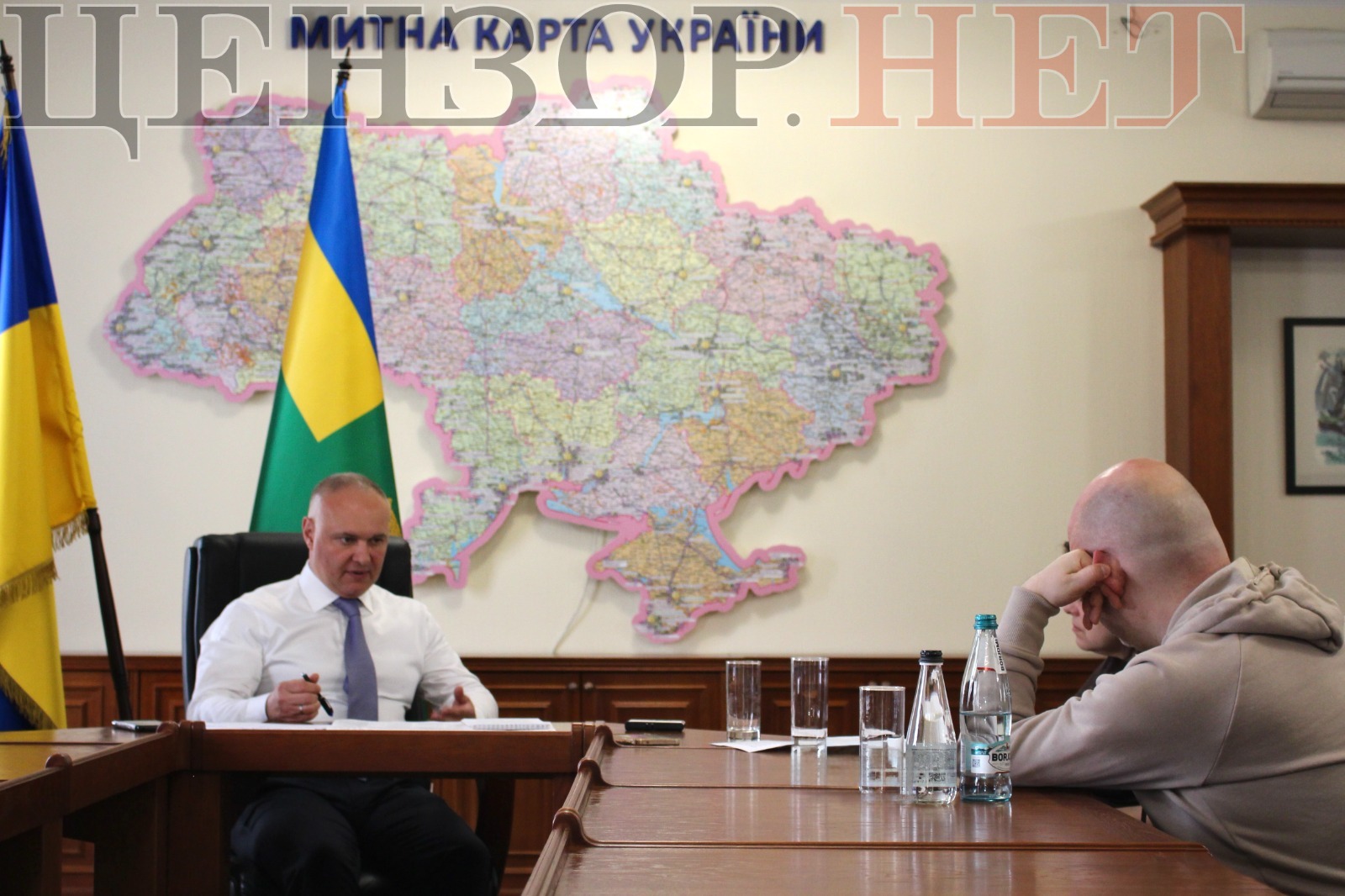
"IT IS IMPORTANT TO DISMISS PEOPLE WHO ENGAGE IN ASSET ANOMALIES"
– To what extent is the customs service generally funded from the state budget?
– As of today, our needs are funded at 48%. More than 90% of these funds go to salaries, with the rest allocated for current expenses and work to introduce rail-type scanning systems, which will appear in Ukraine for the first time this year. So, in effect, we are talking about a lack of resources for institutional development.
According to preliminary estimates, next year’s funding level may be around 38%, with a similar cost structure, but without separate funding for scanner-related work.
– How, then, do you plan to carry out the attestation?
– We have sent a letter to the Finance Ministry asking it to find additional budget funding to launch the attestation process: forming commissions and covering related expenses connected with interagency communication during integrity checks.
So far, we have received no feedback from the Finance Ministry. For now, we are waiting and continuing to work. Given public demand and the attention from our international partners, we have scheduled a so-called donor conference for 10 June, where we will present our overall consolidated needs. These include HR-related areas, including attestation, the purchase of technical means of control, funding for IT solutions, and so on.
Among other things, we plan to raise the need for US$1.1 million, which has become the talk of the town on specialized Telegram channels, to start the attestation process.
– It is known from open sources that in your letter to the Finance Ministry, you asked for UAH 600 million to fund the work of international experts on the commissions. At the same time, when speaking with customs officers, I heard from them that, in order to undergo attestation, they will have to travel to other regions. Travel and accommodation expenses will be at their own cost, and that is not exactly a small amount. People are taking this quite negatively. In this regard, I have two questions. Can Ukrainian experts delegated by international organizations be involved, and is there any way to reduce budget funding in this area? And second, why should customs officers travel to other regions at their own expense instead of undergoing re-attestation locally, so they do not have to spend money on it?
– Let us start with the composition of the attestation commissions. As you rightly noted, the law introducing the customs reboot mechanism, which sets clear deadlines and requirements for forming the commissions, contains no mandatory provision stating that commission members must be foreigners. They may be people delegated by the relevant international and intergovernmental organizations, the list of which has been approved by Ukraine’s Ministry of Foreign Affairs. If these are people of moral standing with Ukrainian citizenship, we are perfectly fine with that.
As for speculation about excessive logistics costs and disproportionate financial pressure on customs officers, first of all, as of today, there is no clearly defined and agreed position on how this attestation will take place. The attestation commissions must be formed by 13 July. We are currently considering the option of creating a first-wave commission in Kyiv to attest senior management, and five second-wave commissions for all other officials: in Kyiv, Vinnytsia, Poltava, and two in Khmelnytskyi. It is not easy to find people willing to work for 18 to 36 months on a voluntary basis to create a commission in every region. So for now, this is the optimal option.
– You did not answer about the UAH 600 million. Given the current shortage of budget funds, this is a large sum. Can it be reduced somehow?
– I think this is a matter for discussion. It will only be possible to answer that in the course of implementation. I did not calculate this amount. It is included in the medium-term action plan for achieving the goals of customs reform as part of the implementation of the National Revenue Strategy, approved by the Cabinet of Ministers.
– Are you not concerned that attestation could result in a personnel shortage? Or is the goal to dismiss as many people as possible and recruit new ones? For example, the tests at NABU and the ESBU are quite difficult. The competition for the head of the Asset Recovery and Management Agency (ARMA) also showed how difficult it is to pass such a process.
– My main priority now is meeting budget targets. And despite my experience in the law enforcement system and the operational information available to me, I am absolutely not a supporter of revolutionary changes. I am convinced that we must do everything in an evolutionary way, gradually cleansing the system of people who discredit it. I consider people who are ready to work within the new framework and do not have corruption rents to be members of my team.
What matters to me now is ensuring that the system remains manageable so that it can continue to perform its fiscal function effectively.
As for the tests, we need to find a balanced approach, taking into account the age of customs employees as well. At some customs offices, these are people aged 51 to 56. We do not see much potential or excitement around filling vacant positions, especially in units operating near the line of contact, where there are constant threats to life and health.
That is why we need to find an option that will allow us to carry out a genuinely high-quality attestation and filter out incompetent people. But for me, the main focus will be integrity checks. It is important to dismiss people who engage in asset anomalies. In other words, a person has spent their entire life in public service, yet owns assets worth several million dollars or leads a lifestyle that sharply contrasts with their official income.
– When you met with your Hungarian colleagues, did you travel around Zakarpattia? Did they happen to show you any customs officers’ "little cottages"? Locals once showed them to me.
– Given the schedule of the official events, I did not have that opportunity. But I will certainly take advantage of Zakarpattia’s hospitality and will definitely be able to inspect those properties.
– And where do you live? Have your housing conditions changed since you took up the new post?
– In Kyiv, I rent a one-room apartment near the administrative building of the State Customs Service. My family circumstances allow me to focus as much as possible on work, since my family is abroad because of the war.
For me, this position is about responsibility, not a window of opportunity.
– Otherwise, over time, we would be listening to you on tapes too...
– For me, the best safeguard against such things is my own personal experience. I would not want NABU Special Operations Department officers knocking on my door one morning.
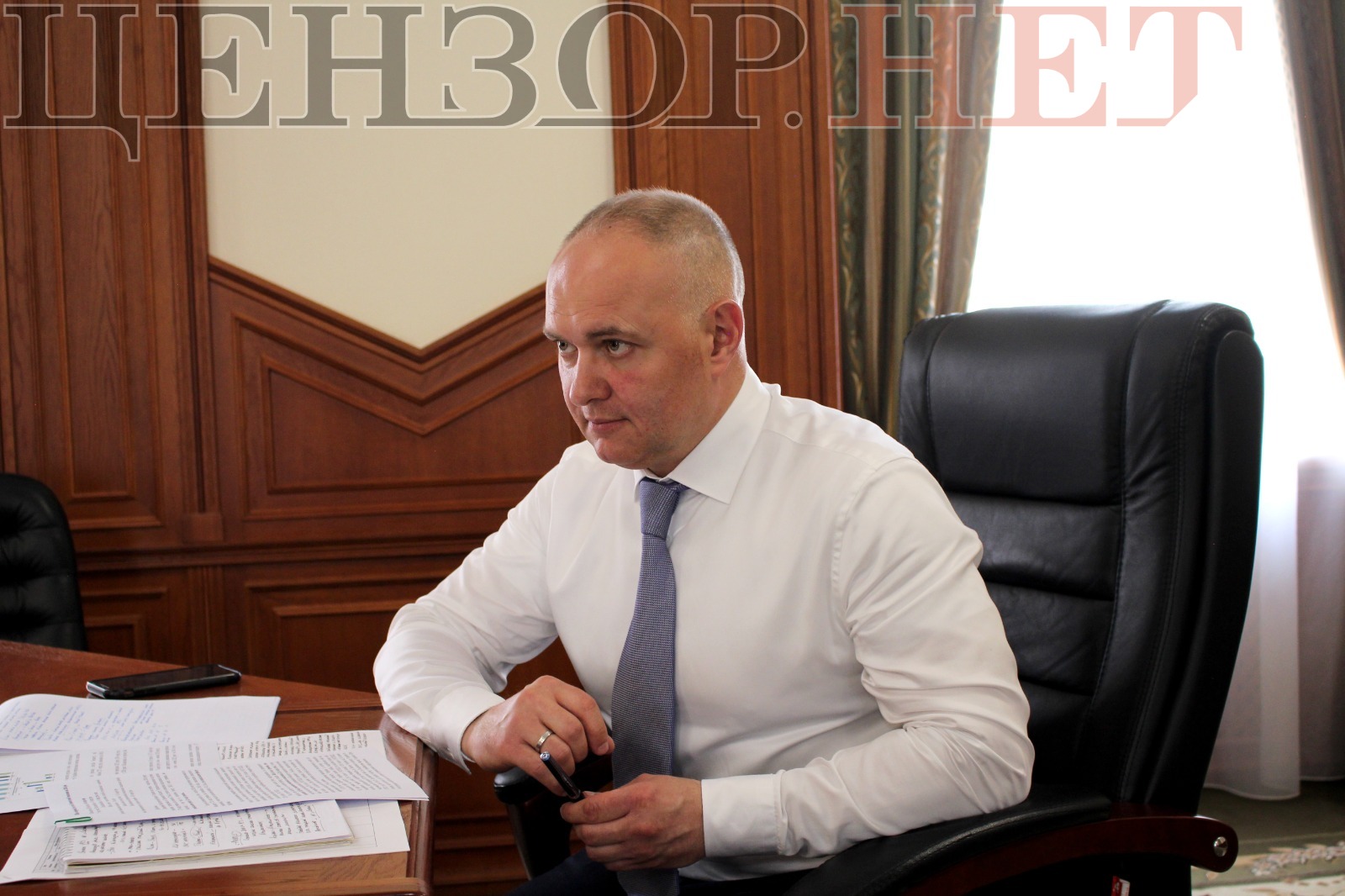
– When the selection commission held final interviews with six candidates and announced the finalists, two NABU employees were among them. The head of the selection commission, Kunio Mikuriya, said, in effect, that although there were worthy candidates from customs among the finalists, the commission gave preference to anti-corruption professionals because Ukraine’s customs service now needs, above all, to solve the problem of integrity. "So perhaps bringing in an experienced anti-corruption fighter would be a good step," he said. Do you support this strategy, that integrity is now somewhat more important than experience? In other words, is it better to take an honest person and train them from scratch than to keep an experienced dinosaur who knows all the schemes?
– Given Kunio Mikuriya’s experience and life wisdom, I completely agree with him. We are operating in extremely difficult conditions caused by Russian aggression. And we need to use unconventional solutions and show the world that even in wartime, we can carry out high-quality transformational changes. I am confident that my experience and my willingness will contribute to this.
I do not want to condemn anyone across the board or call into question their competence or their ability to drive transformational change. But when a person has spent a long time inside the system, is integrated into certain processes, and sometimes has personal connections, it can get in the way of approaching the work without subjectivity.
The regulatory framework can be studied, and it is possible to understand how the customs system functions. What matters to me is that there are no vertical or horizontal ties, no pull toward one influence group or another, what we call "customs trade unions."
– How are you forming your team, given the operational information you have about what is really happening in the customs system? For example, when a new coach comes to a football club, he has two options: either immediately replace the players he does not like, or wait half a season and see how they perform. What is your approach?
– The second approach you described. I do indeed have a lot of operational information, both because of my previous job and because of my current communication with former colleagues and with the law enforcement sector in general. In this regard, there are many questions about our current employees, both in the central office and in the regions. But during the first conference call, I clearly said that I believe a mass transfer of NABU employees to customs positions, especially senior ones, would be wrong, because I am not a supporter of building a team based on personal loyalty. I do not need people to keep me in a comfort bubble and tell me how wise my decisions are. I need quality work. So a certain number of people from NABU will be brought into the State Customs Service. Not to top positions. For me, this is an alternative source of information about the processes taking place inside.
Those who have failed to understand that fundamental changes have taken place, both in worldview and in the approach to work, will be gradually removed by forwarding the relevant materials to law enforcement agencies, or through attestation or disciplinary investigations. This was stated at the meeting.
– Has anyone from the President’s Office or the Cabinet of Ministers communicated with you regarding the work of customs? Perhaps they hinted or told you directly that certain people should not be touched, or that someone should be helped?
– There has not been a single conversation of that kind.
– Let’s talk about tackling the shadow economy, on which budget revenues depend. Are there any figures you are expected to deliver by the end of the year?
– For 2026, our overall target is UAH 944.9 billion. For the general fund of the State Budget, it is UAH 875.6 billion, and for the special fund, UAH 69.3 billion. The special fund includes UAH 9.3 billion from duties related to exports of soybeans and rapeseed. But the government expects the bulk of it, UAH 60 billion, to come from tackling the shadow economy. It is hard to say how realistic that figure is. I have already heard some analysts or economists cite figures of UAH 100-150 billion... In this case, the Cabinet of Ministers took a more balanced approach: they see this growth area at UAH 60 billion. But every year, the National Bank conducts an analysis and publishes data on so-called informal trade. For 2025, it estimated this figure at around US$900 million. This is turnover not covered by taxation, that is, outside the reach of fiscal authorities. Given the effective tax rate on imported goods, which is around 27%, we arrive at a figure of roughly UAH 10 billion. This is, conditionally, the substantiated growth area where we can say there will be a cash-flow effect that can go into the budget.
– What conclusions has the State Customs Service drawn from the case of the former deputy head of Kyiv Customs? On the one hand, you were not dealing with Kyiv Customs; on the other, I think you had relevant information on this matter as well when you came to the State Customs Service.
For readers unfamiliar with the case, let me remind them that, according to the investigation, during his time in public service, the official allegedly accumulated significant assets illegally and later, among other things, invested more than US$2 million in cash in the construction of an elite restaurant and hotel complex in Bukovel.
Have you analyzed this case? What conclusions have you drawn?
– In fact, the allegation is that the pre-trial investigation body has charged him with laundering around US$2 million through the construction of a hotel and restaurant complex. At the same time, the initial construction and registration of ownership rights were carried out in the name of a person under his control.
What conclusions can be drawn from this? It seems to me there is only one conclusion: unfortunately, neither the State Customs Service of Ukraine nor, more broadly, our anti-corruption infrastructure has built effective tools that would allow us to detect warning patterns at the initial stage of capital accumulation. Clearly, this did not happen in a day or two. Unfortunately, as of today, there is no effective system for using tools that would allow us to see these things immediately as they develop and respond to them quickly. That said, we now have certain developments in this area. In other words, all reports on social media and Telegram channels concerning certain asset anomalies or worrying trends are analyzed by the relevant corruption prevention department, and a certain financial screening of the official is carried out. There are clear recommendations from the World Customs Organization on the methodology for checking the integrity of officials. And if we see any clear deviations, this information is immediately forwarded for further response either to a specially authorized anti-corruption body or to law enforcement agencies.
A few figures. In 2024, we sent 48 reports to law enforcement agencies and 45 to specially authorized entities in the field of anti-corruption. In 2025, the trend declined slightly, to 25 and 22 reports, respectively. But this work is being carried out on a constant and systematic basis. I think the case you asked about shows that these integrity checks, where we will record all signals (for example, social media posts about lifestyle, assets, or the flaunting of certain expensive status items), will also be taken into account. A person who wants to be a celebrity has every opportunity to do so outside public service. I believe that is how it should be.
– Let’s change the subject. I’m looking at you, and I don’t see a watch on your wrist. Do you wear one? Or do you stay away from temptation?
– I don’t wear a watch at all. I can even show you (rolling up his shirt sleeves – author’s note).

I am not drawn to such luxury items, let’s put it that way. I lead a fairly active lifestyle. Once, back in my previous life, I was given a simple budget watch as a gift, but I damaged it in an everyday situation. Since then, I have not worn such accessories.
– Have you considered introducing the polygraph as a mandatory periodic check for all employees without exception? They had them at NABU, didn’t they?
– This will definitely be introduced on a mandatory basis. Checks of officials at the National Anti-Corruption Bureau are carried out at certain intervals and randomly. In other words, lists are drawn up, and no one knows in advance who will be checked. We also actively use the polygraph now, in virtually all internal investigations, provided the official agrees to undergo such a check. We plan to scale up this practice during attestation checks as well (if there are doubts about a person’s integrity). In addition, it will be mandatory during competitions for first-time entry into service, and as an anti-corruption prevention tool for all customs officials without exception.
– Did you undergo polygraph tests often?
– Quite often, since I served in units of the department for combating organized crime. During my time at the Ministry of Internal Affairs, I underwent them three or four times, if I am not mistaken. And I underwent polygraph tests around three more times while serving at the National Anti-Corruption Bureau of Ukraine.
– Were you nervous?
– It is an unpleasant procedure.
– Even if you are not guilty of anything?
– Yes. Because a person’s reaction is unpredictable. You may have certain triggers that can make you react in a rather unclear way. Even to questions about drug use or some informal relationships. But a professional polygraph examiner, when they see these triggers, certain warning signs in the body’s response, can always clarify these questions and discuss them in more detail. And, as a rule, that resolves certain issues. But it is a fairly effective tool.
– Can a person learn over time to deceive a polygraph?
– That is extremely difficult. You need maximum self-control. That is the level of employees who train for this for years. Or there may be the use of sedatives, but that is visible. There are also cases when people, the day before, throw themselves as deeply as possible into the arms of the "green serpent," and the next day their reactions are dulled. But the polygraph examiner sees that.
– Did you not have an opportunity, while undergoing the polygraph, to receive "feedback"? That is, for them to tell you afterward: "Here, here, and here, you had questionable moments"?
– For the most part, such things are brought to the attention of the person who initiated the check. In other words, there is official secrecy, but when I disagree with certain things, I have the opportunity to communicate that.
– According to NACP research, in 2025, 21.8% of entrepreneurs encountered corruption during customs control. What is being done so that these entrepreneurs can report such cases? Apart from the hotline, do you hold meetings with businesses to get feedback? Because, according to the same research, the public and businesses ranked customs second and third, respectively, among the most corrupt sectors on a fairly long list. Clearly, this was before you came in. So how are you trying to change the situation?
– In fact, apart from the hotline, we also make very effective use of the whistleblower portal on the NACP website. Every piece of information received by phone or through social media is recorded. Employees of the corruption prevention department monitor this entire body of information, the whole information space. If it has not come through official channels, they personally enter this information into the whistleblower portal. There is a clearly defined procedure there: among others, law enforcement officers can see this information, and every such report is checked. Documents are attached showing the results of the check and the subsequent decision taken.
As for communication with the public, we have already held meetings with the Public Council under the State Customs Service, the American Chamber of Commerce, the European Business Association, the Ukrainian Business Council, and sectoral business associations. In other words, all key stakeholders have the opportunity to communicate with me personally.
We already have cases where people report worrying trends involving preferential confirmation of vehicle origin only at certain customs offices. I respond to these things as quickly as possible. They can even submit certain analytical materials to me privately. I review them, and if I see that this is not some planted case and that it is based on relevant information, we respond immediately.
– And what does the country’s leadership expect from the State Customs Service? First and foremost, of course, to replenish the budget or prevent budget losses. But there was this key quote from the President in 2023: "Our goal is the Tax Service without tax officers. Customs without customs officers. Automatic digital procedures." This idea of customs without customs officers: how do your subordinates react to it? Because, first, digitalization also means cuts, doesn’t it? And second, it means corrupt customs officers losing access to some profitable schemes. If I worked at customs, regardless of whether I was corrupt or not, such prospects would worry me.
– Believe me, no one is more interested than I am in removing unnecessary discretion from customs officials, the kind that allows them to generate corruption rents. For me, it is fundamentally important that a customs officer has a clear, defined course, bounded by a red line, and a specific protocol of actions. And that we, as the central executive body implementing state customs policy, can verify the legality of their actions and the sequence from start to finish: whether all basic requirements, protocols, and algorithms were followed.
In any case, we have no choice but to pursue digitalization. We are already doing this. We have solid groundwork and a team of specialists who, given the existing budget, are trying to get things done. For example, when it comes even to automated customs clearance of postal items and express shipments, we already have solid progress. We are launching a pilot project involving authorized economic operators and are already preparing certain protocols. We have IT solutions that allow us to say that even if a law is later adopted to lower the tax-free threshold for international parcels, we will be ready to operate as normal from 1 January.
The Automated Risk Management System (ARMS) is also now being integrated and used as extensively as possible. In other words, the State Customs Service is moving toward removing unnecessary discretion from customs officials at the start of the customs clearance procedure. If there are no warning patterns involving manipulation of value or commodity codes, and if ARMS is not triggered, customs clearance is completed fairly quickly, within the four-hour period set out in Article 255 of the Customs Code. The fact that we need to move actively toward digitalization is a demand of the times. In many cases, even in the automated customs clearance of postal items, we use artificial intelligence tools that allow us to translate product nomenclature as quickly as possible in real time. At the same time, AI allows us to de-anonymize certain senders or recipients so that we can understand the circle of these actors. I think we will scale up this tool further.

– Fortunately, artificial intelligence does not have such a thing as temptation.
– This is something that removes certain stereotypes that exist in society. A few days ago, we had a working meeting with the relevant committee of the Verkhovna Rada of Ukraine. MPs and representatives of the Ministry of Digital Transformation were present. We discussed the adoption of a law on customs clearance of cars through Diia. In simple terms, there is an initiative under which any individual importing a vehicle into Ukraine would be able to complete all customs clearance procedures using the Diia app. Given that vehicle imports have always been burdened with excessive negativity, we are ready to give up even this customs discretion. But on the condition that we give it up together with responsibility. Clear algorithms must be set out: how customs value is determined, who will be responsible for any budget losses or, conversely, for creating conditions for excessive fiscal pressure.
– When is this customs clearance through Diia expected to be launched?
– As far as I understand, the draft law is already ready. The question is how far this correlates with Ukraine’s foreign policy commitments as an EU candidate country. For Europeans, the idea that customs delegates to someone else the functions of a state body related to determining customs value and adjusting it does not quite fit into their worldview. But we are ready. If our lawmakers believe that such a radical option is currently demanded by society and is necessary, we are ready to adapt even to such realities.
– Let’s talk about your cooperation with foreign customs colleagues. Can you give successful cases, examples, or agreements with other countries that are already working or will work under your leadership?
– If you allow me, I will break your question down into several parts. As for international cooperation, this area has two different aspects. The first is cooperation within the framework of administrative assistance. This is when we request specific information about certain cross-border movements or operations. Or it may be an automated exchange of advance information, as is currently practiced with our Hungarian colleagues. The information provided is verified as much as possible, and for us, it is extremely important for use in the targeting system and preliminary risk analysis.
A similar practical case is our productive cooperation with the customs administrations of Romania and Lithuania. For this, we used the SEED+ programme, whose second phase was also funded by the European Union. At the moment, we have run into the issue of a lack of funds, including on the European side, for the full rollout of the information exchange programme at all crossing points on the Ukrainian-Romanian section of the border. But our colleagues from the EU’s DG ENEST promise they will find the necessary funds to resume this cooperation.
With Lithuania, we continue to exchange information as effectively as possible. We are now seeing a trend where groups involved in vehicle imports most often use companies that are residents of the Republic of Lithuania. In many cases, we carry out further verification of the preferential origin of certain goods, again using the capabilities of our colleagues from the Lithuanian administration. The results are very good. Our cooperation is extremely positive and high-quality.
The issue of advance information exchange with our largest trading partners, in particular Poland, remains a matter of discussion. As of today, Poland’s National Revenue Administration does not provide us with such information on the grounds that there is no agreed decision from the relevant department of DG TAXUD in Brussels. As soon as the European Commission says, "Yes, we have concluded that this is a rule that applies equally to all EU countries, and Ukraine, as an associate member, has proved that this information is used exclusively for those needs," then I hope we will find a generalized mechanism that will help us receive this information. In terms of international customs cooperation, it is highly effective, even when it comes to exchanging requests within administrative assistance. Last year alone, based on responses from the National Revenue Administration of the Republic of Poland, we managed to open more than 150 cases. The total amount of discrepancies involving goods hidden from customs control exceeded UAH 500 million. That is a fairly significant figure.
We have had successful cases linked to bilateral cooperation with Malta’s customs administration. One involved the import of special-purpose equipment worth around UAH 690 million in total. For us, this is a vital tool for information exchange, and it needs to be developed and put into practice as much as possible.
For the first time in several years, we have now received quite a substantial amount of information from the customs authorities of the People’s Republic of China. To their credit, this was achieved through the mediation and active involvement of our diplomats who are present there at the diplomatic mission. I hope that a separate section of that information will have tactical consequences for certain influence groups at the border.
For me, a matter of principle (I hope we will be able to push this through the Ministry of Foreign Affairs of Ukraine) is either restoring or building from scratch the work of so-called customs attachés in countries that are our key trading partners. I am referring to the Republic of Poland, the Republic of Türkiye and the People’s Republic of China. I believe this is an extremely effective tool. We can see this, for example, in the work of the customs attaché of the Federal Republic of Germany’s General Customs Directorate. Some people see customs attachés as a relic of the past, an ineffective tool. But no one doubts that Germany today is the engine of Europe’s economy as a whole. If they still use a customs attaché for cooperation with us, then I think this would also be an extremely useful and valuable tool for us: having customs attachés in our key partner countries who can obtain, through working-level communication, the sensitive information that we sometimes wait six months for, or even longer.
– And when do you think this could be restored?
– I am not ready to talk about any deadlines, because I hope that during a personal meeting with the Minister of Foreign Affairs, we will be able to discuss this and find options for how to do it. Whether this will require additional personnel decisions or whether it can be done using the Foreign Ministry’s current staffing levels, we are still looking for solutions.
– Commenting on the shadow cigarette market, acting head of the State Tax Service Lesia Karnaukh said in an interview with Censor.NET: "We control everything that can be controlled. But the raw materials that enter the country or are grown outside licensing conditions also affect the volume, and we do not see them because our posts and other control mechanisms are not present there." Does the State Customs Service record cases of raw materials being brought in outside customs control?
– No, the State Customs Service has not recorded any cases of tobacco raw materials being brought in outside customs control.
Overall, in the first four months of 2026, 460 attempts to illegally move excisable goods across Ukraine’s customs border were detected and stopped, worth a total of UAH 32.9 million. These included 2.2 million cigarettes worth UAH 9.2 million, 85,600 disposable e-cigarettes with nicotine-containing liquid worth UAH 14.6 million, and 14,038 bottles of e-cigarette liquids worth UAH 4.8 million.
If we are talking exclusively about cigarettes, then in 2025 and the first four months of 2026, customs authorities stopped 228 attempts to illegally move cigarettes out of the country, involving 1.4 million cigarettes. Only 21 attempts to bring cigarettes into the country were recorded. So the figures are simply not comparable.
But there is another point here. I will give you figures that should give pause for thought. If we take the State Customs Service’s statistics, we see a certain interesting trend, particularly compared with 2025. If we take the period from January to April 2026 as a whole, customs payments from imports of cigarettes and cigarillos fell by almost UAH 2.2 billion. In other words, we are seeing a sharp decline in imports of finished tobacco products into Ukraine’s customs territory.
If we look at imports of raw materials into Ukraine’s customs territory, we see that the volume of raw tobacco has increased 1.7-fold. It is difficult for me to say how much production within Ukraine has actually grown. But the patterns here are quite alarming. After analyzing the tax records of some importers, we see that after receiving billions in tax benefits, there is neither production of finished tobacco products nor their subsequent sale to Ukrainian resident companies. There is this anomaly where these commodity stocks are being accumulated, reaching grotesque proportions, and what happens to them afterward is unknown to the State Customs Service.

– Is all of this brought in legally, if I understand correctly?
– Yes. This is what is imported through border crossing points. There is no point in importing it illegally, because all of it is brought in exempt from customs payments. To give you an idea of the overall situation with exemptions, the total amount of all preferences granted for imports of goods now already stands at almost 52% of the amount of customs payments collected for the budget.
When we talk about exemptions for defense goods, this is an objective necessity. Exemptions for goods needed to restore and repair energy infrastructure are also in demand. But why an exemption should be granted for tobacco imports during wartime is something I cannot understand.
Last year, exemptions on excisable goods (tobacco) for the production of tobacco products in Ukraine amounted to UAH 62.7 billion.
We also understand that the humanitarian aid sector is currently operating heavily in the shadows. We are uncovering cases where charitable foundations conduct currency transactions, the goods arrive, and are then imported into the customs territory of Ukraine—and the currency corridor is closed via a simplified customs procedure that is processed within 10 minutes. Furthermore, these goods are not subject to tariff and non-tariff regulations. However, whether these are truly goods intended for the people who need them, or highly liquid commercial goods purchased abroad that are subsequently sold off, remains an open question. Unfortunately, such situations do occur.
– You cannot track this?
– We cannot, because we are not currency control agents. And this information constitutes banking secrecy.
A few days ago, we had a working meeting with representatives of the National Bank, chaired by Andrii Pyshnyi. It was decided that an interagency working group would be created with the participation of customs and the Economic Security Bureau, where we will be able to communicate these issues in a more focused format. We will raise our problems and share information, and they will be checked using the tools available to the ESBU and the National Bank. I hope our involvement and this synergy will produce some results.
We also now want to intensify our communication with Lesia Karnaukh (Acting Head of the State Tax Service – ed.) as much as possible when it comes to interagency information exchange. In fact, Ukraine has a very large layer of work to do on information interaction, even between bodies that are part of the fiscal block of public finance: the ESBU, the State Tax Service, the National Bank, and the State Financial Monitoring Service. I would very much like us to have high-quality interaction, because this is extremely important for the effective performance of our functions.
– The raw materials you mentioned cannot be tracked once they are already inside the country, either?
– Thanks to information exchange, we can track certain movements, commodity and logistics chains across Ukraine. From what we see, this tobacco remains at the importer’s disposal, or it may be transferred through one or two transactions to a company that is neither a producer nor a major supplier of this raw material to entities that manufacture tobacco-containing products. For some reason, abnormal stocks of this tobacco are being accumulated and have not gone into production. As far as we can see, there is a trend in which warehouses are located in places that pose an increased risk for storing it. I do not want to get ahead of events, but there are risks that, in the future, simply because of certain events, it may end up being documented as destroyed. Whether that corresponds to reality is difficult to say.
– What do you mean when you talk about danger?
– I mean that this raw material is usually accumulated in areas that are constantly under artillery fire from our "northern neighbors."
– Can you name the three hottest geographical smuggling hotspots?
– If earlier Odesa Customs was the key smuggling window for us, then because of security challenges and the fact that the ports are effectively not operating now, logistics have changed, and the focus has shifted to northern and eastern Europe. In particular, the logistics route has moved to the Baltic Sea. This is Tricity (the name of an agglomeration in northern Poland), Gdańsk, Gdynia, and Sopot. From there, these goods already move through western Ukraine into Ukraine’s customs territory. Accordingly, Lviv Customs is in focus, Chernivtsi Customs as the route from Türkiye, and Zakarpattia Customs, the section of the Hungarian border. And Odesa as well, because 40% of the previous trade turnover remains there. This is if we are talking about smuggling on the external border.
If we are talking about "gray schemes," in most cases, the final destination is Kyiv Customs.
In order to minimize losses, we carefully select customs control measures and check whether certain cargoes actually correspond to what has been declared. Unfortunately, there have already been precedents where goods that had nothing to do with energy recovery were moved under the use of preferences.
– I read on social media that customs clearance of such goods has been halted at Kyiv Customs.
– This was my initiative, but it was not prompted by abuses by local officials. It is actually just an attempt to understand the entire mechanics and legality of such movement: whether the operator has the right to do this or not.
Tetiana Bodnia, Yevhen Kuzmenko, "Censor.NET"
Photo: Anhelina Shorokhova, "Censor.NET"


