



New customs rules for Ukraine: what is being adopted from EU and what will have to be set out separately
A draft new Customs Code aimed at bringing Ukraine’s customs rules into line with EU legislation has been registered in the Verkhovna Rada. The bill is one of the key steps in Ukraine’s EU accession talks.
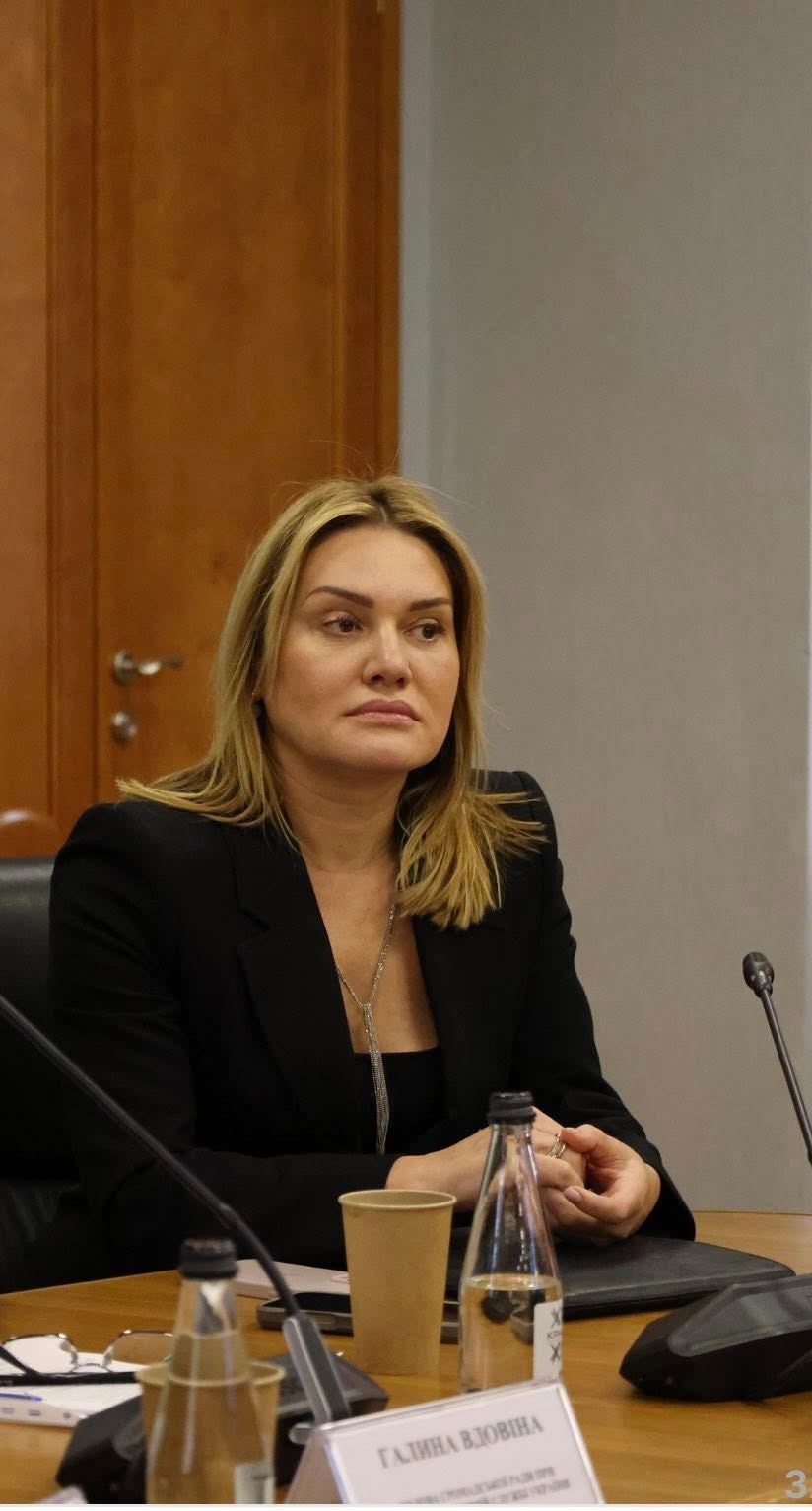
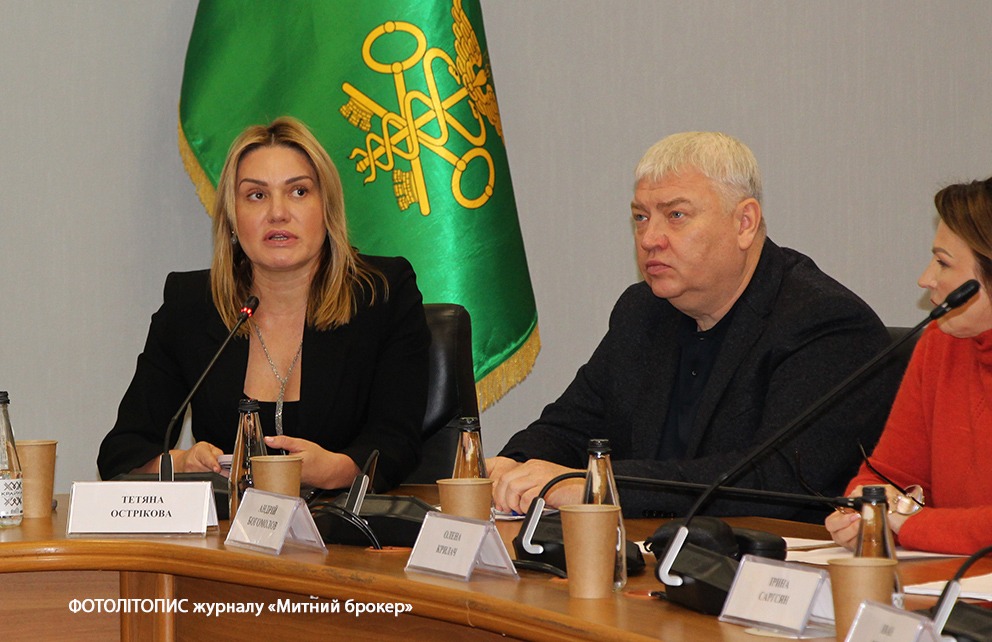
We asked Tetiana Ostrikova, head of the Working Group on consultations on the draft Customs Code of Ukraine and an expert at the Public Council under the State Customs Service, what specific innovations the bill introduces, why it gives customs authorities additional powers, and what businesses and citizens should expect from it.
VAT ON PARCELS FOR INDIVIDUALS: WHY RETURNING TO EXEMPTIONS MAY TURN OUT TO BE MORE COMPLICATED THAN PROMISED
– MPs failed the vote on the draft law taxing international parcels valued under 150 euros. However, the parliament ratified a 90 billion credit agreement with the European Union, and as MP Yaroslav Zheleznyak noted, the money will be paid to Ukraine in tranches, and before each one, it must fulfill certain obligations. "1st tranche (€3.2 billion): Draft laws (submission) on the cancellation of the tax exemption for international parcels and on the taxation of income through digital platforms," he wrote on social media. That is, they may return to this issue. If the limit is canceled and VAT is introduced, how much will it complicate the process of receiving parcels, and what might it look like in general?
– If we talk about the legislative initiatives we have already seen, they stipulated that customs clearance and VAT payment for a parcel with goods ordered on a marketplace abroad could be carried out using three methods. The first of them is the so-called "recipient method." That is, a postal operator (Ukrposhta, Nova Poshta, etc.) submits a special register to the customs authorities. This is happening right now.
After that, it collects money from the recipient of the parcel upon its delivery. And as of today (if the value of the postal shipment exceeds 150 euros), the postal operator has a month to transfer the VAT received from the recipient to the budget. This currently works for parcels worth more than 150 euros, so lawmakers planned to extend this method to all parcels, regardless of their value. The change here will be that the operator is given not a month to transfer the VAT received from the recipient of the parcel to the budget, but two months - the period is increased to ensure the possibility of bringing the parcel, handing it over to the recipient, taking funds in the form of VAT from them, and paying these funds to the budget. This, in particular, is due to the fact that there is currently no air traffic in Ukraine, and parcels take longer to be delivered.
The second method is the so-called "sender method," which means that a foreign marketplace, identifying a buyer from Ukraine and delivering to Ukraine, immediately collects the VAT amount in the currency in which it sold the goods. Accordingly, the VAT will be included in the price of the goods, which will be 20% more expensive.
– How can Ukraine receive these funds?
– The marketplace has two months to send the VAT paid by the buyer to Ukraine. As the Ministry of Finance says, their idea was for Ukraine to become a country for marketplaces with the same rules that these Chinese or American marketplaces have when goods are purchased by Europeans and delivered to the EU.
But the nuance is that in the European Union, there is one intermediary for all countries – an EU resident, to whom all these foreign platforms transfer the VAT collected from EU buyers. And this intermediary then transfers the funds (VAT) received from the marketplaces to the budget of the European Union.
The Ministry of Finance, however, proposes a somewhat different interaction option with foreign platforms. The idea is that each of the express carriers will be able to become such an intermediary for paying VAT for foreign marketplaces. In this case, the marketplace will have two months to transfer the funds either to Nova Poshta, Ukrposhta, or another operator delivering the parcel, for direct transfer to the budget of Ukraine. It is a somewhat complicated process, but the Ministry of Finance decided to introduce it, citing the fact that the EU works on the same principle.
At the same time, the sender method will be applied only to parcels cheaper than 150 euros. Because for those more expensive than 150 euros, there is also the issue of paying customs duties, and under the recipient method, marketplaces collect only VAT. And if the marketplace takes VAT from me, transfers it to Nova Poshta, and they transfer it to the budget, my operator or I will still have to pay customs duties in Ukraine.
– As Nina Yuzhanina, an MP and member of the Committee on Finance, Tax and Customs Policy, told "BiznesCensor" in a comment, the world's largest American company and marketplace, Amazon, does not see the possibility of becoming a VAT payer in Ukraine. What should be done if others also disagree to accept our terms of cooperation?
– I do not know where Ms. Yuzhanina got this information from; I cannot comment on it. But I asked the Ministry of Finance whether consultations had been held with online platforms and marketplaces regarding the possibility of Ukraine joining the 27 EU countries that operate on the principle of the sender method. As it was explained to me, such consultations were conducted by the operators themselves, in particular, with Chinese marketplaces. They proposed to talk about the substance of this issue after the adoption of the relevant draft law.
Let me remind you of the situation with the so-called "Google tax". When it was introduced, it was also said that Google, Apple, Netflix, and other digital platforms providing electronic services (advertising, paid subscriptions, software, games, cloud services, streaming) to individuals in Ukraine would not transfer this tax to Ukraine and would not register as taxpayers here. And now, every year, we read information from the State Tax Service that they receive VAT for the use of electronic services from non-residents. That is, these mega-giants have registered as VAT payers. According to the head of the STS of Ukraine, the "Google tax" brought more than 14.4 billion hryvnias to the budget in 2025.
Perhaps Amazon will first observe, study the text of the already adopted law, and only then make a business decision on whether it is worth bothering with it, based on the market share they have from Ukrainian clients located in Ukraine. And if, imagine, Amazon decides not to register here as a VAT payer and not to authorize any of the operators and express carriers to receive and transfer VAT to the budget, then all parcels from this platform can be cleared using the recipient method.
– You mentioned the register that is submitted to customs. Please explain whether a customs declaration is required when clearing such goods.
– The customs declaration is not going anywhere. This is the third method. And I know of cases when, for example, DHL has doubts about the specified price of a product and says - you can submit the customs declaration yourself or use the services of our broker to submit it. That is, no one is canceling it. A person can submit it independently if the carrier or postal company refuses to do so, having doubts about the value of the goods.
Regarding the register. In my opinion, people - buyers of goods on foreign websites or marketplaces, do not need to delve deeply into these customs details with the register that the operator submits to customs - all this works today as well. This is a document submitted by express carriers to the State Customs Service. This is an invisible story for the customer of the goods. It's just that currently, when collecting parcels valued up to 150 euros, we only pay for delivery. And if the draft law is adopted, we will pay an additional 20% VAT upon receipt of the parcel.
– In your opinion, is the taxation of parcels generally needed right now? After all, goods are purchased this way not only by civilians but also by the military. And commenting on this initiative, Yurii Butusov, commander of an unmanned systems platoon of the "Khartiia" brigade, stated that the adoption of the draft law on parcel taxation could have catastrophic consequences for supplying the Defense Forces.
– Regarding the military, it is a separate topic. This, in my view, is the biggest problem. Because when we talk about the military, we have to understand that they include two categories. The first consists of a company or an entrepreneur that imports components for the manufacture of military goods. Customs sees that they are included in the register of manufacturers based on a declaratory principle. And the law provides an exemption from VAT for such components. Therefore, nothing will change for this category of importers — just as they submit declarations now, they will continue to do so in the future to take advantage of this exemption.
But the other part of purchasing goods for the military is when volunteers, the military themselves, their friends, or relatives order such goods from abroad as individuals. Here, first of all, not all of these goods may be eligible for an exemption. And even if it is provided by Ukrainian legislation, will a foreign marketplace want to account for this in its systems and separate goods for which Ukraine's legislation has established a VAT exemption from goods that do not have such an exemption? The answer is obvious. Most likely, they will not "play around" with determining which exemptions have been introduced in Ukraine and whether they need to set a price with VAT or without VAT for certain goods. And if, say, a person buys something for their military relative, VAT will still be charged on such a parcel. And then the product, just as for all other buyers, will be more expensive.
By the way, energy-related goods, which have a VAT exemption until 2029, also fall into this category.
At the same time, the Ministry of Finance says that the VAT included in the cost of such foreign goods (parcels), if an exemption applies, can be refunded in Ukraine. This can be done within two months of the funds being received by the Treasury, either from the postal operator or from a foreign marketplace. But I see a problem in how this will be implemented in practice. Because everything looks very good in theory, but I think it will be difficult to actually get the money back from the Treasury. Given these considerations, I think the draft law on the taxation of parcels was somewhat underdeveloped, particularly regarding military goods and those categories of goods most frequently ordered for military needs – clothing, footwear, protective equipment, and so on.
Is such a legislative initiative timely at all? I have heard three groups of arguments. Some are more complex, some are simpler. The first argument is political: supposedly, a taxpayer in, say, Germany or France needs to be shown that Ukraine needs financial assistance because it has already raised its own taxes. Allegedly, we have to demonstrate to European partners that we are raising taxes ourselves wherever we can.
The second group of arguments I heard is that Ukrainian manufacturers suffer from orders of clothing, footwear, textiles, and other goods on these platforms. Because if Ukrainian manufacturers import raw materials — for example, fabric, buttons — they pay VAT upon import; likewise, VAT is included in the price if raw materials or components are purchased in Ukraine. Yet, when finished clothing or textile products, for instance, come from abroad in parcels for individuals, the value is indicated below 150 euros, and there is no VAT. Allegedly, this is often abused by entrepreneurs who order commercial batches of goods for sale through parcels and thus avoid paying import VAT.
Another group of arguments concerns companies that import a similar assortment of clothing, footwear, electronics, and other consumer goods while paying VAT on the full value upon import. Meanwhile, some enterprising Ukrainians order the same goods in parcels but on a commercial scale, thereby abusing the exemption provided by law specifically for individual parcels.
– Probably, it was possible to think about some other options for filling the budget and discuss this with foreign partners.
– There is always room for dialogue in negotiations; perhaps it was worth proposing other ways to generate additional budget revenues. The decision is definitely unpopular; the only thing that can be said here is that in the European Union, VAT is charged on all parcels. And starting in July, a fixed customs fee of 3 euros per product item is also being introduced.
But there is also another argument that the EU is a common customs area that unites the markets of its member countries. Therefore, you can order certain things without customs duties and VAT within this large customs area. In Ukraine, however, we have a limited domestic market and do not yet have the same opportunity as in the EU. Therefore, I would introduce taxation closer to joining the European Union.
Indeed, before joining, we must test the operation of such a system so that later we can synchronously integrate into their customs area with other countries and work according to their customs rules.
CUSTOMS AUTHORITIES’ REASONABLE DOUBT: HOW THE NEW CODE MAY AFFECT CUSTOMS VALUE DISPUTES
– You headed the interagency Working Group on consultations on preparing a new version of the Customs Code of Ukraine. What were the biggest problems and contradictions you faced while drafting the document, and was it possible to strike a balance between the interests of the state, customs security, and the needs of business?
– A government order instructed that a working group be created to hold consultations on the draft new Customs Code. The group included representatives of major business associations, such as the European Business Association and the American Chamber of Commerce, as well as sector-specific associations representing producers or importers, and representatives of the Public Councils under the Ministry of Finance and the State Customs Service.
At the first inaugural meeting, we had a long discussion about what consultations actually mean. Were we supposed to submit as many amendments as possible and change the draft code, or were we supposed to ask questions and check the text against the Customs Code of the European Union? In the end, we agreed to go article by article, and each member of the group was assigned specific sections of the code.
I will draw parallels with the Civil Code now to explain the logic behind our actions. Why is it drawing so much criticism? Because no consultations were held. Had they been held, those wild provisions that have prompted irony and confusion among practising lawyers could have been discussed, and it would have become clear that they would not work. That is why it was so important for us to move article by article.
We were constrained by the fact that there is the text of the Customs Code of the European Union, which is uniform for all EU member states. It regulates all issues related to customs procedures, with a few exceptions. These include liability for smuggling and violations of customs rules, because it is a matter of each state’s sovereignty to decide what should be punishable and how. Another exception is the status of customs authorities, because, again, this concerns each country’s sovereign right to decide how its public authorities should function.
We had a clear table prepared by the working group, matching an article of our code with an article of the Customs Code of the European Union or the relevant implementing regulation.
It should be understood that in the new draft Customs Code, we are implementing both the Customs Code of the European Union and, roughly speaking, what in Ukraine would be called Cabinet of Ministers resolutions, while in the European Union, these are implementing regulations.
Until we become an EU member, their implementing regulations do not apply to us, but they flesh out the provisions of the Customs Code, so we included both them and the articles of the EU Customs Code in the bill. The new version of Ukraine’s Customs Code will remain in force until our country joins the EU.
We could see how things are set out in the current EU code and how they are proposed in our draft. If there was a mismatch in the text, we submitted proposals to correct it. For example, the EU code says that a customs authority must interact and maintain dialogue with an economic operator, while a "may" had crept into the draft Ukrainian document.
Second, there were articles covering legal institutions that currently do not exist in Ukraine’s Customs Code. For example, the so-called "customs valuation authorisation." So we do not know what it is or how it is supposed to work, which is why we put questions to the Ministry of Finance and the State Customs Service and sent a request to the Europeans asking for consultations.
In some cases, we overlaid certain provisions of the draft Customs Code onto business models. For example, how agricultural producers currently operate when exporting, and how they will operate once this code enters into force, and whether it will create obstacles to the way they work today. This is the context in which our consultations moved forward.
Overall, we managed to correct many provisions. But I am convinced there will still be a lot of work and many amendments on the parliamentary platform, because this is a major codified act.
I think it will be criticised much less than the Civil Code. Because, to repeat, we have a clear framework: the EU Customs Code, and we cannot depart from it if we want to join the EU.
– You said the updated code will remain in force until Ukraine joins the EU. So this is a transitional document, if I understood correctly? You said the updated code will remain in force until Ukraine joins the EU. So this is a transitional document, if I understood correctly?
– Yes. Therefore, all our customs rules and procedures, IT systems, information exchange standards, types and kinds of customs declarations during this conditional transitional period must be exactly the same as those currently operating in EU countries. After adoption, the norms of this code will be implemented in practice; businesses, citizens, and customs will work according to them for several years, then a special EU assessment mission will check us, and when it confirms that all customs clearances are carried out according to EU rules, we will be ready for accession in the customs part. And when we join, the EU Customs Code will become a directly applicable code for us; the need for the Customs Code of Ukraine will disappear, so it will become invalid, except for issues of liability for violation of customs rules and provisions on the status of customs authorities.
– Couldn't the European Customs Code have been taken as an entire framework and some necessary things adapted? Because experts also write about this, calling the version of the Ukrainian code prepared by the working group a complex hybrid document.
– This is a very simplified understanding of the situation. People who are not involved in customs matters say exactly that: the translation is on the website, you can just use it. And replace the words "European Union" with "Ukraine" everywhere throughout the text. But, unfortunately, it does not work that way. Because once again, besides the code, it is necessary to take into account the regulations that specify its provisions. That is, we would still have to supplement the text of the code with the norms contained in these regulations.
Second, the Constitution states that the foundations of customs matters are established exclusively by the laws of Ukraine. Accordingly, certain issues cannot be left to the Cabinet of Ministers' resolutions.
Third, there is a difference in terminology. For example, the term "member states" is used throughout the text of the European customs code. Ukraine is not yet a member, so in each specific case, it is necessary to determine what wording should be used in a given article of the draft Customs Code of Ukraine, depending on the context.
In addition, the EU Customs Code contains articles on delegated powers. This is when the European Parliament delegates certain powers to the European Commission. In Ukraine, however, the Constitution provides that each body acts within its own powers, and these powers cannot be delegated.
Fourth, the EU Customs Code does not contain a term such as "customs border"; it uses the term "customs territory of the Union." In Ukraine, however, most constructions in the Tax Code and even in the Criminal Code are built around the concept of the "customs border" — for example, the Tax Code says: "The rules for taxing goods moved across the customs border of Ukraine are determined by this Code," while the Criminal Code of Ukraine says: "Smuggling, that is, moving goods across the customs border of Ukraine outside customs control or concealed from customs control..." At the same time, each EU member state, as part of a supranational entity, has its own state border, while the EU has a common customs territory and, accordingly, uses the term "customs territory" in the EU Customs Code. So all of this has to be adapted to our realities. The same applies to the accuracy of translation and the legal meaning of terms used in the EU Customs Code. For example, we have "customs control," while the EU Customs Code uses customs controls, customs supervision, and customs surveillance.
So, to sum up: Ukraine is a unitary state, we are not yet an EU member, and our main task is to implement the legal procedures, terms, and legal institutions that are in force in the EU Customs Code and the relevant implementing regulations of the European Commission. We must also regulate, in a way that is as close as possible to EU standards, issues related to combating smuggling, liability for violations of customs rules, and the status of customs authorities, by granting the State Customs Service the status of a law enforcement agency.

– One of the most sensitive issues is customs value and adjustments. Does the code introduce changes that would make procedures more transparent and reduce the number of conflicts between customs authorities and importers?
– Yes. For example, Chapter 3, "Value of goods for customs purposes," contains specific innovations, namely: the possibility of taking into account discounts and price adjustments for defective goods for the purposes of determining customs value; determining customs value in the event of a partial delivery; assessing terms and arrangements when determining customs value; and the possibility of using simplifications for determining customs value (fixing the elements to be included in the customs value), where the administrative costs of applying a simplified declaration are higher.
There were major discussions at the working group meetings about whether this chapter should be supplemented with provisions on protecting the rights of foreign trade operators when determining customs value, as in EU customs law, guarantees for the rights and freedoms of economic operators in determining customs value, as well as a range of specific rules on customs authorities’ control and adjustment of customs value, are set out in judgments of the Court of Justice of the European Union (CJEU), which have direct effect and are binding on member states and their public authorities. Thus, using only the provisions of the relevant EU regulations in the draft Customs Code of Ukraine does not reflect the actual rules for determining customs value applied by customs authorities in EU member states in practice. Therefore, during a roundtable held as part of the consultations with the participation of academics, practitioners, the State Customs Service and the Ministry of Finance, it was pointed out that a mechanism was needed to prevent possible negative consequences during the transitional period between the entry into force of the new Customs Code of Ukraine and Ukraine’s accession to the EU, when the above-mentioned guarantees established by CJEU judgments become binding on Ukraine.
EU customs law guarantees the rights and freedoms of economic operators in the determination of customs value, as well as a number of specific features of the control and adjustment of customs value by customs authorities, are defined by decisions of the Court of Justice of the European Union (CJEU), which are directly applicable and binding on Member States and their public authorities. Thus, the use in the draft Customs Code of Ukraine of only the provisions of the relevant EU regulations does not reflect the actual rules for determining customs value applied by the customs authorities of EU Member States in practice. Consequently, during a round-table consultation involving academics, practitioners, the State Customs Service and the Ministry of Finance, the need was highlighted to establish a mechanism to prevent potential adverse consequences during the transitional period from the entry into force of the new Customs Code to Ukraine’s accession to the EU, when the above-mentioned guarantees established by CJEU rulings will become binding on Ukraine.
As a result of the discussions and debates, the draft Customs Code for the first time enshrines the concept of "reasonable doubt" at the level of a codified act (Article 139). Under this concept, a customs authority has the right to reject the declared customs value only if there are properly substantiated and objective grounds. Thus, the draft code introduced the concept of "reasonable doubt of a customs authority," defined when such doubt is actually considered reasonable, and set out the cases in which an economic operator may provide additional information in order to overcome such doubt. A two-stage model for adopting a decision on determining customs value has also been introduced: if, after reviewing additional information from the declarant, the customs authorities’ doubts have not been dispelled, the decision on whether customs value may be determined on the basis of the transaction value is transferred to an authorised unit of the customs authority, while the declarant is given an opportunity to hold consultations and exercise the right to be heard.
– What else is new in the draft CCU (Customs Code of Ukraine) that businesses should pay attention to?
– The procedure for importing goods into the customs territory of Ukraine generally remains similar to the current one. Prior to the import of goods, an entry summary declaration must be submitted (a change in the name of the general arrival declaration). Such a declaration can be submitted by providing two or more partial data sets by two or more parties in the supply chain.
Goods brought into the customs territory of Ukraine are subject to customs supervision from the moment of their arrival and may be subject to customs control.
From the moment of presentation to the customs authority, foreign goods are placed under temporary storage for 90 days (without extension), after which such goods must be re-exported or placed under a customs procedure.
Goods may be stored only at authorized facilities or in places approved by customs exclusively for the purpose of preserving them in an unaltered state.
The presumption of the customs status of Ukrainian goods is applied, namely, it is determined that all goods in the customs territory of Ukraine are considered to have the customs status of Ukrainian goods unless it is established that they are not Ukrainian goods.
Cases are established when a declaration can be submitted verbally or by performing certain actions; the actions considered to be a customs declaration are defined.
– In the professional environment, the idea of granting customs the status of a law enforcement agency is being discussed quite actively. Does the customs service have enough resources to work effectively in this status?
– As of today, it is not enough. But today, there is also no legislative basis for such readiness. You cannot put the cart before the horse. First, we need to decide at the political level whether we want our customs to be like most EU customs authorities, which are law enforcement agencies. This is important because customs is designed to ensure economic security.
The new edition of the code stipulates that a specialized law enforcement unit prevents, detects, stops, and investigates criminal offenses assigned by law to the investigative jurisdiction of customs authorities. That is, it does the same thing that the Economic Security Bureau of Ukraine (ESBU) and NABU (National Anti-Corruption Bureau of Ukraine) do. Because we took these structures from the laws on NABU and the ESB.
– Could you clarify exactly which offenses are being referred to?
– As you understand, investigative jurisdiction is determined not by the Customs Code, but by the Criminal Procedure Code. And I have repeatedly insisted that along with the draft Customs Code, amendments to the Criminal Code, the Criminal Procedure Code, the laws "On Operational-Investigative Activity", "On the Protection of Court Employees and Law Enforcement Agencies", "On the Fundamentals of Combating Organized Crime" and others, where there is a list of law enforcement agencies and pre-trial investigation bodies and which determine their rights, be submitted to the Verkhovna Rada. But so far, no documents providing for all the necessary changes to the legislation have been submitted.
Therefore, communicating with the head of the State Customs Service, Mr. Orest Mandzii, I said that given his profile and vast experience in the law enforcement system, it is very important that he takes on this leadership and that work is carried out to prepare the relevant draft laws. This is to ensure that granting the status of a law enforcement agency to customs does not turn into empty declarations.
Why is it important for customs to have a law enforcement status? As I have already said, the customs authorities of European countries predominantly have law enforcement statuses, and when it comes to exchanging information about the movement of goods or any violations, they cannot share data with our customs. It does not have such a status, and for them, it is a civil body.
And one more thing. As of today, almost all law enforcement agencies want to be present at customs posts and control the customs clearance processes. This includes the SBI (State Bureau of Investigation), the ESBU, the DSR (Department of Strategic Investigations) of the National Police, and the SSU (Security Service of Ukraine). Then we read in journalistic investigations that they are somehow involved in what is happening there. Therefore, if our customs itself becomes a law enforcement agency and the investigative jurisdiction is clearly defined, all these representatives of various law enforcement structures in areas with customs control will not be needed. Customs officers will detect and investigate offenses, and we will hold them accountable later.
Now there is a new head of the State Customs Service, elected through a competition. We see that there is trust in him from both the business community and international donors. And if international donors are ready to provide him with financial support and material and technical equipment (scanners, weighing complexes, body cameras for inspectors), and specialists who focus on foreign economic investigations and cross-border operations join this specialized unit for combating smuggling and customs rules violations, it will definitely not be worse. If this cuts off all other bodies that want to sit at customs posts and "earn" from this, it's fine by me.
– Won't such powers simply become an additional instrument of pressure on businesses? Other law enforcement officers will be removed from customs posts, and there will be a kind of monopoly of customs officers.
– If you and I lived in the paradigm of 2016 or 2021, then perhaps I would be the first to tell you that this is exactly what will happen. Now, in my opinion, the situation is different. As I have already noted, the new head of the State Customs Service has a credit of trust from those who elected him, from the government that appointed him, from entrepreneurs, and from international donors.
Next, an attestation of customs service employees is to take place. I know that certain preparatory measures are already underway within the State Customs Service to launch this process. We will see how it goes, but as a result of the attestation, it may happen that some of those who do not correspond to their positions, either in terms of knowledge or integrity, will leave. And qualified and honest people will come to take their place.
Our international partners are also interested in the effective work of customs, because if budget revenues increase, less funds can be allocated to Ukraine.
The fourth issue that needs to be considered is our movement into the EU and the need to adopt the draft Customs Code. Our businesses and our customs officers must learn to work according to the procedures prescribed in it. Then we need to receive the conclusion of the European Union's assessment mission that the way things operate in Ukraine meets their requirements, and we can join.
All these factors combined, along with the background of the new head, provide grounds for cautious optimism. Because when we talk, for example, about the law enforcement status of the German customs service, we do not say that German customs officers have gained a monopoly, drive away all other law enforcement agencies, and "shake down" businesses.
Or take our anti-corruption agencies as an example – NABU and SAPO. They are built according to a certain model and with the assistance of our foreign partners. Do we hear anywhere in the media today that they are extorting money from some entrepreneurs? No. Although they have a monopoly on investigating a certain category of crimes. Including in the economic sphere, where business is involved one way or another. Because if something was stolen during a tender, someone supplied this product for the tender.
– Does the new Customs Code provide for strengthening post-clearance audit as an alternative to blanket controls at the border?
– Post-customs control in the draft CCU is regulated by Article 92 and is based on European norms, in particular Article 48 of the European Customs Code, which provides for the possibility of taking control measures regarding the customs clearance of certain goods after their release. This ensures the speed of clearance, for example, during import, when control is shifted to a later stage, and the entrepreneur (economic operator) knows that the release of goods into free circulation at the declared value and on the basis of the submitted documents is not a panacea and does not guarantee the absence of claims from customs authorities in the future, as each transaction can be checked in subsequent periods. This guarantees the inevitability of liability and serves as an incentive to submit correct and reliable information to the customs authority during clearance.
Article 92 of the draft Customs Code of Ukraine provides that post-clearance control is carried out by:
1) conducting a pre-audit analysis of information declared in customs declarations, information on transactions involving goods that were not properly declared, or previous or subsequent business transactions involving those goods that took place after their release, as well as information received from other state bodies, institutions and organisations, and authorised bodies of foreign states, to establish the authenticity of documents submitted to the customs authority;
2) conducting documentary audits of compliance with customs legislation, in particular the timeliness, accuracy and completeness of the calculation and payment of customs duties, including on the basis of information received at the request of the customs authority from individuals, institutions and organisations.
A pre-audit analysis is carried out based on the results of risk analysis and may be initiated within the time limits set for the storage of documents.
If, as a result of the pre-audit analysis, inconsistencies are found in documents or information (data), or facts are established showing that a customs declaration, temporary storage declaration, entry summary declaration, exit summary declaration, re-export declaration or re-export notification was not submitted where customs legislation requires such submission, this information is taken into account during risk analysis. Based on that analysis, customs authorities decide whether to:
1) conduct on-site documentary audits (scheduled or unscheduled) or off-site audits of compliance with customs legislation;
2) send information about the identified inconsistencies to other competent authorities authorised to carry out types of control other than customs control.
During an on-site documentary audit, the customs authority may decide to:
1) set an additional period for conducting such an audit, which may not exceed 15 working days;
2) suspend such an audit for a period not exceeding 30 working days, except in cases where:
a) the person subject to the documentary audit needs to restore lost, damaged or prematurely destroyed documents.
In this case, the on-site documentary audit is suspended for the period needed to restore such documents, but for no more than 90 working days;
b) there is a need to conduct a customs examination, cross-check, obtain information from other state bodies, institutions and organisations or authorised bodies of foreign states, or wait for a court to complete consideration of claims related to the subject matter of the documentary audit.
In such a case, the conduct of a documentary on-site inspection is suspended for the period necessary to complete such procedures. In the event of establishing violations of customs legislation, in particular, regarding the correctness of the declared tariff classification of goods, their customs value, country of origin, grounds for exemption from the obligation to pay, or the application of reduced import duty rates, the results of the documentary inspection are formalized by an act containing a notification of the customs authority's intention to take an adverse decision, which serves as a basis for the independent determination by the customs authority of an understatement (overstatement) of the tax liability for the payment of customs payments and the implementation of measures provided for by the laws of Ukraine.
Tetiana Bodnia, "Censor.NET"


